


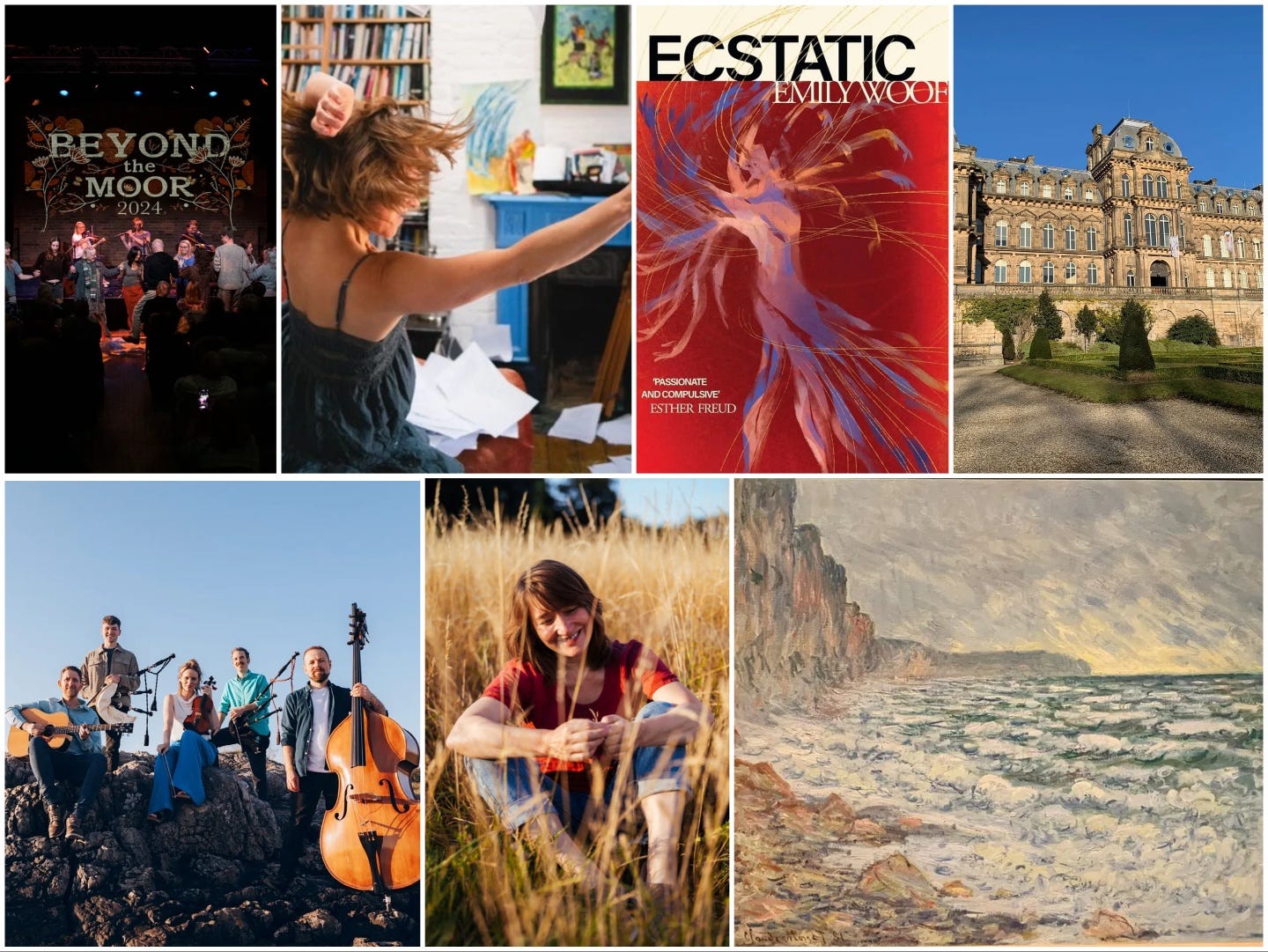
Hello and welcome to this week’s Cultured. On Sunday, where we’ve got music, art and books on the agenda.
We’re looking ahead to the return of Beyond the Moor at Gosforth Civic Theatre, catching up with Scottish folk favourites Breabach ahead of their headline appearance at the festival.
David Whetstone, meanwhile, has been to The Bowes Museum to see its latest major exhibition, Impressions of Light, which has been two-and-a-half years in the making and includes paintings by Monet, Pissarro, Boudin, Courbet and other star names of the art world.
And he’s also been chatting to Newcastle-born author and actor Emily Woof about her new novel, Ecstatic, which is out now. She says: “Some reviewers have said it’ll make you think for days afterwards, so I’m pleased with that.”
As ever, thanks for spending a couple of cuppas’ worth of your Sunday with us.

Beyond the Moor brings folk traditions together in Newcastle

Folk music in many forms will fill Gosforth Civic Theatre next weekend as Beyond the Moor returns for its fourth year.
Seven acts will perform across two stages on Saturday, October 10, with a programme stretching from Scottish and Irish traditions to the sound of the West African kora, alongside contemporary folk and music from some of the next generation of North East performers.
Bringing the day to a close will be Scottish roots band Breabach, whose visit comes less than a fortnight before the release of their new album, Gathering Ground.
“We are always excited to get back to Newcastle and it is a great honour for us to be a headline act for Beyond the Moor this year!” says Calum MacCrimmon, who plays bagpipes, whistle and bouzouki and provides vocals.
“We are very excited to be debuting music from our new album ‘Gathering Ground’.

Major French loan makes big impression at Bowes
“London might have the Bayeux Tapestry but we have treasures that are 100% worth seeing,” said Vicky Sturrs, director of programmes and collections at the Bowes Museum.
“And”, she added pointedly, “you can take photos.”
The famous embroidered account of the Norman Conquest is in temporary residence at the British Museum, having travelled from France in a delicate operation that had curators on tenterhooks.
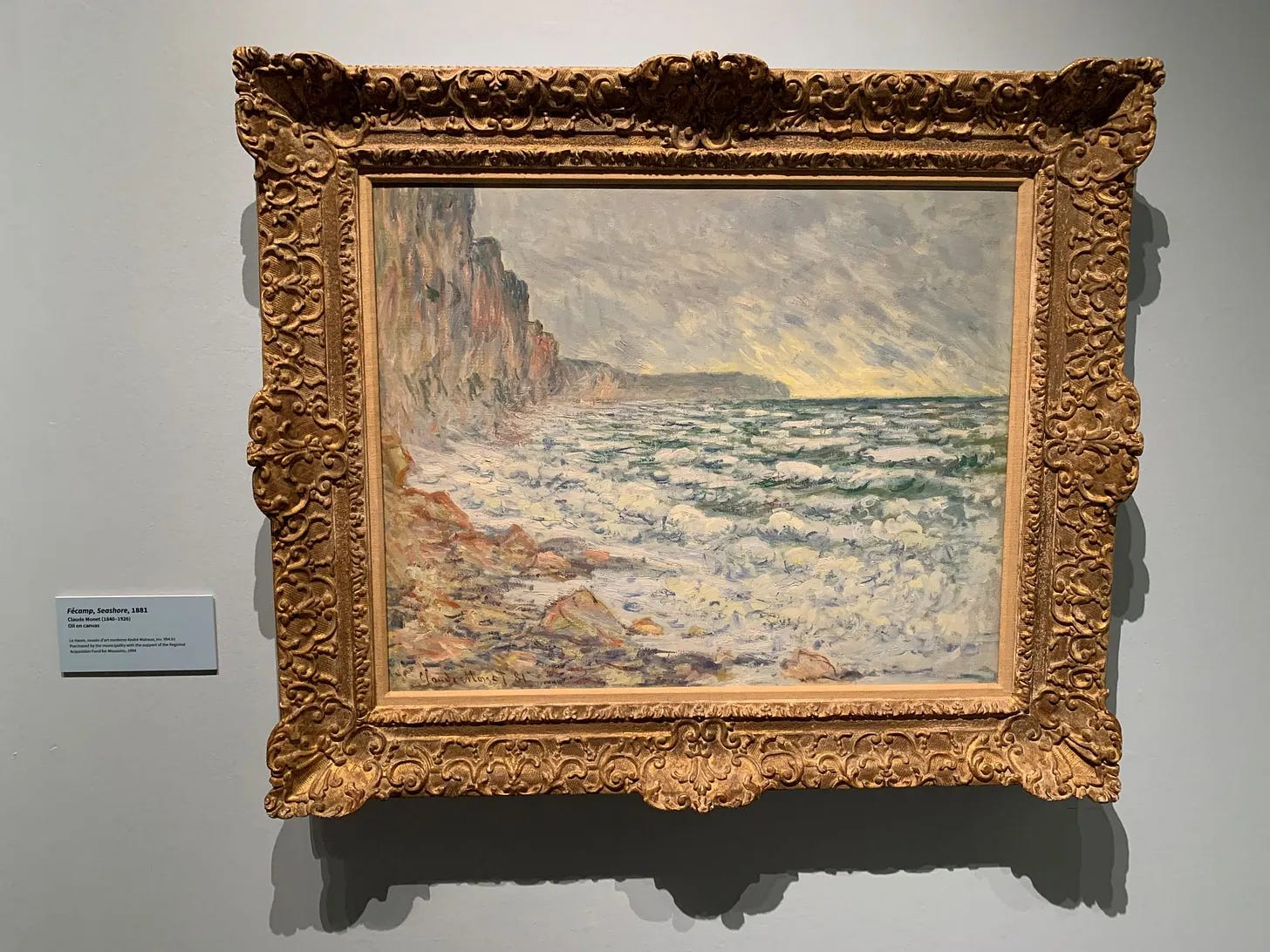
The treasures referred to by Vicky might not be as old as the tapestry but they, too, are historically important and crossed the Channel in a significant gesture of entente cordiale – many for the first time.
The new Bowes exhibition, Impressions of Light, has been two-and-a-half years in the making.
It is the result of an unprecedented partnership between the museum in Barnard Castle and the gallery in the port city of Le Havre popularly known as MuMa.
Its full name, evidently a bit of a mouthful even for the French, is the Musée d’art modern André Malraux.
The exhibition traces the development of landscape painting through the 19th and into the 20th Century, the period embracing Impressionism, and it includes paintings by Monet, Pissarro, Boudin, Courbet and other star names of the art world.


Newcastle-born novelist’s euphoric dancing daze

Emily Woof’s new novel – her third – is called Ecstatic. Well, of course it is. You wouldn’t expect something half-baked, like Pleased or Happy, from someone like Emily.
“I know this book is quite hard to describe and it won’t be for everyone,” says the writer, actress (her eclectic filmography includes The Full Monty, The Woodlanders and The League of Gentlemen’s Apocalypse) and one-time trapeze artist.
“But I think it’s an experience for the reader. Some reviewers have said it’ll make you think for days afterwards, so I’m pleased with that.”
It’s an experience, all right. And it does indeed set the mental cogs whirring.
Ecstatic (published by Wilton Square Books) draws you into a febrile world teetering on the brink of something ominous, and where people are struggling for all sorts of reasons.
We’re in a near-future London of climate change-induced heatwave and flood that seems almost familiar… but not quite.
With its citizens restless, agitated and prone to riot, the shadowy powers-that-be are driven to increasingly draconian containment measures. It’s as if they’re forcing a lid on a pressure cooker.
But the reader’s attention is focused not on geopolitics but on the individuals – people like mental health worker Ghyll, AI researcher Fareed, single mum and artist Mari, and Bridge, troubled and vulnerable - who find refuge and release in a church, although they’re not attending services.
There, along with others from across the city, and with the Christian religion set aside, they assemble weekly at the behest of the shamanic Lois to dance with wild abandon to the tracks she chooses for them – and later to the beat of her drum.
The novel begins with the resumption of what they call The Gathering.
