

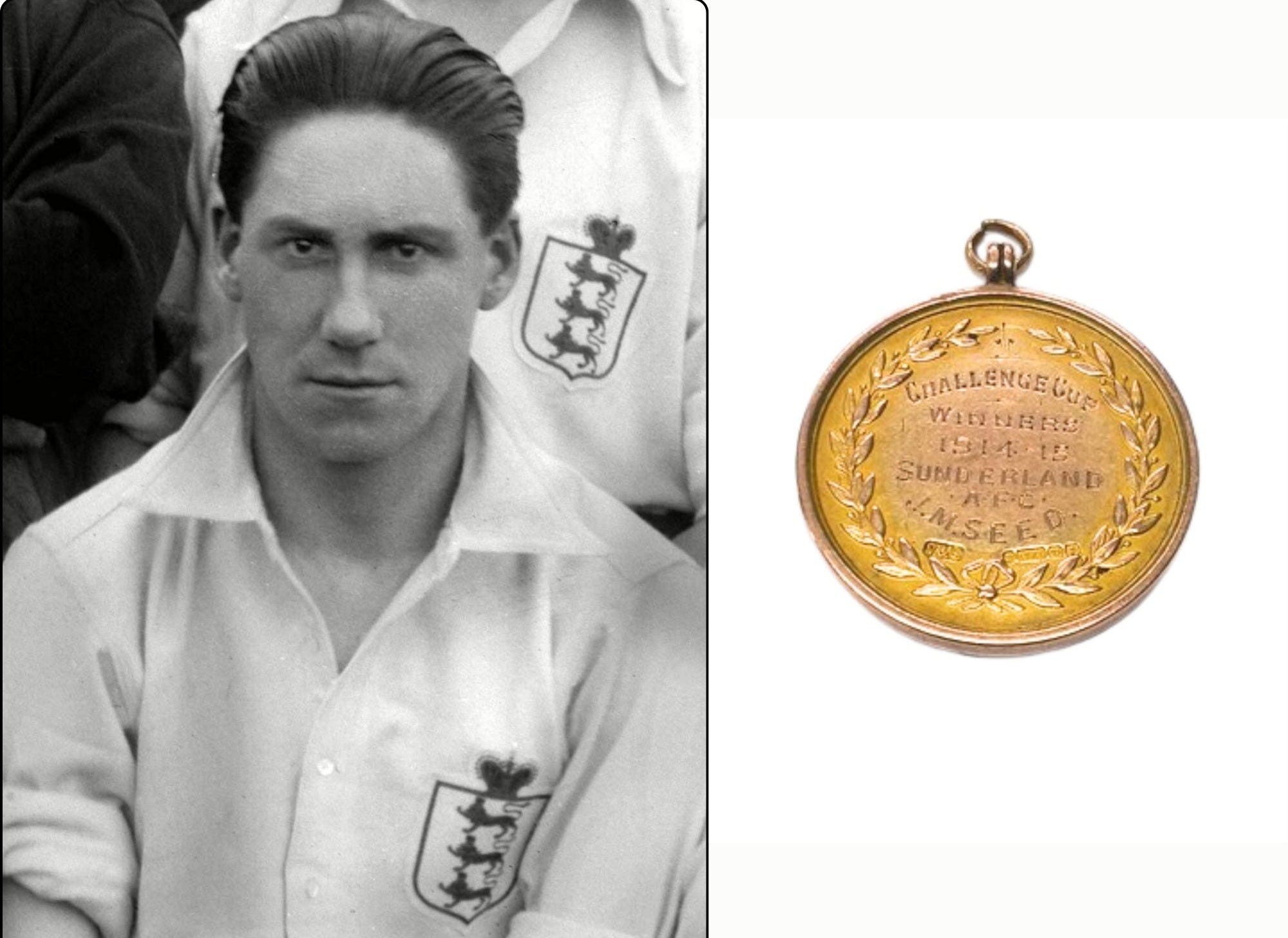
Footballer Jimmy Seed’s playing career was written off after he was twice gassed during the First World War.
Seed, who played for Sunderland, was released by the club, which felt that his lungs were too damaged to allow him to continue his career.
But forward Seed, from Whitburn, refused to accept defeat and went on to be capped five times by England, play a total of 363 games for Tottenham and Sheffield Wednesday, scoring 96 goals, and becoming one of Charlton Athletic’s greatest managers.
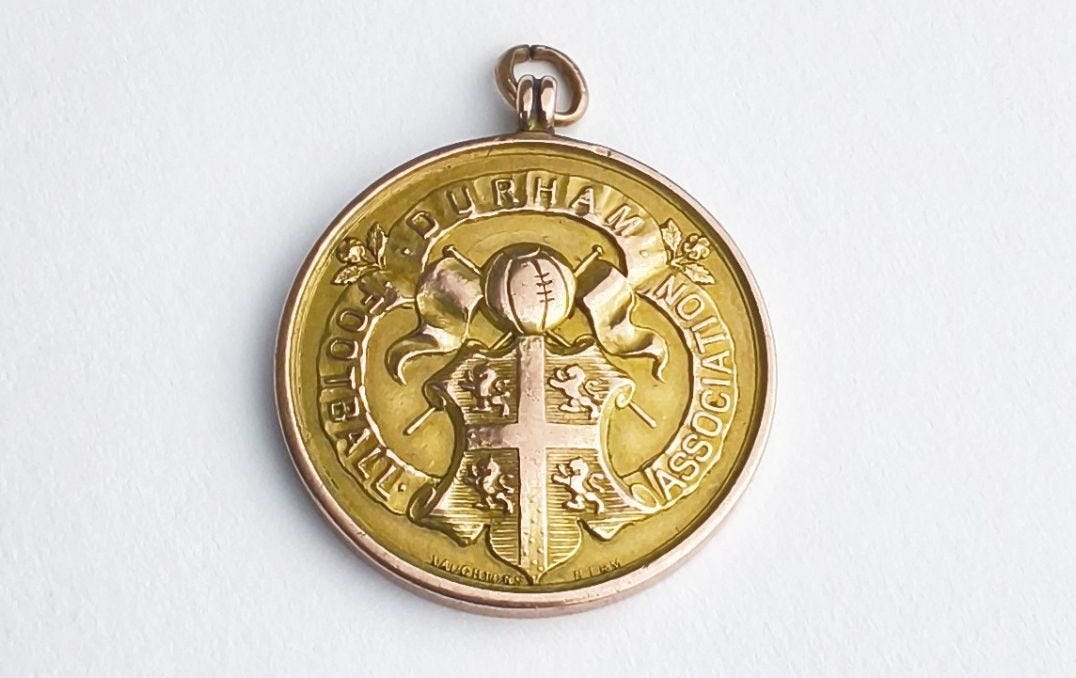
The remarkable story of Seed’s life has emerged with the sale of his gold winner’s medal from the Durham Football Association’s 1914-15 Challenge Cup Final, in which Sunderland Reserves beat Darlington 2-0.
The medal is being sold on Wednesday by Boldon Auction Galleries with an estimate of £400-£500.
James Marshall ‘Jimmy’ Seed won the 1921 FA Cup with Spurs and captained Wednesday to consecutive First Division titles. As Charlton manager from 1933-1956, he achieved back-to-back promotions, and led them to their 1947 FA Cup triumph in what was the club’s most successful era.
Seed was born in Blackhill, Consett, in 1895, with his family moving to Whitburn two years later.
Leaving school at 14, Seed worked at Whitburn Colliery and at 16 he was playing in the Wearside League for Whitburn.
He was signed by Sunderland as a professional in April 1914. When competitive league football was suspended due to the First World War, the 20-year-old Seed joined the Army.
In July 1917 he was gassed when a German aeroplane dropped mustard gas bombs as Seed, with other soldiers, sheltered in the basement of a bombed-out building in Belgium.
When the gas seeped in, it killed more than 50 of his comrades. Seed was sent to England to convalesce and returned to France in August 1918, but was gassed again at Valenciennes, France, two months later.
After the end of hostilities, Seed played a Victory League match for Sunderland against Durham City but his lungs were weak, resulting in a poor performance, following which it was decided his wartime experience had finished him as a footballer.
Sunderland did not put him on the transfer list as they believed his lungs were too damaged to continue playing.
But a determined Seed began playing again in non-league Welsh football at Tonypandy, where he attracted the attention of Tottenham Hotspur, who in 1920 signed him for £250.
Seed was a virtual ever-present for Spurs in the following seven seasons in the First Division. The 1920-21 season saw Tottenham lift the FA Cup, with Seed playing in all six matches in the cup run.
Two months after receiving his cup winner’s medal, Seed was called up for the first of his five England caps on May 21, 1921, against Belgium.
He moved to Sheffield Wednesday in 1927, and was captain as the club won two successive First Division championships in the following two seasons.
After damaging the ligaments in his right knee in a match against Newcastle United during Christmas 1930, he realised his playing days were numbered, and became manager of Clapton Orient before taking the manager’s job at Charlton and later Millwall.
Jimmy Seed died in 1966, aged 71.