


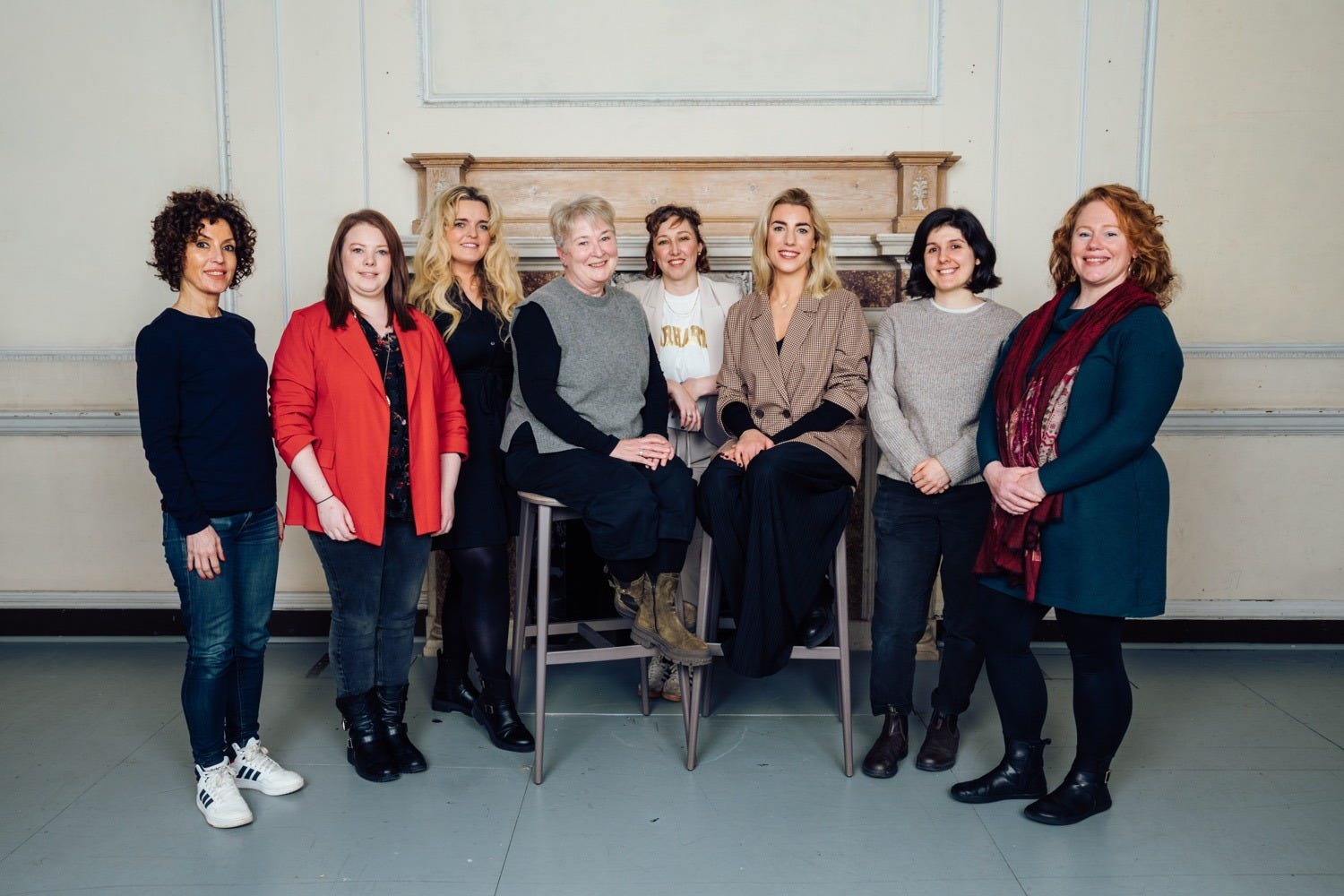
For Lucinda Borrell, returning to the North East in 2024 felt less like coming home and more like standing at the edge of a cliff.
After years working at the sharp end of current affairs television – producing and developing investigations for the likes of Panorama, Dispatches, Newsnight and ITV – the broadcast journalist and presenter found herself back in the region where she grew up, questioning whether there was still a place for her in an industry she had given most of her adult life to.
“I was really disillusioned. I was broken by some of my experiences in the industry, and I didn’t know what came next.”
What came next was the Women in Film and TV (UK) Four Nations Mentoring Scheme – a programme aimed not at new entrants, but at women already established in their careers and looking to move into leadership.
Over a period of six months, mentees benefit from one-to-one mentoring with senior industry professionals alongside peer-to-peer training and bespoke development workshops.
“We’re made up that we’ve been able to increase the number of places on offer in the North of England this year to 10, reflecting both the increased demand from the region and the remarkable pool of talent here.”
Helen Bullough, mentoring producer for the North of England cohort
For Lucinda, it became the catalyst for a complete shift in how she saw her future.
“I genuinely don’t think I’d still be working in TV if I hadn’t been accepted onto the scheme,” she says simply..
Today, the 37-year-old is building Purple Storm Media from a base in North Tyneside, developing television projects while launching an independently produced podcast series, Elbows Out. The decision to set up her own production company, she says, grew directly out of the mentoring relationship and the peer network the scheme created.
“It wasn’t just about getting advice,” she says. “It showed me a different way of existing in this industry – and that made me realise I could take control of the culture I work in.”
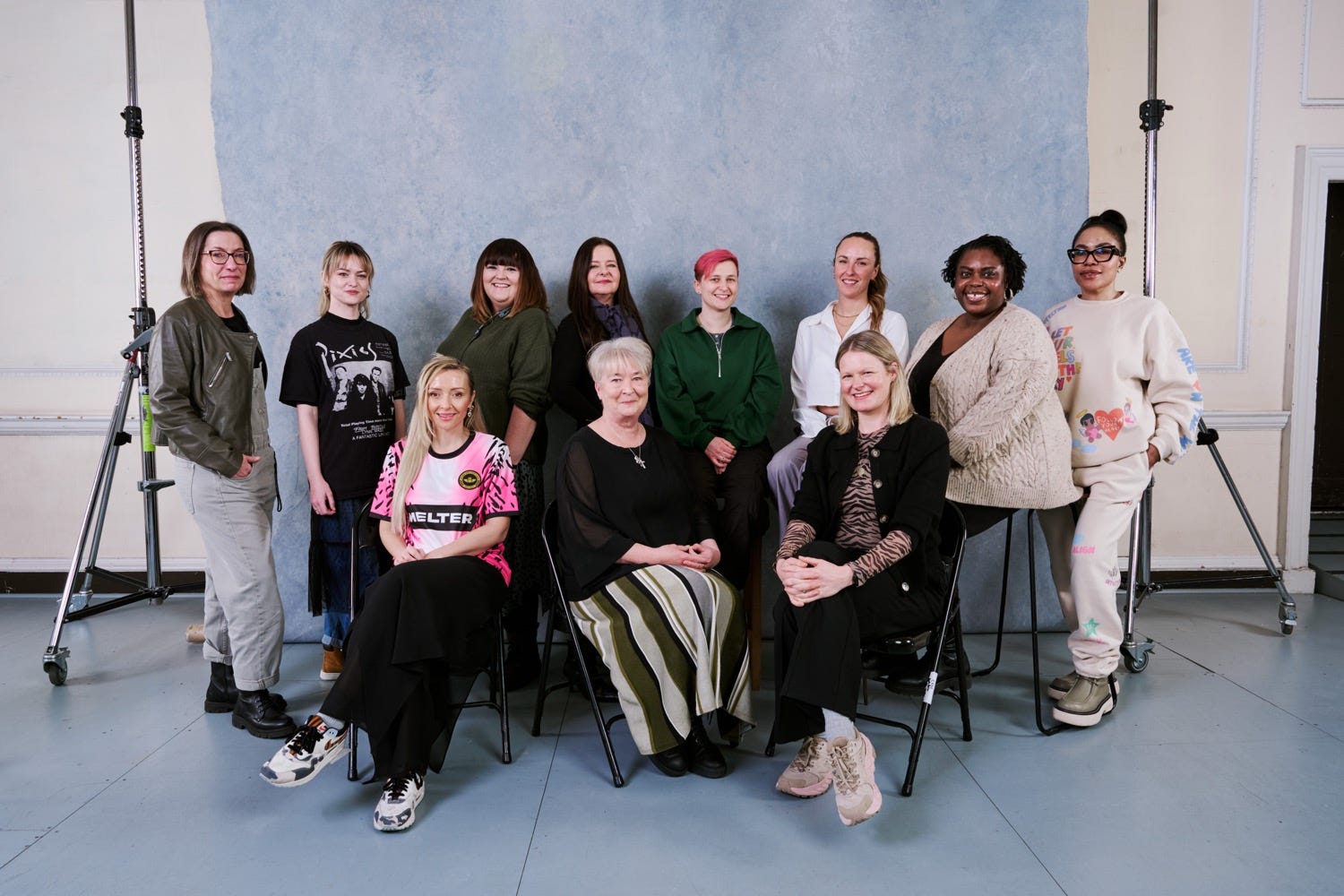
That sense of reaching a crossroads is a familiar one to Helen Bullough, mentoring producer for the North of England cohort of the Four Nations scheme. A former BBC executive producer with decades of award-winning experience across drama, entertainment and children’s television, she is clear about why mid-career women are the scheme’s focus.
“This isn’t an early-entry programme,” she explains. “These are women who already know their craft. They’ve had success. But they’re often the only person doing that role on a production, and as you move up, the opportunities narrow.”
For freelancers in particular, Helen says, there is a gap where leadership training, strategic thinking and peer support should be – a gap that salaried roles inside large organisations sometimes fill, but which many women never have access to.
“You might be brilliant at what you do technically,” she says. “But leadership, confidence, managing up, building networks – those aren’t skills you automatically get taught. And yet they’re exactly what you need to move into senior decision-making roles.”

The Scheme, which has run in various forms for more than 15 years, was expanded in 2024 to include a dedicated North of England cohort, with support from Screen Alliance North. North East Screen is a core partner in that alliance, helping to ensure that women based outside London can access high-level career development without having to uproot their lives.
This year’s 52 newly announced 2026 mentees includes North East participants Samantha Neale, a Newcastle-based screenwriter, and Sarah Howie, a production manager and line producer – adding to a growing pipeline of senior women choosing to build sustainable careers in the region.
“We’re made up that we’ve been able to increase the number of places on offer in the North of England this year to 10, reflecting both the increased demand from the region and the remarkable pool of talent here,” says Helen.
Among this year’s mentors are BBC Comedy commissioning editor, Emma Lawson who hails from County Durham and continually puts her shoulder to the wheel when it comes to breaking down barriers to allow talent and hard work to flourish.
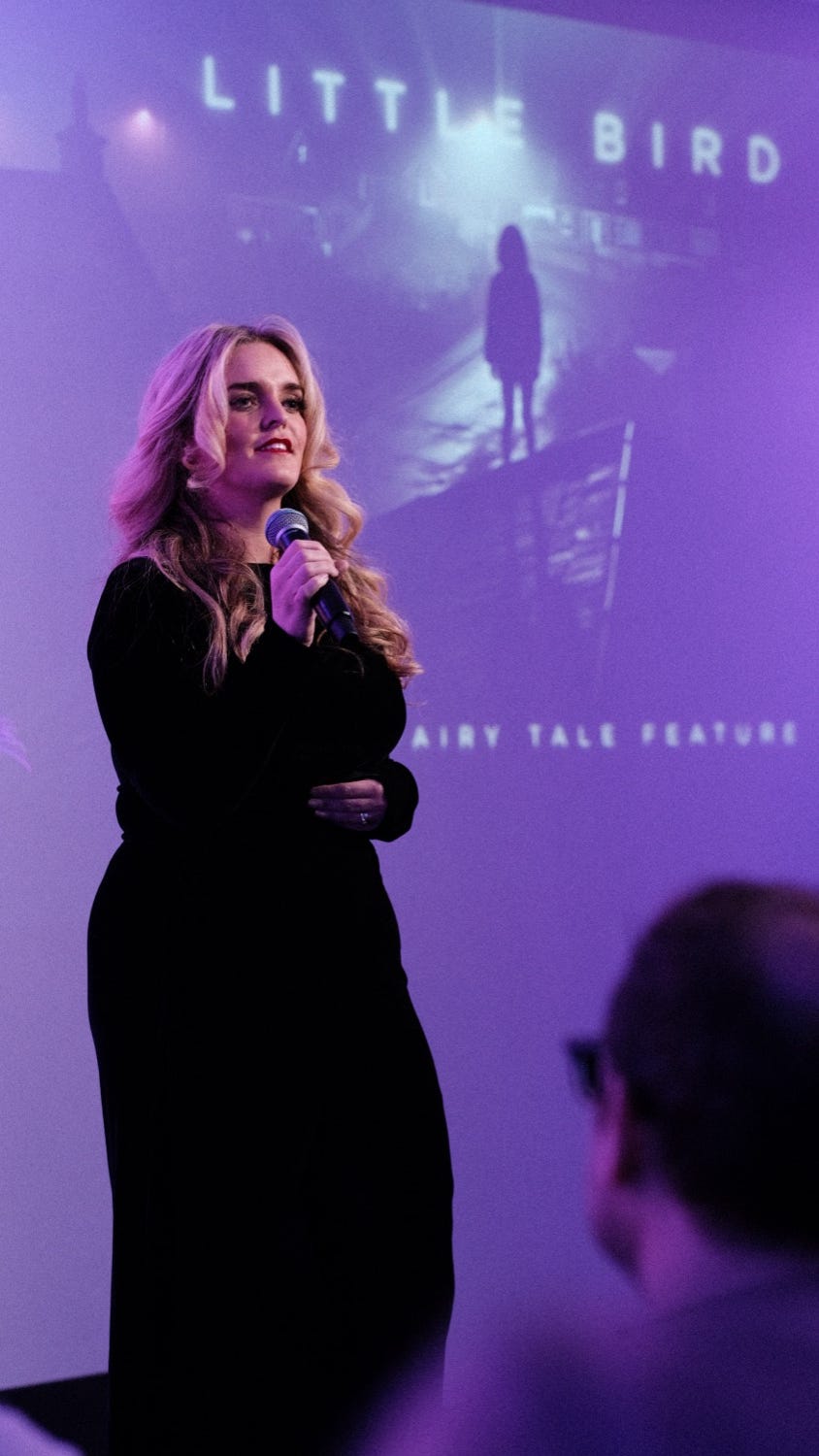
While each mentee is matched with a senior industry mentor through what Helen describes as a “bespoke, boutique” process, it is the collective experience of the cohort that many participants describe as the scheme’s most transformative element.
North East writer and producer Carley Armstrong, who also took part in the 2025 scheme, says the breadth of disciplines represented – from drama and documentary to production management, casting and business affairs – fundamentally changed how she understood the industry.
“It makes you a better collaborator and a better decision-maker, because you’re not operating in a silo,” she says. “And having that range of voices from different regions and backgrounds adds real perspective.”
Carley, founder of Sunderland-based production companies True Moon Pictures and Mack’em Productions, was at a point where she was stepping into greater responsibility – not just creatively, but as a leader. She applied to the scheme seeking strategic clarity rather than validation.

“This wasn’t about potential,” she says. “It was about responsibility, leadership and longevity. I didn’t want generic advice or surface-level networking. I wanted proper guidance from people who understand the realities of the industry, especially as someone building from the North and outside the usual systemic routes.”
Her mentor, BAFTA winning drama big hitter, Nicola Shindler (Hillsborough, Queer As Folk, Happy Valley, It’s A Sin), helped her think not just about individual projects, but about building power and sustainability over the long term.
“Nicola is someone I’ve looked at for years as an example of what it looks like to build power in this industry properly, creatively, commercially and with real integrity,” says Carley. “She’s proof that you can come from outside the usual routes, back bold voices, and build something long lasting and iconic.’
Just as important though was the environment created by the wider group.
“It became a safe space very quickly,” she says. “People were honest about the pressures, the politics, the emotional weight of stepping up. That level of trust made the experience far more valuable and I have made long lasting networks and friendships nationally.”
For Lucinda, the cross-disciplinary nature of the cohort was both unexpected and restorative.

“Current affairs can be incredibly competitive,” she says. “I wasn’t used to being in a room where you could share an idea and know no one was going to steal it!”
Instead, she found herself part of a national network of women offering advice, contacts and encouragement – from navigating difficult relationships with executives to understanding how different parts of the industry function.
“I learned about drama budgets, international co-productions, costume design – things I’d never normally come into contact with,” she says. “Even when it’s not directly applicable, it gives you a new perspective.”
It’s that perspective is central to the scheme’s regional impact, according to Helen. The goal, she says, is not simply to support individuals, but to strengthen the screen ecology of places like the North East.
“When a region has a critical mass of senior talent, a few things happen,” she explains. “People become role models. Business comes into the region. Companies get set up. That’s how you get sustainable growth.
“And so the legacy of that empowerment can be not just for the individual, but it can be for other individuals, either in an inspirational or financial benefit.”
North East Screen’s involvement reflects that long-term thinking – backing women not just to enter the industry, but to stay, progress and lead within it.
“The choice to build a career outside London should be a real choice,” Helen continues. “Not something people feel forced to do, or forced to abandon.”
That emphasis on choice resonates strongly with Lucinda, who is currently balancing freelance television work with building her own company while remaining based in the region.
“I can do a lot from home, and then travel when I need to,” she says. “What matters is that my base – my life – is here.”
“I didn’t want generic advice or surface-level networking. I wanted proper guidance from people who understand the realities of the industry.”
North East writer and producer, Carley Armstrong
Carley agrees. While her work increasingly operates on a national and international scale, her commitment to the North East is deliberate.
“Schemes like this don’t just open doors,” she says. “They help people stay, progress and lead.”
As the 2026 cohort begins its journey, the scheme’s legacy is already visible in the women who have come through it: production companies launched, leadership roles assumed, networks that continue long after the formal mentoring ends.
For Helen, that continuity is the measure of success.
“These women move through the industry together,” she says. “They support each other, collaborate, and pay that generosity forward.”
For those now stepping into the scheme – including the aforementioned North East participants – the impact may not be immediate or easily quantified. But if the experiences of Lucinda and Carley are any indication, it could be career-defining.
“It gave me confidence, clarity and momentum,” Carley says. “I feel more grounded in my identity as a producer and more assured about the choices I’m making.”
“It reminded me why I wanted to work in TV in the first place,” adds Lucinda. “And it showed me that the industry can be better – if we’re prepared to build it that way.”