


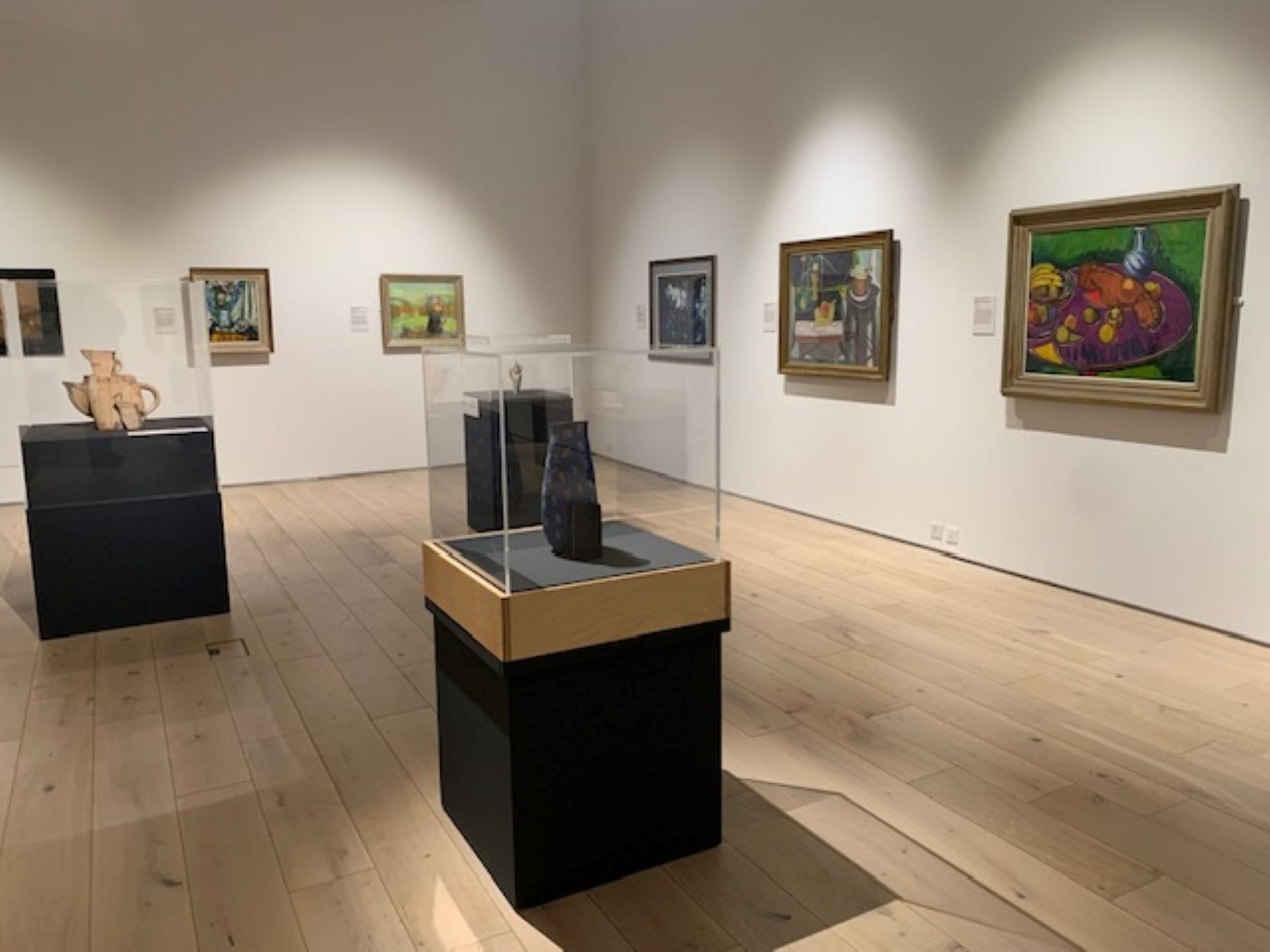
Definitely worth a visit is the latest exhibition at the Hatton Gallery which features treasured pots and paintings from North East Museums collections – chiefly those of the Hatton and the Laing and Shipley art galleries.
Here, beautifully displayed, you’ll find ceramic pieces by Bernard Leach (1887 to 1979), regarded as the founding father of British studio pottery, and paintings by the likes of Winifred Nicholson and Quentin Bell.
All easy on the eye and very covetable.
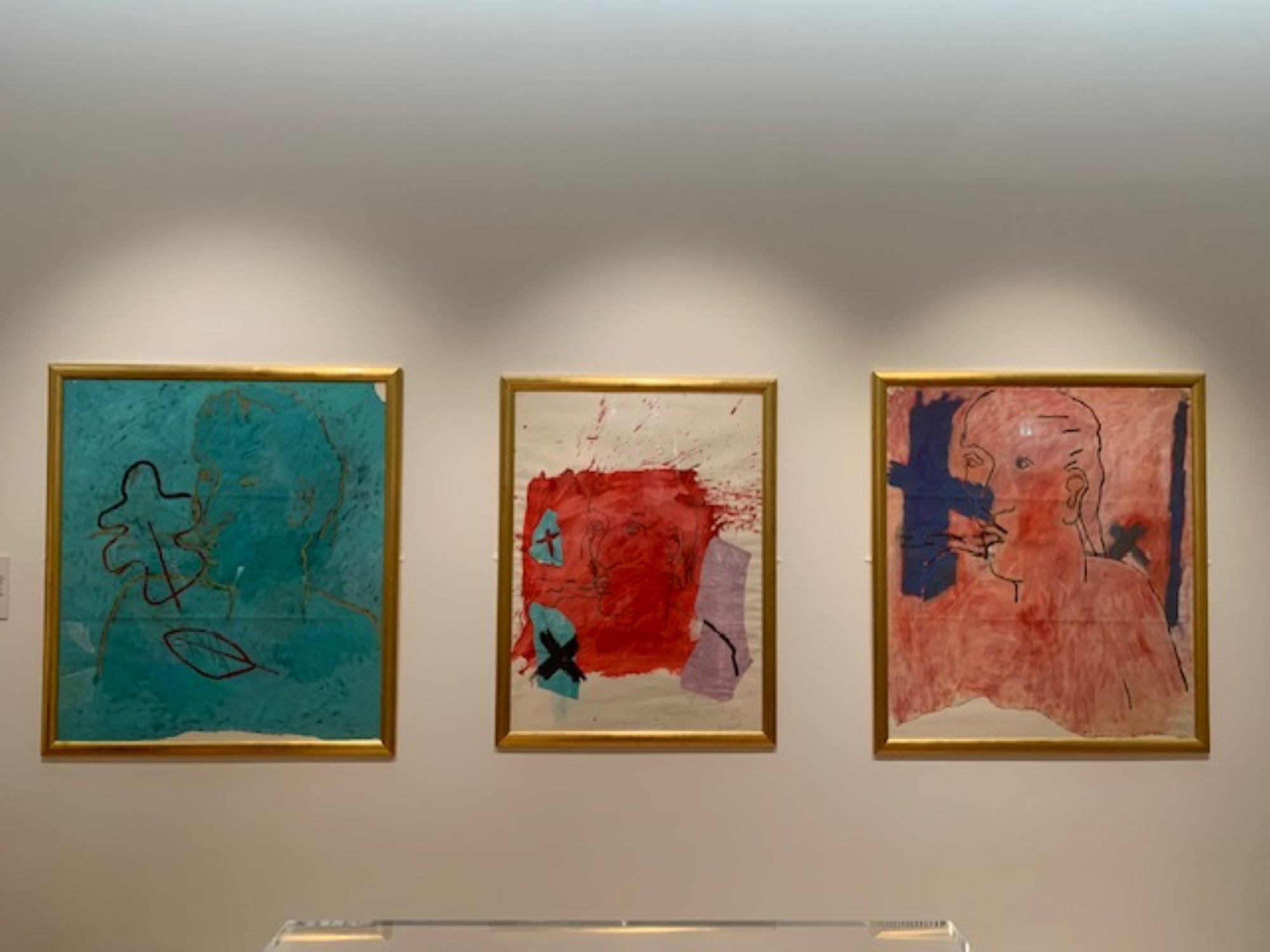
Later pieces include large and colourful paintings by Helen Baker, made as studies for flags for the First Tyne International exhibition, a highlight of Gateshead’s National Garden Festival of 1990-91.
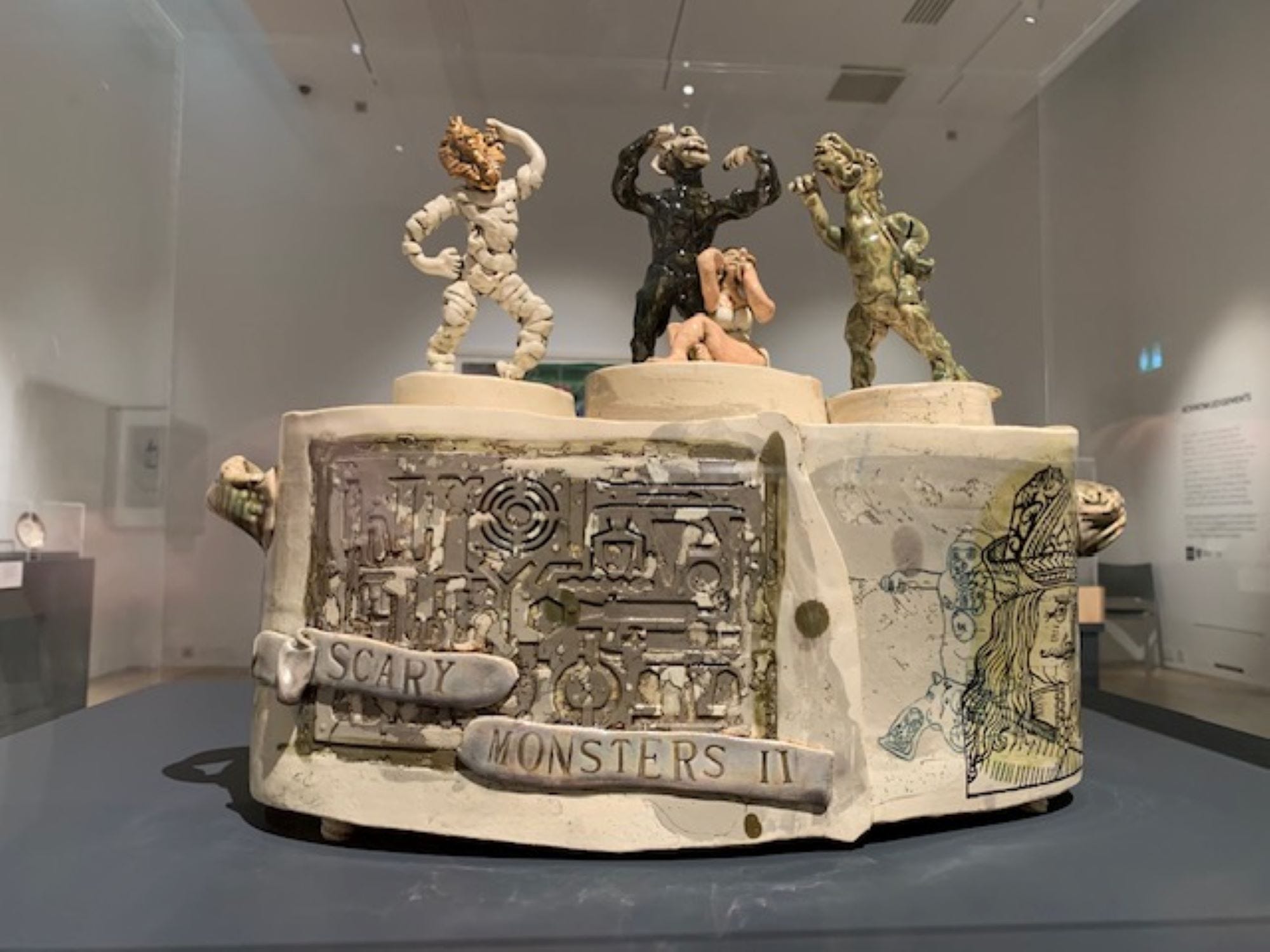
There’s also Stephen Dixon’s Scary Monsters II, a 1998 ceramic piece based on a medieval chrismatory (Christian container for holy oils) but with portraits of Saddam Hussein as Frankenstein’s monster and Slobodan Milošević as Count Dracula.
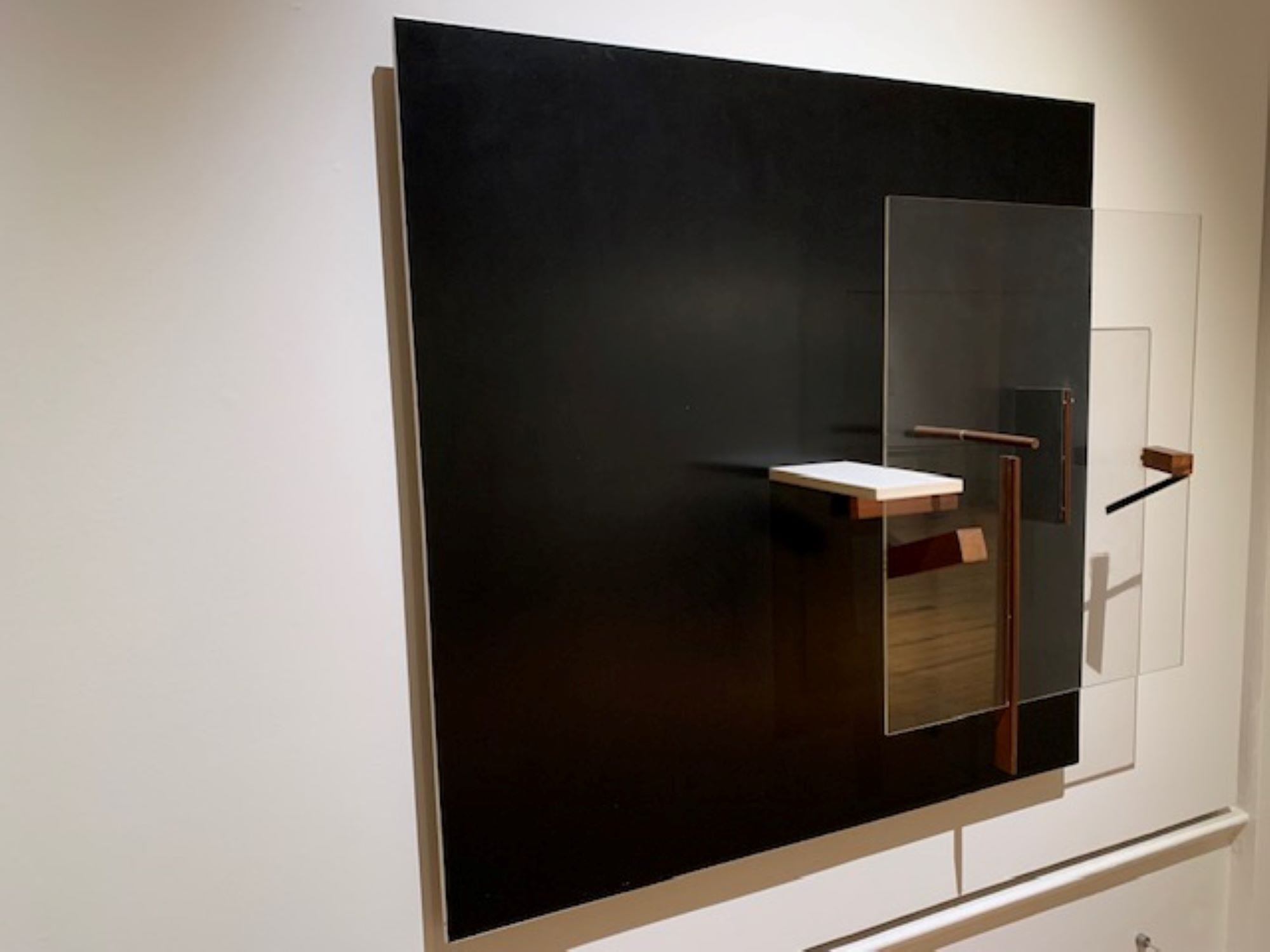
And back out of storage comes Victor Pasmore’s 3D ‘painting’, snappily known as Abstract in Black, White and Mahogany, Relief Sculpture: Wood and Perspex – made as the 1960s dawned and doing, you could say, precisely what it says on the tin.
It’s not a painting ‘of’ anything, nor even a metaphor. It’s simply a wall-mounted ‘constructivist’ artwork which looks different from every angle and bursts out of its ‘frame’.
Pasmore, an influential figure in British art education at that time, is still part of the fabric of this place since a large photo of him standing in the gallery is set into the wall at the foot of the stairs.
He ran the fine art department at what was then King’s College, Durham (which later became Newcastle University) from 1954 to 1961 and later in the decade took his 3D experimentation to a new level with his concrete Apollo Pavilion in Peterlee.
What brings all these pieces together at the Hatton?
An exploration, as stated on the information panel in the first of the four rooms, of “the painterly and graphic approach of artists to British studio ceramics in the 20th Century”.
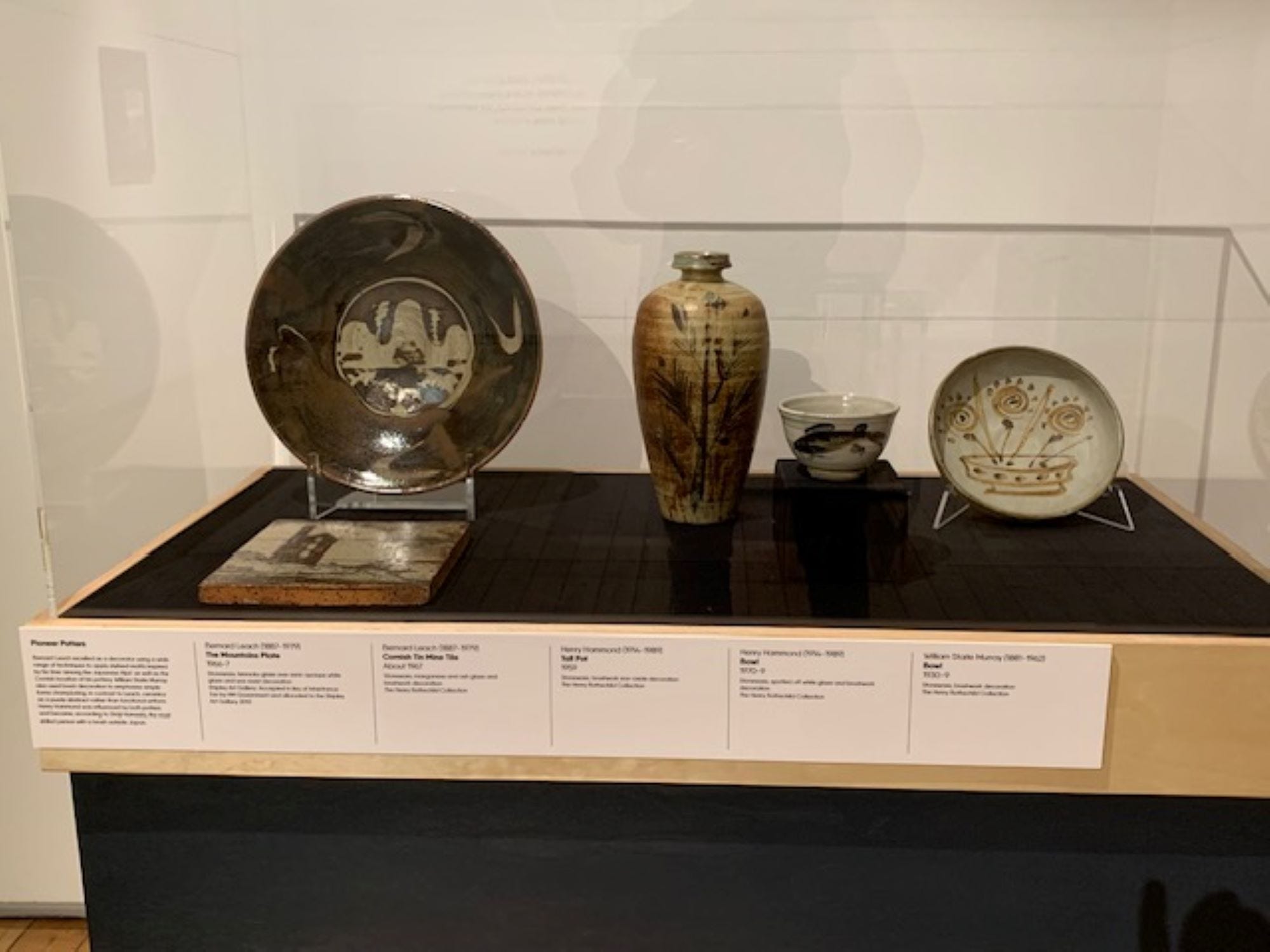
And it adds: “While often regarded as a sculptural medium, many artists also saw clay as their canvas – a place for abstract mark making and illustrative storytelling.”
The title, The Potter’s Canvas: Ceramics and Painting in the 20th Century, makes it sound a little like a PhD thesis. This is a university gallery, after all.
But there’s a thread running through it, if you care to follow, showing how functionality gave way to decorative and painterly expression.
It’s a fairly loose thread, giving scope for diversions and digressions, and allowing for intriguing outliers such as the Pasmore piece which is really neither painting nor pot.
In the first room you’ll find ceramic pieces by Leach, solid and reassuring but with the brushwork decoration he’d learned during spells in Japan and China and taken back with him to the studio he set up in Cornwall in 1920.
A splash of colour is supplied here by Red Table, a 1954 painting by Patrick Heron who was a close associate of Leach and lectured on The Crafts in Relation to Contemporary Art.
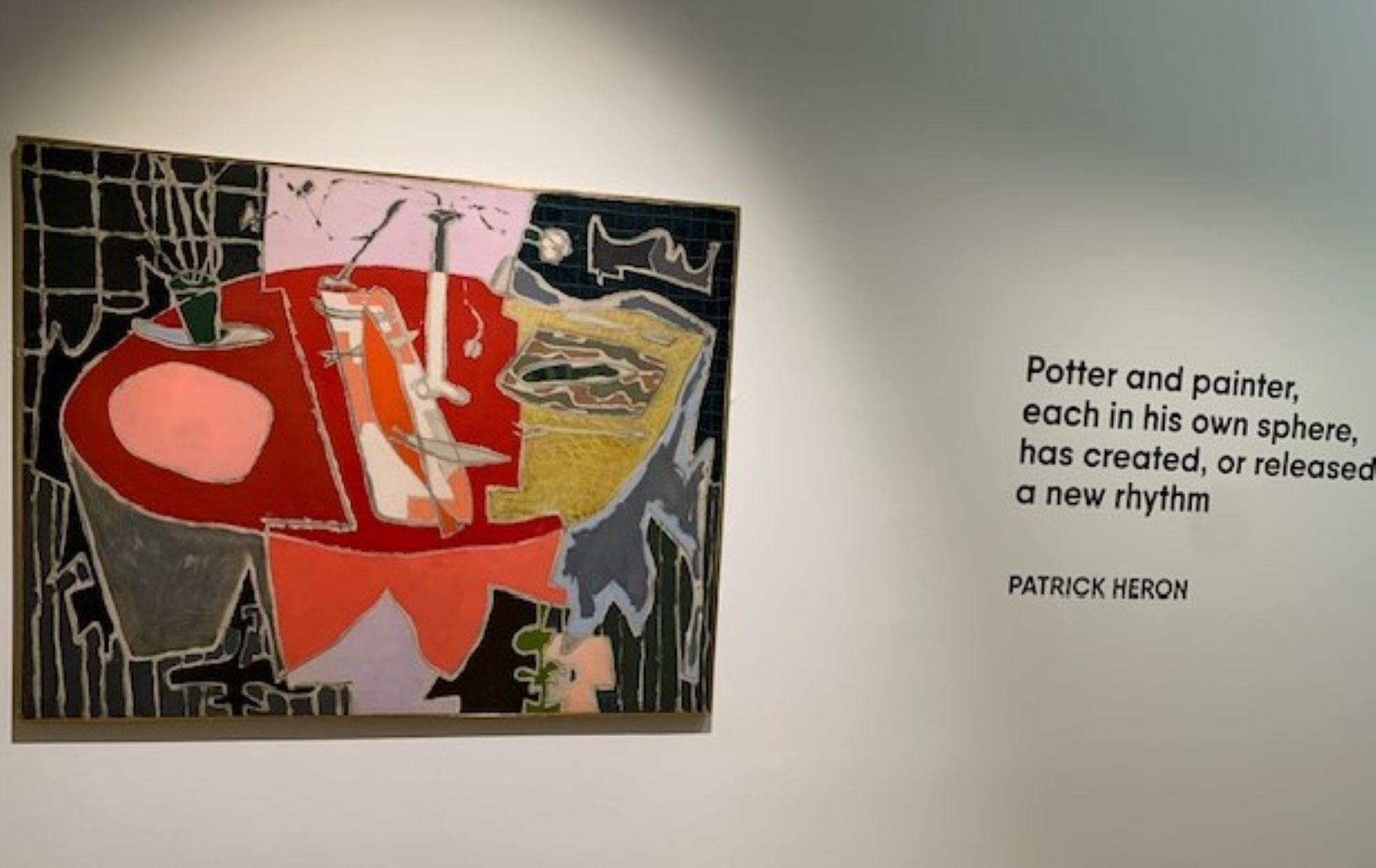
We’re directed to “the Leach-like jugs, coffee pots and vases” in this painting which was presented to the Hatton in 1971 by the Contemporary Art Society.
The distinction between contemporary craft and art is much less marked today, and certainly since Grayson Perry won the Turner Prize in 2003.
As you proceed through the rooms, you’ll see how painters depicted ceramic vessels in still life paintings (William Scott in his Pears on a Plate, 1955, and Winifred Nicholson in Evening at Boothby, 1953) while ceramicists like Gordon Baldwin came to regard clay as “a blank sheet of paper”.
In the big second room are fabulous pieces by the likes of James Tower and Bernard Rooke with decorated surfaces.
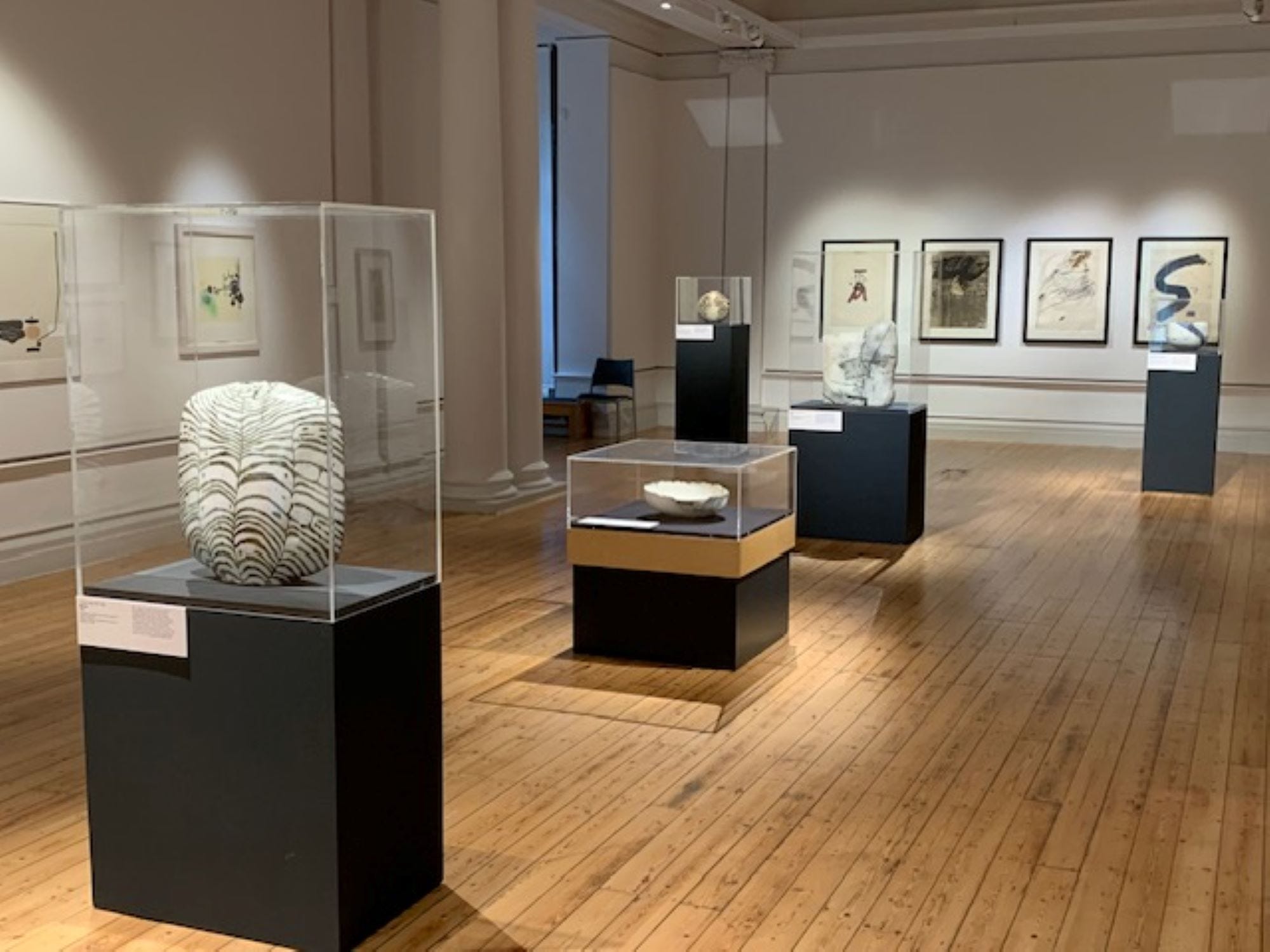
The third room, focusing on the 1970s and 1980s and under the heading Making a Splash, features the 3D work of Carol McNicoll and Alison Britton who embraced painting as an important part of their practice.
Colour really comes to the fore in the final room with its array of still life paintings and humorous ceramic creations, including Linda Gunn-Russell’s stoneware Teapot which you couldn’t pour because it’s almost flat.
It was bought in 1984, the year it was made, for the collection of the Shipley Art Gallery.
Every exhibit in this room vies for attention, to the extent that it’s easy to forget the title or the thread and simply enjoy the process of looking.
“Artists have never lost sight of the potential of the ceramic surface to tell stories or mark personal and political events,” states the wall-mounted info panel.
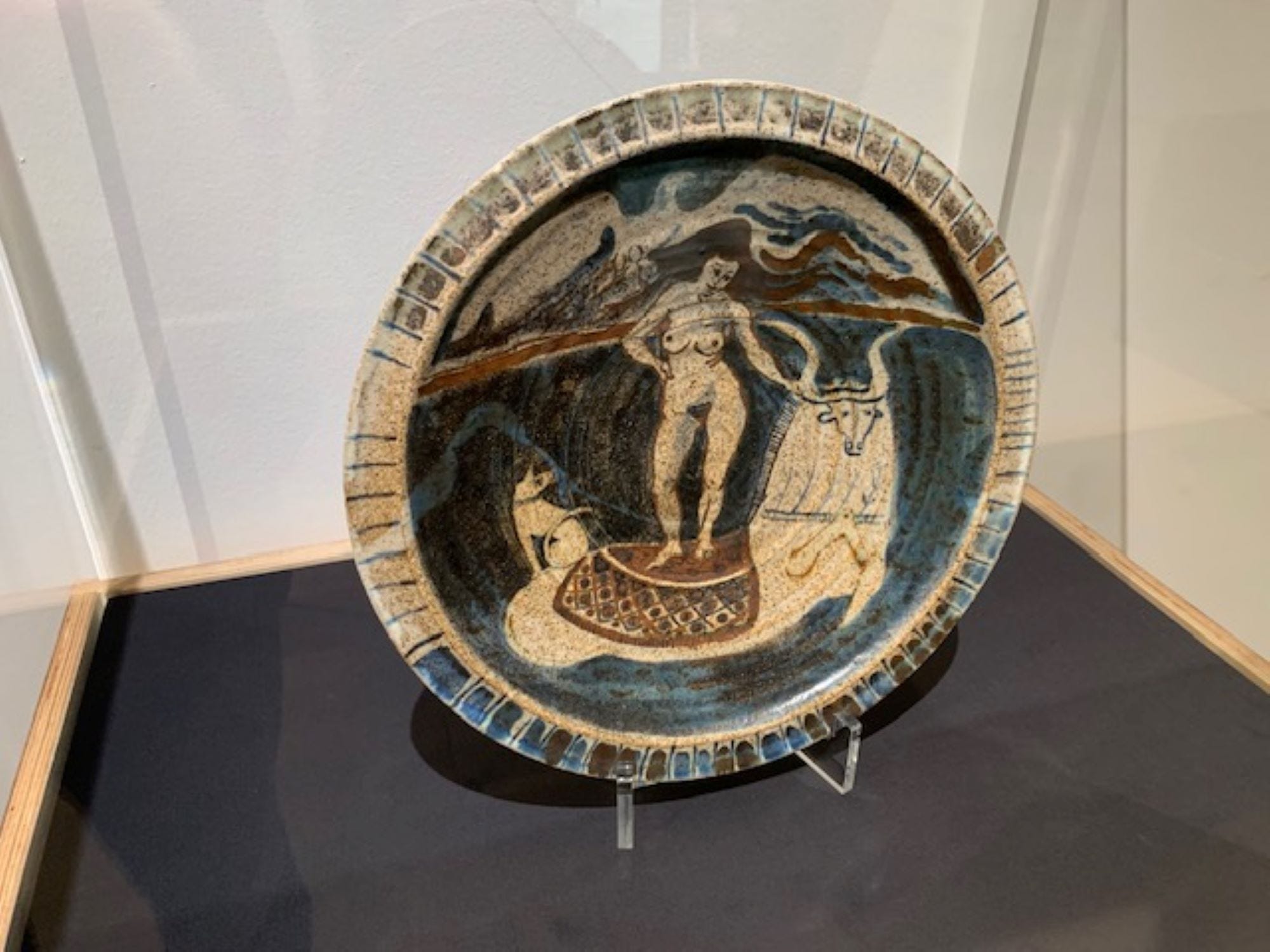
Stephen Dixon, Philip Eglin and others have used the ceramic surface to satirise modern society, it points out. Eric Mellon, declaring it was important not just to decorate a surface but to communicate ideas, produced shallow bowls showing scenes from classical mythology.
A witty ceramic piece by Mo Jupp (1938-2018), Portrait of a Pear, held by the Shipley and made in the early 2000s, is a still life feature taken from a canvas and made three dimensional.
Among the last exhibits you’ll see are an etching (The Sculptor’s Nightmare) and a stoneware vase (Smugglers Cove) made by Scottish artist Adrian Wiszniewski when he lived in an attic flat in Alnmouth in the mid-1980s.
Both are in the collection of the Laing Art Gallery and they look like companion pieces, distinctive Wiszniewski creations – figurative, dynamic and rather strange – but one on paper and the other on clay.
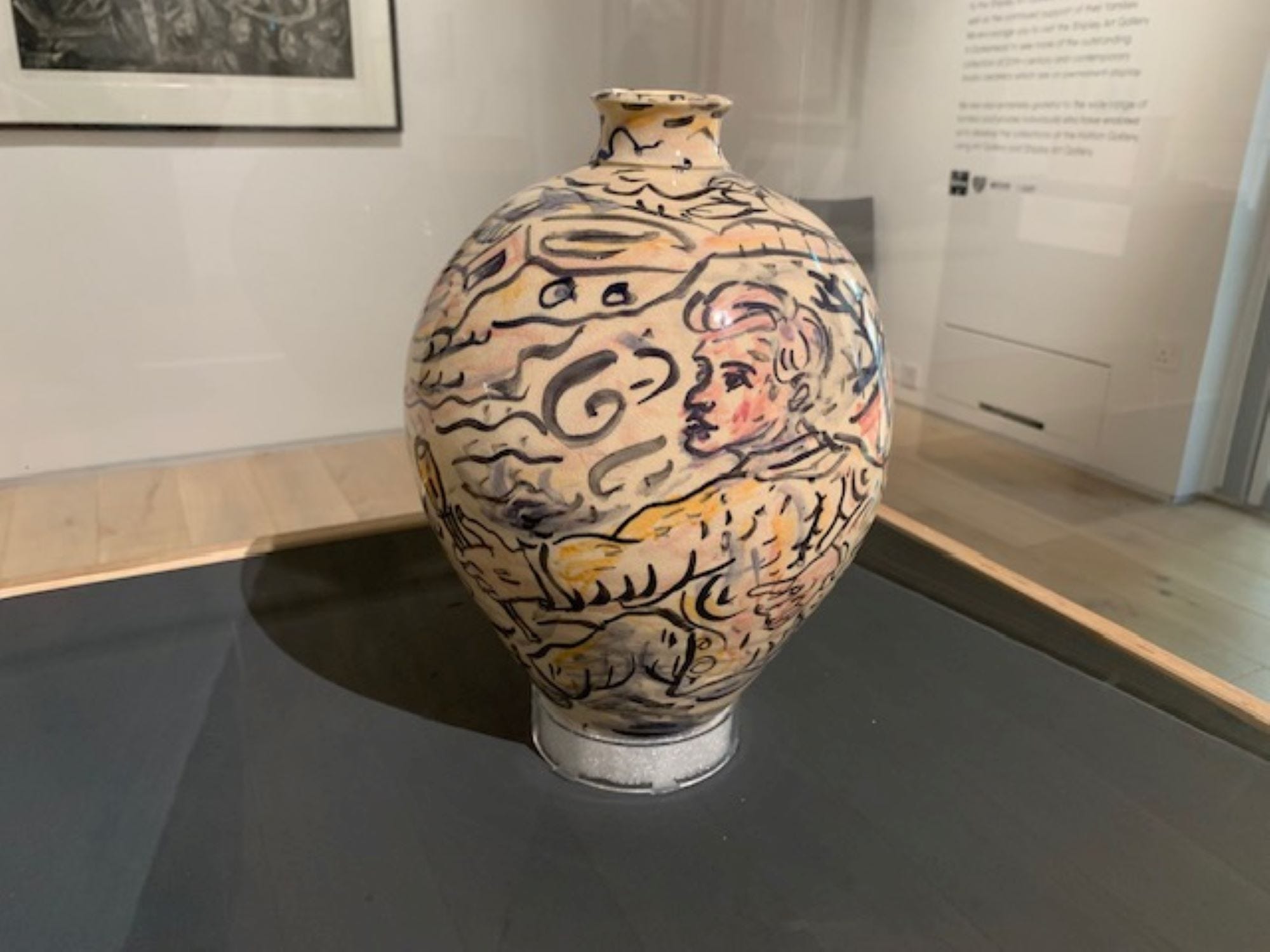
The two artistic media seem inter-changeable, just different ways of bearing an image or conveying a message.
The Potter’s Canvas: Ceramics and Painting in the 20th Century is on at the Hatton Gallery until January 16, 2027. The Hatton is open Monday to Saturday, 10am to 5pm, and admission is free.