


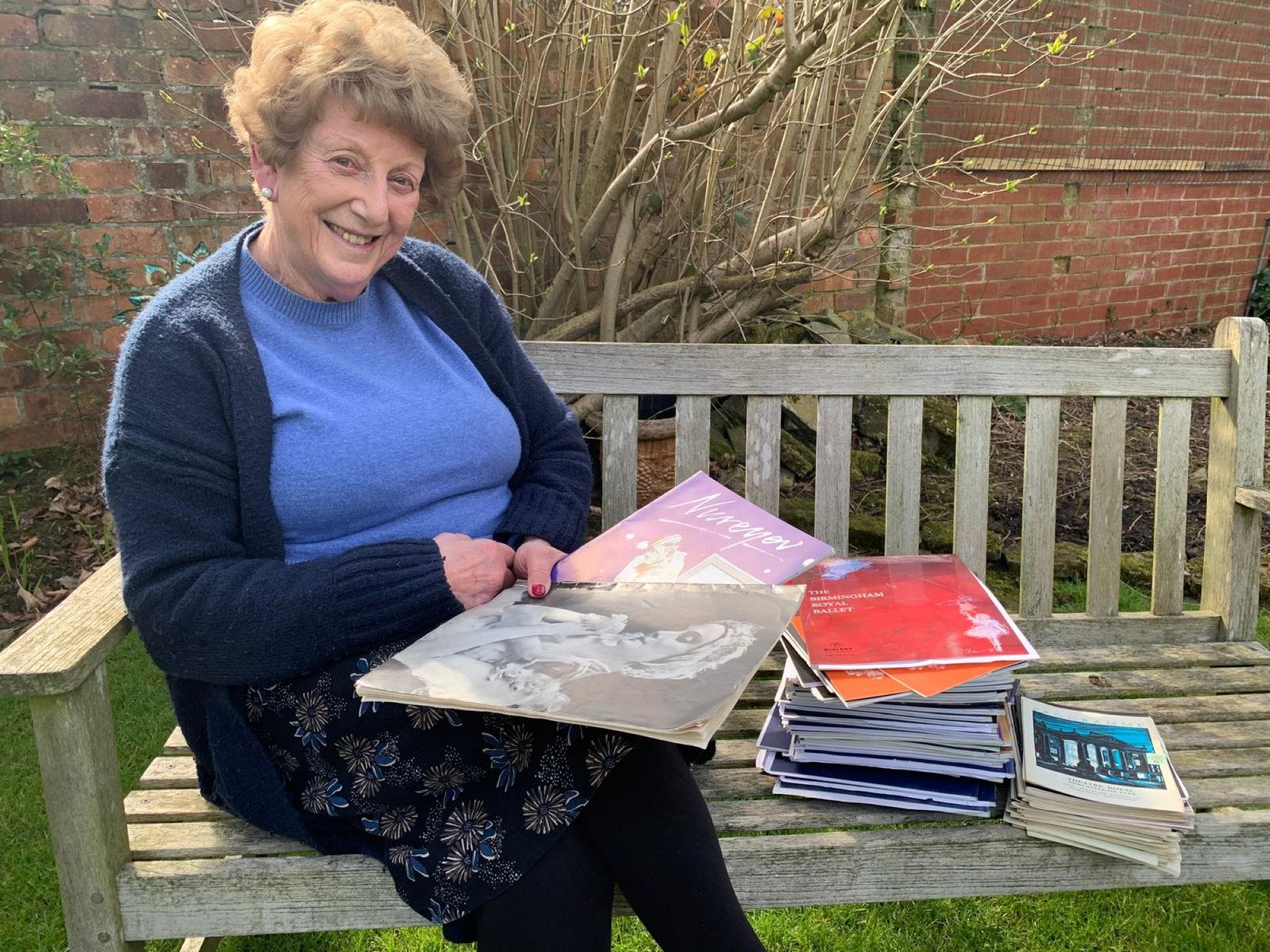
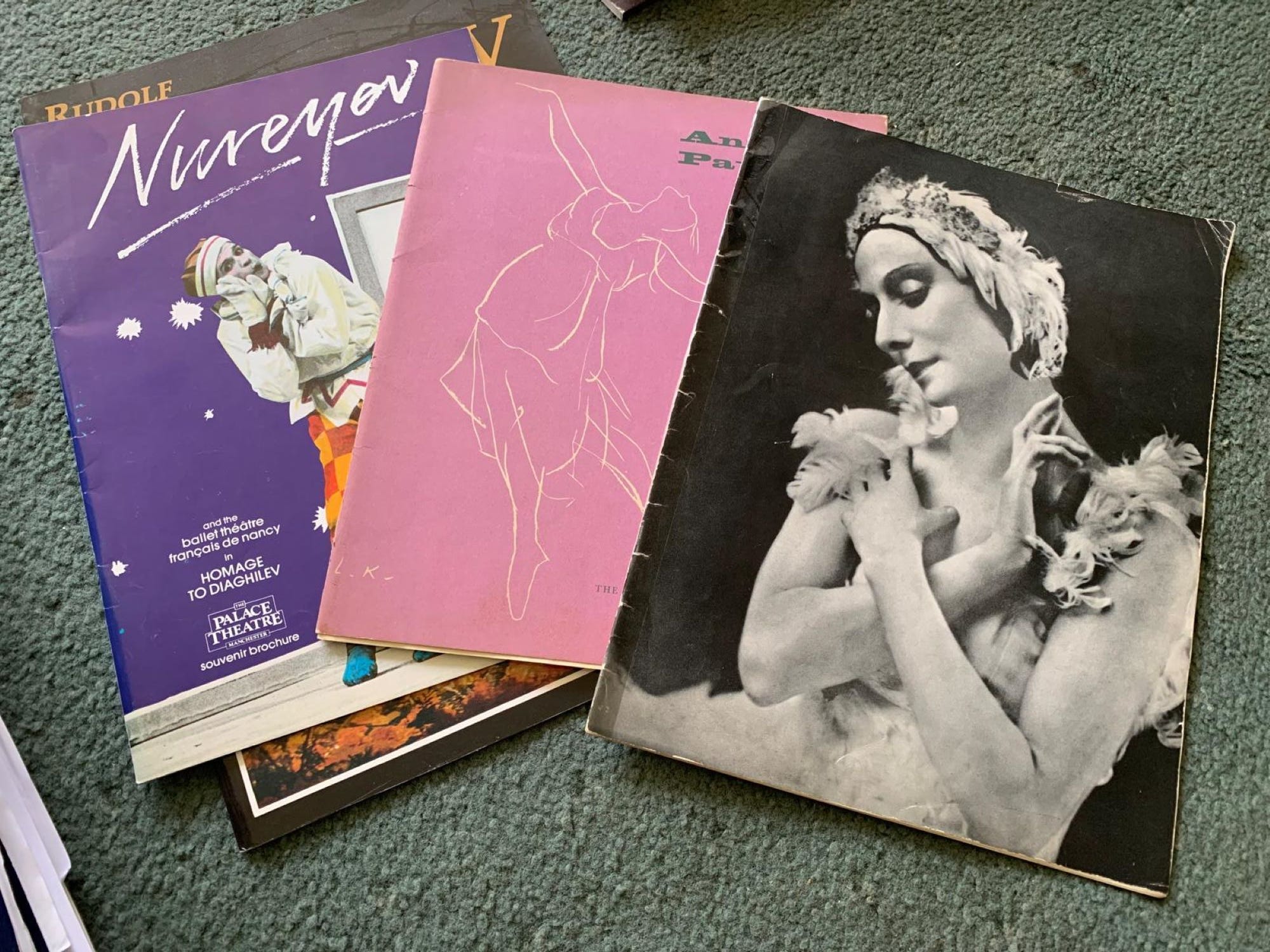
Hundreds of theatre programmes lie in piles across Barbara Peacock’s carpeted floor, every one of them recalling a trip to the ballet.
Collected over decades, they’re a fascinating mix of the exotic and the mundane.
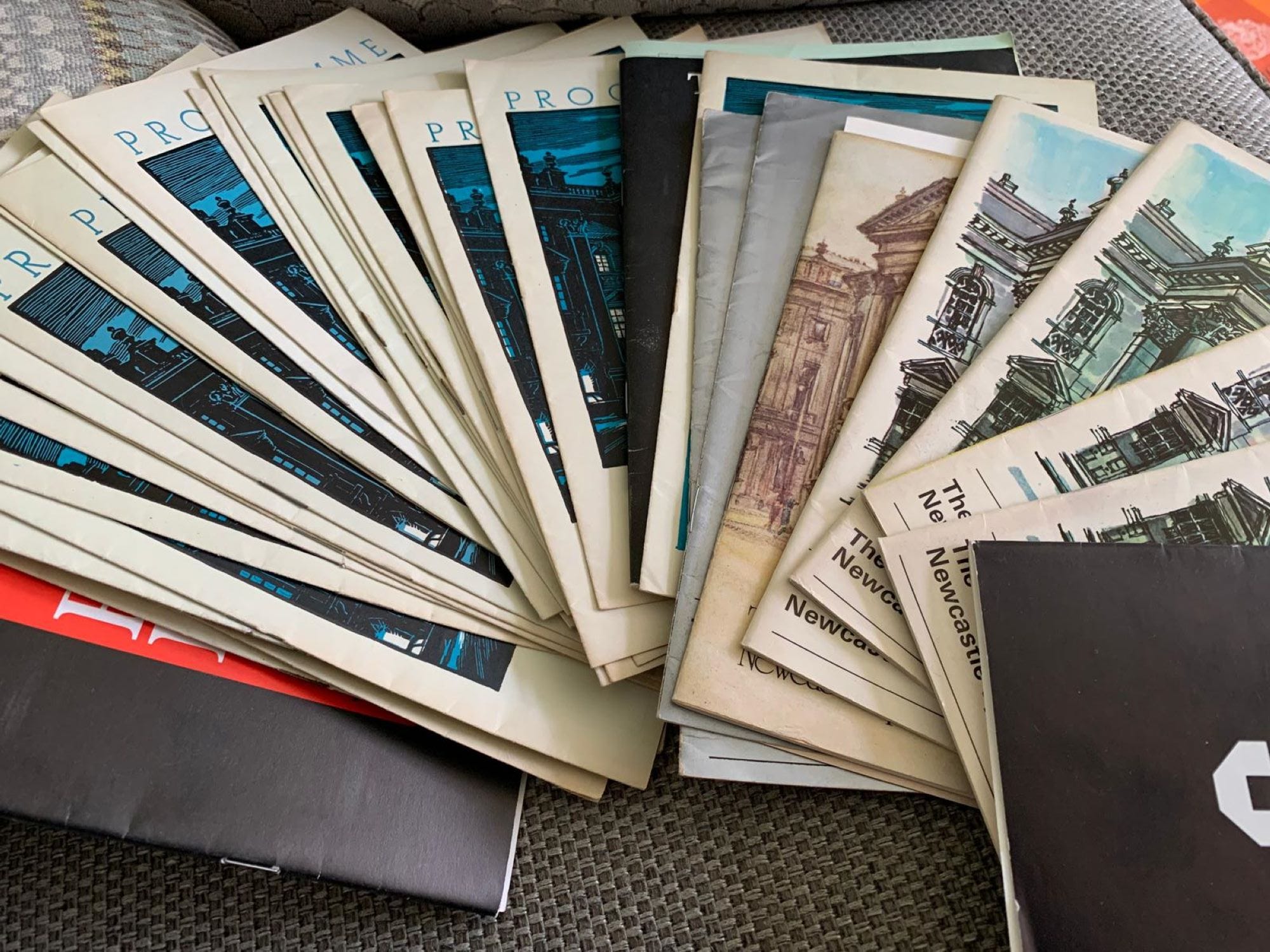
Here’s the Sunderland Empire with details of a performance by The Royal Ballet (founded by Ninette de Valois, directed by Frederick Ashton) opposite ads for M.C. Crosby, decorators’ merchant and Sunderland Electricity Showrooms, enticing theatre-goers with “Unit-Plan central heating from £55”.
Another trumpets an appearance at Newcastle Theatre Royal of London’s Festival Ballet, sandwiched between a plug for the Rossleigh car showroom on Northumberland Road and a reminder that Tilley’s offers a “special pre-theatre dinner”.
While Barbara’s more recent programmes are lavish colour souvenirs, the earliest, wafer thin and printed in black and white, seem designed to be ephemeral.
Even without them, Barbara has clear recall of some of the most memorable performances she has seen, often by ballerinas with exotic names.
“I’ve seen Alicia Markova, Violette Elvin, Svetlana Beriosova, Nadia Nerina. You might not have heard of them but they were the big dancers of their day,” she says.
Then there was the “amazing” Margot Fonteyn.
“She must have been one of the first dancers I saw. I still remember her in The Firebird because she wore a red tutu and when she came on she stood for a while in the spotlight. You just knew she was a star.”
A less happy experience was an ill-fated “farewell tour” by Fonteyn’s celebrated dancing partner Rudolf Nureyev which brought him to Sunderland in 1991.
“I’d seen him once before but this time he was very ill. It was a disaster really. Very disappointing.”
Barbara is a balletomane – a word you don’t hear often nowadays but meaning a true fan of the ballet – and is concerned that the biggest companies don’t seem to be coming to the North East as often as they did.
Recently she has been sending letters to air her concern, typically going right to the top.
She was pleased to receive a reply from Carlos Acosta, director of Birmingham Royal Ballet, who thanked her for her kind words.
“BRB has a long-standing relationship with Sunderland of which we are extremely proud, and we are fortunate to have a very loyal following there and we perform at Sunderland Empire as often as we can,” he wrote.
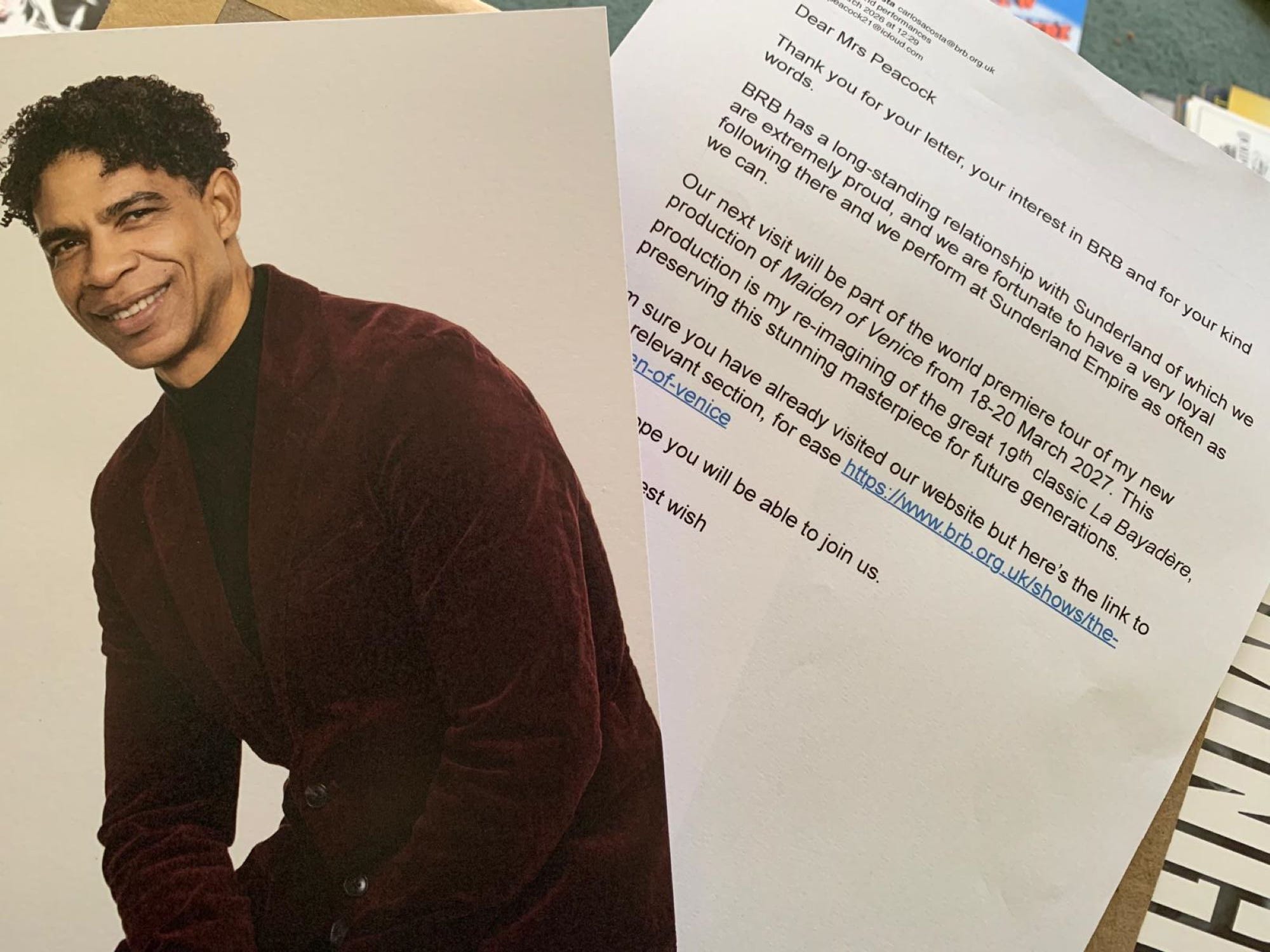
But Barbara will have to wait until next March to see the company perform Maiden of Venice, Acosta’s “re-imagining” of the 19th Century classic, La Bayadère.
Barbara is still awaiting a reply from Acosta’s opposite number at The Royal Ballet, or indeed from Lisa Nandy, although she appreciates the Culture Secretary might have a lot on her plate.
“The Royal Ballet used to come to the Theatre Royal. I can prove it because I’ve got the programmes. And Birmingham Royal Ballet came regularly to Sunderland in March and October.
“I used to go twice every time they came, and I know they’re coming in March next year but it doesn’t seem much for an area like this.”
In March 1989, the year before it relocated to the West Midlands to become Birmingham Royal Ballet, the Sadler’s Wells Royal Ballet gave eight performances at Sunderland Empire, twice as many as are scheduled for 2027.
The answer to the big question is almost certainly to do with funding. The arts in this country aren’t lavishly endowed, costs are rising and touring tends to be low hanging fruit when it comes to cuts.
Scottish Ballet brought The Nutcracker to the Theatre Royal in February 2025 but isn’t coming south of the border this year. It is, though, taking new ballet Mary, Queen of Scots – “generously supported” by a private foundation in California – to America in June.
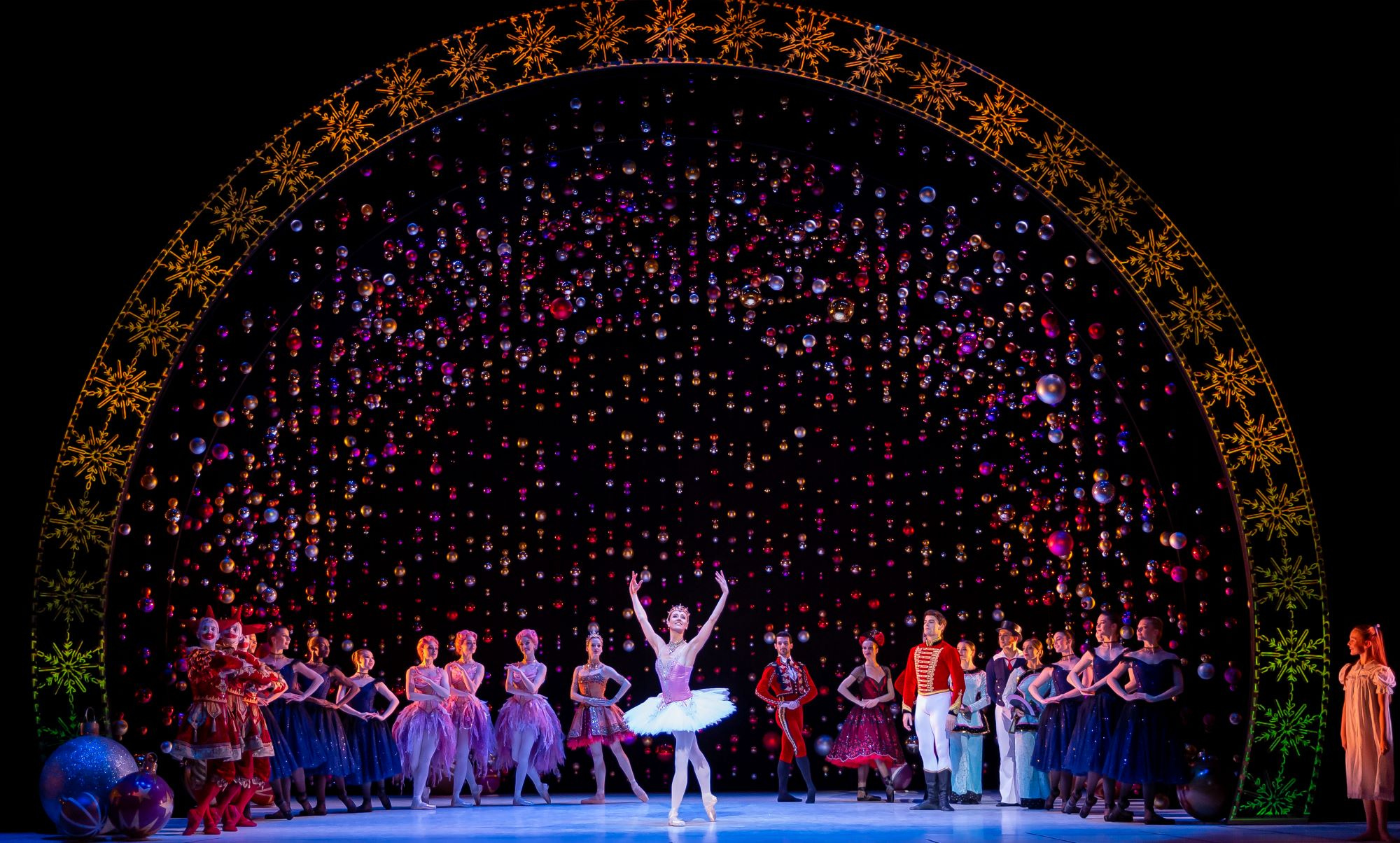
“They used to come here regularly,” says Barbara.
“I’ve got a programme with my daughter’s name in it because she was a mouse in a performance of The Nutcracker. There it is – January 1988: Deborah Peacock.
“I went to every performance that week. And we went to see it together when they came last year, although it had changed.”
Ballet has been a thread through Barbara’s life since childhood.
“Opera does nothing for me at all, but in ballet everything comes together, the movement, the storyline, the music,” she explains.
“I went to ballet lessons from the age of six because I just loved it. It was what I wanted to do.”
She continued with lessons as an adult in the North East, only giving up when bringing up four children and work (her last job was running Newcastle’s unit for young teenage mums) got in the way.
Barbara grew up in Abingdon (her father was a scientist at the Atomic Energy Research Establishment at nearby Harwell) and went to school in Oxford which is where she met her lifelong friend Miriam Margolyes – not, says Barbara, a fellow ballet fan but they were classmates and hit it off.
Barbara saw her first ballet in Oxford, at the New Theatre, but also took trips to London where she saw the famous Bolshoi Ballet on its first UK visit (she still has the programme, of course).
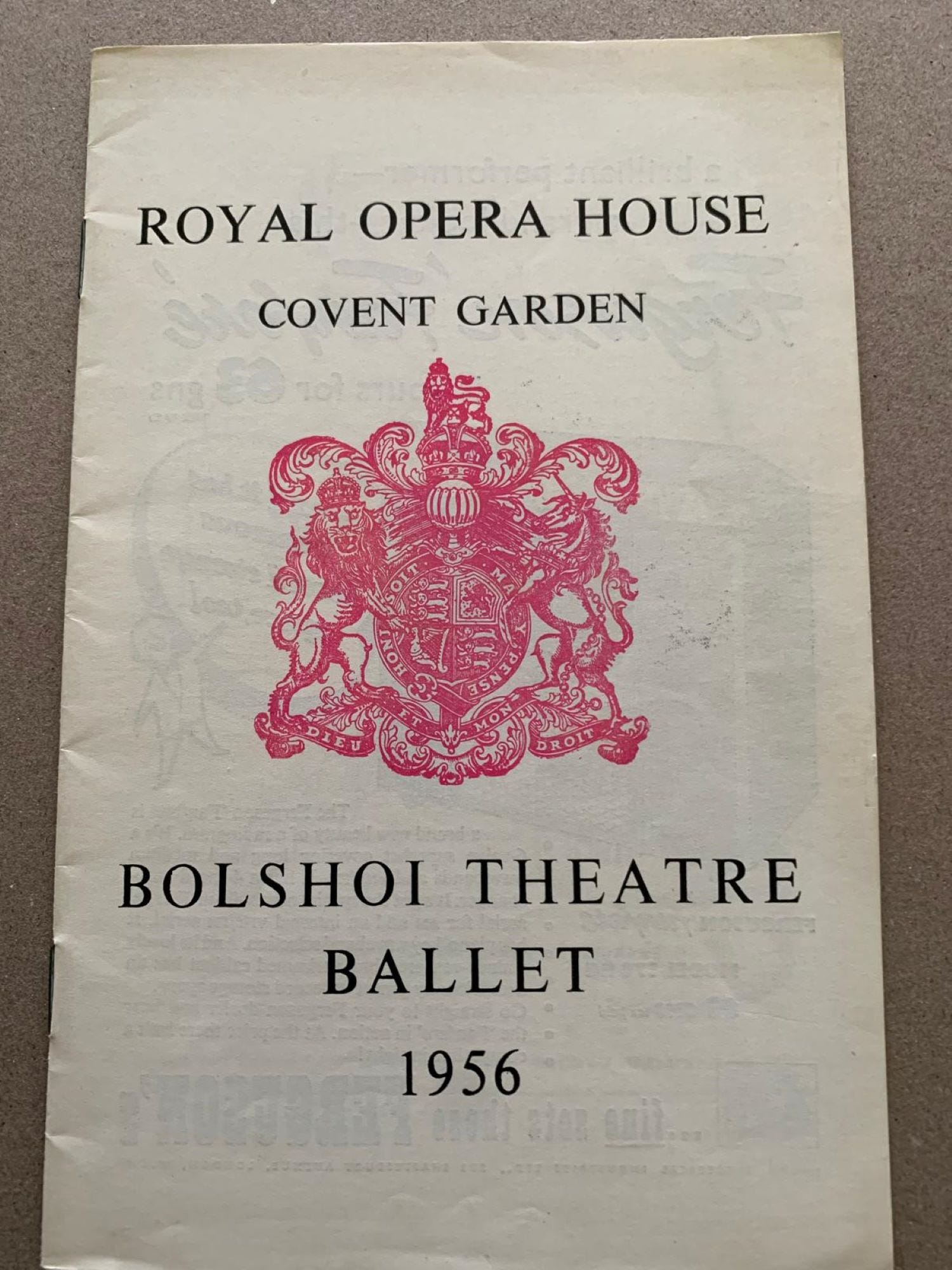
“They were absolutely fantastic. They did two ballets, I think, but I chose Romeo and Juliet because I wanted to see a dancer called Galina Ulanova and I knew that was one of her main roles.
“But they wouldn’t tell you when she was dancing and in the end it was a different dancer I saw, Raisa Struchkova, but she was fabulous. Getting tickets was difficult but it was worth it.
“It was much bigger and grander than anything people had seen before.”
When Barbara came to the North East to study at Durham University, she went to see all the ballet she could – and she says there was quite a lot of it in those days.
She has also been to Russia, which is where her grandparents came from, visiting first in 1964 and then in 1991 when she saw the Bolshoi perform Romeo and Juliet at the Kremlin.
One thing she’s never forgotten was the interval queue for ice-cream, which was long because at the head of it was a woman in a headscarf weighing out each portion with a set of scales.
It was meticulously fair, she smiles, except many people waiting didn’t get served because the interval ended.
Another striking performance, in London again, was to commemorate Russian ballerina Anna Pavlova 25 years after her death in 1931.
“They played The Dying Swan, which Pavlova danced more than 4,000 times, with just a cellist on stage and a spotlight that moved around an empty stage. Nobody danced. It was fabulous.”
Sitting in front of Barbara, soaking up the atmosphere, was Dame Ninette de Valois.
Back in February, film actor Timothée Chalamet controversially (as it turned out) said he didn’t want to be “working in ballet, or opera, or things where it’s like, ‘Hey, keep this thing alive, even though, like, no one cares about this any more’.”
It was an off-the-cuff remark which he subsequently rowed back on but that “Hey, keep this thing alive” seems pertinent in the light of Barbara’s concerns.
The rudiments of classical ballet are still taught across the region, with hundreds of little girls (it is mostly girls, Billy Elliots still thin on the ground in real life) attending regular classes.
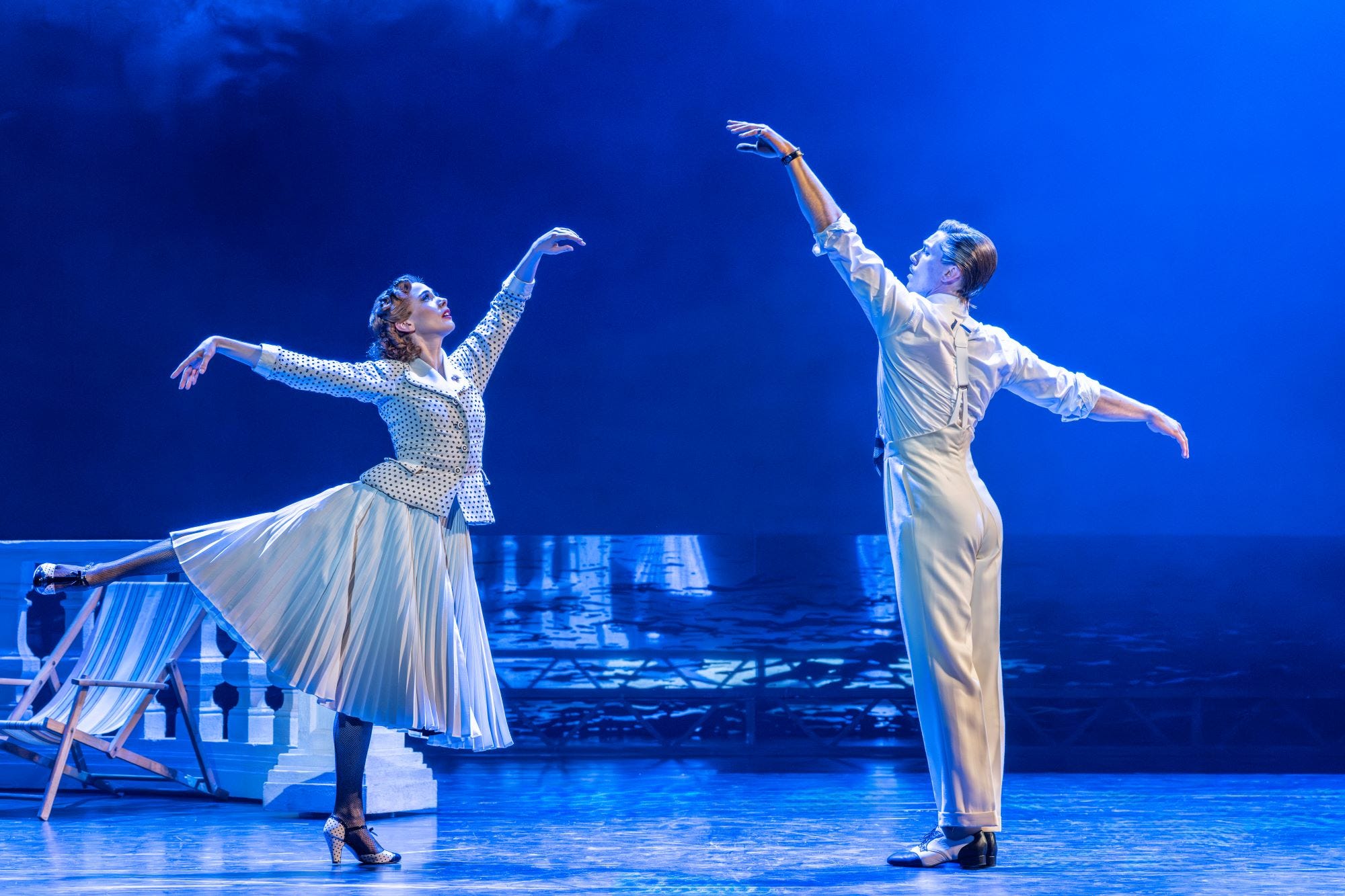
And patently there is a passion for dance. Matthew Bourne’s productions come regularly to the Theatre Royal with The Red Shoes (on there until the end of the week) evoking the world reflected in those early programmes Barbara has lovingly retained at her Jesmond home.
Cinema screenings of ballet are one way the big companies reach out, compensating for an inability to tour. Barbara has seen The Nutcracker and Giselle at the Tyneside Cinema but wasn’t wholly satisfied.
“You could see what they called live ballet. Well, yes, it was happening live in London but what you missed was the atmosphere of the theatre, the excitement of getting the programme… none of that was there.”
Timothée Chalamet’s words provoked a backlash but for the time being those ballet programmes look an increasingly rare commodity – at least in the North East.
Following The Red Shoes at the Theatre Royal this month come the following:
Le Ballets Trockadero, on their 50th anniversary tour as “the world’s foremost gender-skewing comic ballet company, parodying the conventions of romantic and classical dance” (May 26 and 27) and English National Ballet with My First Ballet: Cinderella (May 30 and 31), deemed suitable for children as young as three.
For the true balletomane, though, nothing much
Perhaps Barbara’s persuasive letter writing will bear fruit.

In the meantime, she does have tickets for something else. Friend Miriam’s Full English – possibly as far from ballet as it’s possible to be - is the attraction at Sunderland Empire on September 30, although young children would appear not to be the target audience.
“Expect memories & mammaries, Arsenal, politics, filth, and absolutely everything in between,” advises the website billing.
Don’t expect Tchaikovsky or men in tights.