


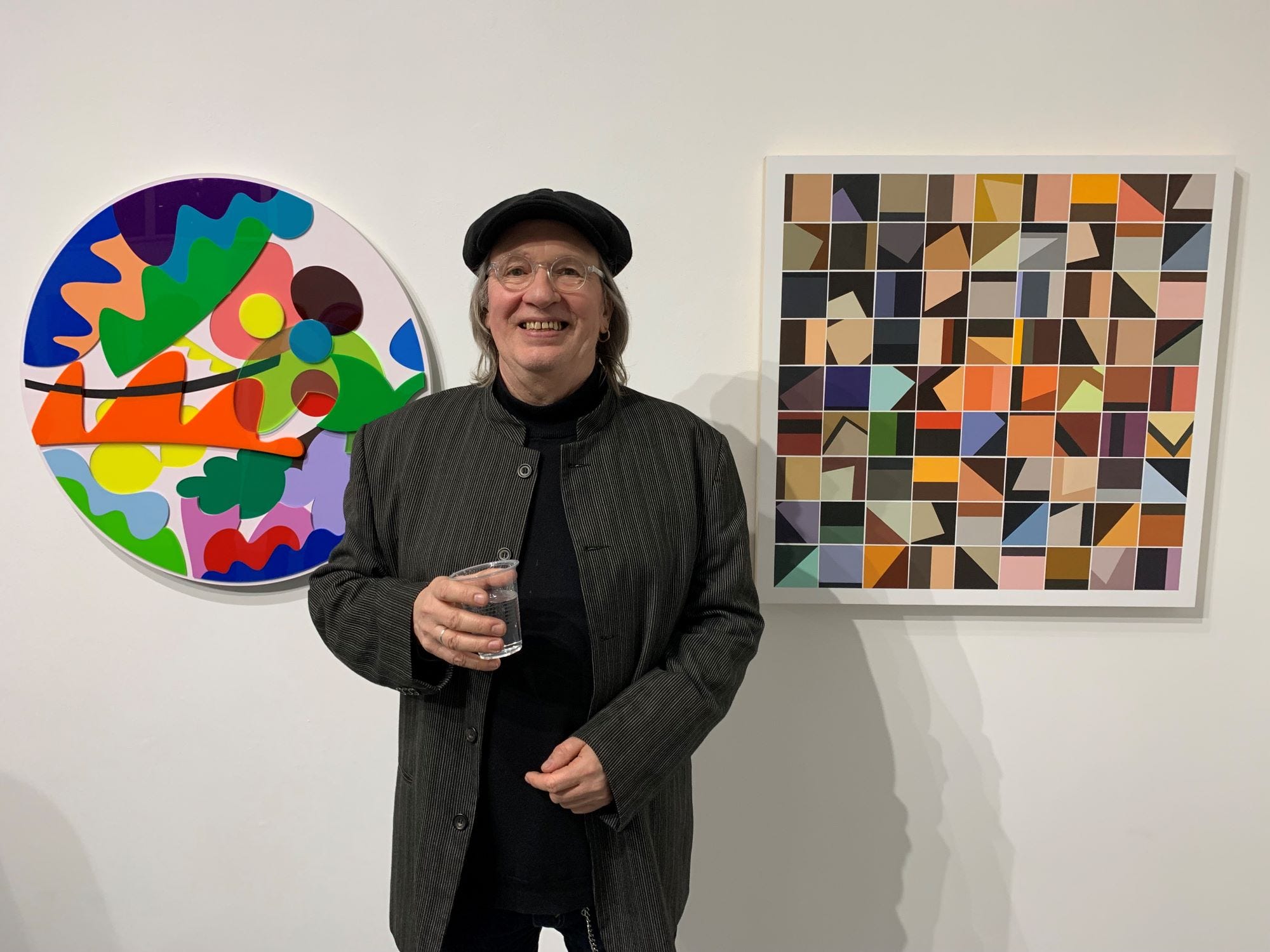
There are many reasons for optimism being in short supply these days but an antidote to gloom can be found in Mike Collier’s latest exhibition, Moments of Wonder.
At least one of the artworks on the walls came out of adversity, cancer treatment which confined him to barracks for a long period.
You can imagine it was tough for someone who has found inspiration outdoors, evidenced by the work he has done over many years colourfully visualising birdsong.
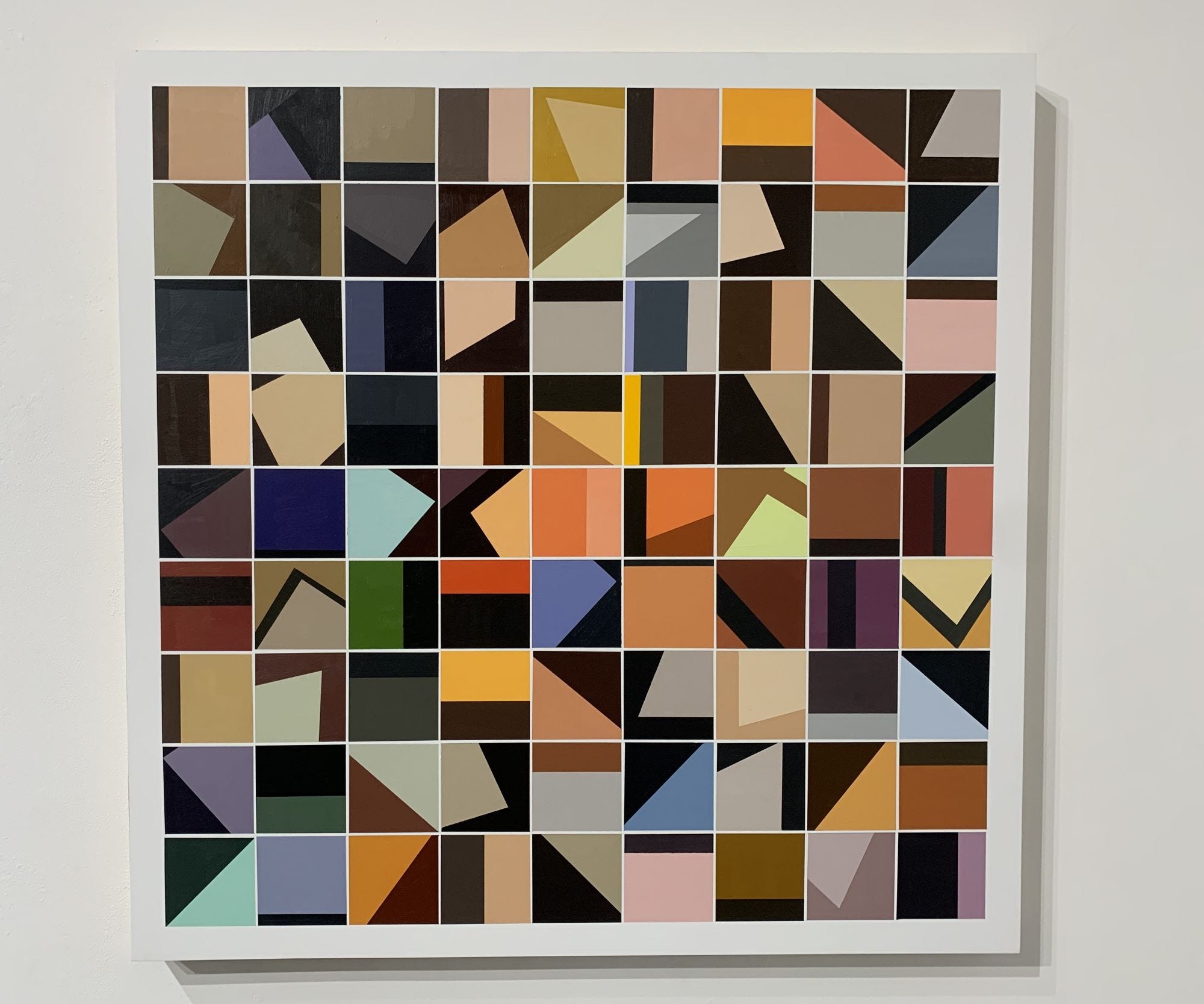
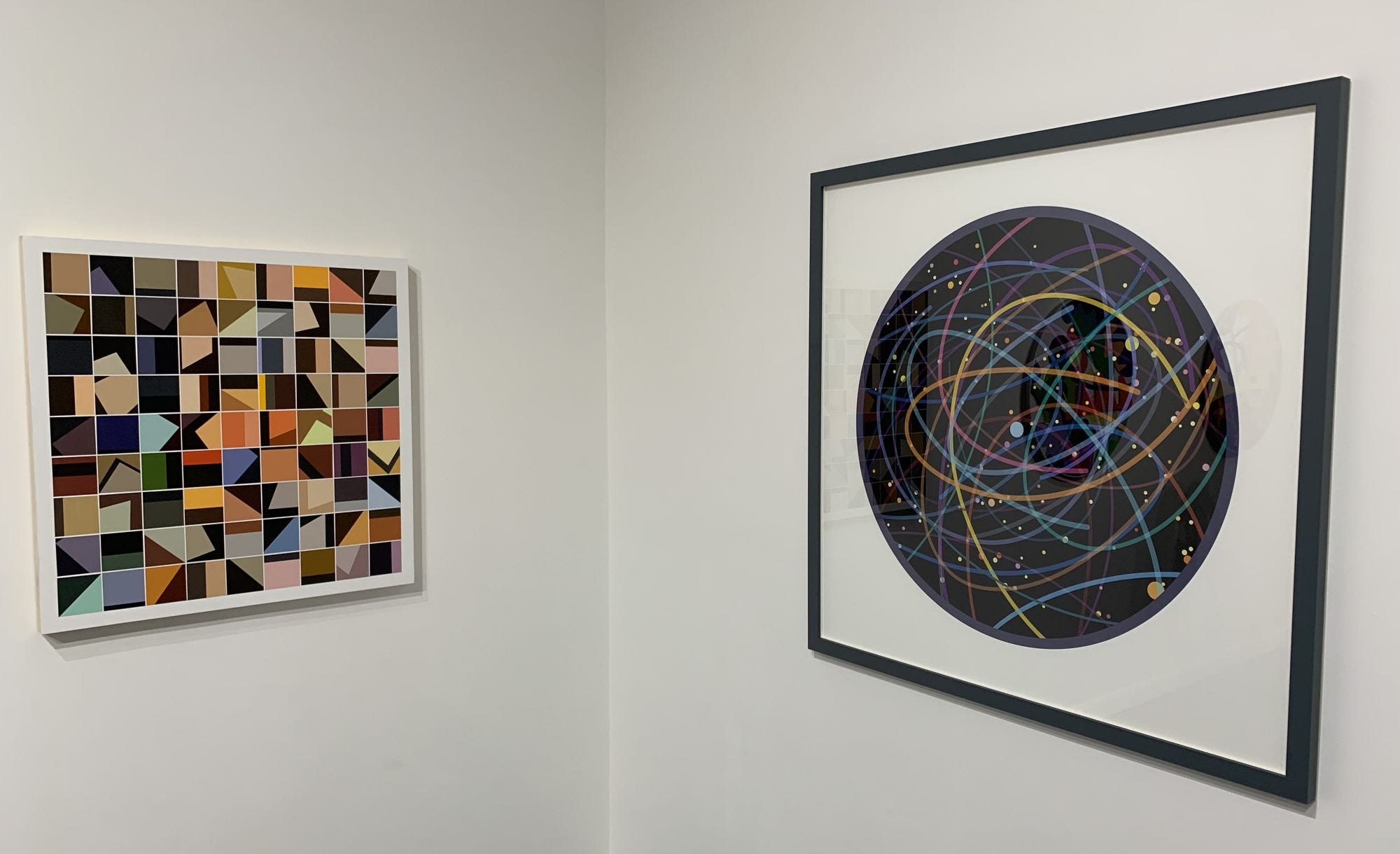
But the abstract pictures which began as iPhone photos of shadows falling on surfaces at home are typical of an artistic sensibility not easily thwarted.
Mike says he became a little obsessed with this photographic shadow catching and revelled in the process of building the images into the visually appealing grids we now see.
At the opening of his exhibition at Vane, the gallery you’ll find in the Orbis Community (official address – 65 High Street, Gateshead; more helpful address – near the Gateshead end of the Tyne Bridge; postcode – NE8 2AP), we’re catching up.
I first got to know Mike, fine art graduate of Goldsmiths, University of London, when he moved to Newcastle in 1985 to run an arts development strategy at the Laing Art Gallery.
During his time there he oversaw some memorable contemporary art interventions, gingering up a collection heavy on gilt frames with some of the chutzpah characteristic of London’s ICA (Institute of Contemporary Arts) where he’d been gallery manager for a time.
It was great for a journalist, generating some startling headlines and oodles of faux outrage.
Mike initiated the Tyne International Exhibition of Contemporary Art, planned as a triple bill.
The first, in 1990, featuring the work of some 60 artists, was a vital and much photographed element of the Gateshead Garden Festival.
At the close of play, the artworks were auctioned, one (Ray Smith’s Red Army) going to Lord Peter Palumbo, chairman of the Arts Council, who had it installed in the grounds of his country estate in Pennsylvania, and another (a textual neon affair) to writer and publisher Peter Mortimer who startled neighbours by fixing it to the roof of his terraced house in Cullercoats.
One artwork, Mike recalls, featuring water drawn from near the Sellafield nuclear processing site, had had to be withdrawn from the exhibition on health and safety grounds after failing a Geiger counter test.
Those were the days!
The second edition, three years later, saw 12 artists given the run of the concrete CWS building on Newcastle Quayside, then an architecturally interesting empty relic, and the Tyne Bridge towers.
He remembers the first job at the former was clearing layers of pigeon poo. This I do remember, wondering what the heck anyone would ever be able to do with this listed former Co-op warehouse resembling a multi-storey carpark… and stinking!
It is now the Malmaison hotel.
The third and final edition coincided with Visual Arts Year UK in 1996 (of which more in another article), for which Mike was commissioned to write an official appraisal after the dust had settled.
Fast forward to now and Mike, after a long academic career, is emeritus professor of art and ecology, University of Sunderland – but still making art, as he has always done.
The new exhibition, he says, “is a culmination of work I’ve been doing over the last three or four years”.
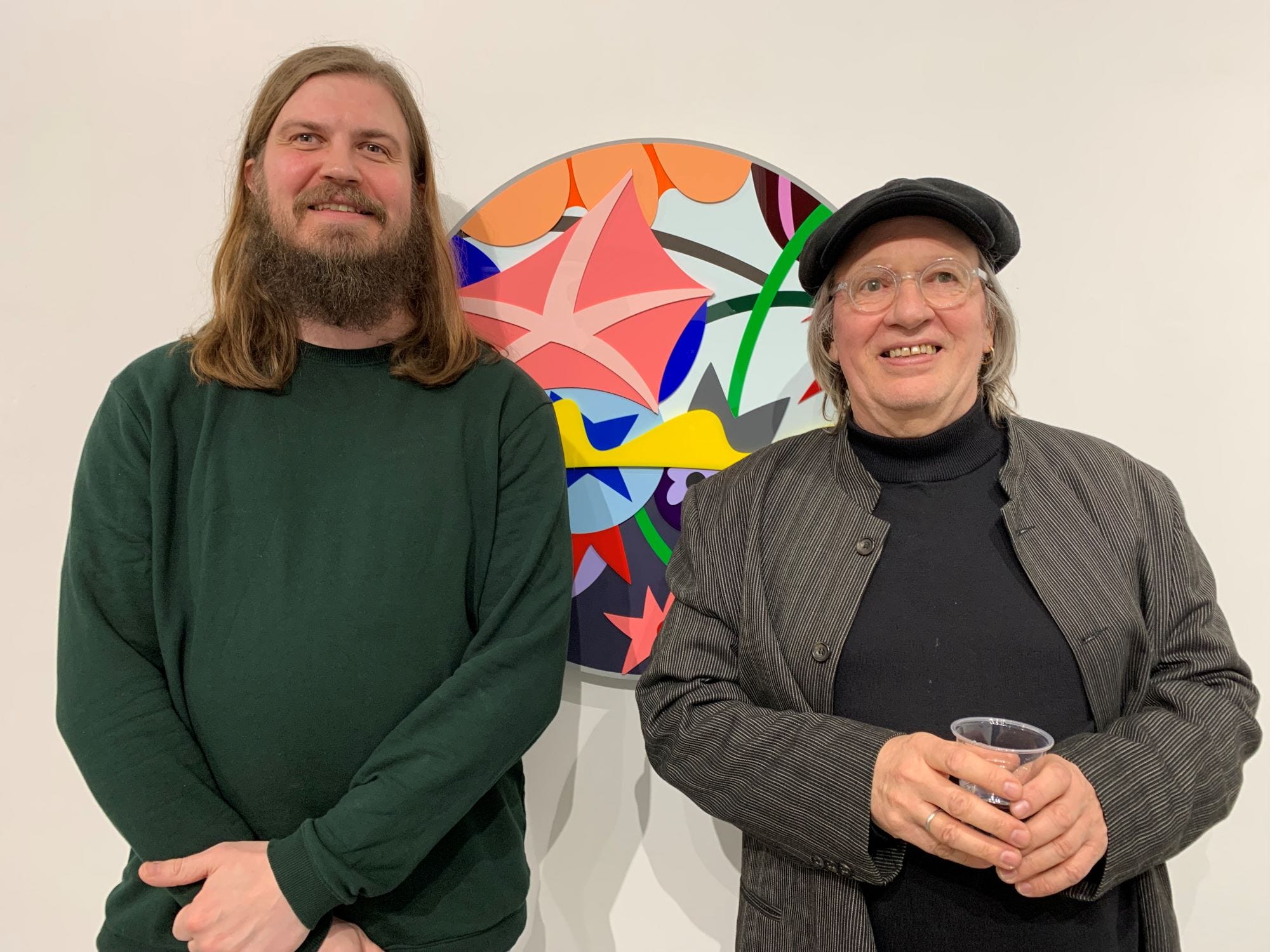
But it is also, he stresses, a collaboration, notably with Tom Jordan, a former student now studying for an MA as one of the last cohort passing through Sunderland’s National Glass Centre before it shuts in July.
“Collaboration is really important to me and I learn so much from it.
“It means I can push boundaries technically in a way I couldn’t on my own, and through engagement with others you get ideas bouncing across. It also means I can work with younger people.”
Birds, having been a lifelong source of inspiration, feature in the exhibition, although obliquely in works reflecting their sound and behaviour.
“When we were kids we used to go on walks along the Sefton coast (Merseyside), from Waterloo to Southport,” Mike recalls.
“My mother was interested in natural history.”
He went on to become an artist and his brother, Tim, whom he calls “one of my sternest critics”, a nature photographer.
Birdsong, and particularly the dawn chorus, have long fascinated Mike. For a decade he has collaborated with natural history sound recordist Geoff Sample on a series of pieces based on birdsong recordings.
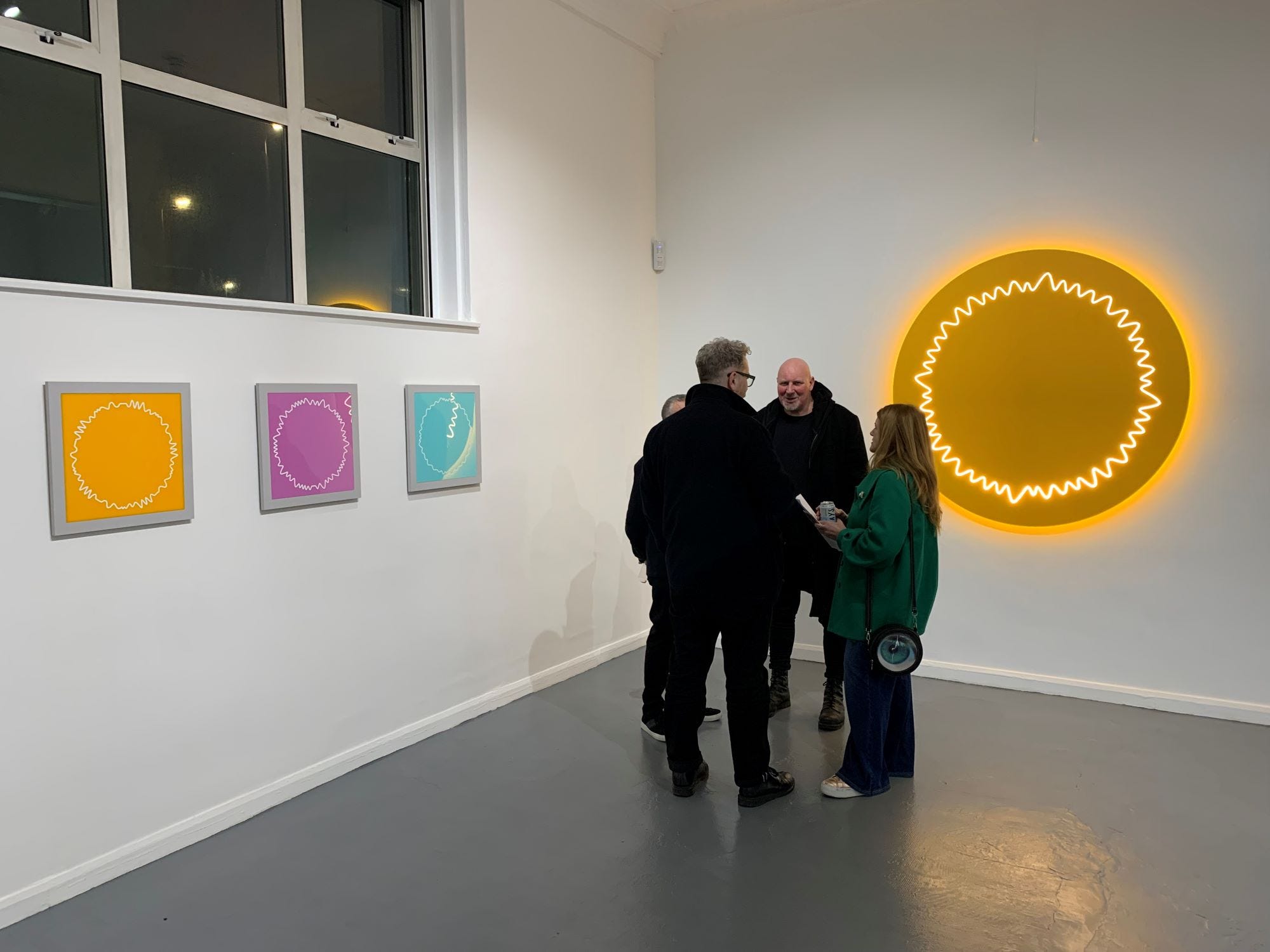
One of the latest you can see here, a large circular LED work called The Song of the Wren (variations on a theme no. 7).
Tim and Geoff keep him right, he says, in his attempts to express the sounds of nature visually, even though it could be argued it’s a matter of personal perception.
Genuine concern for the environment underpins his work.
“We’re losing songbirds but I think the best way to illustrate my concern is that when my grandfather was alive, he would have heard a dawn chorus that featured more birds, and that was normal for him.
“When my dad first heard it, it would have diminished but he would have considered that normal. What I hear I think is normal but when my grandson hears it in years to come, he’ll think that’s normal.
“This kind of depreciation is the most dangerous thing.”
What might the dawn chorus have sounded like in the days before sound recording and the Industrial Revolution? It’s a startling thought.
The bird theme also surfaces in two large prints, The Valley of Love; the Nightingale and The Valley of Wonderment, which were inspired by a 12th Century Sufi poem, The Canticle of the Birds, imagining a quest undertaken by a group of birds through seven valleys.
It was commissioned last year by the Aga Khan Centre Gallery in London, as were the six small circular pieces influenced by classical Persian poetry expressing wonder at the beauty of the night sky.
The gallery’s curator is Esen Salma Kaya who previously ran the visual arts programme at the Customs House, South Shields, so knows the North East art scene well.
Also evident to exhibition visitors in Gateshead will be the inspiration gleaned from Japan, which Mike has visited several times since his first trip as part of a university student recruitment drive.
Last summer he undertook an artist residency on Sado Island, off the country’s west coast, and spent much of his time in the isolated village of Kitaushima at its northern tip.
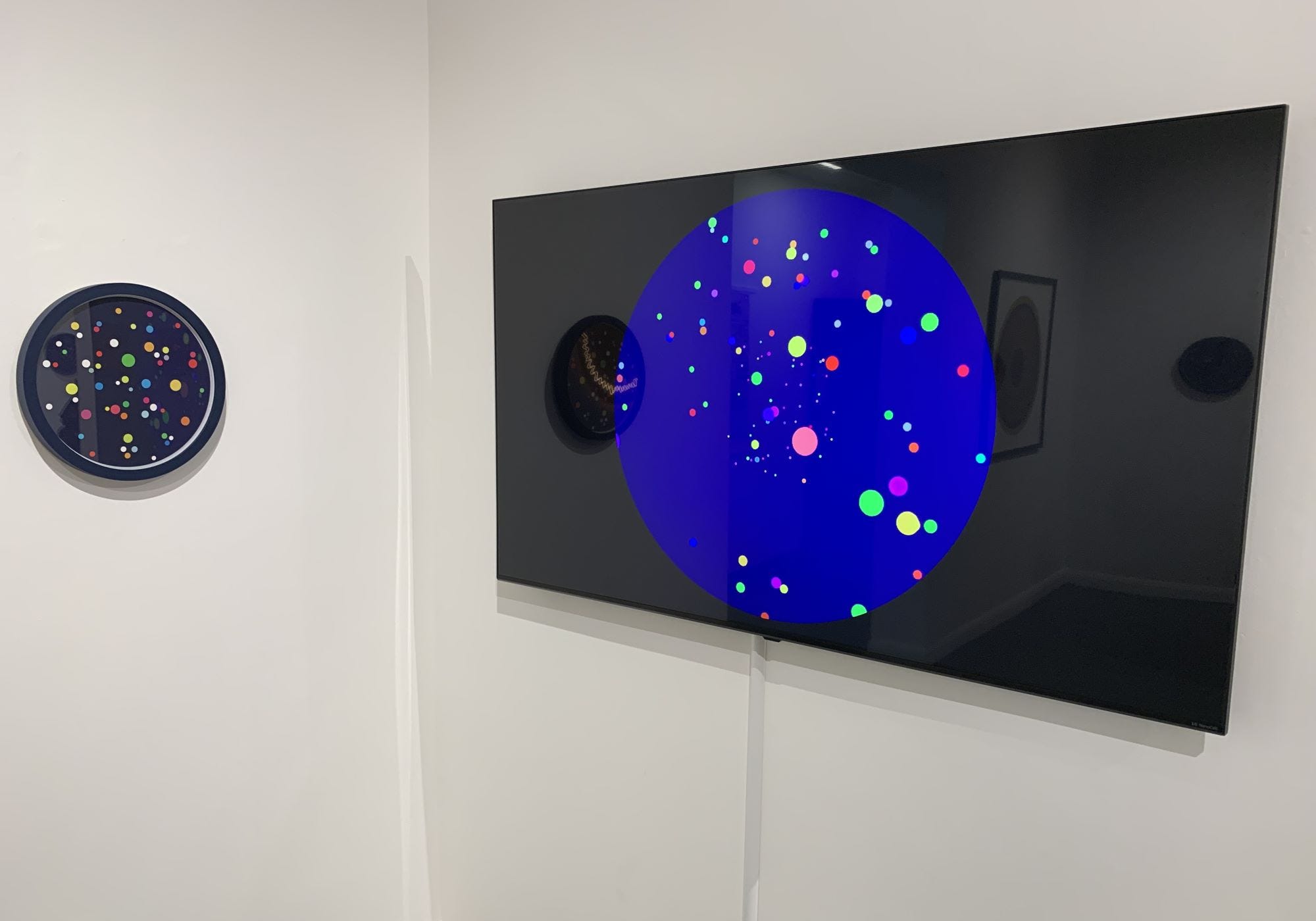
Marvelling at the aerobatics of the abundant Pacific swift, he sought to capture it in art with a series of digital sketches called A Swoop of Swifts, one of which features in the exhibition and is reproduced on the cover of a souvenir essay by Rebecca Morrill.
He also took the opportunity to continue his shadow catching in an empty inn, or ryokan, where the light at different times of day fell on surfaces including wood, paper and fabric.
This time, having arranged the photos, he painted them, capturing, as he saw it, the ghosts of past ryokan visitors. See it here: Memories of Kitaushima Ryokan Shadows, Sado Island.
Talk of serious illness is rarely uplifting but after treatment to thwart a possible recurrence of prostate cancer, Mike seems full of beans, bursting with ideas and looking forward to re-visiting Japan.
While reflecting on that sobering reminder of mortality, he suddenly stops himself.
“I’ve had lots of comments from people saying they find this a joyous, happy exhibition and I’m very happy with that.
“The reason it’s called Moments of Wonder is that I, like everyone else, listen to the news every day and get depressed.
“But I also feel there’s a lot to celebrate and a lot of joy in living. I think we have to find moments of wonder as a kind of counter to the awful things that are happening.
“Does that sound naïve? I hope not.”
I think not.
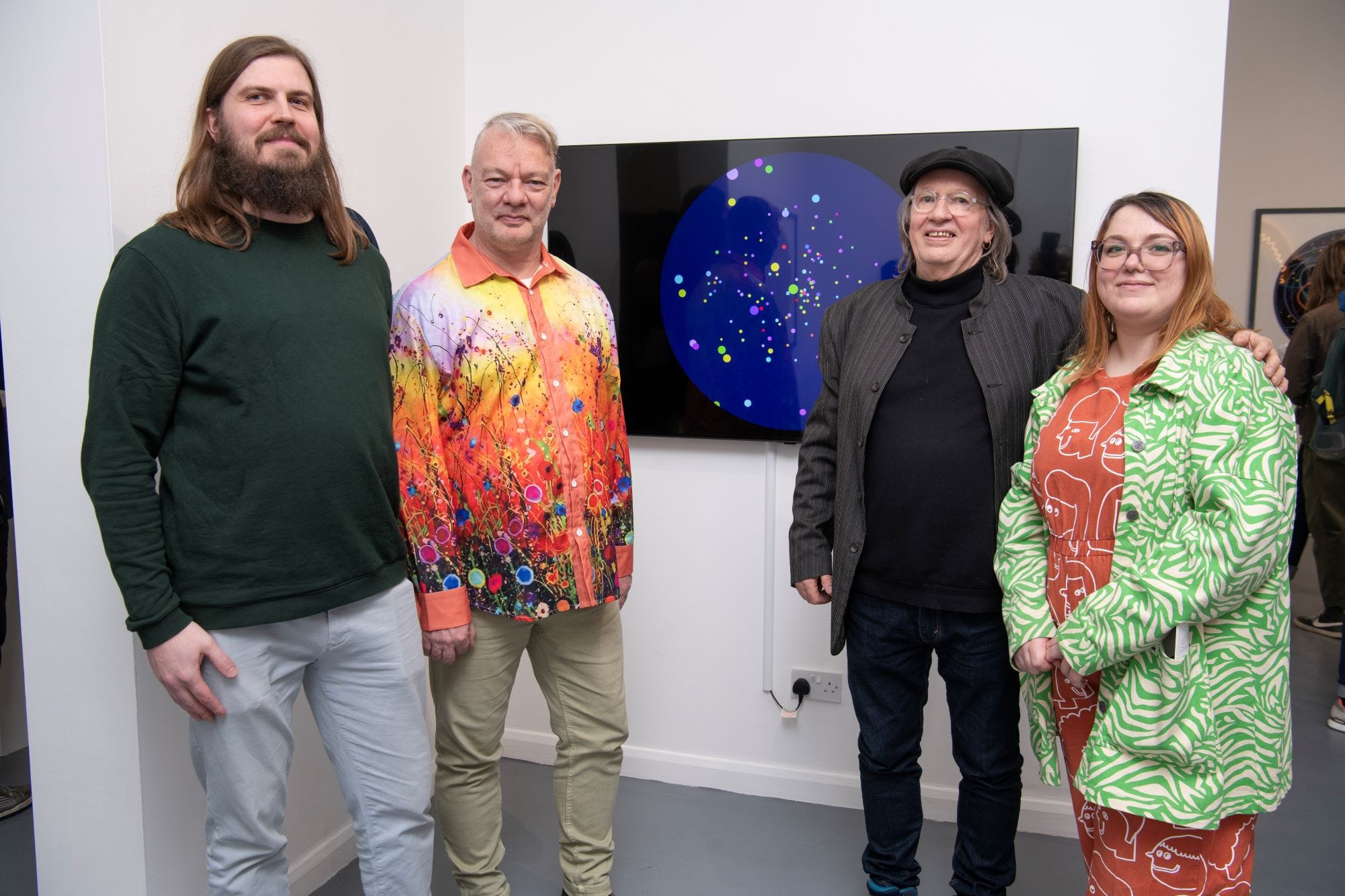
These exhibits, which also include a new animation to accompany a musical work by Dutch composer Richard Rijnvos, can be appreciated for the thinking behind them, for the intricacies of construction or simply because they’re really jolly.
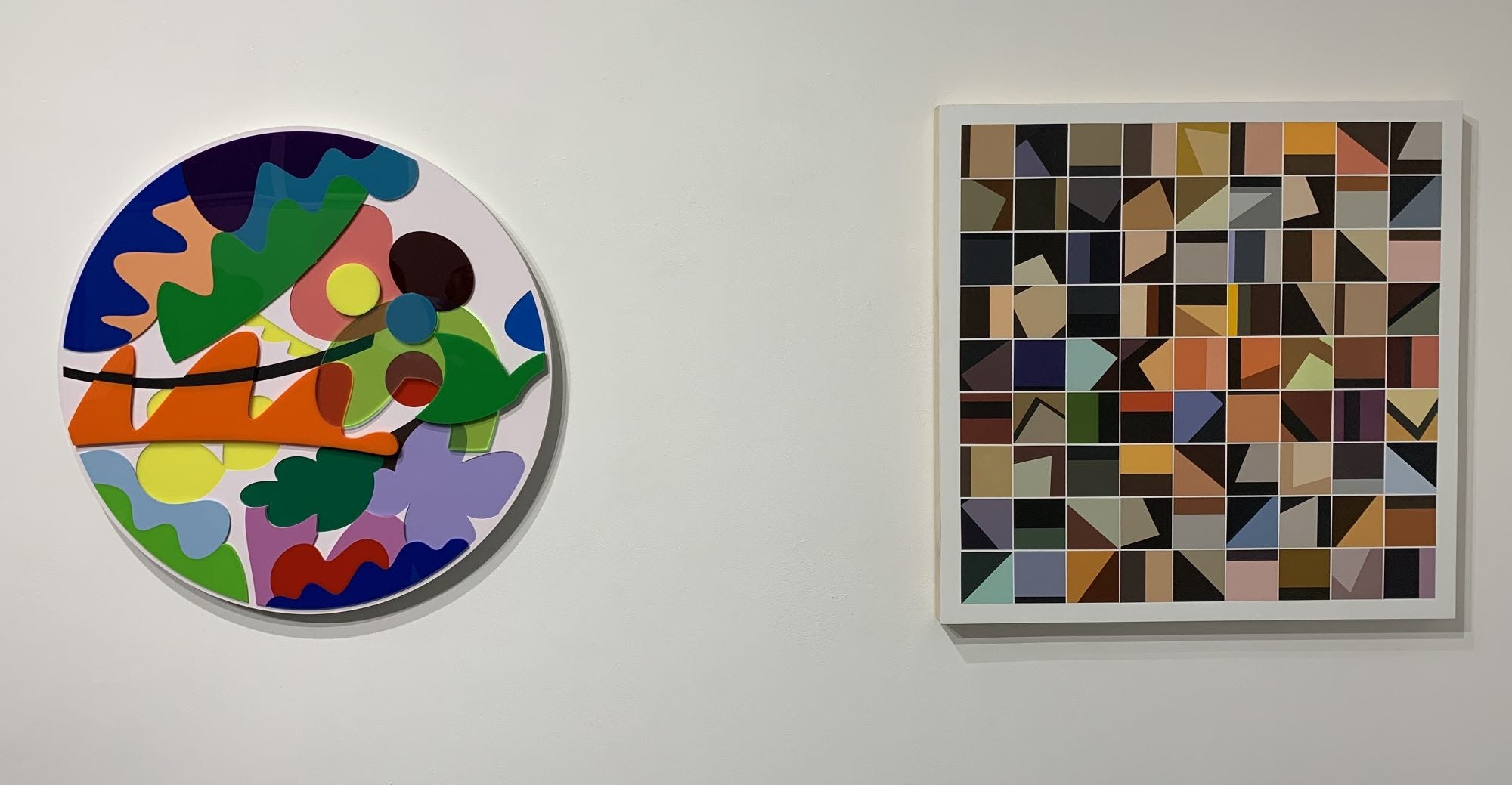
And none more so than the two circular collages reflecting, in one case, the Tree of Life from Persian mythology and, in the other, the glorious plants and flowers of Sado Island.
Neither of these, says Mike candidly, he would have been able to realise without the technical know-how of Tom Jordan on whom the optimistic nature of the exhibition appears to rubbed off.
As one of the last students to pass through the National Glass Centre on the University of Sunderland’s once much vaunted glass and ceramics course, he confesses: “There have been periods when I’ve felt quite upset, particularly when you see your friends losing their jobs.
“You’ve got decades of experience in all kinds of specialist techniques within the building and that sort of knowledge under one roof you’re probably not going to get again.
“It’s a sad loss really but once over the initial shock I think all you can do is make the best of the situation.
“There’s a proposal for a glassworks which is going to take time to get going after the closure but we need to look at it as an opportunity. What can we do now instead of allowing these skills to be lost?
“Artists are very resilient and resourceful. I’ll stick around. I’ve worked with a lot of artists now and while I love working in glass and ceramics, I’ll happily work with other media.”
This is a showcase for what he can do as well as a reminder of Mike Collier’s creative versatility.
Moments of Wonder can be seen at Vane until March 28. Admission is free and the gallery is open Wednesday to Saturday, 12-5pm.