

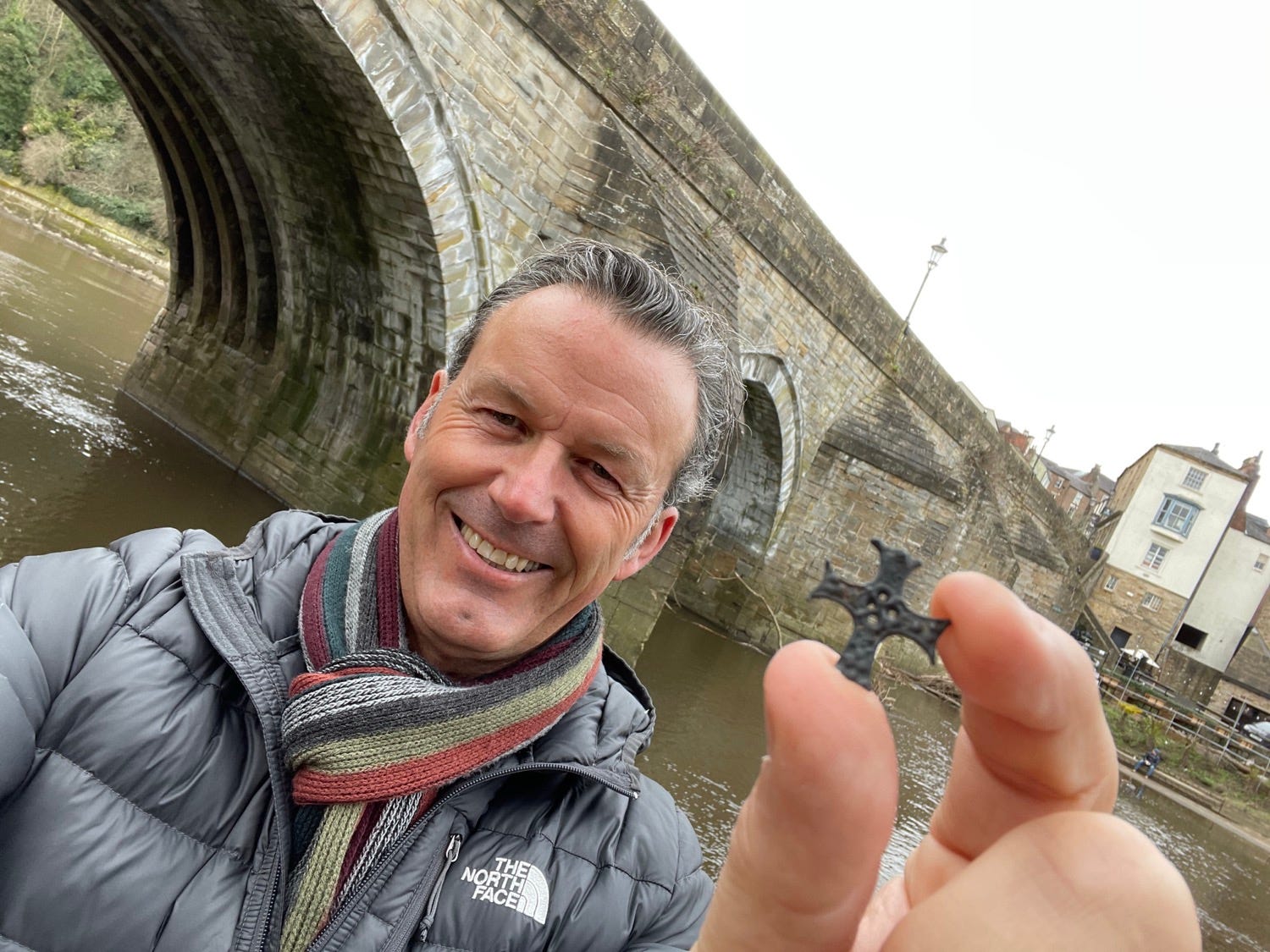
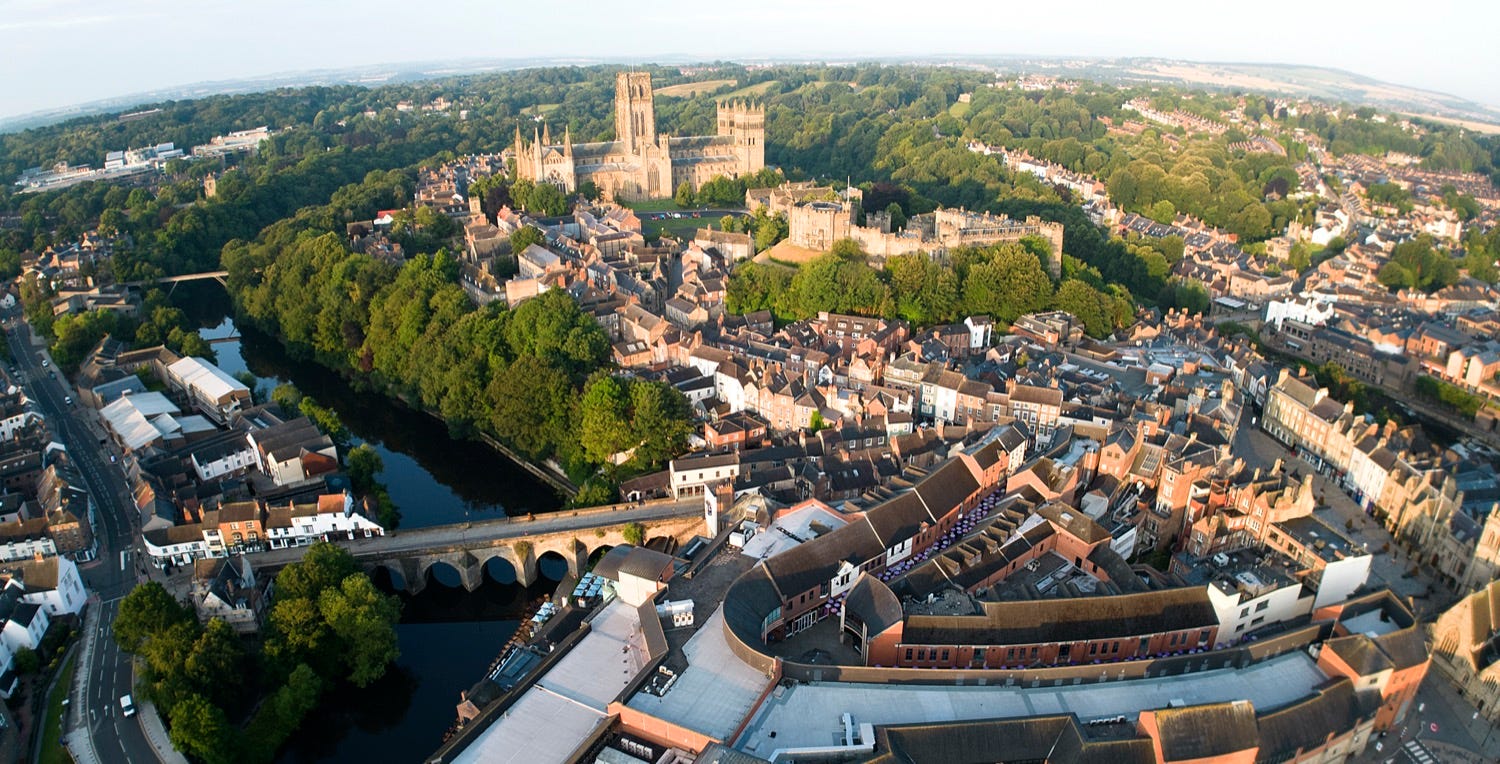
Those who have lived or visited Durham over the centuries have left a legacy in the river which runs through the city.
Underwater archaeologist Gary Bankhead has spent 16 years diving in the Wear to retrieve 14,500 objects from the riverbed.
The huge range of objects from the vicinity of the historic Elvet and Prebends bridges give a glimpse into the everyday lives of the residents and pilgrims in Durham across 700 years.
Now Gary has written a new book on the religious-related finds in what has become known as the Durham River Wear Assemblage – the biggest collection of its type in the North of England.
The book, titled Pilgrim Souvenirs, Devotional and Other Objects of Faith, details his late-medieval to modern period discoveries, including how objects which belonged to Archbishop Michael Ramsey ended up in the river.
Durham became a major pilgrimage destination as the burial place in the cathedral of St Cuthbert and the monk and scholar the Venerable Bede from the Wearmouth-Jarrow monastery.
The overall collection is now housed in Durham University’s Museum of Archaeology on Palace Green.
It includes personal possessions such as dress accessories, writing and reading and domestic equipment covering food preparation and consumption, trade and exchange and textile processing items, leisure pieces, clay tobacco pipes, ceramics, arms and armour, horse trappings, tools and First World War medals.
There are 3,653 coins and trade tokens, 3,052 dress pins, finger rings, pendants, brooches, beads, scissors, combs, musical instruments, toys and whistles.
Evidence of manufacturing, taxing and trade and commercially produced cloth is represented by 364 lead cloth seals – the biggest such group to be found in England outside London.
Most of the items have been found around the 12th-century Elvet Bridge.
Gary, who lives in Pity Me in County Durham, is an honorary fellow in the Department of Archaeology at Durham University.
He says: “The objects vividly illuminate the daily lives of the citizens, artisans, merchants and pilgrims who would have crossed the bridge on a daily basis.
“They offer a unique glimpse into the past, telling stories often overlooked by traditional history.”
The souvenirs acquired by pilgrims include mass-produced lead and pewter objects which would have been attached to clothing, usually a hat, or worn around the neck as proof of a pilgrimage journey or a sign of devotion.
By the 1500s, says Gary, St Cuthbert’s Shrine was “one of the most magnificent monuments in England.”
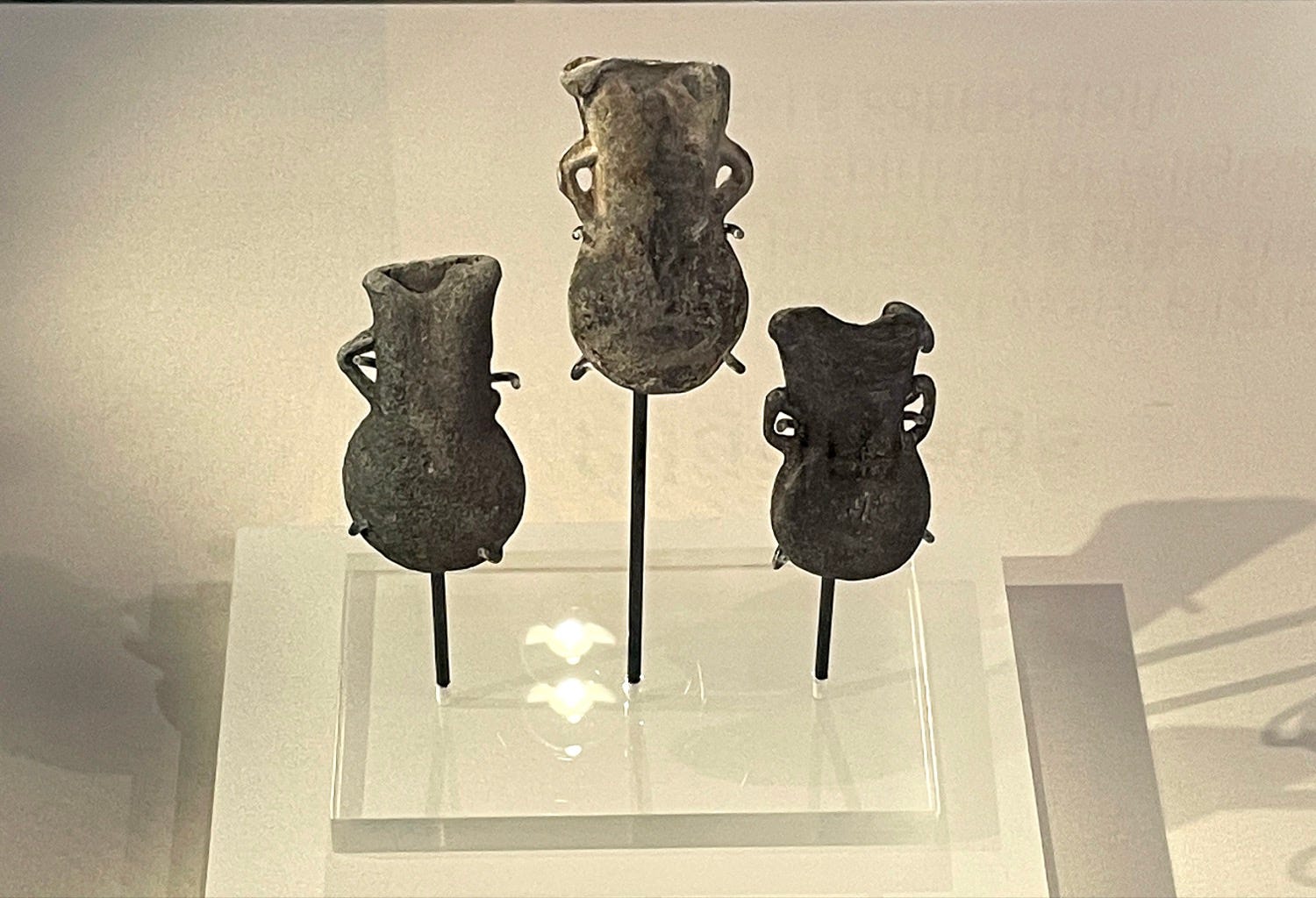
Pilgrim items from the river include small lead ampullae, or flask-shaped bottles to hold oil, holy water, or dust associated with a saint, crucifixes, cross pendants, devotional medals, and two examples of simple replicas of St Cuthbert’s pectoral cross.
Gary also investigates what has been the mystery of the Archbishop of Canterbury hoard found beneath Prebends Bridge, of which he says: “Undoubtedly the most intriguing group of religious artefacts found in the river is the ecclesiastical hoard of gold, silver and base metal objects.”
Between 2007–2009 Gary and brother Trevor, under licence from the Dean and Chapter of Durham Cathedral, recovered 31 objects which had been gifted to Arthur Ramsey, as Archbishop of York and Canterbury, who with wife Joan lived for some time in Durham.
At the age of 35, Ramsey had become professor of divinity at Durham University, and later Bishop of Durham. In 1961 he was appointed as Archbishop of Canterbury.
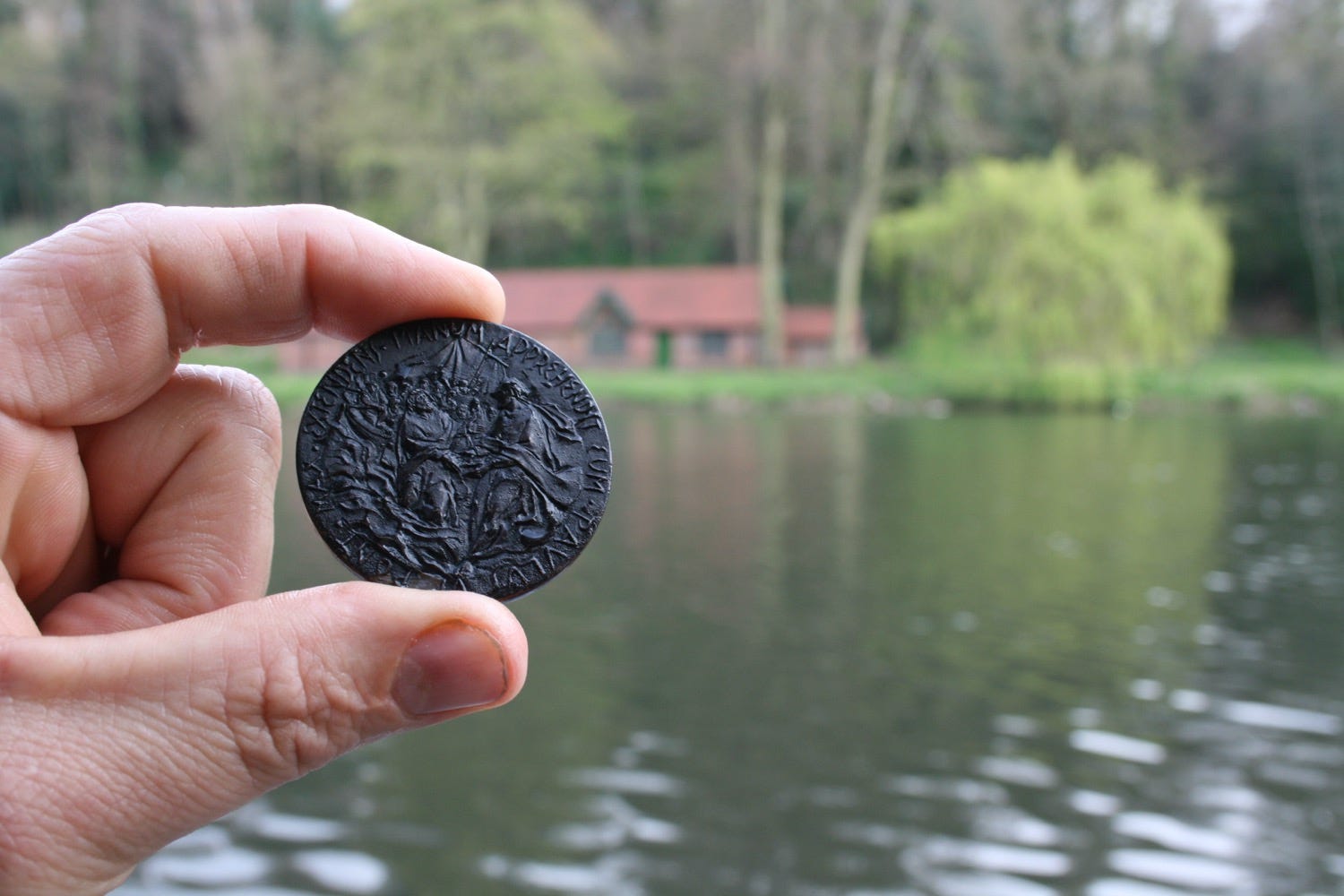
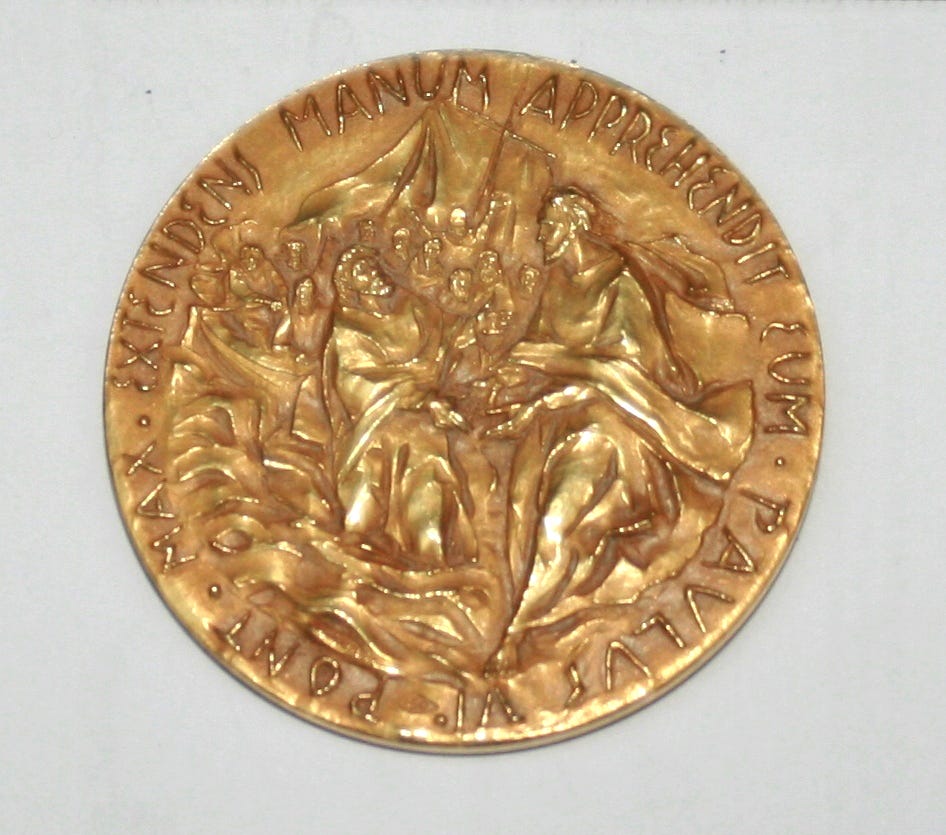
Ramsey had visited India and Russia and among the river finds was a silver trowel, presented to him, which had been used to lay the foundation stone of a church in India, and an eight-sided Russian cross, a silver key, bronze crucifix, gold, silver and bronze Vatican medals, an Elizabeth II medal from her coronation, which Ramsey had attended, and a Silver Jubilee paperweight.
“The question was how gifts presented to Ramsey came to be deposited in the Wear,” says Gary.
The answer, he says, lies in the daily diaries of Audrey Heaton, who was housekeeper to the Ramseys for 22 years.
In addition to the unpublished diaries, there are oral accounts of Audrey’s niece Jenny de Robeck, of conversations with her aunt.
It seemed that Ramsey did not necessarily care for the river items and as they could not be sold or given away, Audrey was asked to dispose of them.
Gary says: “The publication of this book marks a significant milestone in my archaeological career. It brings together years of underwater fieldwork and research beneath Durham’s historic bridges, revealing a unique assemblage of devotional objects.
“I’m extremely grateful to the many individuals who supported this journey, including Durham University archaeology MA students whose contributions helped deepen our understanding of the finds.
“This book is the result of a long and rewarding process - one that has taken several years to come to fruition. It’s a privilege to share the River Wear’s hidden history and the personal expressions of faith uncovered beneath its waters.”
Prof Michael Lewis, head, Portable Antiquities & Treasure, at the British Museum, says: “Gary Bankhead has recovered an impressive number of medieval and later finds - a unique collection of artifacts that shed new light on life in Durham.
“Durham was an important medieval town – the principal see of the Church in northern England – politically and commercially successful. Pilgrims were attracted to Durham Cathedral as the resting place of the 7th-century Cuthbert, Prior, then Bishop, of Lindisfarne, and one of England’s most important saints.
“Aptly, the cathedral also houses the remains of St Bede, a near contemporary of St Cuthbert, famed more for his Ecclesiastical History of the English People than his Life of St Cuthbert. Together, these men marked English history - and that of Durham.
“Whilst we might imagine that many of these items were accidentally lost to the River Wear, perhaps by the tradespeople who sold them on Elvet Bridge, their customers, or people who visited the bridge’s chantry chapels, it could be, as Gary proposes, some were tossed into the river, maybe as offerings for a safe journey onward.
“Purposeful deposition certainly explains an intriguing collection of religious objects in the river connected to Archbishop Ramsey.
“Gary has brought to light all these finds to tell a story of Durham’s religious connections through time. It is truly a fantastic contribution.”
Pilgrim Souvenirs, Devotional and Other Objects of Faith: Late-Medieval to Modern Period Small Finds from the River Wear, Durham. Published by the Architectural and Archaeological Society of Durham and Northumberland with the Museum of Archaeology of Durham University. Hardcover edition via Dive into Durham/Publications £40. Paperback edition on Amazon £29.99.