


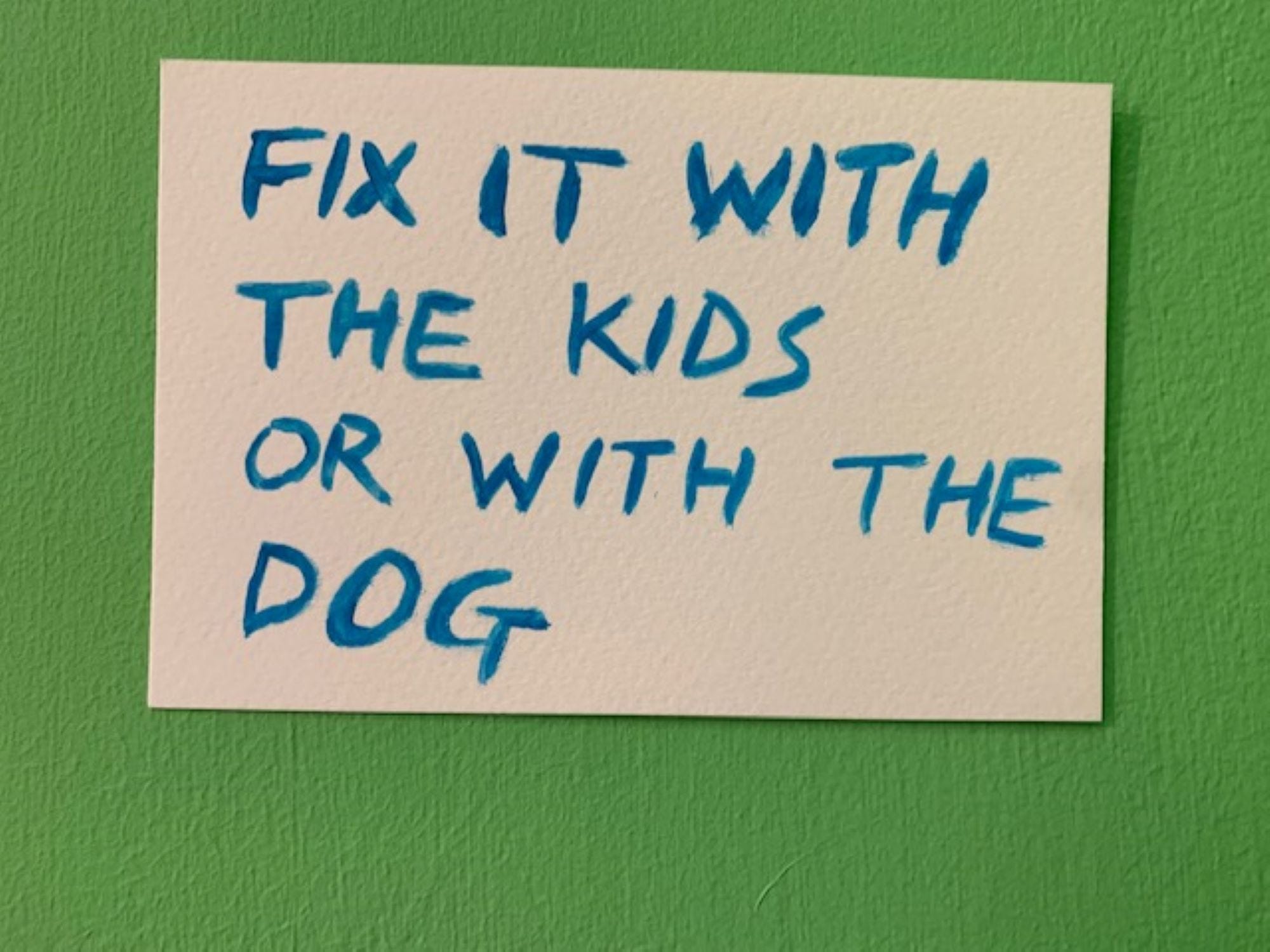
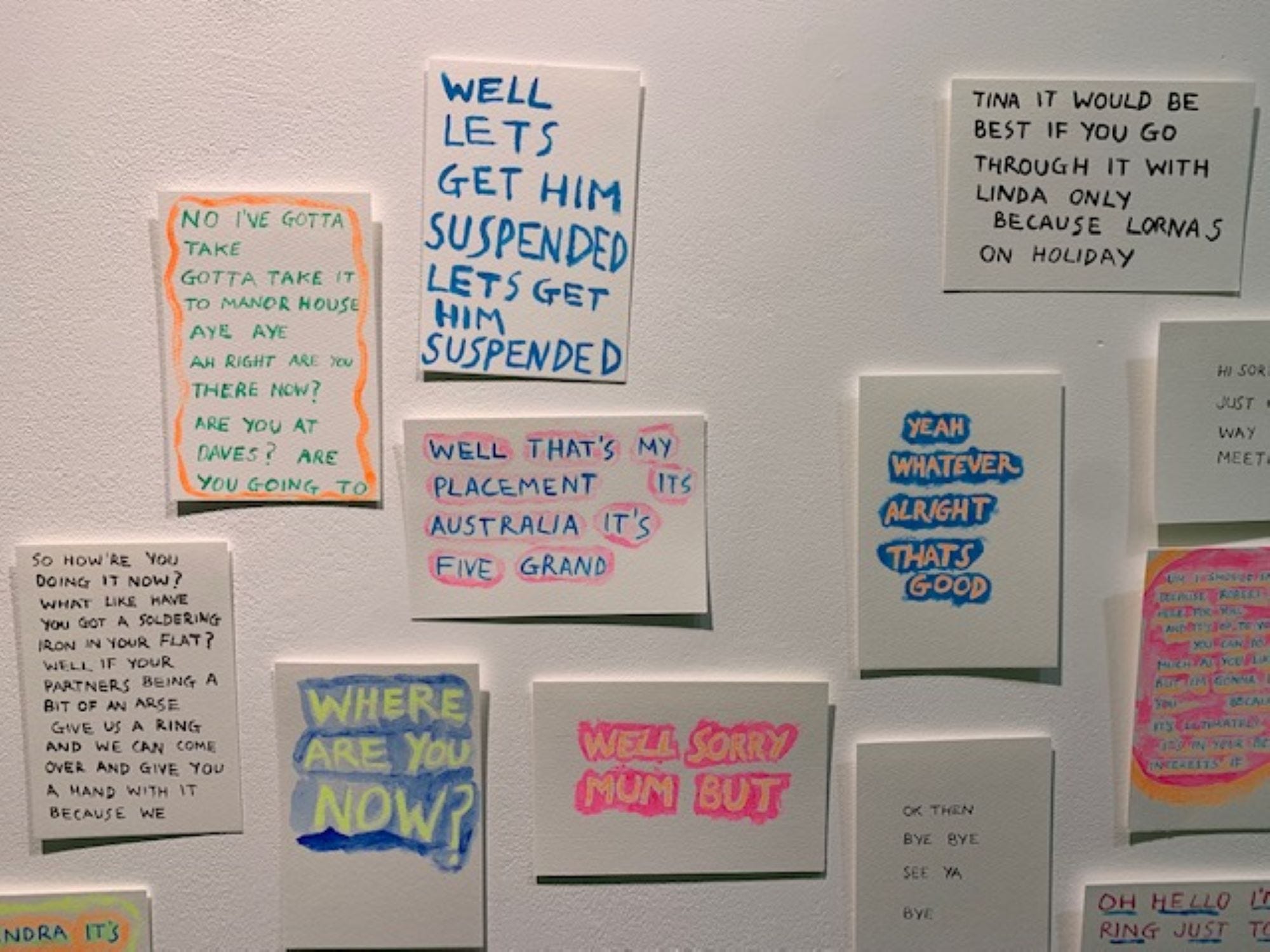
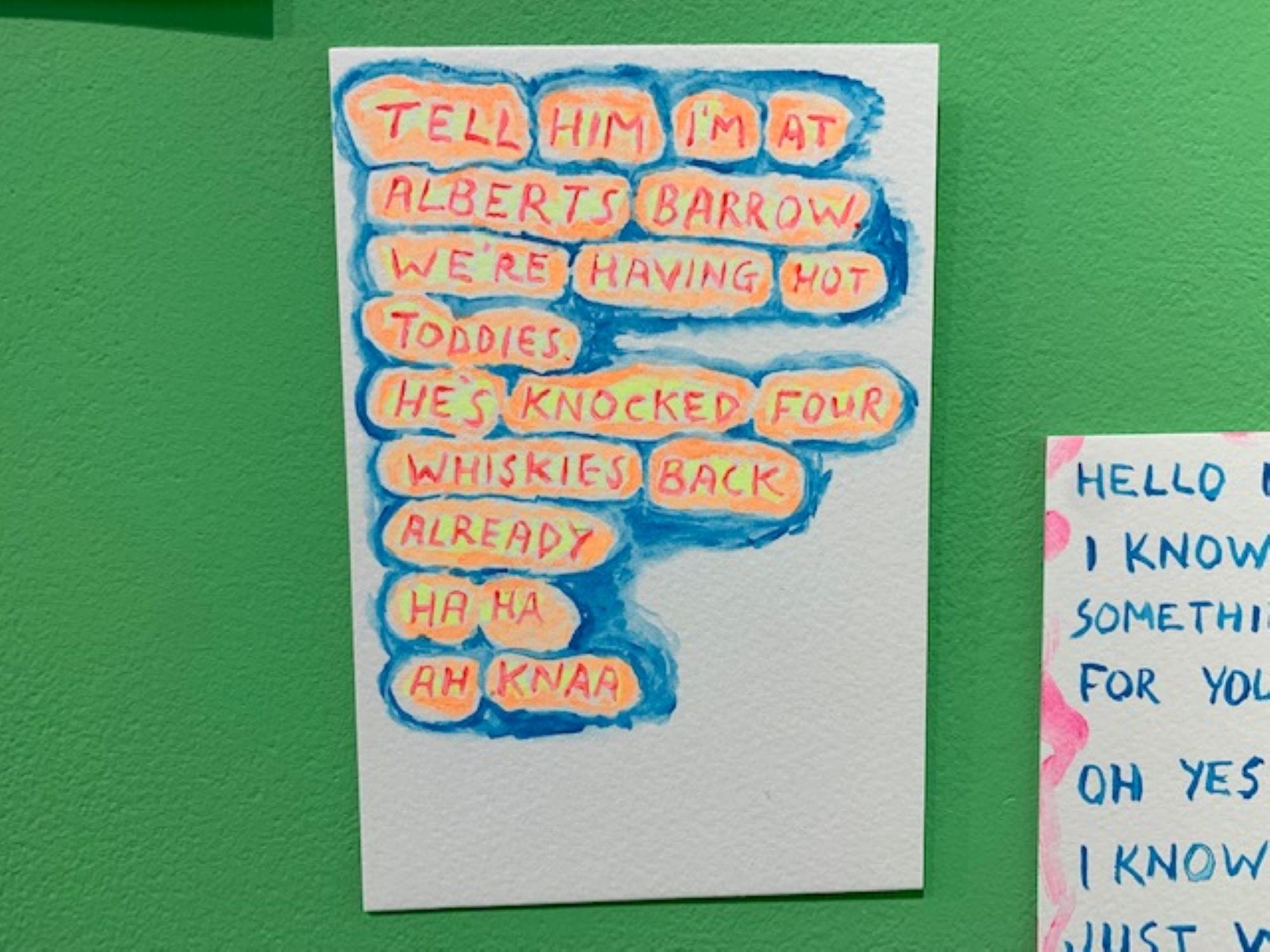
“Where are you now?” “Yeah. Whatever. Alright. That’s good” “He’s knocked four whiskies back already. Ha Ha. Ah knaa…”
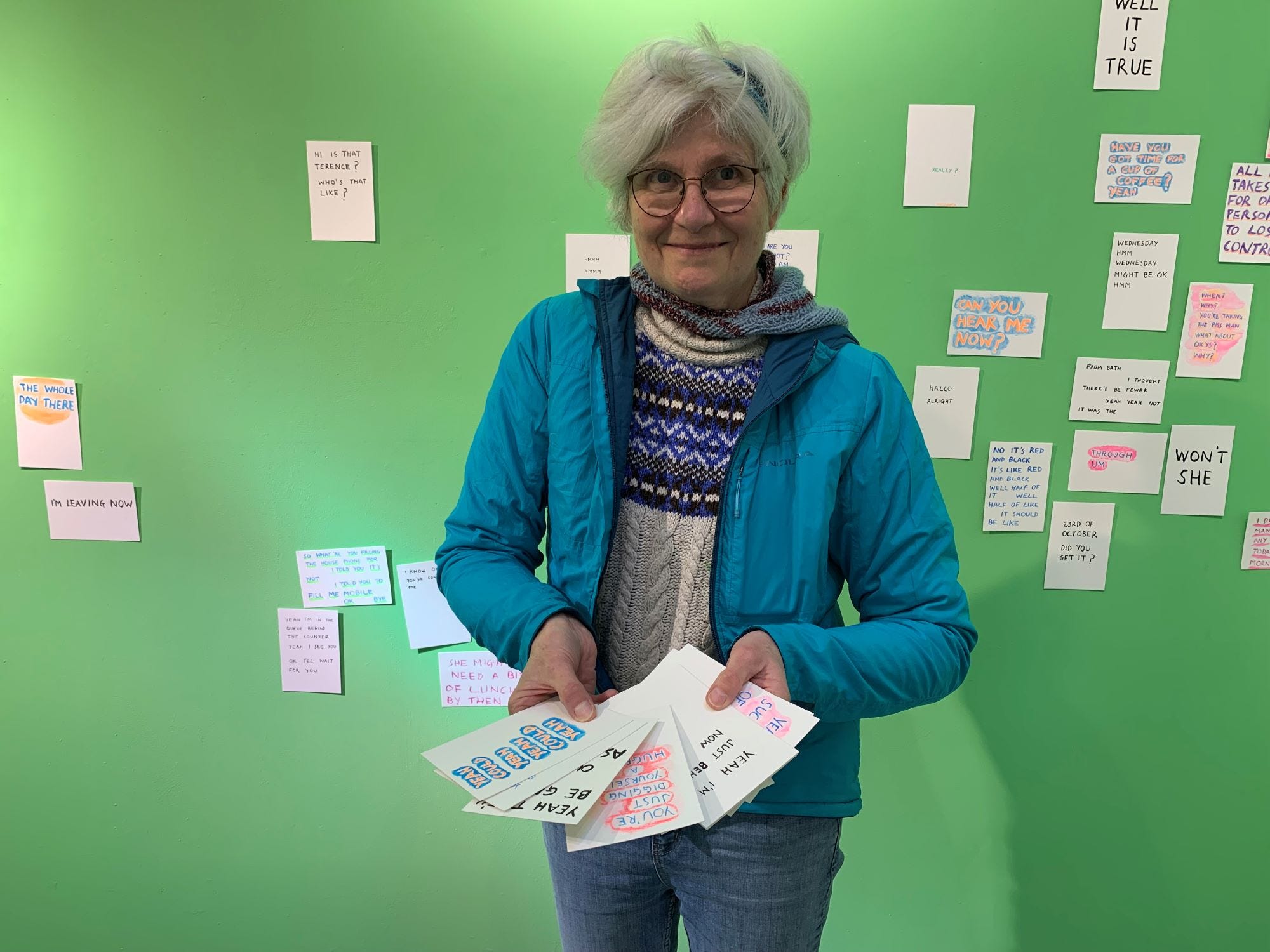
This is just a tiny sample of the substance of Kate Stobbart’s exhibition in the gallery at 36 Lime Street, the artist studio complex in Newcastle’s Ouseburn Valley.
It’s a silent cacophony of overheard snippets of mobile phone conversation – or perhaps not conversation, since the listener, which is to say Kate, has only ever been privy to one speaker.
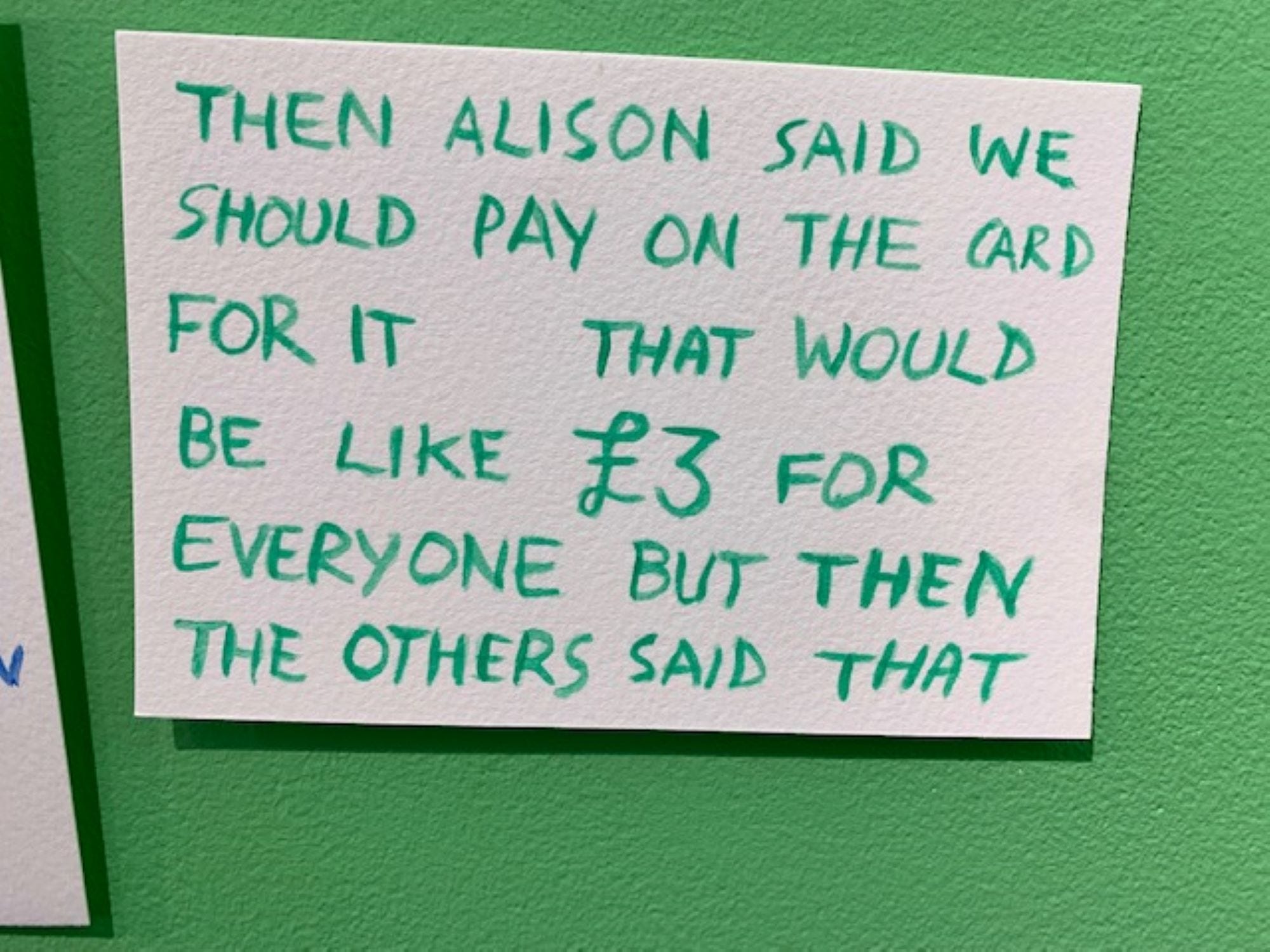
In this gallery, painted green one side so the white cards bearing text stand out, years’ worth of inconsequential blather is recorded, assailing not the ears but the eyes.
You never get the whole picture. Each card offers a mere morsel of insight into the spoken stuff that makes the world turn, the sort of daily dialogue that’s forgotten the second after it’s uttered.
Though not always by Kate if she happened to be within earshot.
The funny or unsettling stuff, she says, would stick in her head until she got home and could write it down. But it mostly wasn’t that unsettling or funny.
“Once I’d started doing it, I realised I couldn’t remember the more mundane ones. So if you passed me on the street and were talking on your phone and I heard you say, ‘OK, at 6.30’, after I’d passed I’d record a voice note, saying, ‘OK, at 6.30’.
“But I didn’t want to go out and record people. I didn’t hunt people down. I tried not to deviate from what I’d be doing normally, so I wouldn’t cross a road to stand near someone on a phone.
“I decided I’d just record stuff that came to me because people were on their phones.”
Eavesdropping has always had negative connotations, suggestive of espionage or occupying the same dubious territory as net curtain twitchers or peeping Toms.
But the rules have changed since mobile phones. As Kate points out: “They’re still such a new thing.
“We (which is to say anybody perhaps aged 50-plus) wouldn’t have heard all this when we were in our twenties because we didn’t have mobile phones. We used to have to stand in a phone box.
“Suddenly society changed and having lived my life and travelled the world without a phone, I just found it really strange, the conversations people had in public.”
She adds: “Now I’m probably doing the same myself.”
This societal change has forced us all to become eavesdroppers, whether we like it or not.
It all started for Kate a few years ago when a fellow passenger started talking on his mobile phone in the quiet coach of a train.
“He was making a really long, loud work call and ended up firing somebody in public. It did my head in. I was really annoyed.
“I’m always quite observant anyway but that’s how it began. I started noticing these conversations more.”
Kate, who lives in Newcastle, studied medicine and became a GP, but art was always a passion and she came to it, academically, a bit later in life, attaining a BA, an MFA and finally a PhD in fine art.
Her exhibition at Newcastle University in the autumn (reported on by Cultured. North East) was her final degree show but delayed from 2020 by Covid-19.
It was during the pandemic that the seeds of this latest exhibition were sown, when she started to write down her collected vocal snippets, rendering some of them in bright colours.
“I think I was using the colours because it was a bit of a miserable time. During the pandemic I was just full on with medicine and had to cut myself off from art. I couldn’t focus on it at all.
“But then I thought, ‘Oh, I’ve got those calls’. It felt like a little achievable thing, although they’ve taken ages… though you might not realise it, looking at them.
“Not all of them were done then but that’s when I started. And I do like bright colours anyway.”
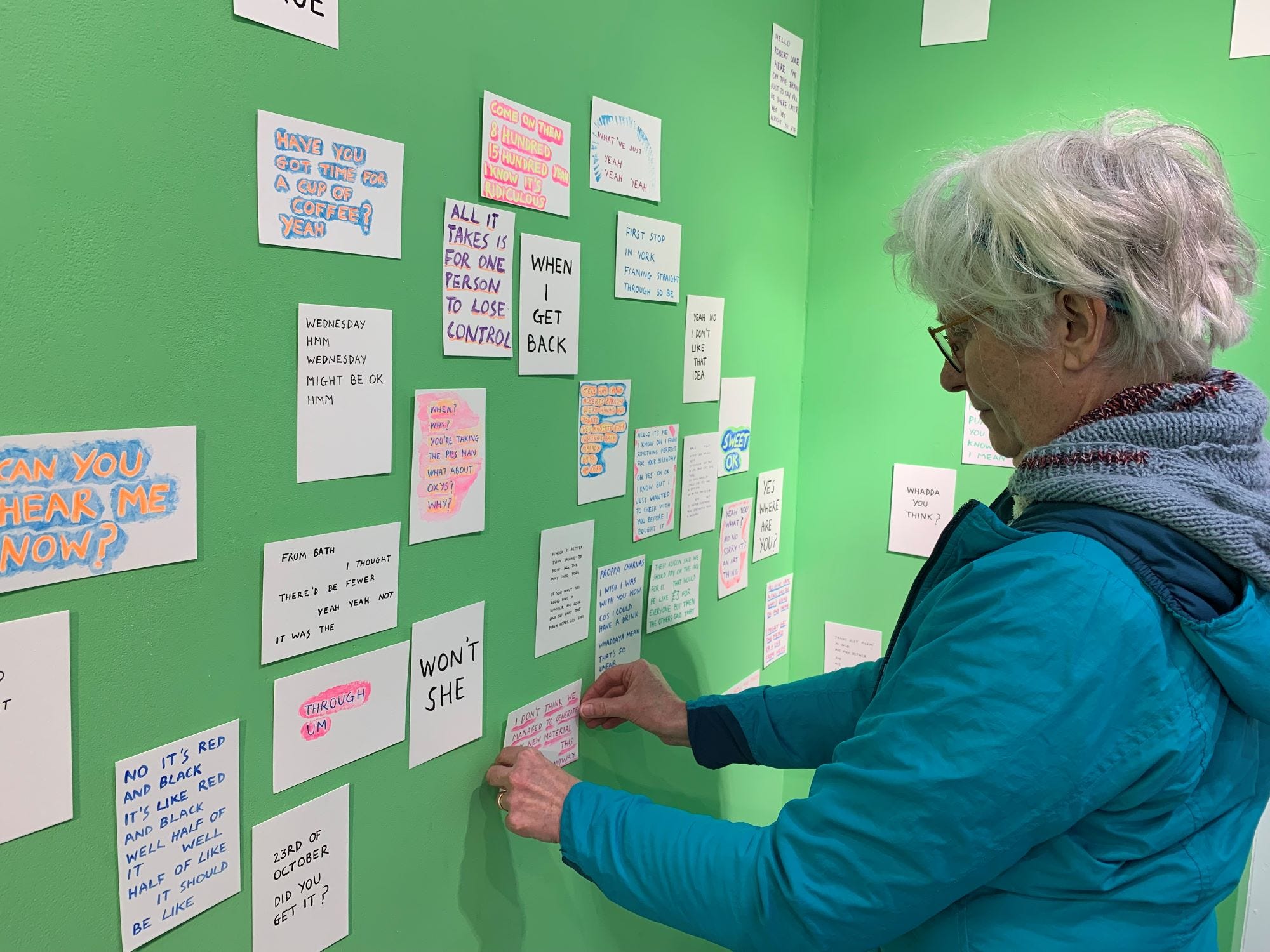
Now retired from medicine, Kate can dedicate herself to art. She shares a studio at 36 Lime Street and is clearly prepared to go the hard yards when it comes to mounting an exhibition.
Fewer than half of the 760 little pictures were on the walls when I visited on Thursday night, the eve of the preview. She was expecting to be there well into the evening and was wondering whether they should all be displayed.
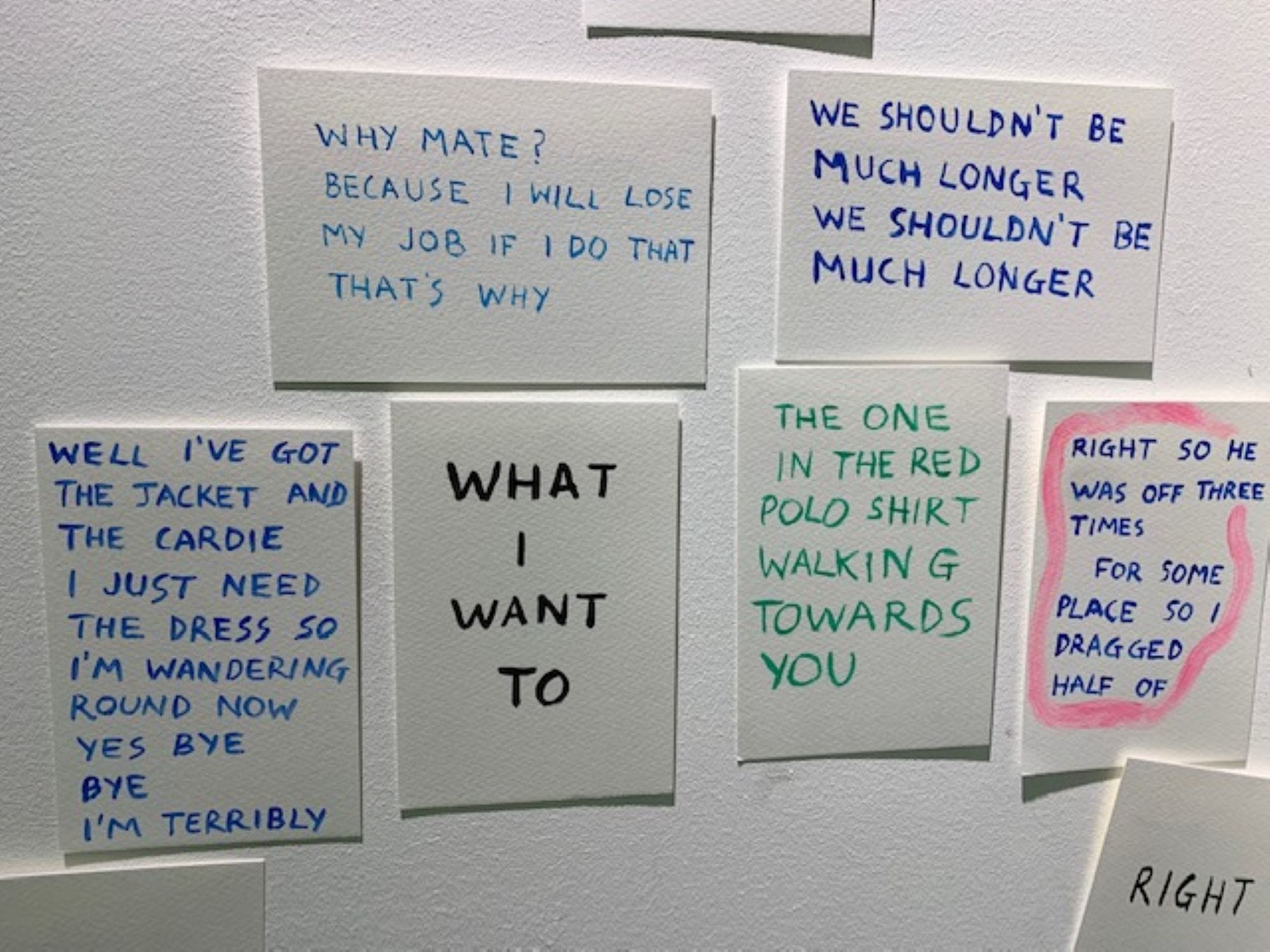
She wasn’t planning to arrange them thematically – although themes are discernible throughout: the hellos, the goodbyes and those referencing food or shops, or those more dramatic ones, such as someone urging: “Shona, did you punch her?” over and over again.
Kate smiles at that one. She quite likes the “radgie ones”, she says, with people letting off steam. And one struck her as being “so sad”: “I’m getting there, I’m getting there. I am getting there.”
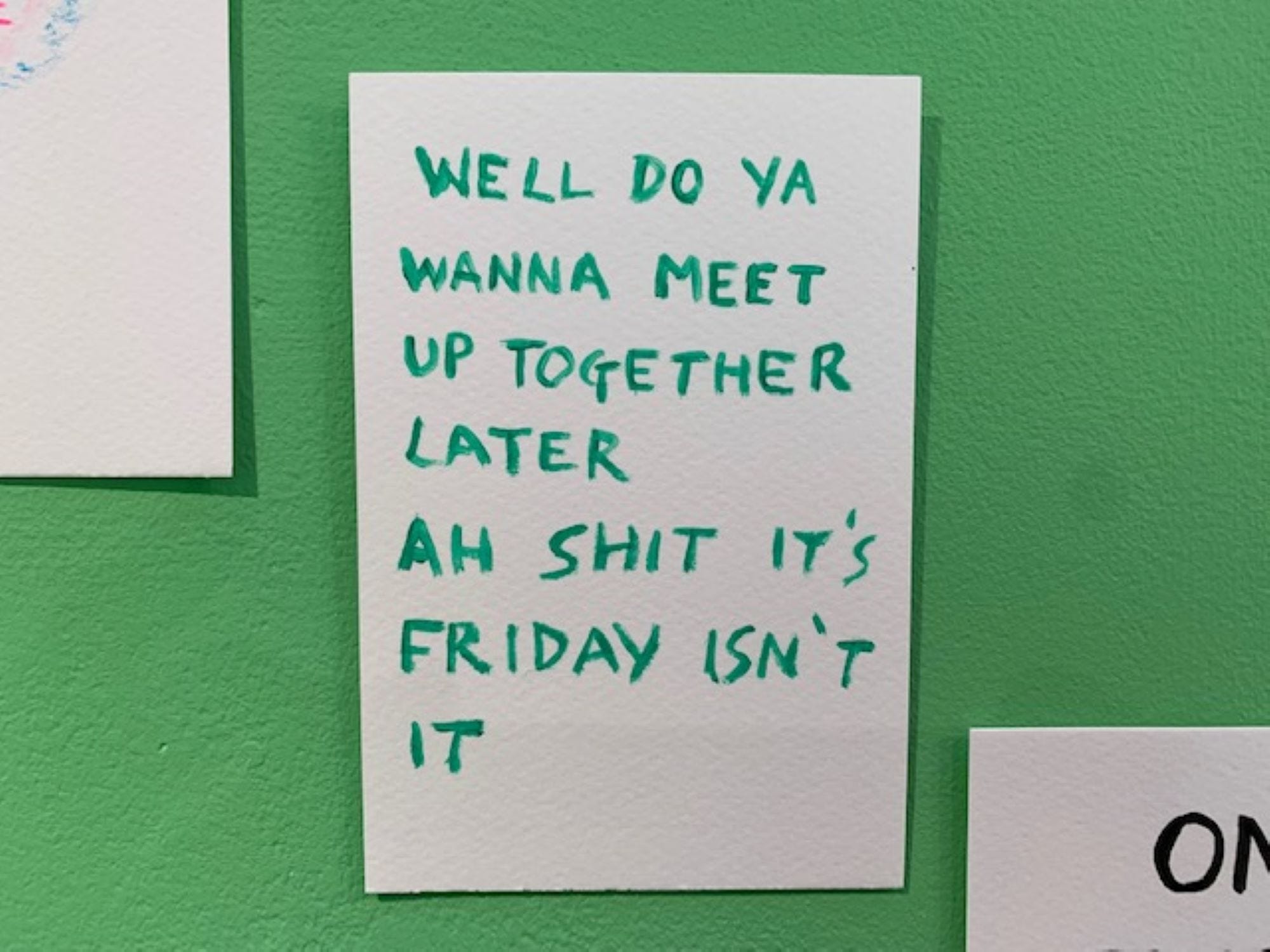
She had some rules. If one of her friends made or took a call, for instance, while sitting with her in a café, she would ignore that. On the other hand, a stranger blathering at a nearby table might be fair game.
And she never took advantage of her position as a GP, or took note of anything near a hospital or surgery. “Too personal and people are often distressed.”
But that said, she reports that occasionally, when triaging patient calls, she would ring someone back and find they were at a supermarket checkout or somewhere equally public and be quite happy to talk.
It’s the modern way – and this exhibition is wonderfully illustrative of its behavioural norms and quirks.
A favourite book of hers, says Kate, is An Attempt at Exhausting a Place in Paris, written by the late French writer Georges Perec and published in 1975.
He took up position in a city square and faithfully recorded all the mundane things he saw. The result was this snapshot of a moment, a gift to any social historian even if lacking a pre-ordained gripping plot.
Similarly, Kate’s efforts with her voice recorder, her cards and her acrylics capture the way we are and the stuff we say. Much of it will strike a chord, no doubt raising a smile or a tremor of recognition.
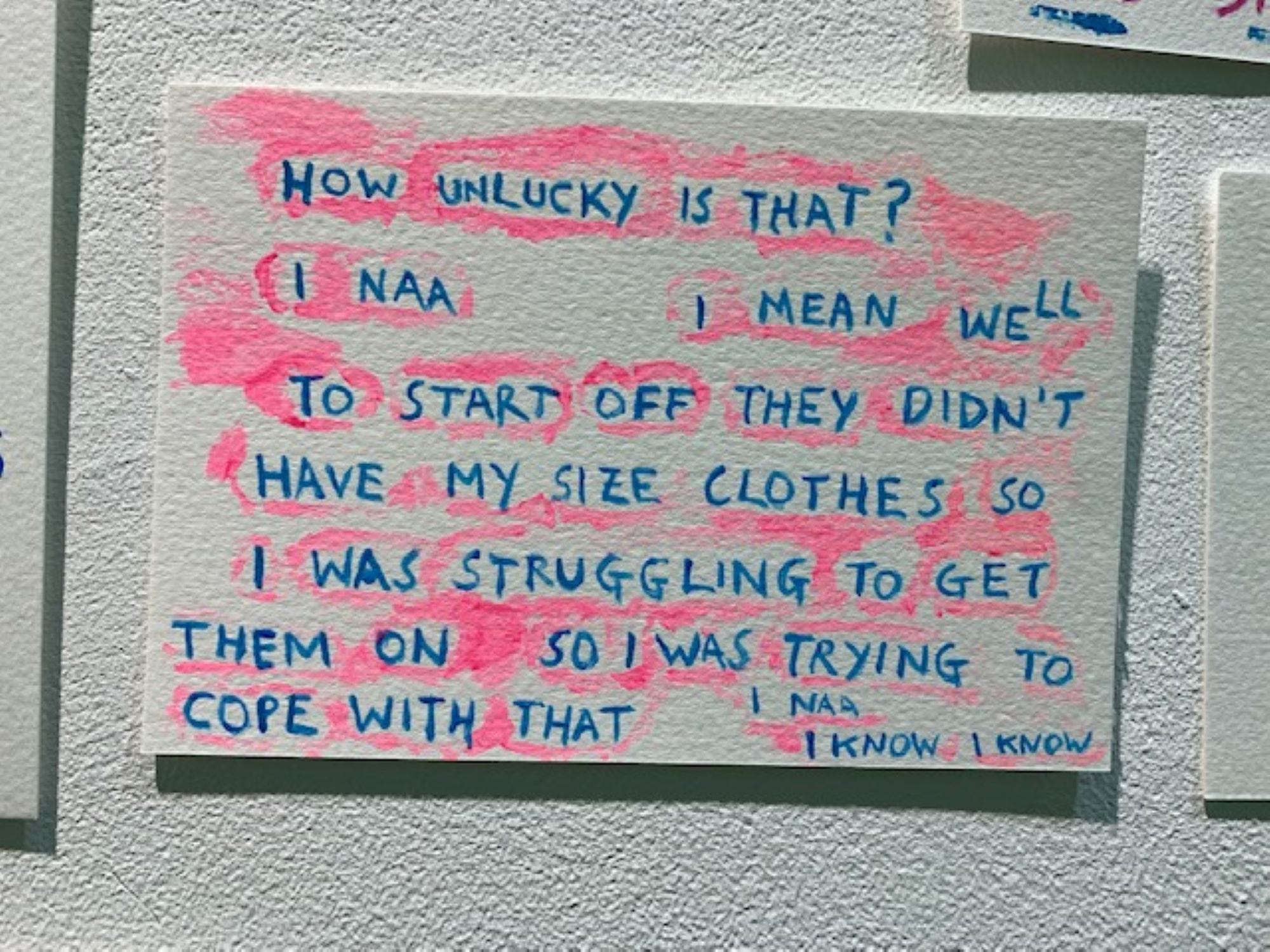
Might anyone actually recognise themselves? Now there’s a thought. Kate’s rather hoping Shona doesn’t pass by.
Her exhibition, titled, in homage to Perec, An Attempt At Exhausting A Year’s Worth of Overheard Mobile Phone Calls, opens on Saturday (March 14) and runs until March 22 with the gallery open weekends from 11am to 5pm and weekdays 2-4pm.