

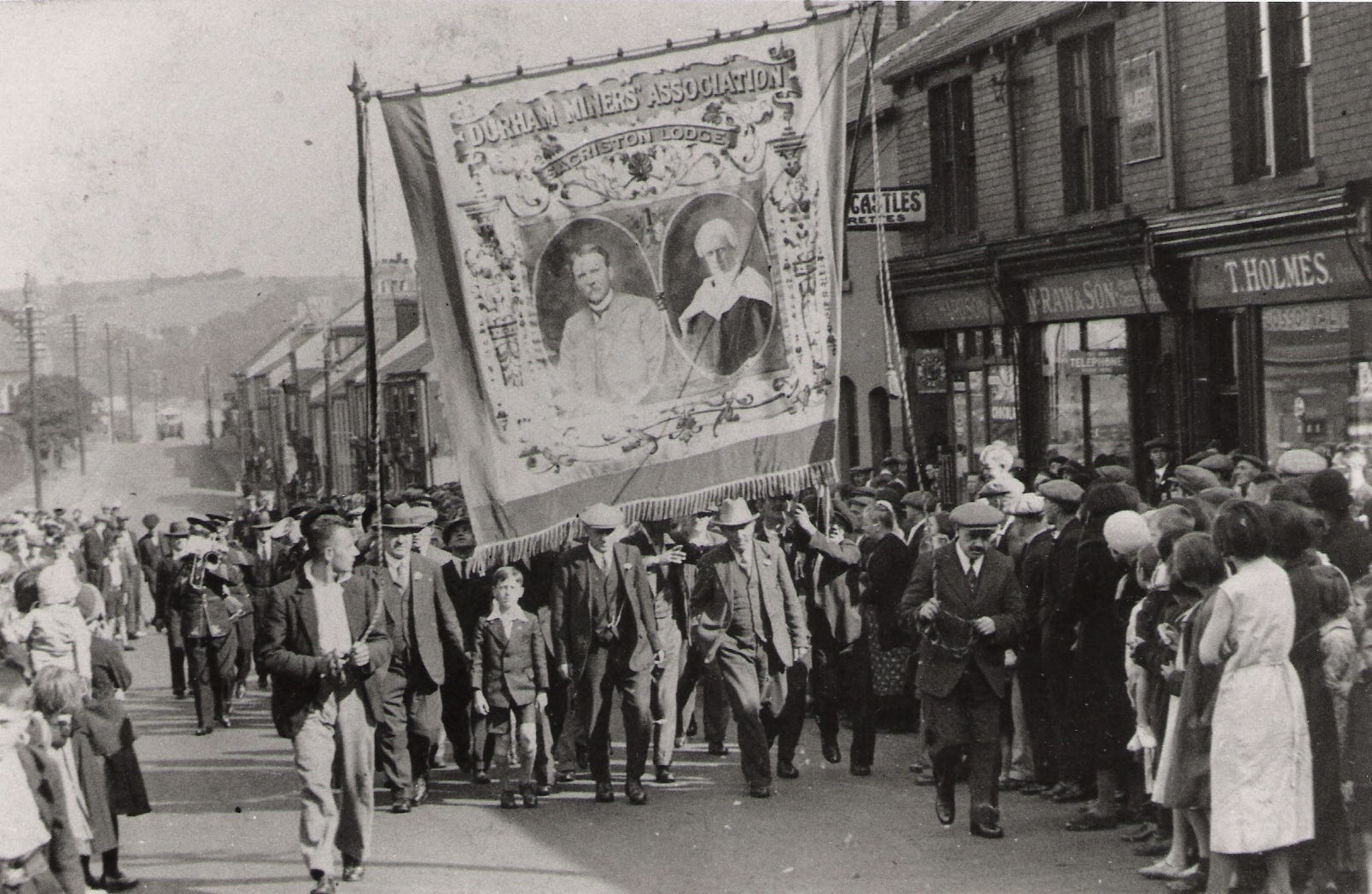
Part of this year’s centenary of the 1926 General Strike is the remarkable life story of a County Durham miner’s wife who, 100 years ago, toured Russia, during which she addressed a gathering of 5,000 Red Army troops.
The exploits of Annie Errington, whose husband Bill worked at Sacriston Colliery, have been researched by Prof John Tomaney. Several generations of his family worked at the mine until its closure in 1985.
John himself was based for 20 years at Newcastle University and was Henry Daysh Professor of Regional Development and Director of its Centre for Urban and Regional Development Studies.
He is now Professor of Urban and Regional Planning at University College London and will give a free public talk at 6pm at Sacriston Workingmen’s Club on Thursday, July 9, as one of the many events in remembrance of the General Strike.
One of the features in his lecture will be how individuals such as Annie Errington and their compact communities were caught up in and reacted to the strike and the months-long lockout of the miners, which formed the backdrop to the 1926 upheaval as coal owners attempted to force their workers to accept reduced pay and a longer working day.

“Sacriston played a large role for such a tiny village,” says Prof Tomaney, who maintains that the place of women in the history of coalfield communities remains under-researched.
Annie emerged as an important political leader in her community in the interwar period, from being a pioneering Labour councillor elected in 1925 to serve on Chester-le-Street Rural District Council to a leader of a mass movement of miners’ wives in interwar Britain.
Annie was born in Sacriston in 1882, into a mining family, and married Bill Errington in 1903.
“Annie Errington - and women like her - played a critical role in advancing social demands, yet her story is untold. In many ways an ordinary woman, she led an extraordinary life which is now largely forgotten, even in the village in which she remained rooted throughout her life,” says Prof Tomaney.
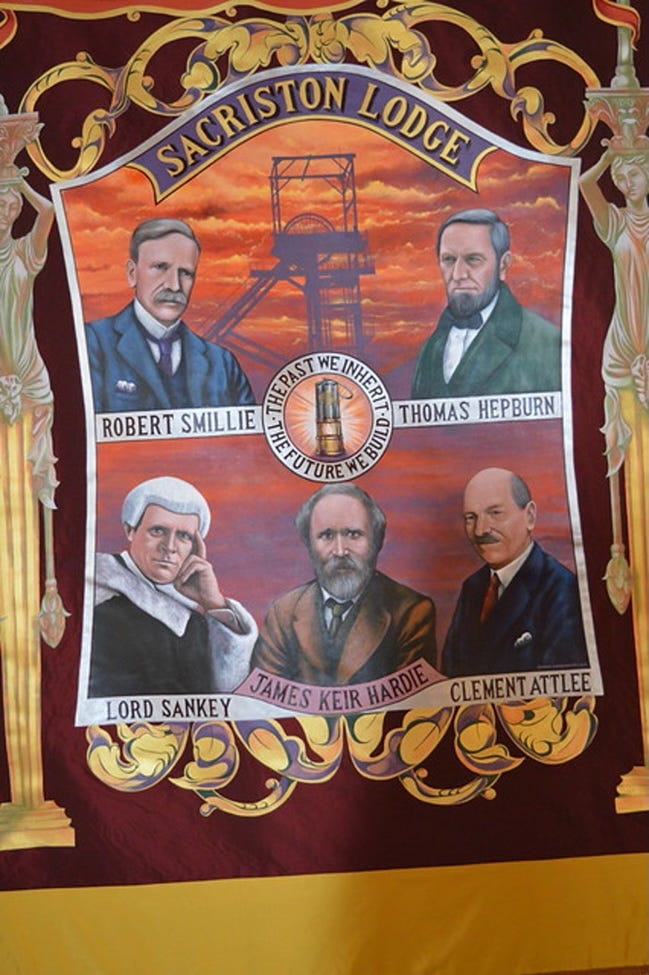
The Durham Aged Mineworkers’ Homes Association (DAMHA) grew from the vision of Joseph Hopper, a miner and Primitive Methodist preacher, to meet the needs of miners and their families who otherwise would be evicted from tied colliery homes when they retired.
As a young woman, Annie lived through major strikes in 1892, 1912 and 1921, which caused immense hardship.
As a councillor, Annie was a member of the Chester-le-Street Board of Guardians, who were responsible for the provision of ‘outdoor relief’ - welfare payments - to the qualified poor. Relief was funded through a local rate on property owners.
With the onset of the Miners’ Lockout, the demand for outdoor relief grew and sparked conflict between the Chester-le-Street Guardians and the Conservative government, which attracted national attention.
The Guardians were accused of being over-generous and faced the threat of being jailed.
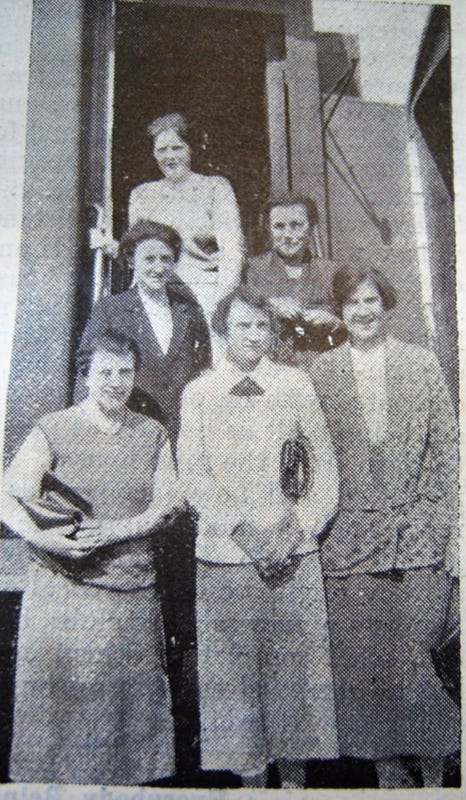
In 1926, the Soviet trade unions donated a large sum to the British miners’ families’ relief fund. The Russians invited a delegation from the Miners Federation of Great Britain to collect the funds, but also to counter claims made in the British press that the Soviet miners had been compelled by their government to make donations in support of their striking British counterparts.
Annie was part of the delegation who travelled to Russia via Holland, Germany and the Baltic states and, through interpreters, addressed thousands of Russian workers and Red Army soldiers.
Their seven-week itinerary took them from Leningrad, through Tula and Rostov, across the Caucasus into the Baku oilfields.
Prof Tomaney says: “Annie Errington did not fit the stereotype of a submissive miner’s wife, trapped in her home. She was a political giant.
“A tidal wave of working-class women’s activism swept through County Durham in the interwar period. The movement was capable of mobilising thousands of women for mass political action.
“Annie Errington played a leading role in the industrial and political struggles of her times.”
Another County Durham pit community which figures in the centenary year is Burnhope, which, when it was ruled that the Durham Miners Gala would not be held in 1926, hosted the meeting attended by an estimated crowd of 40,000.
It is the only occasion on which the Big Meeting has been held outside Durham city.
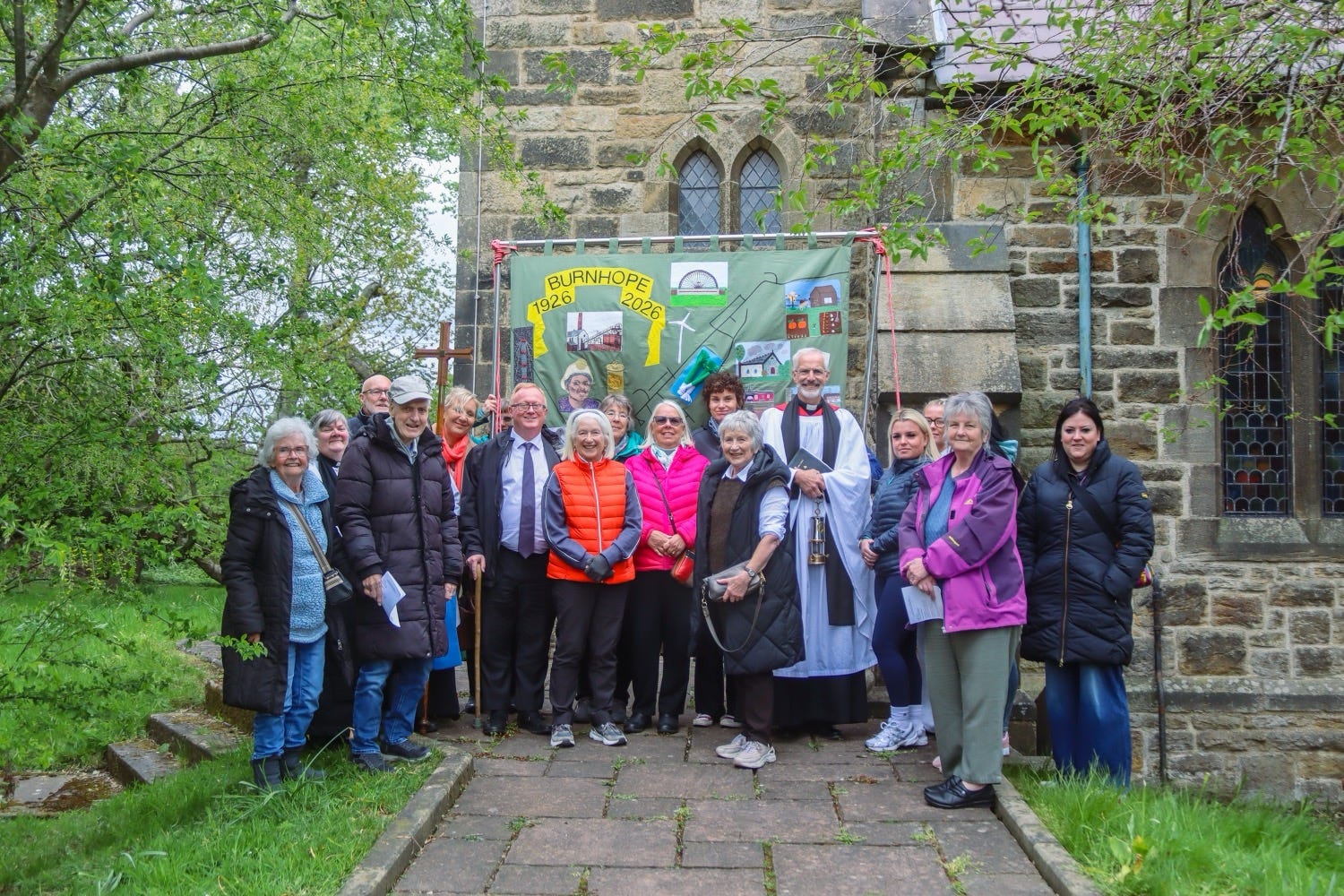
The anniversary of the event was celebrated at St John’s Church in the village when the Revd Dr Philip Plyming, Dean of Durham, blessed a new village banner, which had been specially made by the local craft group to mark the 100th anniversary of the landmark meeting.
The Dean also brought the miners’ memorial lamp which hangs in Durham Cathedral.
The Miners Memorial in the South Nave aisle was dedicated in 1947 to ‘…the Durham Miners who have given their lives in the pits of this county, and those who work in darkness and danger in those pits today.’
Next to it is a Book of Remembrance, illuminated by the miners’ lamp which hangs above it and listing the many men and boys who lost their lives in the Durham collieries.
The Burnhope services were part of a weekend of celebrations which included a parade featuring banners, live music, and pipe and brass bands from the area.
“It was a wonderful weekend,” said priest in charge, the Revd Lesley Sutherland. “There was a theme of community and identity, which is very significant to Burnhope.”
She said the community has faced many challenges since the decline of the mining industry, which led to Burnhope being deemed a Category D village.
Under Category D, settlements such as mining villages in County Durham meant that no future development would be permitted, and property would be acquired and demolished.
The policy ended in 1977 and Burnhope was one of the survivors.
A report of the 1926 village event said:
“Never before has a little village been so crowded. Parties from 50 lodges drifted in at all hours, some had walked 20 miles. The main street presented a remarkable spectacle, one solid mass of moving people, relieved only by banners, the uniform of bandsmen and the costume of impromptu jazz bands.”
The mass gathering was addressed by Arthur Cook, secretary of the Miners’ Federation, who headed the mile-and-a-half procession to the event field.