


If all the submissions to this year’s New Contemporaries exhibition had been accepted, it could have filled MIMA 100 times over.
As it is, 26 works of art were chosen by a selection panel comprising artists Pio Abad, Louise Giovanelli and Grace Ndiritu.
Quite a big responsibility lay on their shoulders, suggested Claire Louise Staunton who gave me an introduction to the exhibition when it opened to the public on May 8 – and (by way of apology for the photos in this article) with the lighting in MIMA’s four linked galleries still being adjusted.
“What this exhibition does, as it has done for 77 years, is give a measure of where contemporary art is at, with the selectors tasked with taking the temperature,” said Claire.
“And the submission process is anonymised so they have no knowledge of the artists’ identity when they’re selecting.”
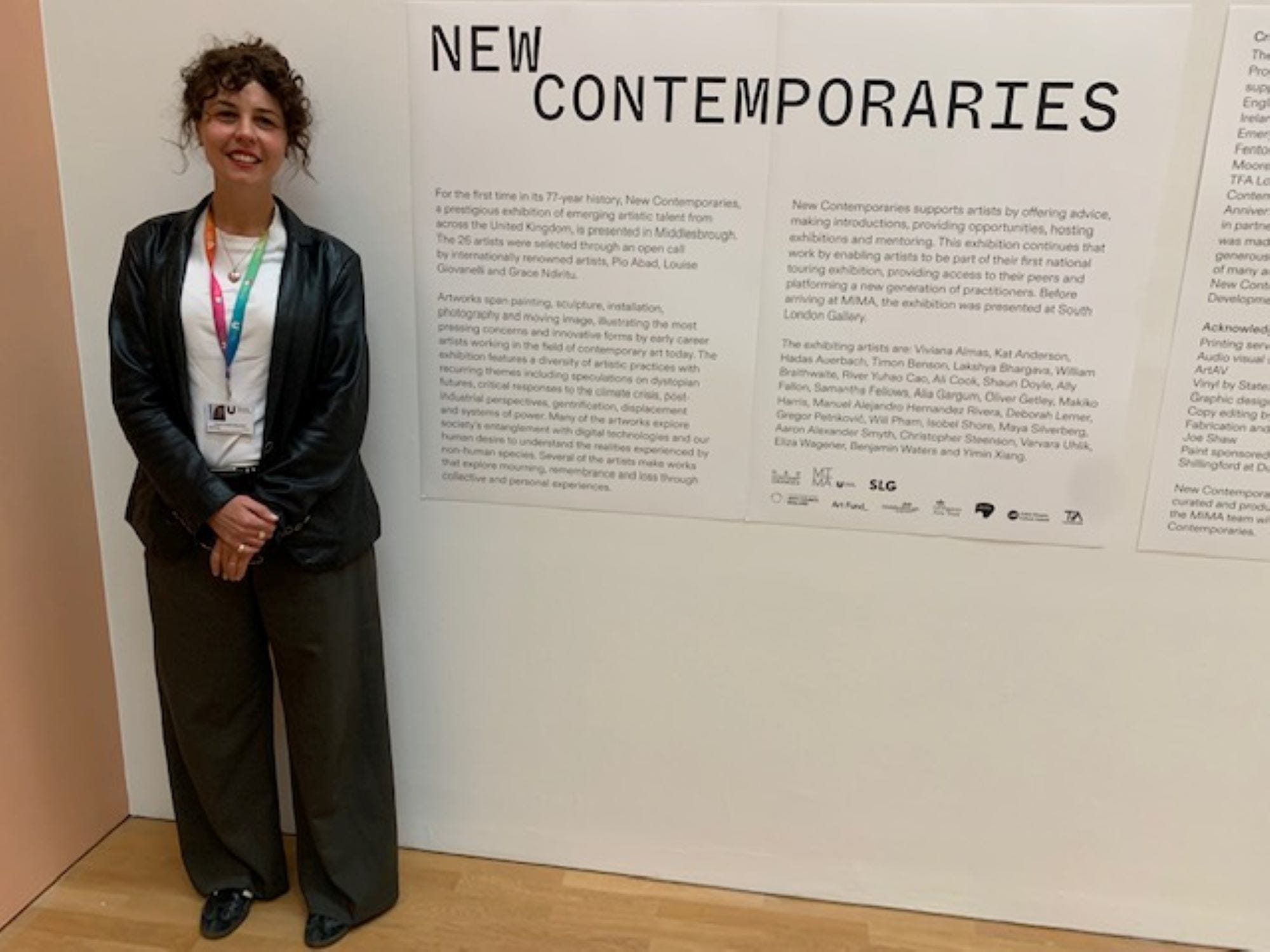
Claire, senior curator and vice-chancellor’s research fellow at MIMA (part of Teesside University since 2014), said more than half this year’s 2,500 plus submissions were from artists based outside London.
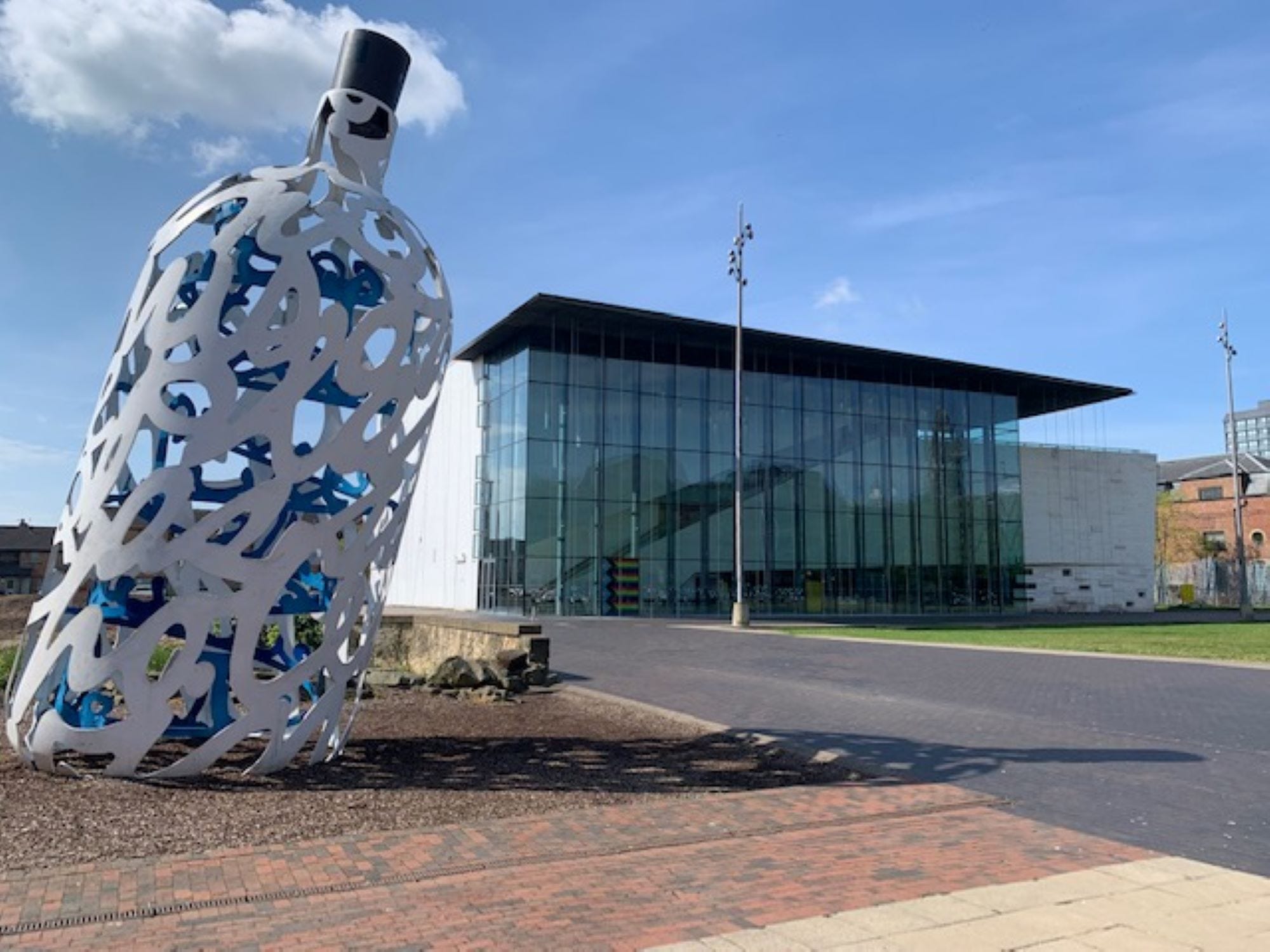
It was, she agreed, a “massive” show in terms of profile, both for exhibiting artists and host venue. This is the first time in its long and varied history that New Contemporaries has come to the North East.
And while it might be seen as a precursor to the Turner Prize exhibition, also being hosted here in what is a big MIMA year, it is, said Claire, “very different in texture and tone”.
Obvious differences are that many more artists are represented (only four contenders will feature in the Turner Prize exhibition) and there’s no competitive element.
While Turner Prize judges tour exhibitions and pick the four artists who impressed them most, the New Contemporaries selectors were limited (although not much, given the response) to what was submitted.
As for the criteria, it was left to submitting artists to decide if they met them, said Claire.
The words ‘new’ and ‘emerging’ seem almost interchangeable in art world language but the same can no longer be said of ‘young’.
Not all ‘new’ artists these days are young and recently out of art school, Claire pointed out. Whether by choice or circumstance, some people turn to art later in life while others return to it after a break.
“It’s not about youth and nor is it judged on an artist’s career or output. It’s judged only on the work they submit and with New Contemporaries there’s no stipulated theme.
“Usually a group exhibition will tell some sort of story but this is a show where the exhibits have nothing to do with each other.
“The key to hanging it was finding the best place for each work.
“What’s fun, and what happens when you walk around, is finding common themes that come up by accident. You’ll naturally look for patterns.”
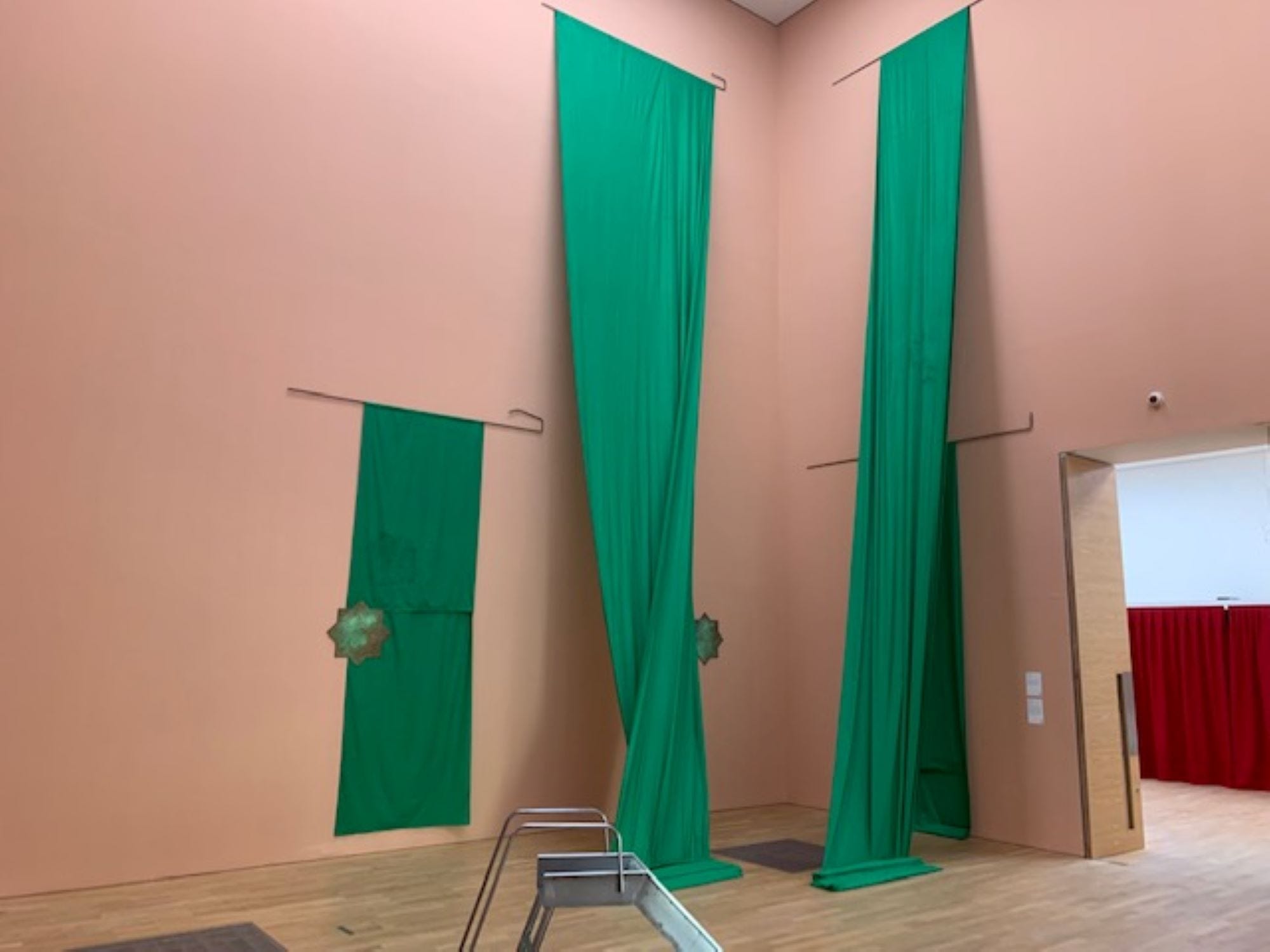
What’s nice here is that one of the first things you’ll see – and it is quite striking, with its lush green drapes and metal stars - is a display by Alia Gargum who’s based in Newcastle.
She is a Newcastle University MFA graduate who explores migration and her Libyan heritage in her work, green being a colour loaded with meaning in that country and the star a symbol of equal import.
The work, from her installation This was a mosque, might not be wholly unfamiliar. Alia has previously exhibited in Newcastle and Middlesbrough and New Contemporaries brings her work back to the region.
Take care when looking at it not to trip over Slide, a steel centrepiece and one of two floor-based sculptures by London-based Varvara Uhlik, from Eastern Ukraine.
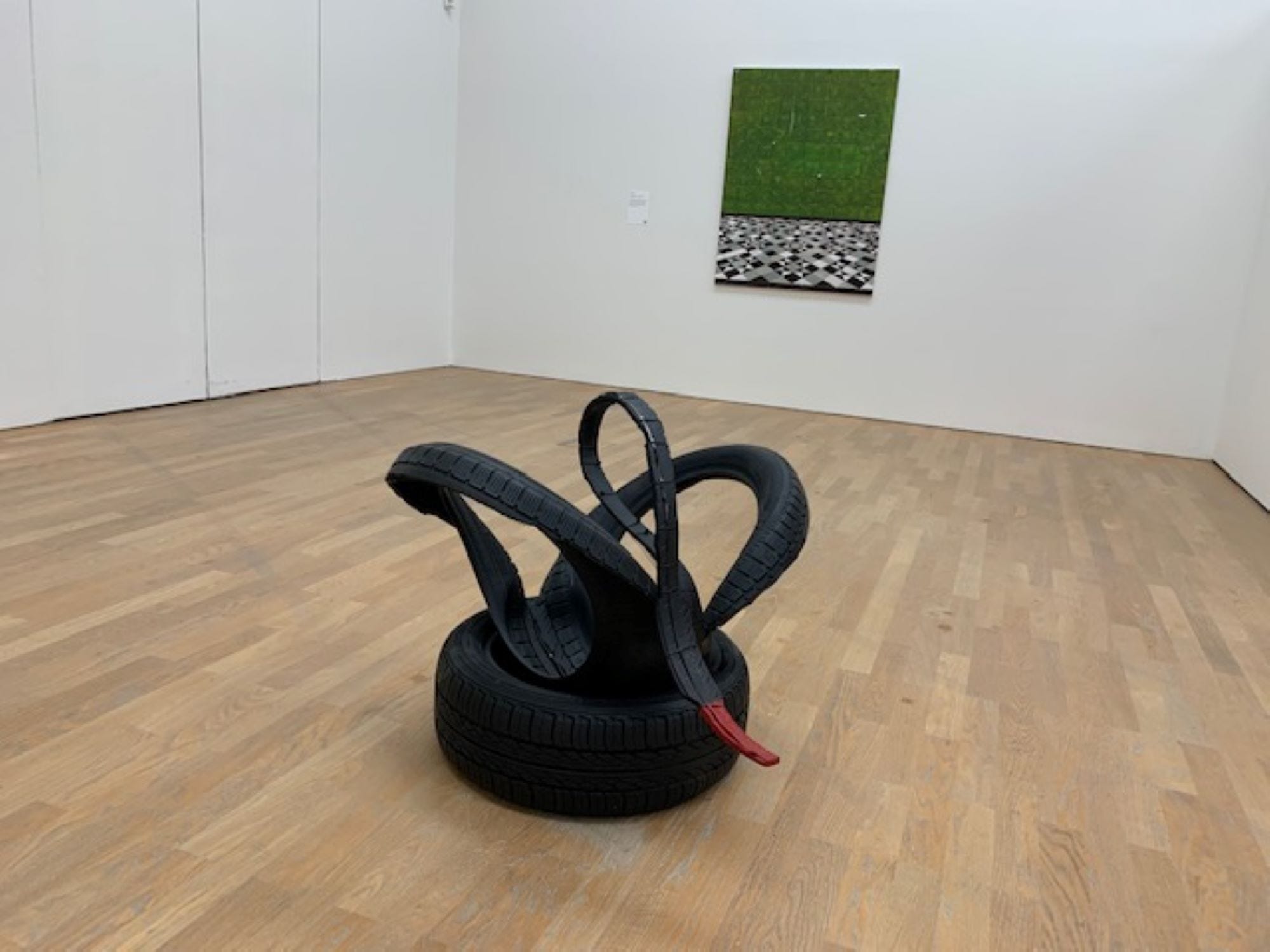
The other, guaranteed to be photographed many times, is Swan, a curiously realistic looking black swan fashioned from old car tyres.
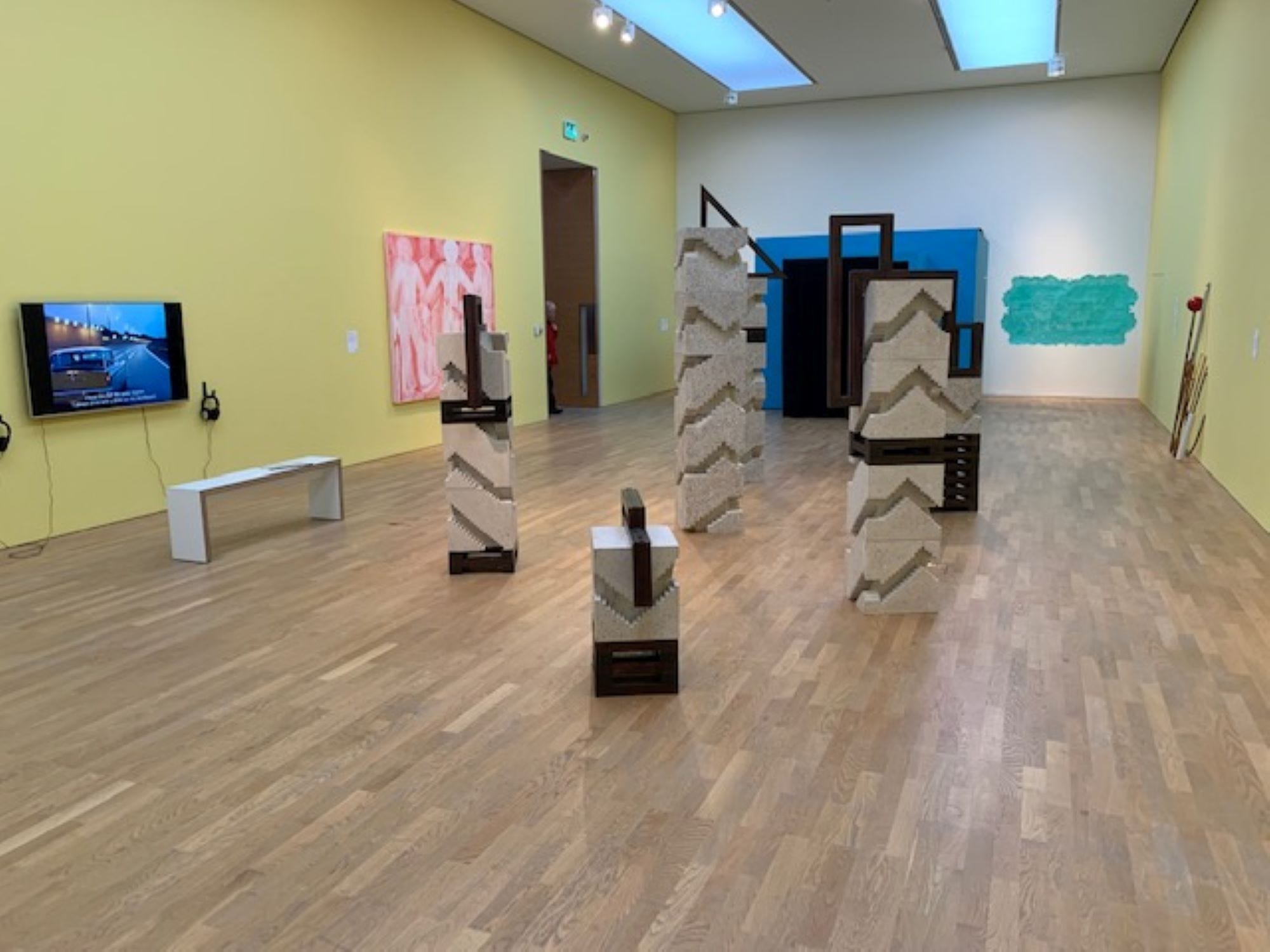
This is in the second of the four rooms if you’re exploring anti-clockwise (as, for some reason, I always do, although it works equally well either way).
If Uhlik demonstrates how to make eye-catching, classy stuff from fairly basic materials, Oliver Getley shows – also in what I’ll call the second room – how to assail the ears.
“Don’t worry about the noise,” smiled Claire as we stood in room one. “It’s just the art.”
There was something familiar about that grinding, rattling din, a bit like an aeroplane taking off. Ah, yes! Our perpetually furious washing machine at home.
Getley’s Site Built is indeed constructed from the parts of a dumped washing machine and while not a thing of beauty it does make its presence felt.
Were any patterns emerging for me yet?
Not particularly but the variety and mood swings of such an exhibition are quite appealing.
Some exhibits shine a light on disturbing social phenomena, as with Kat Anderson’s John, a 30-minute film about the violence experienced by mentally ill black men in British institutions.
It’s fiction with a kernel of truth but the effect is heightened by the artist’s framing of her work within the horror genre.
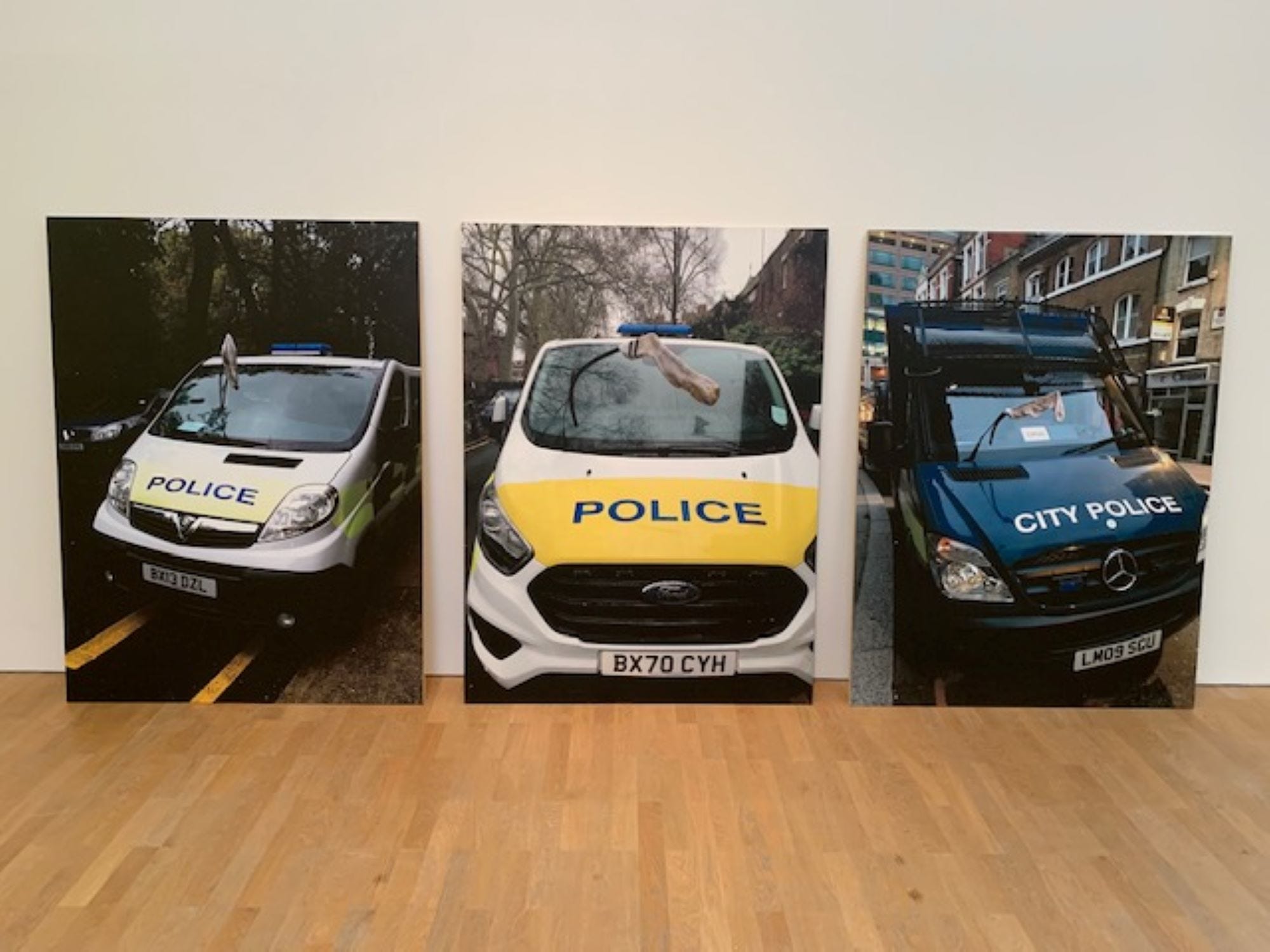
Other artists make their point through humour and you hope for Shaun Doyle’s sake that the police have a sense of it.
His large photographs mounted on plywood boards show individual police vehicles decorated with a single dirty sock.
“The Cop Socker series of artworks is a provocative tease of the police and their assumed authority represented through their vehicles,” states the accompanying label.
“The artist walks around towns and cities without shoes on, then places the dirty sock on the windscreen wiper and takes a photograph.”
I can’t help wondering how Doyle’s five-year campaign of barefoot cheek would go down at the nick!
Nearby you’ll find mildly disturbing pictures by another Newcastle University graduate, Ali Cook (BA Fine Art, 2024).
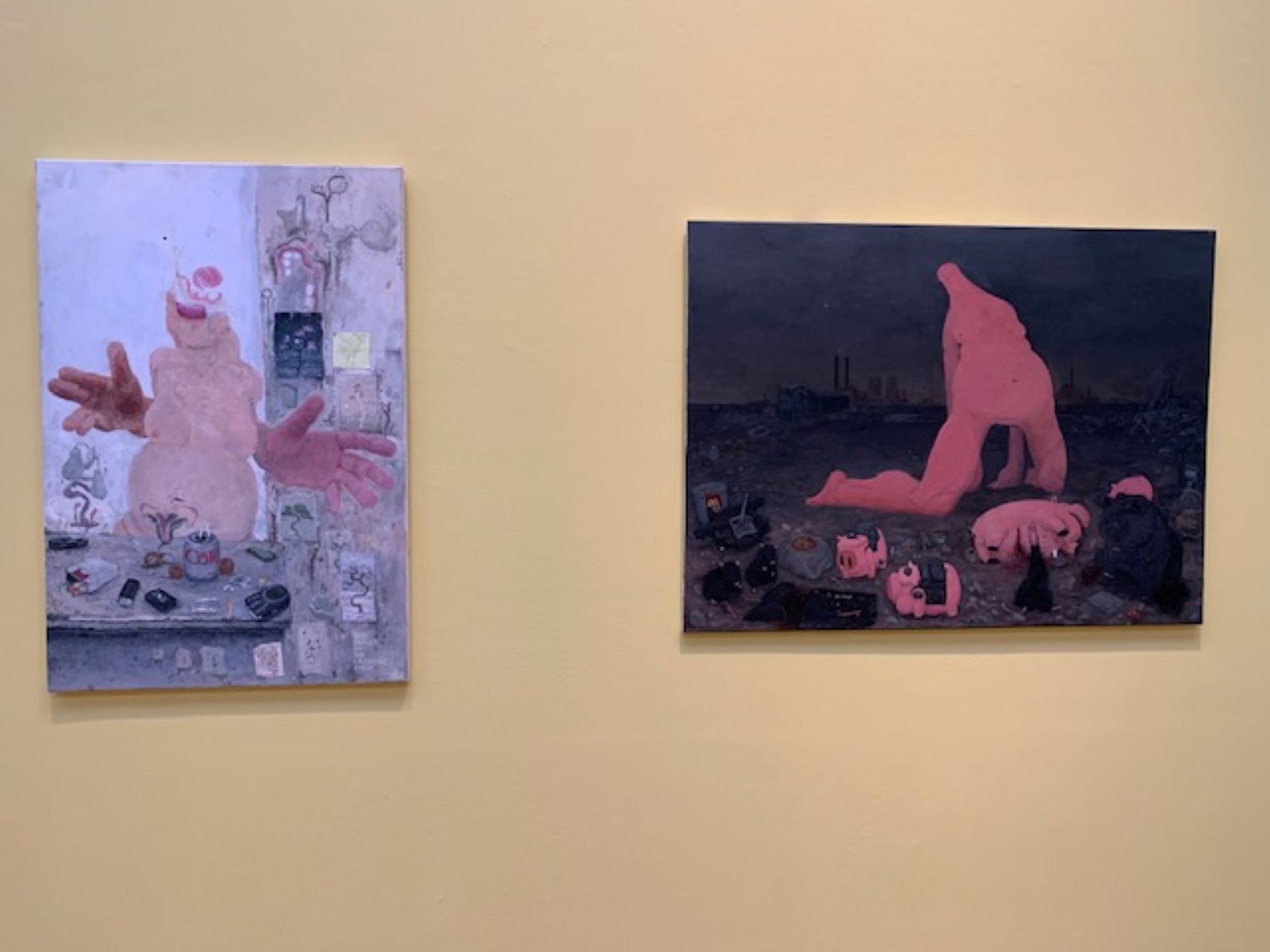
They are The Art Dealer and I Believe in Something Better, showing how acrylics and pen can be deployed to concoct – as the label says - “surreal and scathing portraits of contemporary life”.
William Braithwaite’s pillars of concrete, oak and steel, titled Concretion, are the centrepiece hazard in this longest of the four rooms.
The fourth (or indeed first if travelling clockwise) is home to several works but it’s Christopher Steenson’s The Long Grass which dominates, comprising as it does a slide projector and other paraphernalia.
The slides change automatically with a regular ‘click shuffle’ and the whole installation invites us to consider the plight of the corncrake and the bird’s symbolic meaning in relation to Irish independence.
The corncrake, incidentally, could be seen as nature’s answer to Oliver Getley’s disembowelled washing machine.
Call that an emerging pattern if you like.
As you’ll no doubt have gathered, this is an exhibition that merits more than one visit.
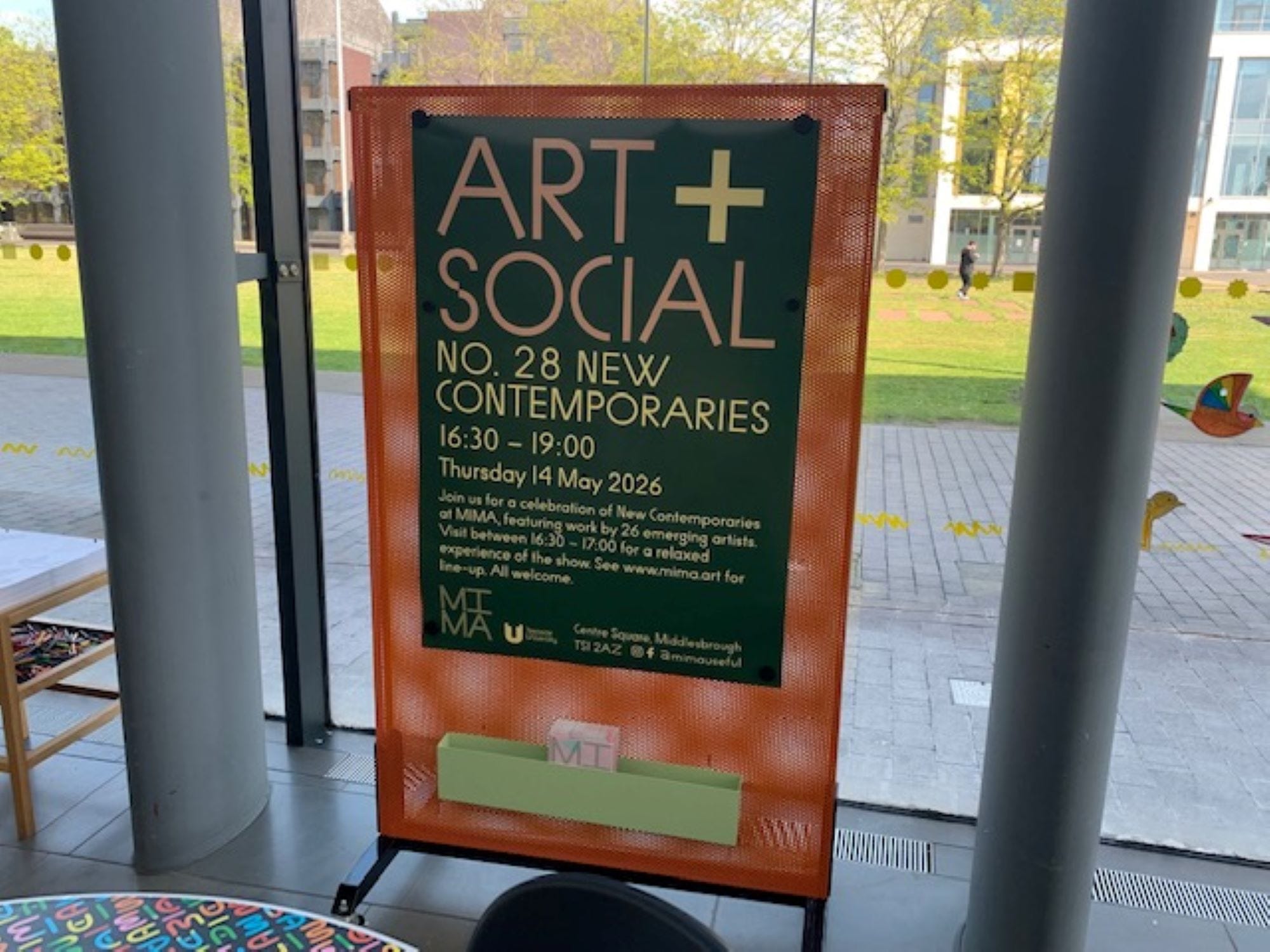
There’s an official opening event on Thursday, May 14 (4.30-7pm) but New Contemporaries runs until August 16.