

As the National Year of Reading continues a pace and as national media coverage of what we are now calling ‘the reading crisis’ (the continued downturn in children finding the attention, solace and stimulation in reading books) continues it’s both enraging and deeply depressing that a head teacher in a school in Greater Manchester took it upon themselves to ban 200 books from the school library and to bring about the resignation of the school librarian through pernicious threats about ‘safeguarding’ young minds.
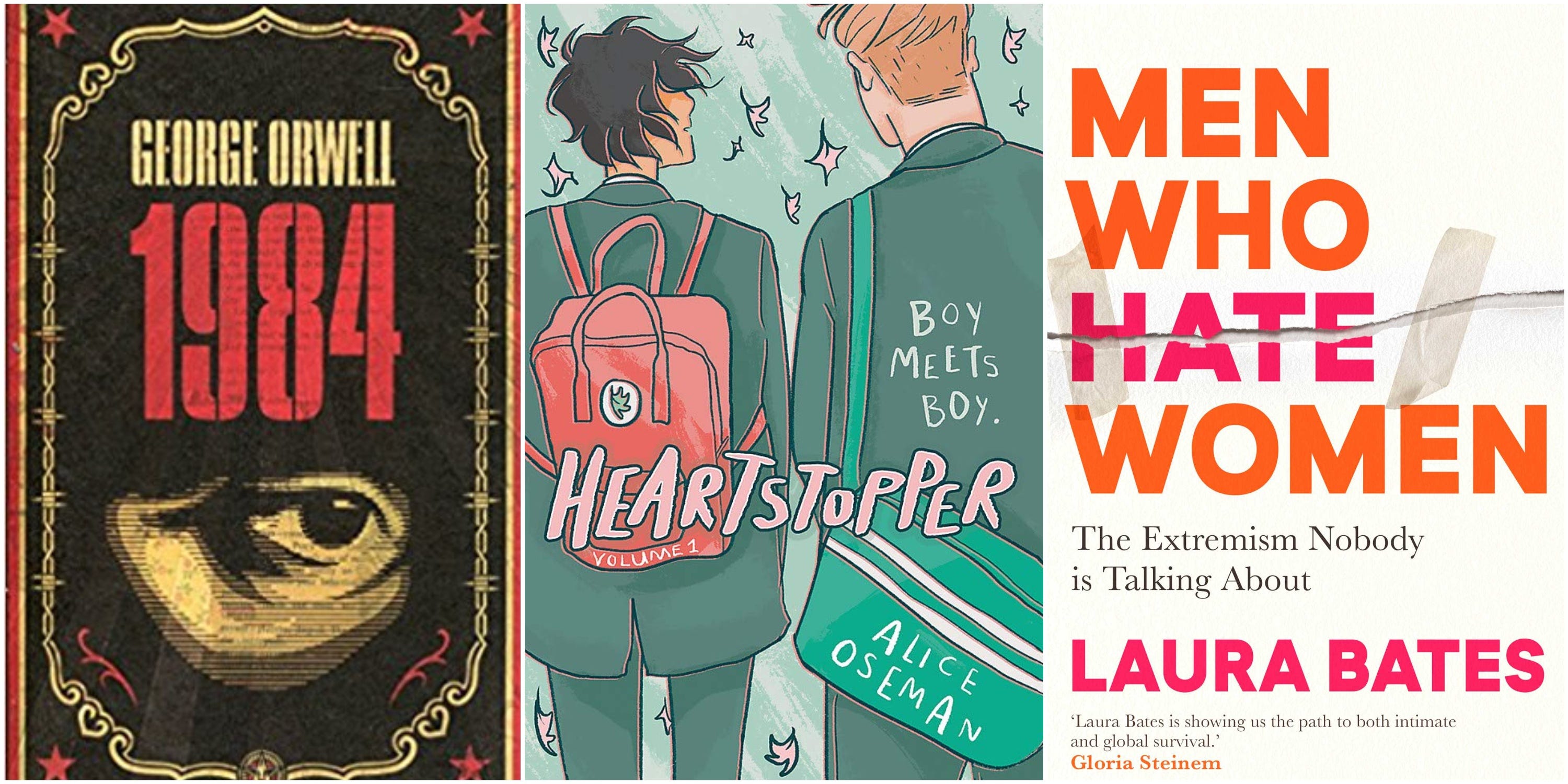
The books in question included Laura Bates’s study of the manosphere and contemporary misogyny Men Who Hate Women, a terrifying but important book when Andrew Tate has such a hold on many young men’s attention, Alice Oseman’s chart topping Heartstopper comics and somewhat ironically George Orwell’s 1984, which in my day was something you were made to study for exams rather than ban from the premises.
You may be imagining a principled and dedicated teacher reading lots of books in search of offending material but of course the person doing the banning wasn’t actually doing the reading and apparently just asked an AI chatbot which books in the library should be removed. Good to understand both the dereliction of duty and the utter laziness there.
As we have seen with the broader polarisation of our politics, we are following the US ultra-right political playbook in so many ways. In the US, school and library boards are very busy banning books that they haven’t read from libraries in schools and communities. To be both humbled and afraid, watch the documentary The Librarians on BBC i-player and experience the full horror of men waving guns about in meetings with librarians and terrorising them online for stocking LGBTQI books.
So far this appears to be a one off case, but I’m shocked by how little attention this has garnered in the national media following a thorough report by Index on Censorship.
If I was doomy, I’d say that we may be naturally approaching a point in time where nobody reads books, where nobody can concentrate for very long and that everything that we consume will now be a short vertical video (‘Hey guys!’) with an ad for vitamins or crypto at the end. I do not wish to live in world where ChatGPT gets to be our chief literary critic – that is literally the rock that I would die on. But we don’t have to and there is another narrative taking shape which gives me hope.
If you are on social media, you may well have seen content about ‘my analogue year’ (I know, ironic to find it there but here we are) – a movement where a generation of younger adults are turning off their phones and turning back to reading print books and magazines and to doing other crafty things with their hands rather than scrolling. A new generation is discovering that reading calms the mind, makes you cleverer and that crafting and making bring wellbeing and satisfaction in ways that technology doesn’t. Vogue recently did a whole feature on models posing with books – being clever being the new ‘cool’ – bring it on.
In an ideal world this is what we’d be teaching in schools, the skills to read deeply and widely. Helping everyone to see the benefits to health, wellbeing and democracy that books and being able to think empathetically and critically can bring.
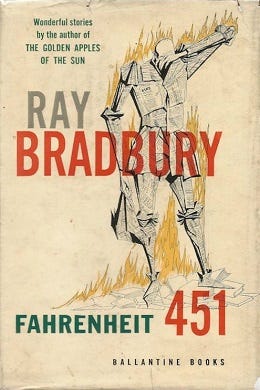
In Fahrenheit 451, Ray Bradbury’s futuristic dystopian novel where addiction to technology has led to a lack of empathy and connection (sound familiar?), Guy, a ‘fireman’ burns books in a society where literature is banned to suppress independent thought. He eventually realises that this is bad idea and joins the ‘book people’ a resistance group whose aim is to memorise literature. One of the characters that encourages him on this path is Clarisse, a teenager whose curiosity and love of nature challenge his world view.
On my hopeful days I look forward to a new generation of Clarisses who can see junk tech, AI’s racist, homophobic and sexist reading lists, and associated book banning for what it is, and lead us down a different path.
Luckily, I work with a committed team of Clarisses and we hope to turn the tide on some of these issues through our work. Our new centre for writing and publishing which is now in the works will be a beacon for reading and engaged debate and a place where all books – and especially those that challenge and open minds will be championed and celebrated.
For a deeper dig into why freedom of expression is important join us next week on April 29 where the writer Max Porter will be delivering the 2026 PEN Lecture at Newcastle University. If you want to know more about reading and your brain, I highly recommend James Marriot’s BBC Radio 4 series How Reading Made Our Brains available on Sounds.
In the meantime, get reading and enjoy your analogue spring!