


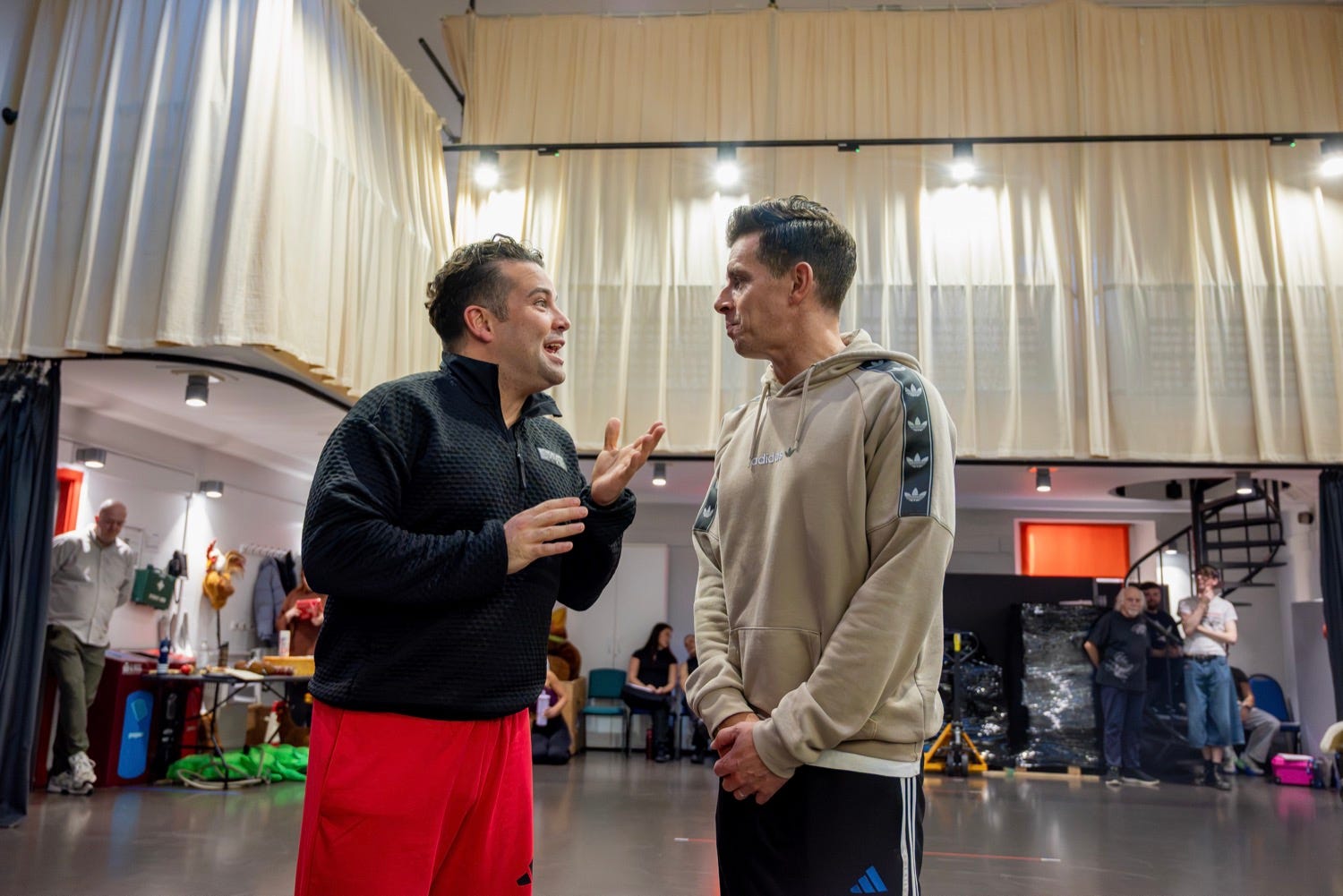
When someone offers you a poncho before you watch a rehearsal involving Danny Adams, my advice would be to take it.
This was the second indication that our invitation to watch a run-through of Act One of Jack and the Beanstalk at Newcastle Theatre Royal might not be quite a relaxed morning of theatrical observation.
(The first had been David Whetstone’s shaving foam-covered report from his rehearsal attendance last year.)
A handful of ‘lucky’ members of the media had once again been invited into the rehearsal room as the cast prepared to move into the theatre proper.
We were on high alert from the moment ponchos were unwrapped.
Every time a bucket, hose or tray of eggs appeared, you could feel the tension rising. What was in it? Is that pipe attached to anything? Are there real eggs hiding among the rubber ones?
I’m not about to give away any of the surprises awaiting audiences when the curtain rises next week, but I can offer a few clues from the prop table.
Plastic jugs, a pheasant puppet (unplucked), a FOR SALE sign, chairs without seats, giant pea pods, a small sack of beans, stepladders and a single leek.
There is also a tongue-twister involving the aforementioned pheasant which will have some parents on tenterhooks - earmuffs at the ready.
Make of all that what you will, but if your ticket is for the front of the stalls, I’d say a poncho is advisable.
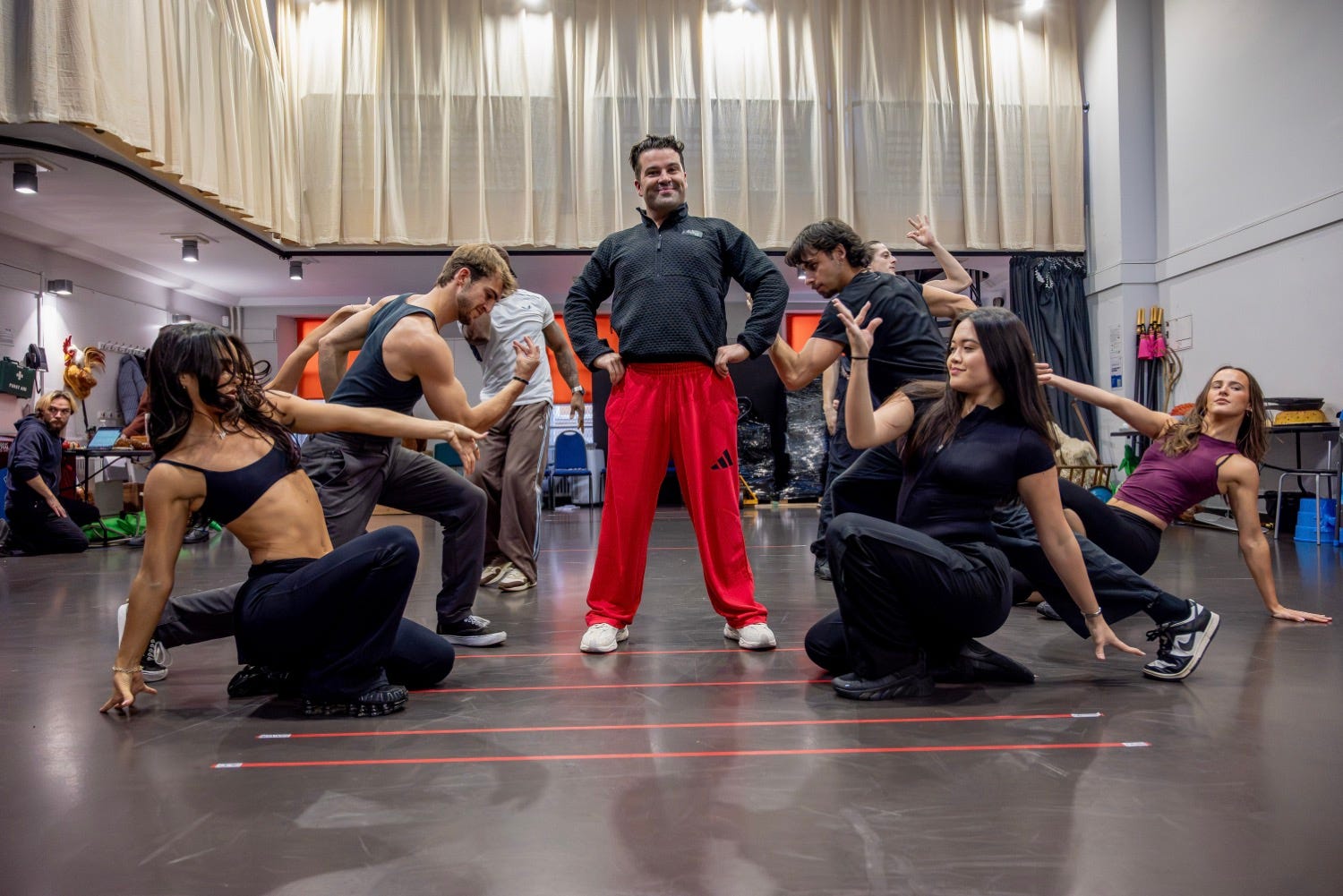
Despite the soaking though, it was a real treat to watch the company at such close quarters, particularly before the costumes, scenery and special effects are added.
Because beneath the apparently effortless mayhem is an extraordinary amount of precision, timing, talent and hours and hours of hard work.
The slapstick is beautifully choreographed, the musical performances are terrific and the cast’s camaraderie is delightfully obvious.
The production is written and directed by Wallsend-born Michael Harrison, who has become an internationally renowned theatre producer while maintaining his long-standing connection with the Theatre Royal panto.
He spends the first week of rehearsals in Newcastle before turning his attention to another festive fixture on his considerable to-do list: the London Palladium pantomime.
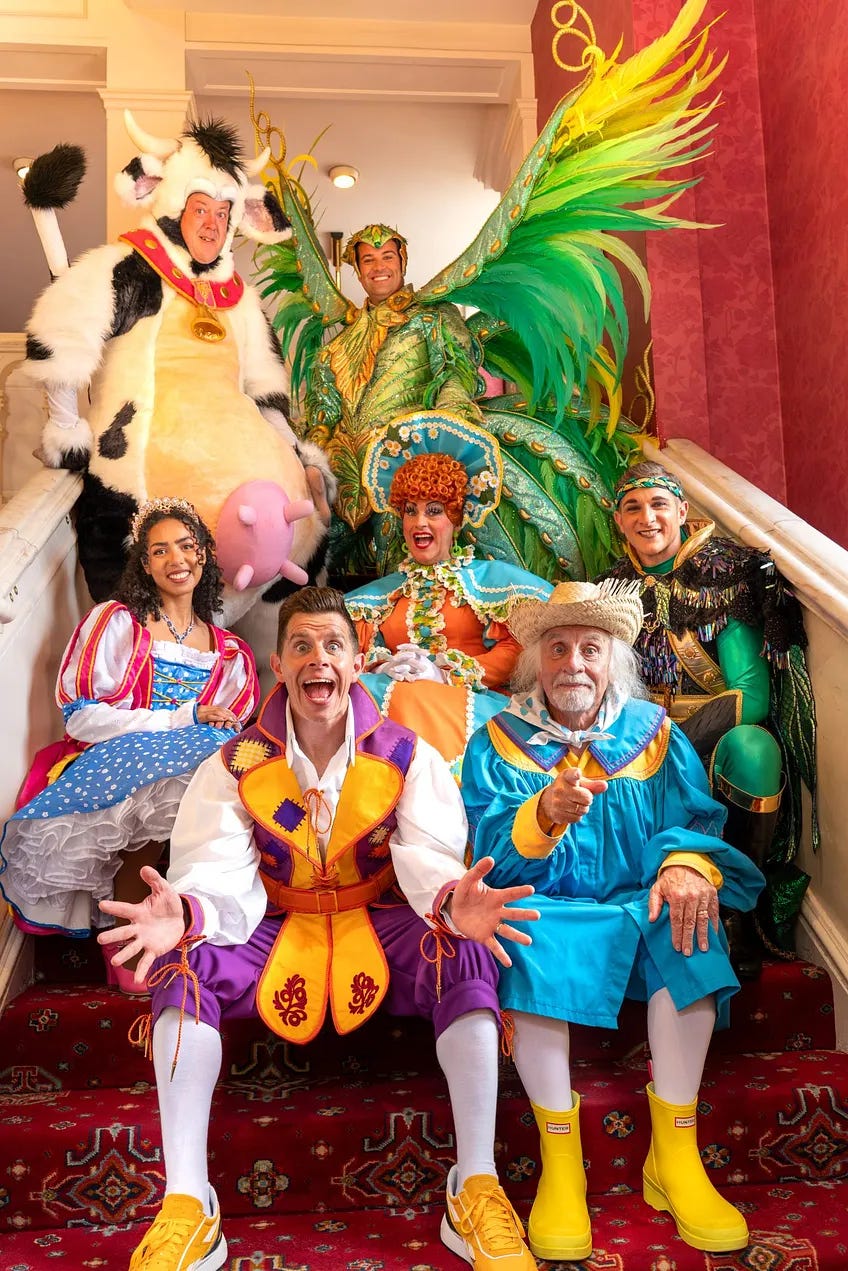
Back in Newcastle, there’s a cast of familiar faces bringing his latest creation to life.
Danny Adams is back as Jack Trot, alongside his real-life dad Clive Webb as Farmer Trot and brother Mick Potts as Pat the Cow.


Chris Hayward returns as Mrs Trot, a dame role he’s been making his own for more years than is polite to ask a lady, while fellow veteran Wayne Smith gets to embrace his wicked side as Fleshcreep.
Joe McElderry is the fabulous Spirit of the Beans, with Rachel Stanley as Queen Josephine and Oonagh Cox as Princess Jill.
Alongside the returning principals is a new intake of young ensemble performers, bringing fresh energy to the production and becoming part of what the regulars clearly regard as an extended panto family.
With Danny and Clive celebrating their 21st anniversary this year, it's a company built on long-standing relationships – and that familiarity is one of the secrets of the Theatre Royal panto's enduring appeal.
After the rehearsal, I caught up with Danny and Joe in their dressing room, where they were delighted to have had some fresh faces to perform for.
“We’ve done it probably 60 times to no one,” says Danny. “So just to have some new people in to get a feel of what works, what doesn’t, it’s great.”
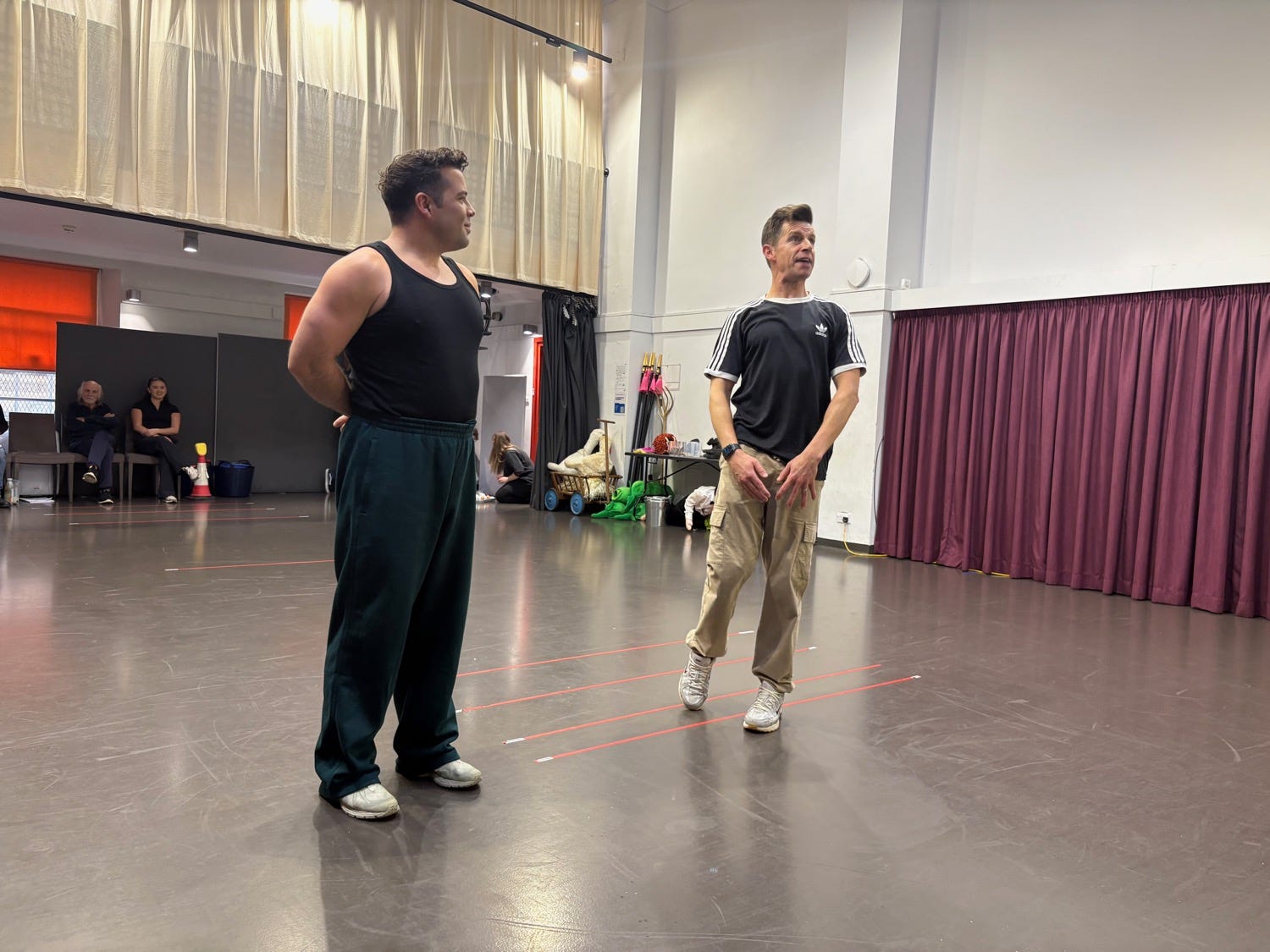
“Sometimes when you do it in the room, when everybody who works on the show has heard one joke once, then you don’t get that spontaneous laughter again,” adds Joe.
“So you’re kind of timing everything, hoping you’re going to get a laugh. It’s nice to get that rhythm before an audience comes in.”
Their own onstage partnership has become one of the show’s highlights.
Danny has a theory about what makes a successful comedy partnership – and his experience of working with Joe seems to bear it out.
“The best double acts just happen through being friends or by fluke,” he says. “Within a minute of that first rehearsal, you get the feeling that there’s something special here. That’s how it was with him.”
Joe reckons their ability to read one another is what makes it work so well.
“You can kind of know what each other is going to do without speaking, just with a look,” he says. “That gives you the confidence to wander off script occasionally, which the audiences really like, and which keeps us on our toes too.”
But while the cast’s close relationships and the affection audiences have for them are among the show’s greatest strengths, there’s always the challenge of keeping things fresh without throwing any babies out with any bathwater (although the latter would obviously appeal on press visit day!).


For Mick , whose largely silent, understated comedy has made him a firm favourite over the years, it’s about finding small new touches.
“There’s an expectation to keep it fresh without losing too much of what works,” he explains. (We’ve moved into an adjacent dressing room, which Mick shares with Wayne).
Incidentally, Mick’s entrance - this time as the Trot family cow - is something of a panto phenomenon. While other characters get fanfares, thunderclaps and elaborate introductions, he simply walks on. And the audience loves him for it.
“It's a real comfort when people sort of know what you're about,” he says. “It's nice here to feel like you’ve got some laughs in the bank because you're not starting afresh.”
Wayne, returning for his 10th Theatre Royal panto, agrees, but adds that familiarity brings its own pressure.
“It’s really unusual to have 11 weeks of work every year in the same place, in an environment that we know,” he says.
“But it’s never a given that you’re coming back. You always want to be better than you were the year before. Find ways to give a bit more and never get complacent.”
This year he’s particularly pleased to be playing the villain.
“It’s always nice to come back to a baddie,” he laughs, with Mick helpfully suggesting that the role comes naturally.
Further along the corridor, sitting among Dame Trott’s incredible parade of wardrobe changes, Clive Webb points out that there are always first timers in the audience alongside longtime fans.
“When we first started, kids who were little when they came are now in their twenties and bringing their own little ones,” he says.
It’s a remarkable relationship between a cast and its audience, although Clive admits it gets harder to create new material as the years go on. “Mind you, I can’t remember what we did 10 years ago, so I wonder if the audience can!”
Chris Hayward, meanwhile, has a rather different annual challenge.
As the Theatre Royal’s resident dame, he starts thinking about his costumes in February or March, ordering fabrics and feathers and working on designs while most of us are still trying to lose the post-Christmas paunch.
Again, I’m not going to offer any spoilers… when it comes to the wider production Chris says he couldn’t give anything away, even if he wanted to.
“I’ve never seen the beanstalk. I’ve never seen the giant,” he laughs. “Apparently there’s a big giant’s foot. I’ve never seen that either.”

All will be revealed during technical rehearsals, when the company finally gets to work with the scenery, costumes and effects.
Those are long days, Chris admits, particularly with quick changes and the prospect of three performances on some Saturdays.
His solution? A bed in his dressing room, which other members of the cast and creative team have been known to make use of.
“I used to be out every night many years ago,” he laughs. “But now I can’t do two shows and go drinking.”
There’s clearly a lot more discipline involved in delivering 85 performances than the onstage chaos might suggest.
Danny says the production keeps getting bigger as technology develops, but insists the traditional comedy remains at its heart.
“We always try and keep the essence of the show, like the slapstick humour that dates back to Laurel and Hardy,” he says. “We just try and put different twists on it.”
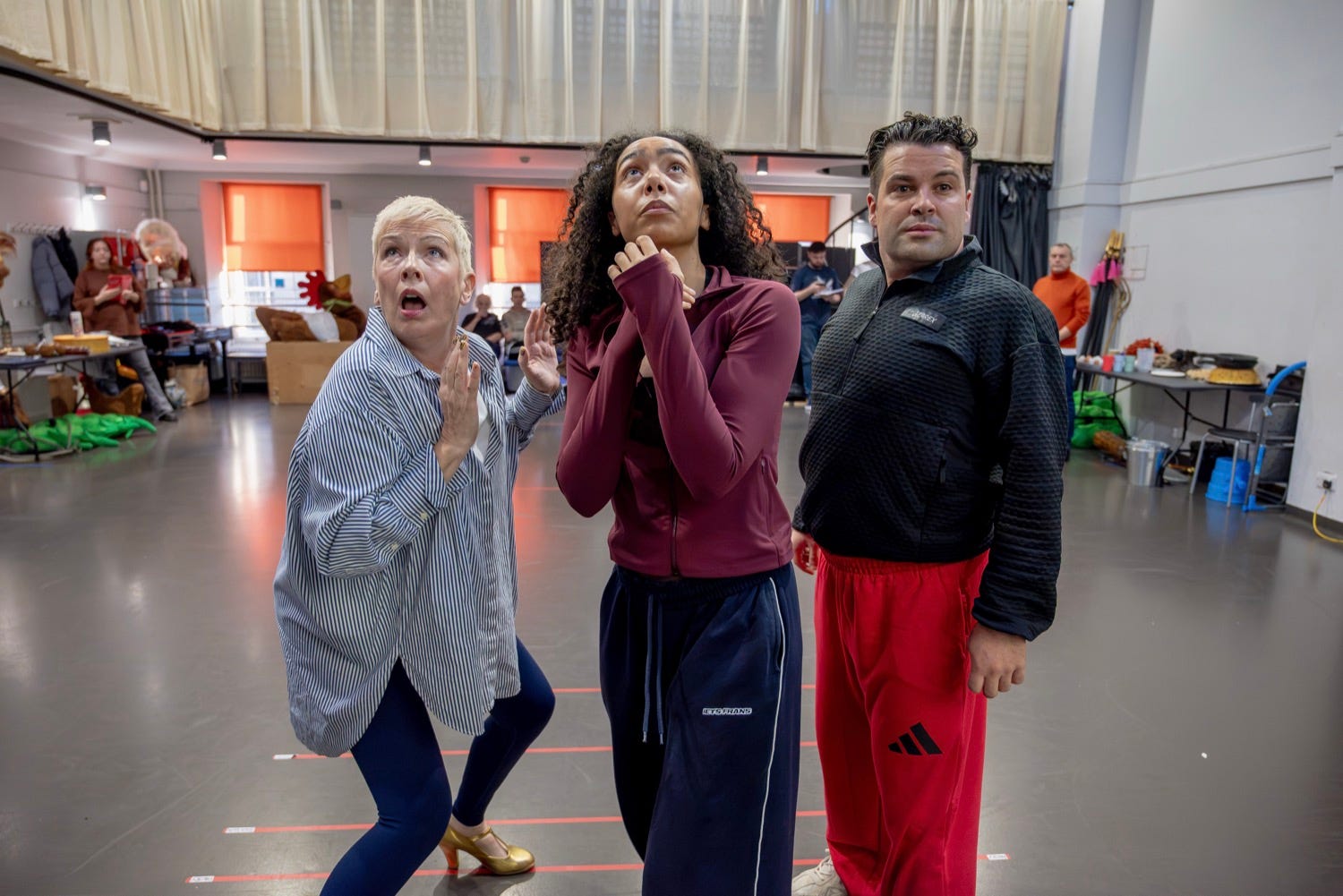
There’s plenty of 21st-century spectacle promised for this year’s adventure, with giant effects, lavish costumes and the sort of surprises that have become a Theatre Royal trademark.
But having watched the cast at work without any of those theatrical bells and whistles, I suspect the biggest attraction will be the same as it has been for the past two decades: a group of talented performers who know exactly how to make an audience - and each other - laugh.
Whether they need waterproofs or not.
More than 76,000 tickets have already been sold for Jack and the Beanstalk, which runs at Newcastle Theatre Royal from November 24, 2026 to January 17, 2027 - one of the longest pantomime runs in the country. Tickets are available at www.theatreroyal.co.uk or by calling 0191 232 7010.
Looking further ahead (if anyone has the energy), tickets are also on sale for the Theatre Royal’s 2027–28 pantomime, Robin Hood, which will run from November 23, 2027 to January 9, 2028.