


Artists can make a difference, in bold fashion (witness Antony Gormley’s Angel of the North) or more subtly (Rupert Clamp’s Longest Sentence, perhaps, carved into kerb stones running from Grainger Street into Westgate Road).
They create new stories and revive old ones – as you will see in the summer when Jed Buttress’s sculptures, inspired by an early 20th Century newspaper report of escaped monkeys, are unveiled in the Grainger Market.
The spotlight has fallen once again on this Newcastle treasure, designed by John Dobson and bearing the name of visionary planner Richard Grainger whose radical reshaping of the city centre in the 1830s has stood the test of time.
“While others think, Mr Grainger acts,” one commentator noted when the sudden availability of a large property made an overhaul of Newcastle’s medieval city centre possible.
His proposed scheme was adopted and has been admired ever since (even though part of it succumbed to 1960s and ’70s redevelopment of a brutalist nature).
With many buildings having fallen into disrepair and even disuse by the end of the 20th Century, the Grainger Town Project was initiated by Newcastle City Council and English Heritage to stop the rot and restore, as far as possible, the past glories of Grainger’s scheme.
This regeneration scheme ran from 1997 to 2003, attracting investment of £174m, mostly from the private sector, and saw jobs created and 121 buildings restored.
Flash forward to just before the Covid pandemic and attention had turned to Northumberland Street and its tributaries.
Killingworth-based architects FaulknerBrowns submitted a vision for this core retail area to Newcastle City Council and argued for the Grainger Market to be included in its masterplan.
Tania Love, FaulknerBrowns architect and associate partner, explains: “We felt this was the most important and vital independent retail asset in the city.
“High streets and big cities were chasing big brands but Covid showed people valued relationships with independent traders who had connections to their communities.
“It was an awakening for a lot of people.
“You were hearing the expression ‘clone towns’ a lot because high streets were getting to look the same. I think all those places are now chasing a bit of uniqueness and the Grainger Market provides that in spades.”
FaulknerBrowns’ vision document drew on best practice from around the UK, along with much discussion with Grainger Market traders, to show what improvements might be made.
“It looked at the architectural, urban aspects of the market but also, in collaboration with others, at governance, leases, branding, communications and all those things,” says Tania.
“The city council used the vision document in support of an application for levelling up funding, which they got to the tune of £7m, and put in additional money to create a £9m budget.”
In 2021, FaulknerBrowns won the contract to deliver the vision now taking shape.
The following year, the North of Tyne Combined Authority (now North East Combined Authority) awarded £1.7m to a new cultural and creative zone in Newcastle, Creative Central NCL.
It aims to revitalise an area incorporating Clayton Street and parts of Westgate Road by supporting artists and creatives, seeing their work as “a cornerstone of what makes the city attractive and unique”.
“Creative Central NCL joined the party and it’s been a really positive collaboration,” says Tania.
“Part of the interventions we proposed were to do with better signage and Creative Central NCL have been finding artists to help with this.”
It’ll remind many of the Grainger Town Project whose regeneration plans included an arts and culture programme.
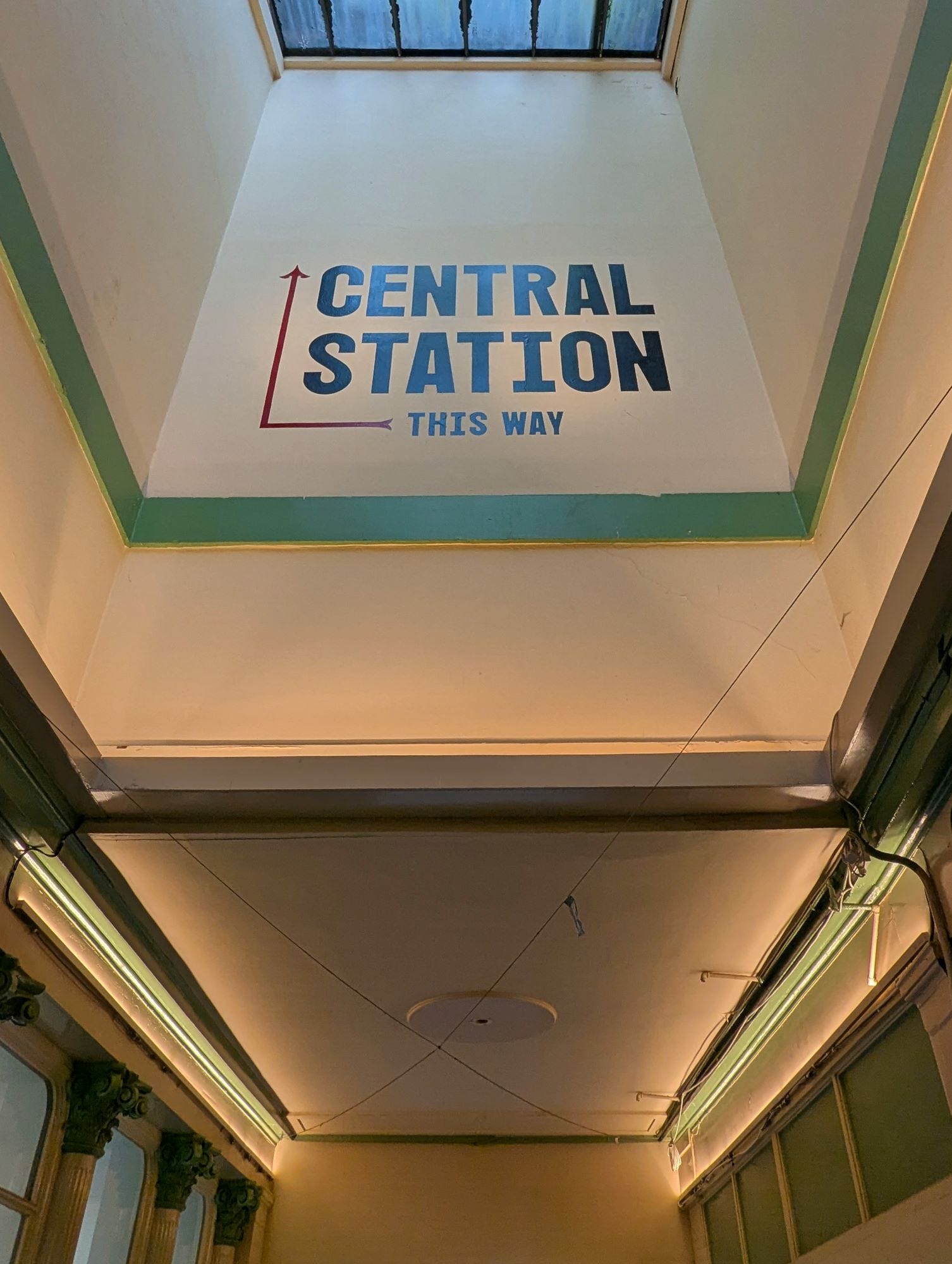
Rupert Clamp’s pavement artwork is a legacy of that and I meet Tania on another, the metal memorial to Richard Grainger set into the Grainger Street paving in 2002.
Designed by Charlie Holmes and Ian Ness, it bears the legend ‘The Past Is My Present To Your Future’.
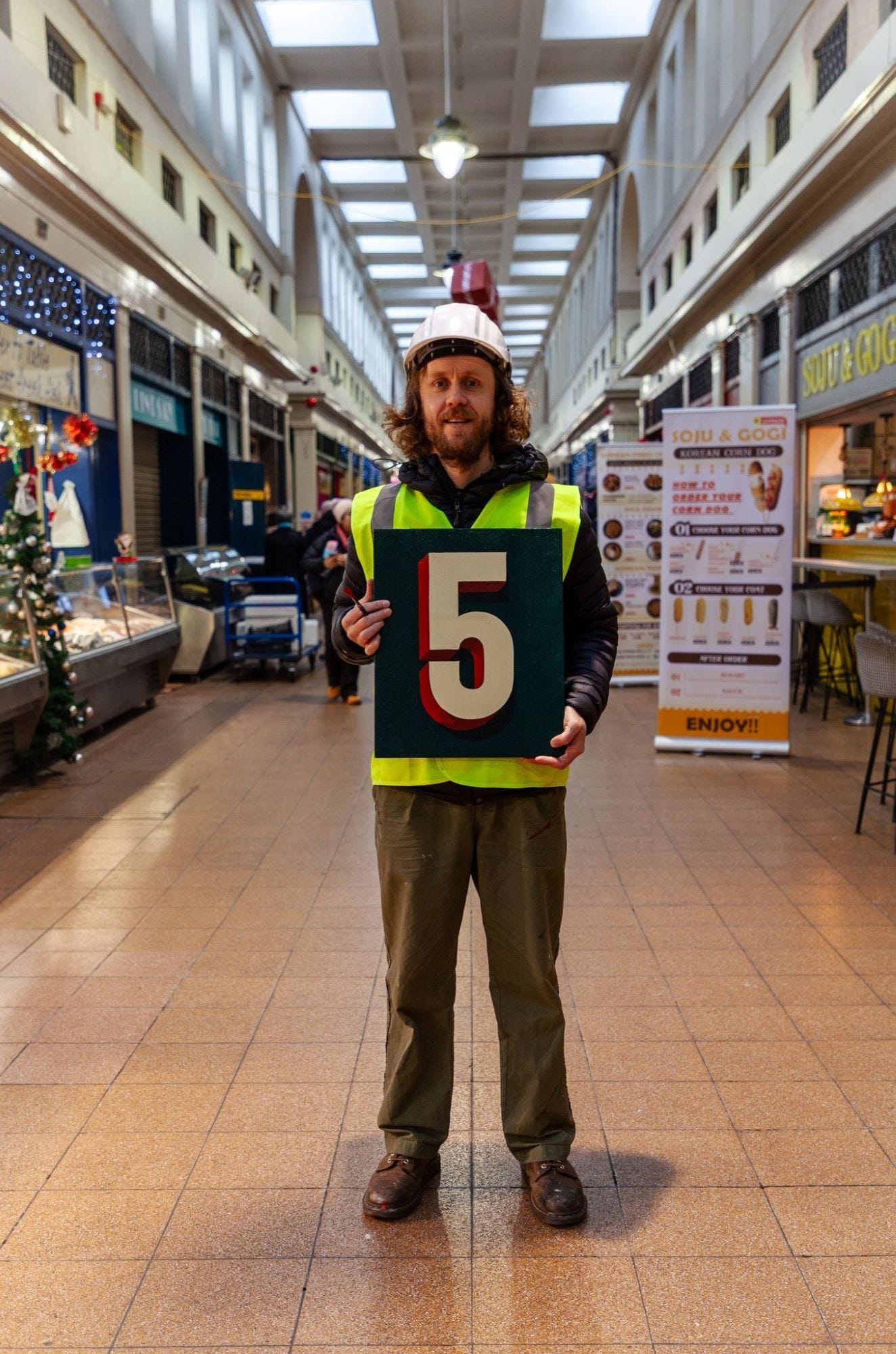
Tania believes the sentiment applies to the current improvements which have seen another artist, Newcastle-based Ashley (Ash) Willerton, making his mark in and around the Grainger Market.
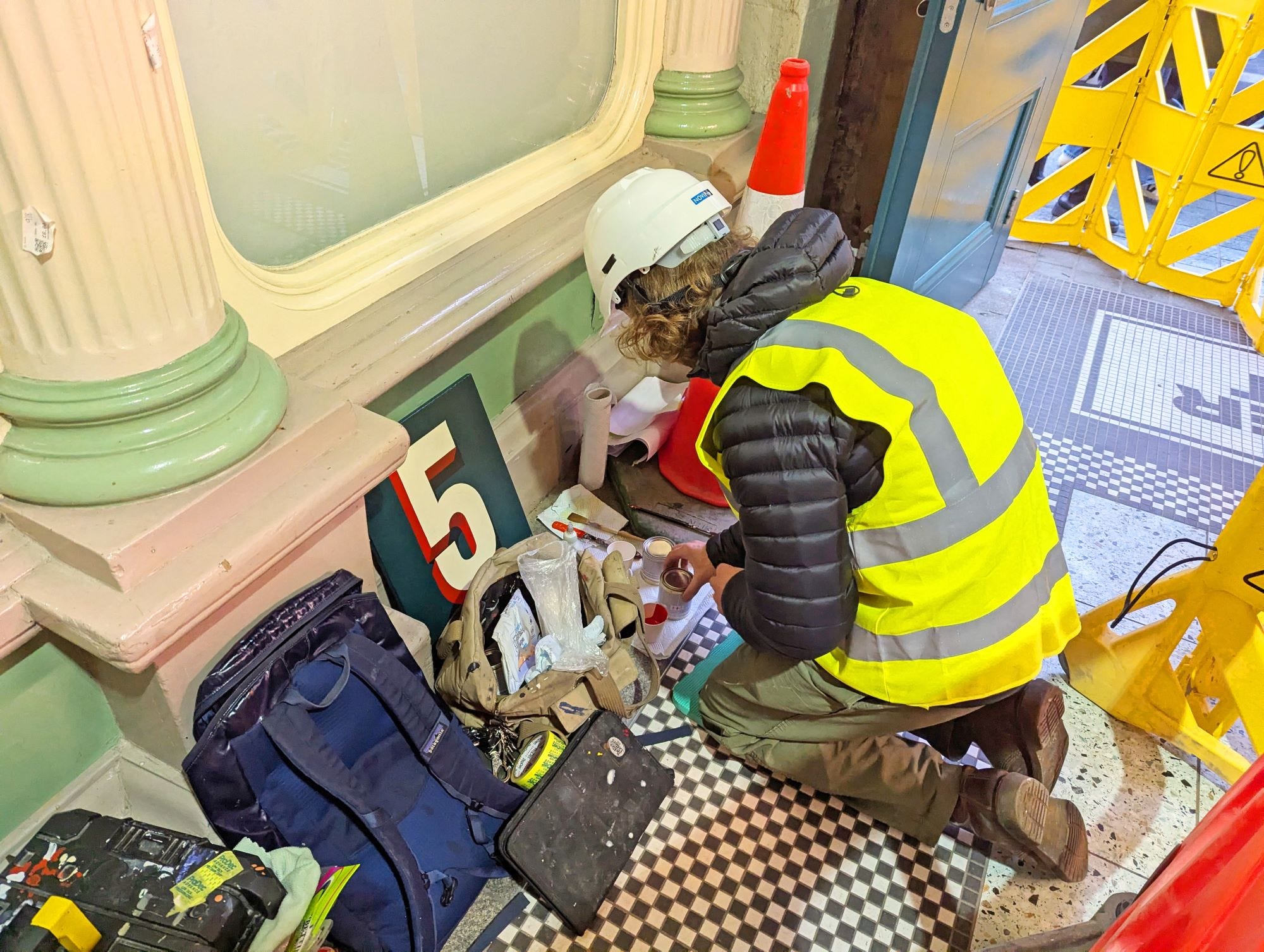
Subtly – “We didn’t want poke-your-eye-out interventions,” says Tania - he has been evoking the past to usher in what all hope will be a more comfortable and prosperous future for Grainger Market traders and customers.
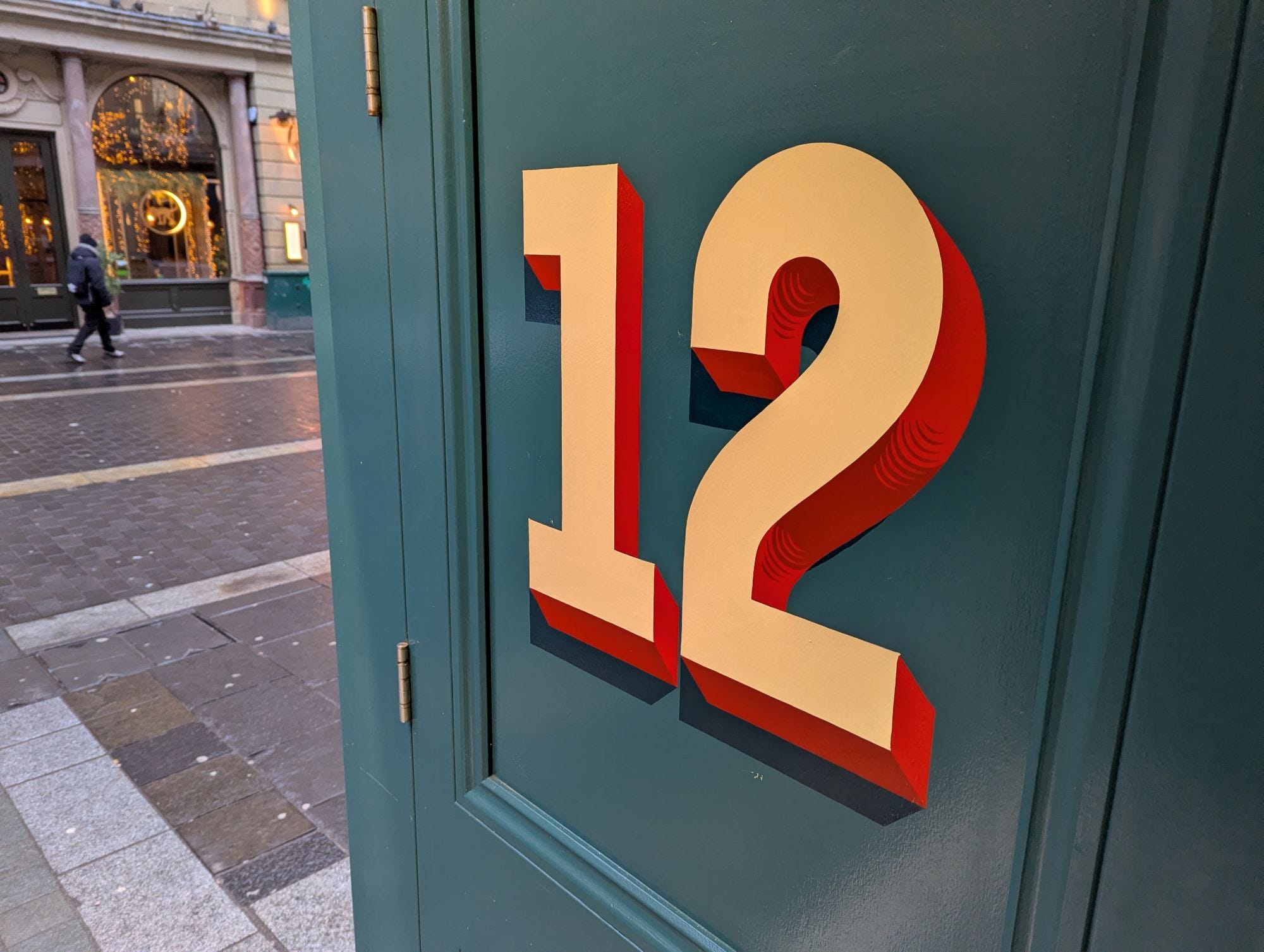
Brand and marketing agency Gardiner Richardson designed a new but distinctly retro font and it was used by Ash to number all 14 entrances.
“Very few people know there are 14 but now that Ash has painted door numbers, people will have a sense of where they are,” says Tania.
“One of the top things on the traders’ wish list was better wayfaring.”
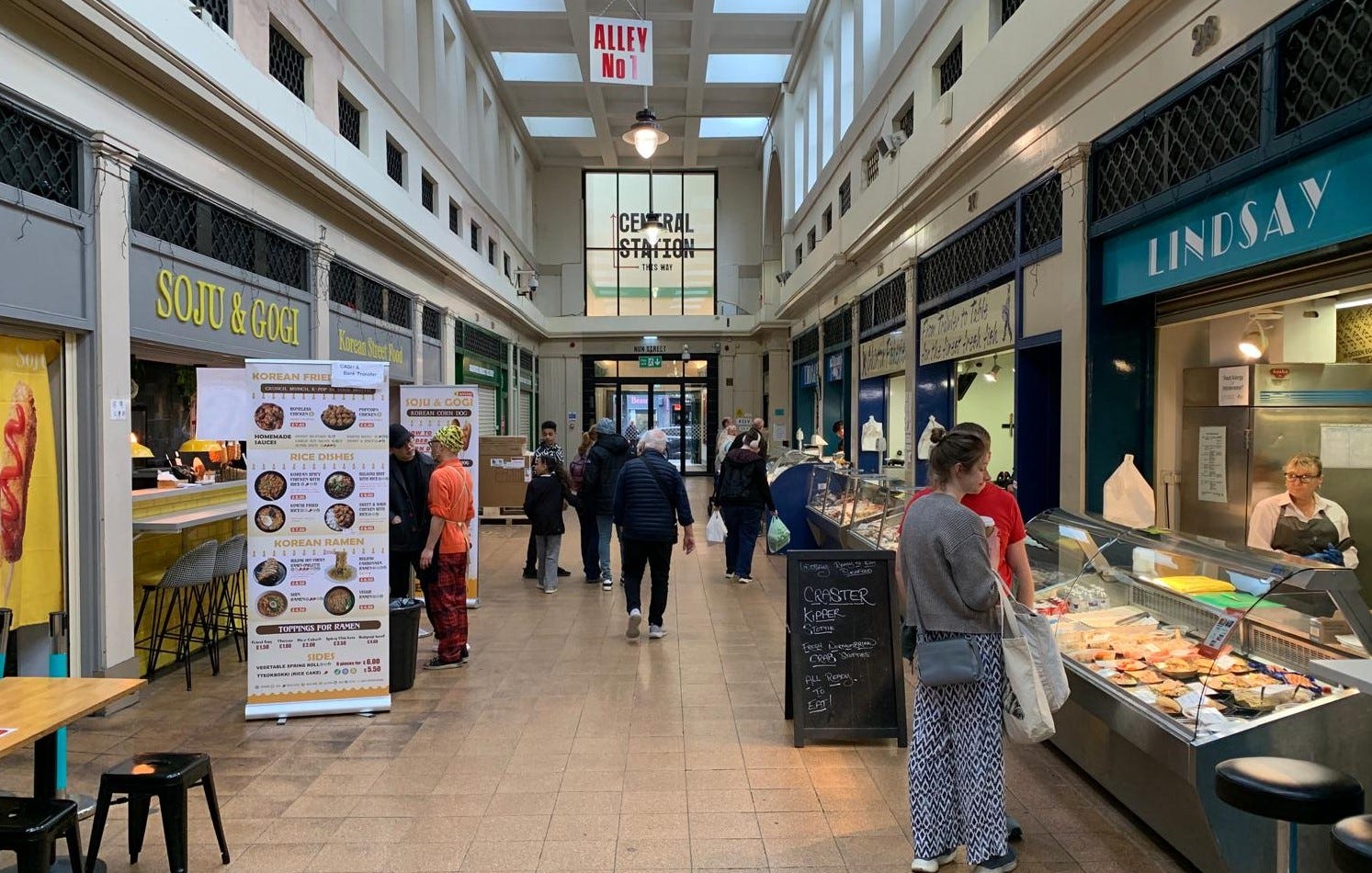
Look up and you will see new hanging signs indicating which alley you’re in and rather more elaborate ones pointing the way to Grey’s Monument, Central Station and Eldon Square.
When Jed Butress’s sculptures are installed, there will be even more landmarks, to say nothing of conversation pieces.
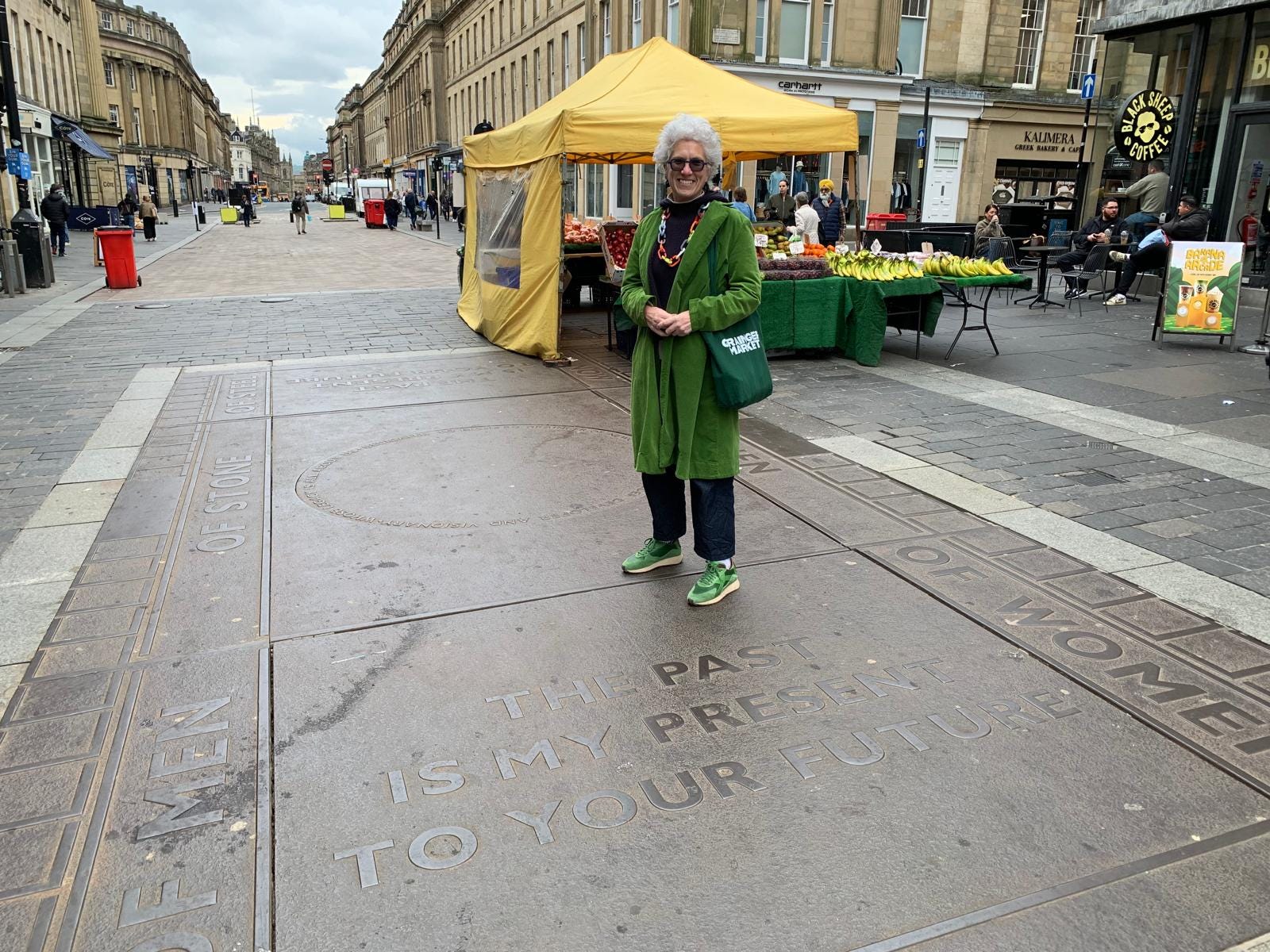
Outside the market new metal signs indicate the entrances and planters are being installed along the Nelson Street and Clayton Street frontages to encourage people to linger.
Other internal improvements have been documented already on these pages, including the creation of a spacious arcade where communal seating will be installed and events take place.
The new Grainger Market loos – the gents’ at least – are a revelation.
But it’s the artistic subtleties that lend uniqueness and the new work seems to have infused new life into past creations, such as the unsigned portrait of the Grainger Market which, says Tania, has “been here forever”, and the little ‘cabinet of curiosities’ featuring barber’s tools located near those loos.
Look down as you enter the market and you will see new mosaic tiling, all inspired by the one entrance where tiling referencing the old Isaac Walton store has been left in place.
Just as in the area around Pink Lane, where murals have been created and communal waste bins largely banished, you can see how Creative Central NCL is making a difference.
For Tania Love, the Grainger Market element of this process of renewal brings much joy.
“I’m a bit of a market obsessive,” she tells me.
“All my holidays are organised around markets. Me and my partner, who’s a chef, choose cities with interesting markets so we’ve been to a lot of them around the world.
“It’s a global phenomenon that markets are having to evolve because of online retail and because shopping trends are changing.
“But it’s really important to Newcastle, and me as an architect trusted with delivering this vision, that this market retains its character and its variety of trading because that’s one of its massive strengths.
“Another lovely thing about markets is they’re democratic and appeal to people whatever their income level. They’re welcoming spaces with something for everyone.”
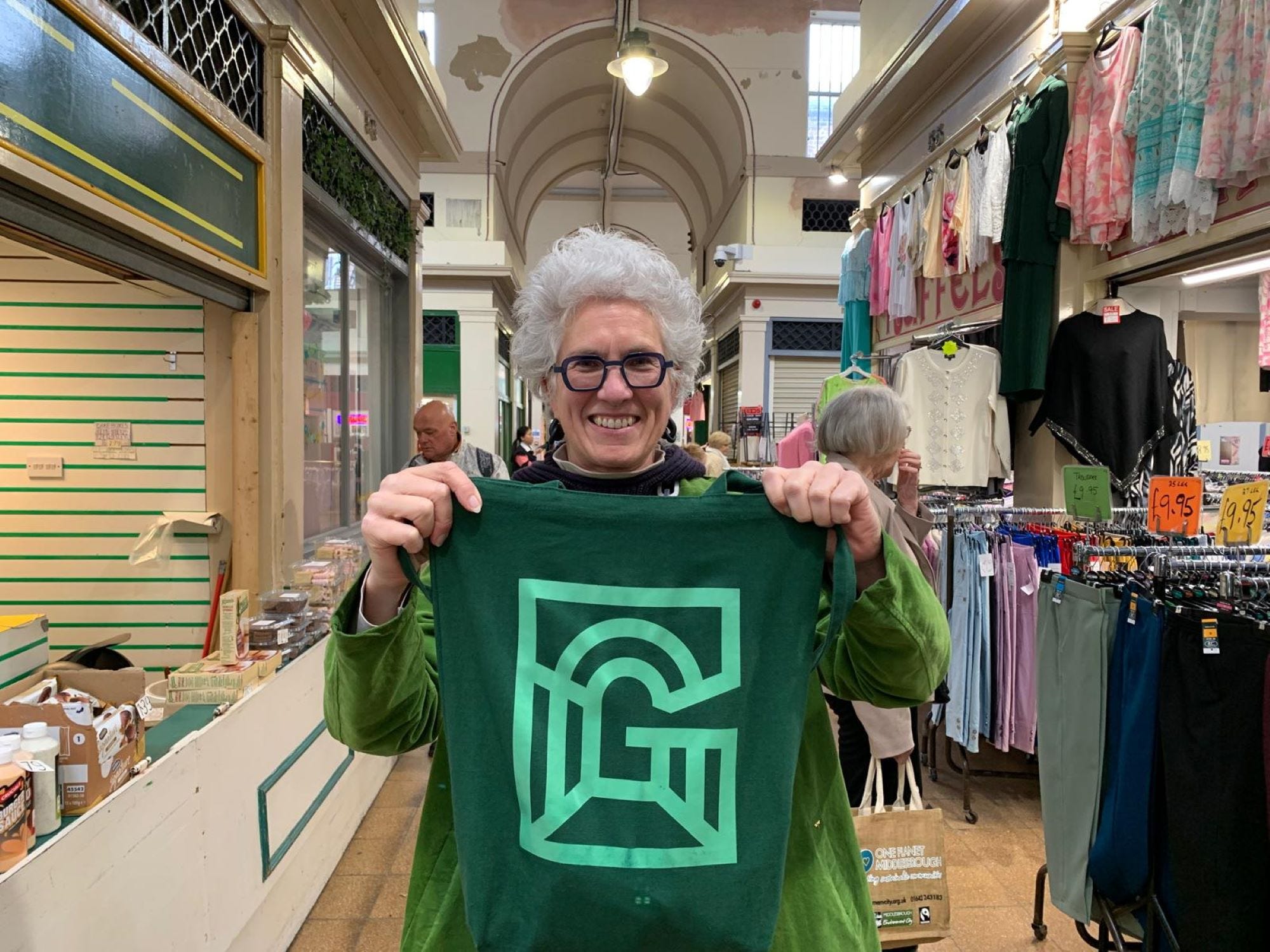
Happily she poses with one of the newly designed bags (on sale in the weigh house, another popular reminder of old times) whose letter ‘G’ logo incorporates one of the market’s appealing features.
It’s an enfilade, she explains, an architectural term meaning a suite of rooms with doorways in line.
Stand in Dobson’s Grainger Market and you’ll see the arches beautifully aligned. It’s just one of the features that make this, in Tania’s expert estimation, the best market in the UK.
Look up and marvel when next you pop in for a cabbage or some kippers.