

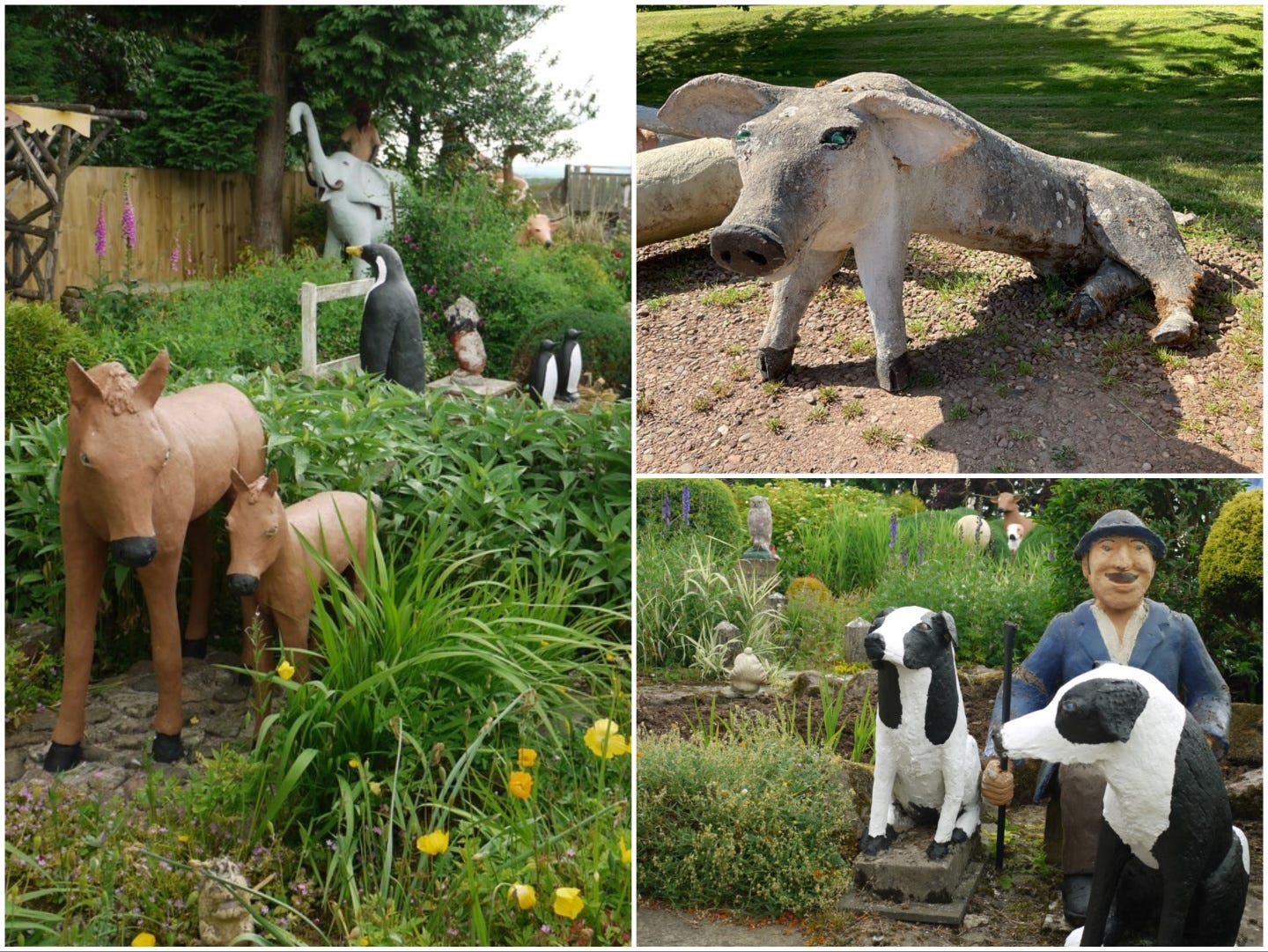
One of the quirkiest North East sculpture collections, which became a quaint visitor attraction, is to be sold.
The Branxton Cement Menagerie consisted of more than 200 animals of every description, together with historical figures such as Winston Churchill and T. E. Lawrence.
The sculptures were created at Fountain House in the Northumberland village of Branxton, with visitors able to tour the private property’s garden to inspect the assemblage.
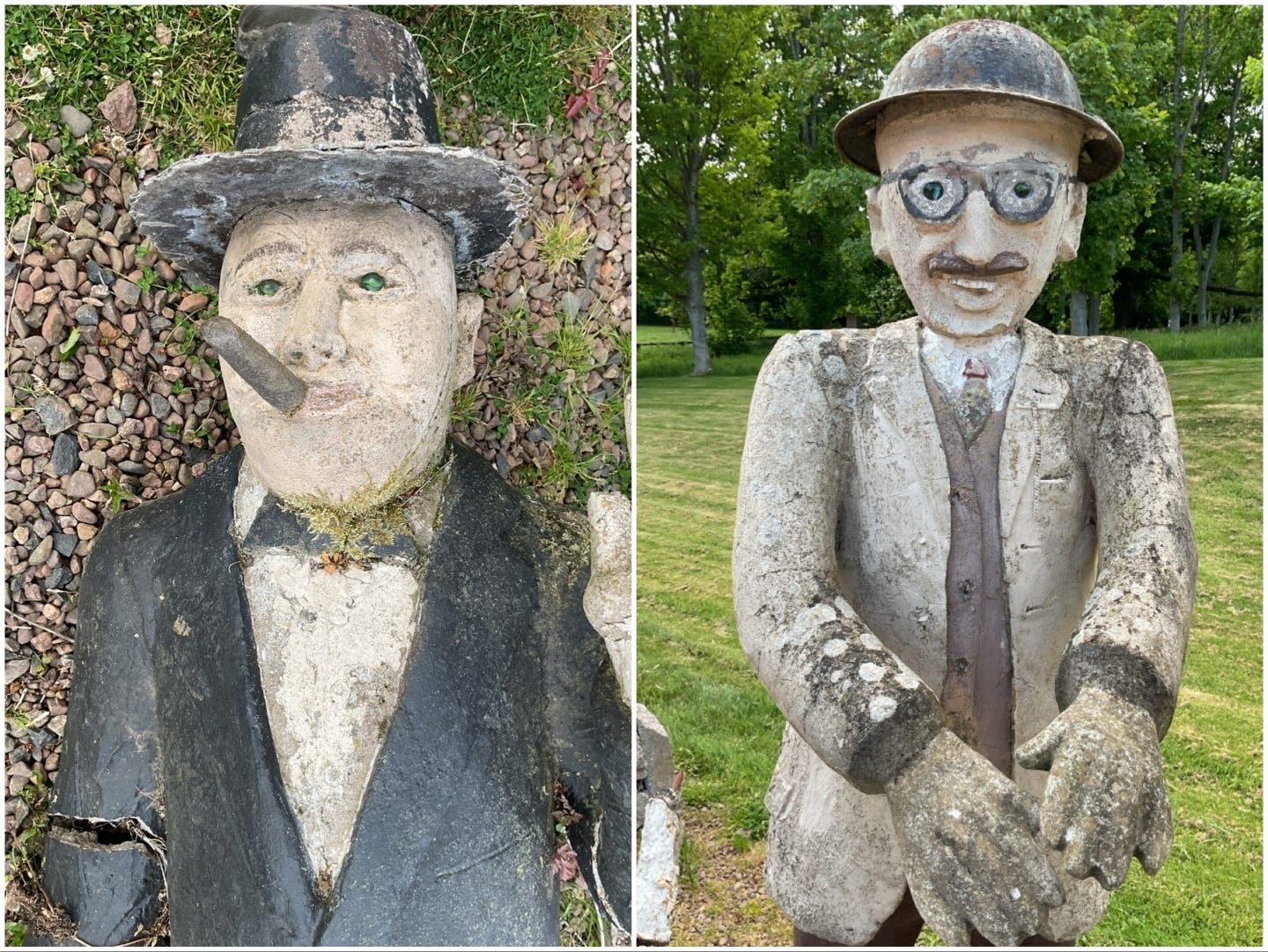
The collection, ranging from a giraffe and a lion to a rhino and zebra, was the work of John Fairnington, a retired joiner who began making the figures in 1961, originally to entertain his disabled son who spent much of his time at home.
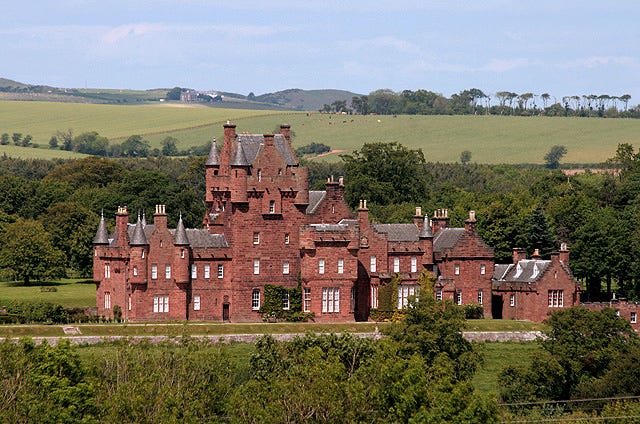
The collection was eventually bought in 2021 by the owners of Ayton Castle in Berwickshire in the Borders.
They in turn have moved on and the 17-bedroom mansion, which was on offer at £3.25m, has now been purchased by comedian, presenter and Celebrity Traitors champion, Alan Carr.
The next chapter in the history of the stately home will now be documented in a new Disney+ show entitled Castle Man, which will follow the transformation of the property.
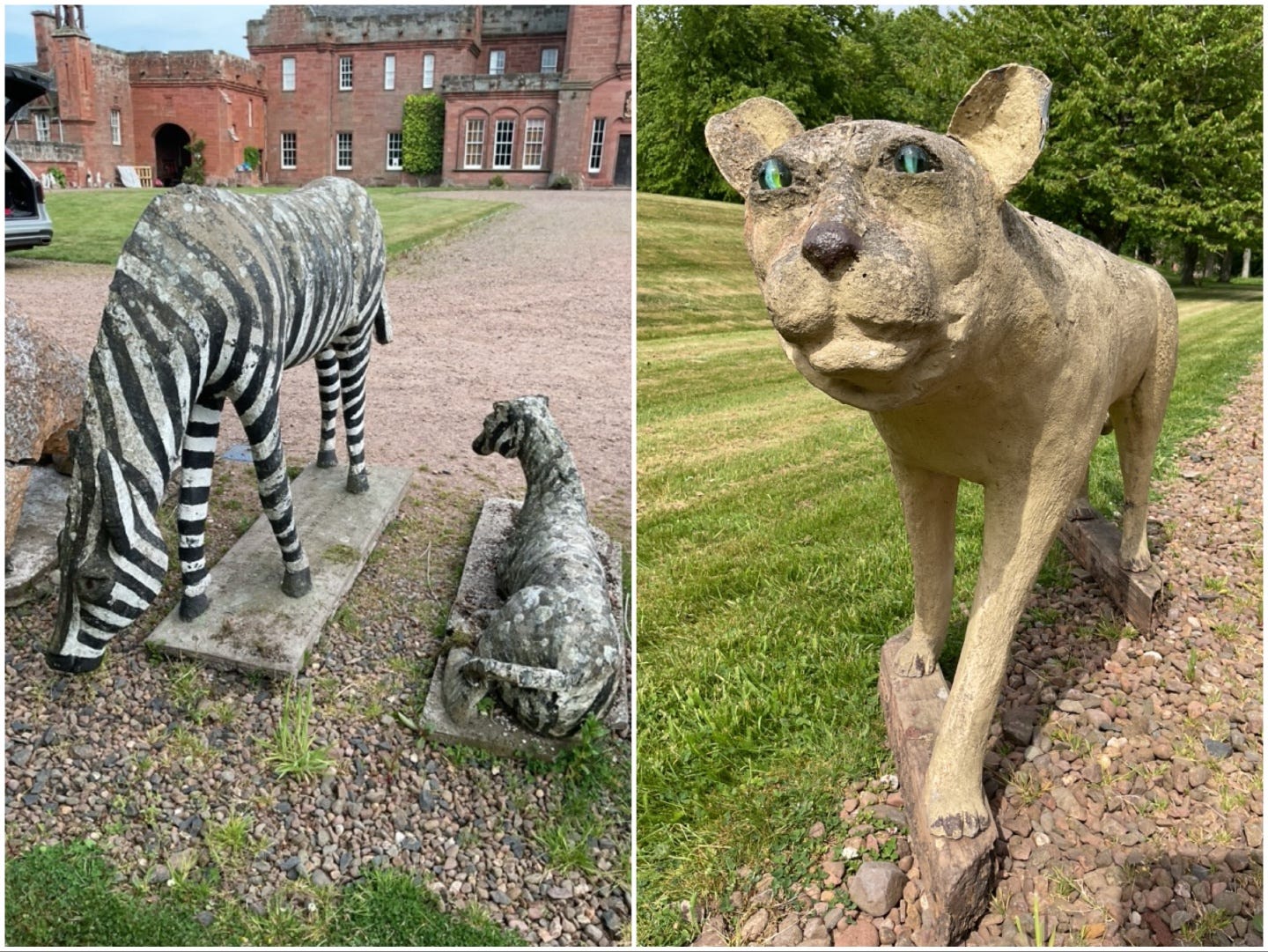
Meanwhile the residual contents of Ayton Castle will be sold in 400 lots by Wooler-based auctioneer Jim Railton, alongside almost 100 of the remaining cement figures, on July 5. Viewing is on July 3-4.
Individual pieces in the £100-£150 estimate range include a zebra, horse, lioness and Churchill.
“I have never sold anything like the menagerie, which is outdoor or naïve art. This outsider naïve folk art has been created by an artisan, with raw uninhibited creativity giving an authentic powerful expression to the sculptures,” said Jim.
“What started as a few figures gradually grew into an extraordinary garden filled with animals of every kind. The collection expanded to more than 200 sculptures, transforming the garden into a remarkable example of British folk art.
“They were purchased as a single collection by the owners of Ayton Castle, ensuring that the menagerie would be preserved for future generations.”
The sale of the sculptures has sparked pleas on social media expressing hopes that the collection can be kept together.
Posts include: “What a shame they’re risking being broken up as a collection and taken from their historical context”; “So hope they can stay together”; “Absolutely beautiful and incredible, let’s hope someone can keep these together.”
Jim added: “It would be nice if it stayed together as a collection or even returned to Branxton, where they were created. However, I suspect it will be split up, as the pieces are so charming, and they have created a huge amount of interest - both nationally and internationally.”
The castle as seen today was created between 1845 and 1851 by architect James Gillespie Graham, with later additions. It is a fine example of the Scots Baronial style, with turrets, battlements and a deliberately romantic “medieval” character.
The original stronghold on the site was later replaced by a more classical country house, which burned down in 1834. The estate was then bought by William Mitchell-Innes, a banker connected with the Royal Bank of Scotland, who commissioned the present building.
For more details on the menagerie, contact office@railtons.co.uk.