

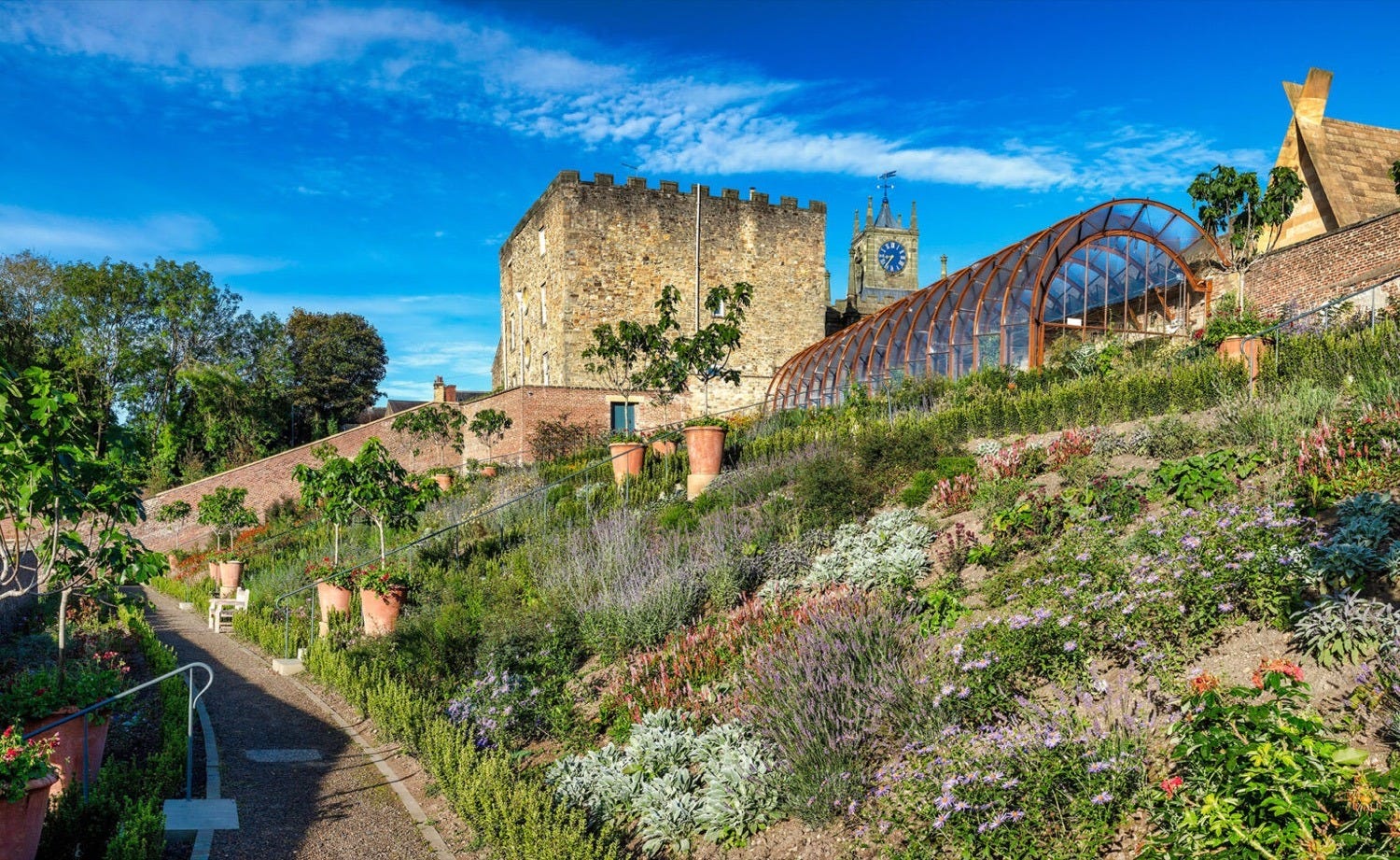
The transformation of a historic walled garden from dereliction to a renewed productive life has made it one of the picks of a crop of North East architectural prize winners.
The Auckland garden, with its listed walls, is one of the five winners of the 2026 RIBA North East Awards, which is marking its 60th anniversary.
The garden is part of The Auckland Project, which is dedicated to the regeneration of Bishop Auckland through the arts, culture, and heritage, and also won the conservation award.
Originally the most northerly fruitful Victorian pinery on record, where pineapples were once grown in hothouses, the site’s restoration has been carried out by MawsonKerr Architects with landscape architect Pip Morrison.
The garden is more than a visitor attraction or productive plot. It also serves as a resource for education on seasonality and biodiversity, with produce grown on-site used in local restaurants and surplus donated to local charities.
The new maintenance block, set into the bankside in a blend of reclaimed and new brick, paired with a sedum roof, allows this functional building to merge with the surrounding landscape.
The highlight is the new glasshouse, inspired by the “ridge and furrow” form of London’s famous Crystal Palace, designed by Joseph Paxton for the Great Exhibition of 1851.
Working with structural engineers JC Consulting, MawsonKerr have produced a result which combines a productive lower garden and a sensory upper garden, forming a key part of Auckland Castle’s transformation into a major visitor destination.
Other award winners:
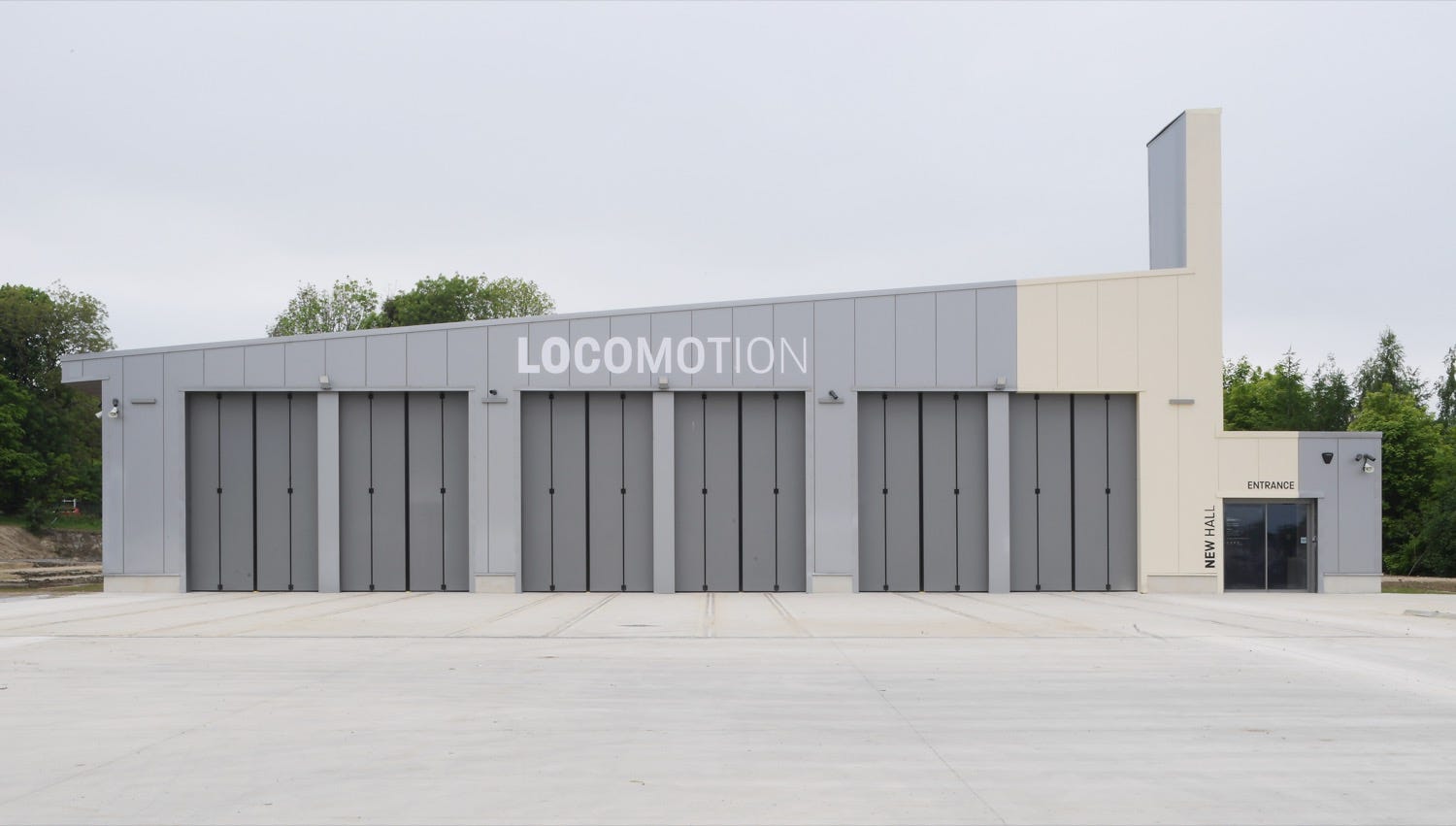
Locomotion New Hall by AOC Architecture, also Project Architect of the Year winner, Hannah Stringer; and winner of the Sustainability Award.
The New Hall at the Locomotion national railway museum in Shildon, County Durham, was championed by the architects as a building for the public, transforming it from purely a conditioned store into a space that involved visitors with the museum.
Externally, the building’s industrial form is defined by six pairs of large doors, hinting at the scale of the historical railway giants within.
Stepping into the hall, visitors are immediately confronted by the engines and the overwhelming smell of the railway, with surfaces unified in white, creating a “white cube” gallery effect that focuses attention entirely on the exhibits.
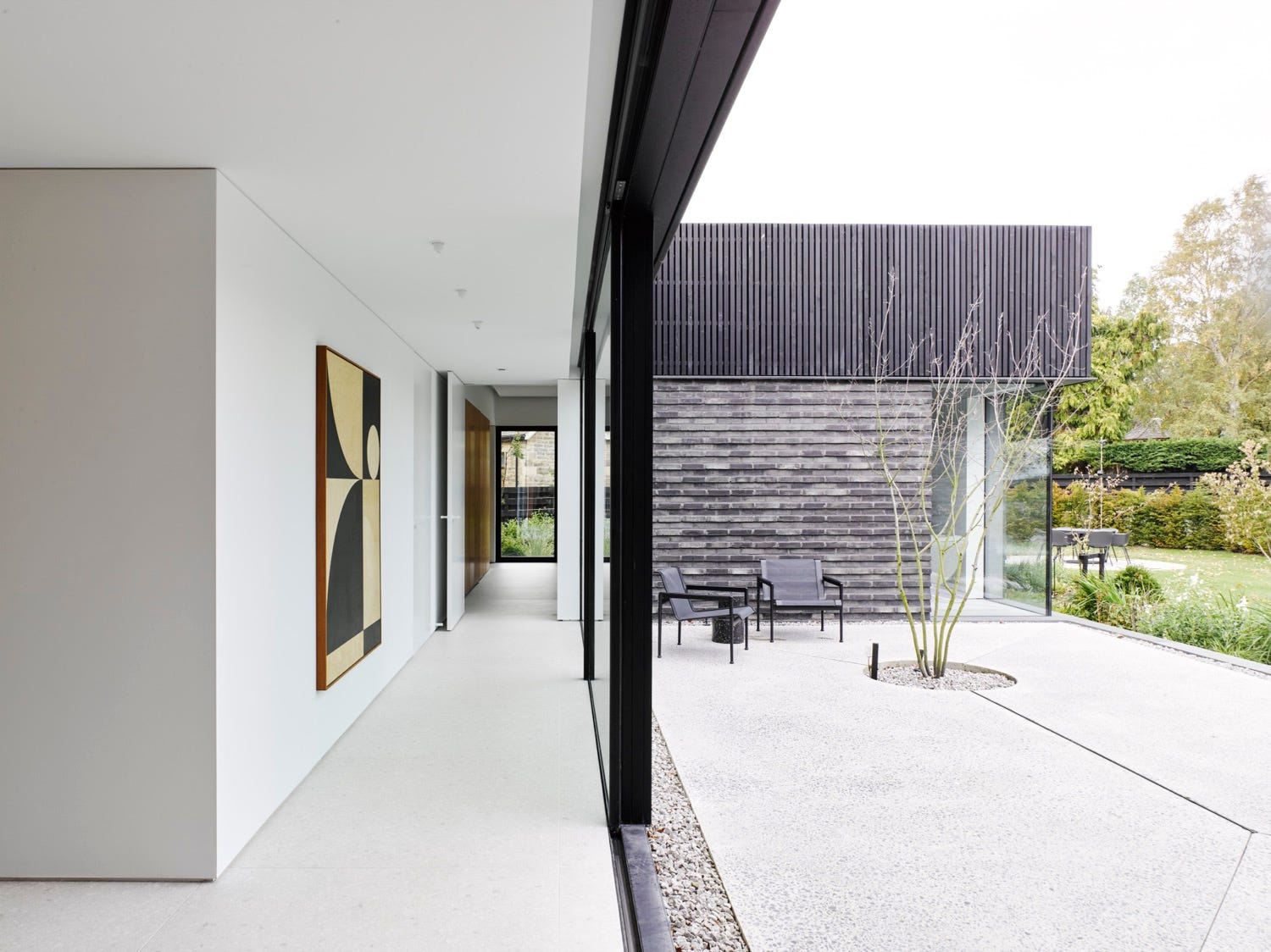
Mono House by Scott Donald Architecture. Also Building of the Year winner.
Judges said: “A discreet, sculptural home in Northumberland.
“What makes a home? It’s a question that has occupied architects for as long as there have been architects. For some, a home is a functional container for everyday life; for others, a highly stylised expression of personality. The best houses manage both.”
On the outskirts of a Northumberland village, Mono House lies behind a line of mature trees on a corner plot, with Danish brick and horizontal band of burnt larch cladding.
“The approach to the front door is choreographed through a series of crisp white concrete pads, leading to a glazed entrance and a perfectly proportioned corner window containing a dog bed,” say the judges.
“If you want to find the best lookout spots in a house, always ask the dog.”
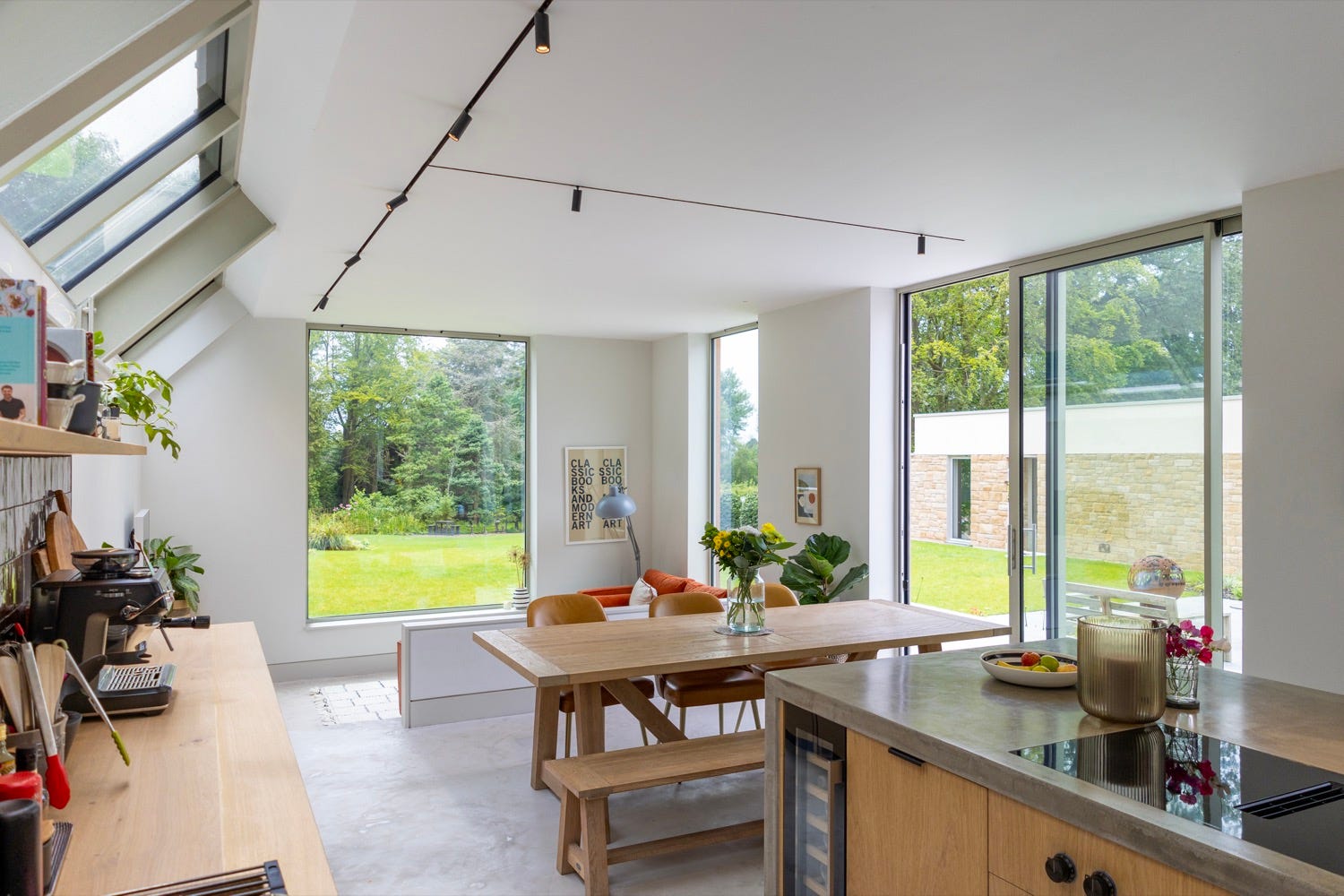
Newcastle Courtyard House by Miltiadou Cook Mitzman and Musson Brown Architects.
The house is on a quiet residential street on the outskirts of the city centre.
Judges say: “The architects have managed to place a large home very sensitively within its streetscape, flanked by grand Edwardian villas.
“Stepping through the doorway into the double-height hallway, you catch a glimpse of the scheme’s anchor point – the courtyard garden, around which the entire house is organised.
“Framed on three sides by full-height glazing, the garden floods into every corner of the plan. White-framed clerestory glazing provides glimpses of treetops, heightening the sense of being ‘within’ the garden.
“This is a very special home.”
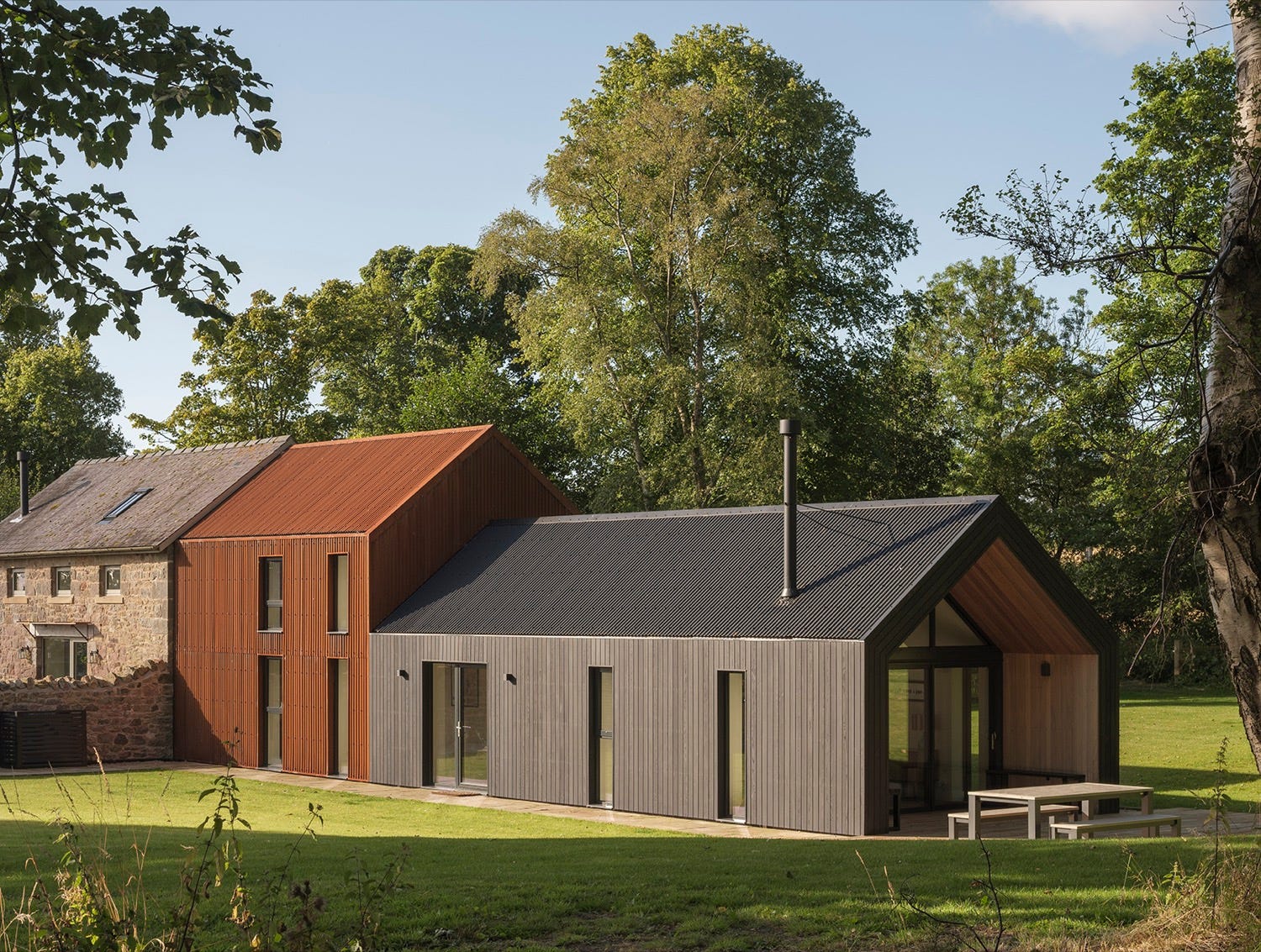
The Limeworks by StudioNorth. Client of the Year winner, also Project of the Year winner.
This is the transformation of a Northumberland farmstead into contemporary homes.
After relocating from London to the North East, James and Kaite Kemp fell in love with a farmstead. On discovering the scale of its 12 acres, they knew they needed to diversify their business, and set out to convert an old granary and its outbuildings into a pair of holiday cottages.
The project’s new-build element, the Hemmel, is a contemporary interpretation of the former storage sheds that once abutted the granary.
RIBA North East jury chair, Andrew Thompson, associate at architects Faulkner Browns, said: “This year’s awarded projects are tied together by a strong sense of care and craft.
“Care over things that many wouldn’t notice, care over decisions taken purposefully at every stage, care for their clients, and care for the planet. Each project marries technical prowess with creative and playful design to produce buildings which delighted and surprised the jury on our visits.
“All of the awarded projects are also underpinned by wonderfully human stories. Great buildings are for living, and this year’s awards showcase the diversity and joy of living in the North East.”
RIBA president, Chris Williamson, said: “This is a landmark year for RIBA as we mark 60 years of our awards and the impact of past winners on society. Over six decades, the Awards have charted a cultural journey across the UK, reflecting how architecture has responded to changing needs in education, industry, work and home life.
“Today, as in 1966, we celebrate architecture that sets new standards for how we live and shape our communities - and reminds us just how important it is to keep raising the bar.”
RIBA North East Award winners will now be considered for a RIBA National Award in recognition of their architectural excellence, which will be announced on July 9.