


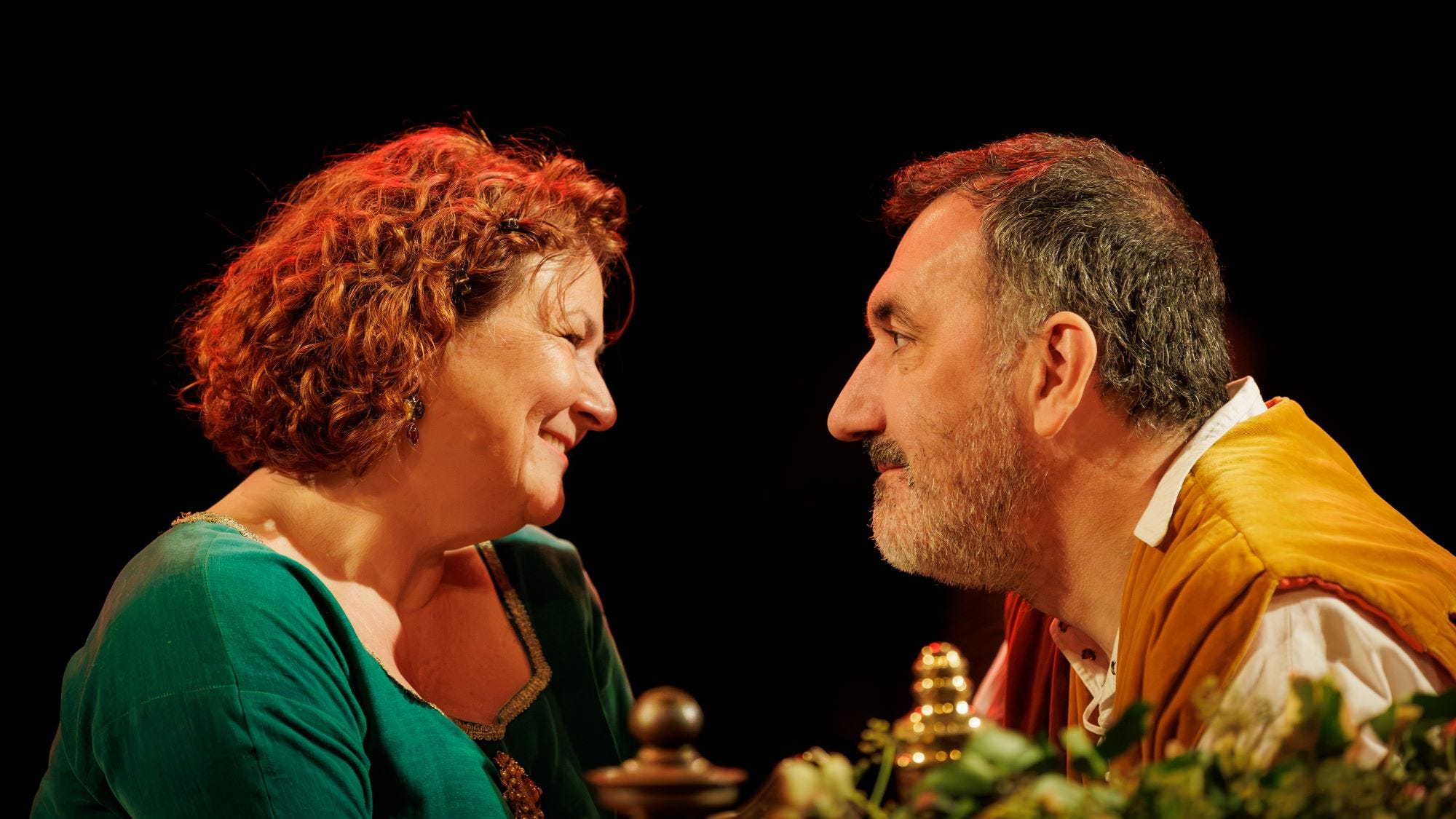
“Of course he’s got a knife,” retorts Eleanor of Aquitaine. “We’ve all got knives. It’s 1183.”
Welcome to the 12th Century and the court of Henry II of England, which happens to be at the Château de Chinon in what we would now call France.
This is a world and a geopolitical set-up so utterly alien to modern experience - certainly to mine – that we might as well be on Mars.
It’s not even a period much studied at school, coming after the Norman Conquest but before the Tudors and Stuarts.
It gives rise to the stuff that generally sends me scurrying to the parts of Wikipedia characterised by tangled family trees and dizzying accounts of kings and pretenders and plotters and heirs apparent and any number of scheming bastard sons.
Henry, I can now tell you, was the first Plantagenet king, reigning from 1154-84 and at the start of a line which ended with Richard III, who we do know something about (or think we do) because of Shakespeare’s play.
James Goldman’s play, written a good time later in 1966, whisks us back to Christmas at Chinon when everyone carried knives, as revealed by Eleanor in a knowing nod to a 20th (and now 21st) Century audience which duly gets a laugh.
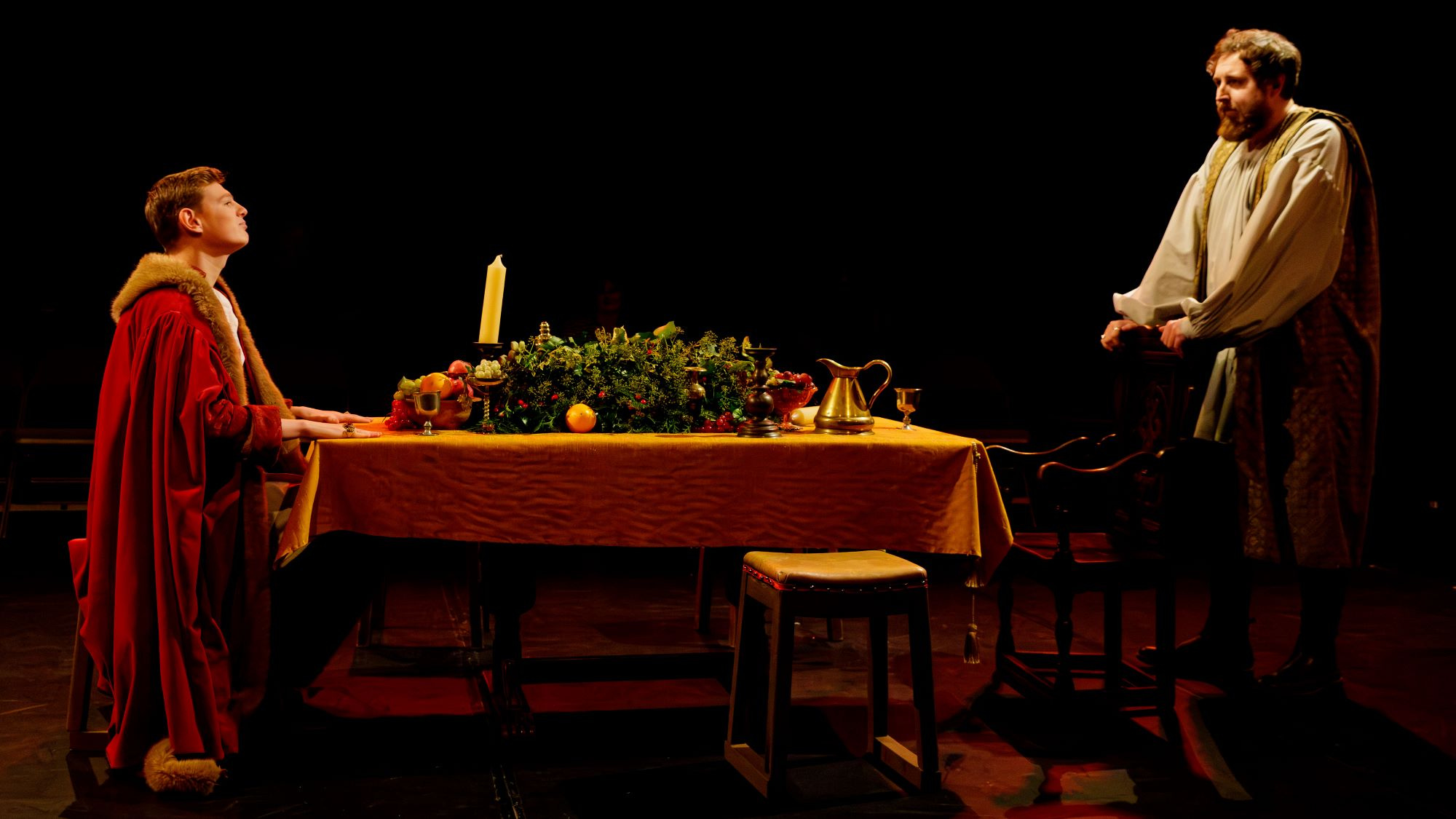
The People’s Studio is arranged for director Sean Burnside’s production with the audience along two sides. At one end are two thrones and at the other a tapestry with a heraldic lion.
Seated midway along one side, my head swung this way and that.
Henry II is played by Mark Burden, a commanding figure on stage with a voice calibrated for the back row of the London Palladium. Beside him, all appear weedy.
That said, his Henry II is 50 and fretting that his days are numbered.
Knowing that your oldest son (well, the oldest legitimate and surviving) is itching to get on with being Richard the Lionheart would, I imagine, play on your mind.
But everyone’s at it. There are three sons, all with knives and ambitions.
As well as the pugilistic Richard (Jordan Carling), a posturing alpha male like his dad but possibly gay, there’s the silly youngster John (Tyler J Matthews), given to tantrums, and oily Geoffrey (Tom Kelly), supposedly the brightest and always wheedling about being ignored.
Also paddling through all this testosterone are the Christmas ‘guests’, callow Philip I of Spain (Jack Stuart), who also might be gay, and Eleanor who moves with quiet serenity, despite having been locked up in a tower by Henry, her husband, for several years.
Moira Valentine makes Eleanor’s enduring and barely explicable love for Henry, the grumpy old goat, seem plausible. This is a character patently at ease with herself, reconciled to tower life and, well… she does have Aquitaine.
In life as we know it, families might feasibly play Monopoly at Christmas, tussling to acquire Mayfair or Park Lane.
Back in the 12th Century in families like this – which, of course, are the only families whose lives were documented – they battled over real places, like Aquitaine, which Eleanor was ‘of’.
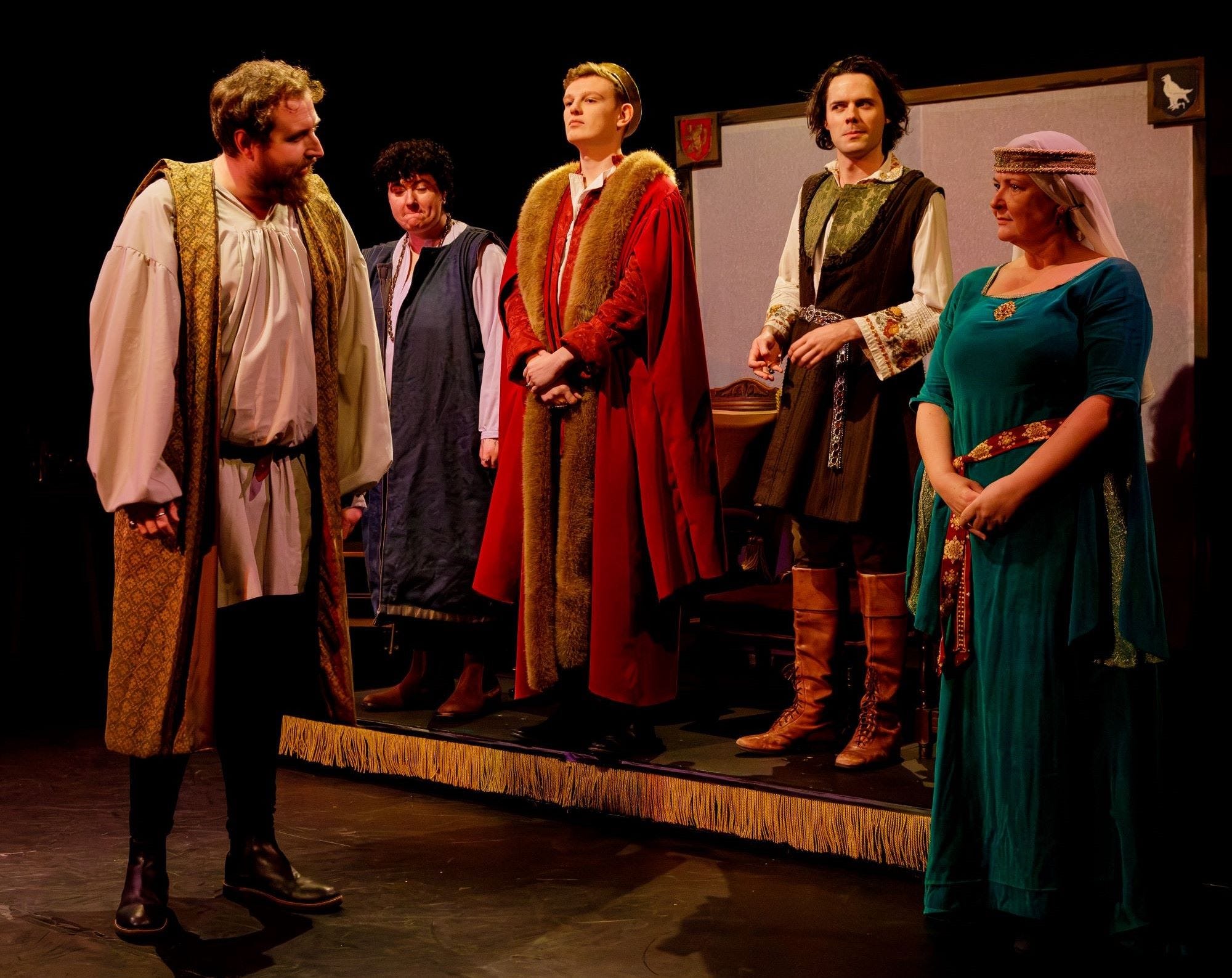
Henry harrumphs and grinds his teeth, the sons plot, Eleanor keeps her cool and – yes, there’s one more character – little Alais (Abbie Martin), as Philip’s half-sister and Henry’s supposed mistress, makes the most of what little agency she has.
There are lots of good lines which you probably won’t find in the ancient manuscripts.
“If your leg fell off at the pelvis I wouldn’t trust it to bleed,” sneers one, imbibing the festive spirit.
And I liked it when Henry, suddenly deciding on an instant marriage between Richard and Alais, commands: “Bring me a bishop!”
Try saying it out loud. You’ll feel better for it.
At the end of the day, as one of this cheery crowd notes sagely (it might have been Eleanor): “Which family doesn’t have its ups and downs?”
Indeed.
The lion in Winter runs until Saturday, November 28. Tickets from the People’s Theatre website.