


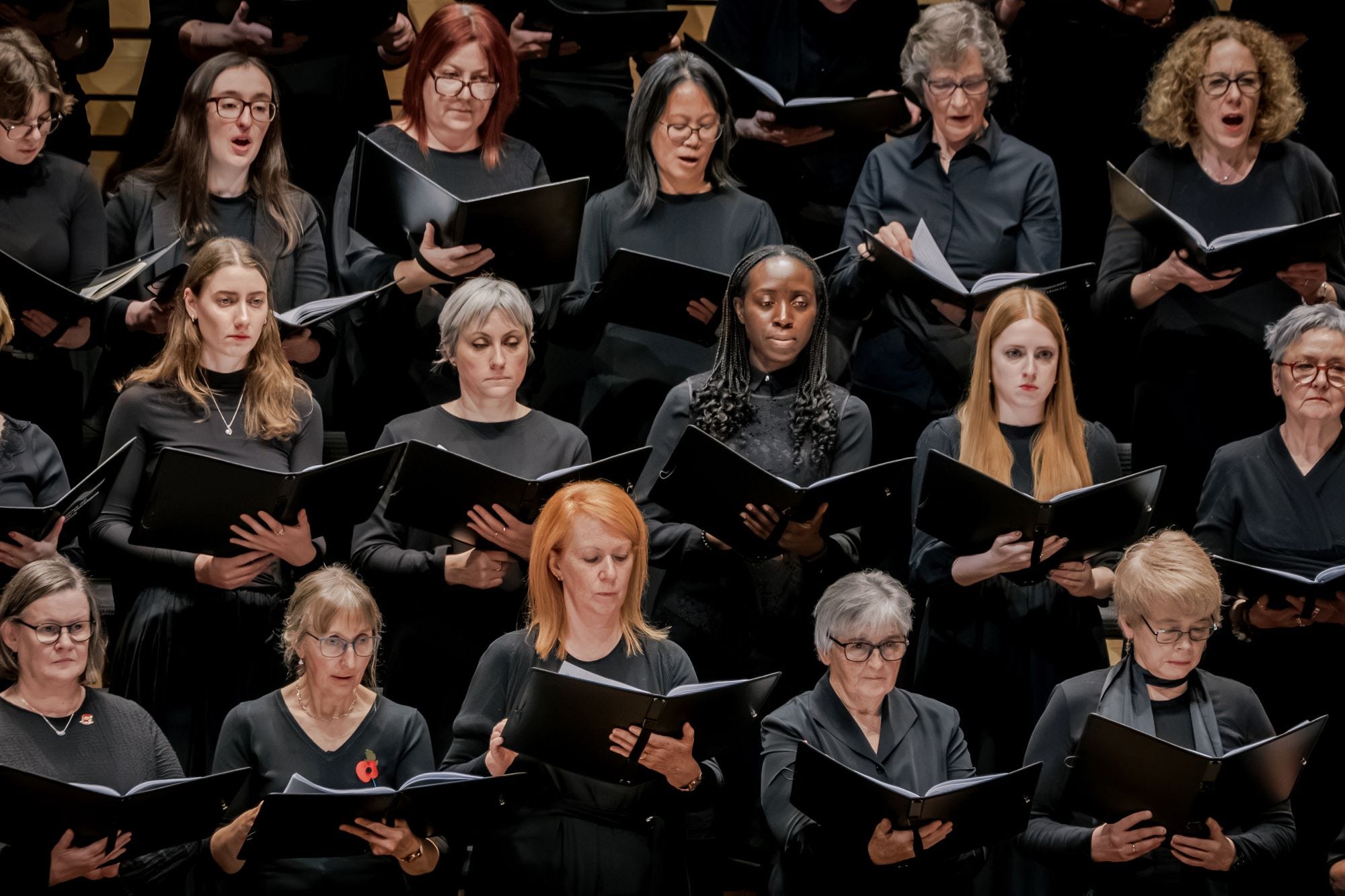
This was the third Share the Stage performance at The Glasshouse, the third main stage pro-am production of a major choral work.
It was my first.
Inexplicably, I missed the first iteration in 2021 – Verdi’s Requiem, a post-pandemic expression of commemoration and relief – and also the second, which saw Michael Tippet’s A Child of Our Time get the treatment a couple of years ago.
Ahead of Sunday afternoon’s performance of Sir Edward Elgar’s The Dream of Gerontius, chronicling the journey of an ordinary but pretty garrulous sinner into the afterlife (or at least a dream of it), conductor Dinis Sousa explained the context.
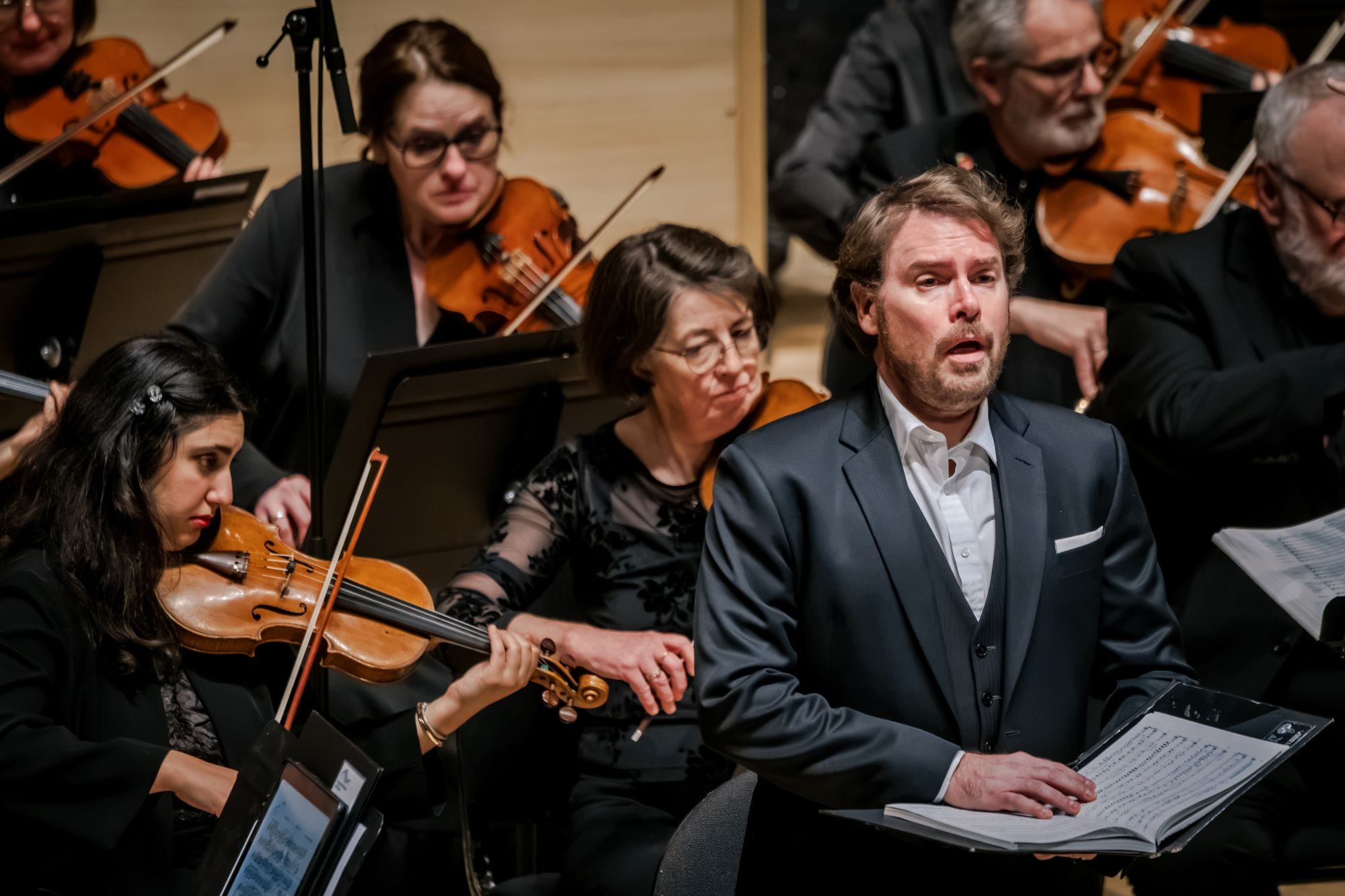
The plan had always been, he said, to create and present something as good as time and resources would allow, so that all the volunteer singers and musicians “would get to know the piece and feel they owned a performance of it”.
This kind of project, he said rather pointedly, required “huge investment”.
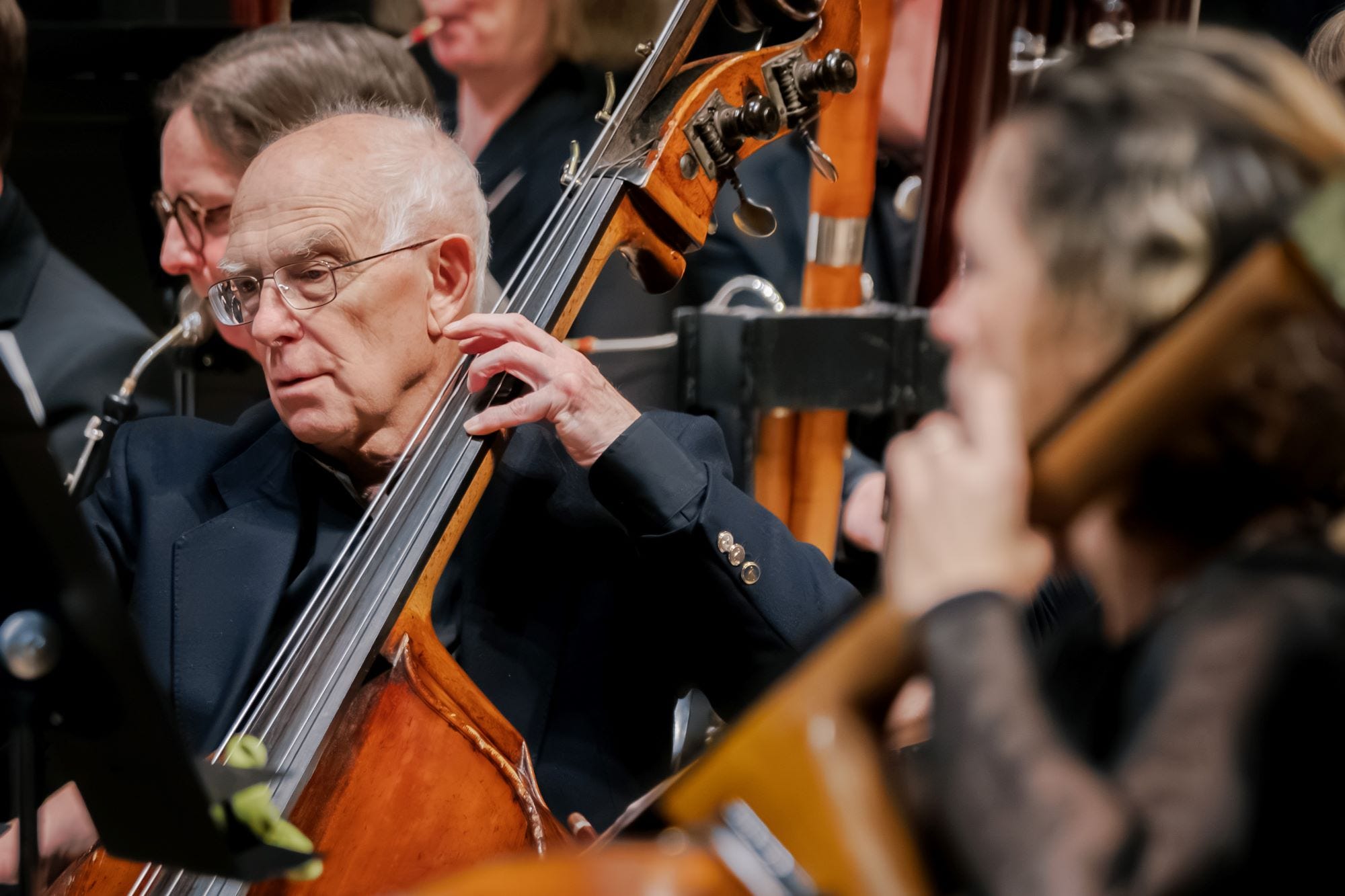
You could see that on the stage, the resident (though augmented) Royal Northern Sinfonia up there with operatic stars of the calibre of Sarah Connolly (mezzo-soprano), Roderick Williams (baritone) and Benjamin Hulett (tenor).
And up above them the “massed musical forces of the North East”, the Chorus of Royal Northern Sinfonia, Voices of the River’s Edge and a host of other people, some who claimed not to have sung for years before committing themselves to this.
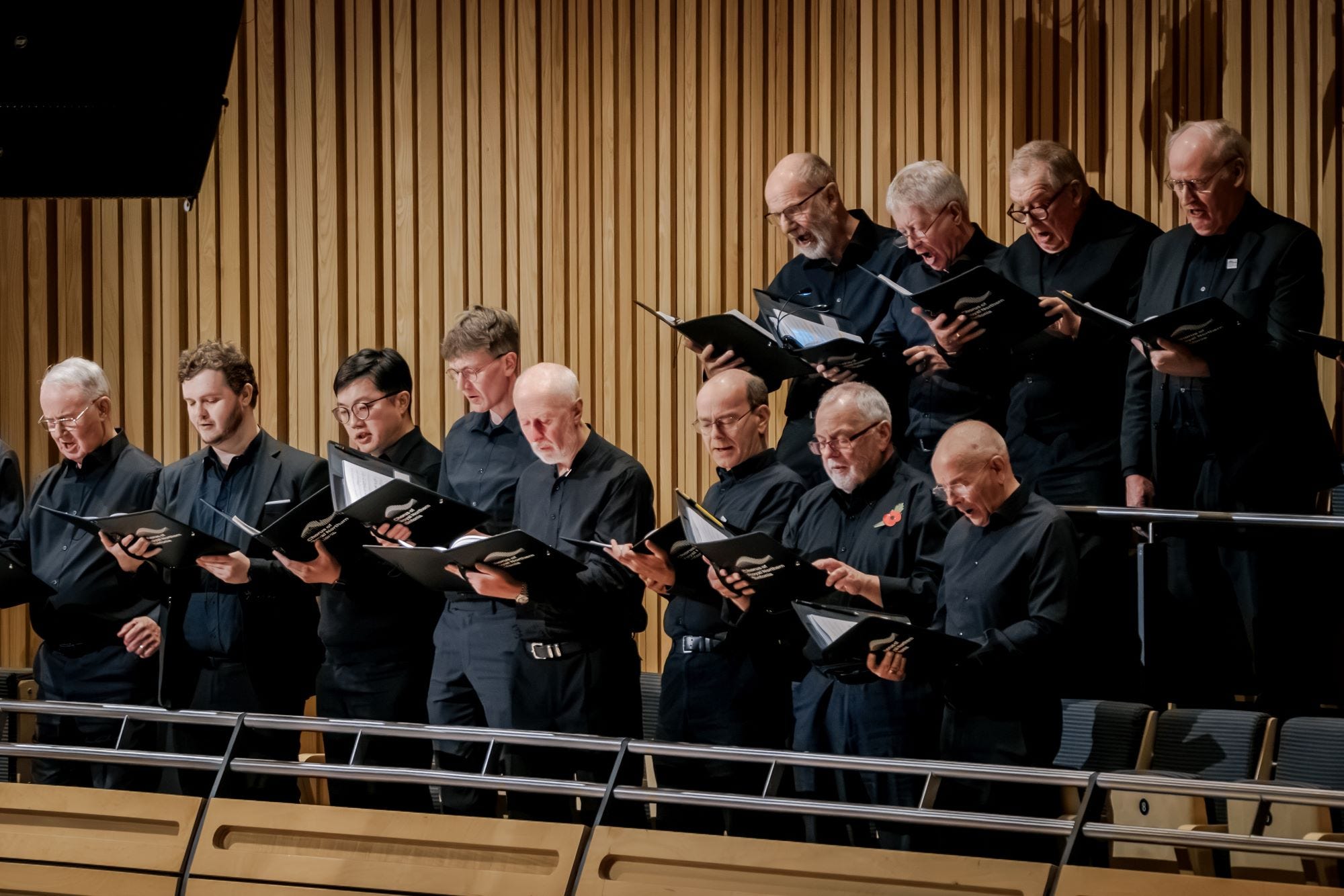
What were they thinking, I wondered, perched up there like the kittiwakes at the Baltic with absolutely nowhere to hide? The adrenalin, perhaps, was pumping; the nerves twanging a little.
I also wondered what Roderick Williams was thinking, sitting there affably, facing us in the audience with a half-smile on his face for more than 30 minutes.
For most of the first part, it’s the tenor, as Gerontius, who does much of the heavy lifting, and Benjamin Hulett was singing his socks off as the baritone sat and waited… and waited.
Penny for them, Roderick!
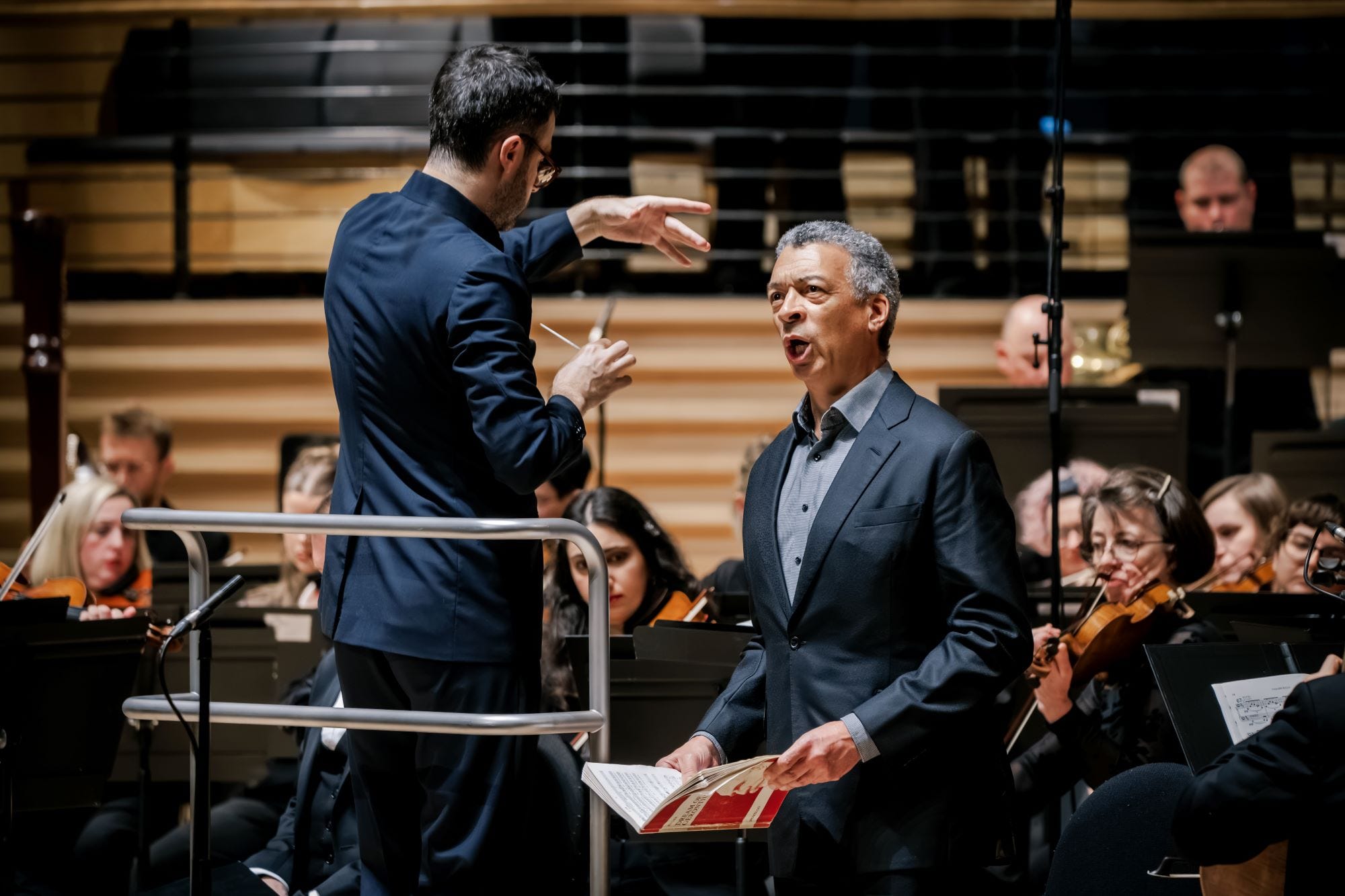
Of course, when the time came, he was on his feet, thoughts of dinner or the football or whatever banished as came the voice of the priest, telling Gerontius in no uncertain fashion: “Go from this world! Go, in the Name of God the Omnipotent Father, Who created thee!”
It was stirring stuff. What a voice! And what a way to spend a Sunday!
But it was all stirring stuff and anyone going along in the hope of a comical clanger (a dropped cymbal, perhaps) or a catastrophic choir malfunction as you might get in the choral equivalent of The Play That Goes Wrong will probably be asking for a refund.
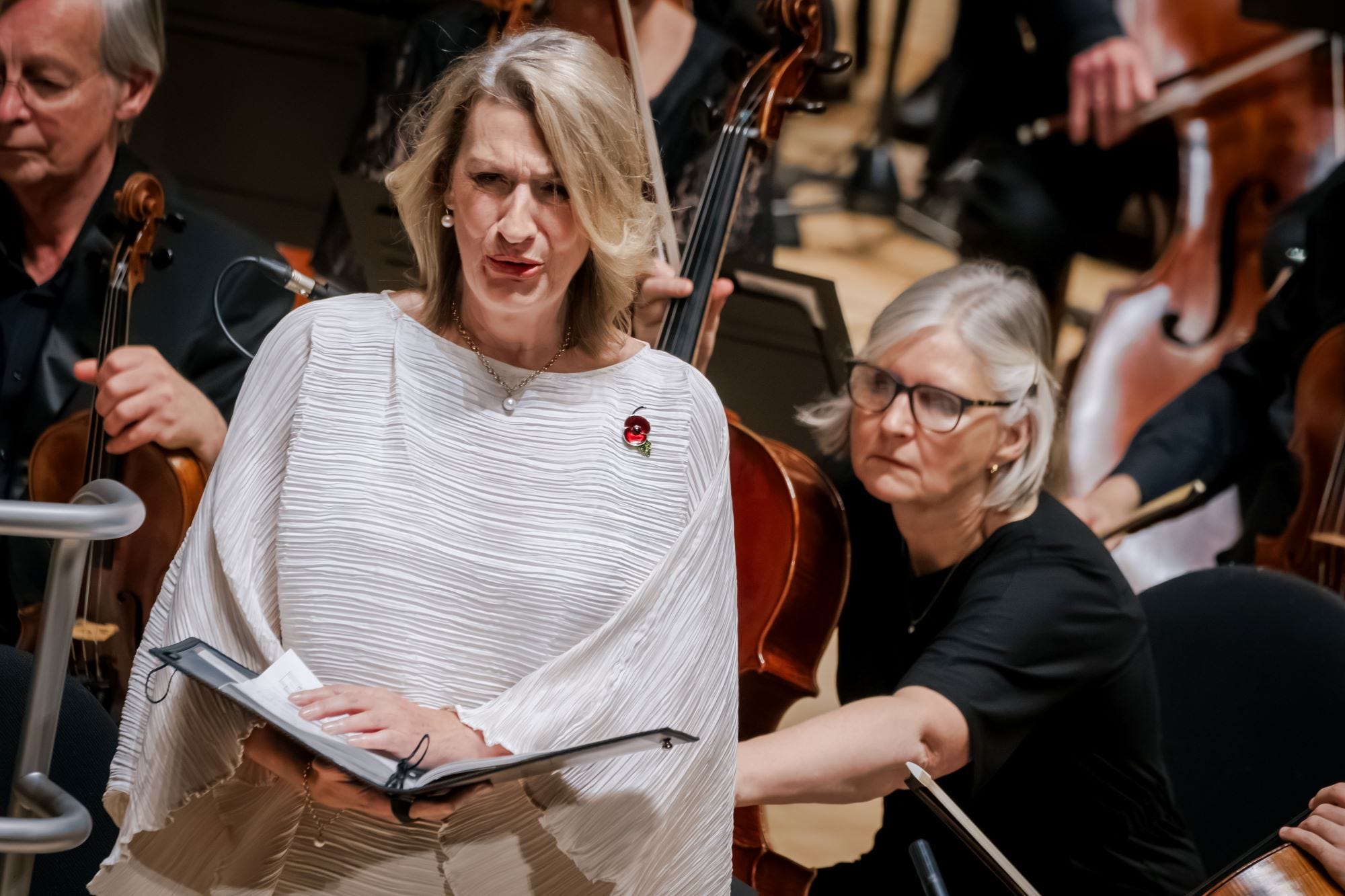
For this was a wonderful performance of a challenging piece which had me riveted.
By the time Sarah Connolly was on stage as the Angel in the second half, all in white to contrast with the black-clad ranks behind, you could sense that any nerves had gone.
The choir, the orchestra, the soloists were fully invested, wrapped up in the music and quite possibly now oblivious to the hundreds of people staring at them.
Elgar, we learn, believed he had really cracked it with this piece.
The premiere, in Birmingham Town Hall in 1900, did not go well. He was not happy. But it would be nice to think he would have approved of this, his special oratorio performed with due vigour and sensitivity.
Dinis Sousa had said at the start that the project had been devised for “people who maybe don’t call themselves musicians who can come and make themselves musicians with us”.
What we would see and hear was the culmination of “a huge process”, he said, and he promised: “I’m sure it’ll be unforgettable”.
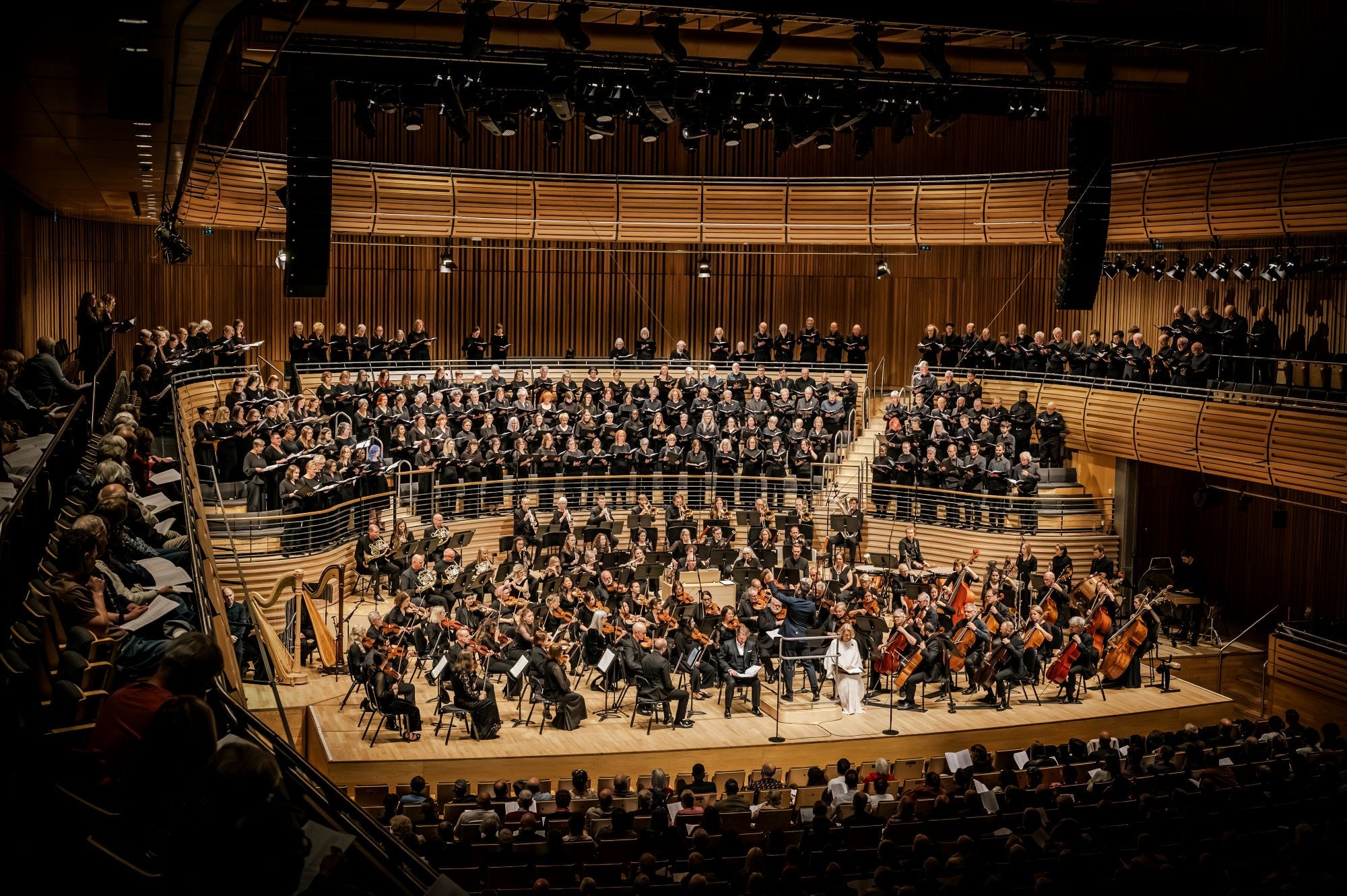
I actually suspect that there were a lot of very good musicians up on that stage, nominally amateur but members of some of the excellent choirs and ensembles scattered across the region.
But Dinis wasn’t wrong. It was special and it probably will be unforgettable – particularly for those who took part.
What, I wonder, will be next?