


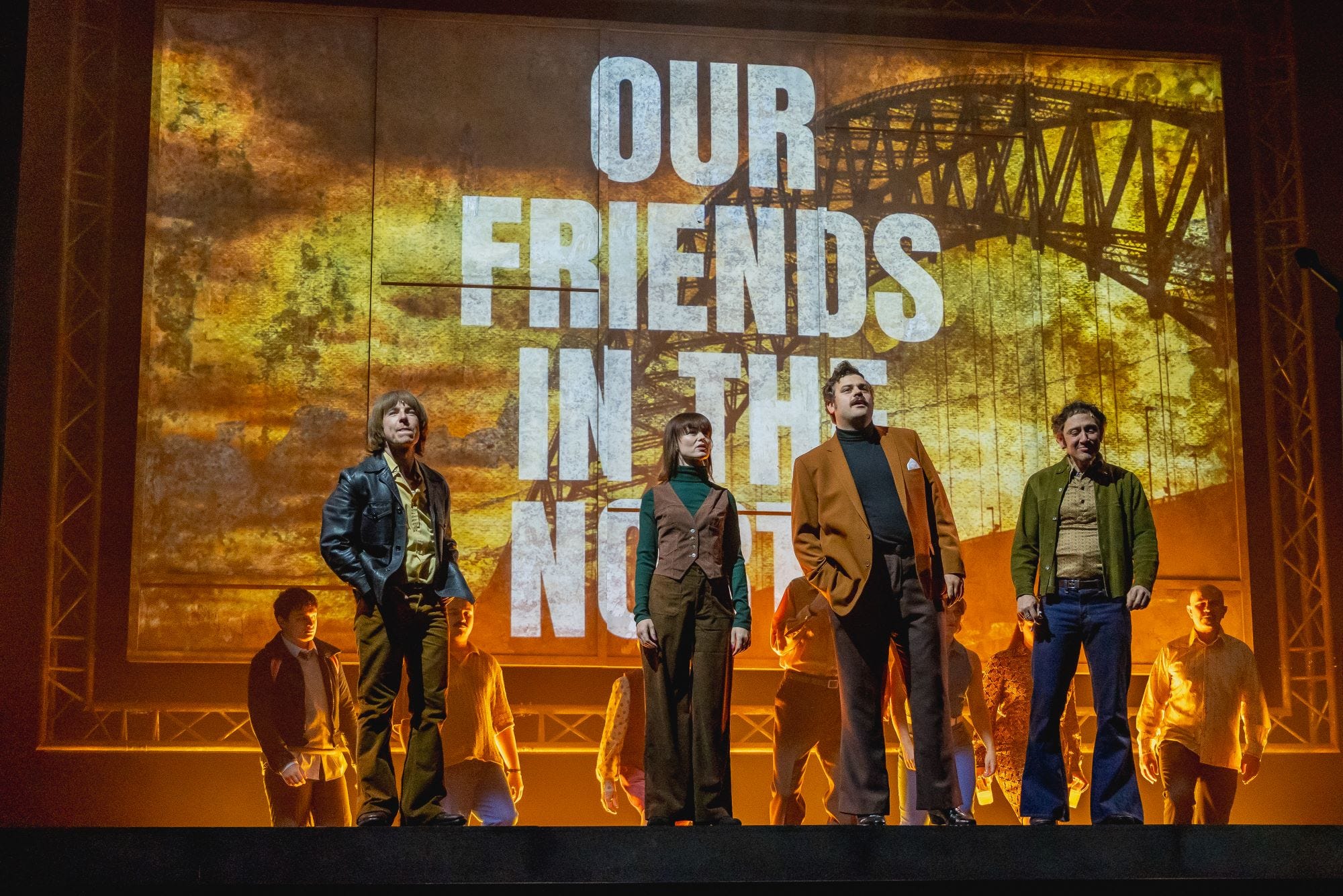
In this wonderful place of so much escapist entertainment, of singalong musicals, magical dance and raucous comedy, comes a reminder that another role of theatre can be to hold a mirror up to life.
And real life is always messy and challenging and not all endings are of the fairytale variety.
Don’t get me wrong. Music, dance and comedy are in the rich mix of this latest thoroughly engrossing manifestation of Peter Flannery’s saga of four friends from the North East.
But, boy, is it bitter-sweet.
It’s down-at-heel Geordie drunkenly wailing House of the Rising Sun; it’s disco dancing and intrigue on the Tuxedo Princess, Tyneside’s floating ’80s fun palace; and it’s the droll exchanges of longtime pals Eddie (Labour MP of the old school) and Felix (gently succumbing to dementia) or the sneering jibes of Soho porn king Benny.
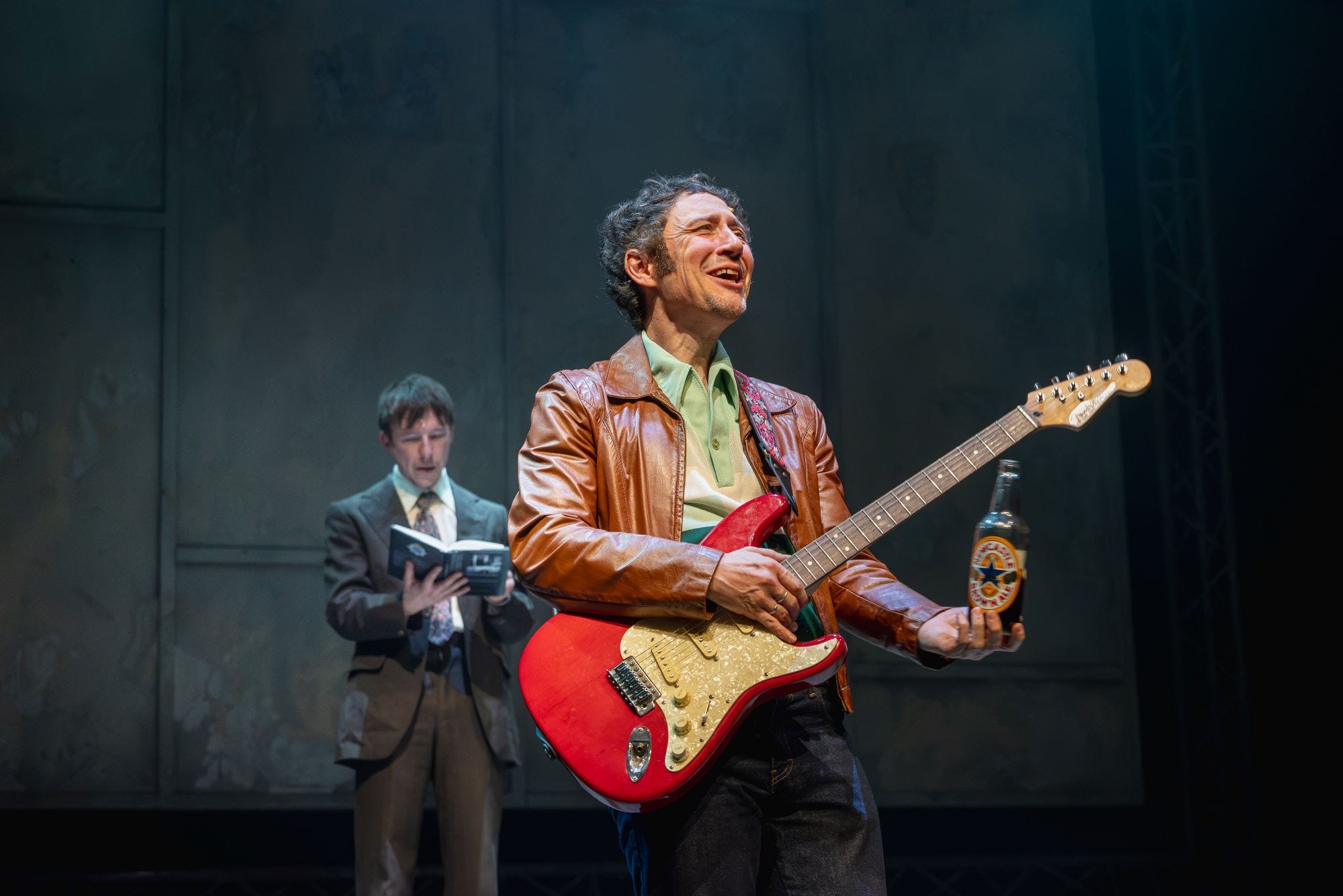
This is a show I had so wanted to work – a rare co-production between the Theatre Royal and Live Theatre, excellently directed by the latter’s Jack McNamara and with the added involvement of Eastlake Productions to push its potential.
And two things happened.
Firstly, there was the uncanny silence of a capacity audience seemingly hanging on every word, catching every nuance of a story that was, in some way or another, about them.
And secondly (speaking for myself) there was the sudden catch in the throat at the end as the friends turn towards a silhouetted Tyne Bridge, involuntary precursor to what might have become a sob if I’d let it.
It’s the words that always do it for me and Flannery’s words, particularly as uttered by Trevor Fox, a commanding and drily humorous presence on stage as Chorus, explaining and tying up loose ends, are gloriously poetic.
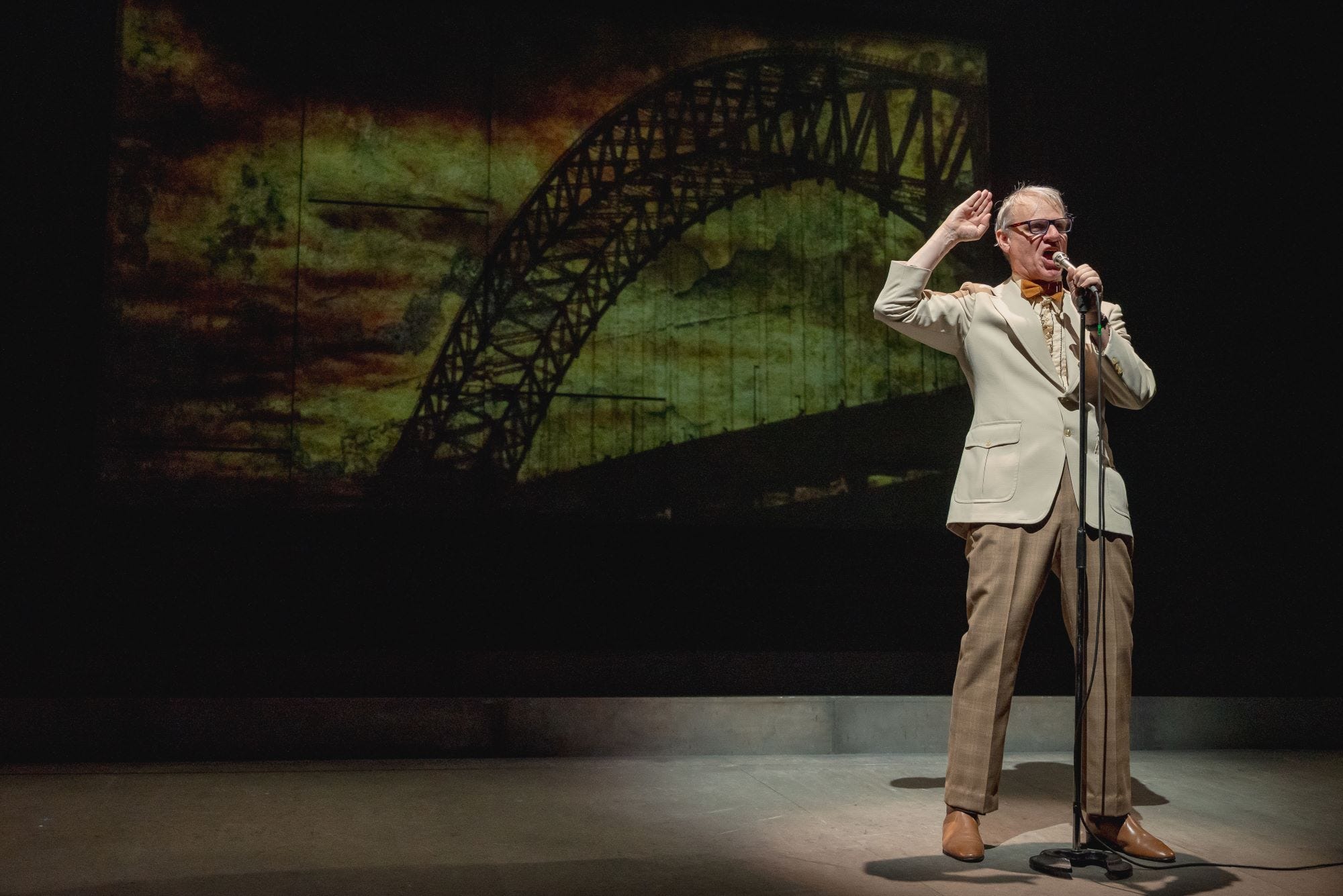
This show on the grand Theatre Royal stage has a bracing Live Theatre sensibility, relating a tale of great consequence in the place it is both staged and set.
What began as a 1981 stage play for the Royal Shakespeare Company became 15 years later an epic BBC TV drama, taking the story from the 1960s right through the turbulent 1980s.
And what we have here is a 30th anniversary staging of the 1980s segment of the TV show, specially adapted and dubbed the Thatcher years because that, frankly, is what they were.
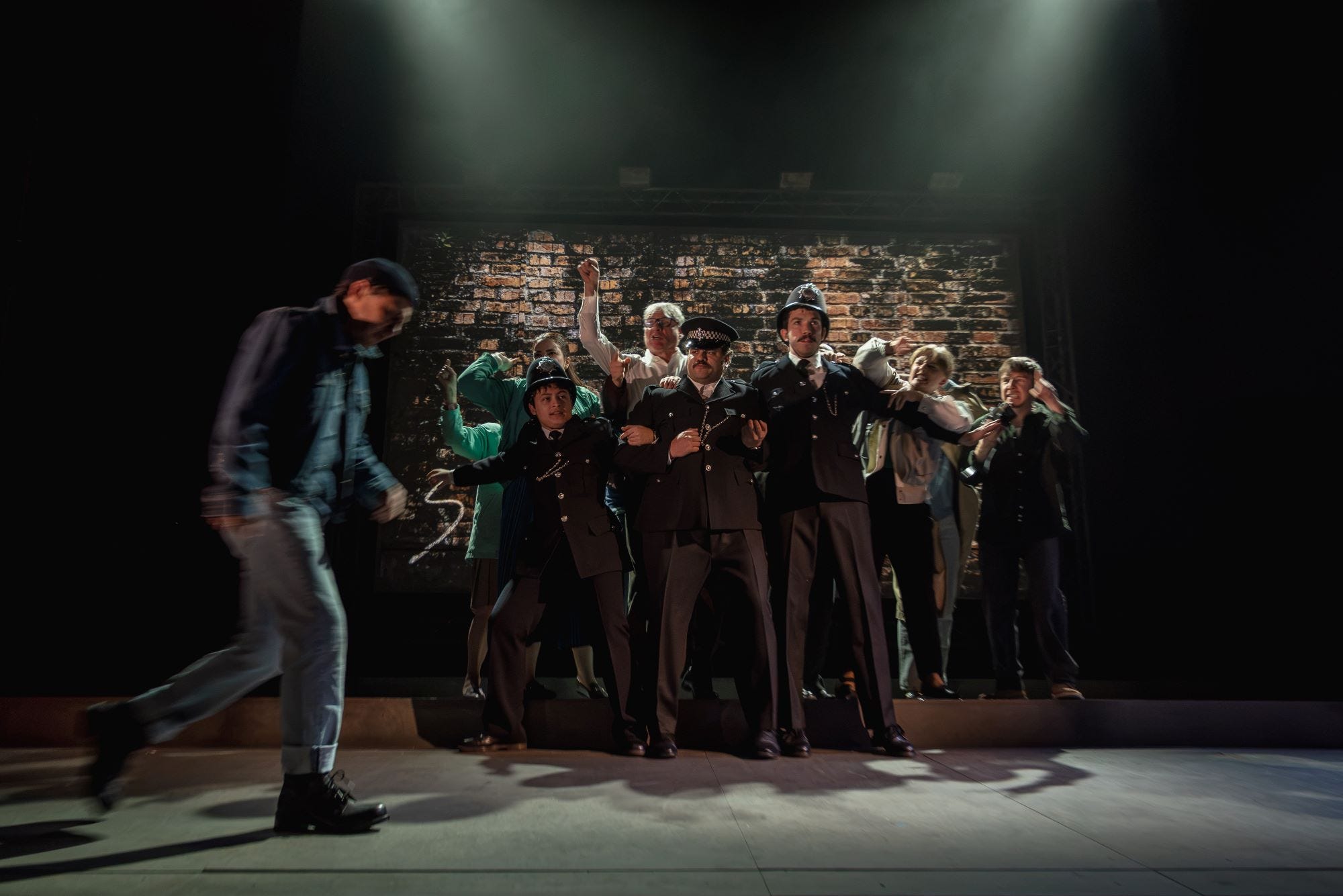
The woman swept through British life like a tornado, wielding her axe to cut jobs, militarising the police to take on the miners – whose consequences we see in the sombre second half – and at weekends (as it were) tackling the IRA and booting the Argentines out of the Falklands.
There was never a dull news day.
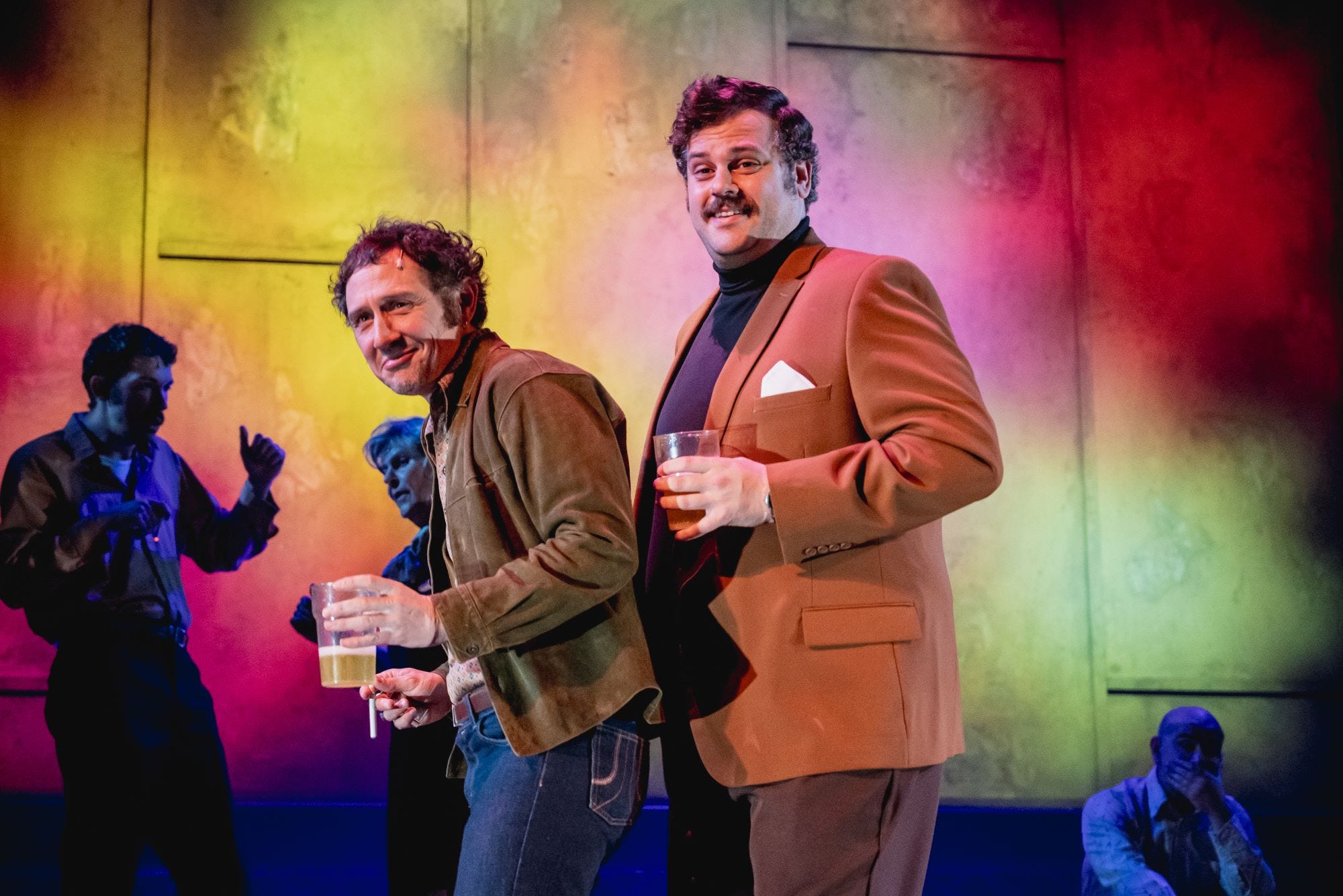
We meet the friends, of course, some way into the original story. Mary (Sam Neale), having drifted apart from boyfriend Nicky (Ryan Nolan), is unhappily married to wayward Tosker (Jack Robertson) and they have a son (also unhappy, and played by Robert Punchard).
Geordie (Scott Turnbull, a loose-limbed presence on stage) floats about, still harbouring dreams of getting a band together until he heads for London and into the orbit of aforementioned Benny (played with sinister relish by Chris Connel, who deftly doubles as Eddie).
The earlier part of the story, which occupied several TV episodes, is told cleverly in flashback, Nolan briefly sporting a 1960s wig with the air of a man desperate for fashions to change.
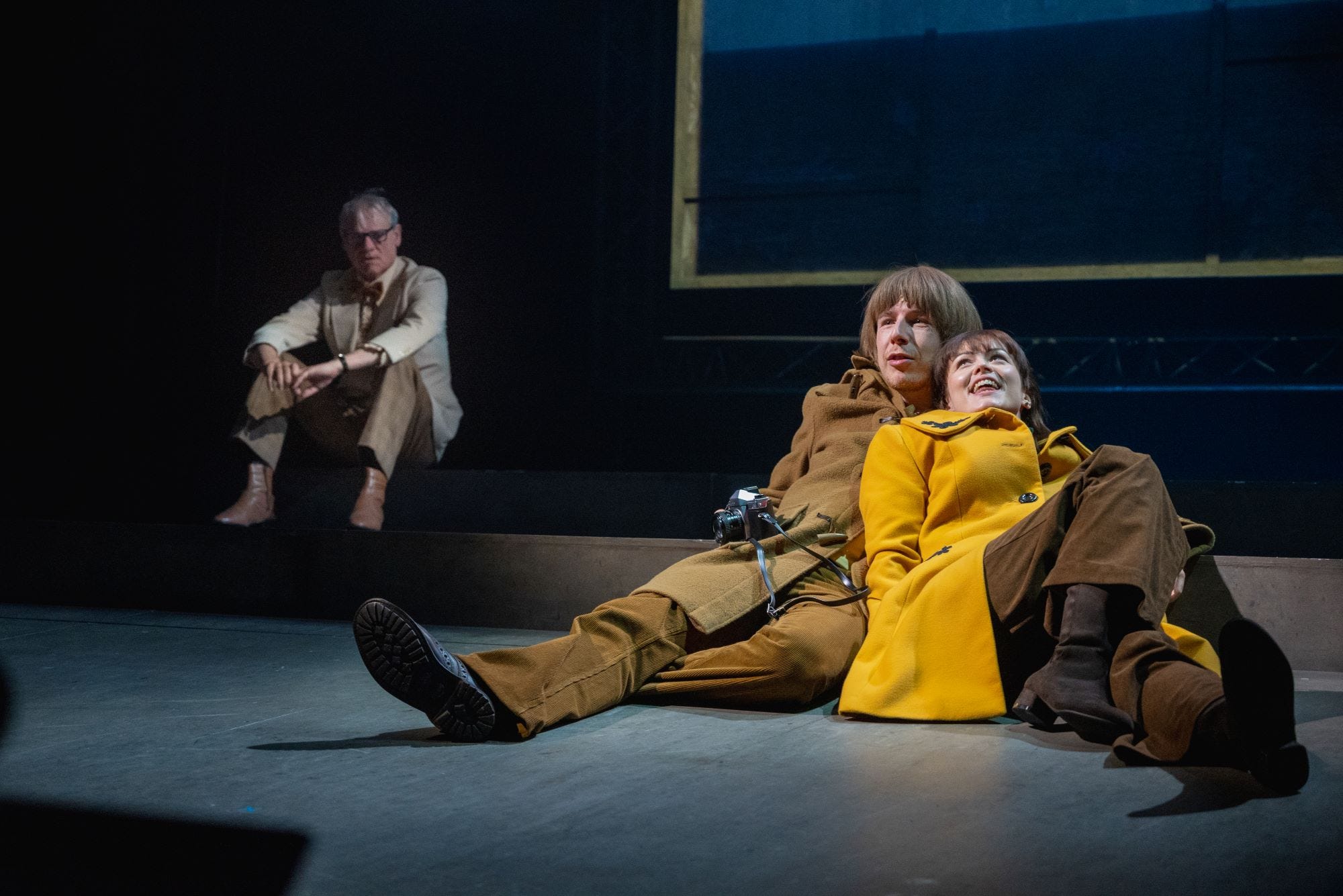
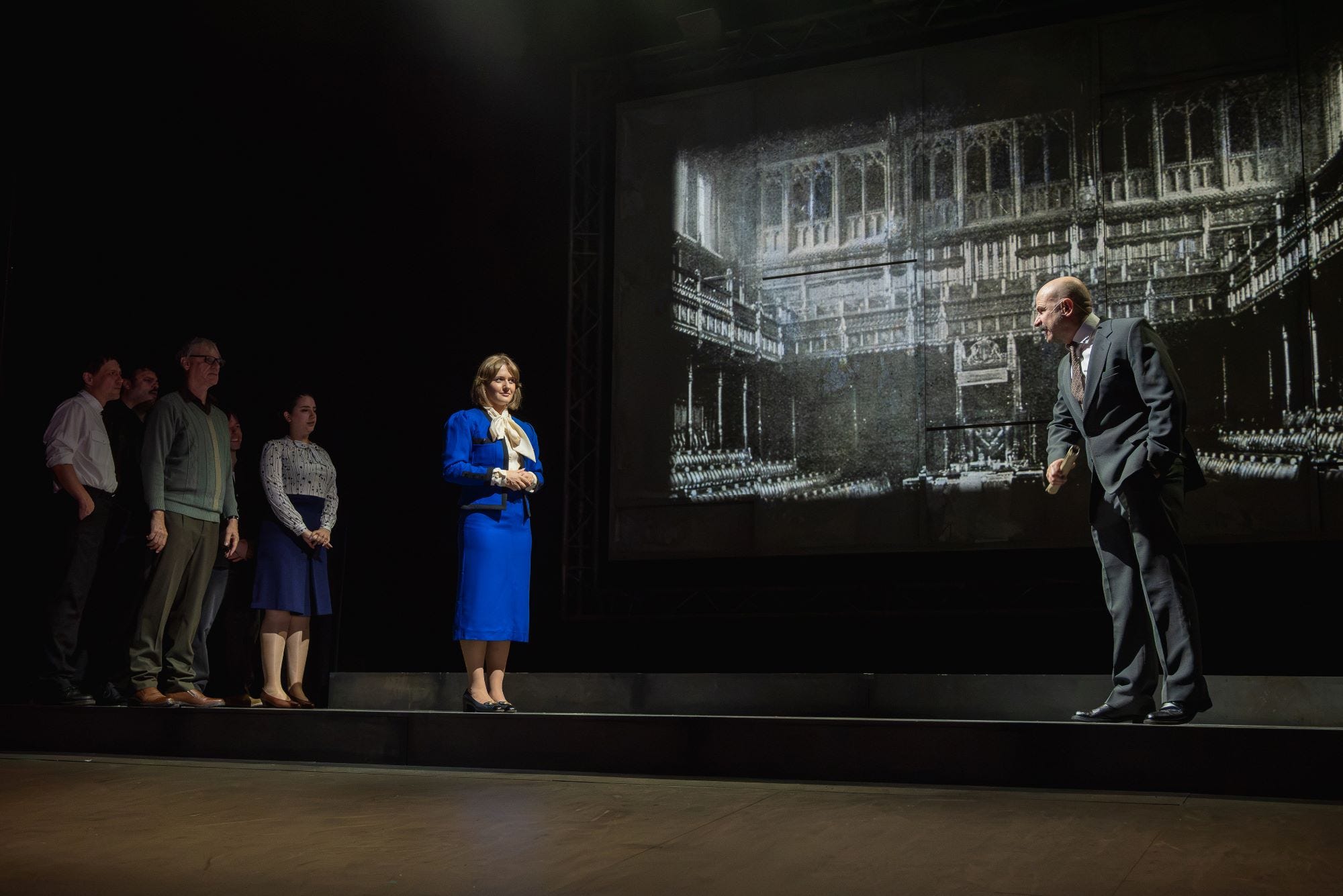
Back in the 1980s, having lost a safe Labour seat to the very model of a Thatcherite interloper (Jude Nelson’s Claudia Seabrook, splendidly terrifying in the bluest of Tory blue), Nicky has become a documentary photographer.
It’s his photos we see projected onto the backdrop along with other images to identify the time, the place and the placards of the moment. There’s a lot of anger in this show, Flannery clearly having lost neither his touch nor his righteous passion.
And there’s much dwelling on memory. Tragically, Felix (also movingly played by Fox) is losing his; Geordie too, along with pretty much everything else.
But memories anyway are notoriously short. What do we learn from the past, even those of us who have lived through a fair bit of it?
Watching a story steeped in crime, corruption, dodgy politics and even dodgier policing, you can’t help wondering what actually has changed that much.
It’s more sobering when the 1980s comes across, in many respects, as a last age of innocence.
OK, people got duffed up; but nobody had an inkling back then about the internet, social media, tech billionaires and AI, forces which, allied to unscrupulous leaders around the world, might seem to be ushering in by stealth the world George Orwell warned against.
All of which might convey the impression that this show is far too depressing for two hours of your time.
But it isn’t. It really isn’t. Nothing done this well is ever wholly dispiriting and there is, for two of the characters at least, a gratifyingly happy ending.
Life goes on – and I sincerely hope there’s more life in this thought-provoking and visually impactful piece of theatre beyond its initial run.
You can catch Our Friends in the North: The Thatcher Years until Saturday, October 24 with tickets on sale (but going fast) via the Theatre Royal website.