


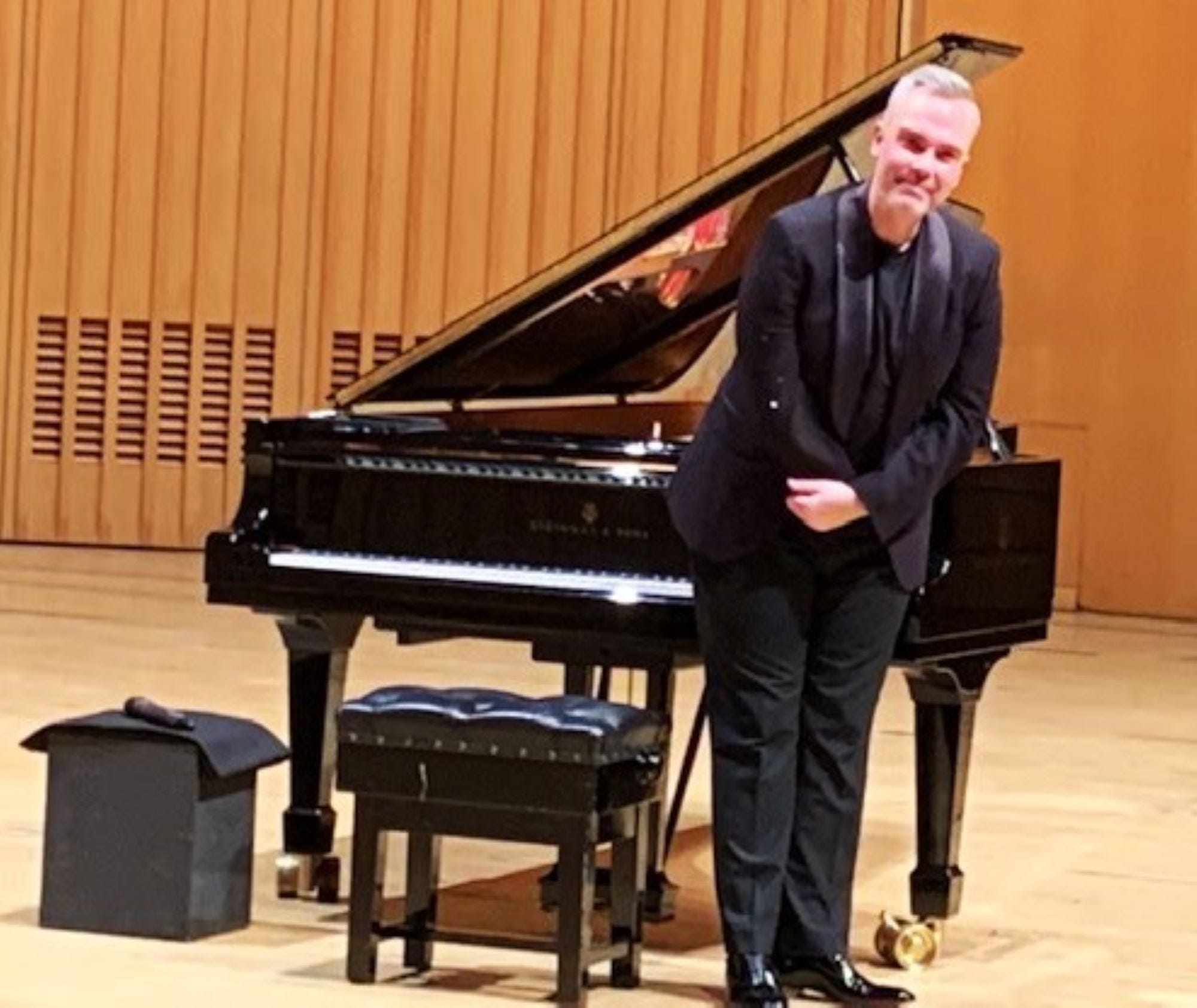
Nicholas McCarthy, on his first appearance at The Glasshouse, gave a sparkling introduction to the piano repertoire for the left hand.
That he only has a left hand, having been born without a right, obviously makes him something of a novelty as a concert pianist.
But there’s much more to him than that.
Passion and steely determination must have played a significant part in getting him to where he is – the obstacles must have been immense, the naysayers in no short supply – but that wouldn’t have been enough.
As we saw here, and you will have seen on TV if you caught him at the BBC Proms last year, he is also a naturally gifted musician.
One hand, two hands – who cares if the rhythms and melodies coaxed from a keyboard sound this good?
The substantial repertoire for the left hand, much of it commissioned by Géza Zichy (1849 to 1924) and Paul Wittgenstein (1887 to 1961) who both lost their right, means there is ample scope for a musician like McCarthy.
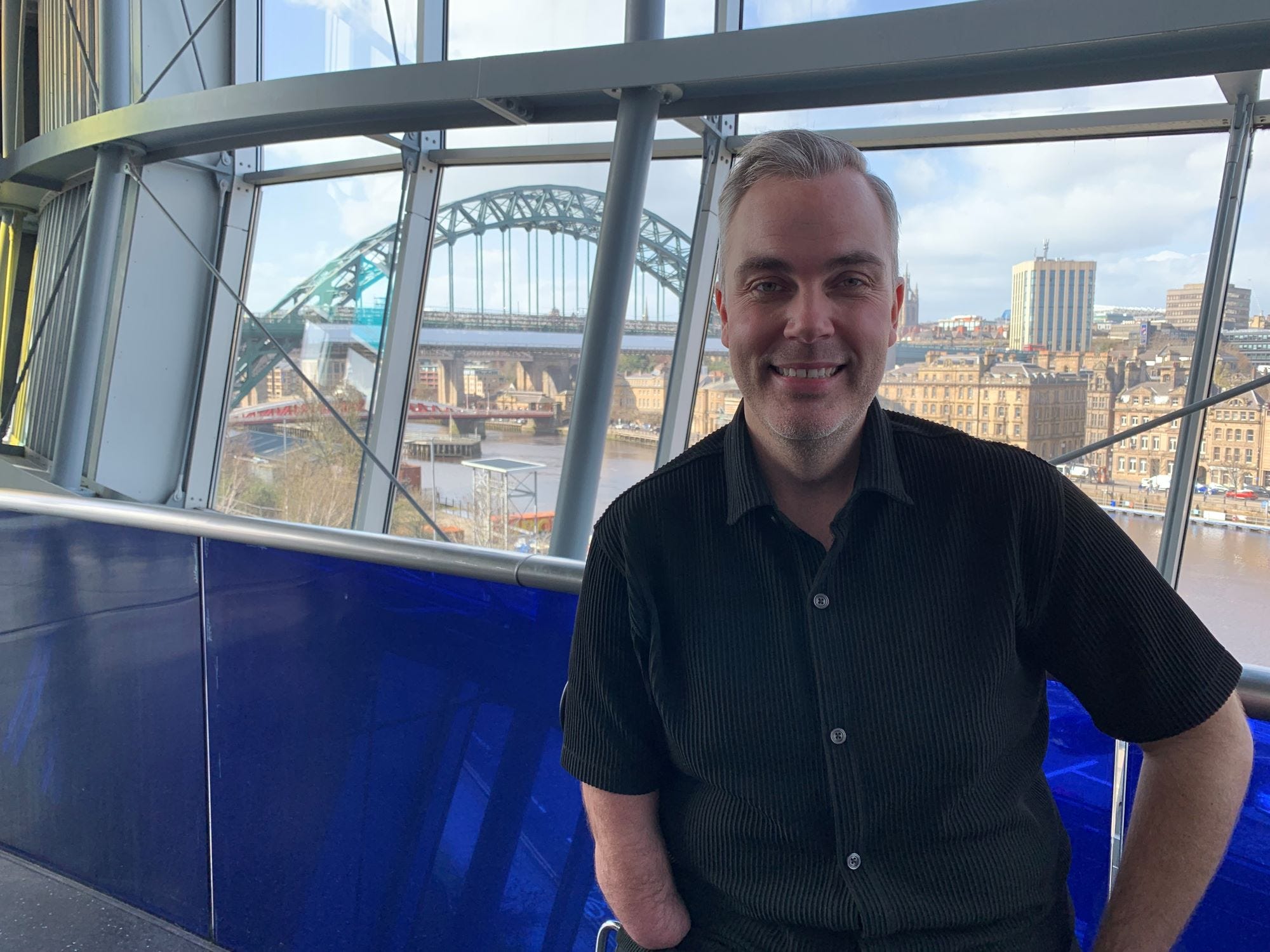
And he is now in a position to emulate his predecessors, commissioning new pieces – such as Julie Cooper’s mini-epic Galilean Moons, with which he opened Sunday’s second half – and showcasing pieces submitted ‘on spec’, such as Jonathan Mann’s arrangement of Morgen! by Richard Strauss.
There was a warmth and intimacy to this concert, despite taking place in a Sage One hall that was far from full. Some of it must have been due to the liberal sprinkling of his North East relatives, McCarthy’s family on his mother’s side hailing from County Durham.
But he is also an eloquent and affable entertainer, not one of those keen to ‘let their music do the talking’.
Ahead of each short piece he picked up a microphone to introduce it, supplying context to the likes of Alexander Scriabin’s Prelude and Nocturne for the Left Hand, the concert opener.
The programme included pieces written for the left hand and left-handed arrangements, including Brahms’ left-handed piano transcription of Bach’s famous Chaconne from Partita No. 2 in D minor for violin.
This arrangement, said McCarthy, resulted from Brahms helping out his good friend Clara Schumann, the renowned concert pianist, after she had injured one hand on a drawer.
Sunday’s concert programme featured four varied pieces either side of the interval, with some invigorating changes of tempo.
After the stately Julie Cooper composition came the helter-skelter Erlkönig, a Schubert setting of a terrifying folkloric poem by Goethe, arranged first by Franz Liszt and then by the aforementioned Géza Zichy for left hand.
“Quite a workout, that one,” said McCarthy, feelingly, after his frenetically dancing hand had described a horseman and his sick son being pursued by a horrific denizen of fairyland.
He closed the concert with a colourful piece by Béla Bartók who he said had made him “a bit cross”.
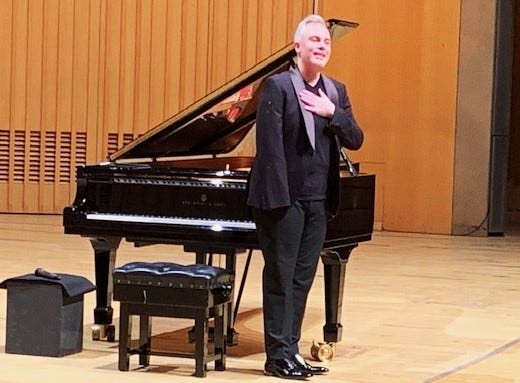
There were few enough sonatas for left-handed pianists and Bartók had written this highly promising first movement but then abandoned it, causing it to soldier on as Study for the Left Hand.
In a letter to his mother, so McCarthy told us, the young composer had gleefully reported the audience’s enthusiastic response and someone’s observation that it was as if three hands were on the piano.
That, I have to say, was the impression given by Nicholas McCarthy during much of this enjoyable recital, a masterclass in controlled yet emotive playing.
I hope he’ll be back at The Glasshouse again before too long, perhaps performing with an orchestra and in front of a bigger audience.