


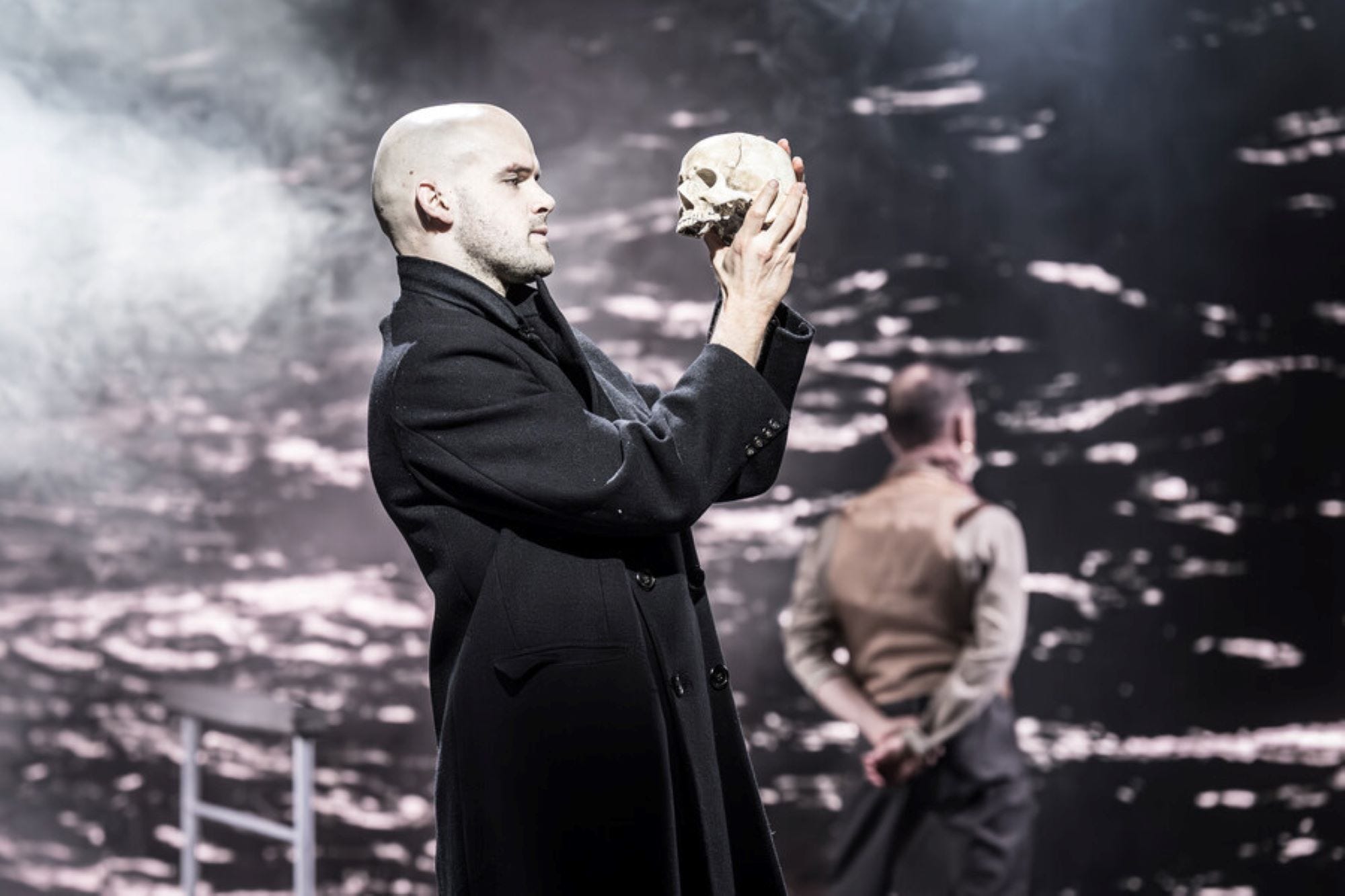
The Royal Shakespeare Company’s exciting new production of Hamlet likens the state of Denmark to Titanic, doomed the moment it hits an iceberg in the form of a highly dubious marriage.
The King has died and his brother Claudius has married the Queen, Gertrude, with what her student son Hamlet regards as indecent haste – and then the King, in ghostly form, reveals to Hamlet his uncle’s foul play.
A fatal poisoning has seen the crown change heads. Crucially, how much did Gertrude know?
The action unfolds on the deck of a big ship with a projected mighty ocean stretching out behind (take note if prone to seasickness).
When a particularly rocky part of the plot is reached, the swell undulates even more and a deck-shaped platform above the stage crunches the playing area, heightening a sense of disorientation.
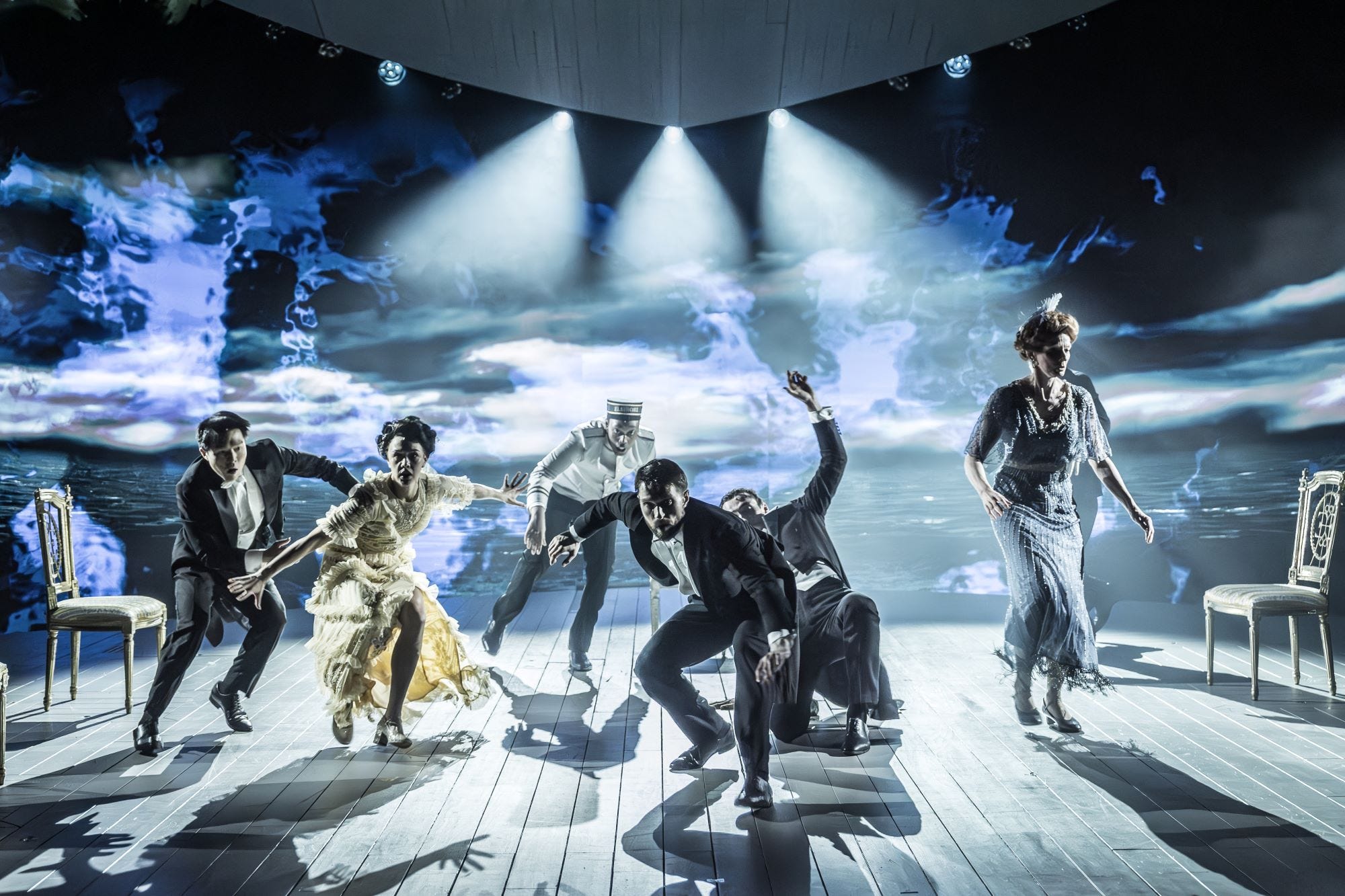
The year is 1912, April the fateful month. The crew are smartly attired in their sailor suits, all the main players aboard.
Well, not quite all. Director Rupert Goold (Sophie Drake is credited as revival director, the production having been premiered at Stratford last February) chose to leave some characters ashore.
Fortinbras, for one, the conquering Prince of Norway, seeming to embody all that is not rotten and corrupt, who in the text comes on at the end, stepping over all the dead bodies.
Had he appeared in this production, which ends with Horatio’s more poetic “flights of angels” singing Hamlet to his rest, he wouldn’t have seen quite as many corpses because some, by then, have rolled off the deck – at least one (it might have been Gertrude) with the aid of a little shove (cue mischievous titter somewhere along my row).
As with Matthew Warchus’s RSC production (also seen here) in 1997, the focus is on the personal rather than the political.
That production also gave us a gun-toting Hamlet (Alex Jennings). Here the prevaricating prince is played – superbly, I thought – by Ralph Davis.
He affects a few vocal tics after the ghost’s appearance but there’s precious little time for prevarication and no time (I may have blinked and missed it) for a spine-stiffening reappearance by the ghost, no: “Do not forget…”
It might sound an odd thing to say about a performance lasting two hours and 45 minutes (with interval) but this fairly rattles along. Kenneth Branagh’s Hamlet was on stage prevaricating half the night.
I probably could have done without the on-screen digital countdown (to collision, I supposed). But everything else is visually arresting.
When the ghost (peachy role for Ian Hughes) appears, he leads Hamlet into the bowels of the vessel where mighty pistons pump. At the end, when it goes down, we see poignant possessions sink.
All the performances – notably by the ensemble of players - are energetic, the voices clear above the implicit din.
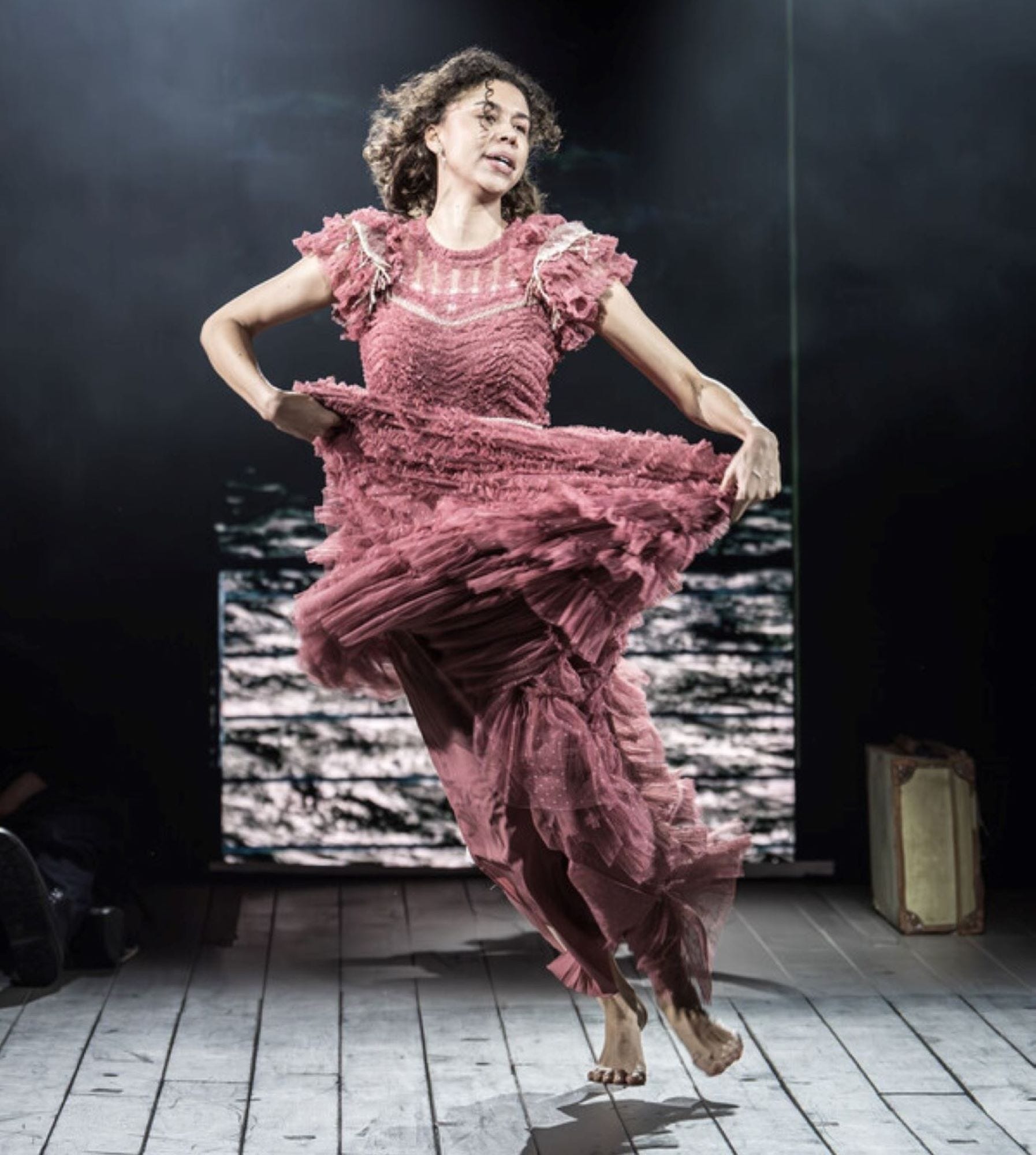
Polonius (Richard Cant) is fussily officious, Laertes (Benjamin Westerby) simmers and then explodes, and poor sister Ophelia, as played by Georgia-Mae Myers, is not quite the fey creature we’ve often seen.
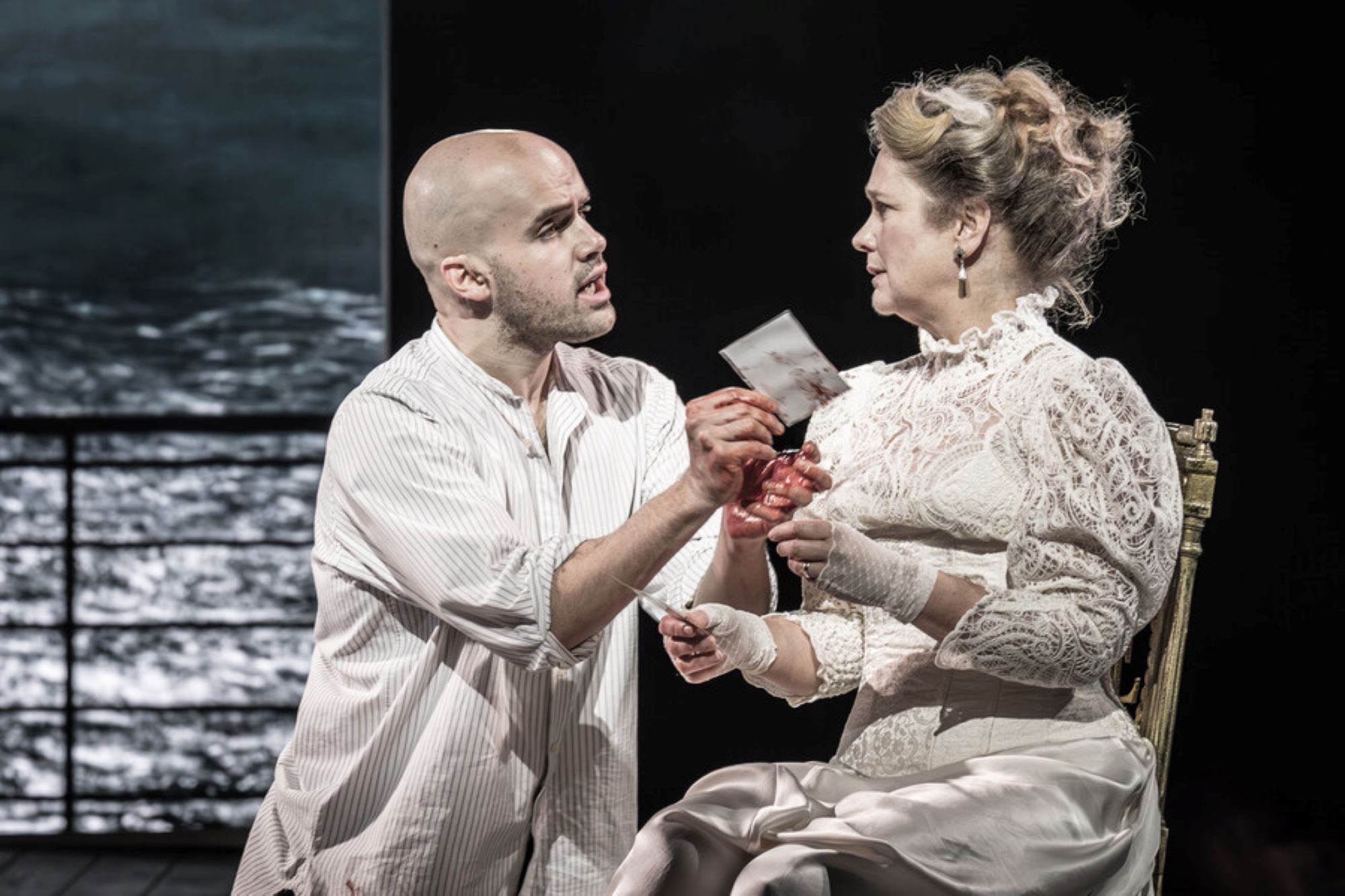
Poppy Miller’s Gertrude seems not to know where to turn. I felt for her as much as for Ophelia. Meanwhile Raymond Coulthard’s Claudius, plausible in his smart grey suit, reveals himself to be the shifty sh** we all know him to be once he’s cornered.
Horatio, slightly Harry Potterish as played by Colin Ryan, draws the short straw in being Hamlet’s friend. Who’d want that responsibility?
Actually, though, perhaps Rosencrantz and Guildenstern draw an even shorter straw, summoned to ‘take care’ (know what I mean?) of their supposed student pal.
Julia Kass, playing Guildenstern to Jamie Sayers’ Rosencrantz, gave me my first female in the role. And why not?
For many, and increasingly those with longer memories, there’s a whiff of nostalgia whenever the RSC comes to town. For many years they brought their entire Stratford season here – Shakespeare plays, others by his contemporaries, new commissions. Happy days!

Now it’s down to a few performances of the latest touring product if we’re lucky. But while not all those Stratford shows were that brilliant or memorable, this one is a cracker, well worth seeing.
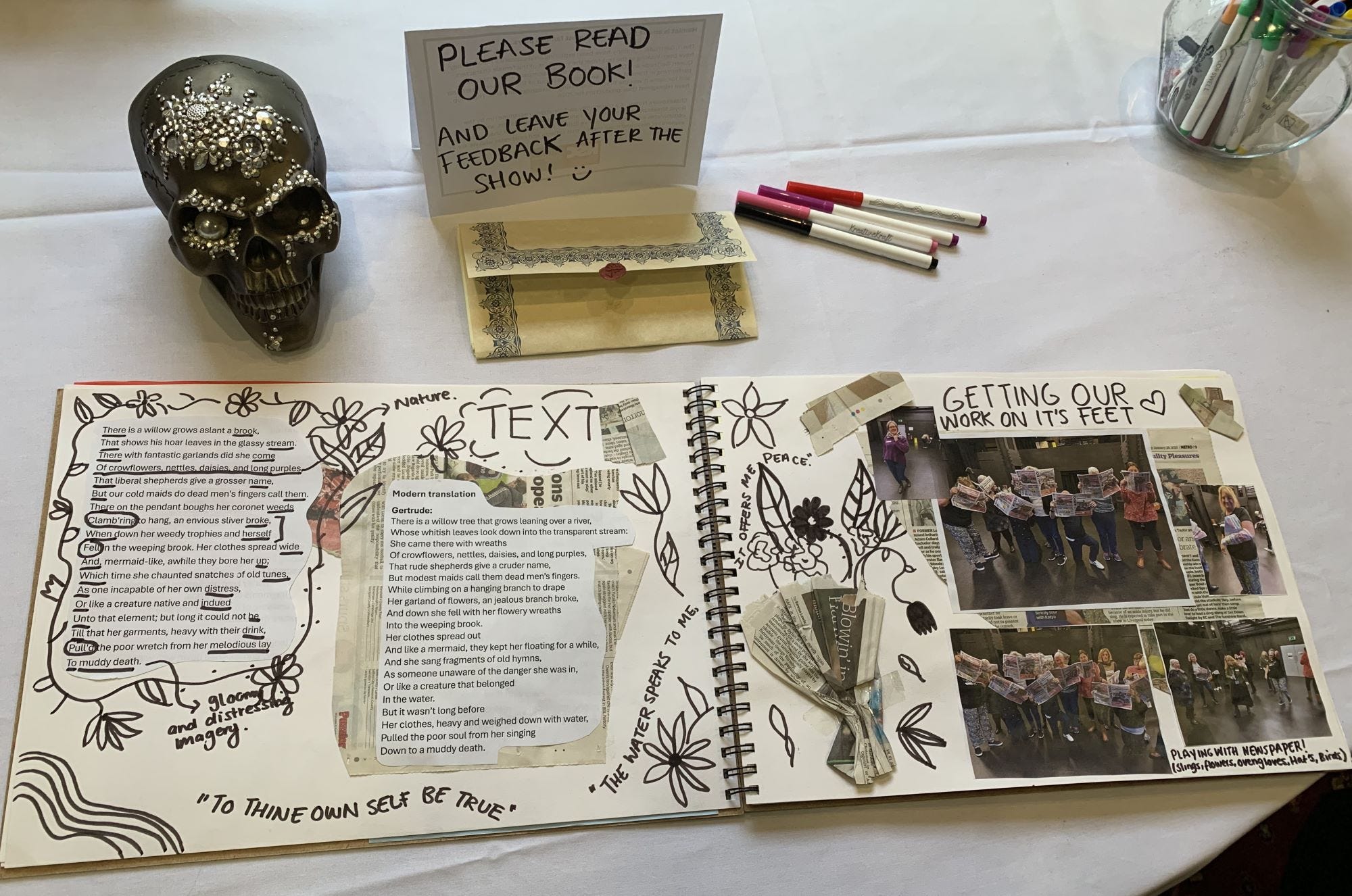
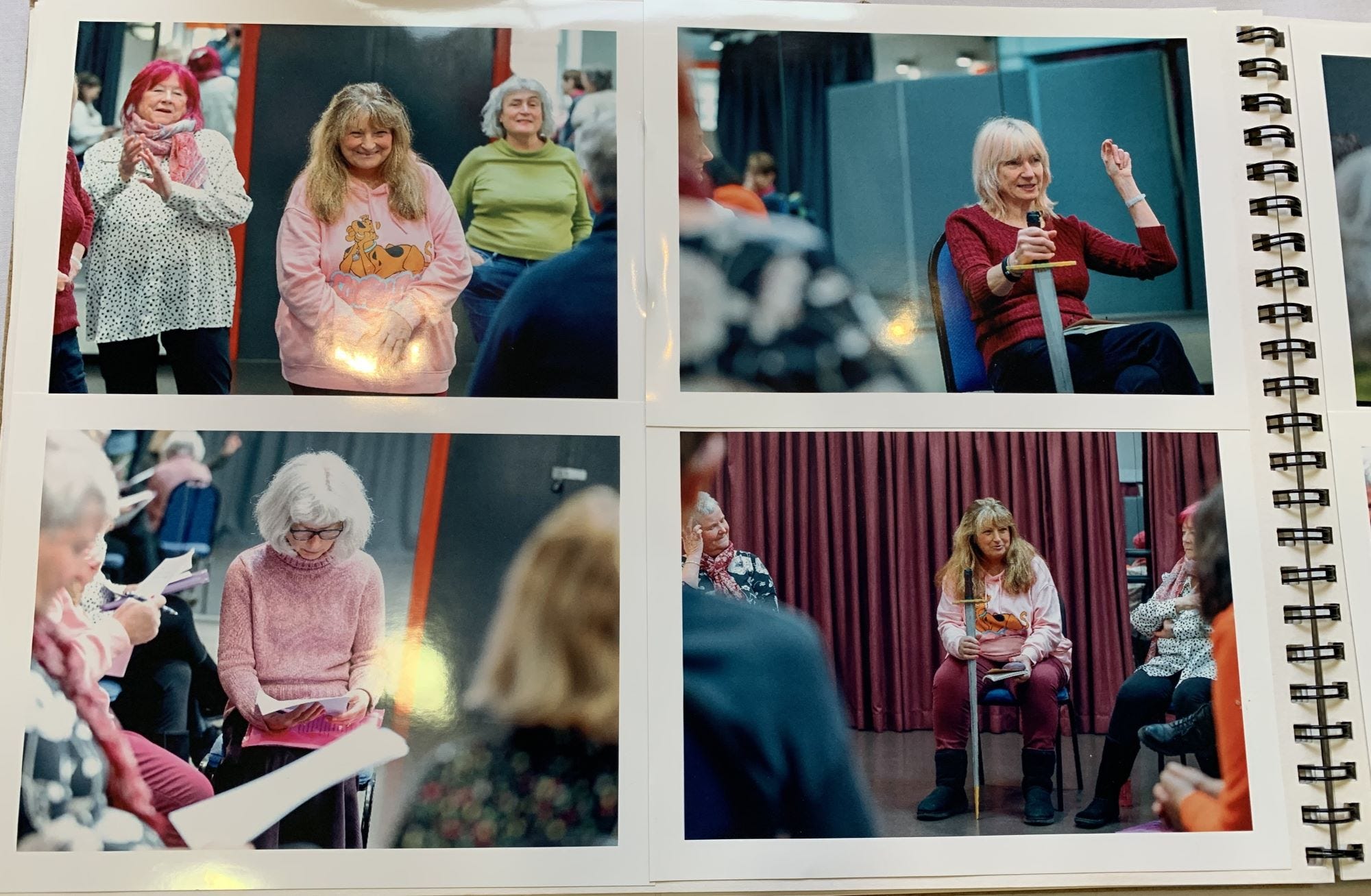
And as a reminder that Hamlet raises more questions than it answers, before Tuesday night’s opening performance I popped into the Theatre Royal Studio to see I, Gertrude, performed by 11 North East women who studied the play as part of Shakespeare Nation, a community participation programme run by the RSC and, in this instance, the Theatre Royal.
Some had known the play well, some not at all. Many, when they first presented their piece last year, were performing in public for the first time. Now here they were again, scripts in hand (“not cheating”, one remarked pointedly).
They had focused on the female characters, Gertrude and Ophelia. There was a lot of sympathy for them, as you might expect. Hamlet, some reckoned, was selfish if feigning madness to hasten Ophelia’s descent into genuine madness by displaying affection for her and then commanding her to a nunnery.
And as for Gertrude… well, at least one of the women would not tolerate her own son talking to her as Hamlet talks to his mother, even though she loved him. God forbid!
It did occur to me that Hamlet, suspecting his mother had married his uncle after colluding in the murder of his dad, might have been able to claim extenuating circumstances. Not sure it would have cut much ice in Newcastle, though.
And why, the women wanted to know, did Gertrude get so few lines when Hamlet was allowed to go on and on and on?
He was, one intimated darkly, boring.
Only Shakespeare knew the answer to that question, as to all others, so the quandaries remain. And the play, as the women observed, has “stood the test of time”.
As well as showing that a Shakespeare play provides much food for thought, the women also made a book about their involvement, revealing how much of themselves they had given to it. It was sporting of them to share.
Take a bow (which they did) Pat Nicholl, Ali Musgrove, Belinda Brady, Yvonne Hinckesman, Alison Wynarczyk, Patricia Bonacoscia, Val Campbell, Barbara Dowling, Mary Lunney Murdoch, Jill Verrill and Christine Wood, who all ended up dancing on the stage.
They were the co-creators of the show and it was directed by Alex Elliott.
That was a one-off. Hamlet, meanwhile, runs until Saturday, April 4. Tickets from the Theatre Royal box office.