


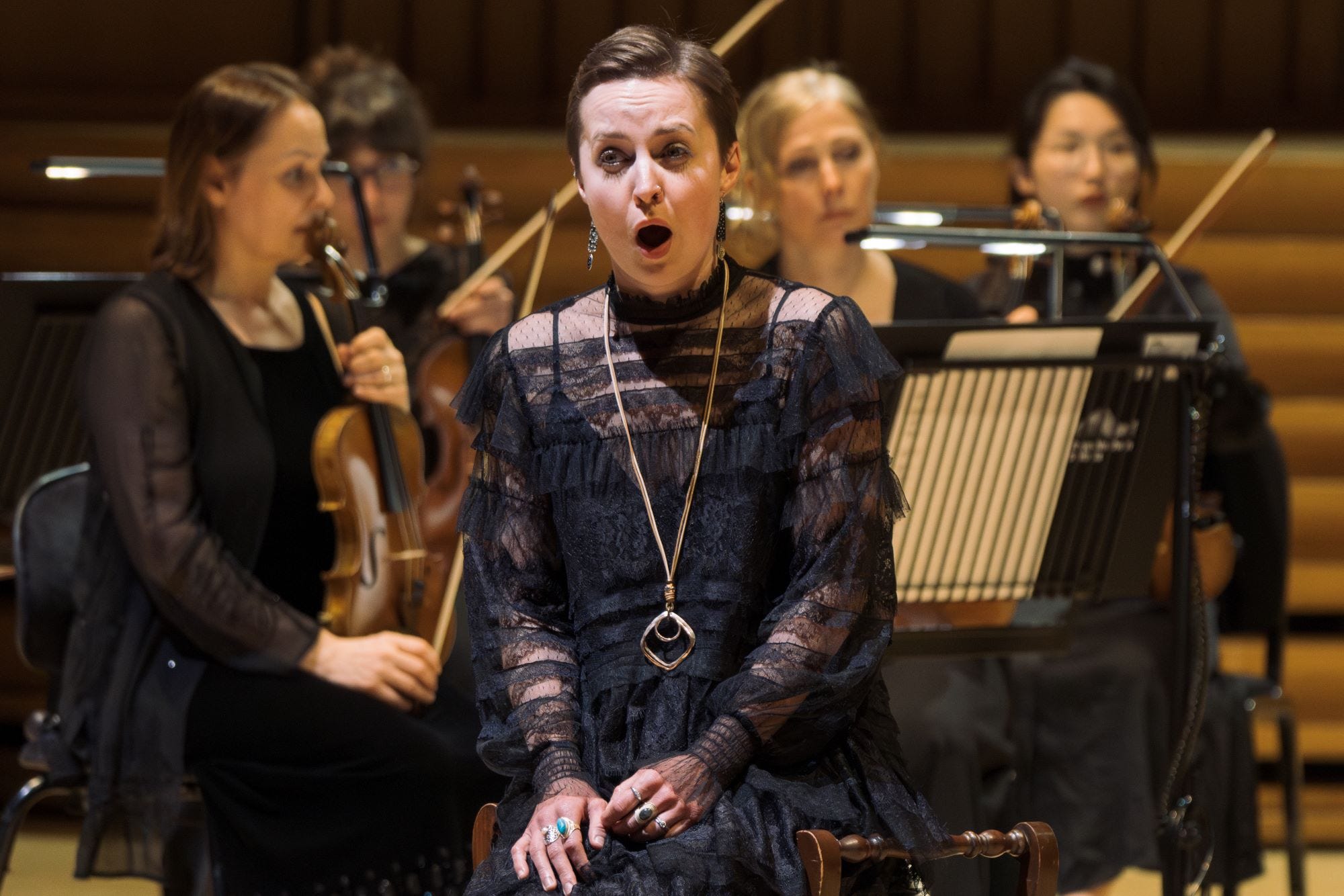
Commiserations if you missed this wonderful evening of surprises in the big hall where the music went off in all directions and so – astonishingly – did our esteemed Royal Northern Sinfonia Chorus (we’ll come to them).
The advertised main attraction, a concert performance of Henry Purcell’s Dido and Aeneas, was bracketed by some heel-clicking folk dancing and a rendition of Waters of Tyne and other classics of that ilk.
Who would have thought of blending genres in this way?
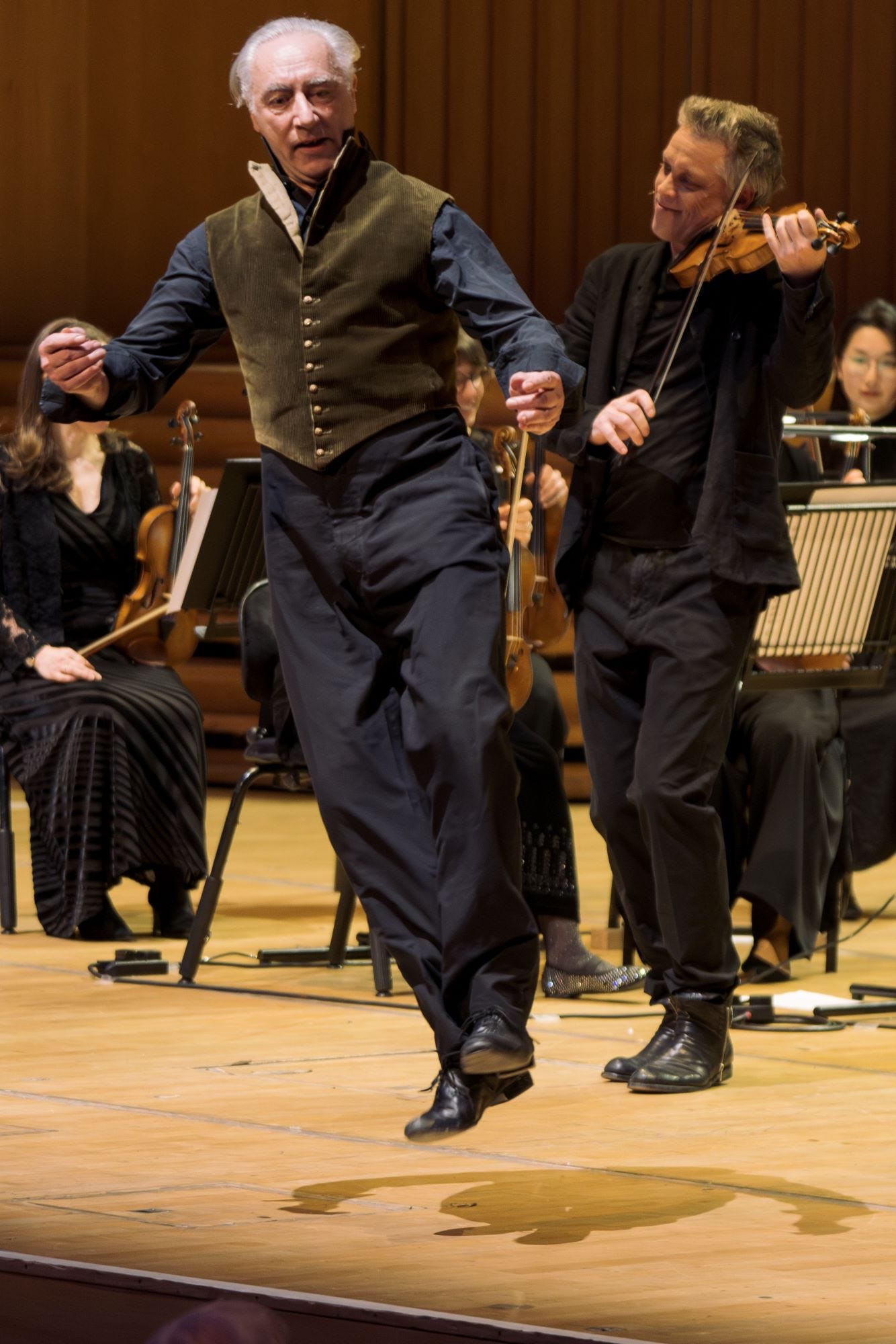
Well, Norwegian violinist and maestro Bjarte Eike, that’s who. A puckish figure with trousers tucked into his boots, he roved the stage in his directorial capacity, seeming to enjoy proceedings as much as everyone else.
He sought the assistance of the audience.
Who, us? Well… you don’t get much of this outside The Last Night of the Proms.
“I might invite you to sing,” he challenged with a smile.
“Yep, it’s one of those! Here you were thinking I’m just going to another boring concert.”
So we practised the chorus of a sea shanty and were urged to shout – ‘hoy’ or ‘ho’ or some such – at the pump of a fist. And on the third and loudest hoy/ho the lights dimmed and the music began. Dramatic and hugely effective.
Whichever way you look at it, this evening was a delight, which is an odd thing to say when one of the principal characters ends up dead on the floor.
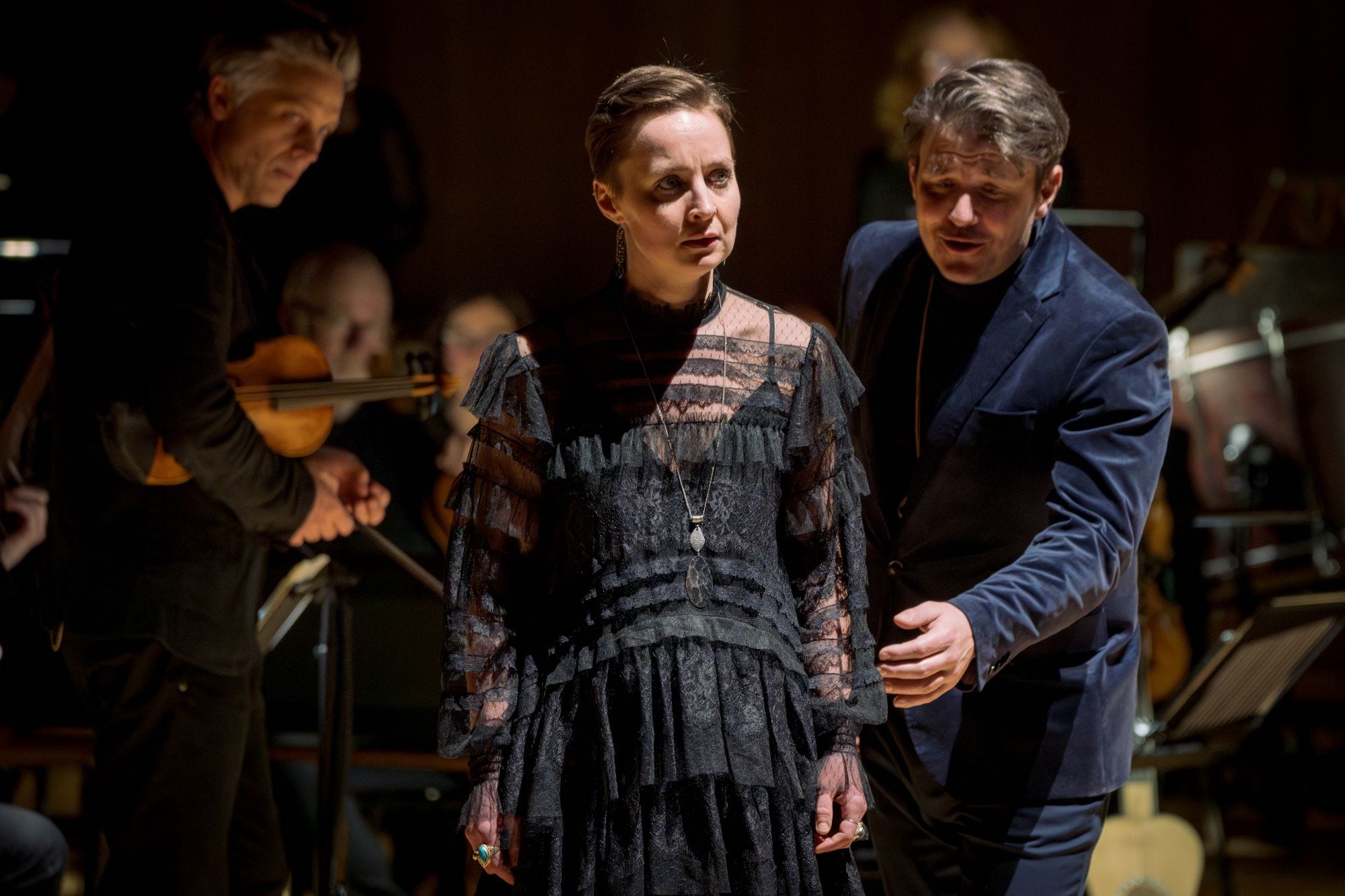
But Katie Bray’s Dido died as she lived, gracefully, a slight figure with a long dress, short hair and a voice of crystalline beauty.
It’s a tragic tale, Dido and Aeneas, as you’ll have gathered. She, Queen of Carthage, falls for a visiting Trojan prince, Aeneas, and a marriage seems propitious.
Then in steps a pesky Sorceress determined to mess things up – and does so, aided by an army of witches. Aeneas is persuaded that the gods have willed his departure so off he sails for Italy, impervious to Dido’s grief and despair.
He returns eventually but there’s to be no joyous reconciliation. Just poor Dido dead on the floor after a delay just long enough (fortunately for us) to deliver the musical heartbreak that’s Dido’s Lament.
So sad… yet so utterly brilliant.
Purcell, a 17th Century composer as British as roast beef, is said to have written his opera for a girls’ school performance (with a libretto by poet and playwright Nahum Tate who also – fun fact – wrote the words to the Christmas carol, While shepherds watched…).
But its journey down the years has been a bumpy one. For nearly 200 years it wasn’t performed at all and what we have today is a patchwork affair, stitched together and full of holes.
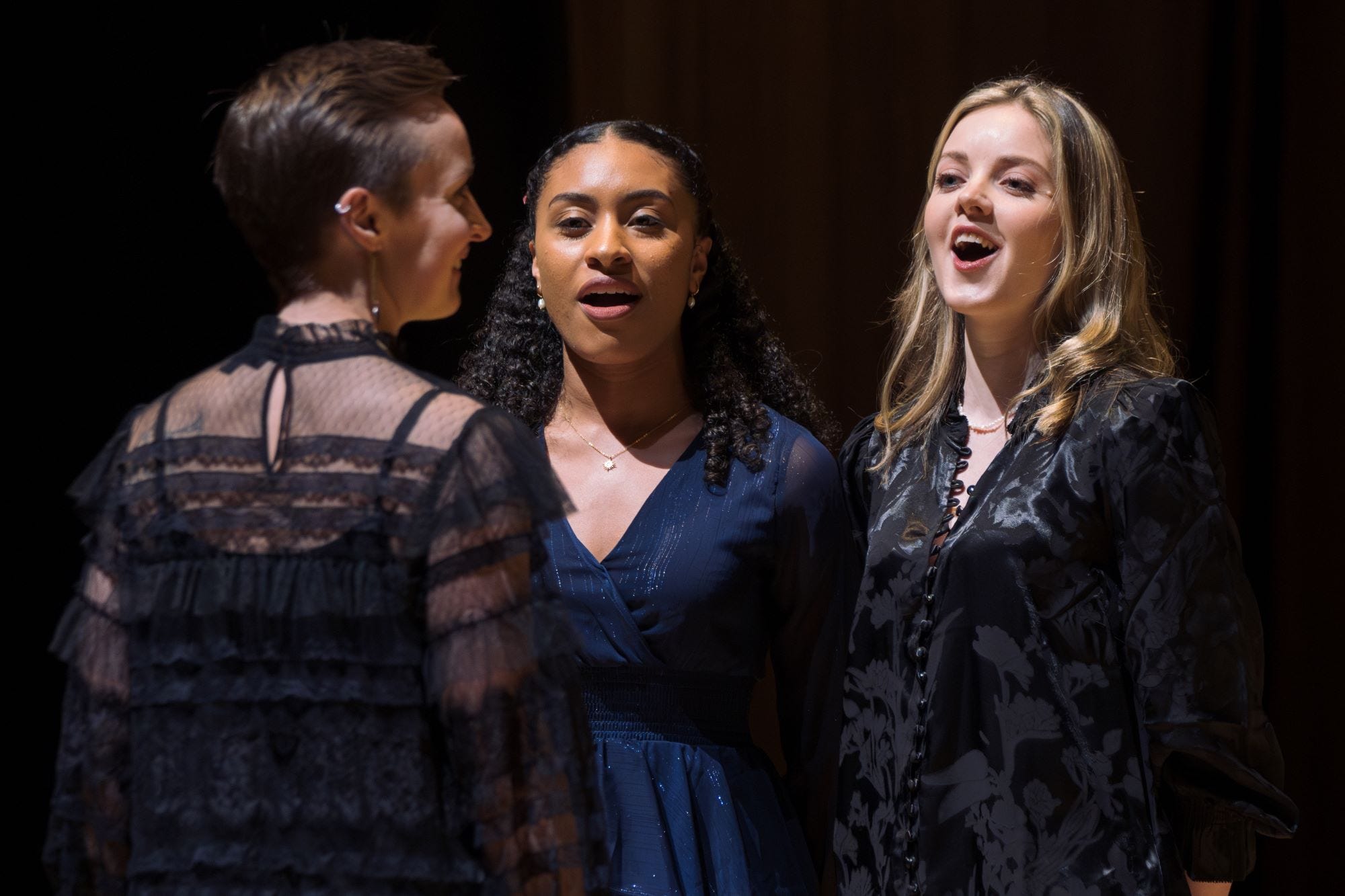
But just as nature abhors a vacuum, a composer – or even a Norwegian violinist with an inventive, genre-blending mind – sees potential in a void, maybe filling it, as here, with folksy delights inspired by Purcell contemporary John Playford and something of a Viking vibe.
So in front of the Sinfonia regulars sat Bjarte’s visiting horde with their baroque instruments, the likes of Hans Knut Sveen on harpsichord and Thor-Harald Johnsen on lute – and in front of them Steven Player, credited as sailor/dancer.
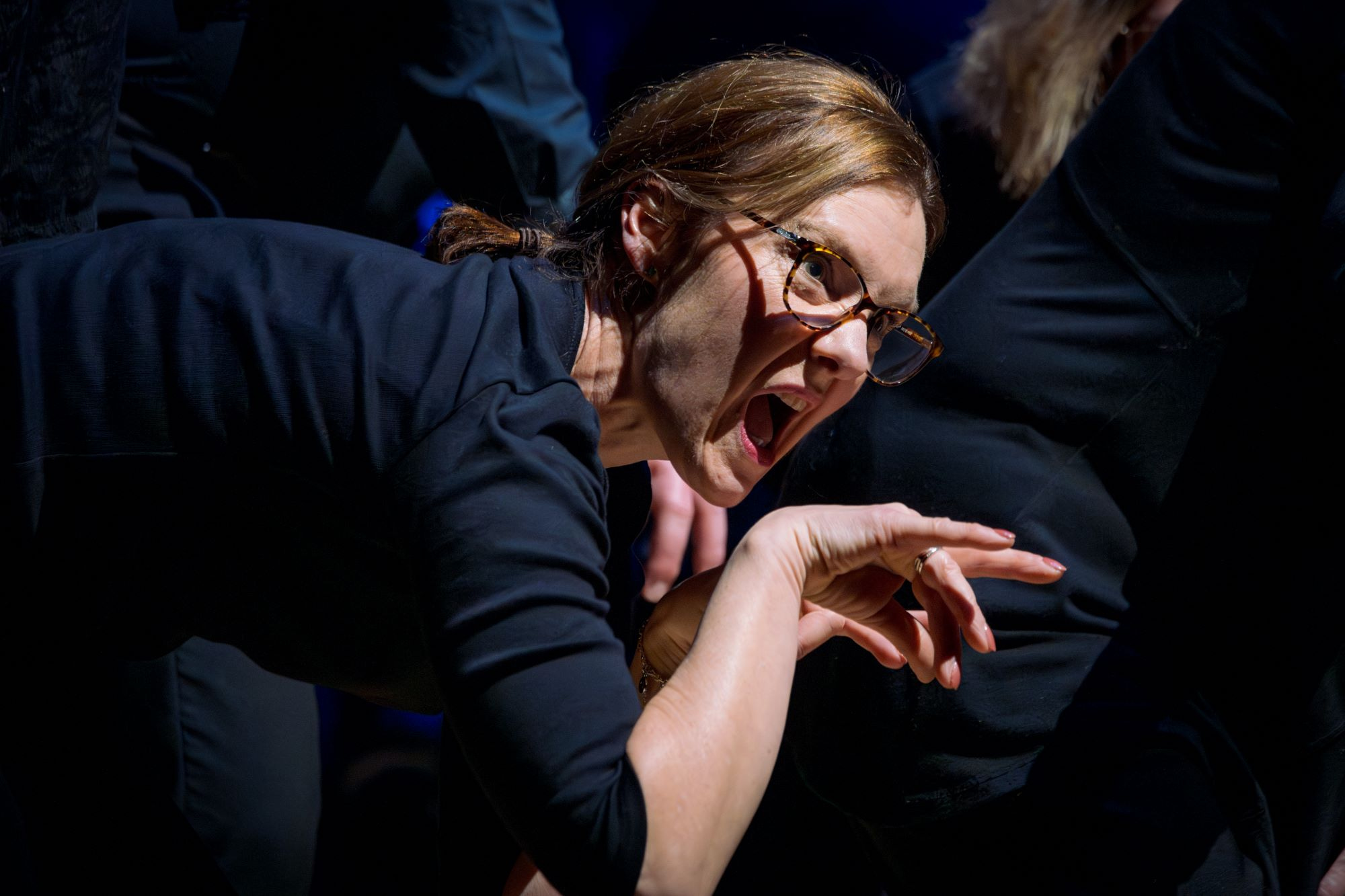
The drama built with the steady pulse of drum (Jude Carlton) and double bass (Sián Hicks) to climax in a sudden blast of brass from up high.
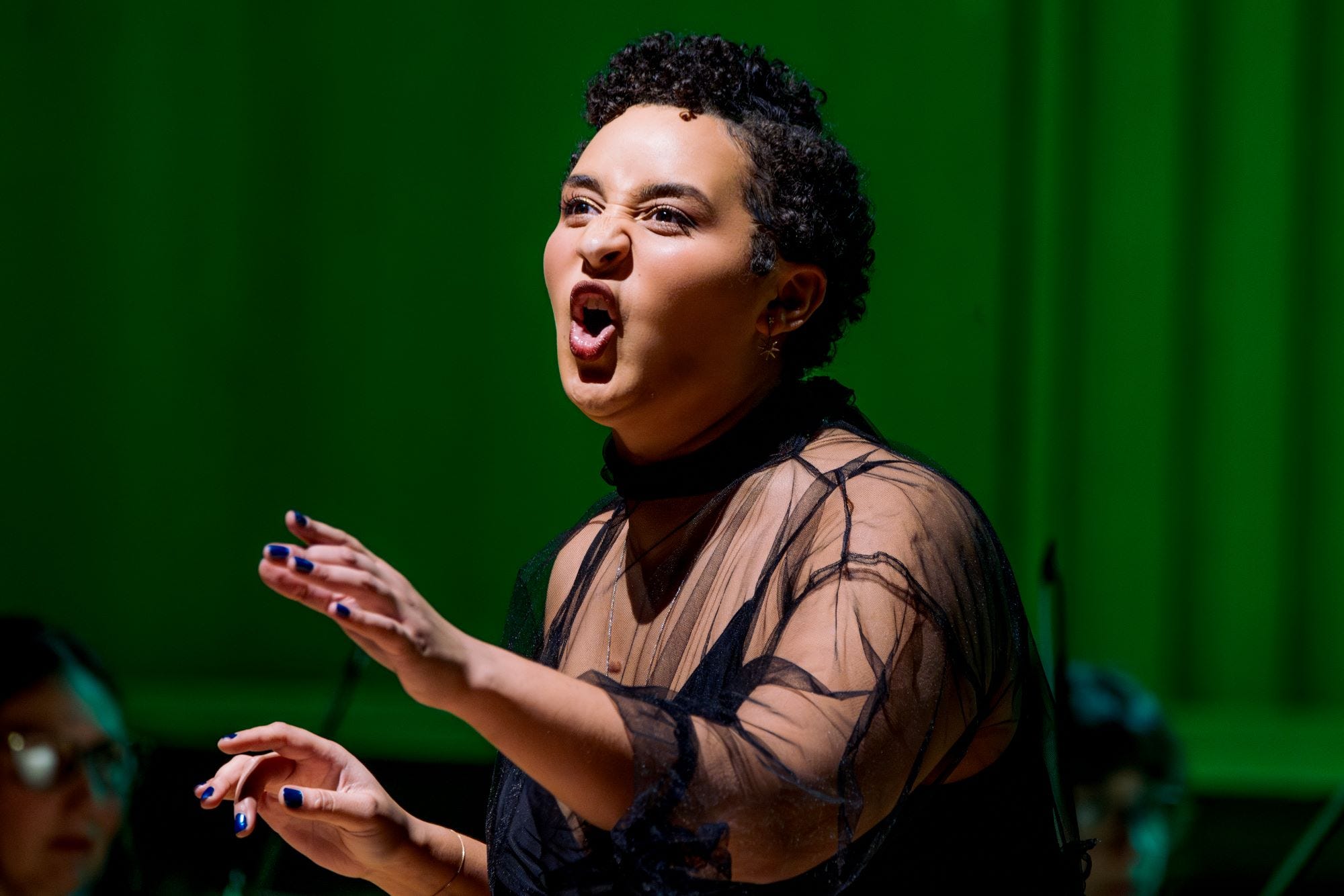
All the singers were sublime, local girl (from Saltburn) Rowan Pierce as Dido’s sister Belinda and Lea Shaw as the Sorceress in much more than supporting roles, making full use of the stage.
That an opera written for girls didn’t have much call for male roles was clear to see with Jonathan McGovern’s Aeneas (heroic credentials very much open to question) alone among the ladies, Myrna Tennant and Jasmine Flicker in the other named roles.
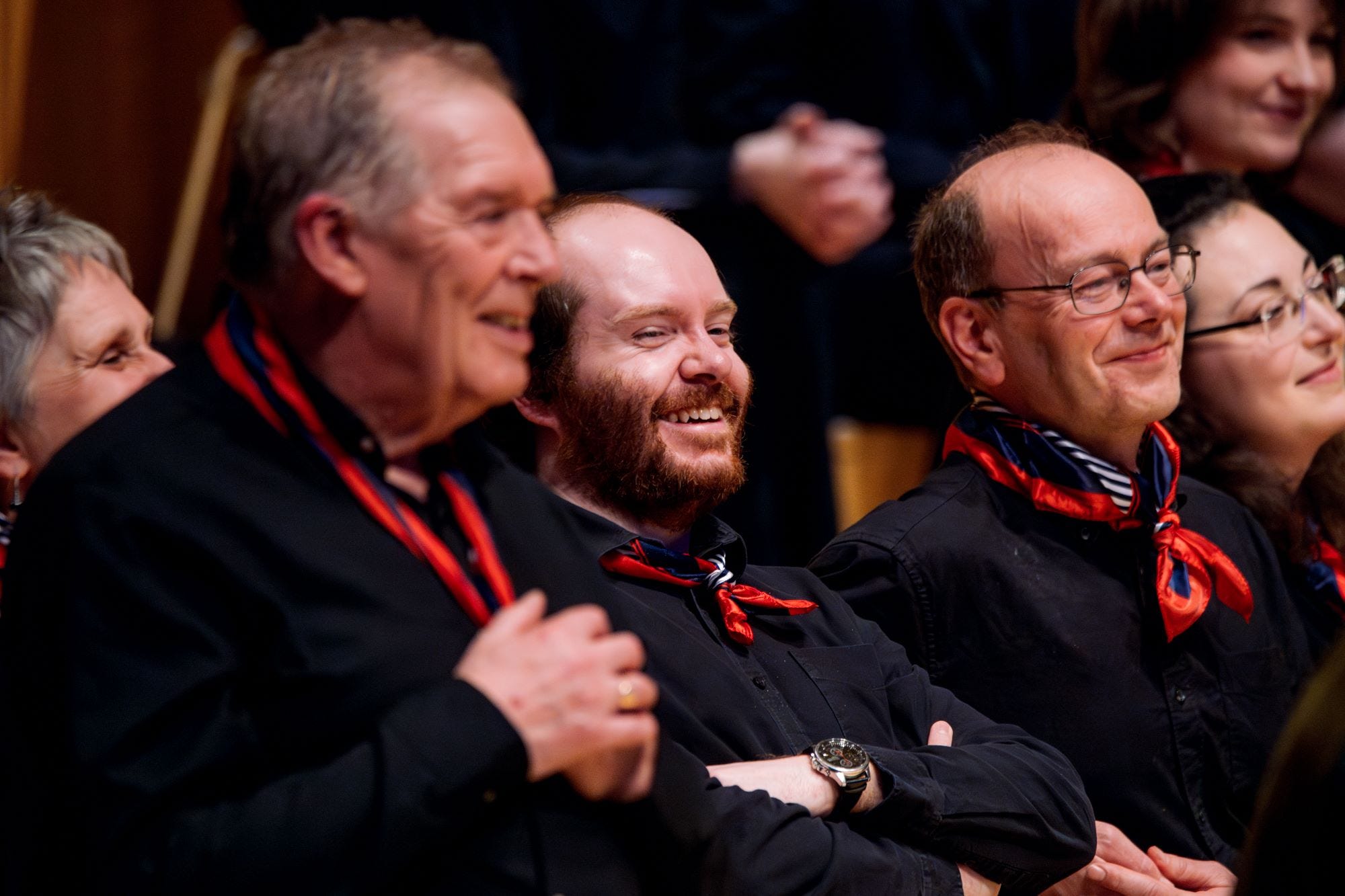
And adding operatic flavour throughout was the Chorus, actually coming down from the perches they’ve occupied since time immemorial to play sailors and witches.
With evident relish, they grimaced and danced and made the stage their own. Given a taste of the action, will they ever again be persuaded simply to sit, stand and sing?
Bravo to them and everyone. It was a great night. Shame there was only one performance.
For more classical delights, check the website of The Glasshouse International Centre for Music.