


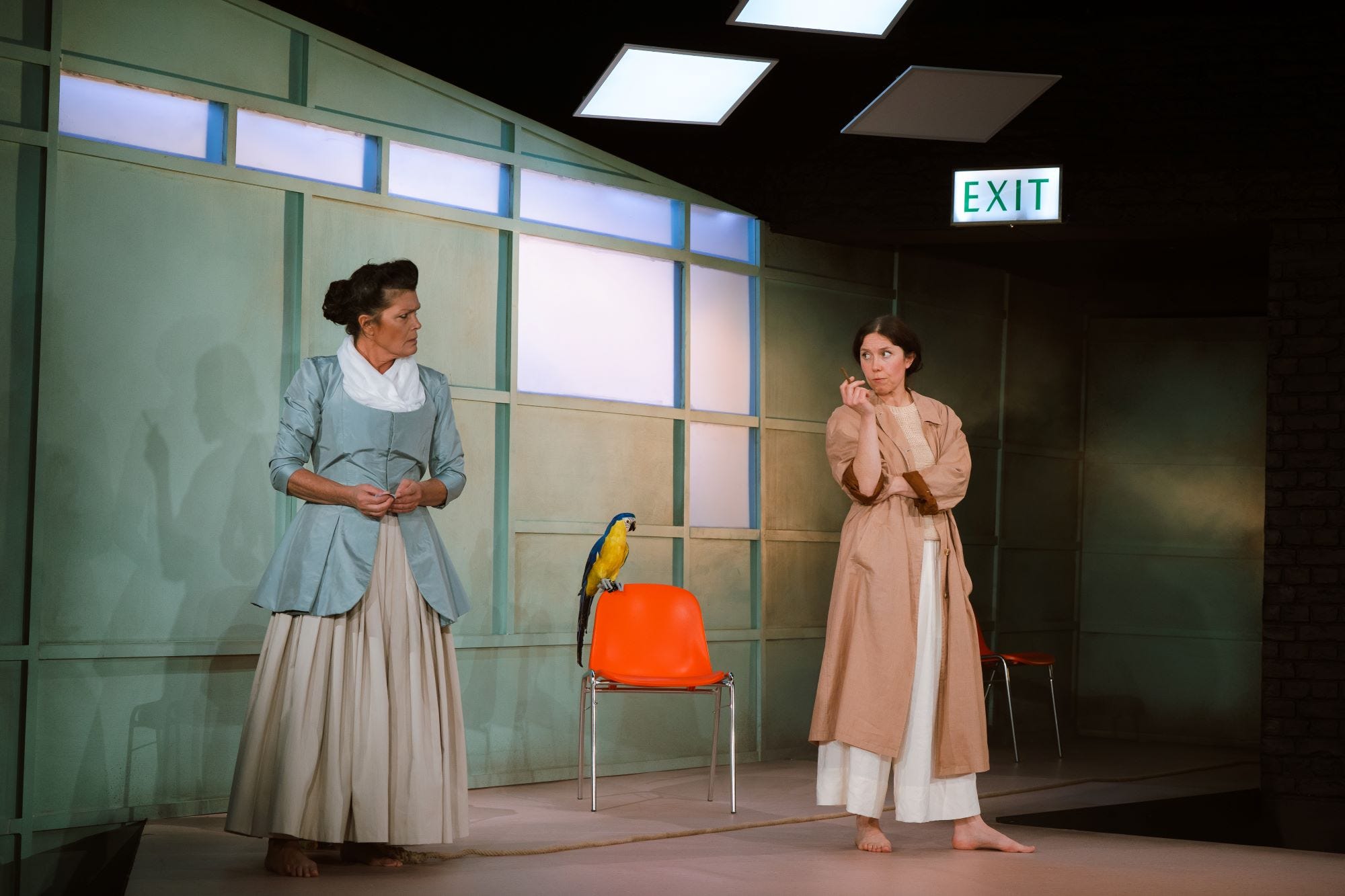
Shelagh Stephenson has a pop at the patriarchy in her enjoyable new play set in the afterlife where Mary Astell sits and knits and Virginia Woolf flits around with a stuffed pet dog and frets about her unlit cigarette.
Where is it, exactly, this sparsely furnished holding area (just two plastic chairs and a stuffed parrot, actually a macaw but don’t let’s split hairs)?
If it’s not purgatory – since that, as the devoutly protestant Mrs Astell from the 17th Century reminds her companion from the 20th, is a Catholic conceit – then where?
Certainly, sniffs Mrs A – present on stage (it actually is a stage) as we find our seats – it is not what she’d hoped for, lacking harps, clouds or angels. She’s even beginning to suspect that He (God, that is) might be a She. That might, she muses, “make more sense”.
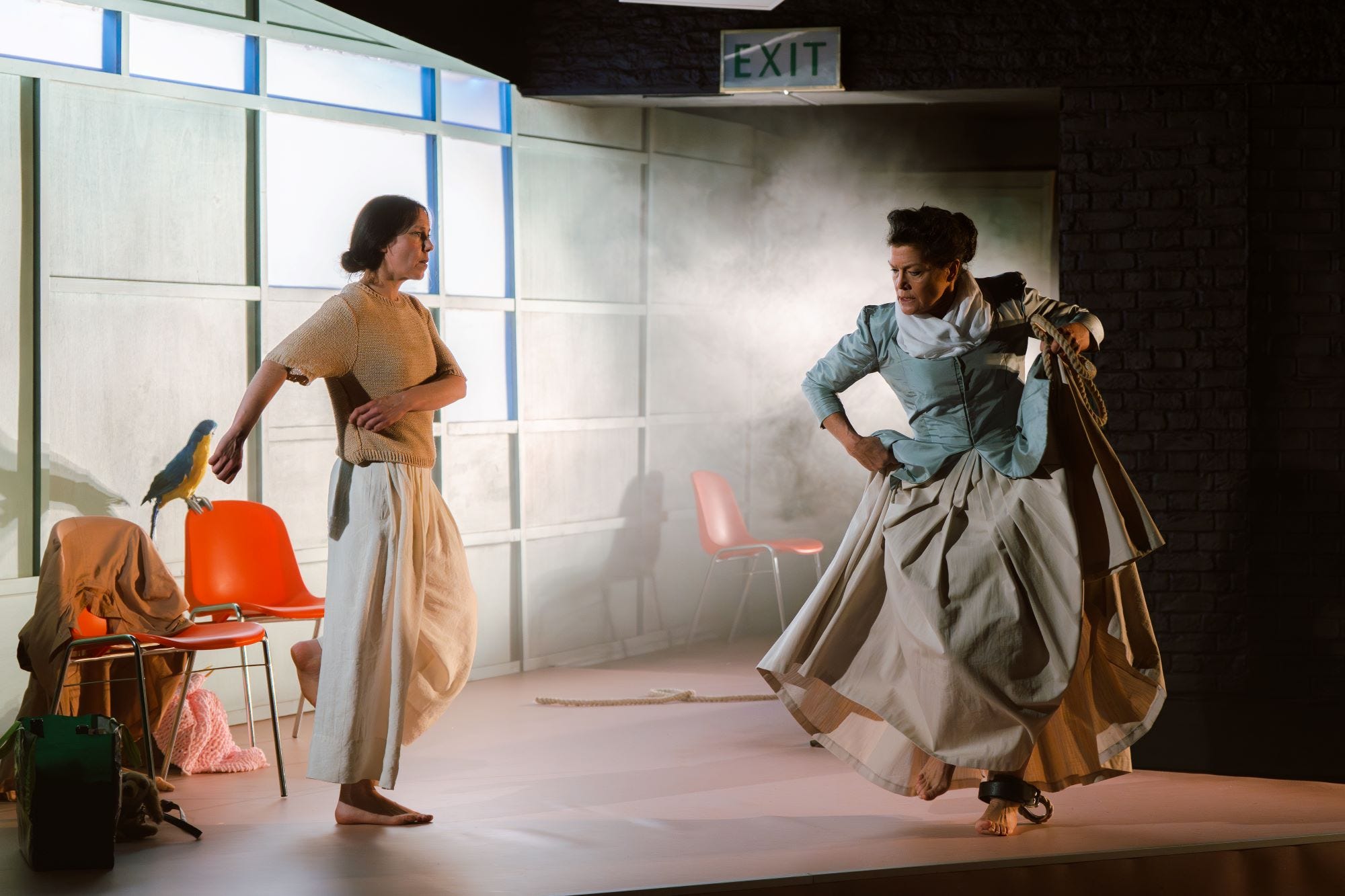
She’s certainly stuck there, tied by an ankle to an exit sign.
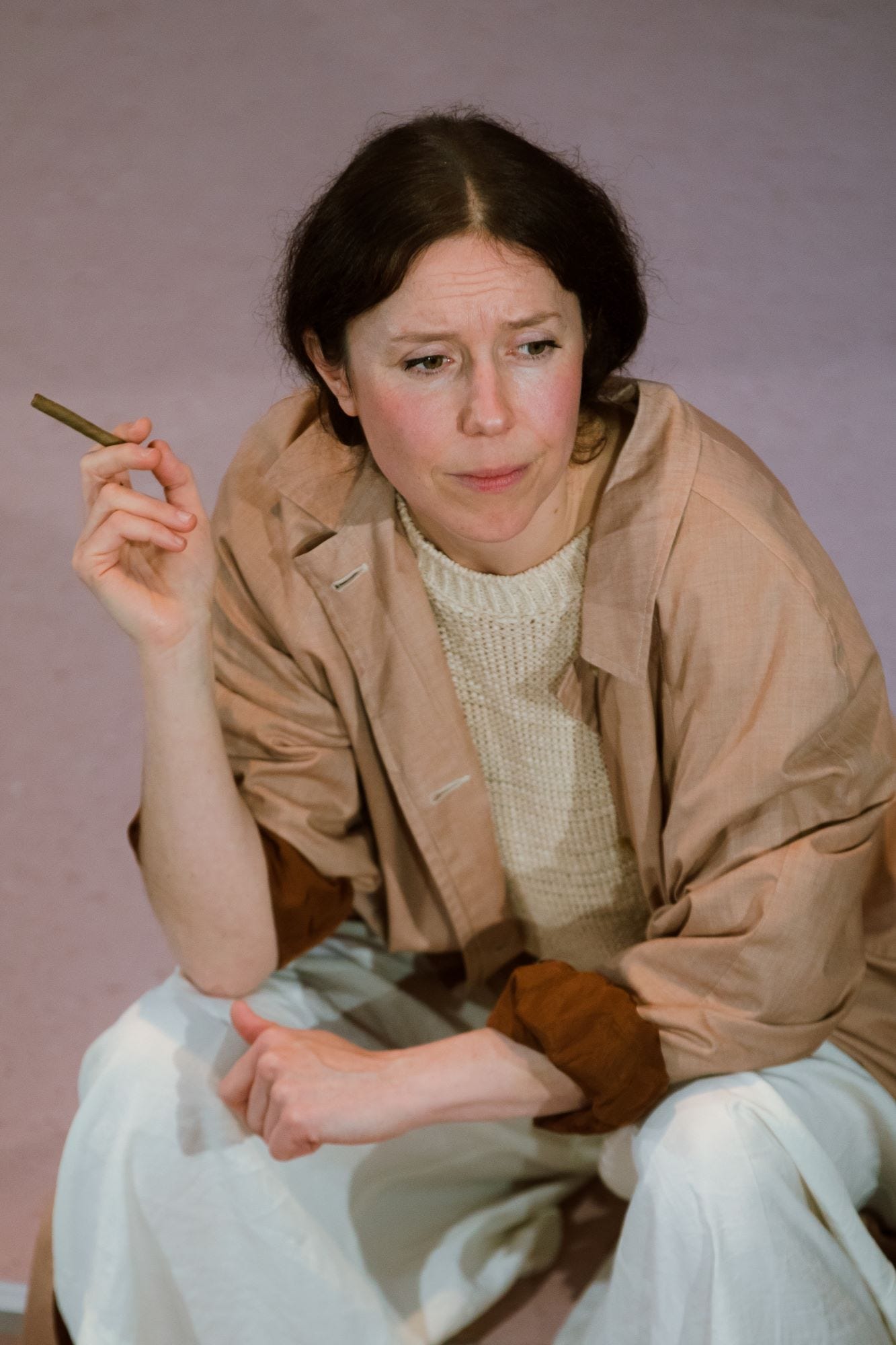
Mrs W, on the other hand, seems free to come and go, unable to smoke but able to swear. Unshackled from the strictures of polite society, she becomes quite potty mouthed.
She can also procure sherry (the girls get drunk, as if at a posthumous hen party) although can’t find knife or scissors with which to liberate her newfound tethered friend.
There’s an earnestness about Mrs A, who strove to kick over the traces in a stultifying man’s world after leaving Newcastle for London at a young age, but Phillippa Wilson beautifully serves the comedy running through Stephenson’s whimsical script.
Every generation rails against the one that’s gone before, she tells Mrs W. “Small steps must be made. Otherwise we’d still be living in caves and eating our neighbours when the crops failed.”
“I’m sure that’ll be back soon,” Mrs W retorts.
The modernist writer, funny and forthright (her wit could sever that rope), gives Tessa Parr a chance to spread her wings at Live Theatre in a play beautifully performed and directed by Karen Traynor
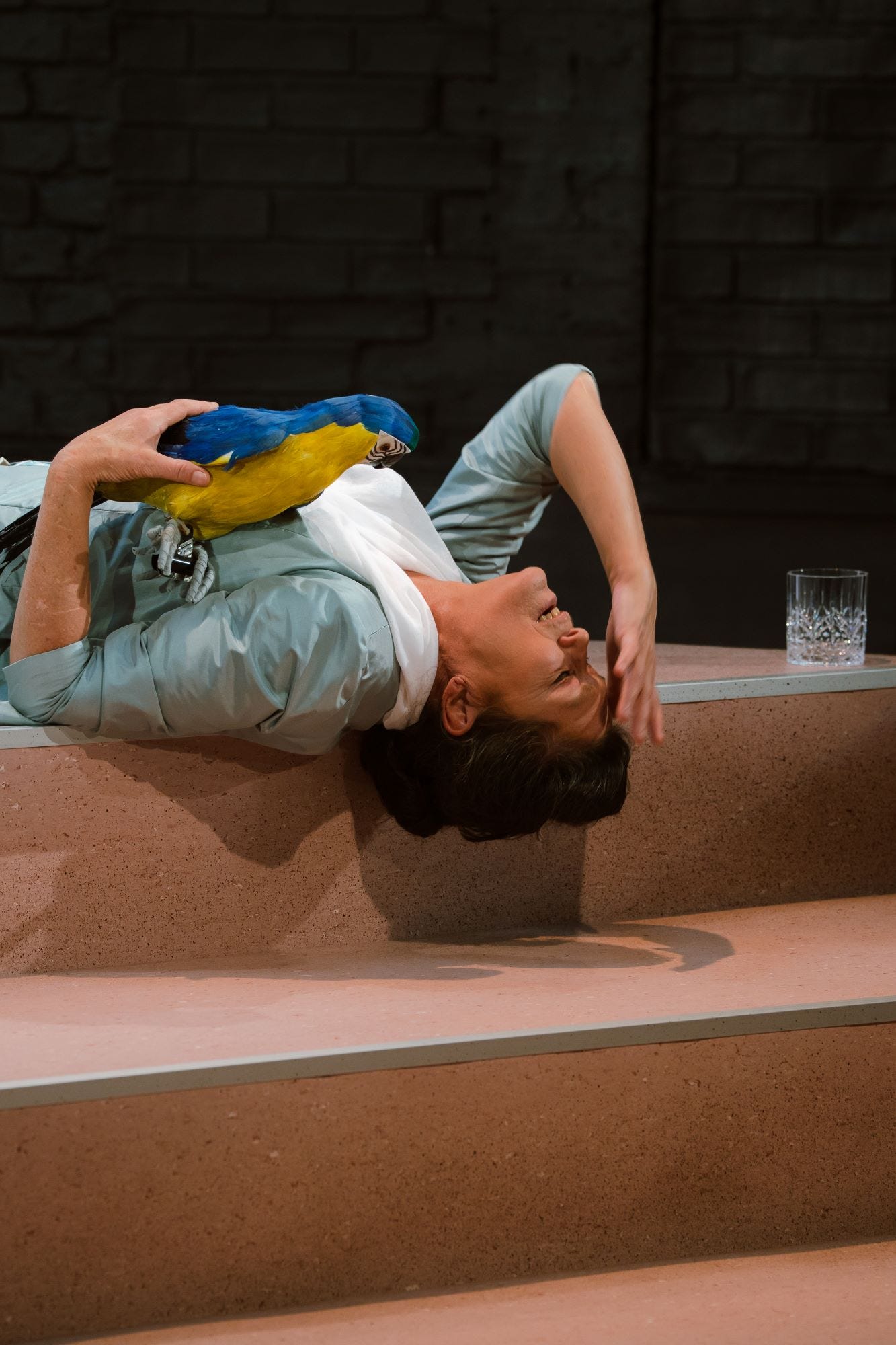
They discuss Freud.
Tessa as Virginia (chirpily): “Did you ever want a penis, Mrs Astell?”
Phillippa as Mary (archly): “I’m sorry?”
Mary Astell, history tells us, was not a fan of marriage and never tried it.
They talk about class, bourgeois Virginia candidly dismissive of the servants who were there to, well, serve.
And in a second half when things turn serious, they find common ground in the way women have been cowed, Virginia opening up as a victim of sexual abuse as she couldn’t in life for fear of embarrassing her male abuser.
“We learnt it at our mother’s knee,” sympathises Mary. “Eve tempted Adam and destroyed Eden. It was all her fault.”
What Mrs Astell fears most is oblivion, held only by that rope from joining the mysterious chorus of anonymous women now finding their voice somewhere beyond the room with the parrot and the chairs.
Who actually would remember her nowadays if it weren’t for a plaque recently installed on a wall outside Newcastle Cathedral (plenty of men, I dare say, are commemorated inside)?
Mary notes sourly that Virginia seems never to go out of fashion, hence her blasé flitting about.
They’re both dead now, as Mrs W reminds Mrs A who’s keen to carry on fighting the good fight for women. Their race is run. The time for projects and manifestos is done… by them at least.
Judging by the curtain call whoops from the audience, there are others who’ve picked up the baton and have the distinct advantage of being still alive.
It’s good to see a new Shelagh Stephenson drama in her native North East. Teasing and thought-provoking, it raises questions without easy answers. You’ll hang, though, on every carefully considered word - and you’d have to be dead not to laugh.
Astell & Woolf runs until Saturday, June 6. Tickets (selling fast) from the Live Theatre box office.