

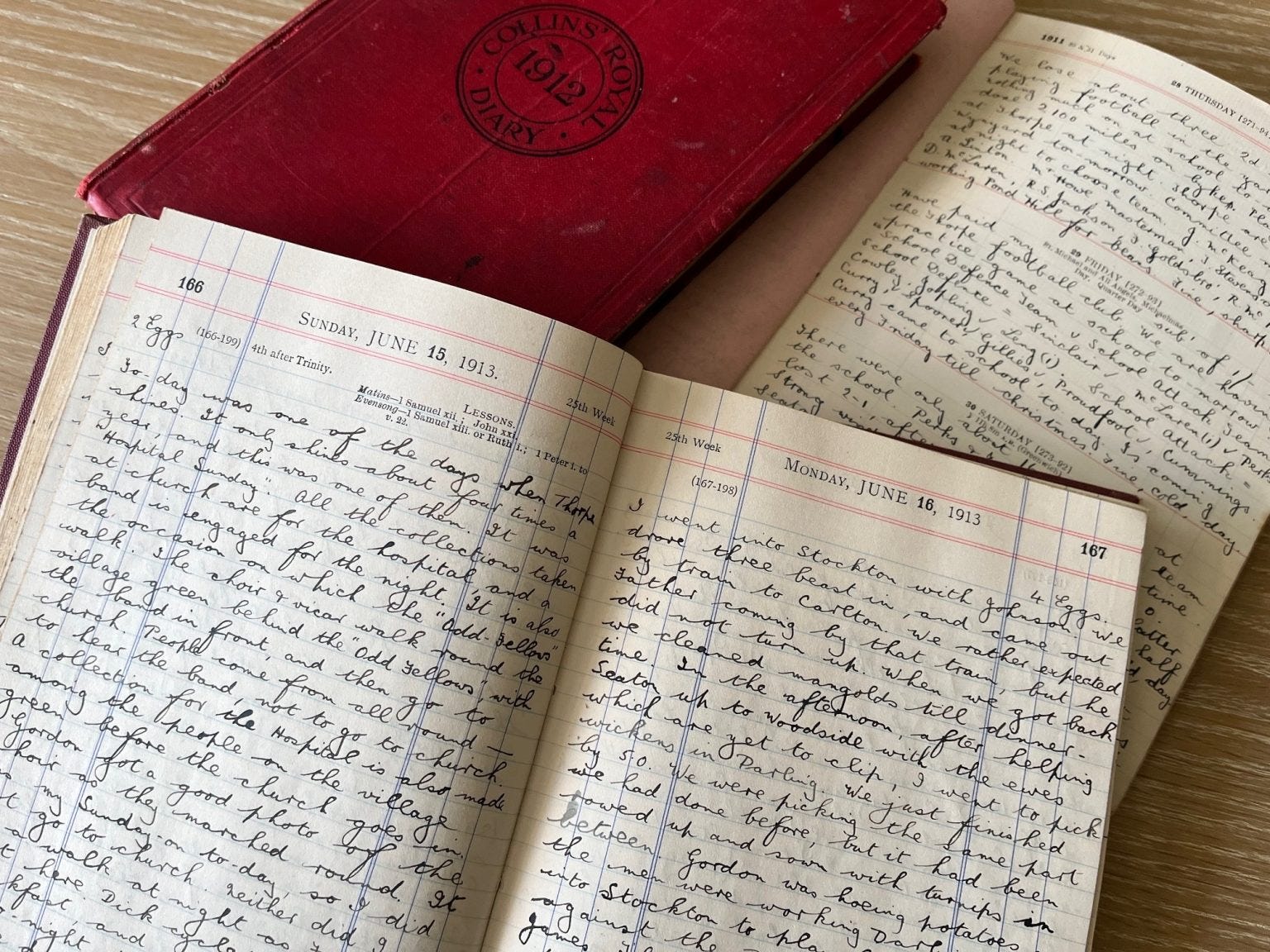
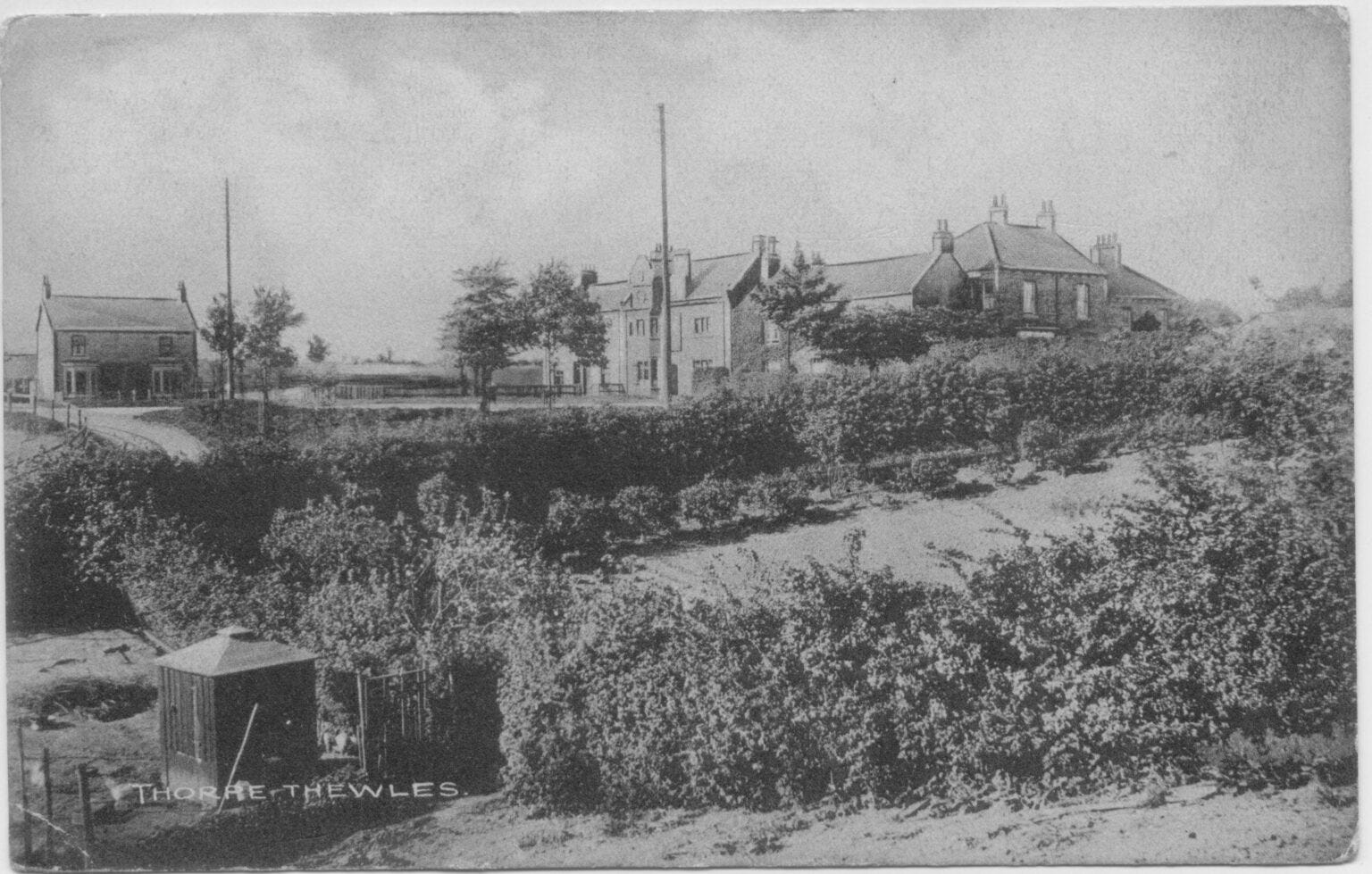
The diaries of a farmer’s son detailing life in a County Durham village before the First World War were a skip away from being lost forever.
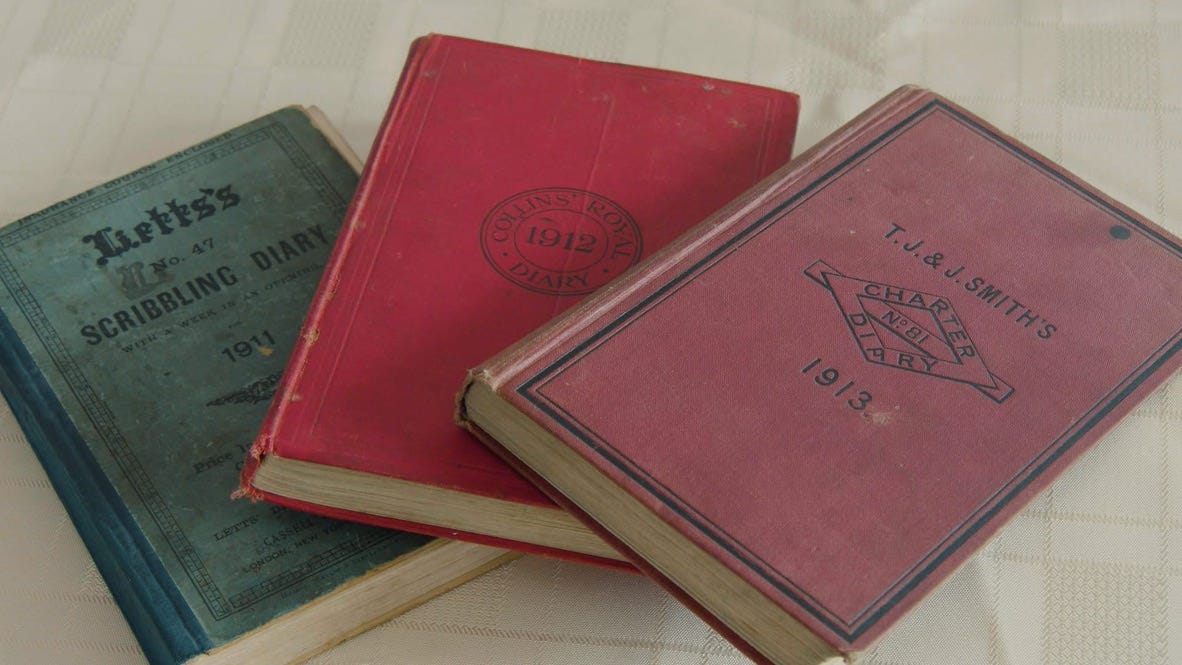
David McLaren began his first diary in 1911 at the age of 14, and continued in 1912 and 1913.
They range across activities on his family’s Manor Farm in the village of Thorpe Thewles, to everyday events, local scandals and his observations on national and worldwide events gleaned from newspapers.
He was also an enthusiastic follower of football, and supported Newcastle United, which meant railway journeys to the city to attend games.
Now a film based on the diary entries will be given a public screening on Sunday at The Story heritage centre at Mount Oswald, South Road, Durham.
The three diaries came to light when Brian Powdrell bought them at a car boot sale. The seller said they had come into his possession after being retrieved from a waste skip at a house clearance.
Brian donated the diaries to the Thorpe Thewles History Group, who transcribed them and contacted County Durham film makers Lonely Tower.
The result is the 83-minute film Lost and Found – The McLaren Diaries of Thorpe Thewles, made with re-enactors, including history group members in the cast. The project was backed by the National Heritage Lottery Fund, with help from community volunteers, Beamish Museum and the Green Howards Museum.
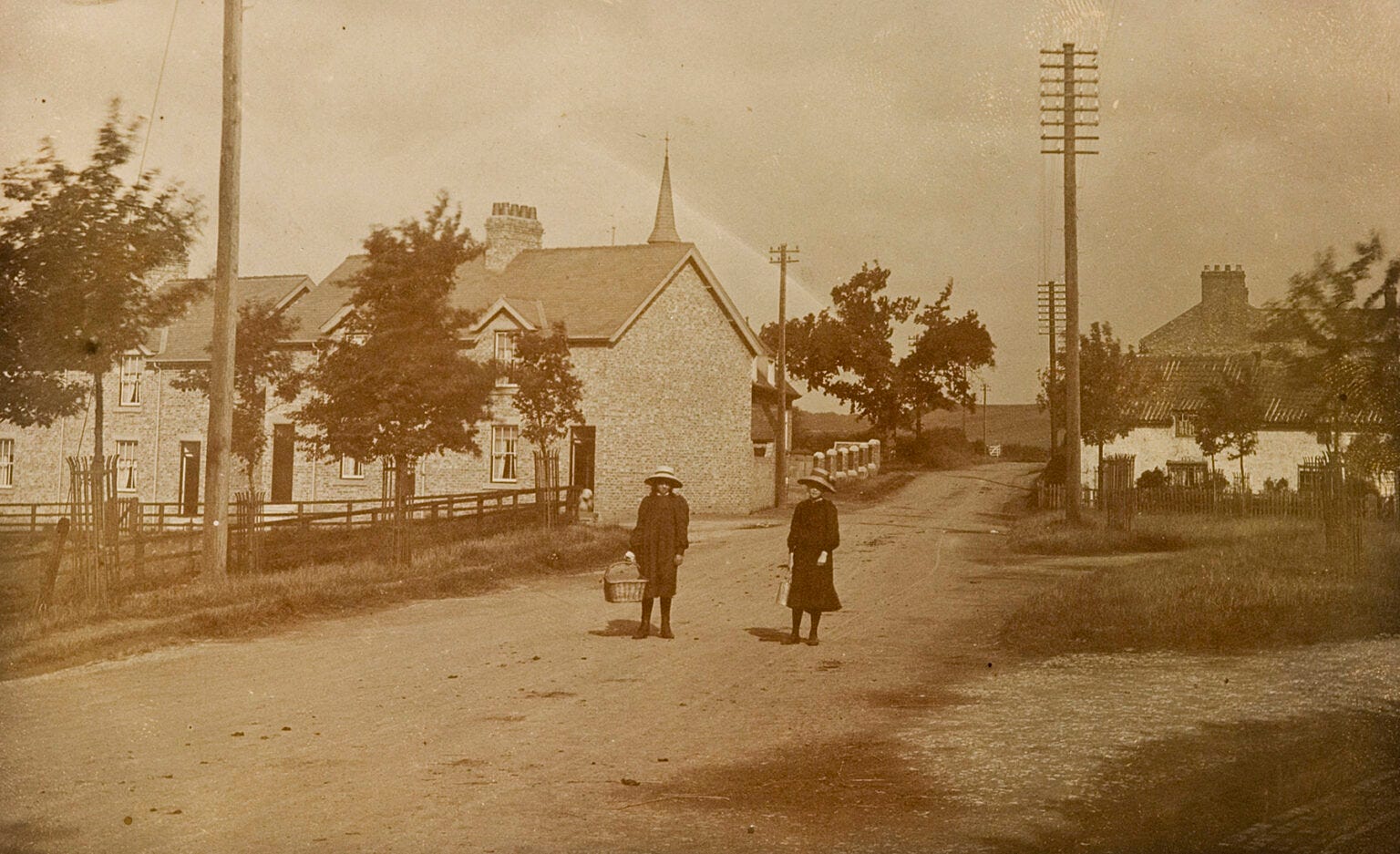
Making an appearance in the film is group secretary Sarah Hillier, who said: “This has been a major project for the group. We have produced a documentary about the discovery of the diaries, their contents and the life and times of their writer.
“David grew up in a massively different world compared with today, when there was no TV, radio, or phones.
“The diaries contain a veritable gold mine of information for historians interested in northern England, particularly southeast County Durham.
“They present a vivid account of a young man’s life in what was then a semi-rural part of County Durham in the years immediately leading up to the Great War. They record much of the young diarist’s detailed daily life along with accounts of both local, regional and international events of interest, many of a sporting nature, as well as village gossip and scandals.”
David was fond of long bike rides, after being given a cycle in February 1911. He records that by September he had covered more than 2,000 miles.
In 1913 he won a scholarship to Armstrong College in Newcastle to study agriculture, where he joined the Officer Training Corps, and then the Green Howards as Second Lieutenant as part of the 50th (Northumbrian) Division (Territorial Force) in 1915.
David’s battalion took part in the fierce fighting at St Julien at Ypres, losing five officers and 10 other ranks killed, one officer and 59 other ranks wounded and 17 other ranks missing. In the next five days the battalion lost a further 34 killed and 74 wounded.
The battalion war diary for October 19, 1915 records: “We were very sorry to hear at 7am that our Machine Gun Officer Lt. D. McLaren was shot through the head in the early morning.” He survived but was blinded for life.
“While his dreams of going back to his plans and delights of just two years before – reading, cycling, playing and watching football and cricket, perhaps later taking over the family farm – were shattered, David did rebuild his life,” said Sarah.
He gained new skills at St Dunstan’s, a charity for blinded servicemen providing training and possible job opportunities. Here he met his future wife Edith Flint, who was superintendent for typing, shorthand and telephony.
They moved back to Thorpe Thewles in 1922, and with four and a half acres of land, David became a successful chicken farmer and a pillar of the local community, as a church warden and treasurer for 50 years as well as chairman of the parish council.
David’s younger brother Peter served in the Royal Field Artillery. While he survived the war, he died aged 24 in November 1922, from symptoms possibly caused by exposure to mustard gas.
The brothers are buried in their home village.
The history group tracked down one of the last direct descendants of David’s parents, William and Hannah McLaren – Graham McLaren Lister of Hartlepool.
Sarah said: “The group undertook extensive genealogical research into the McLarens of Thorpe Thewles which clearly indicated that the only direct line of the family that continued was that from the children of David’s sister Janet, who married into the Lister family of Hartlepool.
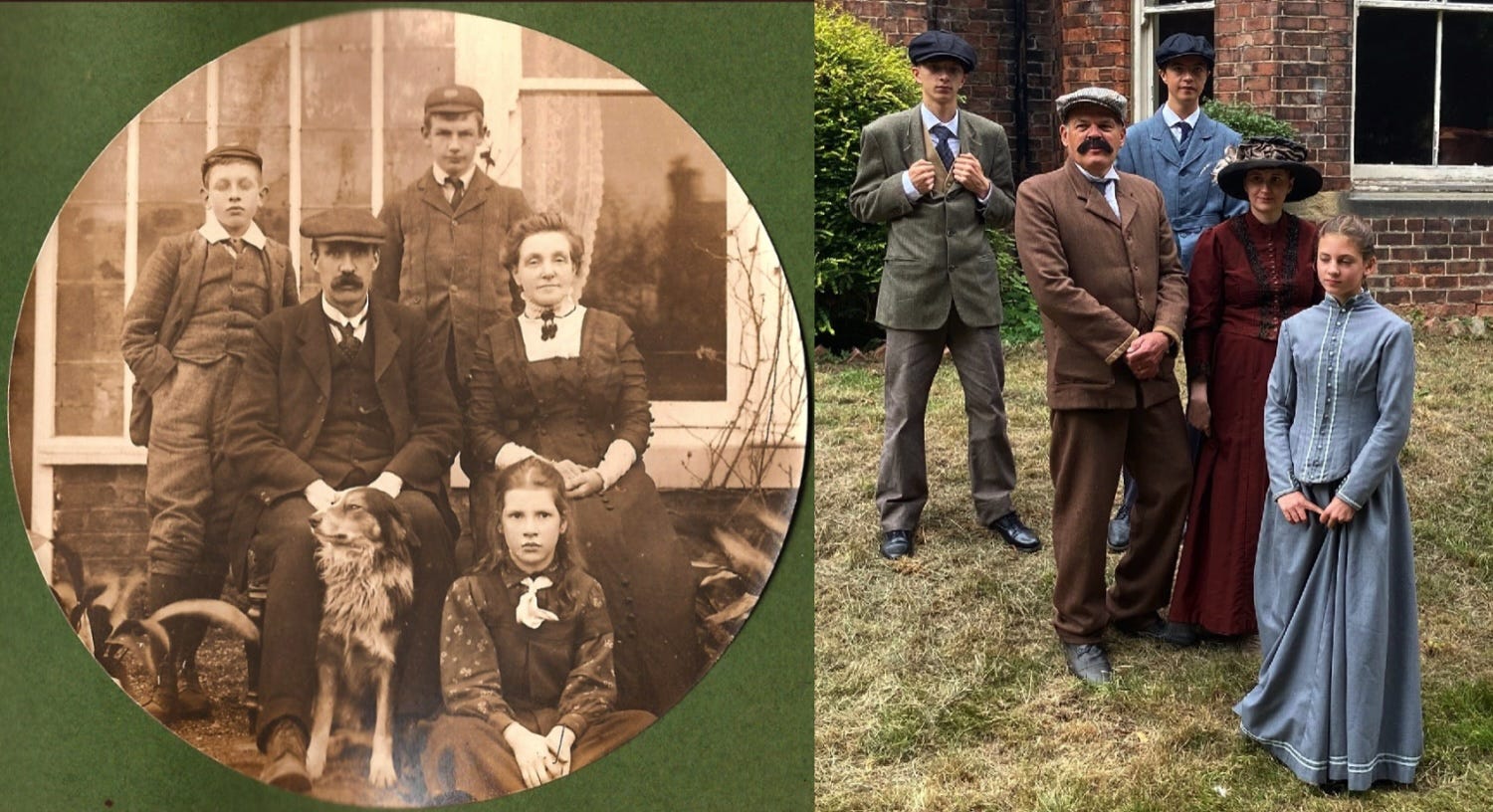
“Once contacted, Graham Lister became a great supporter of the project. He had several of the McLaren family’s photograph albums that had been passed down via Janet, along with several other useful family documents and objects.
“The albums contained unique and invaluable images of David both during the period he was writing his diaries and shortly afterwards. Several of the photographs within the albums portray family events and occasions that were directly referred to within the diaries and others portrayed a range of characters that were regularly mentioned.”
Graham Lister went on to be one of the film’s re-enactors and played the part of his own great grandfather, William McLaren.
For the making of the film, the group and Lonely Tower jointly selected 76 of what they considered to be some of the most interesting entries from David’s diaries, which best portrayed his character and the general times and social framework in which he lived.
Booking is required for the programme at The Story on Sunday, which runs from 1.30pm to 4pm and includes a Q&A with the history group.
Further screenings include: Stockton-on-Tees, Preston Park Museum, April 22, 1.30pm; Beamish Museum, May 16, 1pm and May 17, 2pm; Darlington, Public Library, May 19, 2.30pm; and Sedgefield, Public Library, May 21, 2pm.