


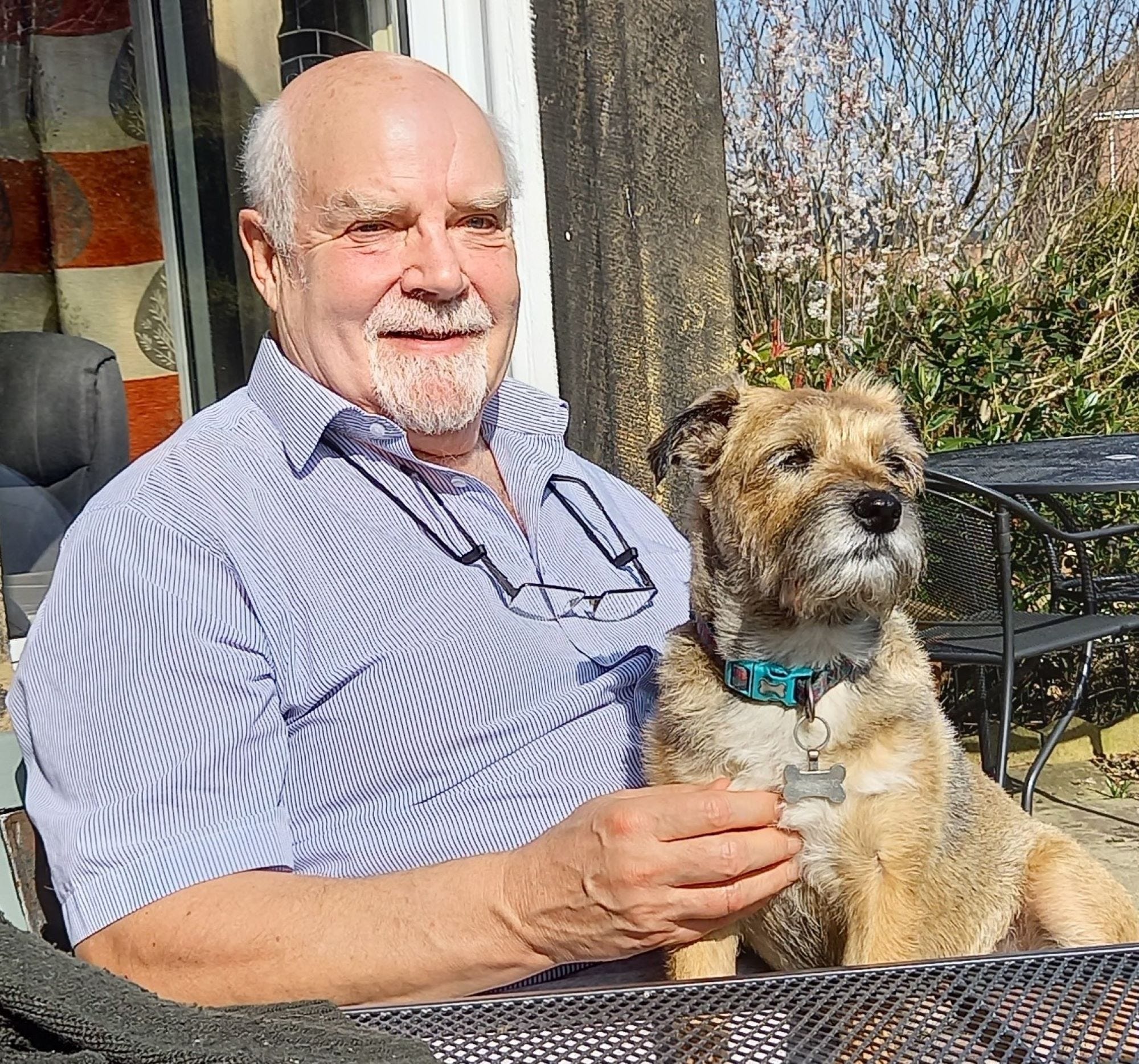
The death has been announced of Peter Stark OBE, influential former director of Northern Arts – the regional arts body before it was merged with the national Arts Council England in 2002 – and a key figure in shaping the region’s current arts landscape.
Peter’s energy and foresight, according to successor Andrew Dixon, ensured that when the National Lottery started in 1994, generating money for good causes, the North East was primed to make its pitch.
The following year, The Case for Capital was given a high profile London launch. Based on research Peter had initiated, it called for significant investment in the North East arts infrastructure to redress a startling national imbalance.
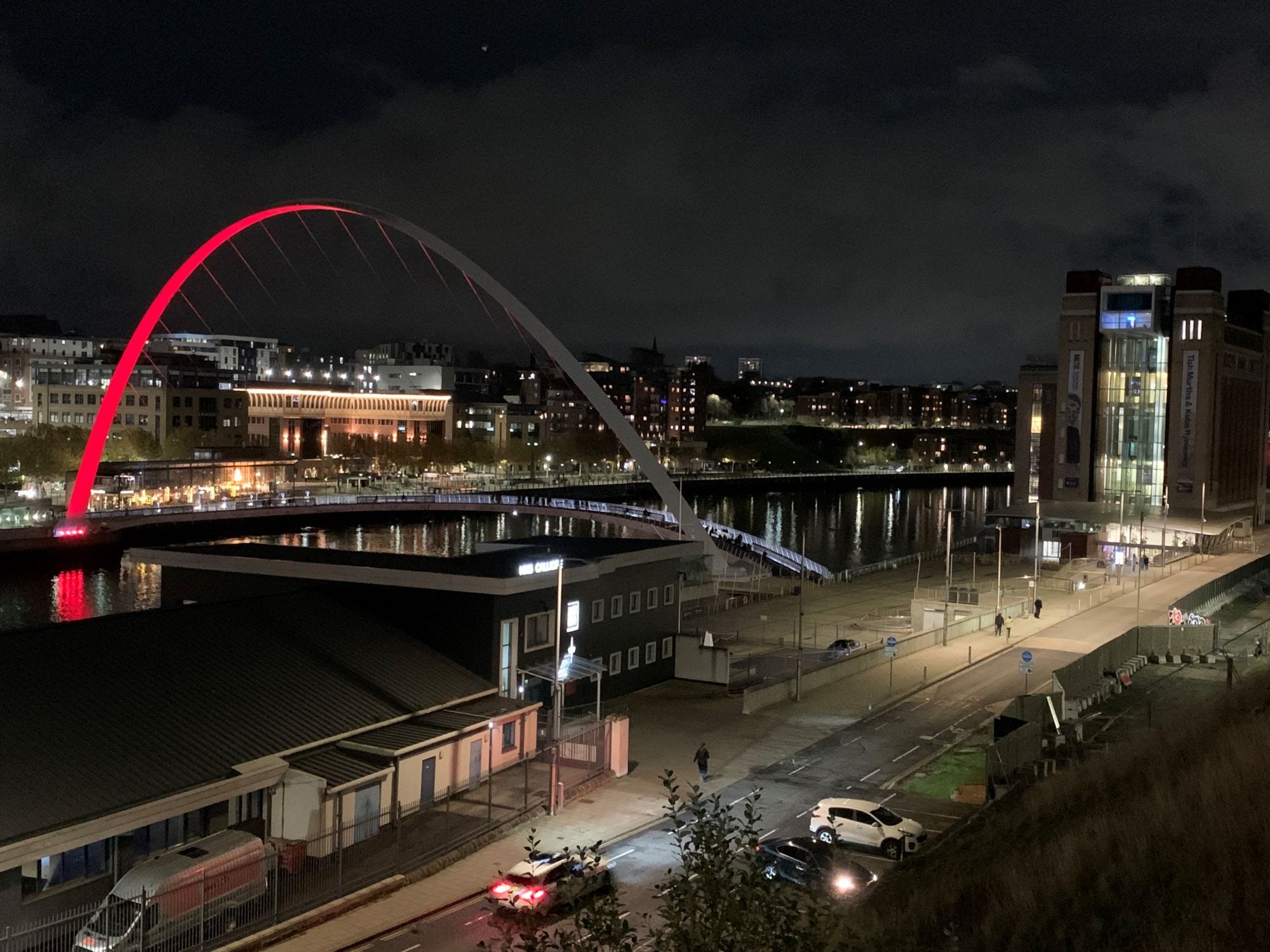
This would result in ambitious projects such as Baltic Centre for Contemporary Art, The Glasshouse International Centre for Music and Gateshead Millennium Bridge, along with other initiatives.
It would see more than £200 million being invested to bring about what some have called a renaissance in the region, making it a case study for culture-led regeneration projects around the world.
Closer to home, it boosted North East participation in the arts, increased its popularity as a tourist destination and fuelled the ambition that would lead to Newcastle and Gateshead jointly bidding to be European Capital of Culture 2008.
That prize eventually went to Liverpool but much of the North East programme went ahead anyway.
Peter Stark was head of Northern Arts from 1984 until 1992, when he was succeeded by Peter Hewitt who eventually moved on to be chief executive of Arts Council England.
Andrew Dixon, who succeeded Peter Hewitt in 1997, said: “I’m very keen that Peter gets due recognition for everything he’s done.
“I don’t think a lot of people now realise how significant he was to the North East.
“Even before he came to the region he’d had a pretty stellar career. In his twenties he’d been made director of a new arts centre (South Hill Park) in Bracknell and then became a lecturer in arts administration, touching the careers of hundreds of people.”
Andrew remembers him as a terrific strategist and the author of an influential policy document which laid out how to redress 100 years of under-investment in the arts in the North East and Cumbria (that county falling under the remit of Northern Arts).
“He reached out to every one of the 33 local authorities and managed to speak to all of them in a way that made them take the arts and Northern Arts seriously.
“At that time Peter Hewitt and I were like missionaries, going out to sell the idea of a local arts development network. Peter was determined that everyone should have access to a good arts centre, whether it was in Berwick or Barrow, or at least have something to celebrate.
“The Case for Capital, although it was left to others to deliver it, was based on Peter’s vision. It had us at a point of readiness when the lottery arrived, so we knew what was needed and we had a road map.”
Subsequently, as special projects officer for Gateshead Council, Peter helped to get those headline-making cultural projects off the drawing board.
Andrew, who joined Northern Arts in 1989 as assistant director, remembers how he would often arrive for work at Northern Arts’ Newcastle HQ to hear Peter Stark lustily singing a folk song like Cushy Butterfield.
His interest in traditional music had a practical outcome, leading to the establishment of Folkworks, the folk music development agency run by Ros Rigby and Alistair Anderson, which would later become a partner in the new music centre (now The Glasshouse).
“Peter played a key role in many areas of work I’ve been involved with in the North East,” says Ros.
“But my contact with him as a friend goes back many decades. I first met him in the early 1970s through our mutual involvement with Welfare State International (the pioneering arts and theatre group based in Cumbria) and then when he was director of South Hill Park.
“He recommended I enrol in what was then the only arts management course in the UK, where he lectured though still in his twenties, hence playing an important part in my career, for which I’ve always been grateful.”
Andrew Dixon remembers “one of the most remarkable nights in my career” when Peter shared his brainwave for securing one of the major year-long art form festivals which the Arts Council had initiated to mark the countdown to the millennium.
Big cities like Birmingham had already secured one. Glasgow was hotly tipped to get visual arts.
“We didn’t think the North East or Cumbria had anywhere at that time that could win one of these but he came up with the idea of the whole region bidding.
“He said we don’t have many galleries so let’s present the region as a gallery and we’ll have art in the streets, along the rivers and in the cathedrals. That’s what won us Visual Arts Year in 1996.
“Peter was a great bidder for things. He was a genius really. He upset some people along the way but that’s what geniuses tend to do.”
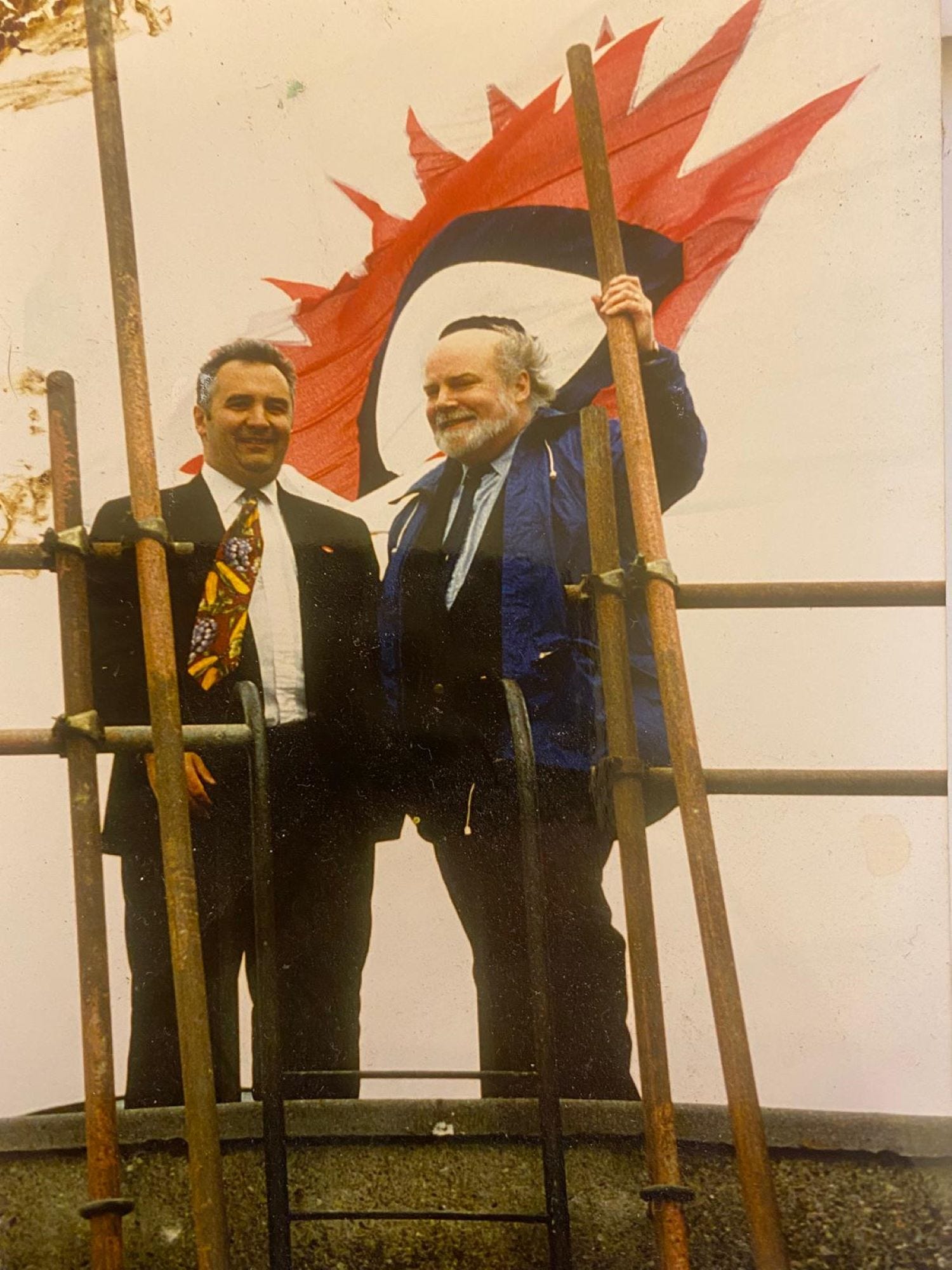
Many will also remember Peter for establishing the Swallows Partnership, building on work pioneered by North East theatre company Dodgy Clutch to forge relationships between artists in this region and in South Africa’s Eastern Cape.
It was an exchange programme, with artists from here going there and vice versa.
In 2009 I went on one myself, marvelling at Peter’s energy and indomitable spirit as he led us over hundreds of miles, taking us to Nelson Mandela’s birthplace, a busy theatre in Port Elizabeth and an extraordinary museum in one of the townships.
We met South African craft makers and visited a community centre to watch some children perform.
One of my travelling companions on that trip was Amy Goulding whose Curious Monkey theatre company would subsequently engage in joint projects with performers from South Africa.
Peter was also the founding director of Creative Lives, a charity that champions community and volunteer-led creative activity, and was its chair from 2011-15.
His death was announced by his wife, Sue, and daughter, Kylie Lloyd, executive director of balletLORENT, with the following words:
“It is with the deepest sadness that we announce the death of Peter Stark.
“Peter was diagnosed with a malignant, inoperable brain tumour at the end of August and was transferred to the Freeman Hospital.
“At his request he was then able to be sent home and cared for there for about a month, then transferred to Marie Curie Hospice, Newcastle.
“He tried to find a way that he could write personal messages to his friends and family.
“Unfortunately, due to the location and nature of the tumour, this proved impossible and much to Peter’s deep frustration he was unable to convey what he wished to say.
“In the end he felt he wanted to leave this to us, under strict instructions that we were not to be too sad.
“He turned 80 on October 28 and was glad to reach that milestone. In his words: ‘I feel very lucky, I’ve had an amazing life and career.’
“Peter died peacefully on Monday, November 9 at Marie Curie Hospice.”
The funeral will take place at Northumberland Crematorium, Bockenfield Wood, NE65 9QJ, on November 30 at 12.30pm.