


There’s a sad irony in the fact that Chris Rea embarked on his final journey at a time when he would normally be “driving home for Christmas”.
It was a journey he shared with millions of people every year at this time, or at least since the late 1980s when Driving Home for Christmas made its first stuttering entry into the UK singles charts – number 53, apparently, in 1988.
Nowadays it’s as if it’s been around forever, a Christmas staple and, according to a breathless Capital Radio presenter I heard this morning on the car radio, “the best Christmas song ever, surely?”
Debatable, obviously.
But what seems beyond question is that Chris, born in Middlesbrough, was one of music’s good guys.
Since his death on December 22, at the relatively young age of 74, evidence of this has surfaced all over the place, not least on the WhatsApp group of journalists who’ve been around the block a few times and of which I’m a member.
Jane Chilton worked with me on The Journal for a few years, covering the music scene (her interview with Slash of Guns n’ Roses I’ll never forget) before going off to the BBC.
Now based in Glasgow, she recalled another career highlight, driving down to Sheffield Arena to interview Chris Rea backstage.
“He was a genuinely lovely, kind, interesting man. He told me he hated being called a rock star, said he was a singer-songwriter as he looked at me with his deep blue eyes.
“I always remembered him saying that. Speaks volumes about the type of person he was. He was rock without being rock. He hated the fame game. A genuinely lovely guy.
“He also told me that a reporter on the Middlesbrough Gazette once unfairly slagged him off for not playing his hometown of Middlesbrough and opting to play Newcastle instead.
“He called the newsroom and asked for the journalist, got through to him and asked him why he’d been so mean. Can you imagine taking that call? What a guy!”
In the exciting early days of BBC Radio Newcastle, Dick Godfrey presented a pioneering late night music show called Bedrock.


“I recall that in the very early time of his first album release, he got on a bus to Newcastle to appear on the show,” he recalled.
Dick was also at the funeral of Alan Hull, Lindisfarne’s founder member and another ‘great’ of North East music, taken from us at the ridiculously young age of 50 in 1995.
Chris gave a eulogy at the funeral. Dick remembered failing to hold back a tear when, as Alan’s coffin began its last journey, Chris laid a hand on it and said: “Tara, bonny lad.”
In the song Stainsby Girl, inspired by the girls who went to a Middlesbrough secondary school, Chris wrote: “Some girls stole your heart/ Like most girls do/
But a Stainsby girls could break it in two.”
‘Stainsby girl’ Joan Lesley didn’t break Chris’s heart. The pair were teenage sweethearts who got married, had two daughters and remained devoted.
Chris was a songwriter who could touch a nerve and had universal appeal.
I became aware of him – you’d have had to have been living under a stone not to be – in the mid-1980s when the album Shamrock Diaries was finding its way into many people’s record collections.
It was released in 1985, Chris’s seventh studio album. It was, and still is, terrific, including not just Stainsby Girl but also Steel River, his homage to the Middlesbrough he remembered from childhood but which seemed to have gone forever.
The song, the voice (the usual description, “gravelly”, is apt) and the timing (they were tough times in the North East, with unemployment hitting 20% and Prime Minister Margaret Thatcher soon to be calling her North East critics “moaning minnies”) were all perfect.
But the song, like his Christmas number (rattled off in double quick time, we’re led to believe), has stood the test of time.
I met him just the once, in Newcastle, and he wasn’t in the city to talk about his music. As a motor racing fan and competitor, he was at the Tyneside Cinema in 1996 to promote La Passione, his cinematic love letter to the Ferrari.
The film, which he wrote and produced, has an unlikely cast including Dame Shirley Bassey (as herself), Sean Gallagher and Paul Shane. There was a cameo role for Chris in his on-screen petrolhead fantasy.
It tells of a young northern lad, son of an Italian immigrant ice-cream maker, who becomes obsessed with motor racing and particularly ill-fated driver Wolfgang Von Trips (a real-life character, killed in his Ferrari at the Monza grand prix in 1961).
To be honest, I wasn’t bowled over by the film and it didn’t do much at the box office. But Chris’s quiet passion and down-to-earth honesty impressed. He seemed to me, as to many others, a nice man.
The film’s soundtrack, written by Chris and which provided a big hit for Dame Shirley, went to number three in the album chart.
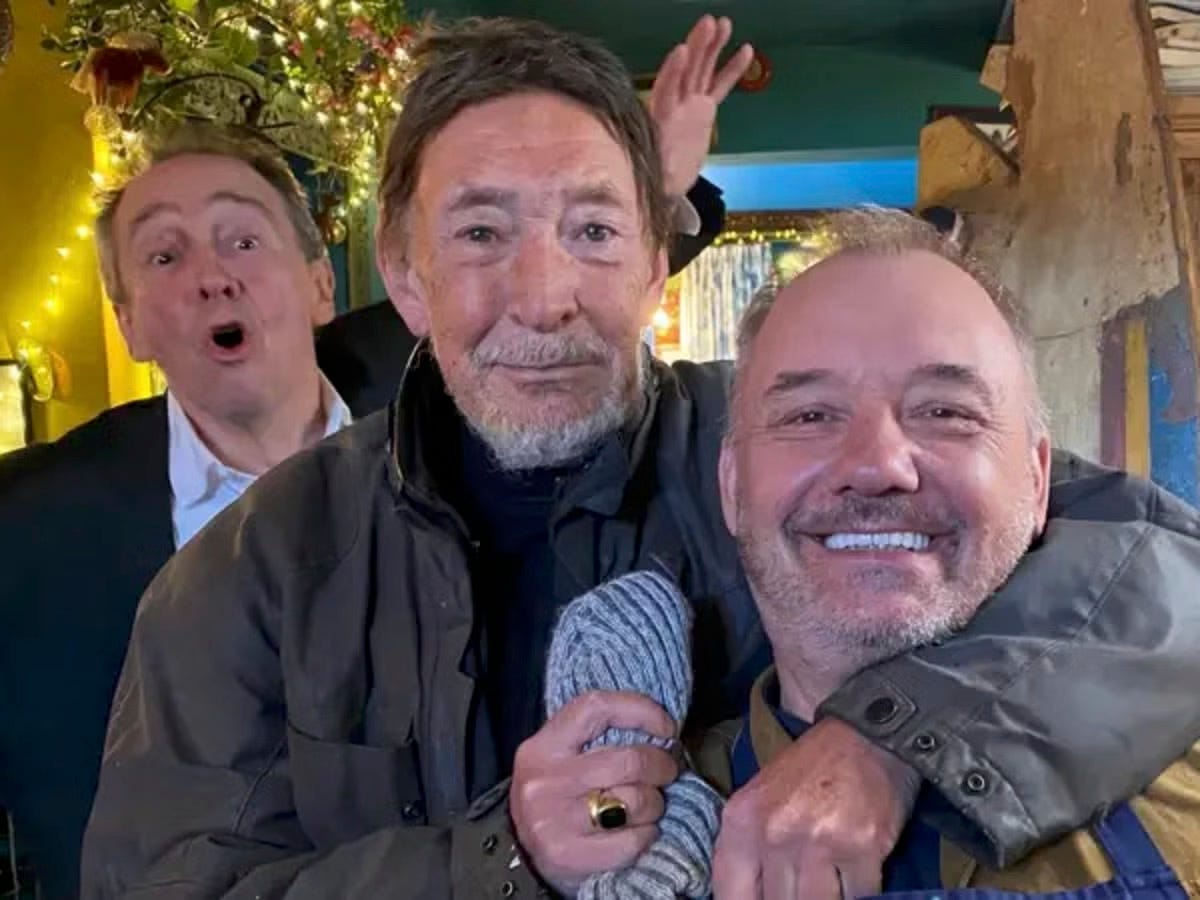
Clinching evidence for me that Chris Rea was a good egg was provided by fellow ‘Boro lad Bob Mortimer, comedian, author and TV fisherman, who claimed on the panel game Would I Lie To You? that Chris Rea, when staying over, had requested an egg to break into his bath.
The rival team considered it daft enough to be true and Bob, with his expertly spun yarn and famous twinkle, won a point for his team.
Chris, loving the joke, subsequently released film footage of himself breaking an egg into his bath.
“So so sad,” remarked Bob on X, learning of Chris’s death. “A lovely brilliant funny giant of a bloke.”
Chris, in the end, was mercifully spared the dramatic end of hero Wolfgang Von Trips but succumbed to the more mundane health issues which had dogged him for much of his life.
What a legacy, though! As well as a fund of fond memories, he left a lot of great music and it’s a fair bet he’ll be driving home for Christmas for years to come.