


The symbolic nature of flags has fuelled much heated debate in recent years but then you come up against one that’s so much more than a symbol.
The flag recently acquired by North East Museums (NEM), and unveiled this week, does have symbolic resonance but wear and tear speaking more of sound and fury than the passage of time marks it as the real McCoy.
“I think the North East does tend to get forgotten about in the national story,” suggested NEM boss Keith Merrin, a little emotional as he surveyed the massive framed relic.
“Impressive,” murmured Susan Collingwood-Cameron.
The great-great-great-niece of Vice-Admiral Lord Cuthbert Collingwood, the man from the North East who secured victory at the Battle of Trafalgar after Nelson was killed, had descended, accompanied by the media, into the downstairs area of Newcastle’s Discovery Museum dedicated to conservation.
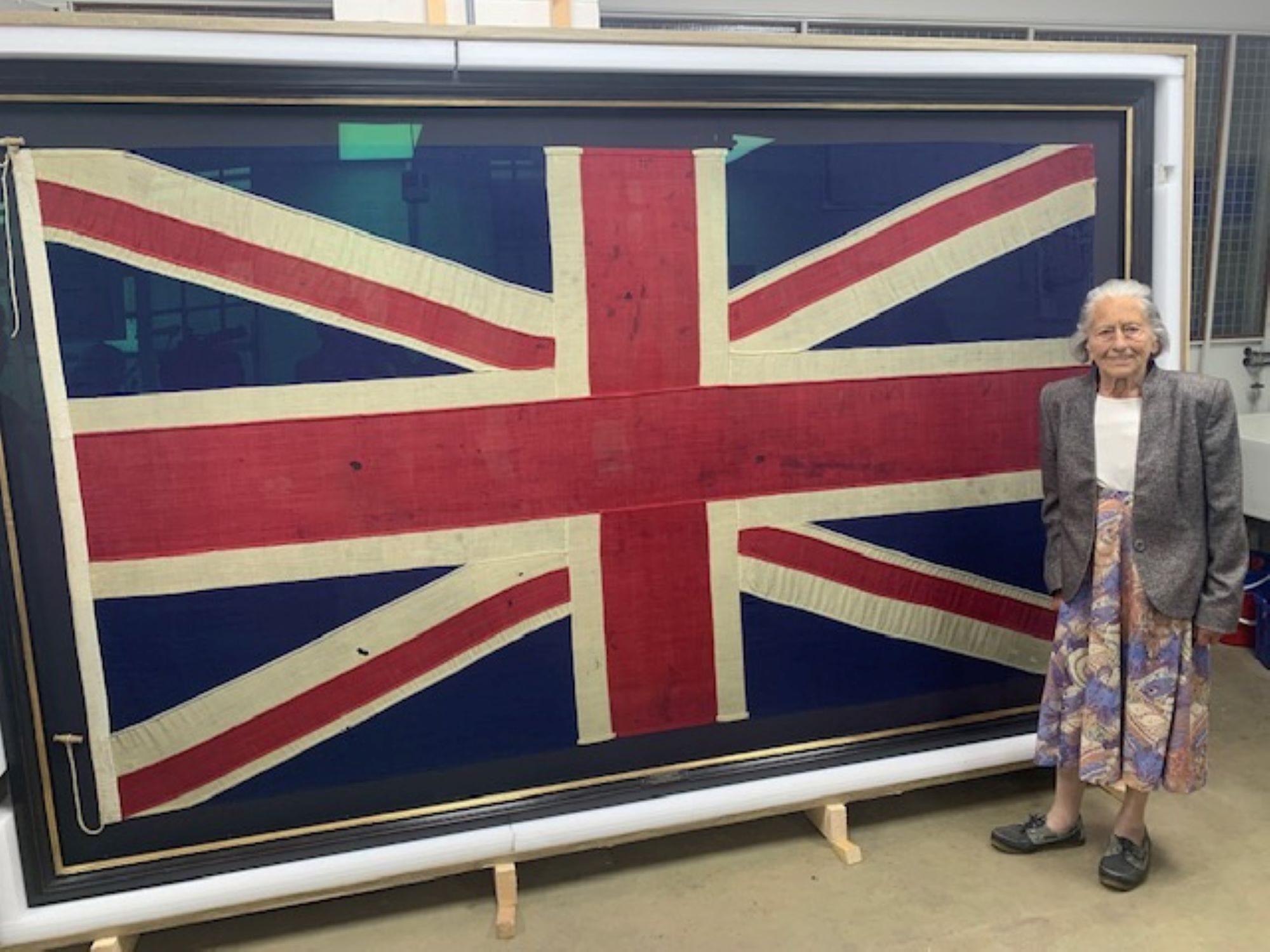
Here, where faint and indistinguishable odours attest to the storing and restoring of disparate objects, the flag rested against a wall, constrained in its protective packaging.
It could be seen as a bit of a comedown for something designed to be flown gloriously aloft. But these are early days.
Later this year, said Keith, it will be displayed upstairs and this time next year, if all goes to plan, it will be the eye-catching centrepiece of a new Discovery Museum display telling the Collingwood story.
There – accompanied perhaps by items already in the NEM collection, including Collingwood’s portrait, telescope and writing desk – it will doubtless be seen by thousands of visitors.
Perhaps, for many, it will come to symbolise the merits and achievements of a region Keith Merrin believes (and he’s not alone) has suffered from being overlooked.
But this flag, acquired after Culture Secretary Lisa Nandy imposed an export bar (it was bound for America after a Sotheby’s auction), was never meant to be symbolic.
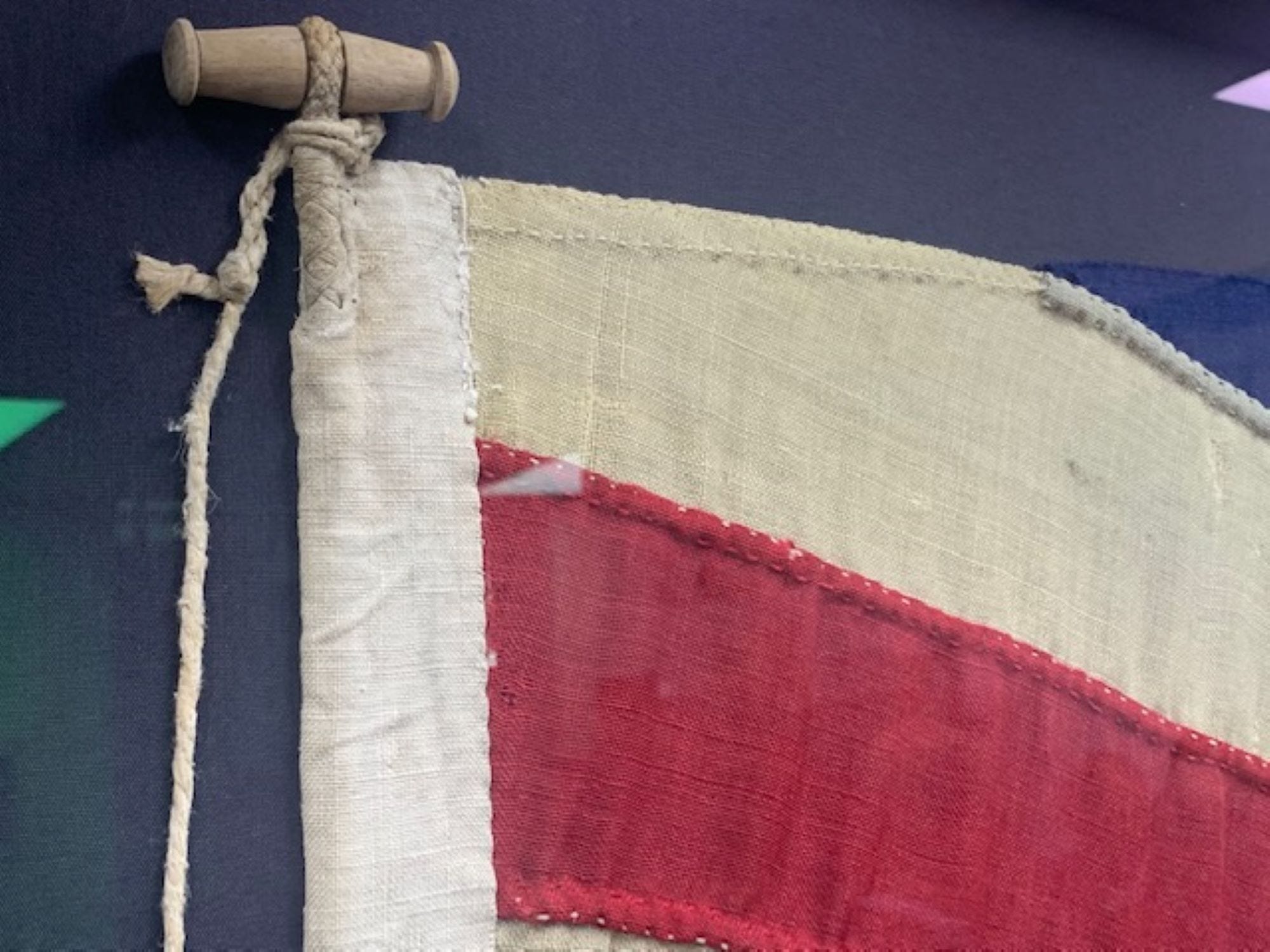
It was made on deck by sailors aboard HMS Royal Sovereign to be flown from the forestay, high above the prow of the ship.
Since a significant proportion of the crew hailed from the North East, it’s not fanciful to assume much of that neat stitching has now come home. Arguably this always was ‘wor’ flag.
NEM conservator Rachel Metcalfe explained that it was made of wool bunting, which is to say very thin wool.
“It allowed air to pass through so it wouldn’t furl up on itself or cause drag.
“The reason it was so high on the ship was so it could be seen by the others. All ships in the British fleet had to fly the Union flag to avoid friendly fire.”
A practical flag, then, first and foremost. And, you have to think, a miraculous survivor since Royal Sovereign was the first to engage with the enemy fleet of France and Spain in that momentous battle of 1805.
“See how that noble fellow Collingwood takes his ship into action,” Nelson is said to have remarked as he led the charge.
Historian Dan Jackson, in his book The Northumbrians, relates one sailor’s memory of Collingwood munching an apple as battle commenced.
As for the battle itself, the sailor remarked: “It was like being in the heart of a volcano – with five ships around us – yet Collingwood had a single-handed coolness that he showed all day.”
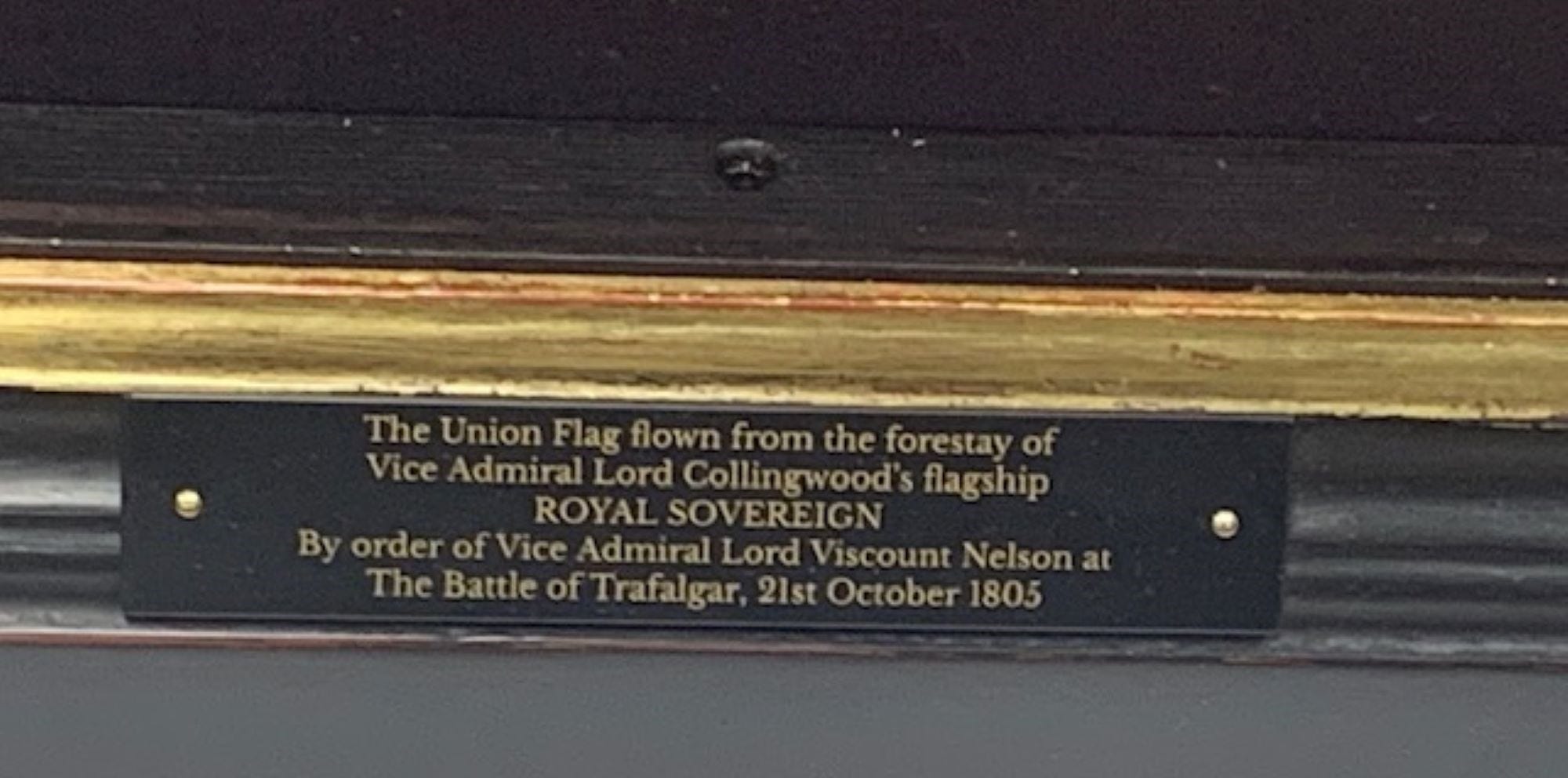
It’s easy to imagine that this flag would have been the first to feel the heat of that volcanic action. More than a medal, it brings home what a sea battle must have been like back then.
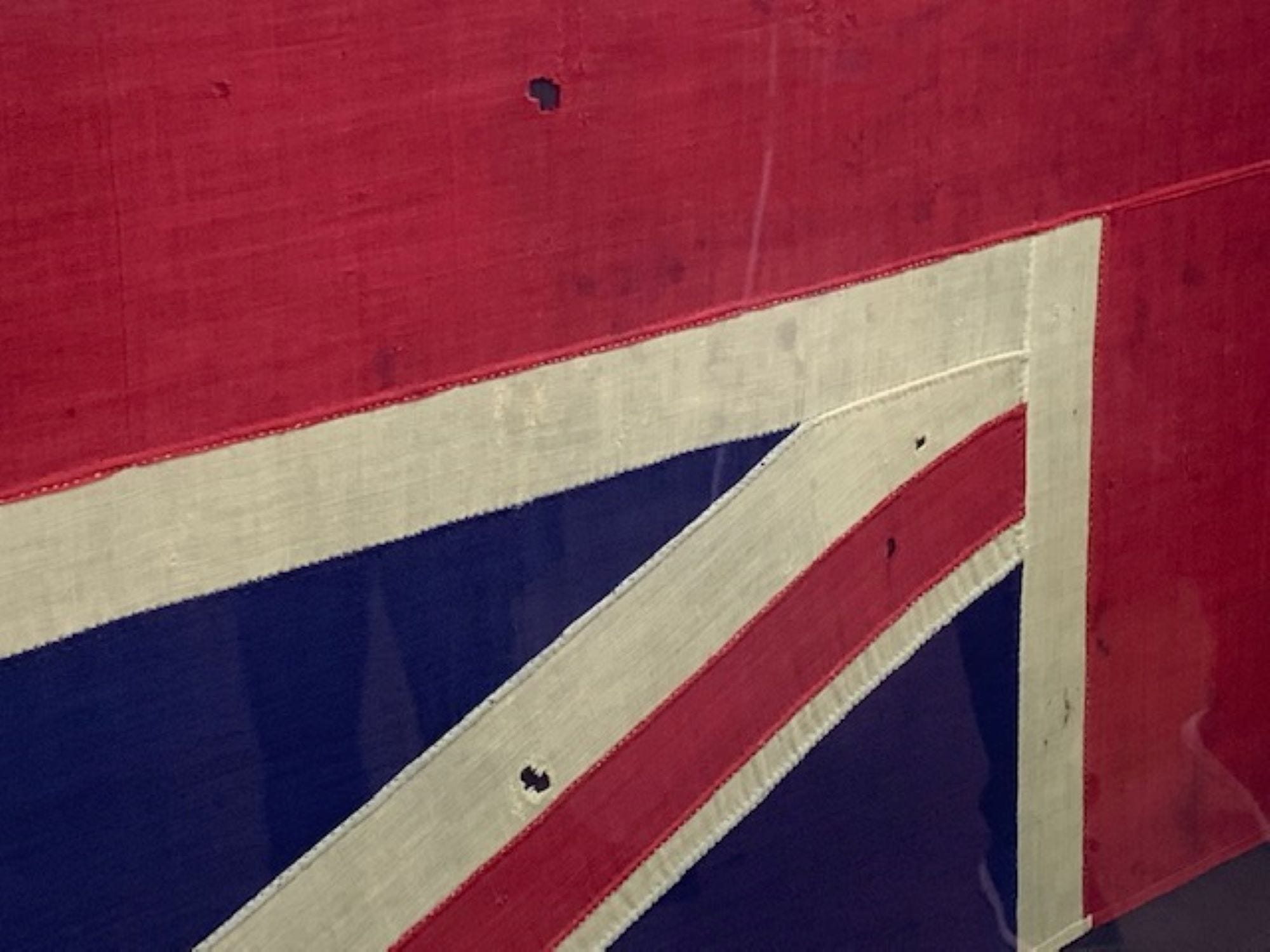
Those holes and tears were not made by moths. Those stains are not the result of mildew or spilled coffee. This was the result of combat at close quarters, loud, violent and with no escape for those involved.
Twenty seven British ships fought at Trafalgar, six fewer than the enemy could muster, and all would have flown the flag.
On each vessel one crew member was given flag responsibility and on HMS Royal Sovereign that was Charles Antram who took it as a souvenir after the battle.
Charles had two brothers who also served in Nelson’s fleet. The flag stayed in his family for years, brought out every Trafalgar Day in a commemorative act of patriotism, until it was sold to a collector and disappeared.
There have been a few repairs over the years, said Rachel Metcalfe, but none to erase the scars of battle.
Surprisingly – because it’s enormous - it wasn’t the biggest flag flown by the British fleet that day. Rachel said there was no stipulated size, the only rule being that each vessel must fly a big flag.
Of those seen at Trafalgar, only two others survive.
One of them, from HMS Spartiate (originally a French vessel captured at the 1798 Battle of the Nile), is in private hands. The other, from HMS Minotaur, is in the National Maritime Museum in Greenwich.
Wor flag, then, is an artefact of enormous significance.
And while it cost £450,000 – the money raised with necessary speed, and largely thanks to a grant from the National Heritage Memorial Fund – Keith said associated costs, including that of creating the new display, took the total required to £700,000.
A Crowdfunder appeal aimed at raising £15,000 has been launched.
Memorials to Cuthbert Collingwood, 1st Baron Collingwood are by no means absent in the North East.
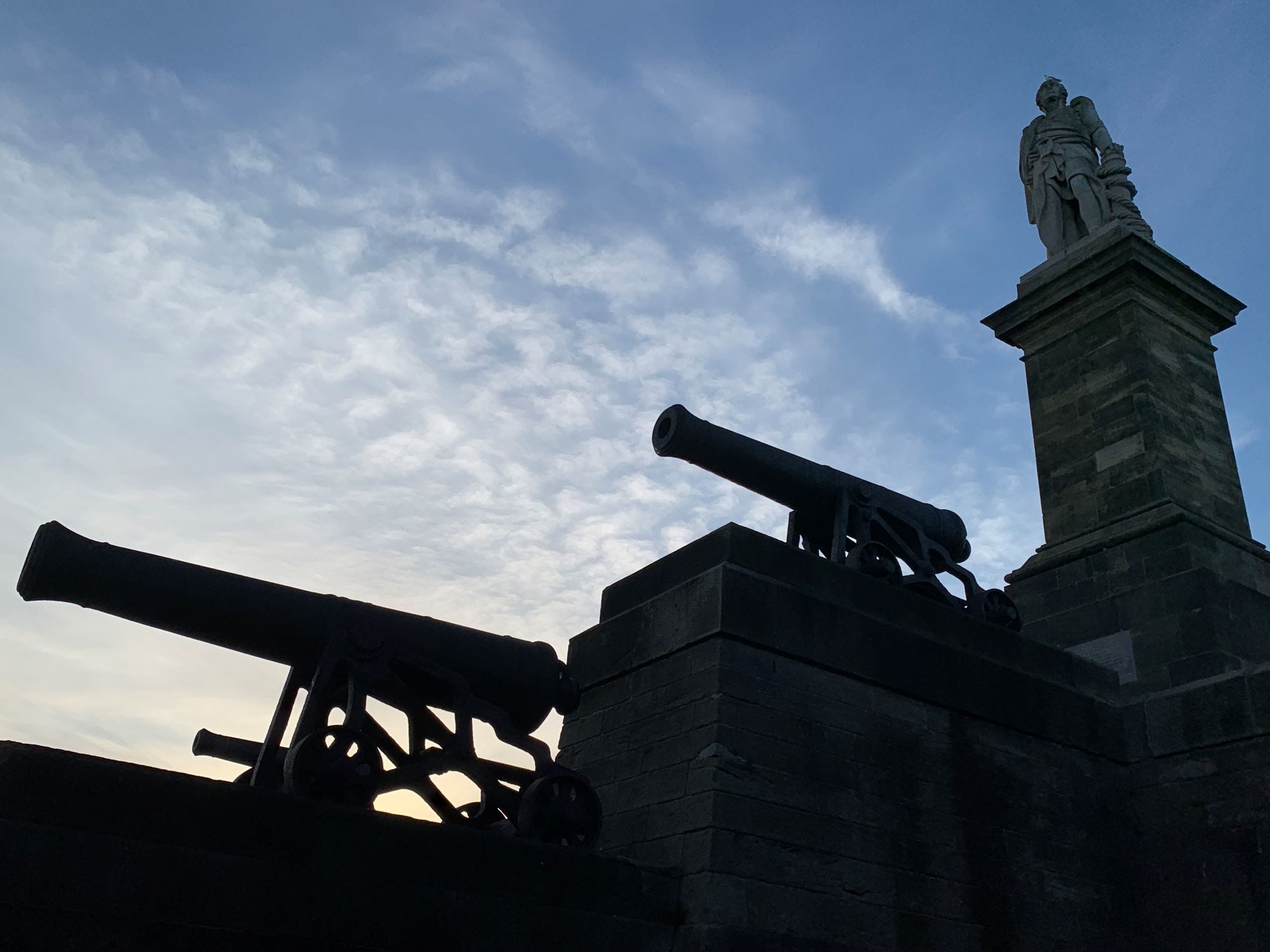
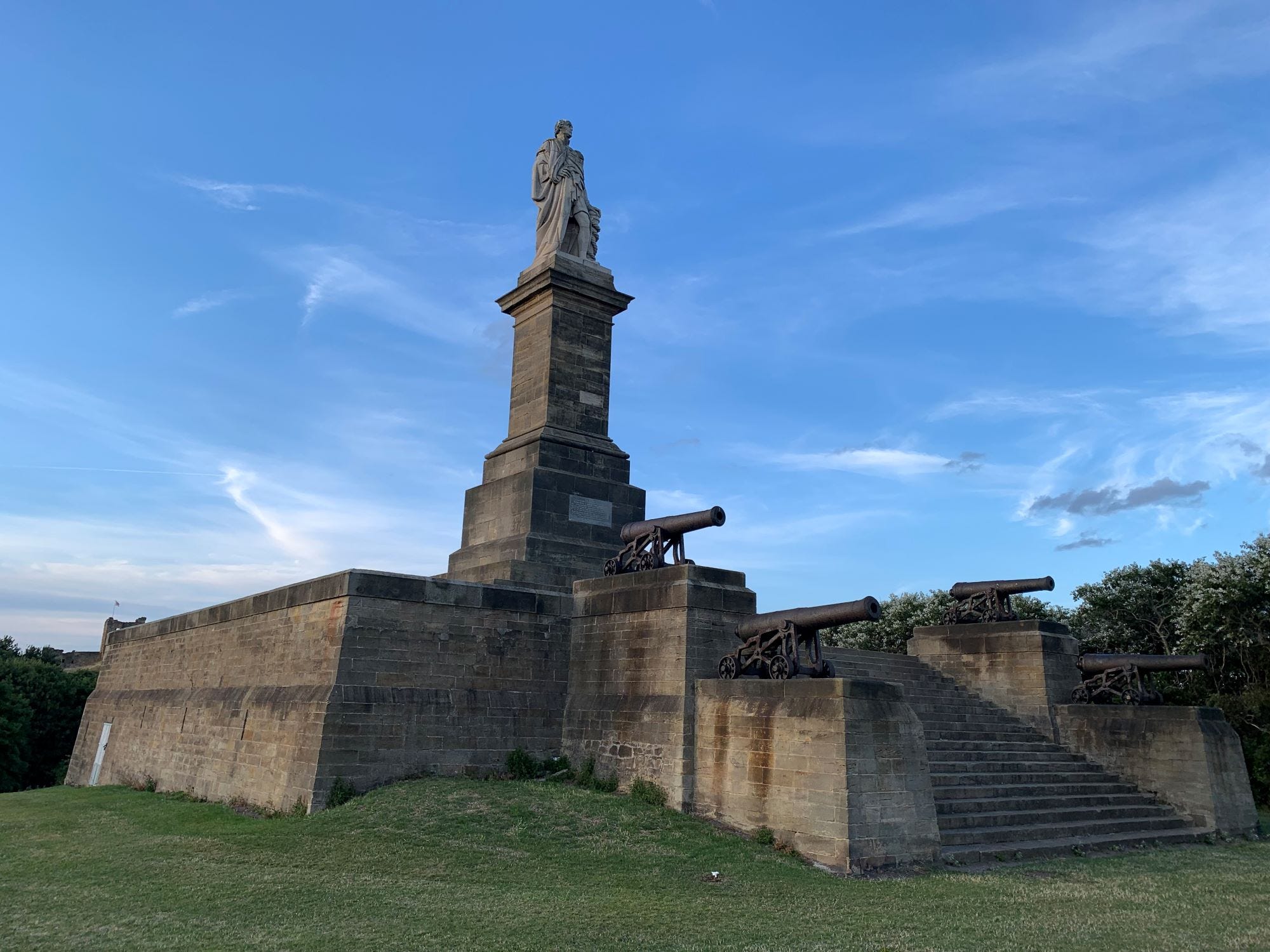
The towering Collingwood Monument is a prominent landmark in Tynemouth completed in 1845. From there, with a seagull perched on his head, the great man surveys the mouth of the Tyne.
Beneath his feet rest the four cannons from HMS Royal Sovereign which were added four years later.
The vessel bristled with 100 of these and their sheer heft is a visceral reminder of what it was to serve in that battle.
Over time, countless feet have compressed the steps leading up to them.
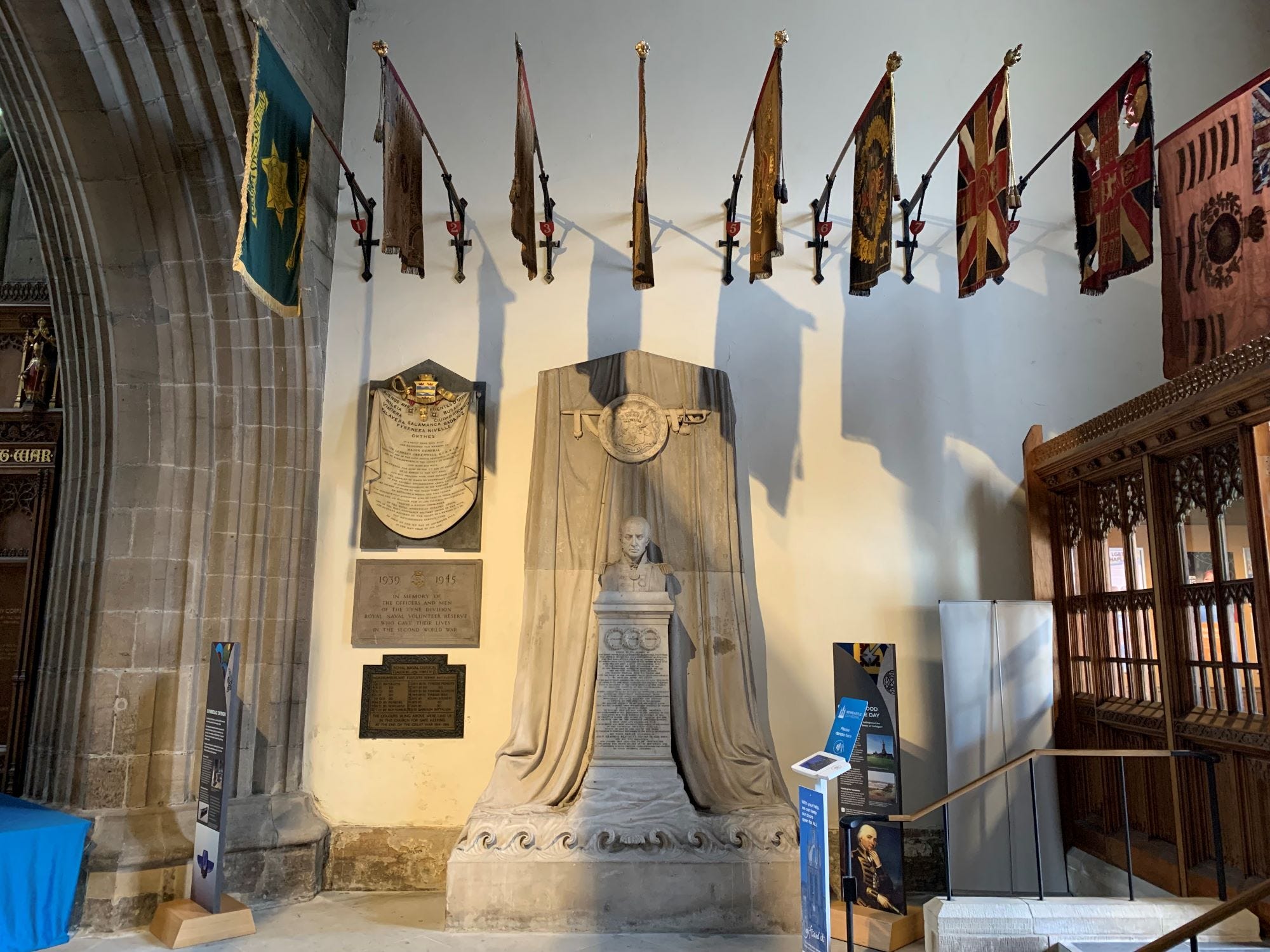
There’s a memorial at Newcastle Cathedral, too, the bust offering a chance to eyeball the man whose likeness is positioned beneath tattered battle flags from other conflicts.
A lengthy testimonial commending his “great bravery” has been carved into the supporting marble which it’s likely few people nowadays have the patience to read.
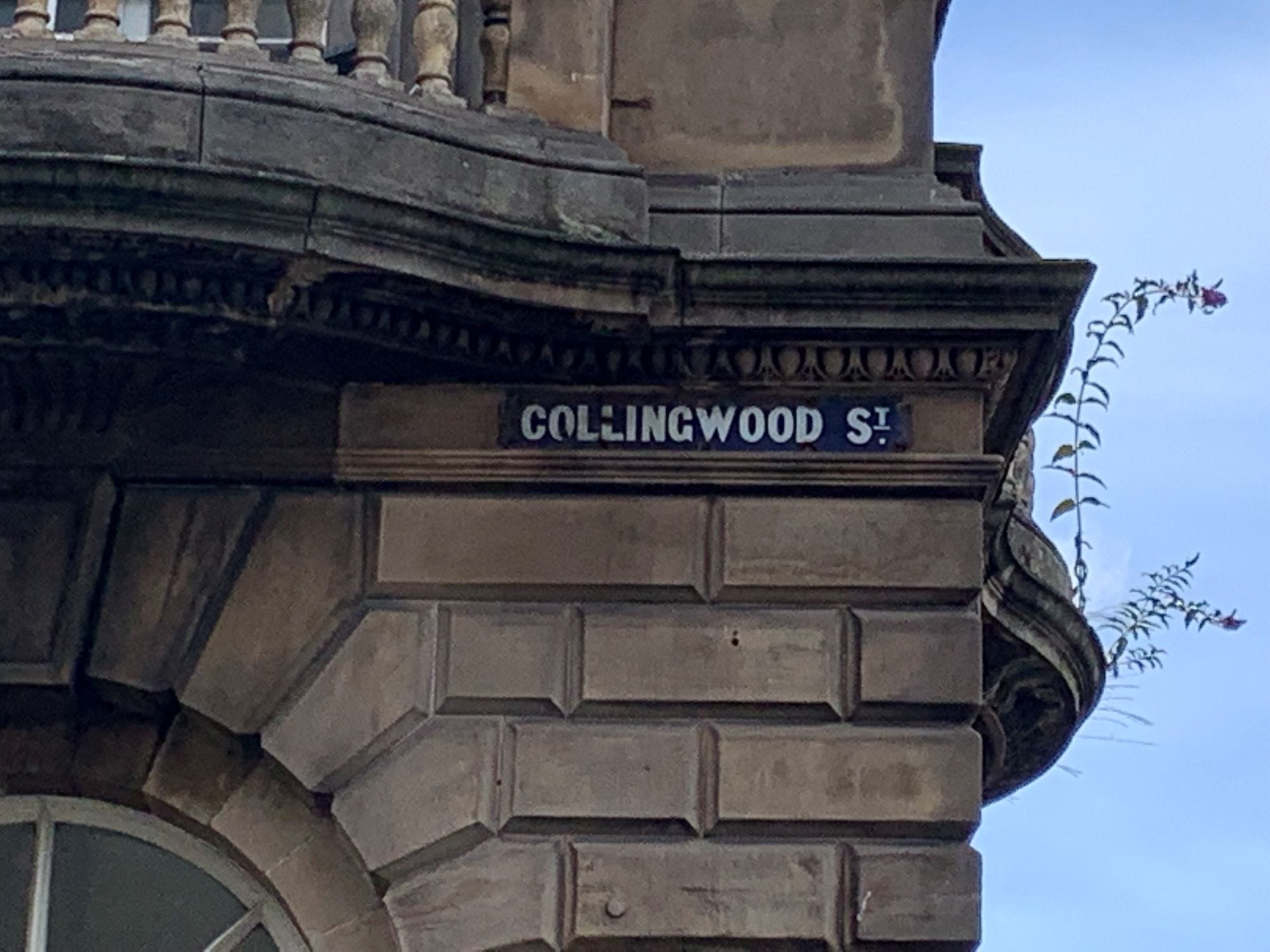
And just outside is Collingwood Street, its faded grandeur reflected in the ageing street sign with wisps of buddleia fluttering beside it.
The Collingwood Society has a programme of activities designed to keep memories of the man alive and the Collingwood name appears in various contexts across the region.
But that flag, set to be an unmissable talking point, promises to reignite interest in a hero of a bygone age.
Kylea Little, keeper of history for NME, has already started on the contextualising of the new Collingwood display.
“There are so many stories that it’s a question of what do you choose?” she said.
“Collingwood will be the main part of our interpretation, his life and connection to Tyneside and his role in the Battle of Trafalgar, but so many of the crew came from this area.
“There are lists you can access through the national archives and we’ll be doing our own research into finding some of those sailors and their families.”
Collingwood, a pragmatist by all accounts, and much less flashy than the fellow remembered on that column in Trafalgar Square, is due for a Tyneside revival, it seems.
And now we have his flag.
The one on Nelson’s flagship, HMS Victory, is no more. It was draped over the coffin at his funeral, according to Rachel Metcalfe, and afterwards torn up and spirited away for souvenirs.