

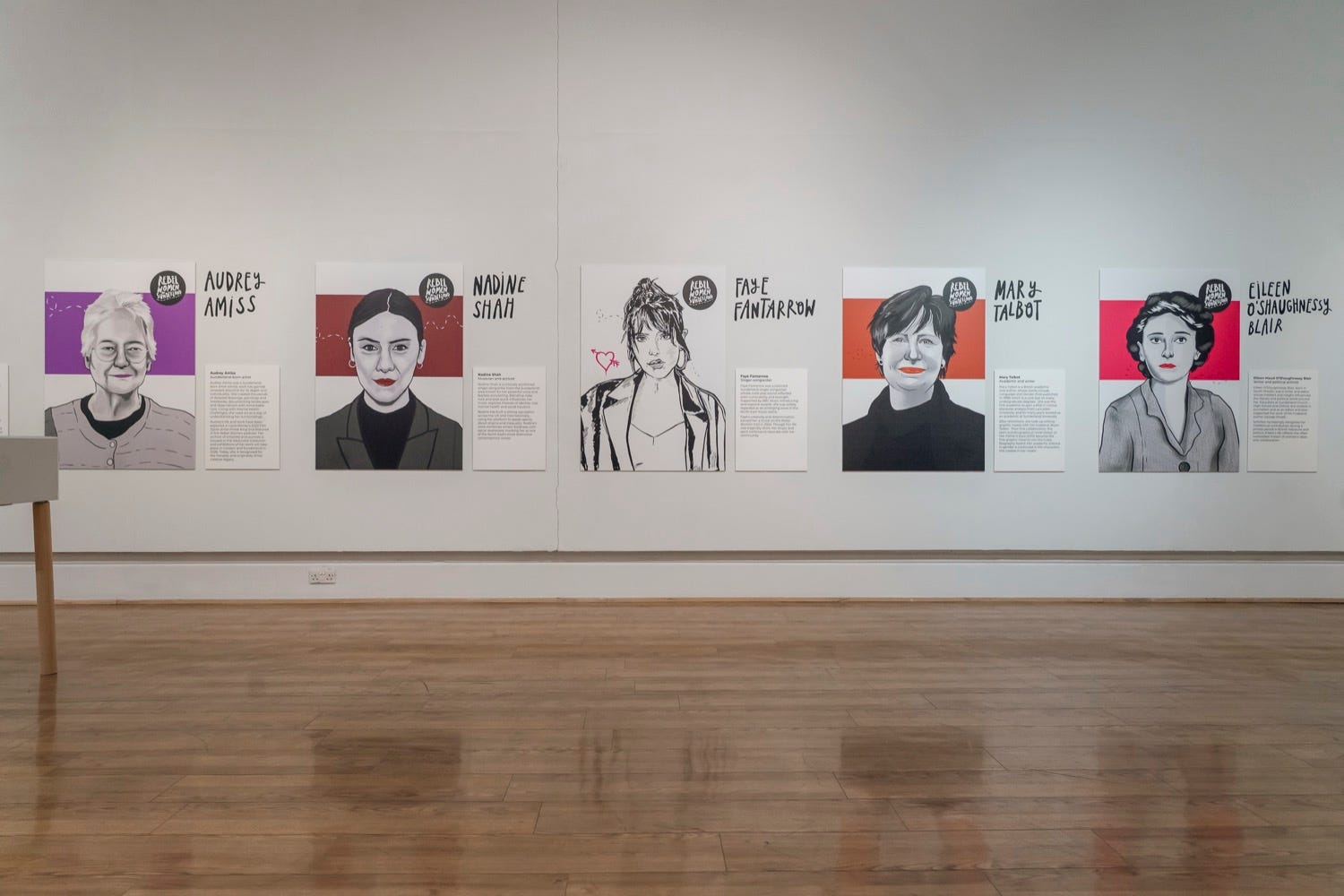
An exhibition celebrating the lives and legacies of Sunderland’s trailblazing women has opened at Sunderland Museum & Winter Gardens.
Rebel Women of Sunderland brings together the stories of extraordinary local women – past and present – highlighting activists, artists, campaigners and pioneers who have helped shape the city.
Opened to coincide with International Women’s Day on March 8, the free exhibition is on display in the museum’s main gallery until August 1.
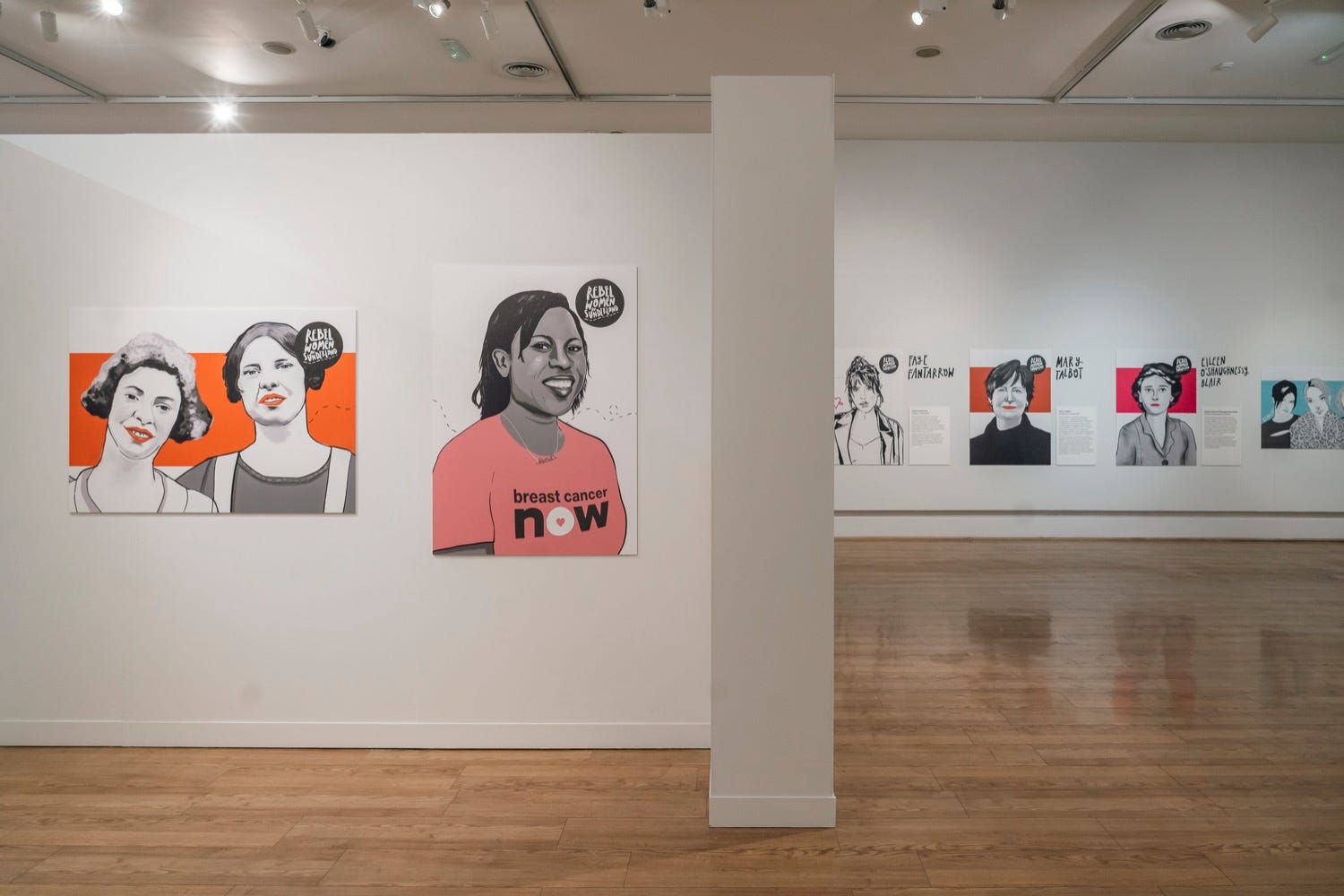
At the centre of the exhibition are a series of striking portraits by Sunderland artist Kathryn Robertson, whose instantly recognisable illustration style captures the individuality and resilience of the women featured.
Those celebrated include journalist and broadcaster, Kate Adie, activitsts Ida and Louise Cook, Sunderland band, Kenickie (Lauren Laverne, Marie Nixon and Emma Jackson), England footballers Steph Houghton and Jill Scott, late singer songwriter, Faye Fantarrow and philanthropist Dorothy Williamson.
Kathryn said the project was one of her earliest major commissions after becoming a full-time freelance artist.
“I started working on the Rebel Women project with Laura Brewis and Jessica Andrews in 2019,” she said. “It was one of my first commissions as a freelance artist, having just gone full time around the same time.
“I was asked to draw portraits of a selection of women who had strong links to Sunderland, who were to be celebrated and have their stories told, I was familiar with lots of the women but there were also a lot that were new to me, so it was interesting and valuable to learn their stories.”
The portraits, created digitally using Photoshop and a drawing tablet, were based on a range of historical reference materials supplied during the research process.
“The portraits are all digital drawings and I used Photoshop and a drawing pad. I was provided with a range of relevant reference images for the women from whoever was researching and working on the project at that time. I’d use those as the main inspiration,” Robertson said.


Some subjects presented particular challenges due to limited visual references.
“Some of the photographs provided were very small, maybe from newspaper clippings, so it was a challenge to create a likeness,” added Kathryn.
“For one woman, Elizabeth Donnison, there was no found image reference at the time, which is explained in the text next to her exhibition image.”
Alongside the illustrations, visitors can explore a podcast series produced by University of Sunderland professor Caroline Mitchell in collaboration with We Make Culture and Lucky Penny Audio, offering deeper insight into the lives and achievements of the featured women.
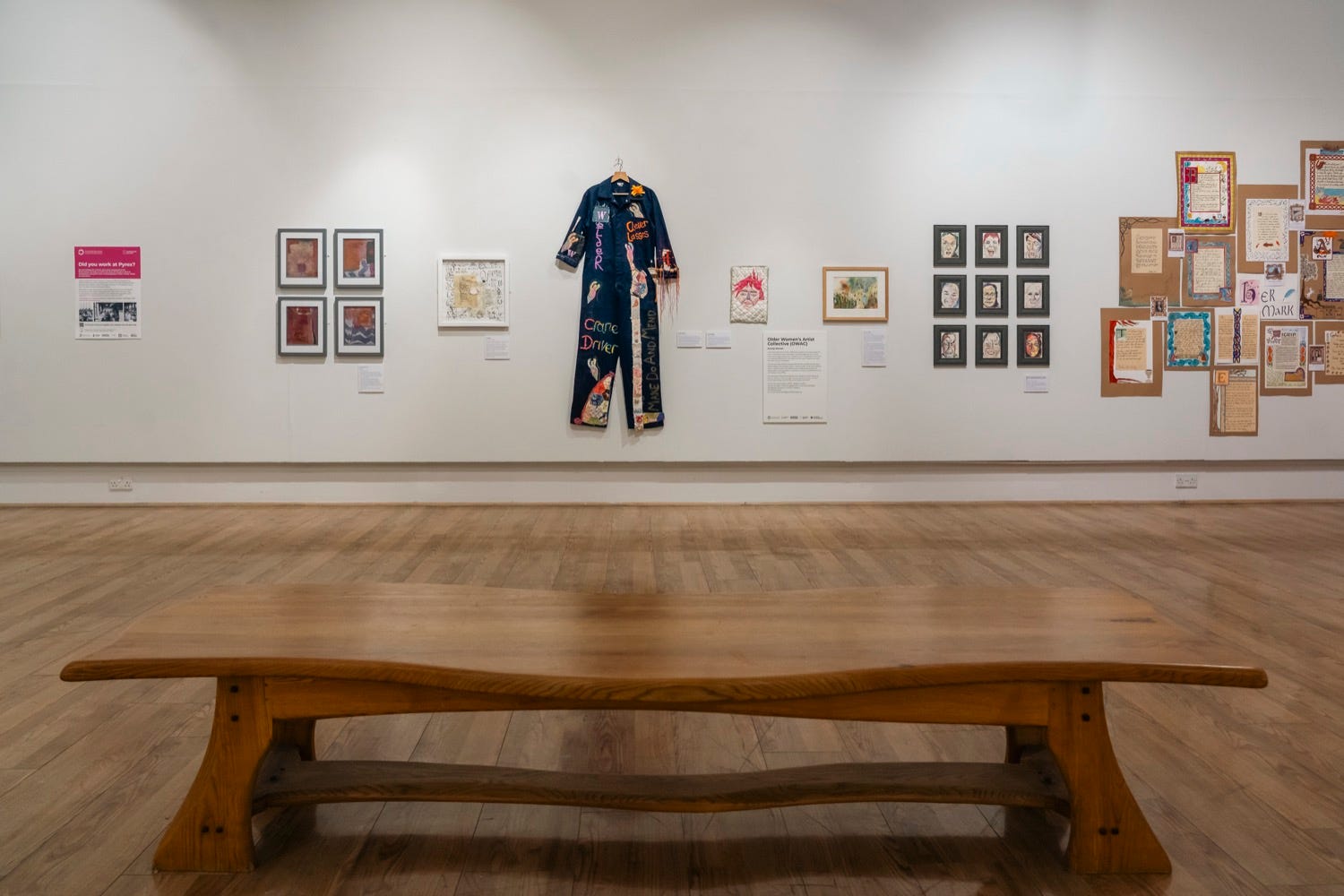
The exhibition also includes creative responses from female artists across the city.
Sunderland-based Pink-Collar Gallery, founded by curator Michaela Wetherell, presents recent projects including a workshop programme led by artist Tallulah Lines with women supported by Wearside Women in Need, and Her Mark, a calligraphy project by Auburn Langley exploring the overlooked creative legacies of medieval women.
Elsewhere, University of Sunderland Researcher in Residence Sophie Piper highlights the work of overlooked twentieth-century photographer Eileen “Dusty” Deste. Visitors can interact with Deste’s 1961 photographs of Sunderland’s Pyrex Factory, rearranging them to consider how stories of women’s work are interpreted and retold.
Jennie Lambert, public engagement and learning manager at the Museum, said the exhibition also features contributions from the Older Women’s Artist Collective and Southwick Research Education Arts and Culture Home (REACH).
“It’s an amazing exhibition about extraordinary women – a group of women of whom the city should be proud,” she said.
For more information, visit the Sunderland Culture website.