

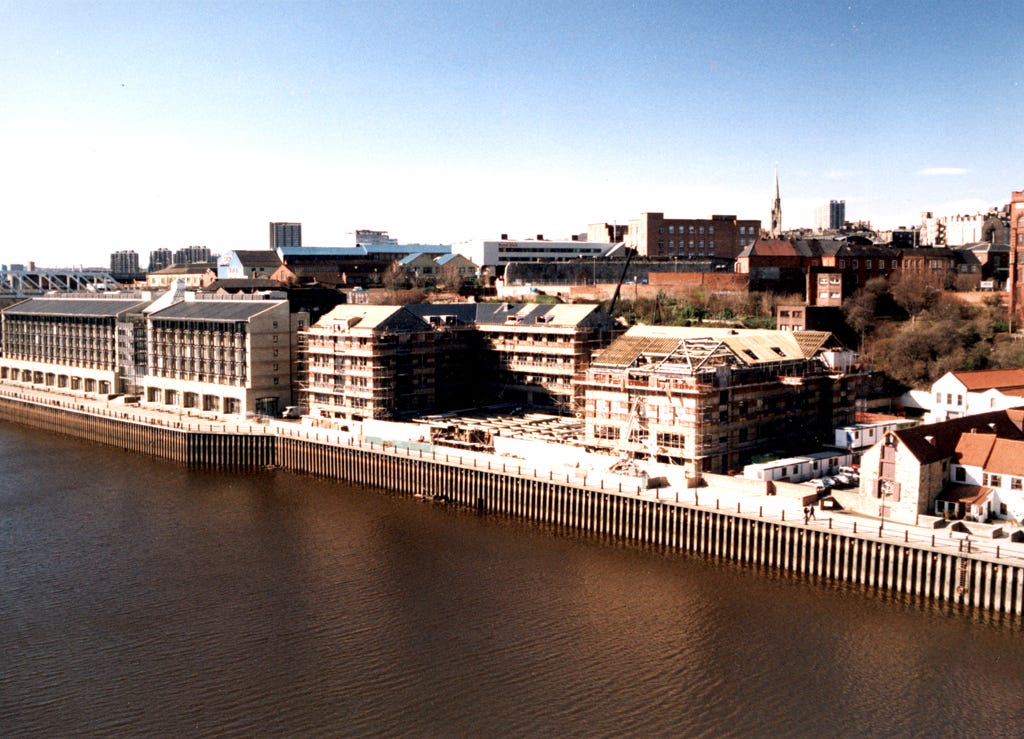
Today, Newcastle Quayside is a vibrant and much photographed part of the city.
Against a backdrop of famous bridges, it mixes bars and restaurants with theatre, commercial use, historic and landmark buildings such as the Crown Court.
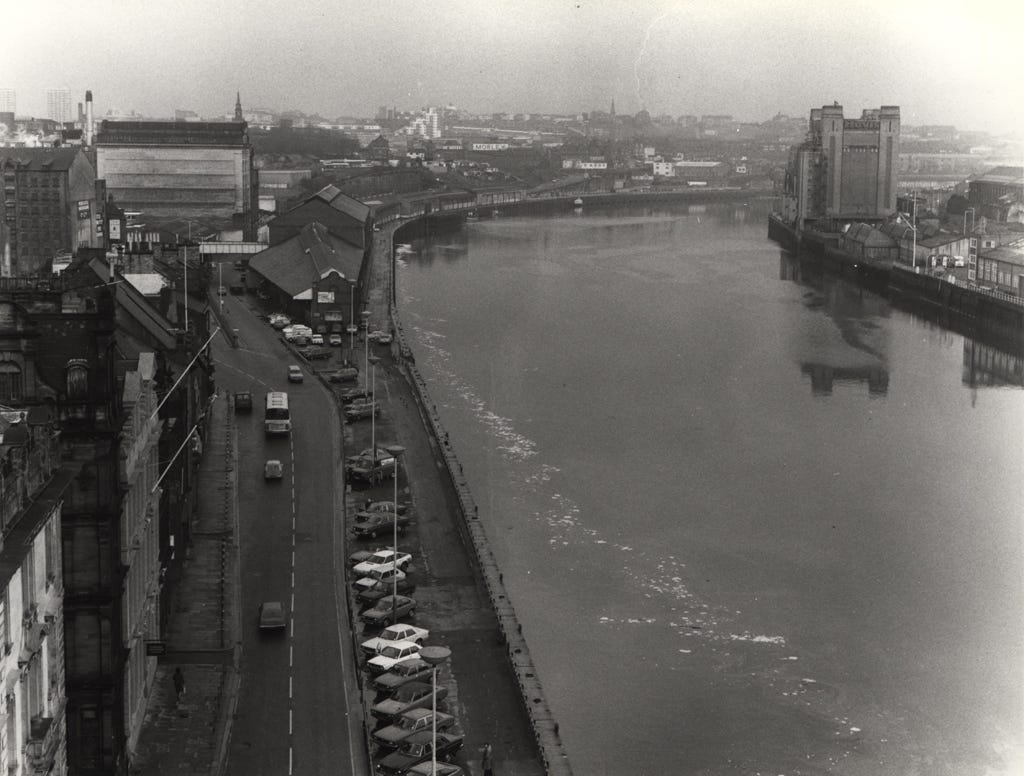
It has always been central to the city’s identity, with a past of industrial use and a flow of shipping carrying goods to and from the port.
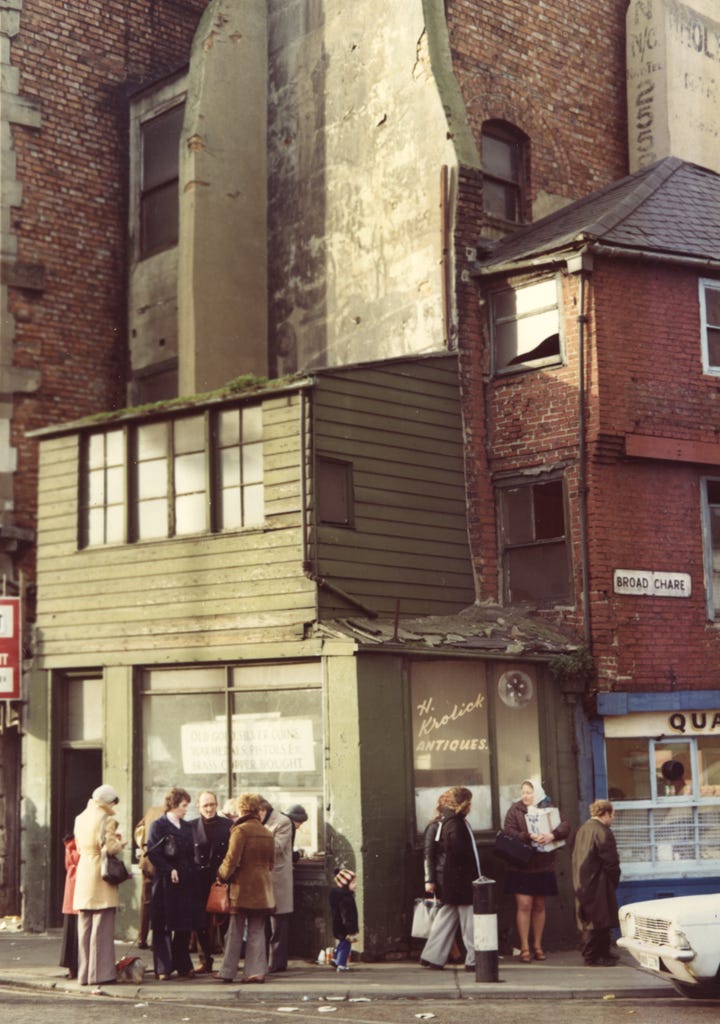
But as the city – and country – deindustrialised in the 1960s and 1970s, the Quayside fell into decline, decay and widespread dereliction.
Then came regeneration and this year the Quayside celebrates the 40th anniversary of its rebirth, which is marked by an exhibition at the Sir Terry Farrell Centre at Newcastle University, running until December 18.
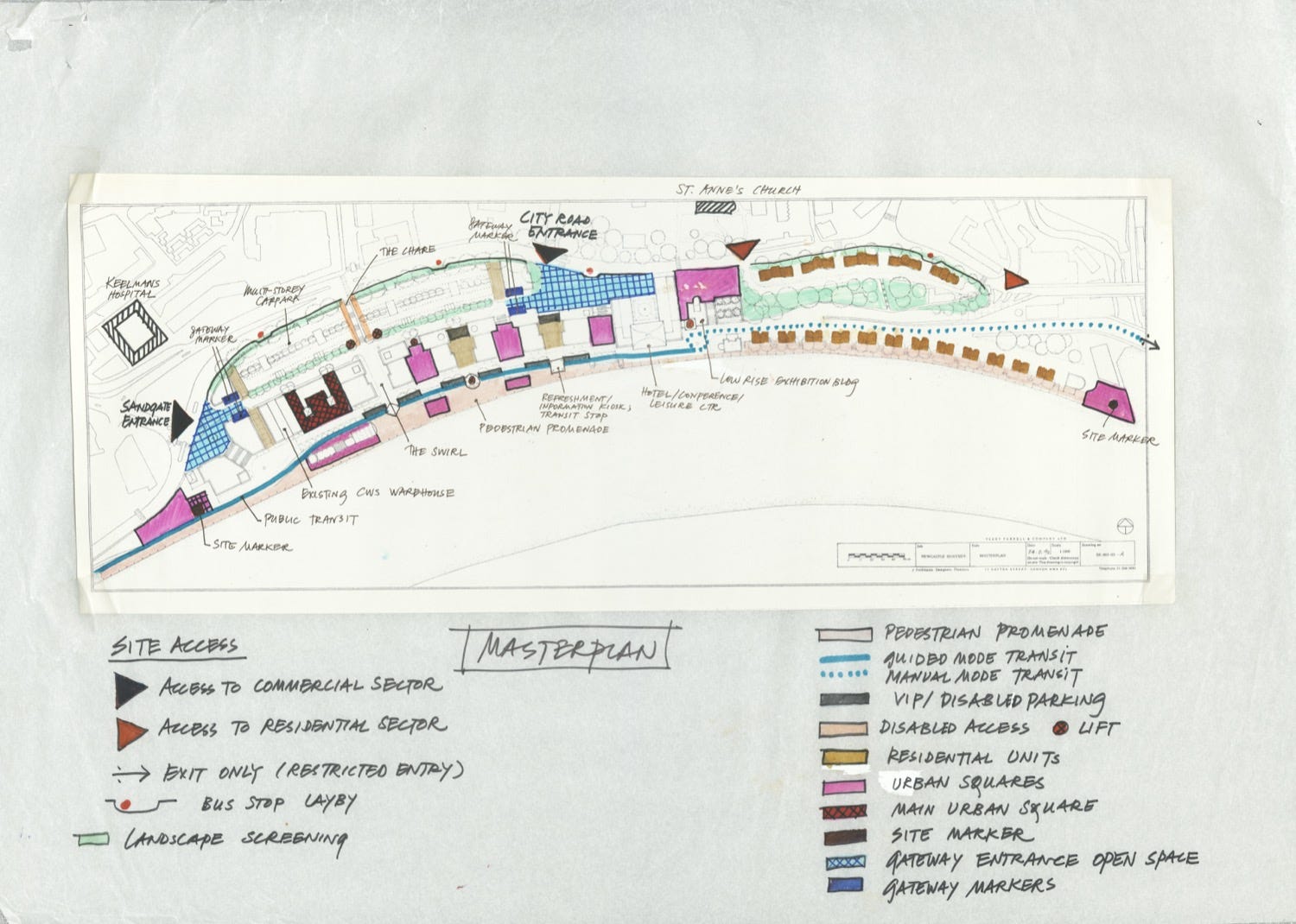
The project involved many partners, but at its core was the strategic oversight of the Tyne and Wear Development Corporation, the place-making expertise of developers Amec – now known as Muse – and the urban vision of the late architect and Newcastle University graduate Sir Terry Farrell, who oversaw the masterplan.
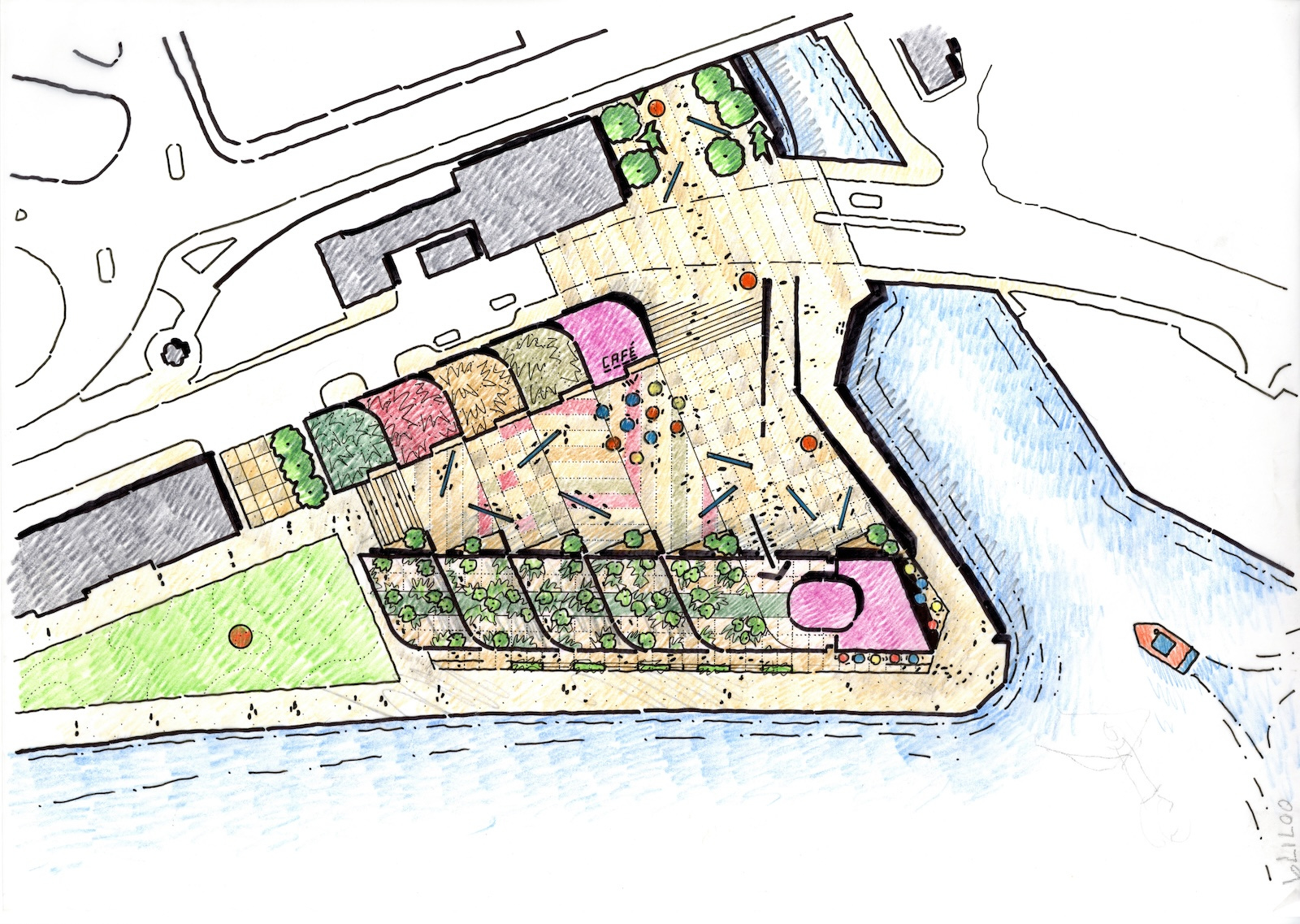
The exhibition brings together a range of archive materials that reveal the ideas and aspirations that shaped the regeneration plan and the individuals and organisations who drove them forward.
A new specially commissioned film, produced by WithLove Studio and the LDN Collective, explores what made the project so successful, reintegrating the Quayside into the city and creating the attractive zone it is today.
The exhibition has been organised with Paul Greenhalgh and Northumbria University’s Dr Kevin Muldoon-Smith, and the North East Regeneration Archive (NERA).
Phil Mayall, managing director of Muse, said: “Newcastle Quayside holds a special place in Muse’s story, and celebrating 40 years is a reminder of just how transformative great placemaking can be.
“We’re proud to have played a part in shaping a neighbourhood that has become a backdrop to everyday life for communities across the city. As Newcastle continues to grow and evolve, we’re as committed as ever to working with local partners to help deliver places that bring lasting benefits for people across the North East.
“It is brilliant to see the Farrell Centre marking this milestone with a season of exhibitions and events that celebrate the Quayside’s legacy while also exploring the future of housing and city-making in the region. Bringing people together to reflect, learn and share ideas is exactly what helps places thrive, and we’re delighted to support the programme.”
Max Farrell, chief executive of LDN Collective, a virtual network of built environment experts and creatives, said: “Newcastle Quayside is one of the great success stories of urban regeneration.
“The masterplan, designed by my father Sir Terry Farrell, set out a bold vision to reconnect the city with its river and it was brought to life through the commitment and long-term stewardship of Muse, whose belief in the place helped transform it into the thriving destination we see today.
“Forty years on, it remains a powerful example of how vision, partnerships and patience can reshape a city and its identity. We are delighted to have worked on the film telling the story, hopefully it will inspire future generations of city makers.”
The Quayside is one of two exhibitions at the core of a Housing for All season at the Farrell Centre.
Housing Standardisation, which also runs until December 18, is an exhibition developed by Professor Sam Jacoby of the Royal College of Art and a team of researchers and practitioners.
Based on a three-year study of recently built affordable and subsidised housing in England, Chile, China, the Netherlands, Spain and Switzerland, it brings together 37 case studies.
Through photographs, models and plans, it considers how housing design is shaped by policy regulations, local cultures and the everyday expectations and experiences of residents.
The international explorations are joined by a series of case studies documenting recent housing in the North East.
Owen Hopkins, director of the Farrell Centre, said: “Access to good quality, affordable housing should be a fundamental right, but one that for too long our towns and cities have been unable to provide.
“Across this season, we aim to explore not just why this is, but how we might change it.”
Alongside the two main exhibitions, the Farrell Centre is staging an installation of the film Song of the Suburbs from March 5 until May 29.
As part of the BFI’s National Archive Our Screen Heritage programme, Teesside-based film-maker Graham Williamson has compiled nearly a century of archive footage from movies, television, amateur film and the internet to tell the story of the British suburbs.
The installation features the foundation of the Welfare State, the rise of new towns and the fall of the high-rise flat, allotments, extremely dangerous children’s games, documentaries made by anti-slum campaigners, home movies and student films, TV news reports and Government information films to tell the story of a part of Britain often mislabelled as boring.
The exhibitions are complemented by a programme of talks, titled Where We Live Now, which explore issues shaping the present and future of housing in the North East and beyond.
A series of walking tours under the Urban Explorers series will look at several notable housing projects in the North East.
The walks include Byker Estate on March 14, Killingworth on April 11 and Peterlee on June 13.