


Beautiful pictures, an abundance of wistful expressions, lots of poetic words… and a testy grumble from William Morris.
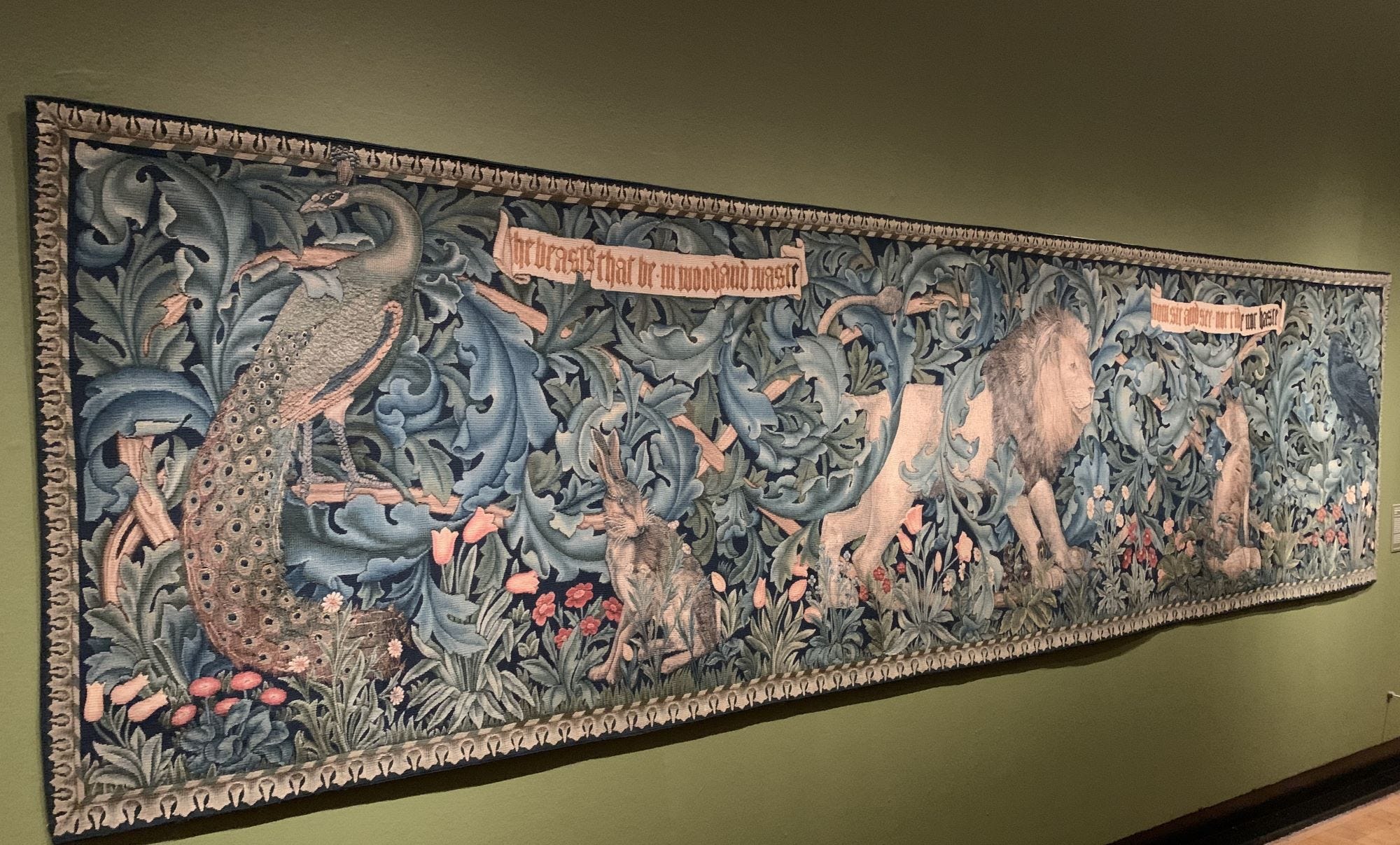
“If a chap can’t compose an epic poem while he’s weaving a tapestry… he had better shut up. He’ll never do any good at all.”
Yes, sir!
Better get weaving… and composing.
This admonition from the Arts and Crafts movement’s leading light is on the caption beside one of the most eye-catching exhibits in the latest ticketed exhibition at the Laing Art Gallery, Pre-Raphaelites: Art and Poetry.
It’s the Forest tapestry, produced by Morris & Co. in 1887 and featuring a peacock, a lion and other animals among abundant foliage, all beneath lines of verse by Morris.
On loan from the Victoria and Albert Museum (V&A), it looks – no kidding – as vivid and fresh as it must have done when it left the loom.
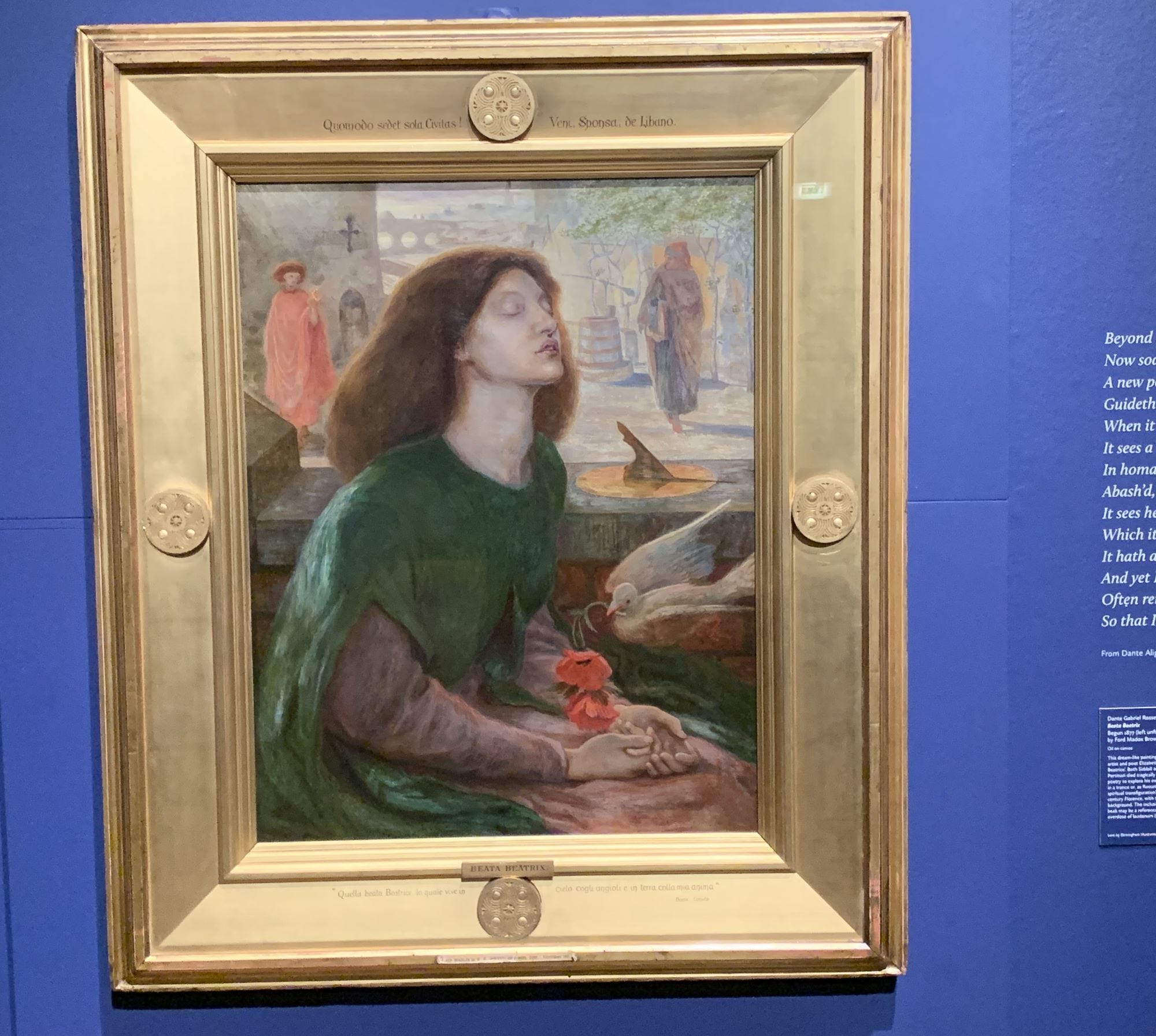
But that’s in the second of the two rooms devoted to this exhibition which is full of myriad delights and justifies its title in spades.
The Pre-Raphaelites bring to mind pictures evoking an idealised Victorian reimagining of medieval chivalry in sumptuous colour and detail.
And there are plenty of them here, displayed across the two rooms, the first freshly decked out in royal blue and the second deep green.
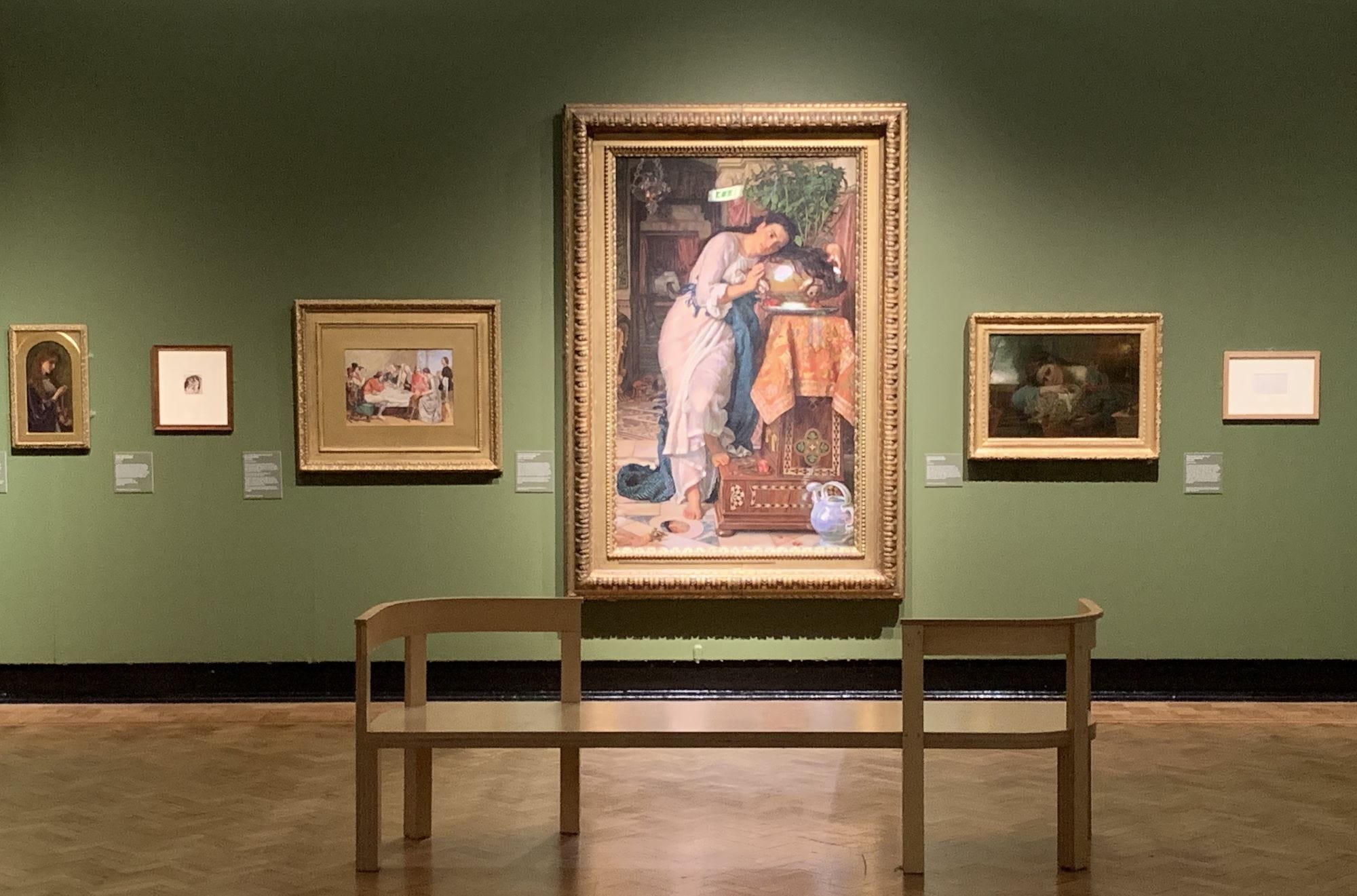
They’re pure eye candy, with the Laing Collection’s own two beauties – Isabella and the Pot of Basil by William Holman Hunt and Laus Veneris (In Praise of Venus) by Sir Edward Coley Burne-Jones – joined by others from major collections.
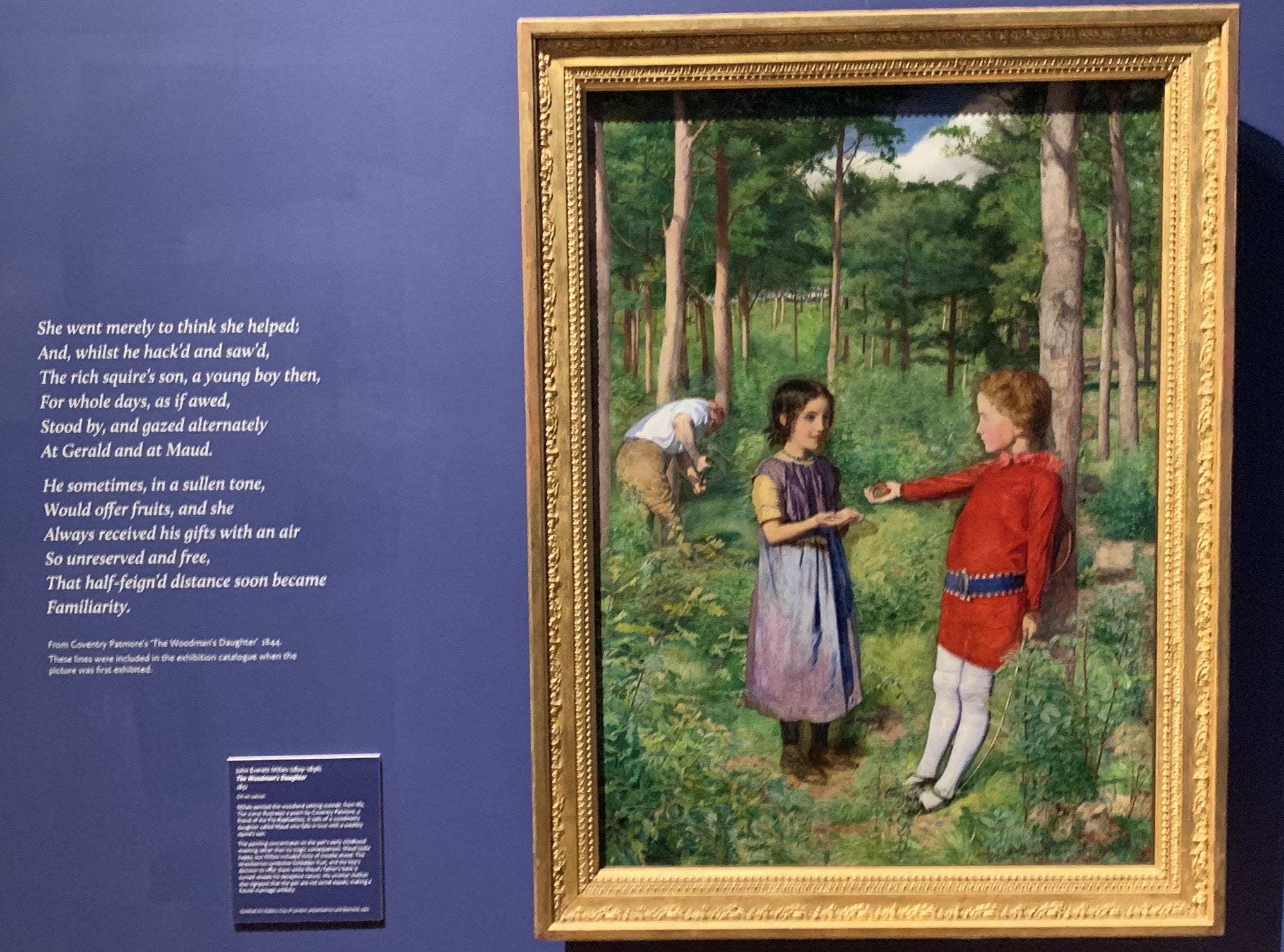
The first you’ll see on entering room one is The Woodman’s Daughter by Sir John Everett Millais, founding member of the Pre-Raphaelite Brotherhood along with Hunt and Dante Gabriel Rossetti (London-born but of Italian heritage), on loan from London’s Guildhall Art Gallery.
And next to it, white words painted on the blue, are lines from the sentimental poem by Coventry Patmore which inspired it – and which were also displayed when the painting was first shown, at the Royal Academy in 1851.
Words, as you’ll see, were more than just part of the Pre-Raphaelite package. They were the inspiration.
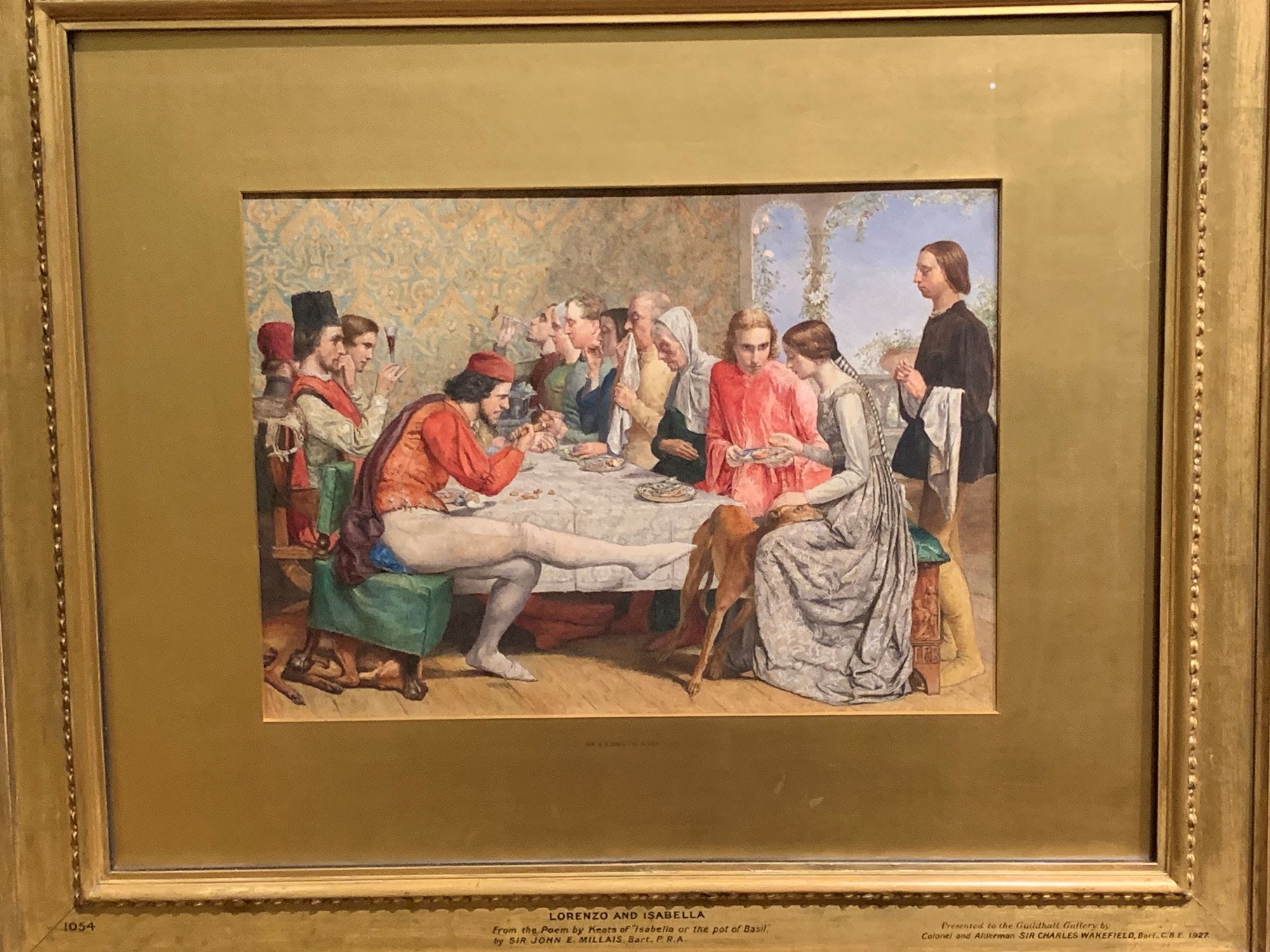
The source of Isabella and the Pot of Basil was a poem by John Keats. The Pre-Raphaelites loved Keats.
Interestingly, the Laing’s majestic canvas is displayed alongside another with the same name (different style but similar pose) done by Joseph Severn in 1877, nine years later.
Severn was a friend of Keats and with him when he died in Italy in 1822, aged 25.
Less eye-catching than The Woodcutter’s Daughter but no less significant is the small magazine in a display case nearby – Art and Poetry: Being Thoughts Towards Nature Conducted Principally by Artists.
It came out in 1850 and cost a shilling. Created by the Pre-Raphaelite Brotherhood and their associates, this was the second issue and the first under its new name. Originally called The Germ, you can see why they might have had second thoughts.
The Pre-Raphaelites were literary as well as artistic.
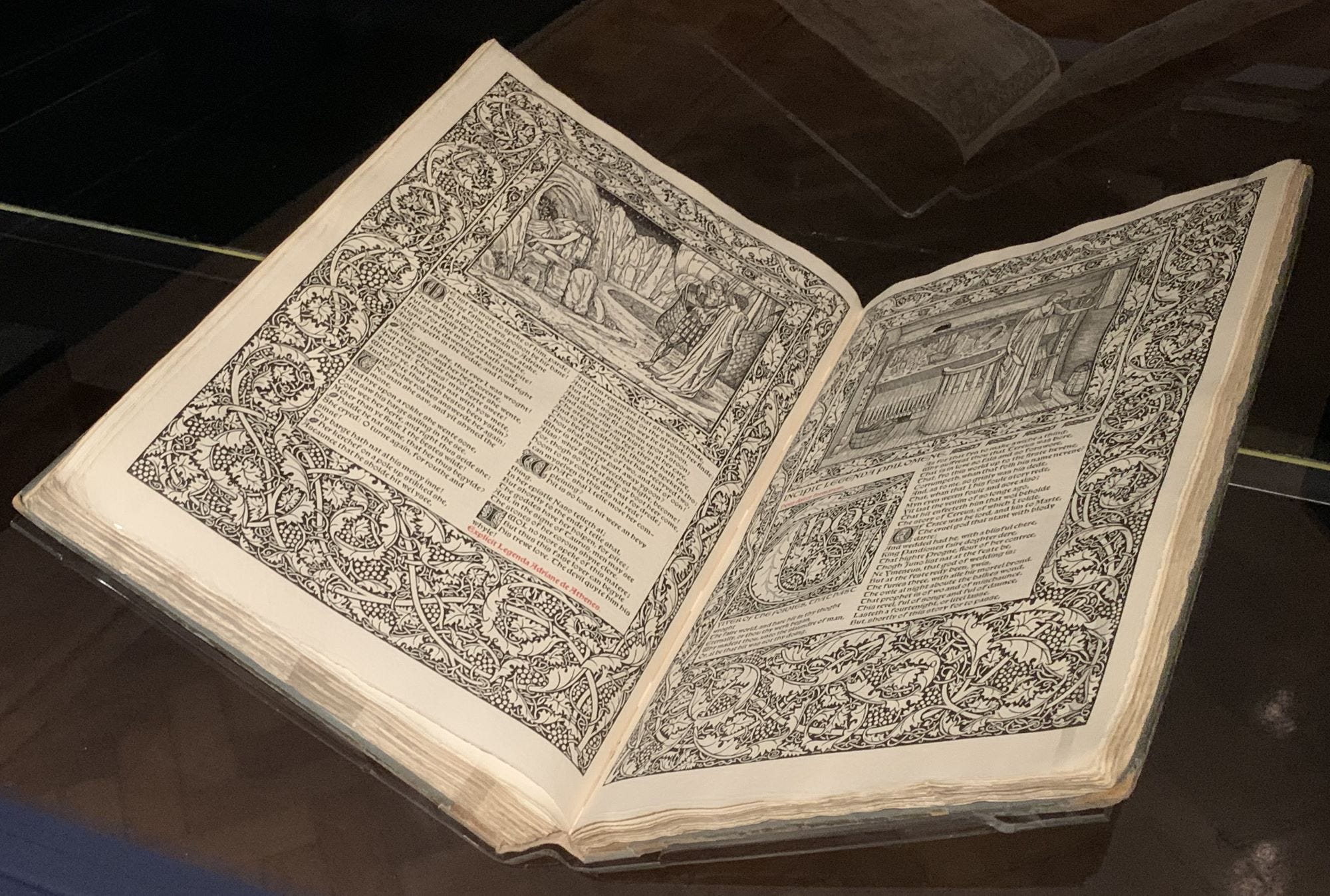
The Works of Geoffrey Chaucer, a massive book on loan from Oxford University’s Bodleian Libraries and shown behind glass, was published in 1896 by William Morris’s Kelmscott Press.
It is lavishly illustrated by Burne-Jones and Morris apparently read Chaucer aloud as the artist worked. Perhaps, being a good chap, he wove a tapestry at the same time, while doing the ironing.
Refreshingly, it isn’t only the chaps who are highlighted. A brotherhood they may have been, but women were involved too.
One interesting exhibit is a wooden jewellery box, dated 1858-62 and on loan from the Society of Antiquaries of London.
It’s decorated with painted illustrations by Dante Gabrial Rossetti and Elizabeth Siddall that were inspired by the book next to it, a medieval tome called The Book of the Queen by Christine de Pizan, one of Europe’s earliest female professional authors.
Elizabeth ‘Lizzie’ Siddall is mainly remembered as the flame-haired model who appears in some famous Pre-Raph paintings. She became the muse of Rosetti and ultimately his wife, but only when she was very ill towards the end of her life.
She died of a laudanum overdose at the age of 32, ensuring her immortality as an artistic but tragic 19th Century victim, like Keats.
In this exhibition, though, she is revealed as the artist she also was.
That casket was owned by another one-time Pre-Raph model, Jane Burden, who became Mrs William Morris but had a long affair with Rossetti, who, though talented, seems to have been a bit of a cad.
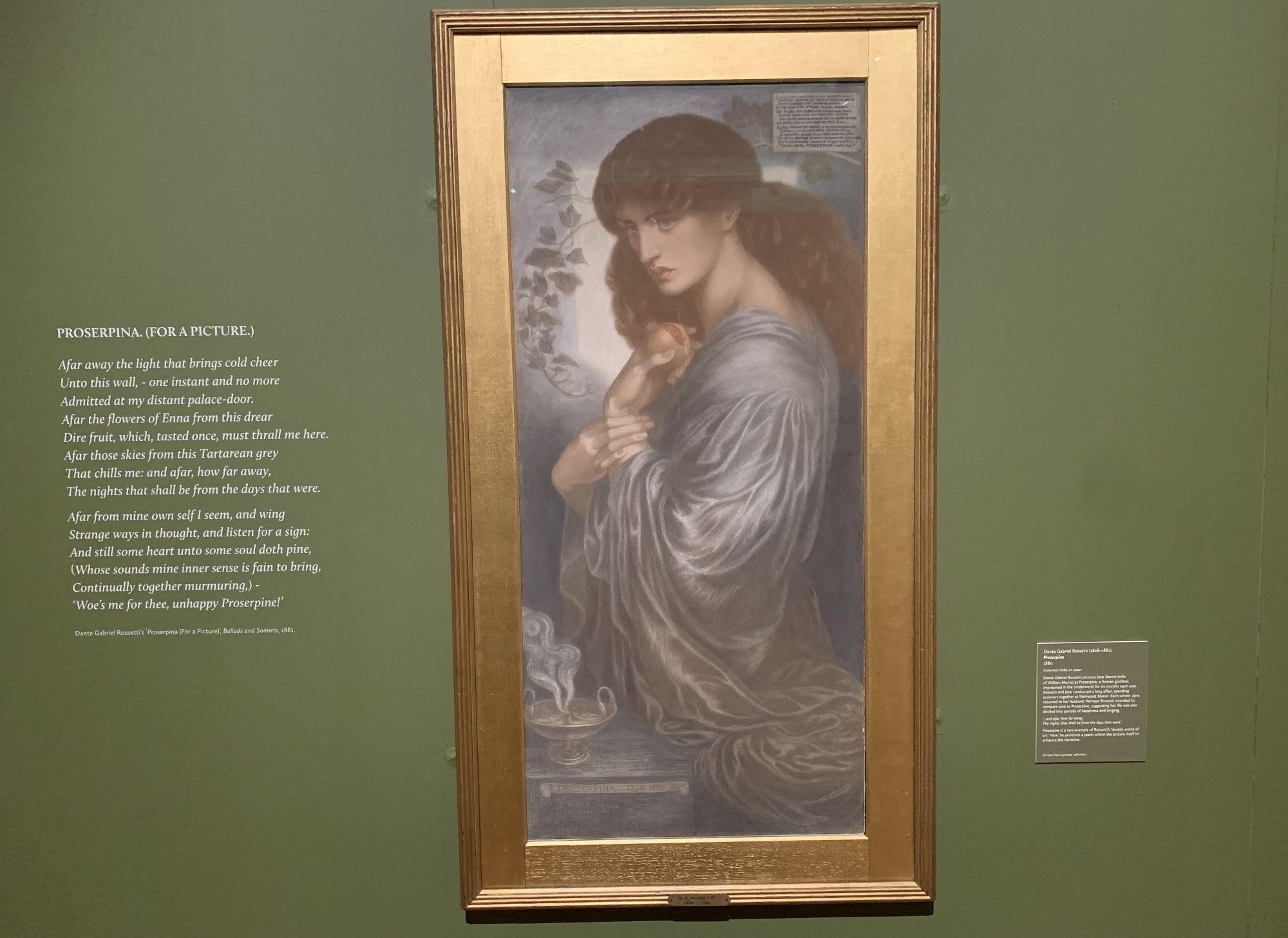
There’s a beautiful Rossetti creation in the second room, a picture of Jane Morris as the Roman goddess Proserpine, done in chalk which enhances its dreamy look. A poem, of course, is on the wall beside it.
It’s on loan from a private collector but not, I was assured, Lord Andrew Lloyd Webber, a long-time Pre-Raph fan and collector who has visited the Laing in the past to see its treasures.
As an aside, and as a measure of how times change, Lloyd-Webber has recounted how, as a 15-year-old, he fell for a grubby old picture in a London shop window, unframed and priced at 50 quid.
He asked his aunt if she could lend him the money and she retorted: “I will not have Victorian junk in my flat.”
This was the 1960s and pop art was the thing.
The painting was Flaming June by Frederic Leighton, an associate of the Pre-Raphs, and nowadays it is exhibited around the world.
Rossetti wrote as well as painted but it’s his sister, Christina Rosetti, who is best remembered as the poet. She wrote the words to the carol In the Bleak Midwinter – but she also penned, in 1862, a deliciously dark poem called Goblin Market.
A cautionary tale telling of sisters Laura and Lizzie and their misadventure with the river goblins, it was first published in a book called Goblin Market and Other Poems.
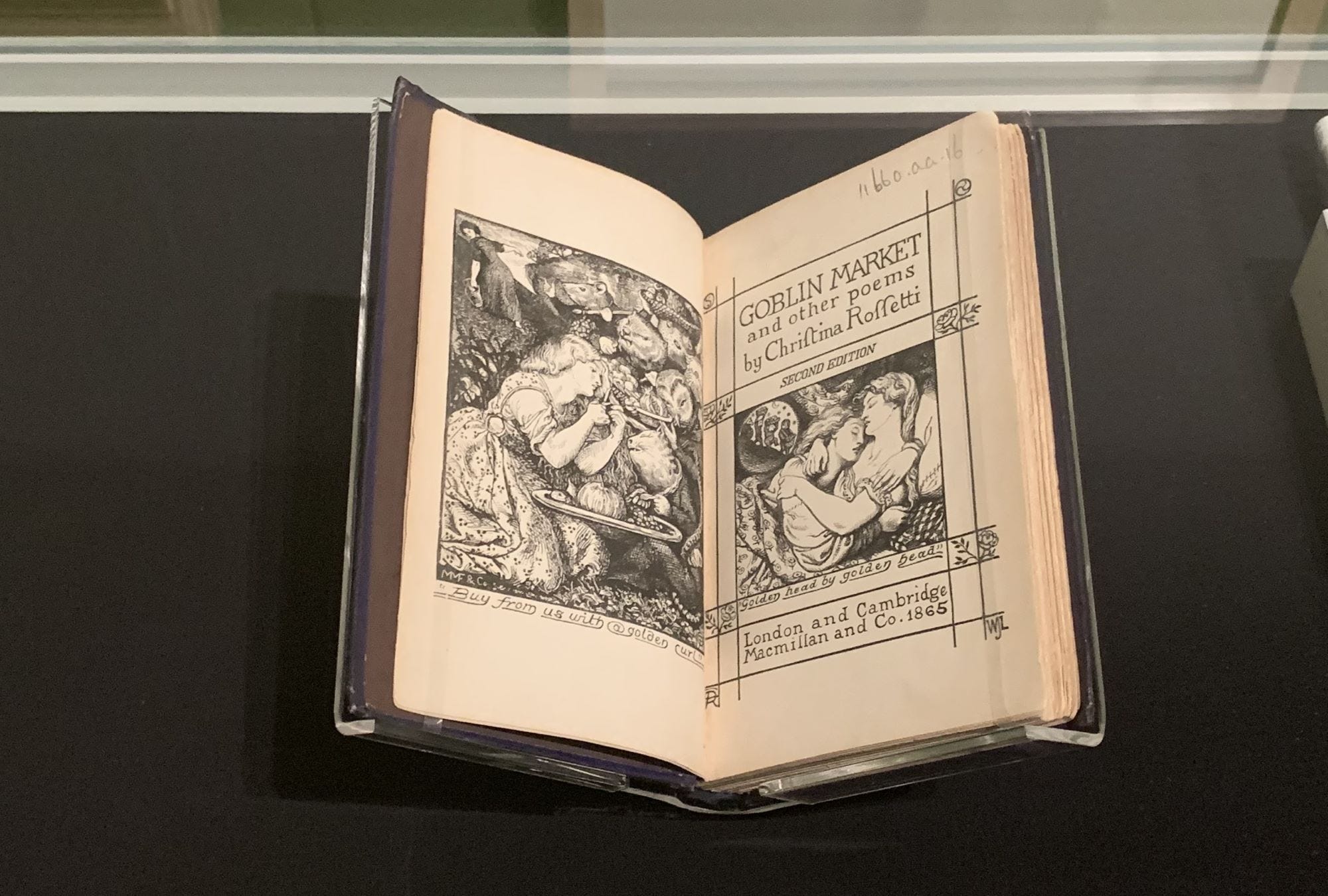
There’s a copy here, on loan from the British Library, “with illustrations by William James Linton after Dante Gabriel Rossetti”.
Another significant woman of the age was the pioneering photographer Julia Margaret Cameron (1815-79) and there are several examples of her work in the exhibition.
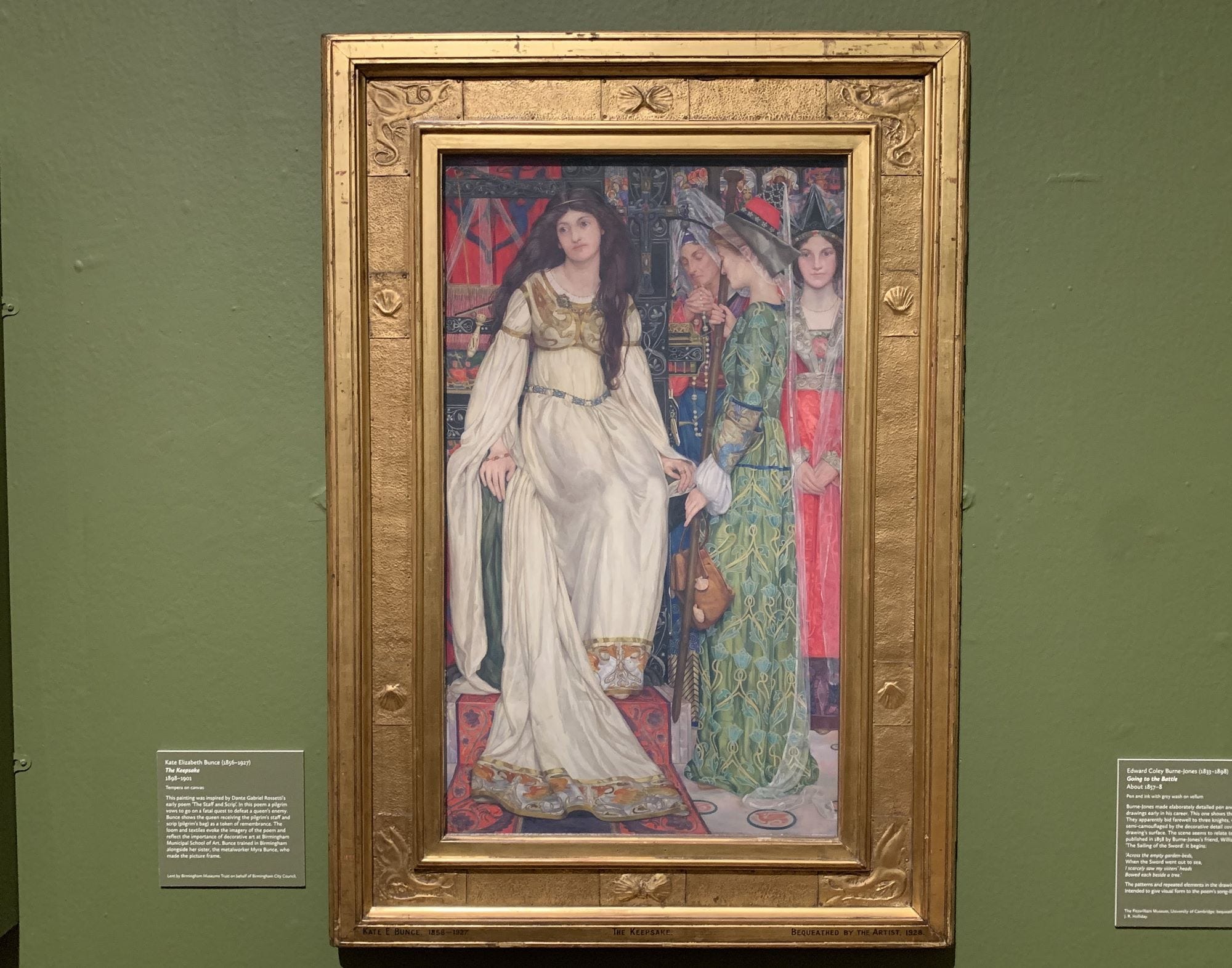
And there’s also a lovely painting called The Keepsake by Kate Elizabeth Bunce (1856 to 1927) which was inspired by a poem by Dante Gabriel Rossetti. Bunce, who fell under the Pre-Raph spell, lived all her life in Birmingham and this painting is on loan from the city.
Links and connections can be made all over this absorbing exhibition which includes a dizzying array of loans. It’s the first dedicated to the Pre-Raphaelites since 1989 so not before time.
And it brings one fine item back to the city.
On loan from the V&A is the early 20th Century casket that was presented to Queen Alexandra when Edward VII opened the King’s Hall of Armstrong College (now part of Newcastle University).
Its enamel plaques show scenes from The Faerie Queene, the 16th Century epic poem by Edmund Spenser that was much admired by the Pre-Raphaelites.
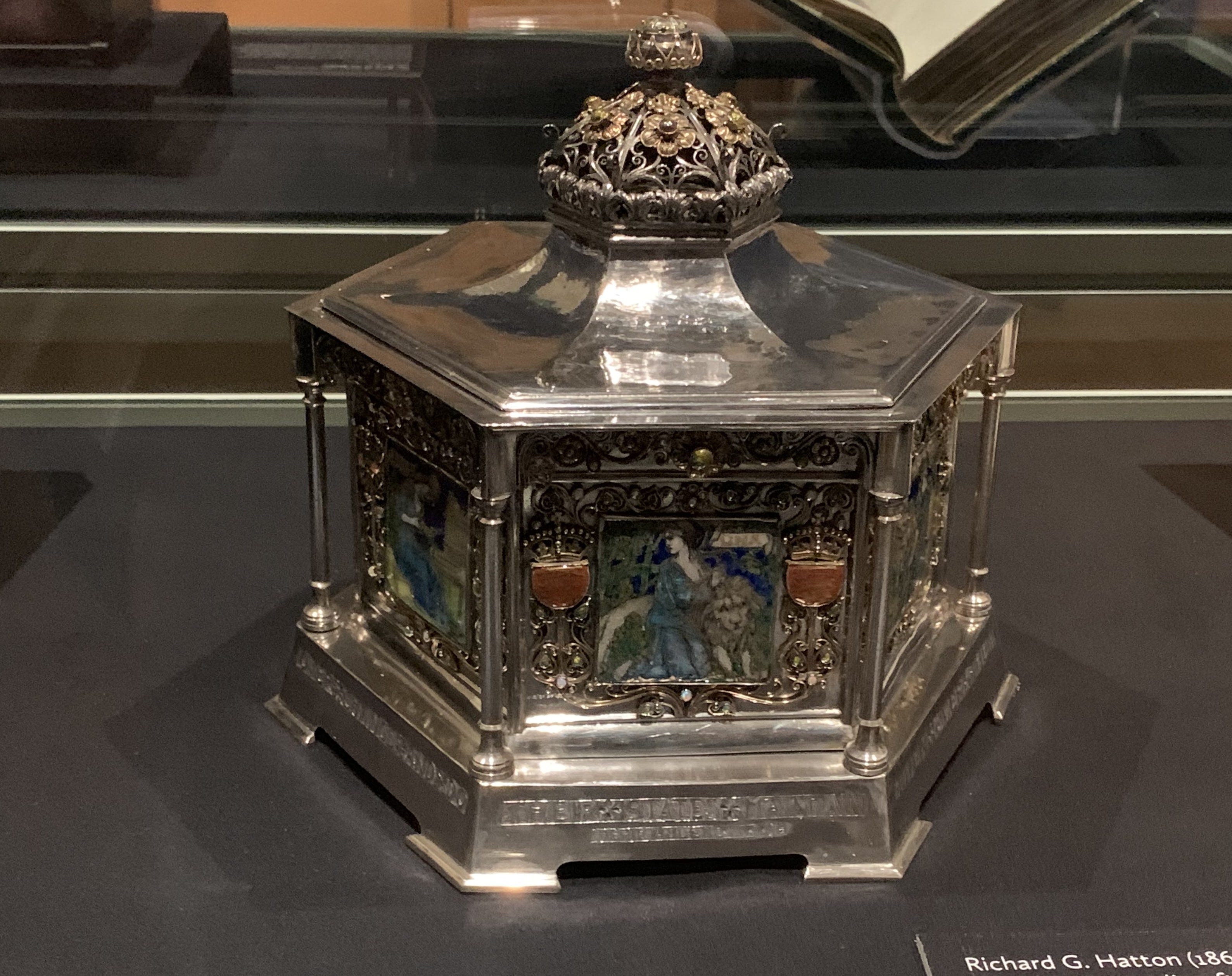
The casket was designed by Richard George Hatton and made by the Newcastle Handicrafts Company, set up in 1899 to enable local art students to get practical experience under Hatton’s supervision.
It’s a credit to all of them.
Pre-Raphaelites: Art and Poetry opens on Saturday, October 17 and runs until February 13, 2027. Find opening times and ticket prices on the Laing Art Gallery website.