


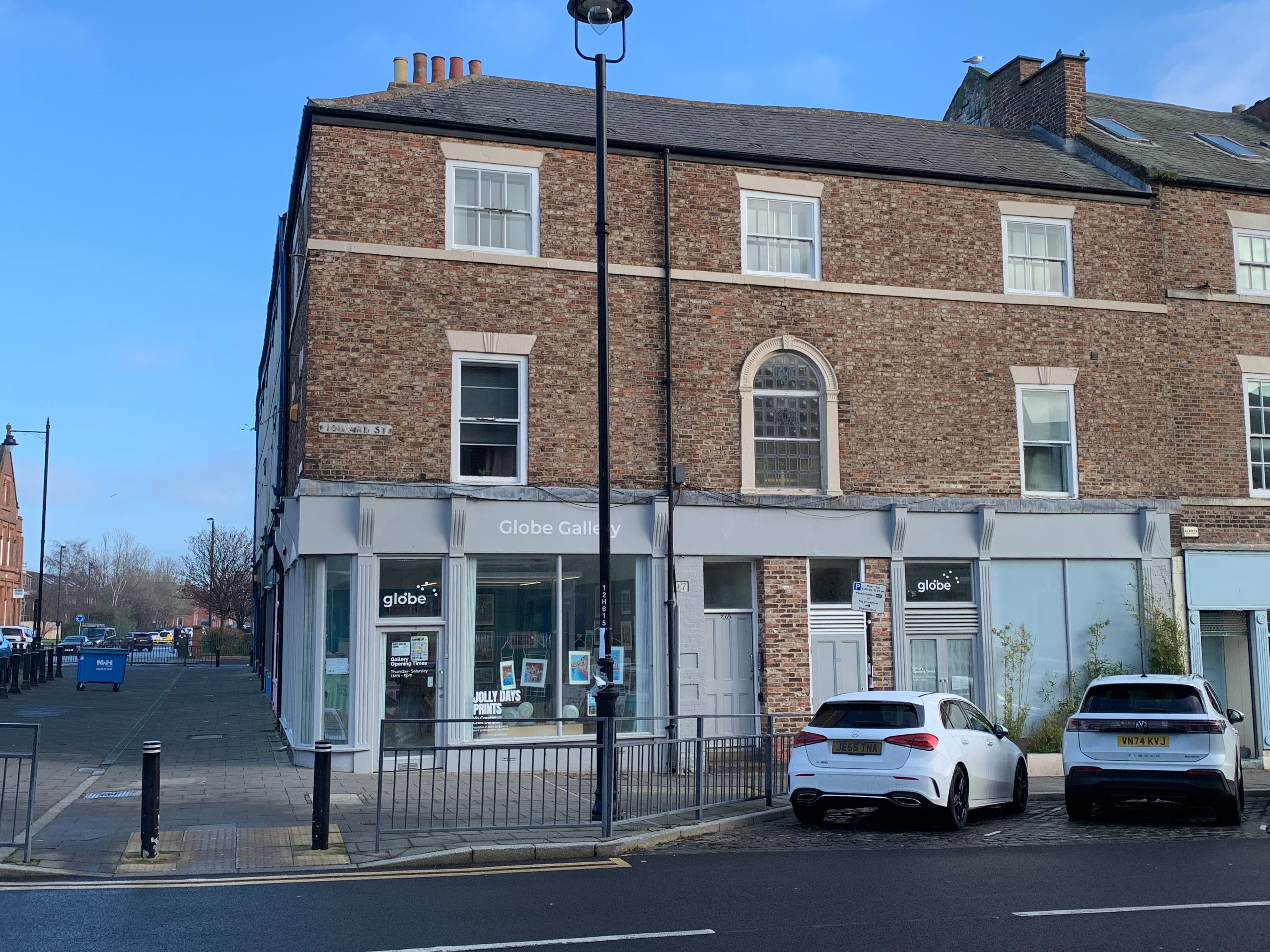
The old year was seen out with Plasticine as the key ingredient (Kitty McKay’s nostalgic lido-inspired exhibition) and the new gets going at the Globe Gallery with the focus again on materials.
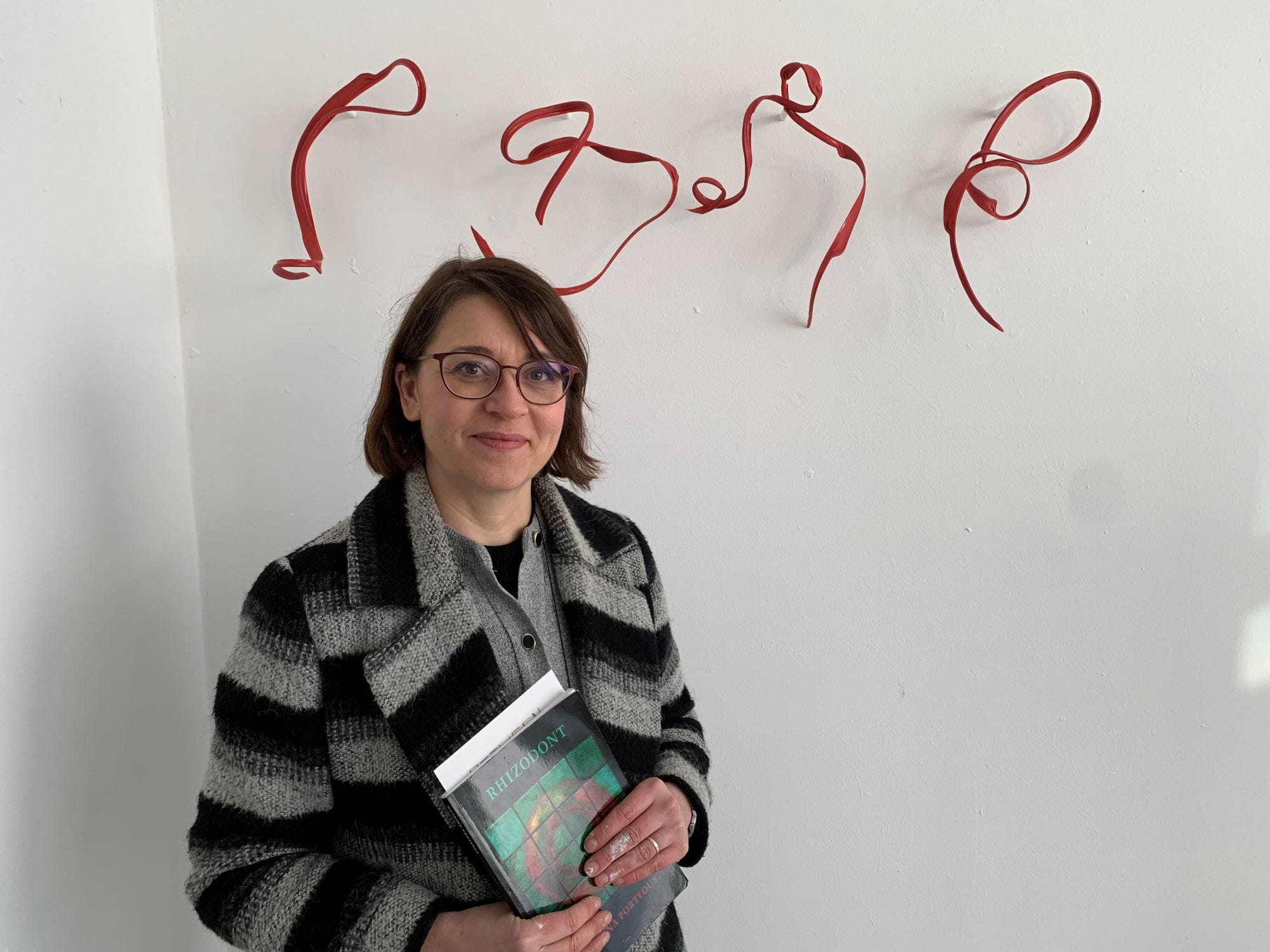
New exhibition Between Work and Play was initiated by Helen Pailing, who has a studio near the North Shields gallery, and it’s a playful celebration of stuff both natural and man-made.
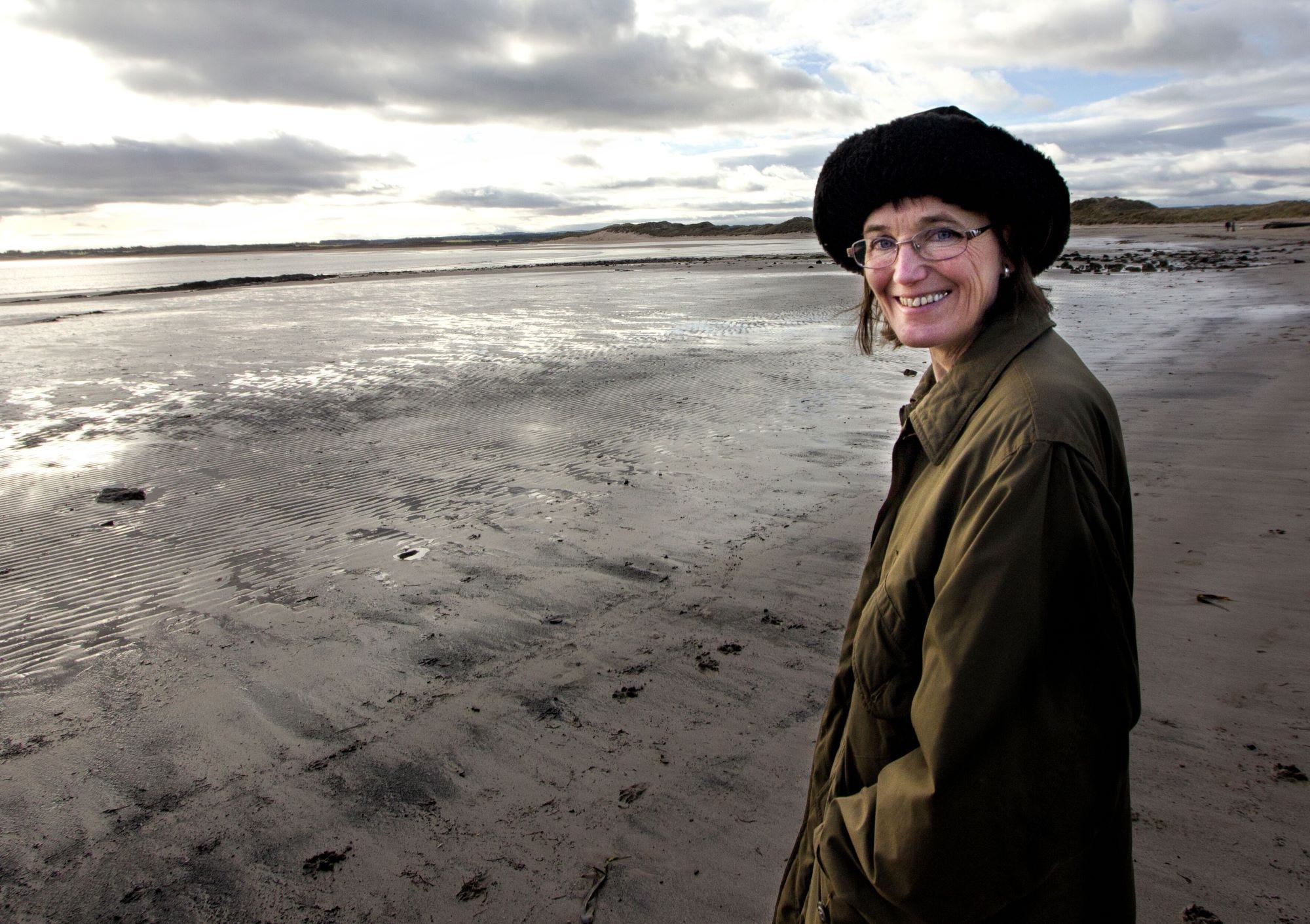
It’s a joint show, featuring Helen’s work and that of Graham Patterson, whose ‘canvas’, says Helen, is a stretch of beach near Holy Island, and London-based Helen Maurer whom she recognised as a kindred spirit when on an art residency in Caithness.
The exhibition also features some framed prints (only ever shown in London) made by Helen Maurer in collaboration with Angela Moore.
The idea for an exhibition came, says Helen, when she got her studio two years ago and fell in love with North Shields Fish Quay: “The knots, the ropes, the paraphernalia…”
Impetus came when the Globe reopened in its original 1990s location on Howard Street and she fell for that too, with its “variety of spaces”.
The title came from a conversation with Graham Patterson whose use of the phrase “between work and play” struck her as interesting and applicable to all their artistic endeavours.
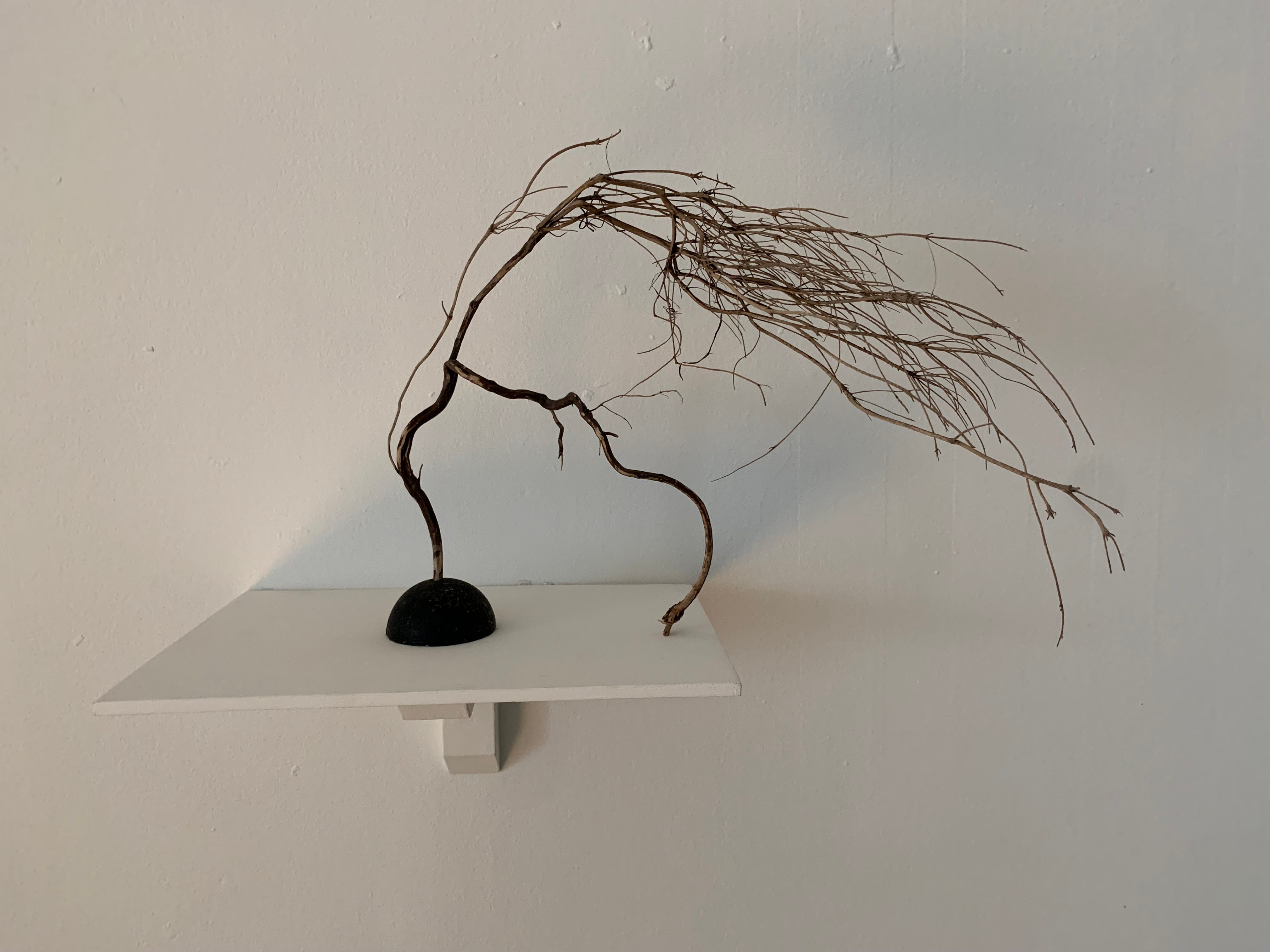
His seaside coastal ‘canvas’ delivers driftwood in abundance, along with other stuff you’d rather wasn’t there but which adds an intriguing ingredient – plastic diving goggles, suspended to indicate an optimum viewing position, and an old football, sea-worn and sand-blasted.
Sticks of suspended driftwood suggest some kind of work process but also hieroglyphics – of which the same can be said of Helen’s elegant wall-mounted scrawl on the facing wall.
This 3D ‘signature’, however, results from a conversation in Middlesbrough where she was one of the artists commissioned to make the railway station a showcase for contemporary art.
Photographer Rachel Deakin suggested she would love Press On, the Middlesbrough producer of vinyl records.
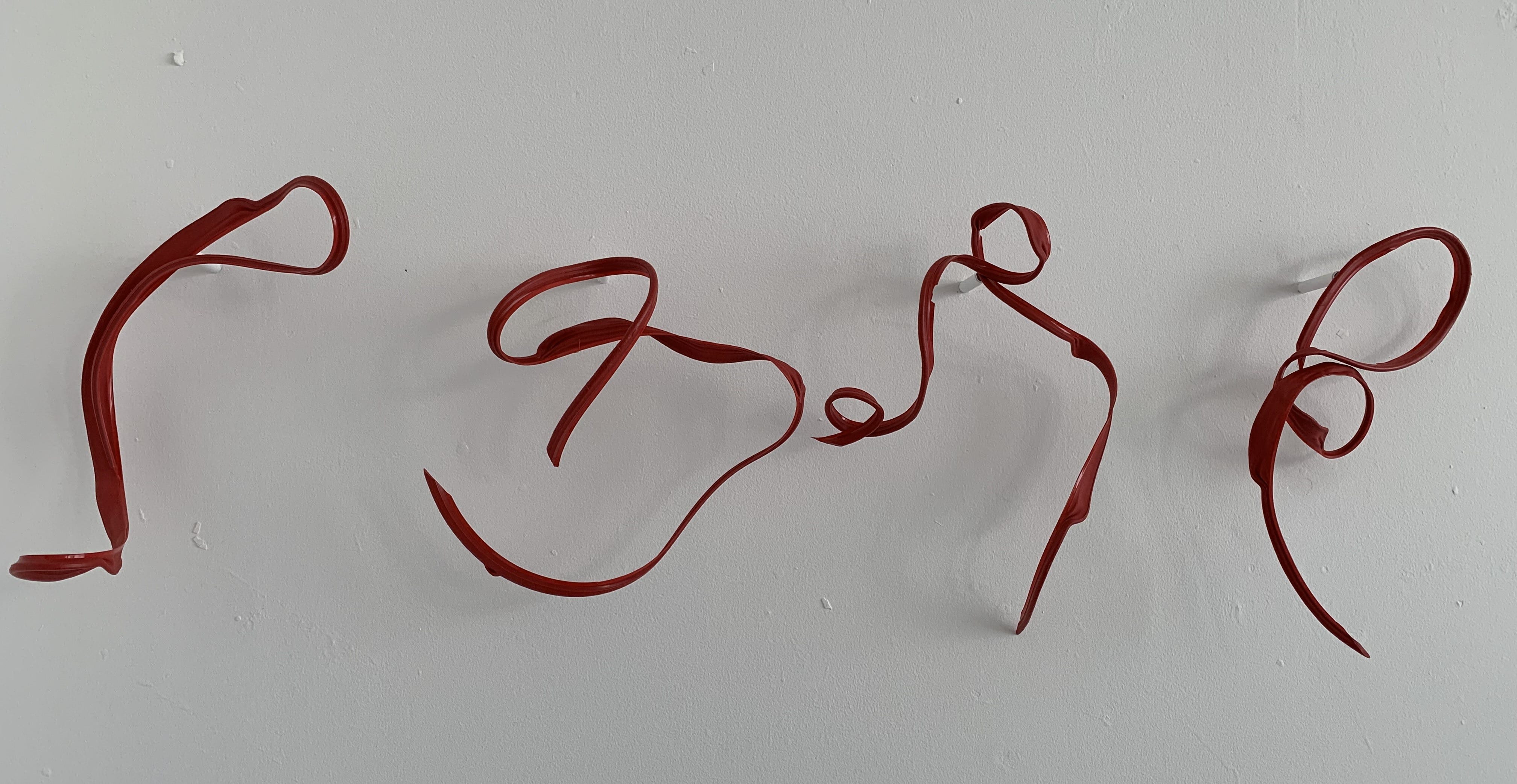
Helen paid a visit and was allowed to take away some of the ribbon-like off-cuts left behind after discs are pressed.
“It would be a great place for a residency,” she enthuses, explaining how she’d been drawn to the discarded strands (not strictly speaking a waste product because normally they’d be re-used).
“They seemed to have their own language.”
That’s certainly the impression you get from the shaped pieces fastened to one of the gallery’s white walls, red to mimic sealing wax and named after a Porteous poem, Fantastical shapes.
One crucial factor in this exhibition is Northumberland poet Katrina Porteous, specifically her latest collection Rhizodont (Bloodaxe, 2024) which takes its title from a huge prehistoric fish whose fossilised skeleton was found on the Northumberland coast.
The book contains two bodies of work, one to do with geography, history and the passage of time and the other inspired by the post-war move from analogue to digital (with Middlesbrough’s Press On a blip in the trend).
Helen’s thoughts turned to Katrina’s “brilliant” book when reflecting on Helen Maurer’s occasional use of text.
Its themes chimed with her own ambitions for the exhibition, “how things are always changing and how we, as artists, have straddled these places between the analogue and the digital, and the joy of making.
“I think Katrina’s language speaks to that.”
Asked if she would write a paragraph or two, Katrina did more, attending the artists’ meetings online and becoming inspired by how all their work seemed to connect in some way.
“We’re so lucky that she said she’d write what ended up being a lovely essay and she selected some of the poems which she felt resonated with us individually and collectively.”
Many of the pieces in the exhibition relate to specific poems and bear their names.
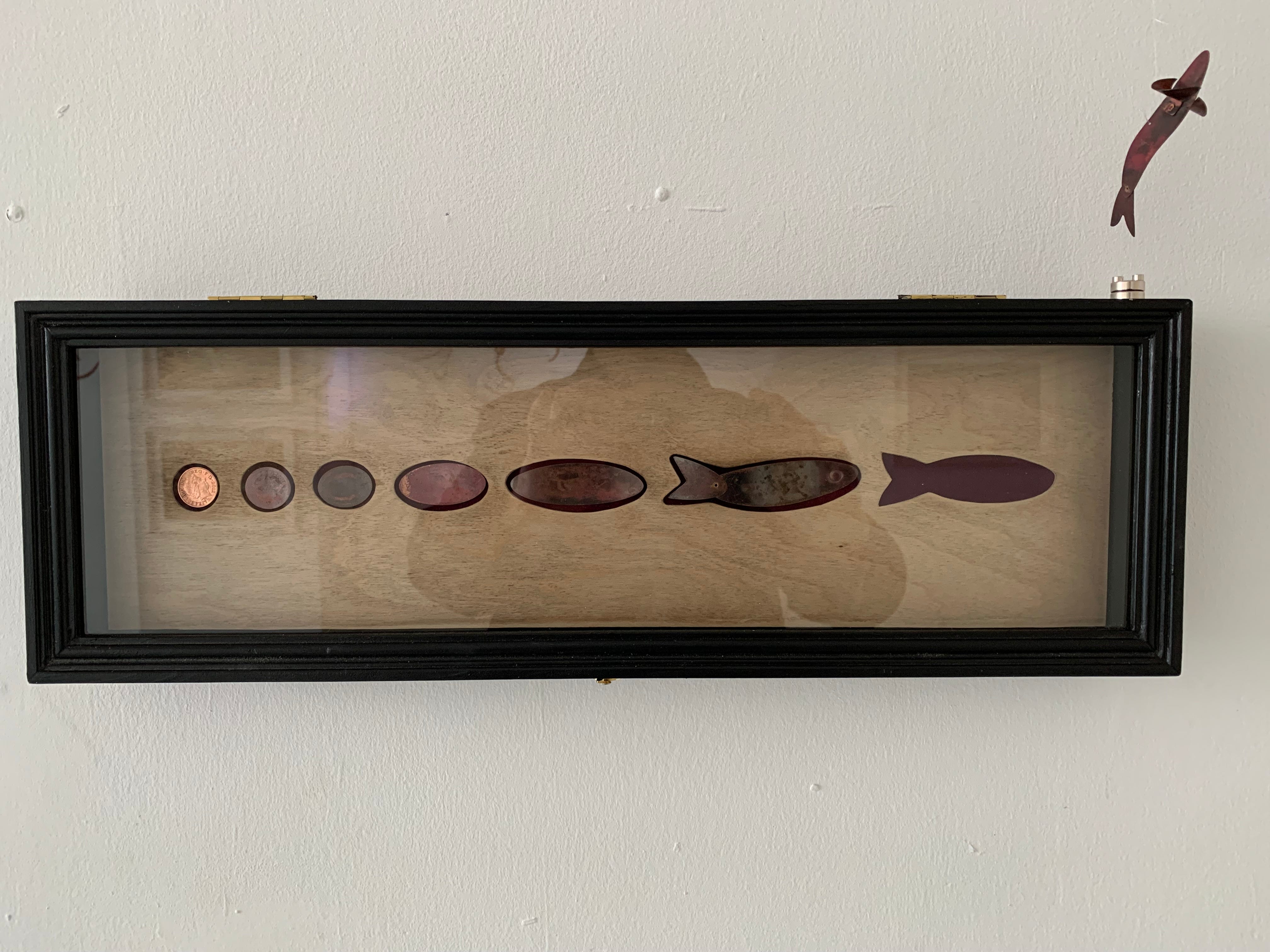
One such is How the Fishes Listen, the first of the two introductory poems in Rhizodont and inspiration for several Helen Maurer creations.
One features an evolving fish made of rolled and flattened pennies which in its final iteration leaps from a wall-mounted display case; another sees the poem’s constituent words and letters randomly displayed on beads of glass.
The artists’ work blends into a whole rather than being compartmentalised to show who did what.
“We wanted it to flow, a bit like a journey, and not be precious about individual spaces,” says Helen.
“We wanted the titles to read a bit like poems on a sheet.”
You can actually find them on a printed sheet but not on wall labels which the artists felt would be a distraction.
It’s an exhibition full of movement and not just provided by Helen Maurer’s film, Sky Garden, showing in one corner.
There are allusions to play – dangling shapes like kite tails or shimmering fish that catch the light and throw reflections – and the grind of a fishing community’s life, with one of Helen’s pieces, Tiny Sparks that dart, inspired by an old photo of children bending pins into fish hooks.
Since nothing goes to waste – a habit, says Helen, born largely of necessity during student days – there’s an old bed base salvaged from a previous residency which has become Locking and unlocking.
Dramatically contorted and hung on a wall, it attains a rugged airiness while reminding us that the potential for art is all around us.
“These sort of discarded objects speak to me,” says Helen.
“I don’t know why but they have value for me, coming from one place to be given another life; and there’s the underlying question of do we need any more in this world?
“We have enough, so now let’s celebrate the things we have.”
Between Work and Play runs at the Globe Gallery until February 14 (the gallery opens Thursday to Saturday, 11am to 5pm).
Meanwhile the previous exhibition’s Plasticine installation, By the Lido Wall, made by Kitty McKay with community helpers can still be seen on the bridge at Tynemouth Metro Station.