


One day at school, when he was 14, Nicholas McCarthy heard some music that changed his life, or at least determined the course of it.
There was a girl who was good at playing the piano. On special occasions, she was always the one chosen to entertain.
“I’d seen her play many times but at this particular assembly she was playing Beethoven’s Waldstein Sonata,” he remembers.
“I knew nothing of it. I’d heard the name Beethoven but wouldn’t know what he sounded like.
“She finished the crashing chords of the first movement and… I can only describe it as an epiphany moment.
“I’d never heard it before but it was life-changing. I decided there and then that I was going to play the piano.
“I didn’t play the piano. I didn’t know anything about music, certainly couldn’t read music, but I just knew that that was what I was going to do and I was going to dedicate my life to it.
“And I think because I was 14 years old… well, at that age you’re invincible. It’s so easy to become an astronaut or buy a mansion. You don’t realise how difficult things are.”
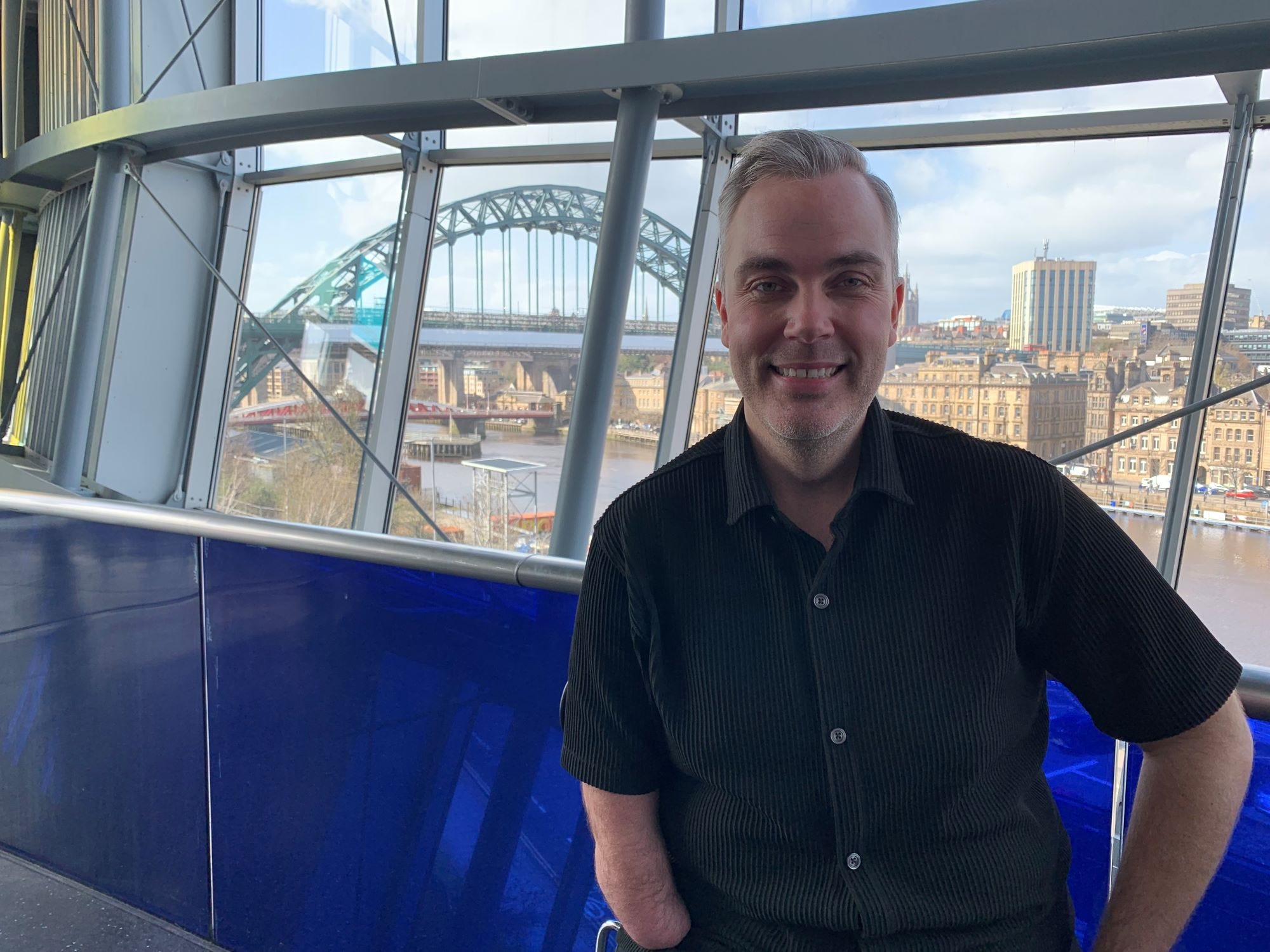
It seems typical of Nicholas, sitting opposite me at The Glasshouse, where he is to perform for the first time this month, that having been born with no right hand doesn’t figure among the perceived difficulties he reels off.
If you didn’t know any better, you might imagine playing the piano to be one thing a one-handed person couldn’t do.
But Nicholas McCarthy is a brilliant concert pianist.
Born in 1989, he is still the only left-handed pianist to have graduated from the Royal College of Music throughout its 133-year history.
He travels the world – jauntily, he tells me he regards anywhere within a six hour drive from his Colchester home as “local” - and last year he performed in a televised BBC Proms concert at the Royal Albert Hall, going down a storm.
His achievement is extraordinary. And, as I won’t be the only one to have discovered for he’s much in demand as a motivational speaker, he’s inspirational.
“I’ve not performed here before,” he tells me, surveying the concourse of The Glasshouse. “I’ve not even been in here.
“But this is a very special concert because I’ve got a lot of family in the North East. My mum was from County Durham and I used to come up here a lot, going to visit various uncles, aunts and cousins.
“I remember going to see my Uncle Ernie and saying, ‘Mummy, is Uncle Ernie’s house a museum?’ He’d been a miner and his house was full of stuff I’d seen at Beamish Museum, like his miner’s lamp.
“These people have all supported me from afar (Nicholas was born in Epsom) but this concert will be special, almost like a homecoming although I’ve never lived here.”
There were musicians on his mother’s side of the family. His great grandmother had been a pianist, playing in pubs, and an Uncle John played the accordion. His mother twirled a baton in a marching band.
“I had a really normal, happy childhood,” he recalls.
“Only child, not wealthy by any means although we weren’t on the breadline either. Music wasn’t really part of my upbringing.
“The only time I heard classical music was when Nigel Kennedy brought out his The Four Seasons. I think everyone had that album. I remember Mum playing it once and asking what it was.”
But after that “epiphany moment”, Nicholas went home and asked for a piano, picturing, of course, a grand, which no room in the house could accommodate.
He swears his one-handedness never crossed his mind as a potential obstacle. “I don’t know why.”
His parents, duly pestered, compromised by buying him a small keyboard from Argos and he got to work.
“I started to self-teach. I learned how to read music, which was arduous but we got there. At that time I was like a dry sponge, wanting to absorb everything about classical music
“I used to listen to Classic FM to find out what I liked and didn’t like, and then, this one afternoon, came a turning point.
“I was playing something on the keyboard in my bedroom and my dad shouted upstairs, ‘Nick, turn the radio down’.
“I was quite miffed because I’d worked so hard on this piece. I shouted down, ‘It’s not the radio, Dad, it’s me’. Mum and Dad then appeared at my door and said, ‘Can you play that again?’
“I played it again and they said, ‘Wow, that was really good. Would you like piano lessons?’”
Of musical education, Nicholas reports, they knew nothing, but he started taking lessons with a local teacher.
“She was quite young, a music student, and I think that was important. She was open and happy to work with me and could think outside the box.
“With her I did my first grades and started to get quite good quite quickly. She said, ‘I really think you should audition for a music school’.”
He did and, of course, he got in. But if this all sounds like remarkably plain sailing, it clearly hasn’t been.
Asked about knockbacks, Nicholas grimaces: “Oh, God! How long have you got?”
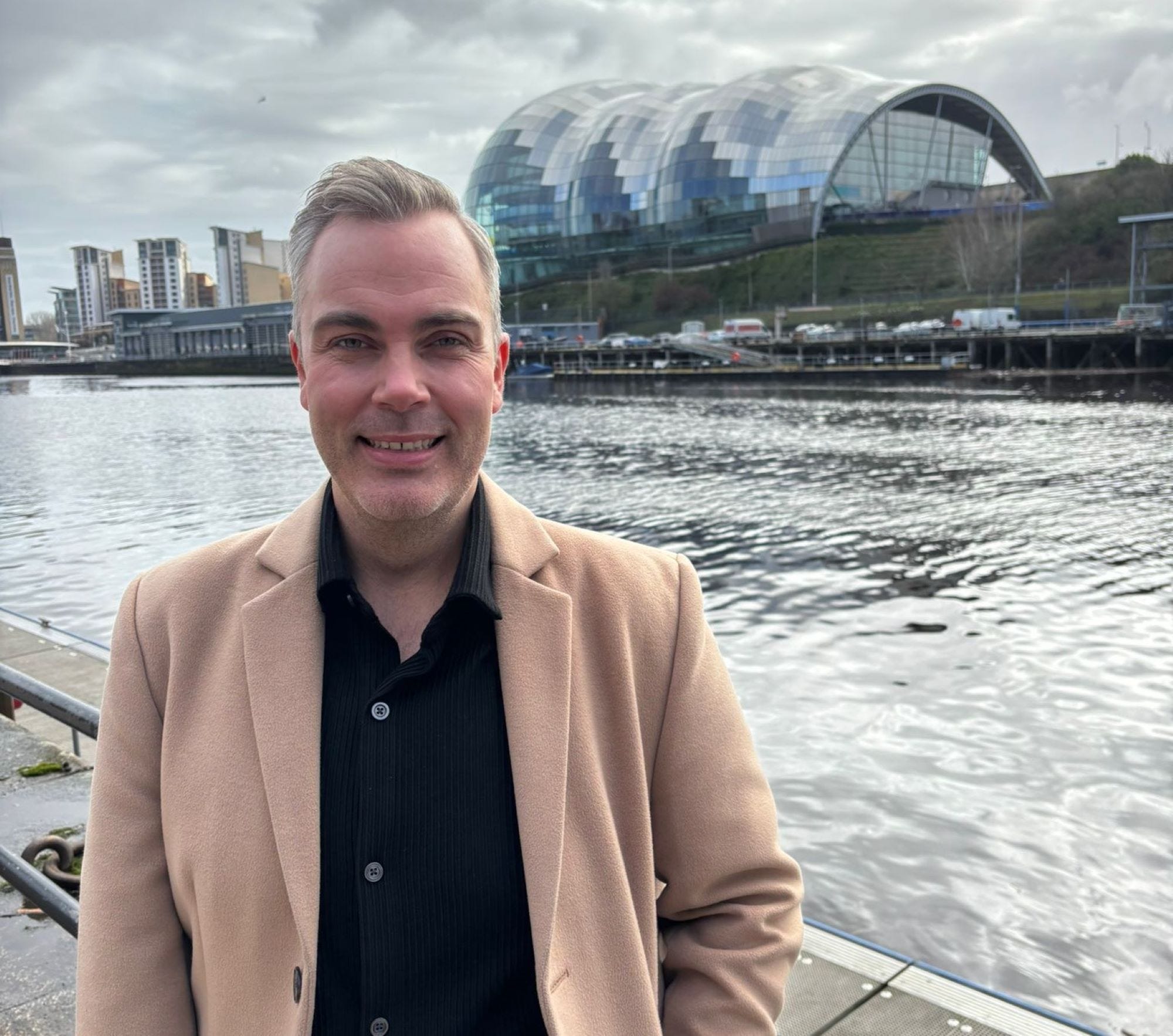
He says we see disability through a very different lens now, even compared to when he graduated in 2012 and started performing for the first time on a modest scale.
“Disability was viewed differently then.
“We’ve still got a long way to go but it’s much more visible now and people are realising there are fantastically talented disabled people out there.
“I used to say it was like pushing water uphill with a fork, especially at the beginning.
“My industry is incredibly traditional and the attitude was very much, if you don’t tread this path you’re not going to reach x.
“My point was always that I was never going to have a traditional career, playing over 100 concerts a year like Lang Lang or Yuja Wang (renowned two-handed concert pianists).
“Firstly, I don’t want to, and secondly, my hand wouldn’t be able to cope with that.
“The left hand repertoire is incredibly tough. There’s no reprieve.”
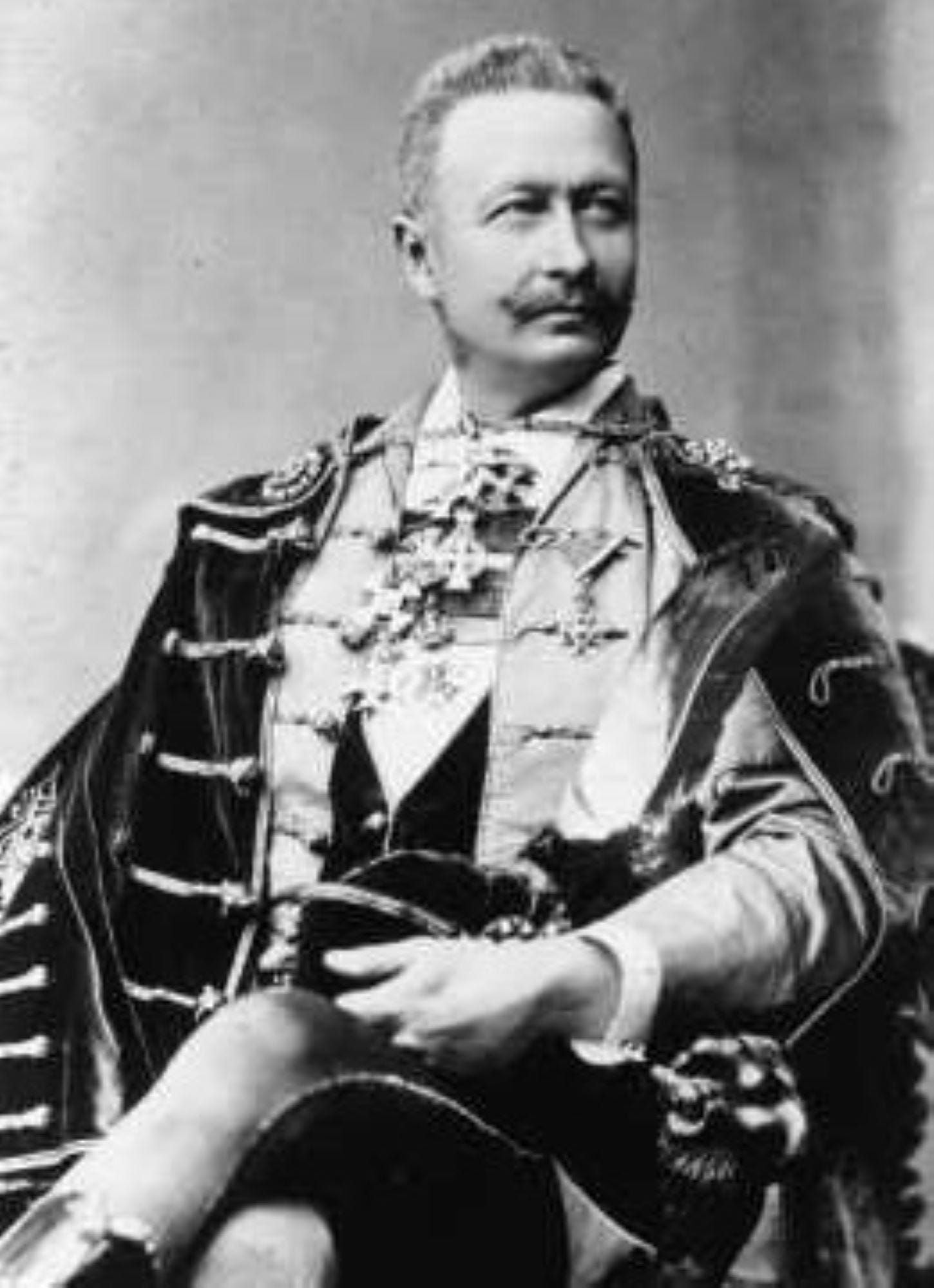
And there is a long-established repertoire for left-handed piano, largely due to the likes of Count Géza Zichy, the 19th Century Hungarian pianist who lost his right hand in a hunting accident, and the Austrian-American Paul Wittgenstein whose right arm was amputated in the First World War.
“You can be independent with one hand, you just have to know how,” wrote Zichy in his memoirs. Wittgenstein, older brother of philosopher Ludwig, worked on left-handed playing techniques and commissioned left-handed pieces for piano.
Says Nicholas: “That’s why we’ve got 32 piano concertos and counting, because I commission as well, and over 3,000 works for left hand.
“So often people will suggest there’s very limited repertoire and I’m like. ‘Ah, well, actually it’s not at all’.”
Nicholas agrees he must be mentally as well as physically strong.
“It was difficult in my late teens and early twenties when often I’d be sat on the sidelines cheering other people on and thinking, ‘Hello… I can do that too. Just give me a chance’.
“It took an awful lot of persistence and self-belief. But only I knew what I could do and was capable of, and I’ve proved some people wrong.”
He says he did feel he had to go the extra mile to prove himself and wonders if that was actually the best approach.
“When they offered me a place at the Royal College of Music, one thing I said was that I didn’t want to be treated differently. I wanted to be marked the same as everybody else.
“In hindsight that was stupid because my repertoire was more difficult than a first year student’s would otherwise be. But I didn’t want people to say, ‘Well, of course, it’s because he’s disabled. He’s ticking a box’.
“I was very keen to not be seen as that and I’m always very keen to keep my standards as high as I possibly can.”
One hand or two, the ultimate test of any musician is that the audience is appreciative, and on that score Nicholas McCarthy has been many times a winner.
That BBC Proms concert was very important, he acknowledges. “It proved to a lot of people what I could do.” The diary is now gratifyingly full.
As well as performing and giving inspirational talks, Nicholas has helped smooth the path for others.
In 2024, working with the Associated Board of the Royal Schools of Music (ABRSM), Nicholas launched the world’s first one-handed piano syllabus.
“You can now do initial grades up to five with just right or left hand because my point is that you can acquire a disability at any point.
“The number of messages I get from people who’ve had a stroke or a car crash or whatever, and so I wanted to provide something for these people.
“What we’ve now done is grades six to eight. From next year you’ll be able to do a fully one-handed syllabus up to grade eight. It’s one of the things I’ve done in my career that I’m incredibly proud of.”
Nicholas’s Gateshead recital on Sunday, April 12 (3pm), as part of the Piano Greats series, will see him performing arrangements of pieces by Wagner, Strauss, Schubert and Bach, along with pieces composed for left hand by Scriabin and Bartók.
He will also perform the piece he commissioned from the composer Julie Cooper, Galilean Moons. Tickets from The Glasshouse website.