


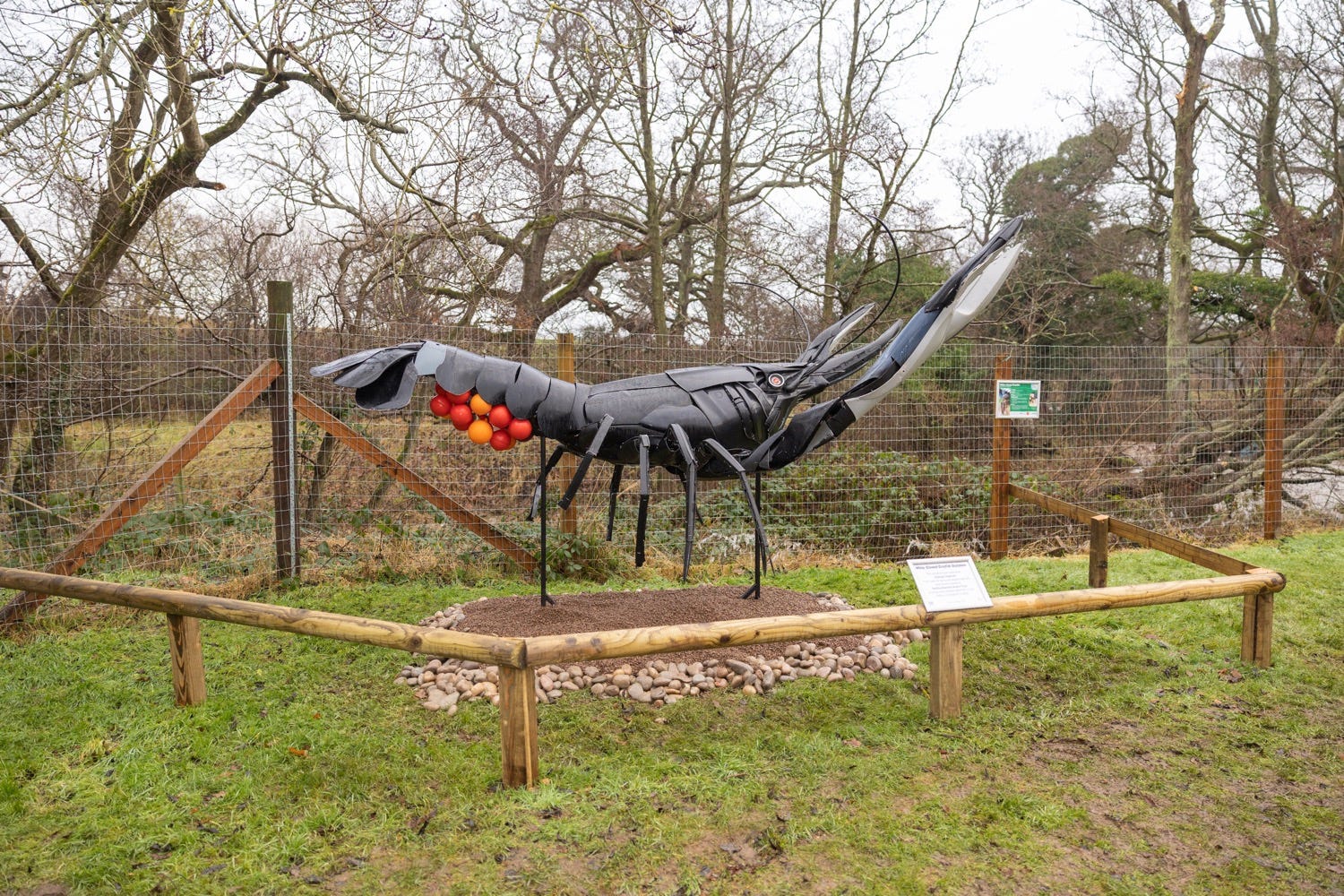
Visitors to Northumberland Zoo might be familiar with the rather oversized crayfish which has taken up residence there.
But behind the sculpture is a conservation story involving hundreds of its considerably smaller, living counterparts.
After more than 1,500 hours of specialist care, 348 white-clawed crayfish have been freed into protected Northumberland “ark sites”, marking the completion of the first stage of a major conservation project to help safeguard one of Britain’s most threatened native freshwater species.
The successful release is a landmark moment for the zoo’s crayfish hatchery, which is designed to give young crayfish – or craylings – a head start before they are released into secure, isolated water bodies where they can live and breed away from threats affecting wild populations.
In November 2024 Northumberland Zoo joined the Environment Agency, Tyne Rivers Trust and the National Trust at Wallington to rescue 53 female white-clawed crayfish carrying eggs, known as “berried” females, from the River Wansbeck.
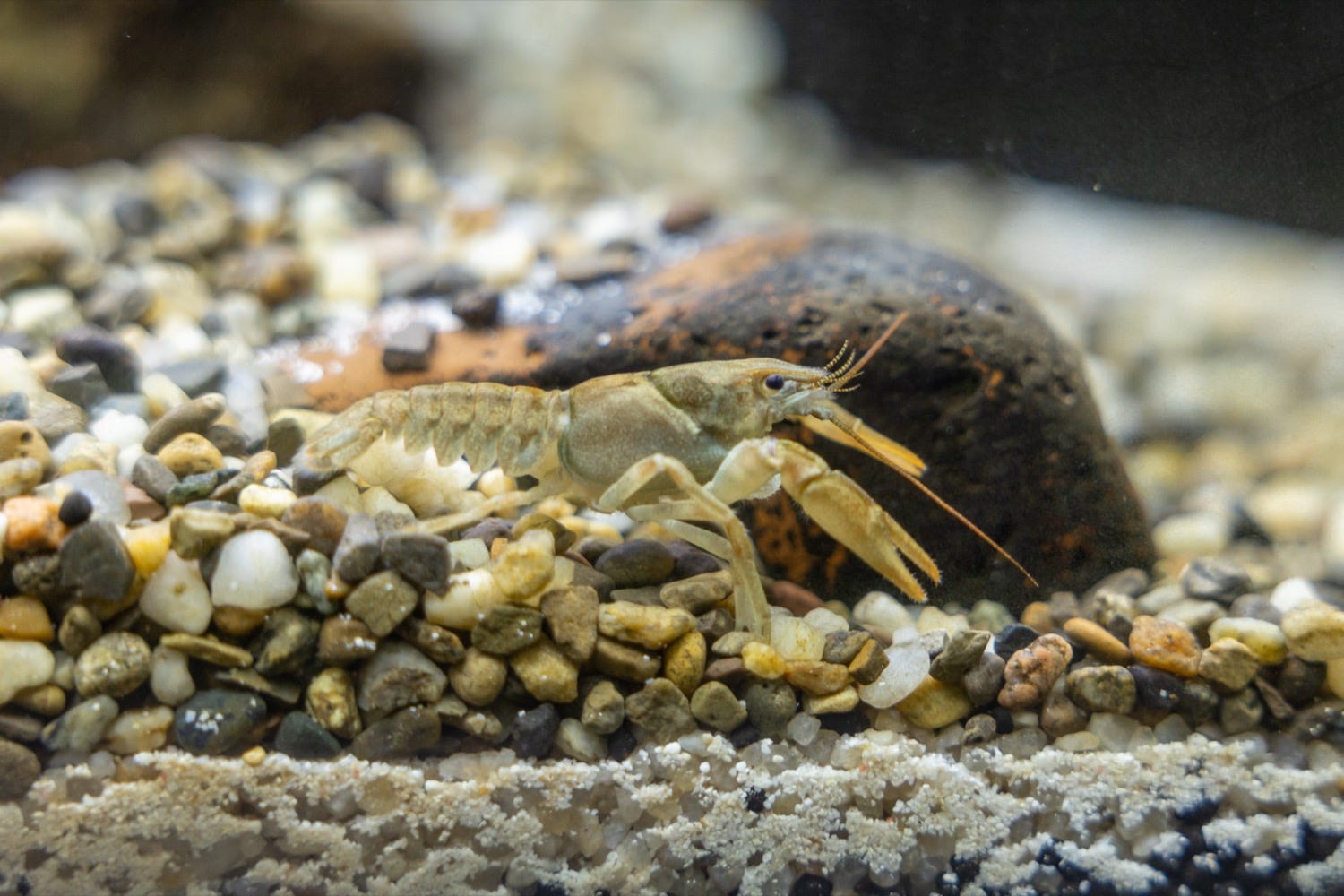
The rescue followed the discovery of unexplained deaths and unusual symptoms within one of the world’s highest-density populations of the endangered species.
The eggs hatched safely at the zoo in spring 2025 before the adult females were returned to the river. The young crayfish remained in the care of the zoo’s keeper team until they were large enough to be released.
Curator Lucy Edwards said: “As our facility was built for a much smaller number of berried females, it was quite a jump going from the three females we had in early 2024 to the 53 that were taken in during this rescue.
“I’m really proud of the effort that the keeper team put into learning about the husbandry of this species, as well as the problem-solving required for such a sensitive species. We faced the challenge and it all paid off seeing the 348 craylings released in Northumberland.”
The River Wansbeck is a nationally significant stronghold for white-clawed crayfish, but the species has declined by an estimated 70–80% in recent decades. It is threatened by habitat loss, invasive American signal crayfish and crayfish plague.
Zoo manager Maxine Bradley said: “White-clawed crayfish might not be the animals that people first come to a zoo to see, and they can be a challenging species to get people to love when they don’t have big eyes and fur. But our commitment to them is a huge testament to our devotion to protecting native species.
“They may be tiny, but caring for them is incredibly complex, with very specific water parameters needed for them to thrive, and every detail matters.”
The zoo is now planning a purpose-built conservation facility to support the long-term breeding, care and recovery of white-clawed crayfish.
The work forms part of a wider national recovery programme, led by The Wildlife Trusts and supported by Natural England’s Species Recovery Programme, which will run until March 2029.
