

Evidence has been unearthed of prehistoric farming in the hills of Northumberland earlier than previously believed.
Excavations at Harden Quarry in the Cheviot Hills have revealed insights into Bronze Age life more than 4,000 years ago, with the discoveries set to feature in tomorrow night’s episode of BBC Two’s Digging for Britain (Jan 28).
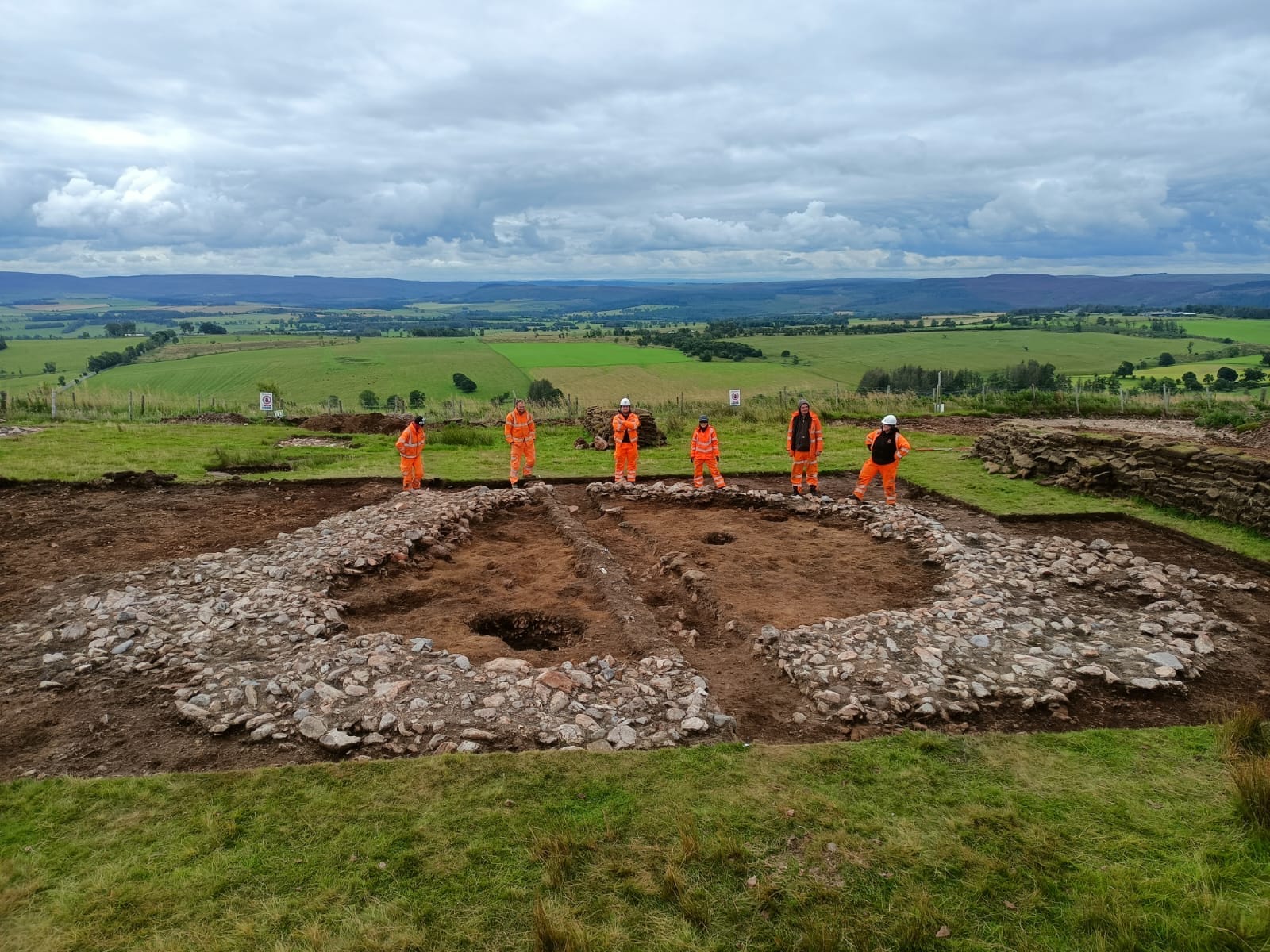
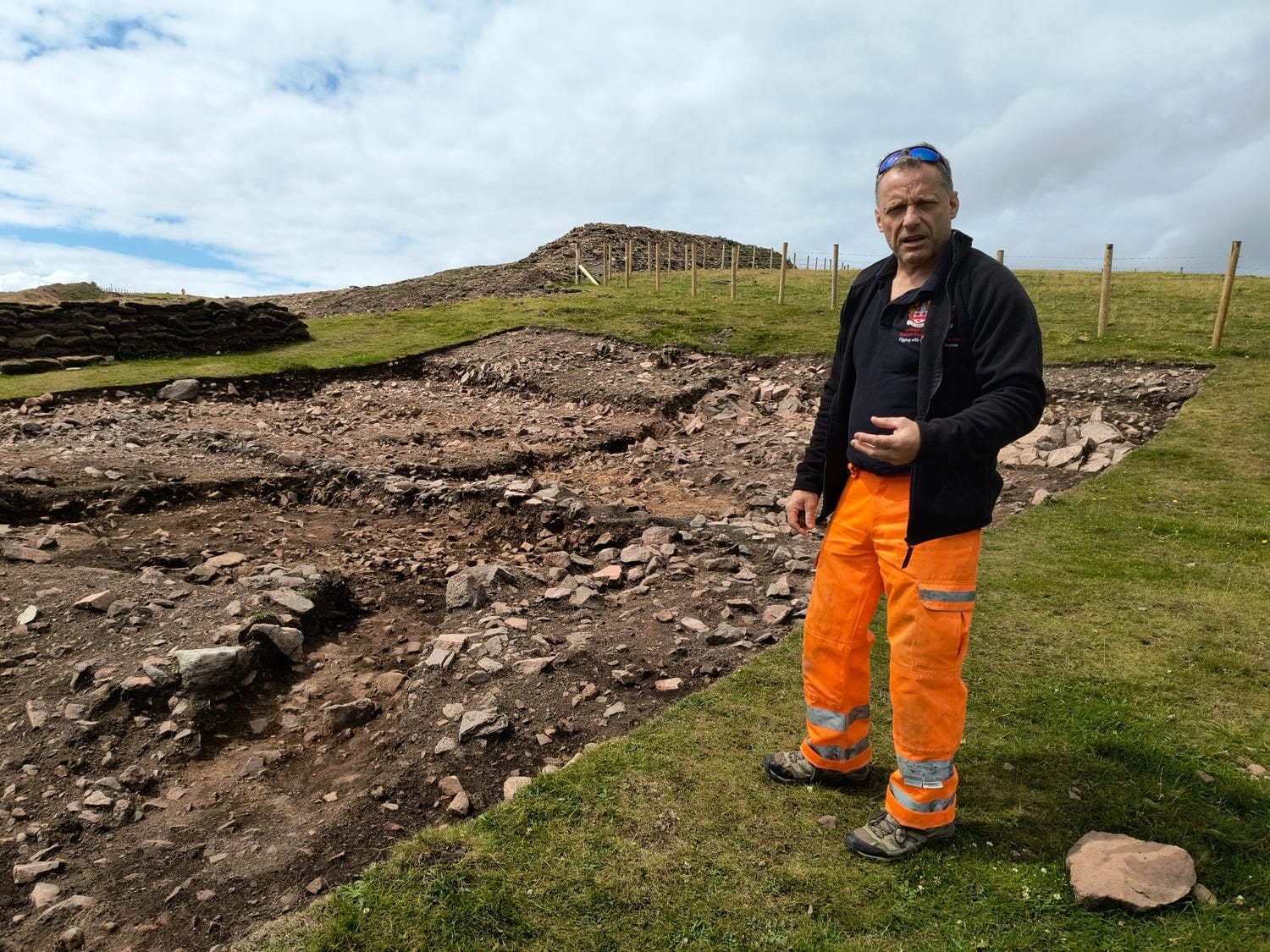
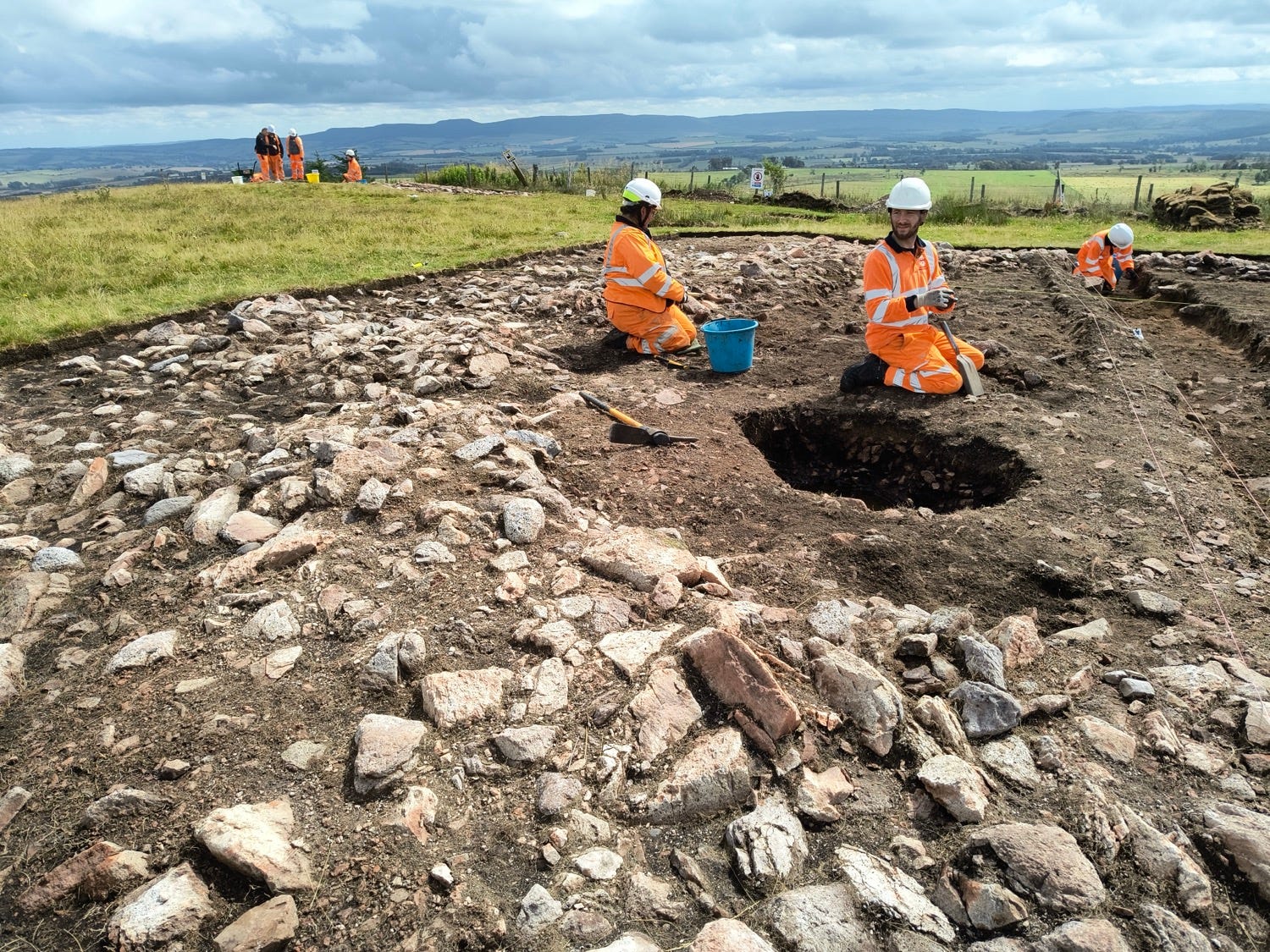
Archaeologists uncovered the Bronze Age settlement on a hilltop, with outlines where roundhouses once stood, along with fields and clearance cairns, or piles of stones cleared by the prehistoric farmers to create fields.
Three burial cairns were also discovered, one built on top of two small, earlier round cairns. The older cairns contained a stone grave box, or cist.
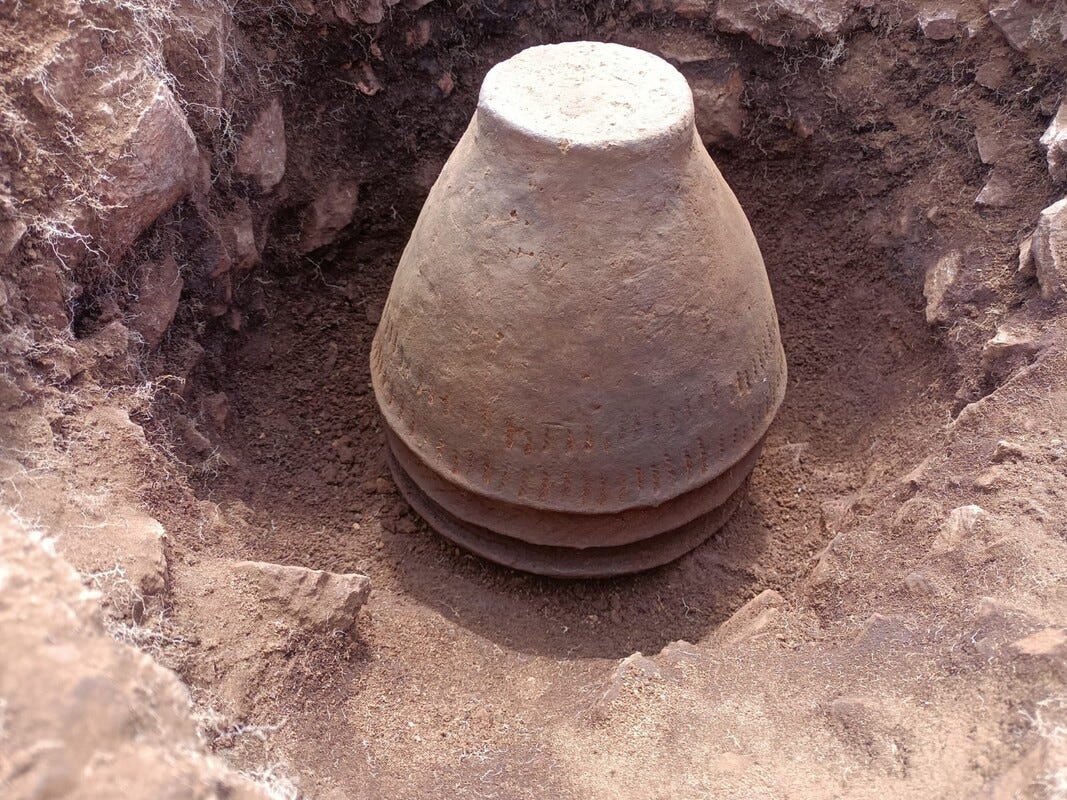
The later cairn included cremated remains, some placed in pots, including one fully intact pot, and more burials in nearby pits.
One clearance cairn was dated to around 2400 BC, the very start of the Bronze Age, and much earlier than expected for upland farming in the area.
These findings suggest people were farming in the Cheviot Hills earlier than previously thought, reshaping understanding of prehistoric life in the region.
The quarry is operated by Tarmac at Biddlestone, located in Northumberland National Park.
Clive Waddington, managing director of Archaeological Research Services Ltd, which carried out the investigation, said: “The discovery of an earlier burial cairn beneath the Bronze Age ring cairn on the highest point of Bleakmoor Hill is significant.
“It suggests Early Bronze Age communities expanded into and started farming these uplands earlier than we imagined, giving us a new timeline for human activity in the Cheviots.
“We still don’t know that much about how people were living in the Bronze Age, particularly in Northumberland. What’s exciting about the discoveries here is that we have almost a full 360-degree view on those early people’s lives.
“We’ve got where they are living, where they are burying their dead close to the gods, and we have the landscape in which they are farming, which is rare in archaeology.”
Planning permission for an extension to the existing quarry was granted in 2022, following a full assessment of archaeological potential within the area.
A comprehensive scheme of archaeological investigation and recording was agreed as a condition of planning approval.
Chris Jones, historic environment officer for Northumberland National Park Authority, said: “This project demonstrates the value of developer-funded archaeology to the national park’s historic environment.
“These finds deepen our understanding of the early history of the Cheviot Hills, helping us to better interpret and share this knowledge with the public.”
Christine Venus, director of park management at Northumberland National Park, said: “We’re proud to have enabled these remarkable discoveries as part of our role as planning authority, which is a key means of protecting and enhancing the national park’s special qualities.
“We look forward to working with Tarmac and Archaeological Research Services Ltd to share these discoveries once the full range of scientific analysis has been completed.”
Harden Quarry is a source of distinctive Red Felsite stone known as Harden Red, which is widely used for road surfacing and other applications.
Richard Barradell, strategic planning manager at Tarmac, said: “Conserving these incredible discoveries reflects our commitment to development that respects the past while supporting the quarry’s long-term sustainability.
“The discoveries from the site will be preserved and interpreted to broaden knowledge of the Cheviots during the Bronze Age, ensuring that this remarkable chapter of history is shared.”
See the discovery on tomorrow night’s episode of Digging for Britain on BBC Two at 8pm.