

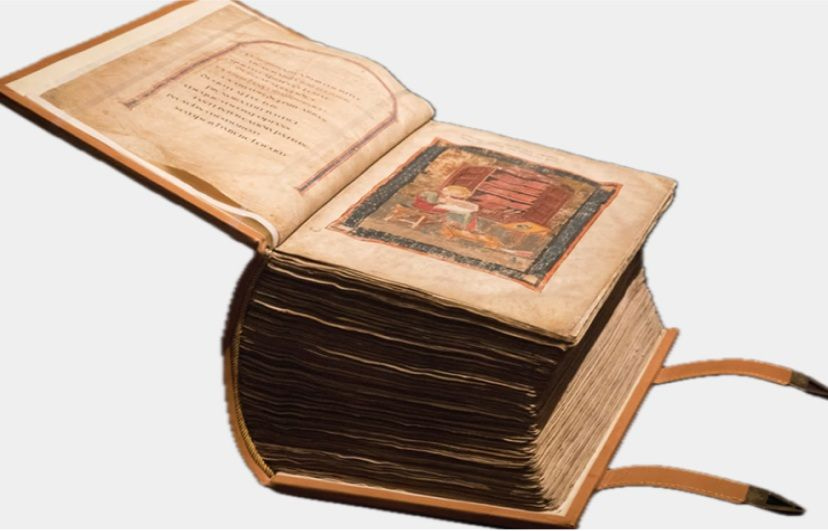
The story of the oldest complete and intact Bible in existence, which was created in the North East, will be told in a new light and sound show that will tour the region.
The Codex Amiatinus is one of three single-volume Bibles - one specifically designed as a gift to Rome - produced in the 8th century by the monks from the Wearmouth and Jarrow joint monastery.
The Rivers of Ink light and sound installation has been created by London-based artists Karen Monid and Ross Ashton of The Projection Studio in collaboration with Durham University researchers.
The artwork traces the long history of writing and book-making, culminating in the creation of Codex Amiatinus.
The free public tour will see Rivers of Ink visit venues across the North East, starting at St Laurence’s Church in High Pittington on February 11 and concluding at Durham Cathedral on February 21–23.
The artwork will be projected on to a large-scale model of an ancient writing tablet covered with papyrus sheets, weaving together sound, multilingual voices and textures drawn from original historical sources.
PhD researcher Lauren Randall and Professor Francis Watson, of Durham University’s Department of Theology and Religion, have extensively researched Codex Amiatinus.
Their expertise has helped shape the Rivers of Ink artwork as well as resources to involve school pupils along the tour route.
Lauren said: “Codex Amiatinus is probably the most important book ever made that we still have today. It’s got such a huge legacy to it, and it was made right here in the North East.
“But unlike the Lindisfarne Gospels, people don’t necessarily know about it, and we feel it’s something that we absolutely should be celebrating.
“When people come away from the tour, we hope they will feel a renewed sense of pride that this incredible book comes from the North East.”
At the heart of the project is Codex Amiatinus itself - a complete Latin Bible contained within a single, vast volume.
It required hundreds of animal skins to produce, along with the labour of highly skilled scribes, artists and bookbinders.
Physically, the book is enormous and handling it would have required multiple people.
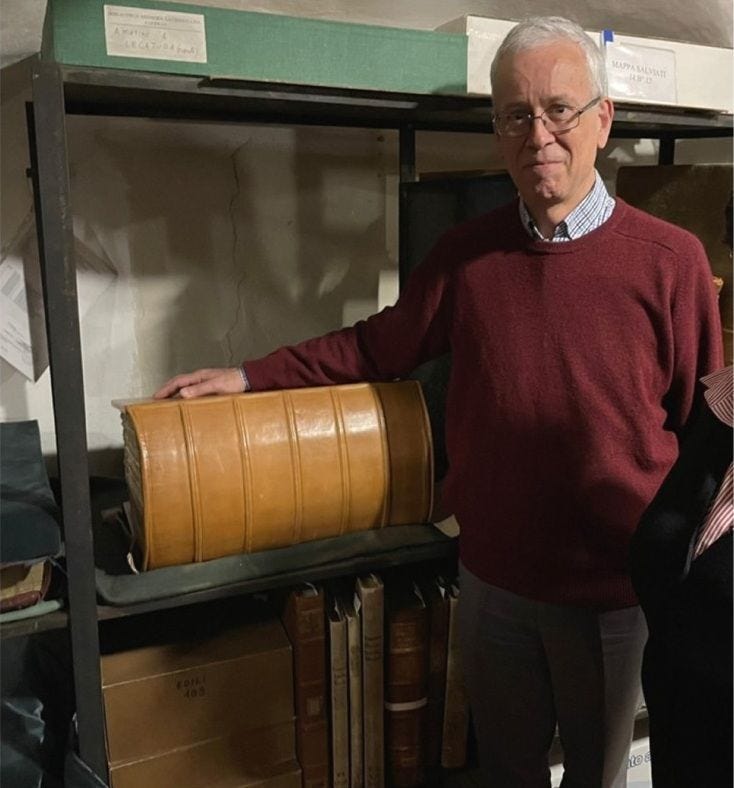
The original Codex Amiatinus is now held in the Biblioteca Medicea Laurenziana in Florence, Italy.
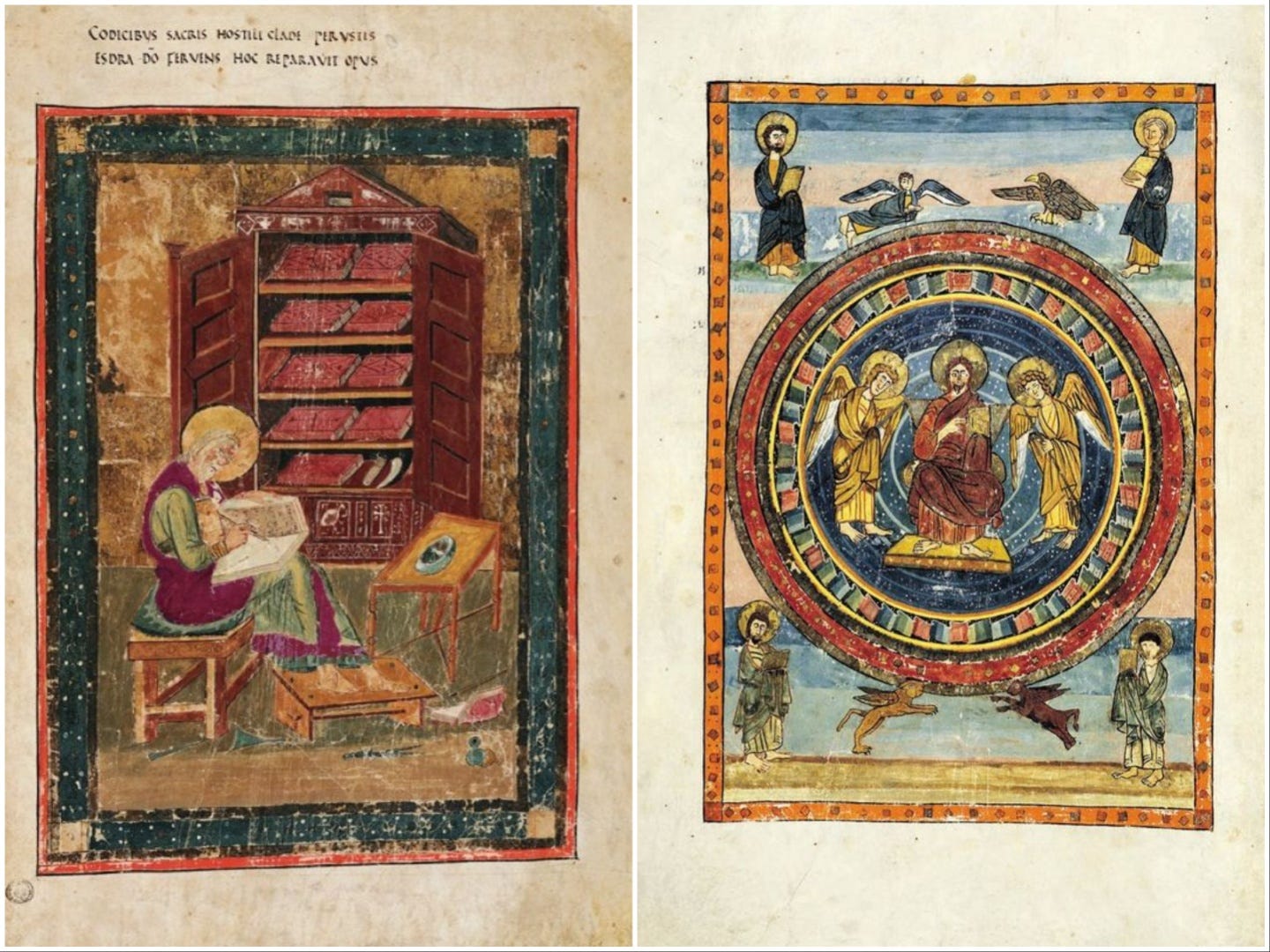
Its origins were concealed for centuries due to an alteration to the manuscript’s dedication page obscuring its true provenance.
It was not until the 19th century that researchers rediscovered its origins in the North East.
The Rivers of Ink artwork presents the manuscript as the culmination of centuries of writing culture.
It begins with early forms of writing including papyrus and fragments of early Christian texts from Egypt, through to manuscripts of medieval Europe.
The title reflects the vast quantities of ink, labour and chains of thought passed from one person to the next, flowing across generations to make such works possible.
Ross Ashton and Karen Monid created the sound and visuals for Rivers of Ink, which included digitally restoring Codex Amiatinus’s dedication page back to its original state.
Karen said: “This project has presented a wonderful opportunity for Ross and myself to look at the human story behind the history of writing: what the scribes thought, went through and achieved to produce the documents they have left us with today.

“It filled us with a genuine sense of awe when we realised the key influence Codex Amiatinus has had on the western world for hundreds of years.
“The North East is rightly proud of this and we feel privileged to have developed a work that can take an experience of this book back to the people.”
Rivers of Ink will visit the following venues:
February 11, St Laurence’s Church, High Pittington, County Durham, 2pm–7pm. Public talk by Durham University Prof Francis Watson at 6pm.
February 13 and 14, Church of St Mary the Virgin, Holy Island, 9am–3pm. Talk by Prof Watson at 4pm. Talk by Durham University archaeologist David Petts on the recently concluded 10 years of excavations on Lindisfarne.
February 16, Blackfriars Restaurant, Friars Street, Newcastle (pre-booked only), 6pm–7.30pm. Prof Watson talk at 7.30pm.
February 18, St Paul’s Church, Church Bank, Jarrow, 11am–4pm. Prof Watson talk at 4pm, and February 19, 11am–3pm.
February 21 to 23, Galilee Chapel, Durham Cathedral. February 21, 10am–5pm, Prof Watson talk at 3pm. February 22, 12.30pm–3pm, talk by Durham University Prof Richard Gameson at 3pm. February 23, 10am–5pm.