


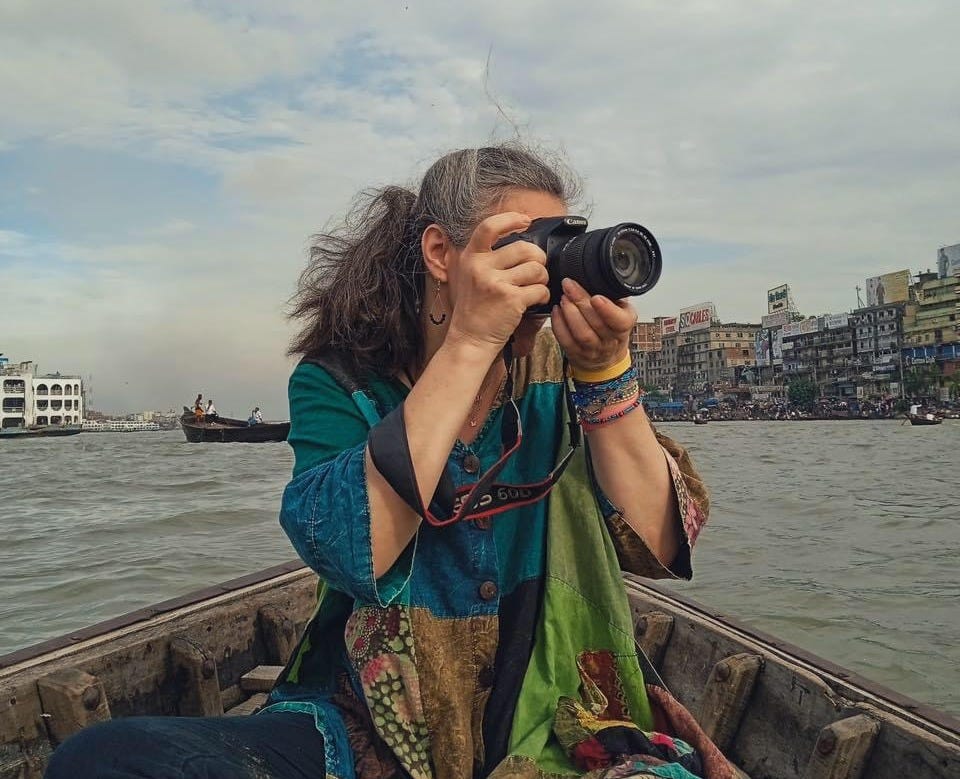
Simone Jimena Rudolphi grew up in Germany - her primary school years spent “on a hill overlooking Mayen, roaming the forests of the volcanic Eifel area”. Rheinhessen, the largest of Germany’s wine regions, was home during her adolescence, offering job opportunities during the grape harvest.
Now in her mid-50s, she has spent more than 30 years in the North East, but says she feels “the migrant element of my identity more and more every day” - blaming post-Brexit political policy.
It was the old black and white photos in the bottom drawers of her grandparents’ oak ‘Schrankwand’ which first piqued a young Simone’s interest in photography.
“Sadly, much of this archive has dispersed and cleared out over the years, but I used to be fascinated by handling the small serrated-edge prints and looking at negatives,” she says.
“Once I had my own simple cheap camera I loved documenting family moments first as a daughter, later as a mother. My eldest daughter has five albums documenting her joys and sorrows of the first two years of her life.”
As a parent helper at school, it was often Simone who documented the trips and creative classroom activities.
“Then in 2012, after two years of self-employment as a translator, I purchased a DSLR,” she says, remembering her first major camera purchase.
“Other people have a talk to get out of the house and talk to people. For me it was the camera, a licence to walk, think, see, engage…
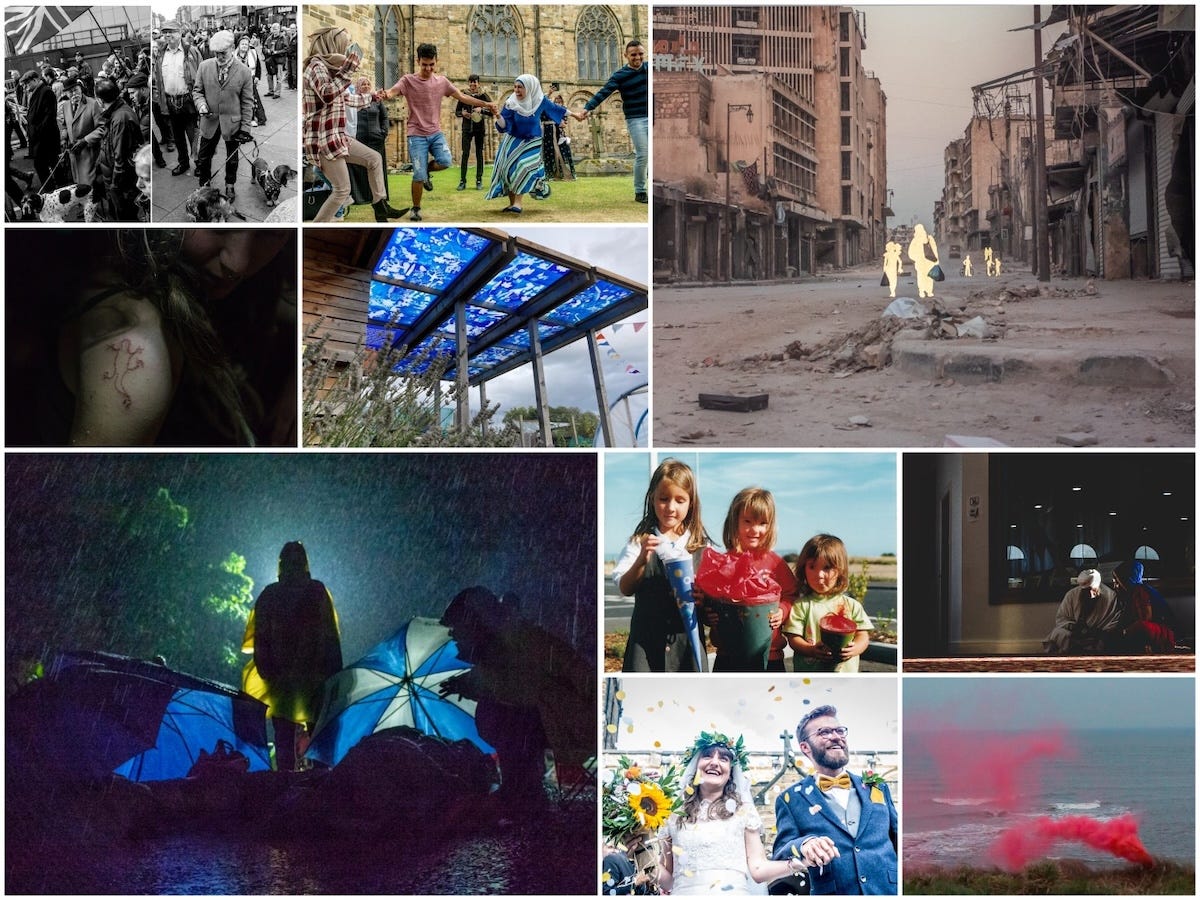
“Serendipitous encounters enriched my life and I always feel grateful for those small moments of conversation out and about and opportunities like photographing gigs and the Tyneside Irish festival.
“My long term roots in climate and antiracism activism since school days also found a different angle in using photography both to document protest and to speak up about issues,” she adds.
It was Simone’s work, documenting the Durham Big Meeting in 2016 which led a friend to suggest she apply for a Masters degree.
“I was thrilled to be accepted on the course Northern Centre of Photography in Sunderland,” she says.
“Some exceptional staff (many still there now) helped me into the ‘art world’ side of photography and building on my previous education for it all to connect symbiotically in my photography, from ethics to ecology, to theology or anthropology.
In line with many of our My Life Through a Lens subjects, Simone brushes away the chance to say what makes her a good photographer, although she will say: “I do think a lot about justice, strategic optimism and I seem to have a huge reservoir of empathy and understanding for and with people.
“For me, the camera allows me to immerse myself into moments and overcome some of my own discomforts, it allows for so much new learning.
“I enjoy finding the beauty and joy in moments and documenting moments and also using my photography to support others with their ideas and or each and tell stories.”
Asked what she finds most challenging, Simone says: “Hmm… the most challenging thing in photography is finding sufficient funding to work on a self-negotiated project or getting paid commissions.”

On the photography itself, she adds: “Anything where it is about the image, a technically perfect image as prescribed, and where it’s about selling a product and consumerism.
“However, if something comes with a story and human or planetary need I would engage with it, for example, food photography: after my own breast cancer diagnosis in 2013 I did a lot of research how I can help myself, so later, I collaborated with a nutritionist and enjoyed photographing (and eating) for a healthy cookbook based on science with a focus on cancer patients.”
While she is quick to cite Shahidul Alam and Gauri Gill as photographers she greatly admires, Simone adds: “Mostly I admire people who are actively inclusive and welcoming towards all beyond labels, stereotypes, and who are prepared to think and rethink their own work and who actively challenge gatekeepers and a hegemonic system, even at personal cost, for the greater benefit of everyone.”
Finally, asked to offer a trio of tips to aspiring photographers, she says: “OK, so these are my top five tips… a bit of extra value!
Don’t try to be ‘one of the great’ photographers. Consider, again and again, why you want to make images;
Be true to yourself and always listen to the people you work with and learn as much as you possibly can about your subject matter;
Most importantly centre your work around justice and anti-racism, as almost all stories have a connection to either or both.
Make sure you listen to a range of voices outside your zone of lived experience and always, always listen and explore a range of majority world voices. No group of people, no community is monolithic.
Join a union!!! (get in touch if you want to know more and why)
Follow Simone on Instagram and Facebook, or visit her website.
1. Favourite Middle Daughter’s First School Day
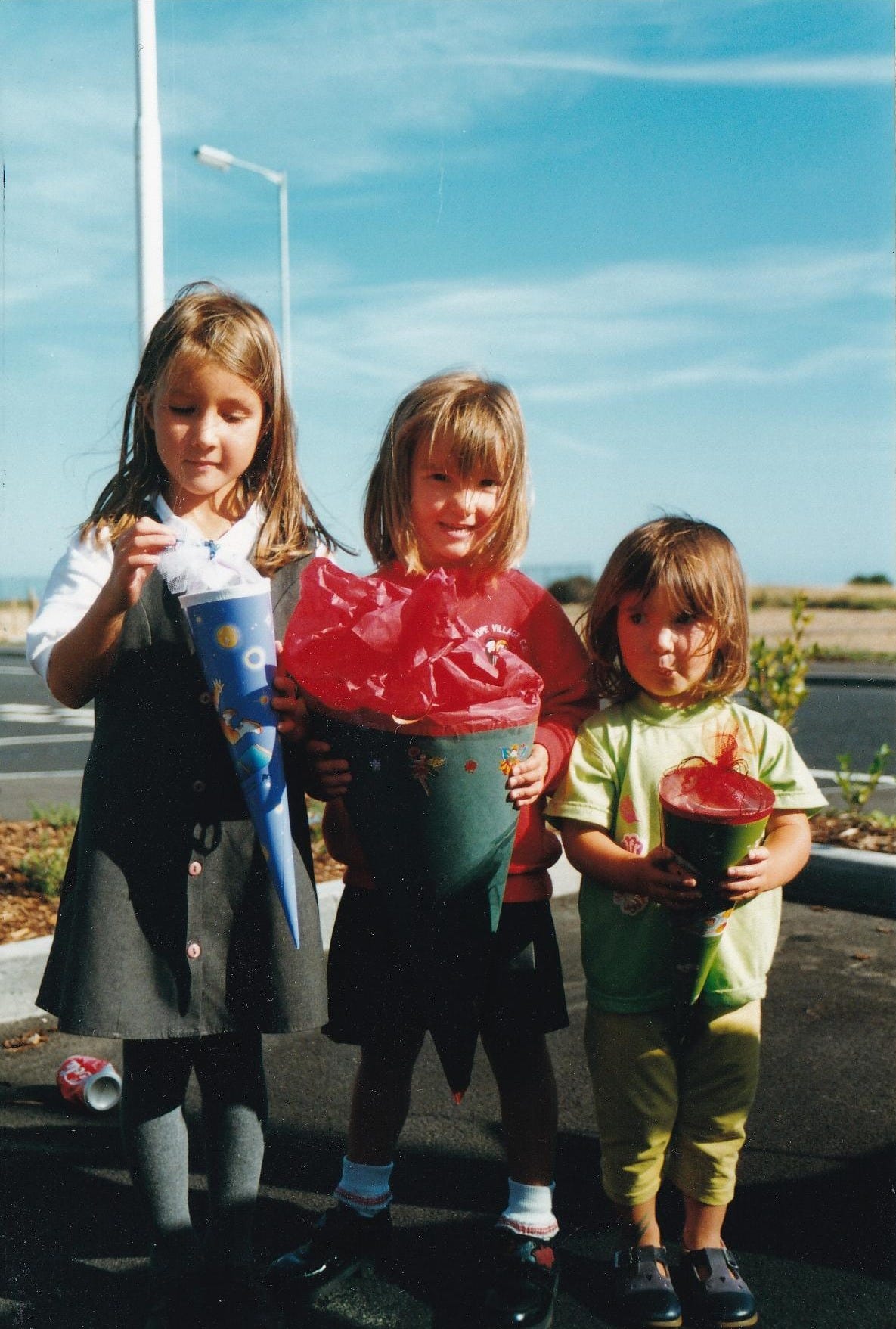
Curiosity and learning are such important elements in my life that this scanned analogue portrait of my three brilliant daughters outside their Primary School in Sunderland is a very apt starting point.
My favourite eldest daughter shows her impatient curiosity very visibly here.
First School Day is celebrated as a major event in German families. One aspect is the ‘Schultüte’, a decorated paper cone filled with treats. I added to the tradition by giving the non-school-starters a smaller cone too on each occasion.
These archived moments are part of our histories and not only document but have the power to return us to that moment of joy. It is so fascinating to look at these moments and see who the young women are now and how they are navigating the world. Very proud of each of them.
2. Evening Light in the Gurdwara
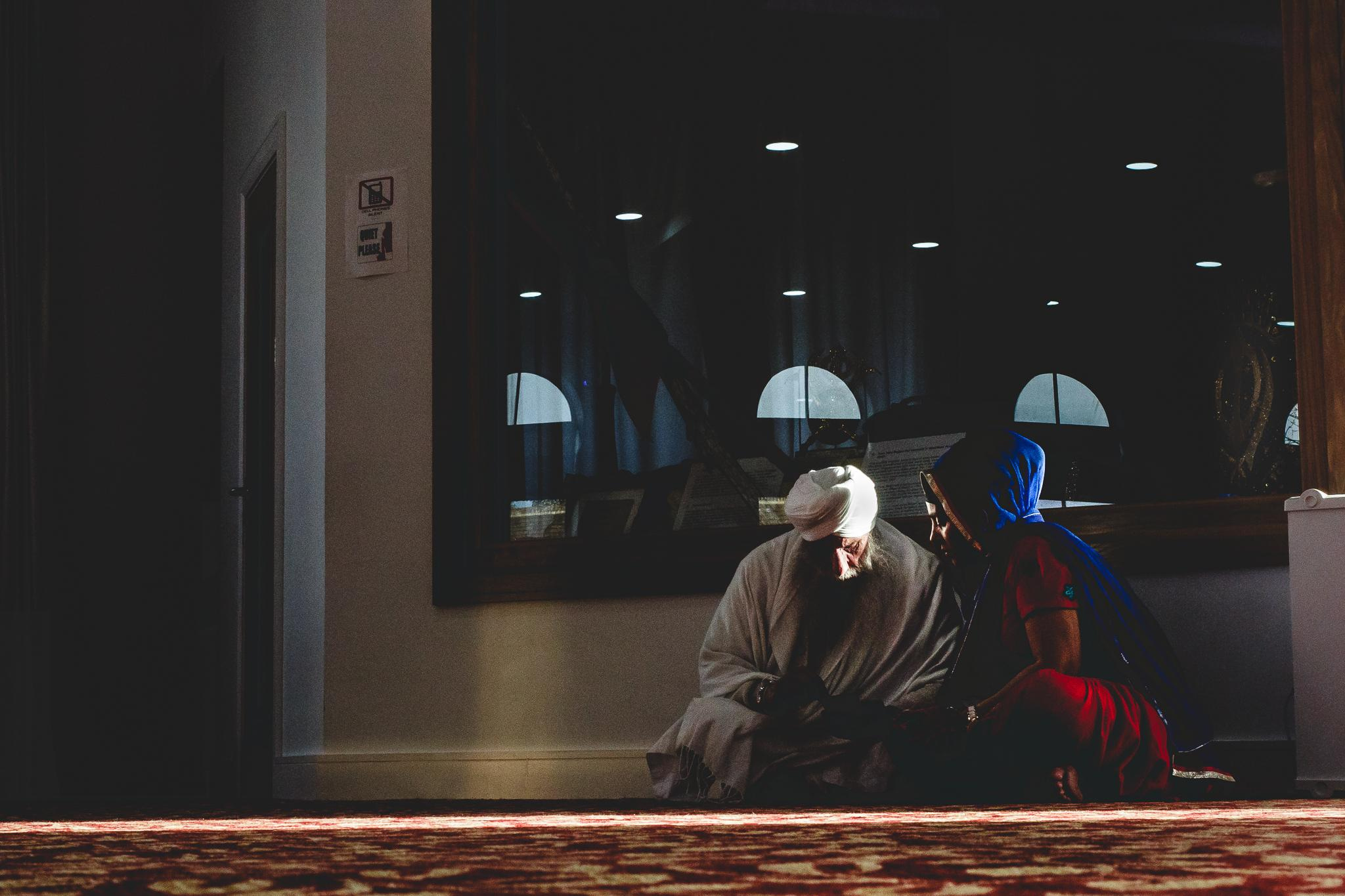
The aforementioned serendipitous encounters led to meeting one of the Sikh community campaigners in 2017. Not long after, I was invited to photograph a learning conference about the Sikh way of life at Newcastle Gurdwara. Incredibly enlightening and it involved sitting together eating a lot of delicious food.
The moment here is between a teacher, the author and spiritual advisor Hari Nam Singh Khalsa, and a community member working out meanings from a gurbani verse.
These opportunities to be included and yet, at the same time, remain an observer are infinitely rich and enlightening. All of it circles back and grows my firm belief in the value of everyone.
This may in time become part of a series of images around the idea of the equality of all faith and none, the untouchable dignity of each of us, keeping the faith, spirituality and culture and traditions, sharing and appreciating the richness of our histories. Doesn’t that possibility sound better than profiteering from war and the pain of others?
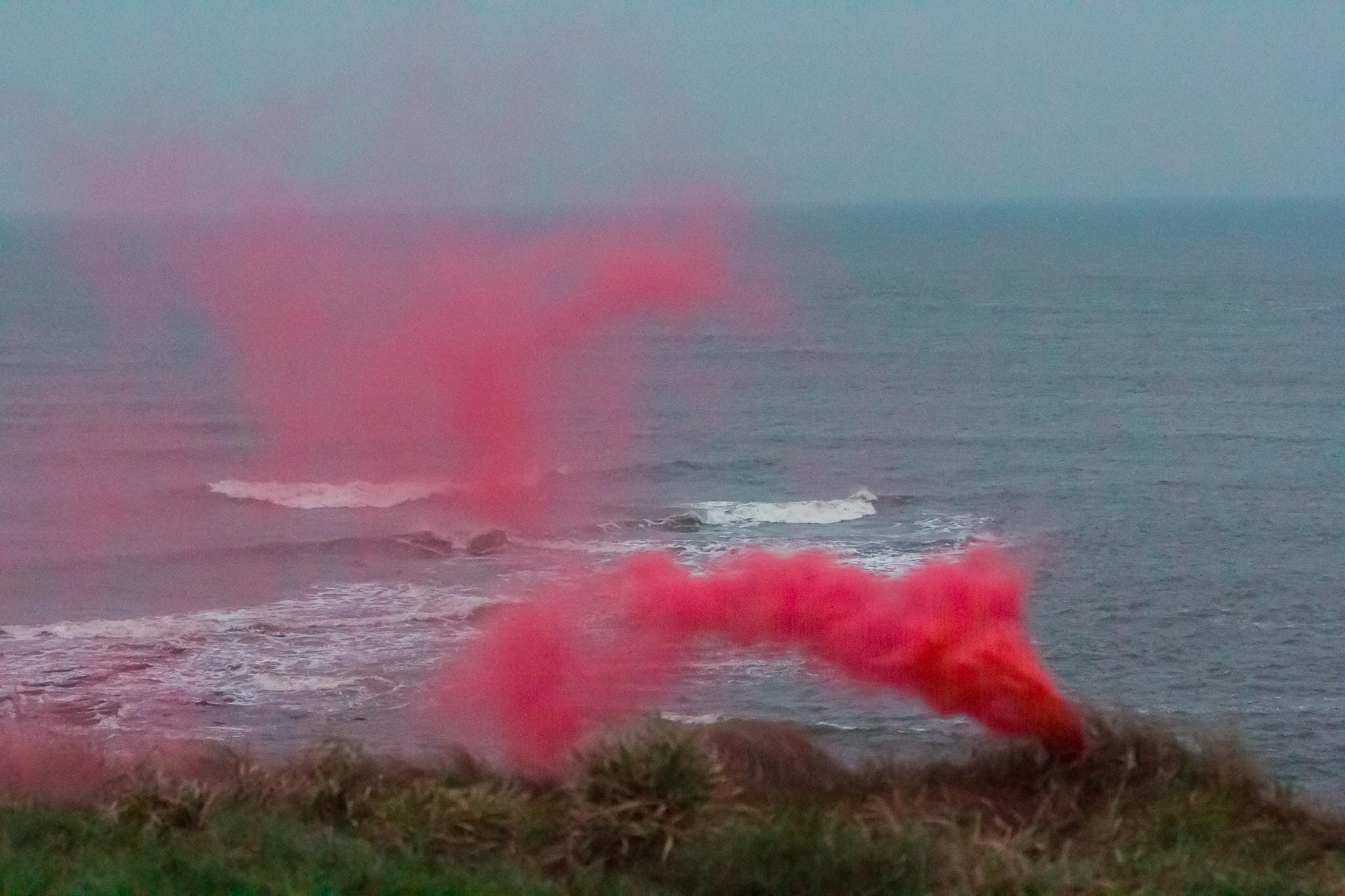
3. Optimism is Strategy
Optimism is Strategy or Life equals 86400 times x? was a series of images made for my Northern Centre of Photography MA portfolio assignment, working as close to my home base as possible to save transport costs; there is a theme here, I guess.
The smoke work is always very intense, in the moment and you never know what the outcome is. In one image the smoke is shaped like an old crone with a solidarity fist, another it manifests an elephant.
I chose the red as the universal colour of blood, symbolising life, love and danger. Strategic optimism is about taking responsibility, relying on one’s own inner resources such as kindness, honesty, courage to evolve and to respond to joys and sorrows.
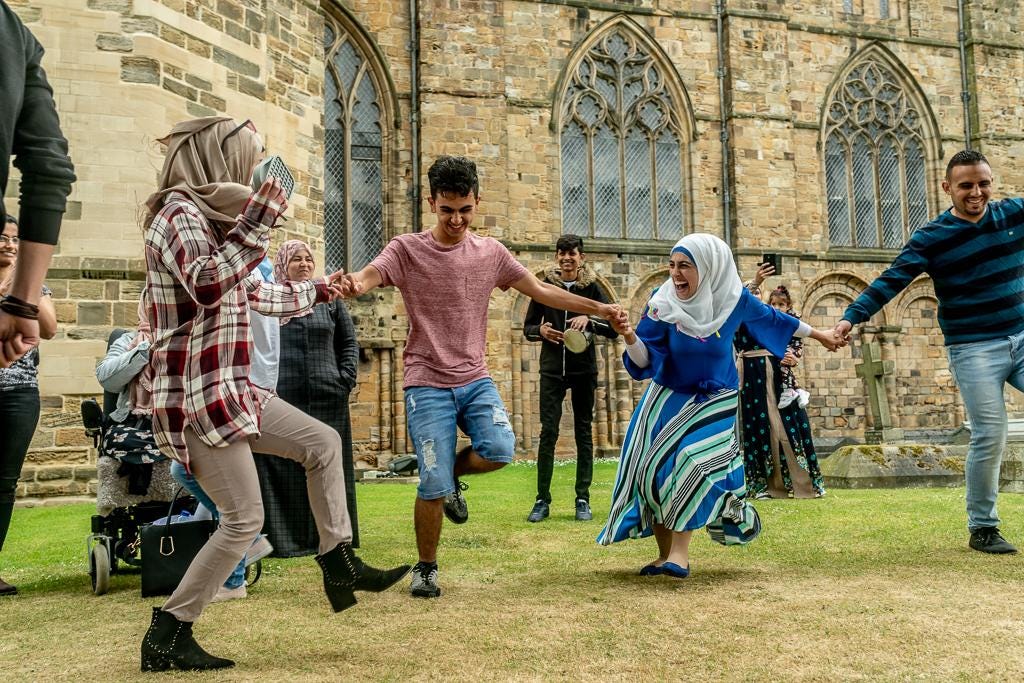
4. Durham Dabke
Doesn’t this photo spark some joy in your heart? This was a beautiful workshop collaboration at the start of Sam Slatcher’s Stories of Sanctuary project, which resulted in an album (available on various music streaming platforms and on CD) of songs written by County Durham residents old and new.
We walked together, we ate together and at the end of the day we danced Dabke. That is a world that is a glimpse of the world which is possible!
Coincidentally, some of these beautiful people in my documented moment appeared in Ken Loach’s award-winning film The Old Oak. So glad they were happy for me to document our time together on the choir tours too. That’s the community commissions I love.
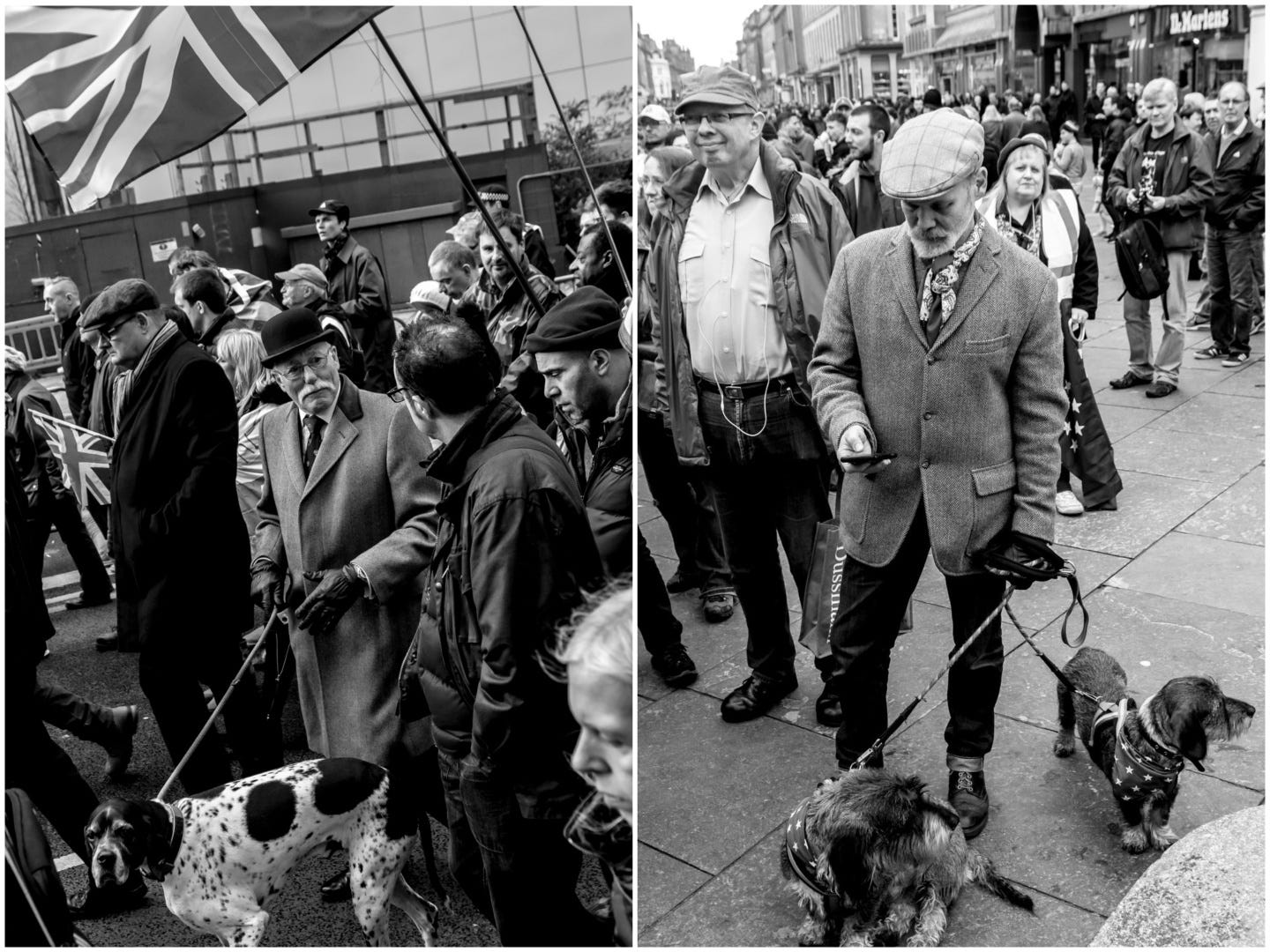
5. The DisUnited Queendom - We won/We were right
Another version of The Value of Everyone appearing in this series: these diptychs from various rallies and demos made necessary by the selfish Cameron Referendum of 2016.
I collated them for the wonderful Photometria Festival in Ioannina in Greece and their Parallel Voices 2020 exhibition. For me these pairs highlight the foolishness of allowing ourselves to become so divided by the governing. I would like us, the governed, finding more solutions to mutual support, solidarity and understanding even when we disagree over these political moments.
Removing the colour and placing similar images (here ‘men with dogs’) next to each other is an attempt at highlighting our collective ‘more in common’. It’s only on closer inspection, you can spot the additional markers (flags, clothing) to see ‘which side’ people choose to be on, identify as, want to belong to.
For me, every day in the singer Shayan’s words: Manush Amar Dol - Humans are my team!
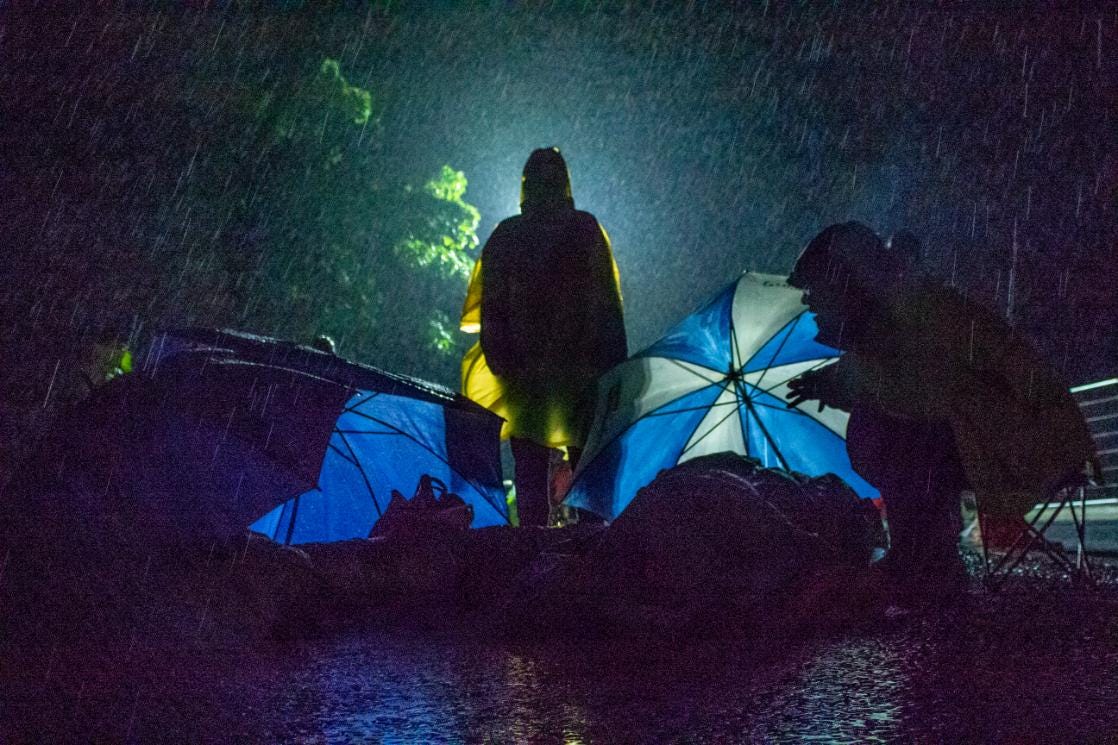
6. The Protectors: Night Time Story Telling
This image from the Campaign to Protect Pont Valley is one of my favourites from the time spent bearing witness and supporting the campaign against the destructive opencast coal extraction practices.
This was a long night in streaming rain. The aim of the lock on was to slow down and/or stop the private company finishing building the access road to the extractions site in the valley; the finished road being a planning condition and there was a deadline by which that had to happen for the mining licence to stay valid.
Images like this speak of solidarity, steadfastness, resilience and courage and even without being able to monetise it as a photojournalist without established avenues it will always have tremendous value to all involved and will continue to tell the story of the campaign that provided the tipping point to ending opencast coal extraction in England.
A small, tiny step on the journey to Climate Justice.
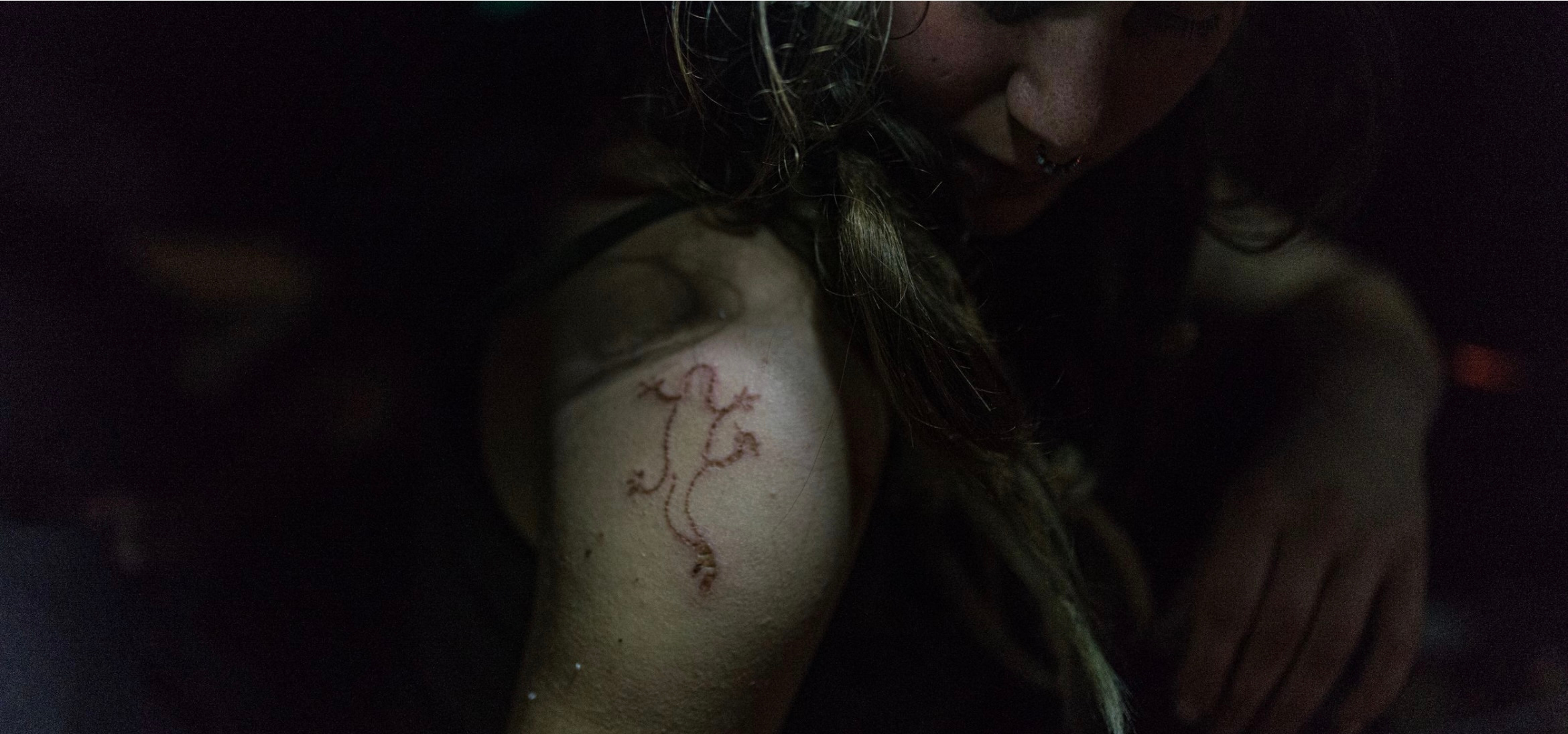
7. The Protectors: An Intimate Moment
Documenting these details of commitment requires trust and transparency, both in the moment but also longer term relating to consent how the images are used.
Here, a protector of the land has branded themselves with the symbol of a protected species, the great crested newt.
While campaigners know about the details of the law including obviously much on wildlife crime, it seems these details only apply when they are used against the people, the governed as individuals, yet don’t seem to apply to corporations or only once it’s way too late for people and the planet.
The legal aspect will certainly occupy me a lot more, especially after reading Radha D’Souza’s What’s Wrong with Rights.
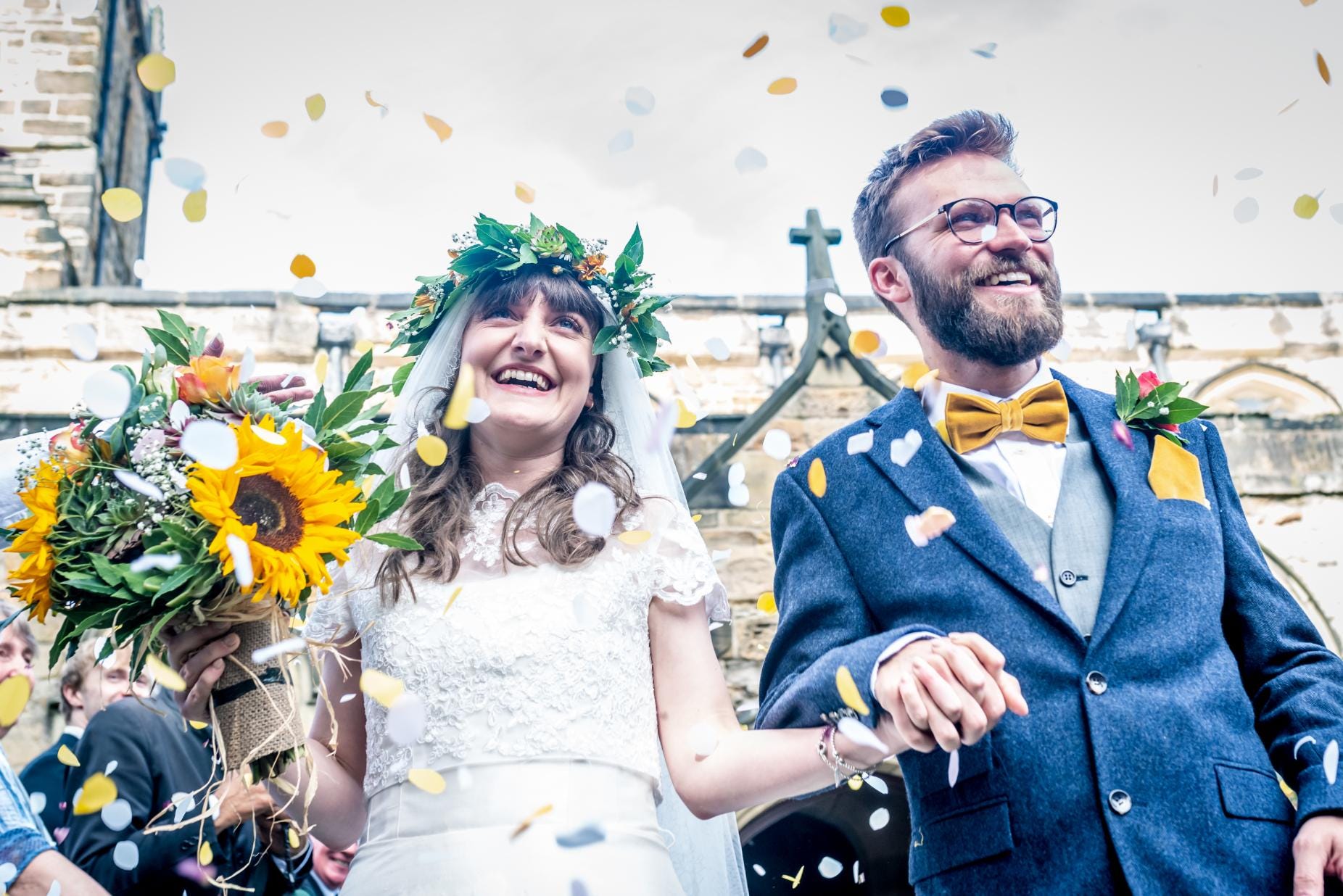
8. Wedding Photography - Mim and Sam
Another intimate moment and big part of my photographic practice is wedding photography though I don’t identify as a wedding photographer.
I am not interested in the wedding industry, wedding fairs etc or too many posed photographs. DIY/at home weddings have been my favourite, they are less regimented and full of big surprises.
Wedding photography is inherently difficult, yet immensely rewarding and joyful too.
At Mim & Sam’s wedding reception at Tanfield Railway, the caterers arrived late so we had extra time setting up some photos among the old carriages and sleepers with all the wedding guests walking in and around the image.
One or two weddings a year have helped with the financial survival just about and usually provide a day of delicious food too.
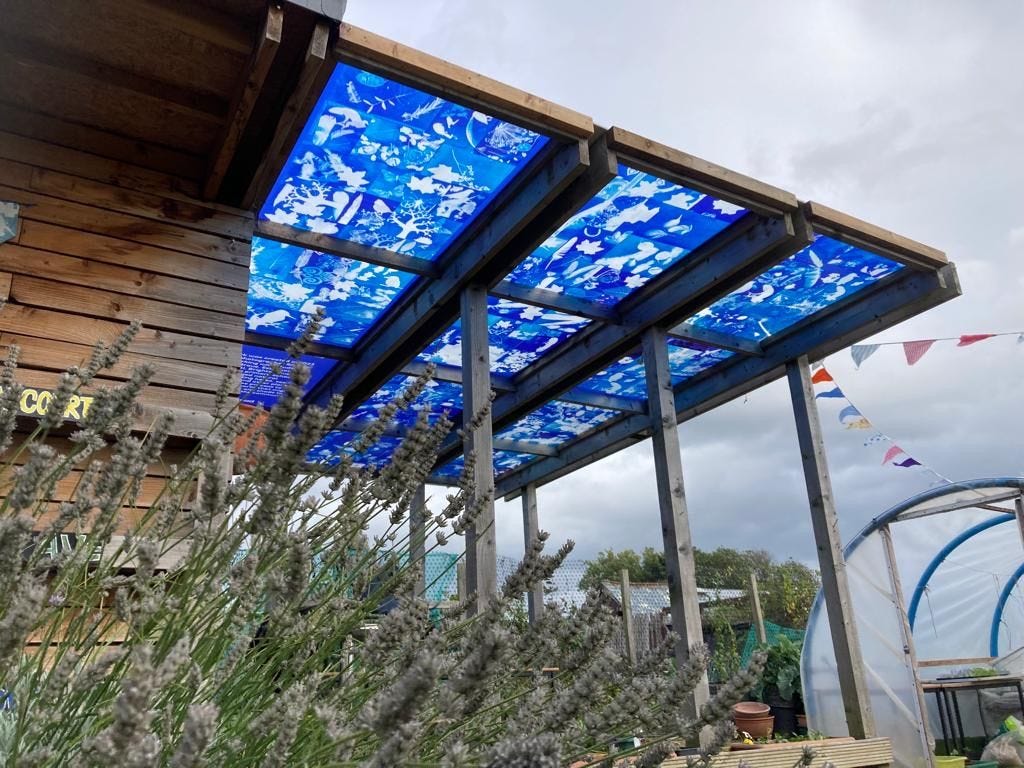
9. Cyanotypes - Workshops - learning together.
The magic and joy of cyanotype became a large part of my days during Covid while living in Northumberland. It was the perfect way to spend the days, cost-effective, environmentally friendly and endless possibilities.
I then incorporated it more into my thinking and was commissioned by The Big Local Gateshead to work with children from five primary schools in the Teams area to teach the process and create a collaborative artwork for the community allotment.
The final piece made from all the children’s work was digitally assembled by the cyanotype wizard, Jo Howell. The process is so versatile and it’s easy to set up and ideal for all ages coming together.
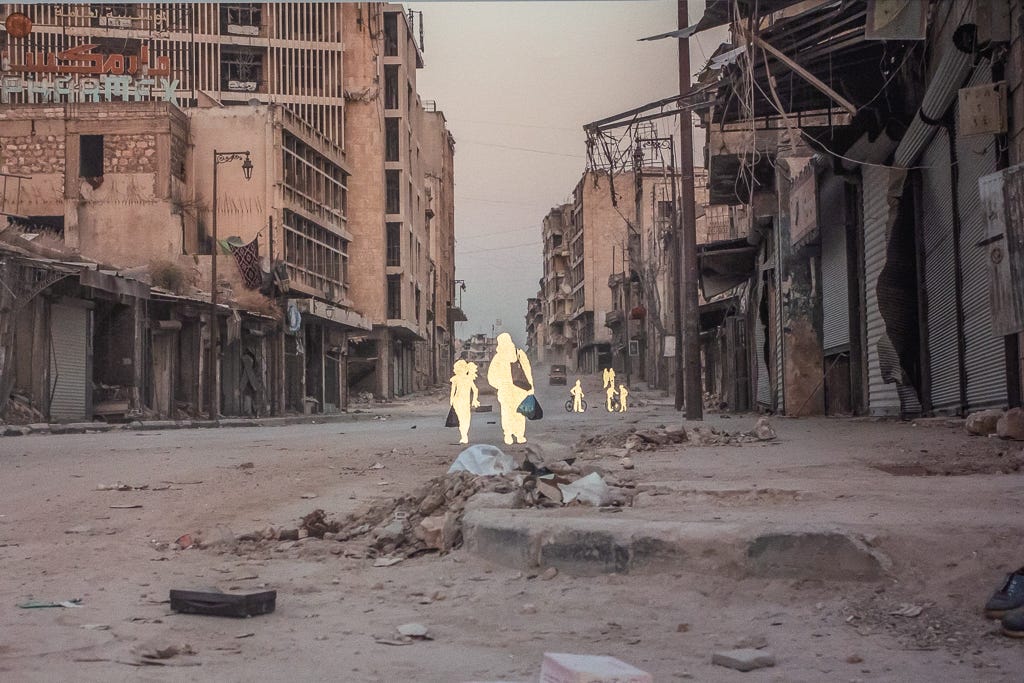
10. The Sustainers II, Aleppo September 2017
The title of each image in the series is quite general and related to what people are doing here: carrying home groceries from the market.
Labelling, generalising, stereotyping… from a young age this would make me rage and intervene in conversations.
Maybe, because I never quite felt I belonged, I always felt a bit odd (too much to explain, too long a story so not for here and now!).
And the untouchable dignity of each fellow human is anchored in the German constitution, meaningful words I was always deeply invested in and proud of. Sad to see how little they mean for our governing institutions.
De-labelling, not generalising while finding the common ground was a way of thinking which grew roots and turned into applying the 23.5 carat gold leaf on the people in my photographs making up the small series The Value of Everyone : Encounters.
There is the simple reading contained in the title and the gold, also more complex layers related to photography itself. I was content with the images until I had a conversation with a comrade in Dhaka about the use of the gold leaf. Now I am rethinking its use and what I could use instead (ideas welcome!)
The gold both offered a sense of beauty and value as seen across cultures and traditions. My friend’s critique rests in the use of gold expressing value as far too deeply ingrained with the capitalist, exploitative model of thinking and behaving for it to match my intentions. What do you think?