

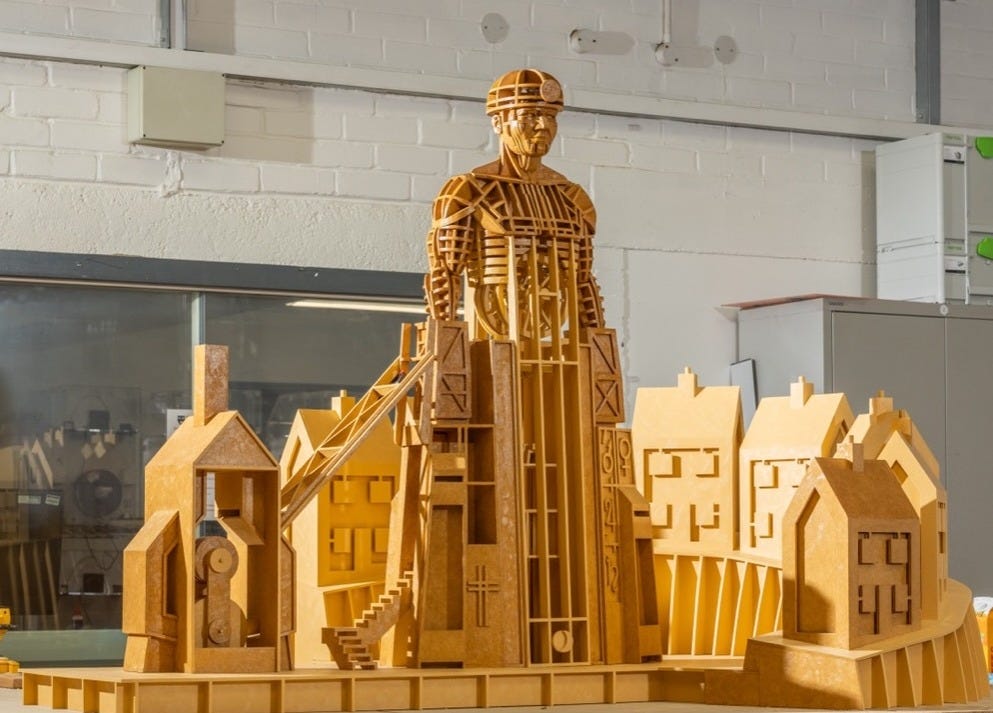
Directly opposite a fort site where hundreds of Roman soldiers were based, centuries later ranks of miners toiled in one of Tyneside’s best-known pits.
The remains of Wallsend B pit next to Segedunum fort were uncovered by archaeologists in 1997 – one of several shafts of Wallsend Colliery which originally opened in 1780.
Now sculptor Dr John O’Rourke has brought together both historical eras.
Since graduating from Northumbria University with a Master of Fine Arts in 1989, John’s works have included Sentius Tectonicus – a 2.8-metre Roman centurion at Segedunum, marking the eastern end of Hadrian’s Wall.
And his latest project honouring the North East’s mining heritage will be shared with the public at Woodhorn Museum’s Northumberland Miners’ Picnic this weekend (June 13).
Over the last three years a scale ‘maquette’ or model of a proposed sculpture has been produced in the university’s engineering workshops, with students involved going on to build careers on the strength of the experience.
The work features the figure of a miner surrounded by pit village houses and industrial structures.
John said: “This sculpture is about the people of this region – their history, their labour, their transition into a new future – and it has taken a community effort to bring it this far.”
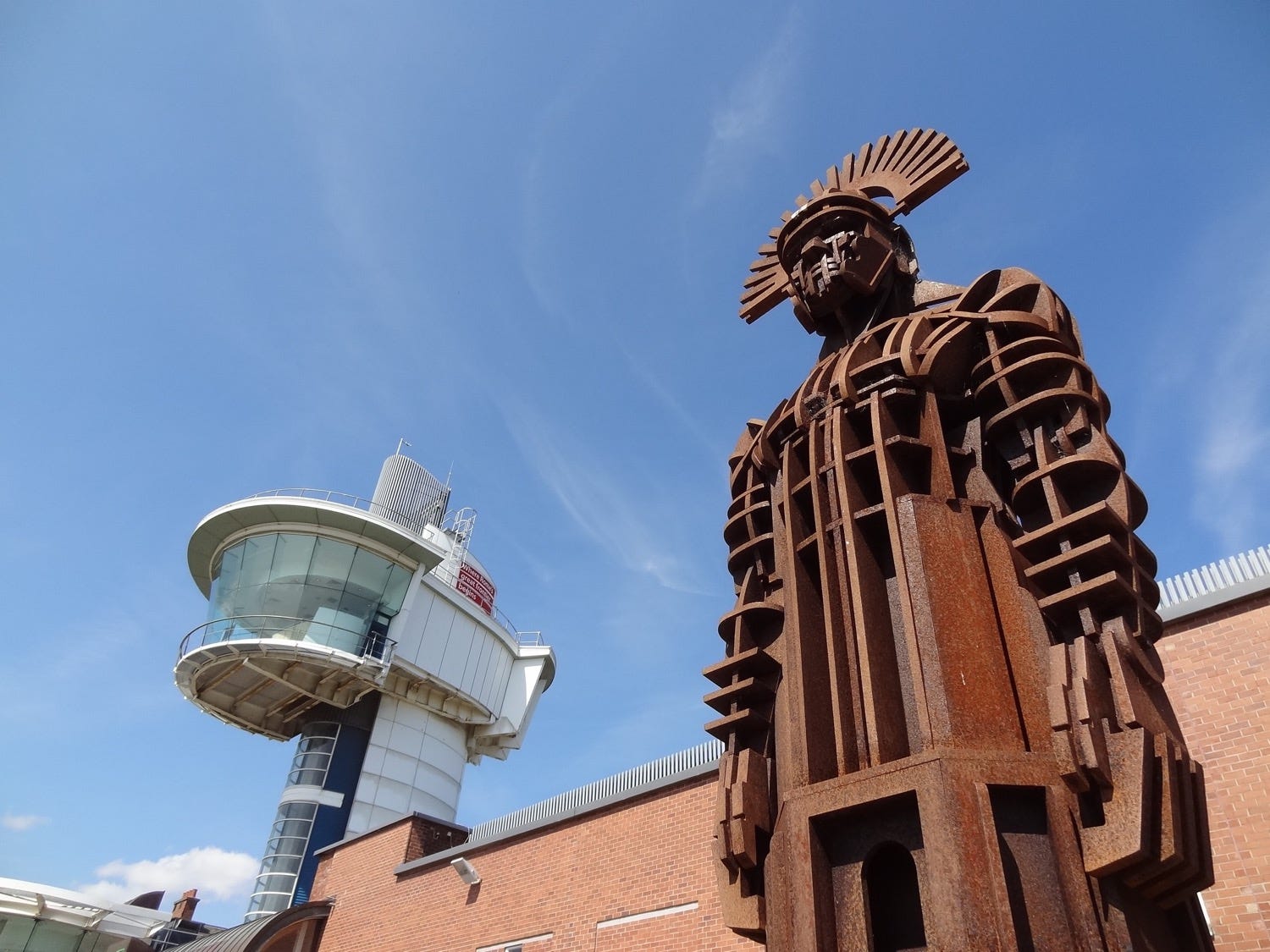
The full sculpture would be made from Corten steel, the same material as the Angel of the North, and would stand at 12.3 metres tall, making it one of the most significant public artworks in the region.
A site near Bedlington on the River Blyth has been identified as a possible location for the structure, with funding now being sought to make the project a reality.
Undergraduate engineering students have been involved in producing the maquette – creating detailed 3D CAD models of the different components from John’s original drawings and scale models.
One is Ali Alamin, a 22-year-old mechanical engineering student due to graduate later this year.
He said: “Being involved in a project of this scale, one that speaks to the history and culture of the region, gives you an enormous sense of pride.
“Applying principles I’d studied at university to real technical challenges developed my skills in ways that classroom learning alone couldn’t. Hands-on experience like this is invaluable for students.”
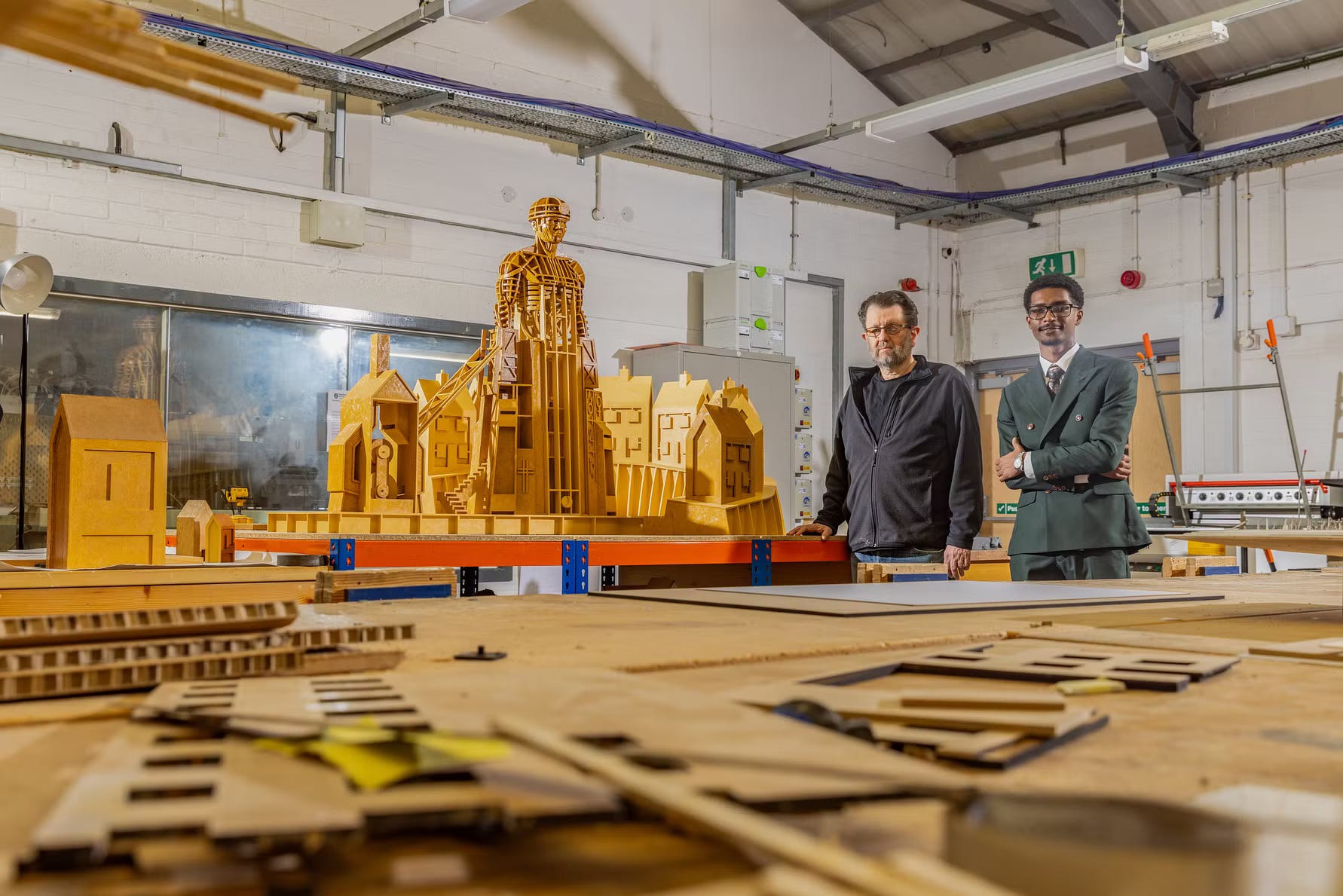
Also among those who contributed is Christos Katsidis, who now works as a design engineer at Morfabrication in Washington.
He said: “The Northumbrian Miner helped me massively when looking for a job.”
John O’Rourke said: “I’m enormously grateful to Northumbria University, to the students who brought my drawings to life, to the technical team in the workshops, and to Professor Martin Birkett for making our residency and the internship programme possible.”
Dr Heather Robson, pro vice-chancellor at Northumbria University, said: “This project is a powerful reminder of what becomes possible when creativity and a deep sense of place come together.
“Watching our students apply their skills to something so rooted in the identity of this region is exactly why meaningful, experiential learning matters. We are proud that Northumbria University has played a part in bringing this vision closer to reality.”
Jo Raw, Northumberland venues manager, North East Museums, said: “The Northumberland Miners’ Picnic is one of the region’s longest-running and best-loved events, bringing together music, performance, arts and culture for a day of remembrance, community and celebration of the region’s industrial past.
“It’s a wonderful opportunity for people of all ages to explore stories from our mining communities and connect with our shared heritage through the creativity, culture and community spirit that continue to shape the North East today.”
It is estimated that the proposed full sculpture would cost around £3 million. One suggested location would be near the recently opened Northumberland Line, visible to an estimated 500,000 passengers a year.
The interior of the sculpture will include hidden chambers, with a large space within the ribcage. Members of mining communities will be invited to have their words and memories engraved on its interior walls.
The project is currently seeking a regional champion and funding partners to bring the full sculpture to life. Contact colin.herron58@gmail.com.