


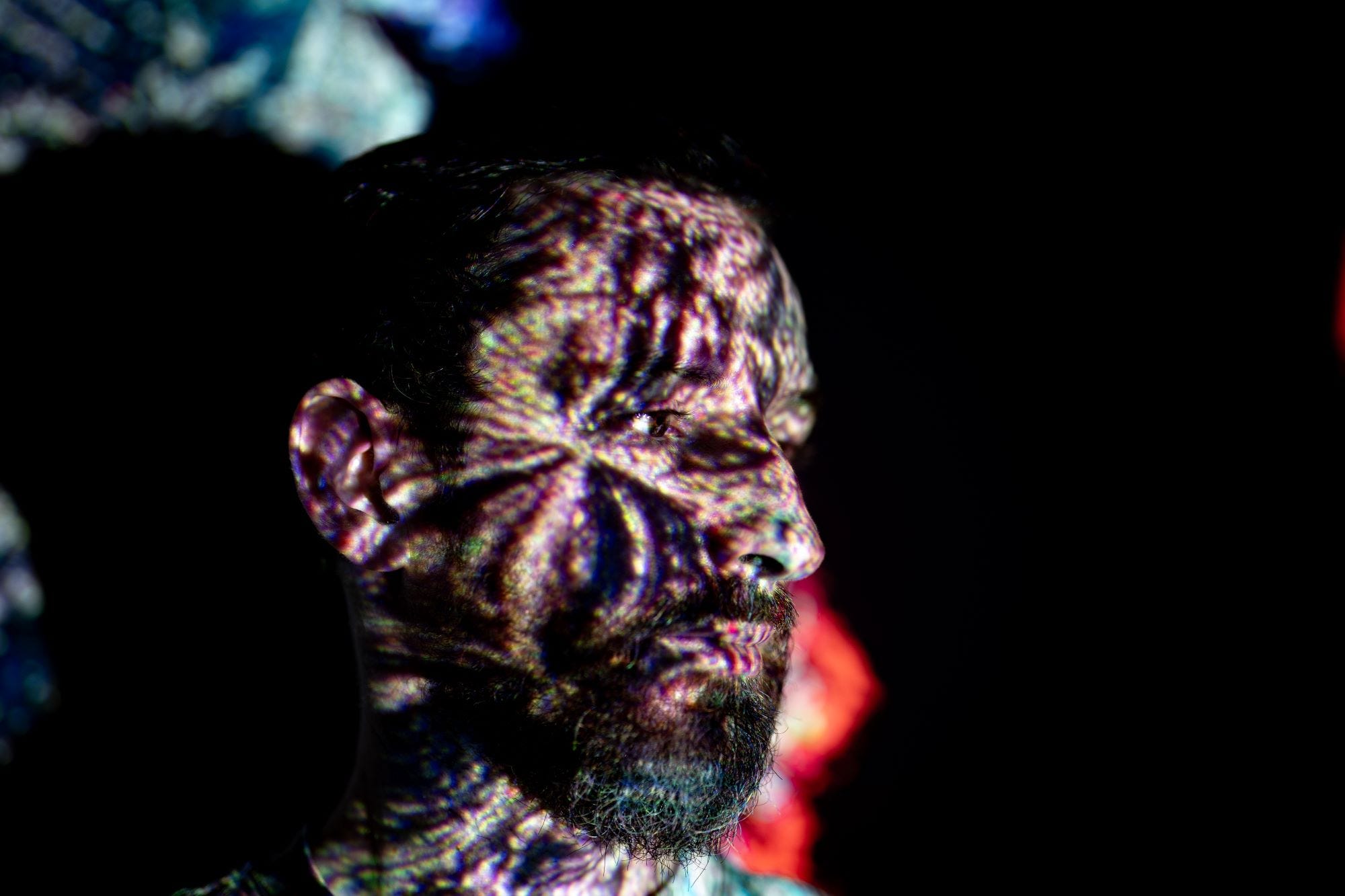
Max Cooper, it says on The Glasshouse website, “will interact with our venue this May”, which is a departure from the usual wording relating to musicians who just rock up and perform.
But then he’s a little different to musicians who come with a pre-determined set.
You’ll know this if you’re familiar with the club or rave scenes where Max Cooper made his name, or if you caught his previous performance here last February.
Back at The Glasshouse recently to deliver a masterclass, he confirmed that every gig is different.
“My performance system is that there’s no pre-defined structure. I can play anything at any time.
“There will be a loose structure, in that I know certain things link together nicely and certain visuals go with certain music, but the path through it can really vary.
“I don’t decide until the day what I’m going to play and even then only decide what I’m going to start with.
“I’ll then play something else and see how it goes, so the early part is trying to feel what works. Then I might play something more intense, a bit more techno, and if people start screaming then I know they want more.
“Or if no-one reacts, I go, well, that’s not the way to go and I’ll try something more ambient. I’m feeling my way. That’s my background as a DJ, trying to interact with people.”
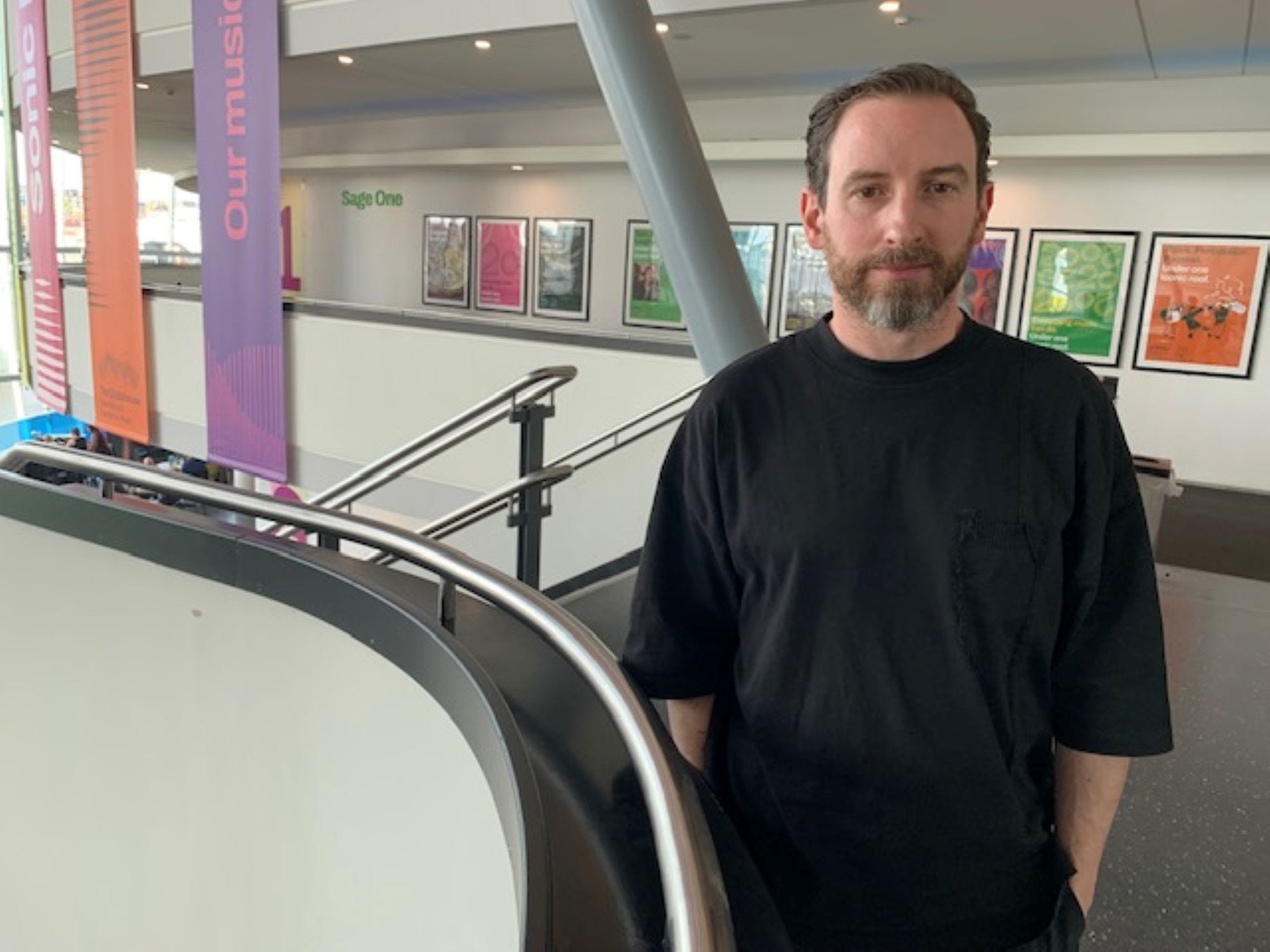
It’ll sound terrifying to anyone reassured by a playlist or script but on the rave scene a certain agility clearly doesn’t go amiss.
In the masterclass he’d alluded to having bottles thrown at him. Did he mean this literally?
“Oh, I’ve had bottles thrown at me,” he confirmed afterwards. “But maybe not for playing ambient music. People get upset sometimes in parties and they do mad things, so I’ve seen it all.”
If he’s a survivor, he’s a hugely successful one, having built a worldwide following for his audio-visual shows, immersing audiences in a changing environment of sound and light.
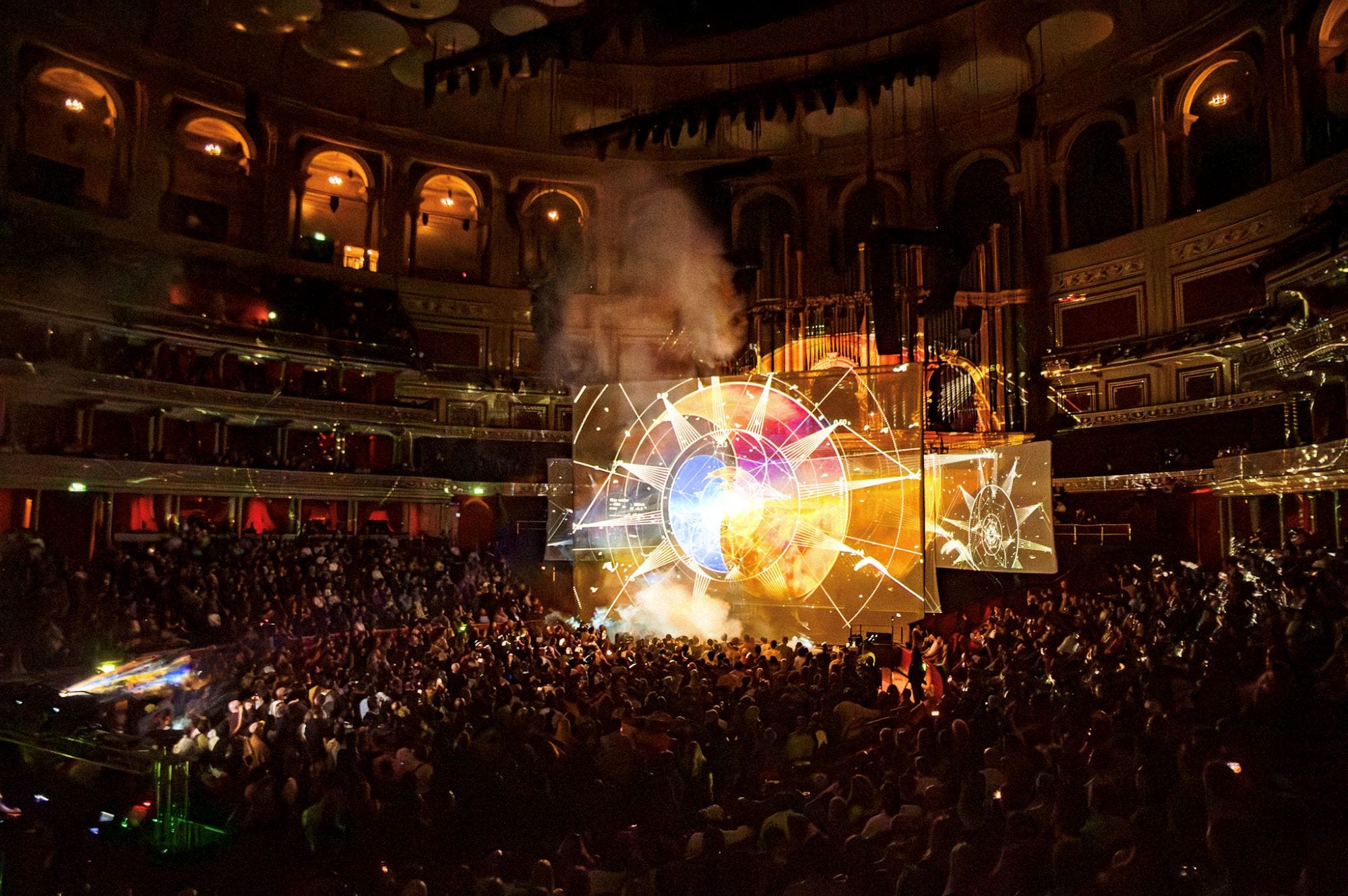
Recently thousands saw him transform the immense interior of the Royal Albert Hall with 3D visuals chosen to complement his own compositions.
It was, wrote one witness to a show that sold out in 48 hours, “a psychedelic night curated with mathematical precision”.
It had gone well, he allowed in Gateshead, but that ‘mathematical precision’ hadn’t made him wholly happy.
Whereas the famous show he’d done in 2021 at the Acropolis in Athens had been 50% pre-planned, he said, the Royal Albert Hall performance hadn’t allowed for any improvisation.
“I was working with such a big team. We were doing this really extravagant show with eight projectors and four lasers and loads of light systems and there were all these people.
“I was controlling the visuals and music but others were controlling lasers and lights and haze.
“It needed to be structured but I actually dislike that. The show worked and we did what we wanted to do but there were moments when I really wanted to break out.
“But then I thought I couldn’t because it’d really confuse everyone and cause mayhem.
“It’s very rare that I do shows like that.
“The show I’m touring here, for example, is all of that content minus lasers and it’s going to be more improvised.”
He’s going on tour supporting his latest album, Feeling Is Structure, which grew out of the Royal Albert Hall commission and is released on May 8.
According to Cooper, it “explores the relationship between physical form and human emotion”.
It promises to be quite a spectacle and a ‘must’ for anyone who thrills to the pulses and rhythms of electronic music.
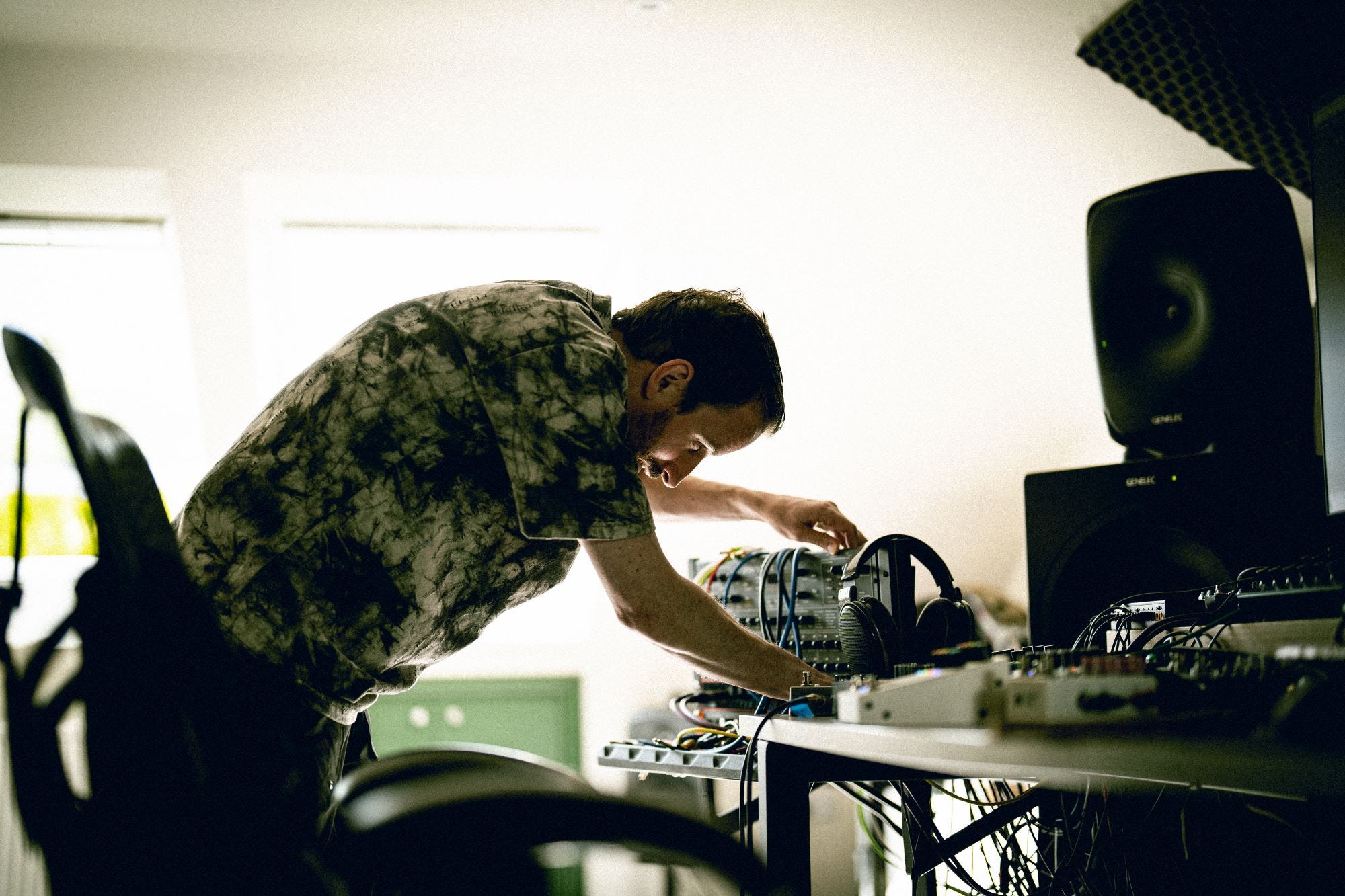
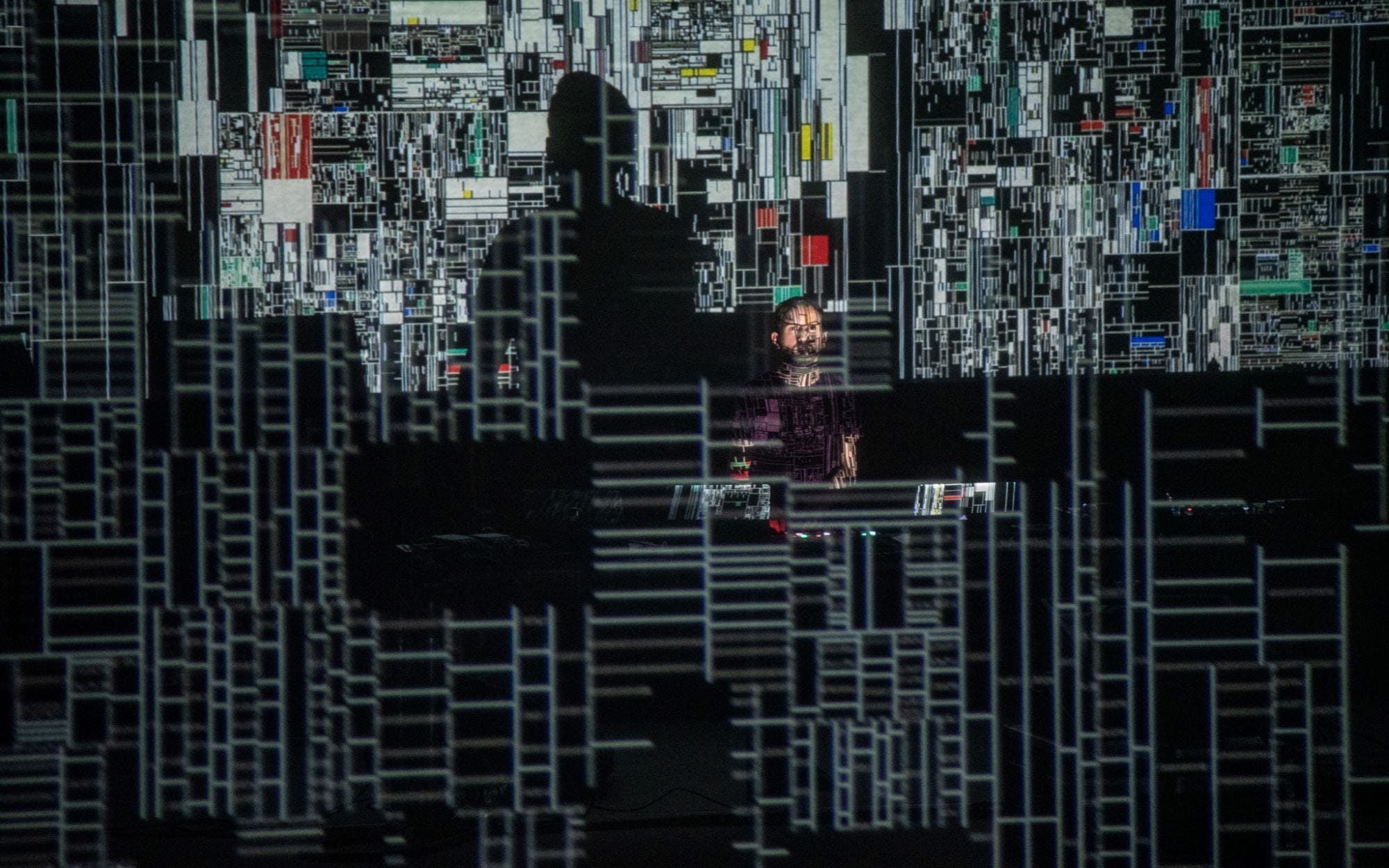
Showy, however, Max Cooper decidedly is not. In his masterclass, he sat behind his laptops and beneath a screen while speaking eloquently of his many collaborations and adventures with digital technology.
Reports of that London performance have him similarly positioned, more a low key facilitator than a flamboyant frontman, as befits the scientist and academic he was until music claimed him.
He grew up near Belfast to Australian parents who had moved to Northern Ireland in the 1970s.
“My dad was an engineer who then worked on the trains but also taught nautical engineering at Queen’s (University, Belfast),” he said.
“Mum taught piano but she’s also an expert on the lyre, which is an ancient harp-like instrument, and still very active in that community.”
(Passing thought: did a player of the lyre ever have to dodge a bottle?)
Reflecting on what his parents think of his music, he said: “I’d say they tolerate it.
“They come to the shows but there’s a difficulty for people who haven’t had a lifetime of going to techno clubs. It’s this wall of sound, so I think my parents struggle with that side of things.
“My sister, who’s five years older, was really into the club scene and got me into electronic music, so I had these different influences – scientific and musical, both classical and electronic – from an early age.”
Growing up during the ‘Troubles’ had been challenging, he said. “Not having family connections on either side, it was confusing and scary… there was a lot of tension with people wanting to know what side you were on.
“I found it quite oppressive so it did push me towards nature, which in Northern Ireland is beautiful. There’s this complex interaction of land and sea with hills coming off the coastline.
“Ten minutes and you’re away on your bike, so nature made a massive impact.
“But then I first started going to trance and techno clubs in the ‘90s and they were spaces where people from all sides would be hugging. It was where I came out of my shell.”
There was a touching moment during his masterclass when he recalled being struck by the sound of rain on a skylight window and nudging a recording of it into a rhythmic drumbeat to blend nature and technology.
Music, initially, he saw as a hobby while he pursued another love, science, which he assumed would be his job.
He went to Nottingham University, stayed for a master’s and then did a PhD in computational biology, all the while honing his DJ skills with a residency at a techno event called Firefly.
Briefly he worked as a geneticist at University College London but the time came when the funding ran out and he was starting to get bookings as a musician.
“I was like, this is paying the bills so I’ll focus on this for six months. That was in 2008 and the more I pushed the music thing, the more it kept working.
“It still took years to get to the point where I was financially stable but I didn’t need a lot of money to survive at that time.”
Science’s loss may be music’s gain, but hearing him talk you can see how they – and nature, too – converge in what he now does.
And it’s perhaps not a world away from some of the classical music programme in The Glasshouse’s Sage One, where a 90th birthday tribute to Steve Reich is coming up in October.
He said he loved the work of Reich and other American minimalist composers such as Terry Riley and Philip Glass (Cooper made an album called Glassforms with pianist Bruce Brubaker).
Glass, he said, “was making techno even before techno with classical instruments. These were godfathers of a lot of the techniques I employ now.”
You can experience the Max Cooper techniques when he performs on Thursday, May 21 at 7.30pm. Tickets from The Glasshouse website.