

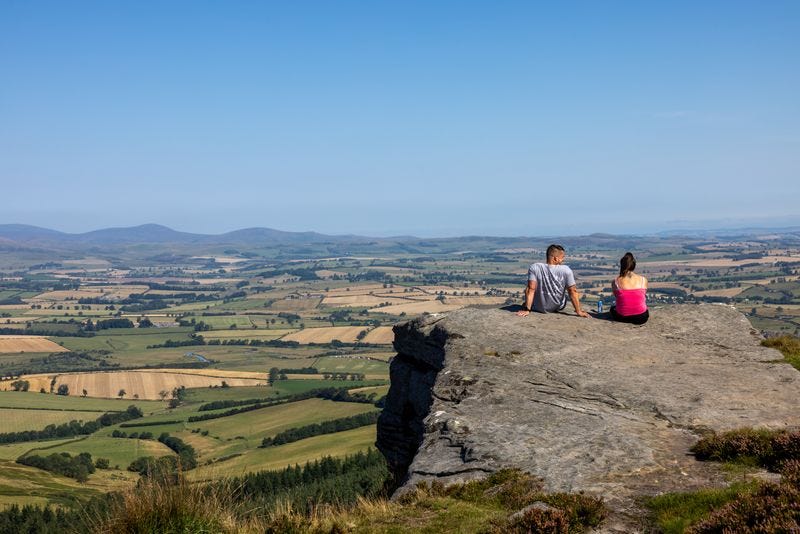
The biggest landscape investigation ever undertaken by The Wildlife Trusts is underway at the centre of a campaign to buy a Northumberland estate.
The unique scientific surveys into the wildlife, ecology and history of the 9,500-acre Rothbury Estate will plot its wildlife and historic landscape.
The studies bring together universities, a music artist, local community groups and Northumberland Wildlife Trust.
The University of Oxford, alongside members of the Rothbury community, have installed a network of 20 acoustic sensors, known as AudioMoths, to monitor birds and bats as well as other species including small mammals and insects.
Using machine-learning algorithms, the recordings will be analysed to identify species presence and activity across different habitats.
Unlike most acoustic surveys which are carried out only in spring and summer, this project will monitor wildlife all year round, providing an insight into seasonal change and the impacts of climate change over time.
Crucially, the work will also establish a baseline of the estate’s wildlife before any habitat restoration begins – highly unusual with this type of monitoring which, in most cases, only happens once work is underway.
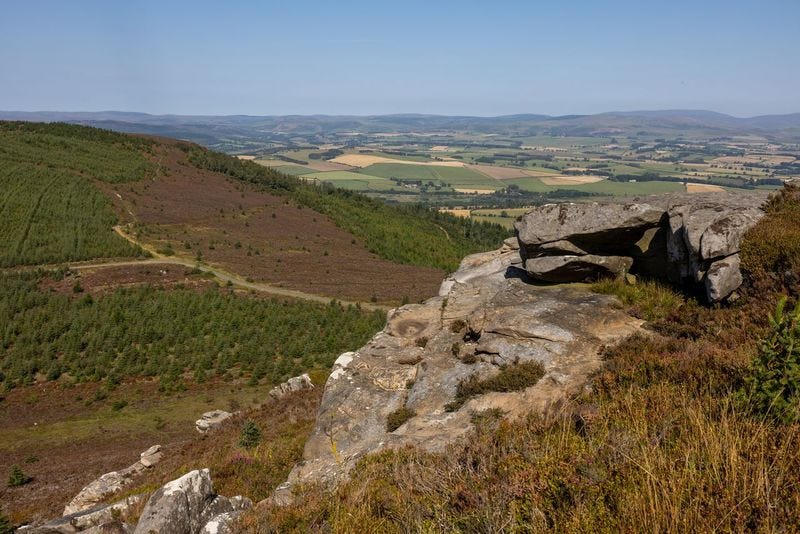
In a first-of-its-kind pilot project, Newcastle University, University of St Andrews and Durham University will combine soil environmental DNA (eDNA) sampling with optically stimulated luminescence (OSL) dating, to find out how the land was used in the past, and what plants grew there over recent millennia.
The results will shed new light on historical ecology and land-use change across one of England’s most important ancient places.
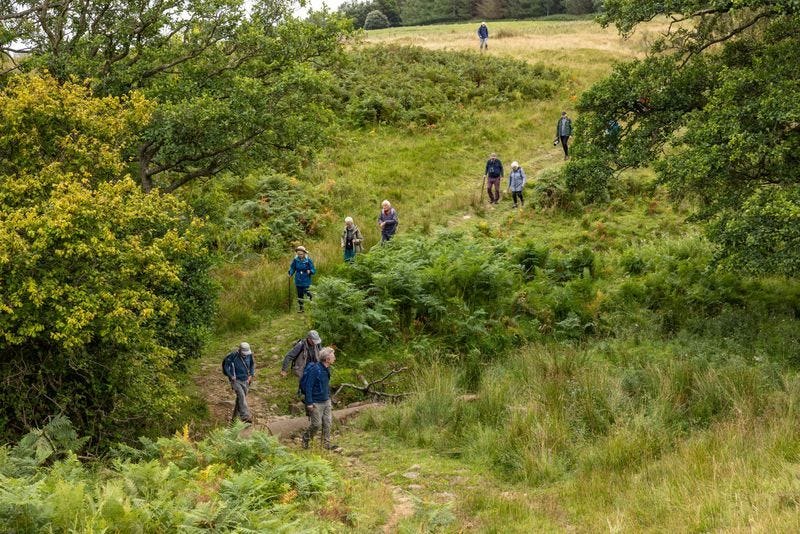
Researchers have been joined by local community groups, including bat, bird and archaeology specialists, to install sensors and dig test pits.
Music artist, zoologist and field recordist Louis VI, an ambassador for The Wildlife Trusts, has taken part in the acoustic monitor installation. He plans to create a musical piece inspired by and using the wildlife recordings in the future.
Dr Ella Browning, postdoctoral researcher in ecoacoustics at the Leverhulme Centre for Nature Recovery at the University of Oxford, said: “We’re incredibly excited to gain new insights into the bats, birds and other species across this very special place using year-round acoustic surveying.
“The study will provide a robust baseline, rarely captured, from which we can monitor changes to biodiversity over time and track the impact of nature recovery approaches.
“This project will allow us to listen to the soundscape in extraordinary detail and we’re looking forward to sharing the sounds of Northumberland nature so many can enjoy it.”
Dr Sam Turner, professor of archaeology at Newcastle University, said: “The landscape of the Simonside Hills has been shaped for thousands of years through the interaction of people and nature.
“Our team integrates cutting-edge scientific methods to understand how natural environments have developed through time – in this case over the last 2,000 years – with results showing what past landscapes were like to help provide ideas for land management in the future.”
Duncan Hutt, director of conservation at Northumberland Wildlife Trust, said: “The Rothbury Estate is a unique and special place where nature, history and people’s lives come together.
“This new research will guide our vision for the large-scale restoration of nature over a vast 9,500 acres, while involving people every step of the way. We’re looking forward to deepening our knowledge of the wildlife that calls this special place home and sharing that with the public over the months to come.”

The Rothbury Estate already supports a remarkable range of species, including red squirrels, hares, eight of Northumberland’s nine bat species, and red-listed endangered birds such as cuckoo, curlew, merlin and skylark. Rare plants including rock bristle moss, frog orchid, dwarf cornel and petty whin are also found on the estate.
Its archaeology spans thousands of years, from prehistoric burial cairns and Bronze Age mounds to Iron Age hill forts, Neolithic rock carvings, medieval field systems and later industrial heritage.
The acoustic monitoring project is funded by the University of Oxford’s Leverhulme Centre for Nature Recovery and The Wildlife Trusts. Funding for the soil dating project is provided by UKRI (Economic and Social Research Council) Impact Accelerator grant.
In 2024, The Wildlife Trusts and Northumberland Wildlife Trust secured part of the Estate, with a vision to restore it at the heart of a 40-mile nature corridor stretching across northern England, from the coast to Kielder.
So far £16,746,000 has been raised by public appeal towards the £30 million needed to buy the entire estate.