


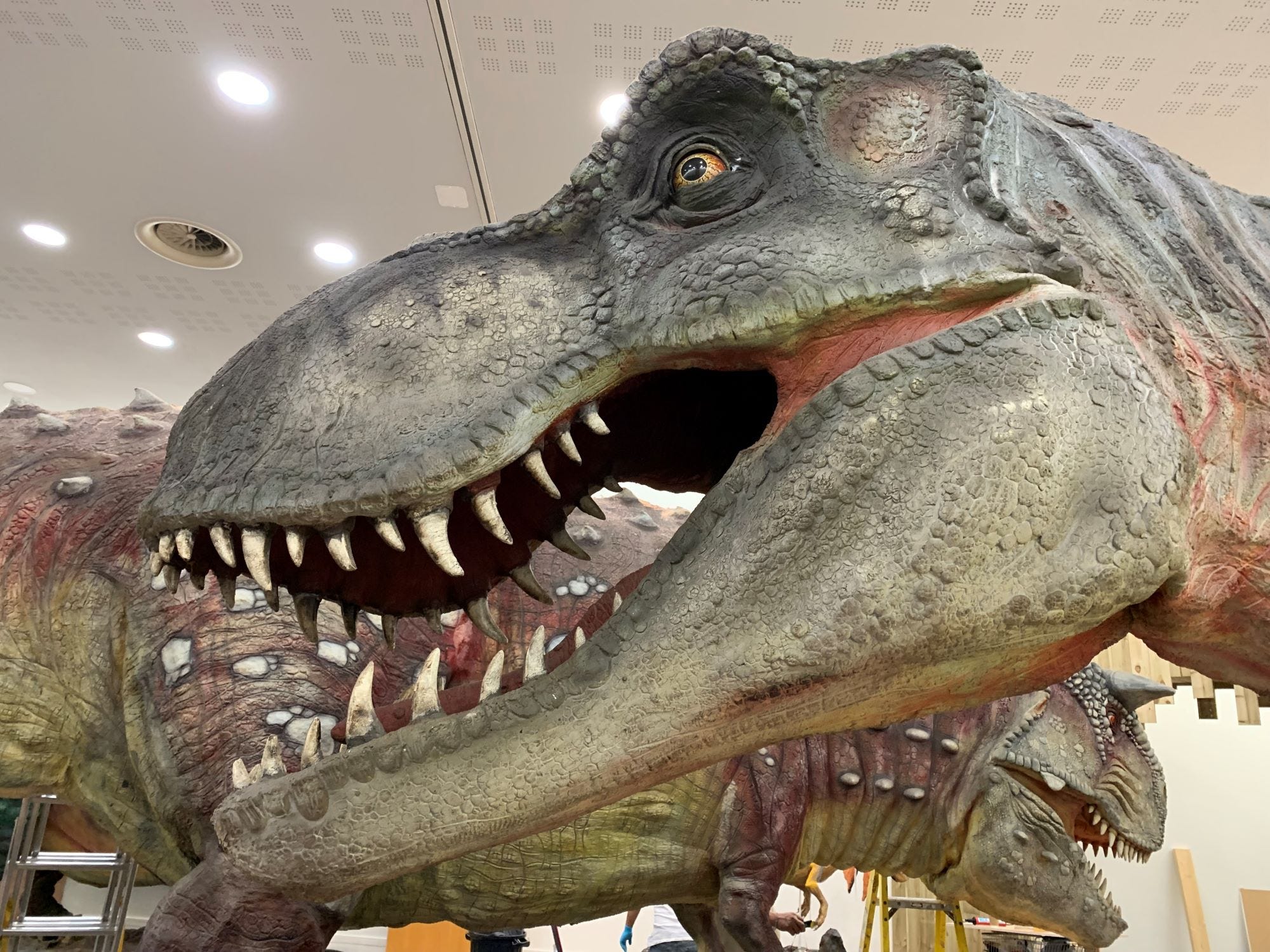
Even ahead of the new Life Science Centre exhibition opening at the end of the month, it has been generating excitement.
Well, it’s hard to keep the wraps on more than 20 dinosaurs and almost impossible when ferrying them across a city.
“They came to the UK three months ago so they’ve been stored nearby,” says Andy Lloyd, Centre head of development and coordinator of this latest venture.
“Even the people at the storage company got quite excited. I think it’s the most fun they’ve had.”
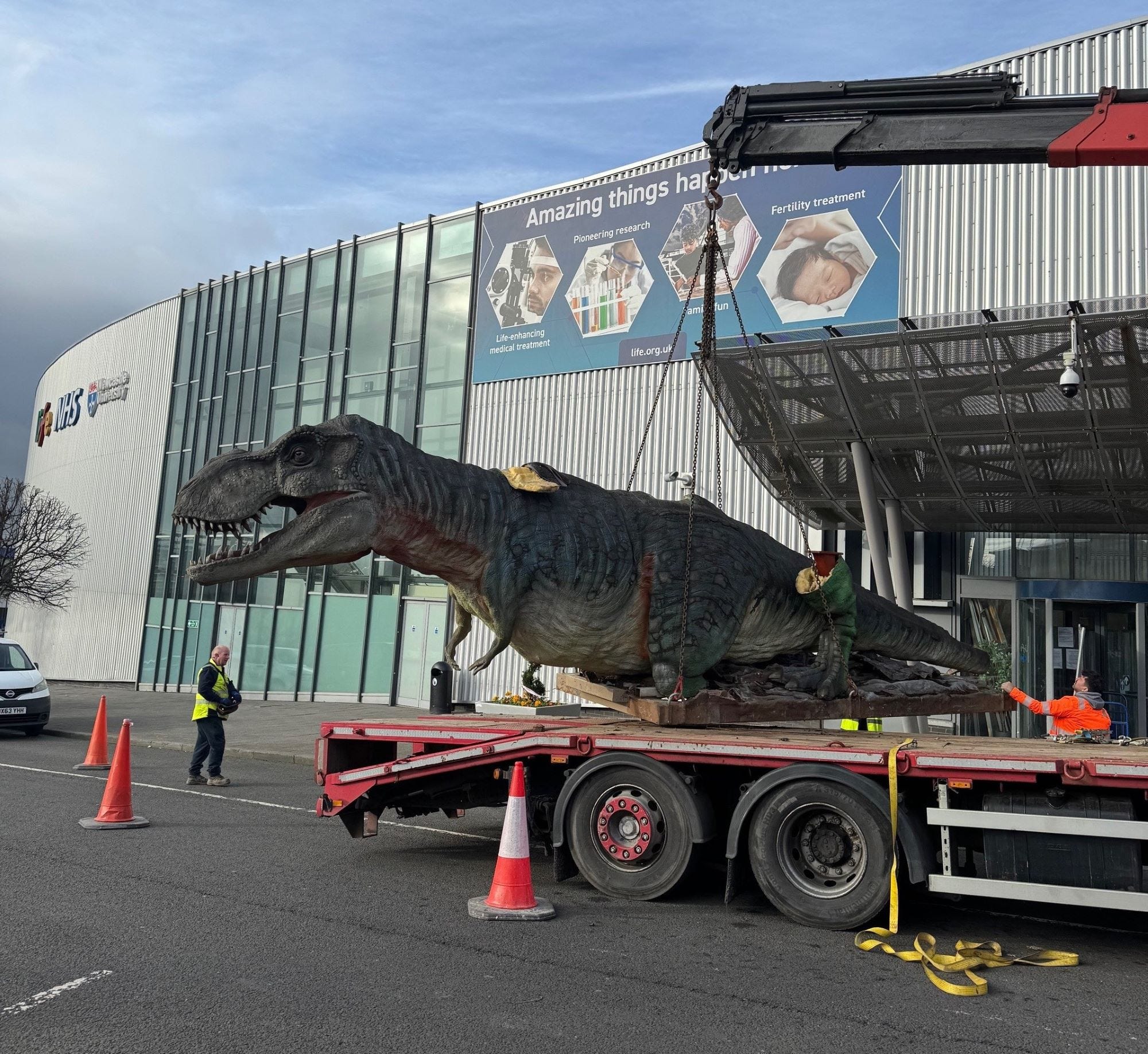
When the tyrannosaurus rex arrived on a trailer, British Transport Police officers turned up “for a bit of a nosy”, adds Neil Rutherford, head of facilities.
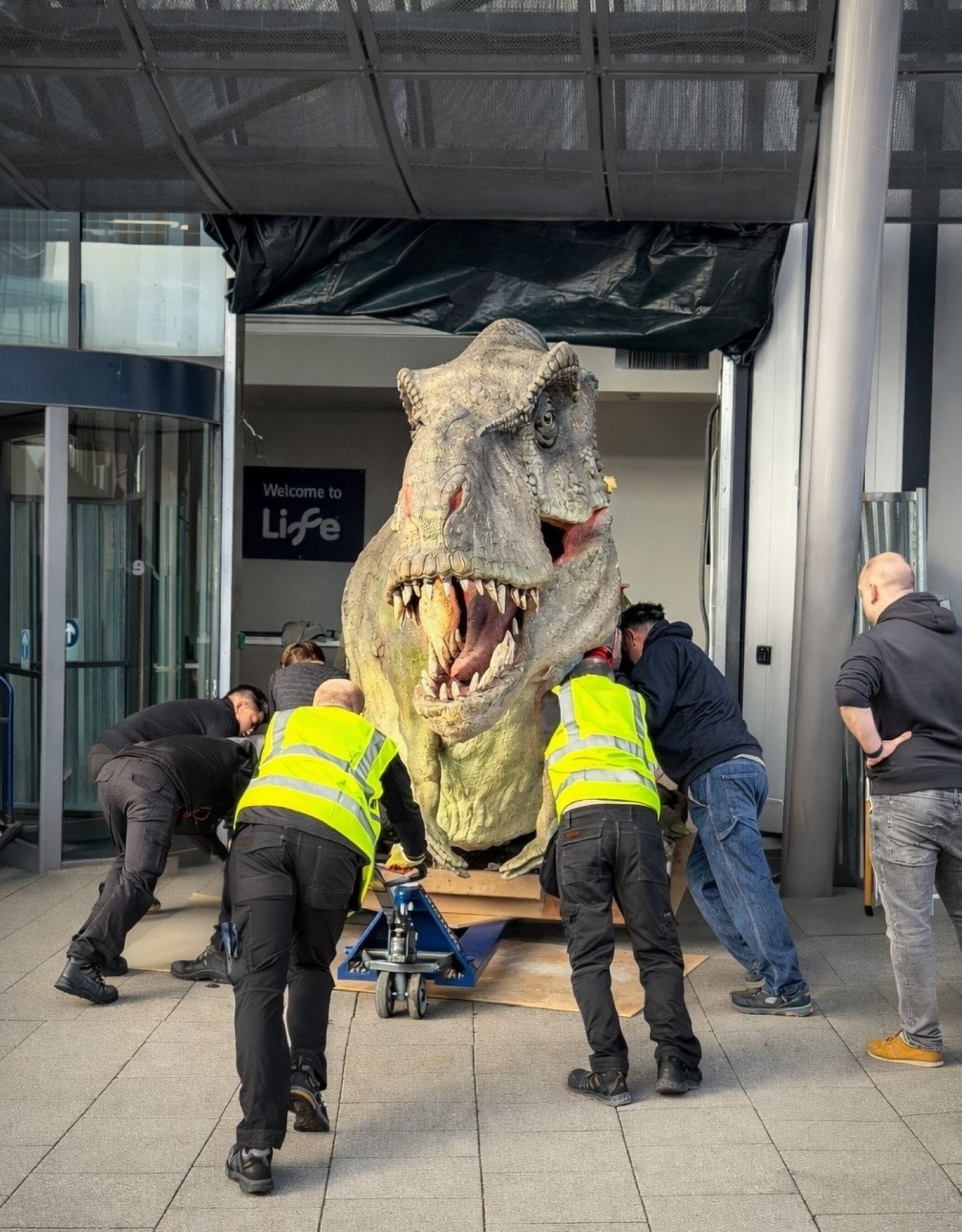
It’s just as well they did. They were able to help staff push the three-tonne beast, or at least the giant parts of it, in through the new replacement doors.
And these are adults. What will happen when children get first sight of The Great Dinosaur Escape, as this new exhibition is called?
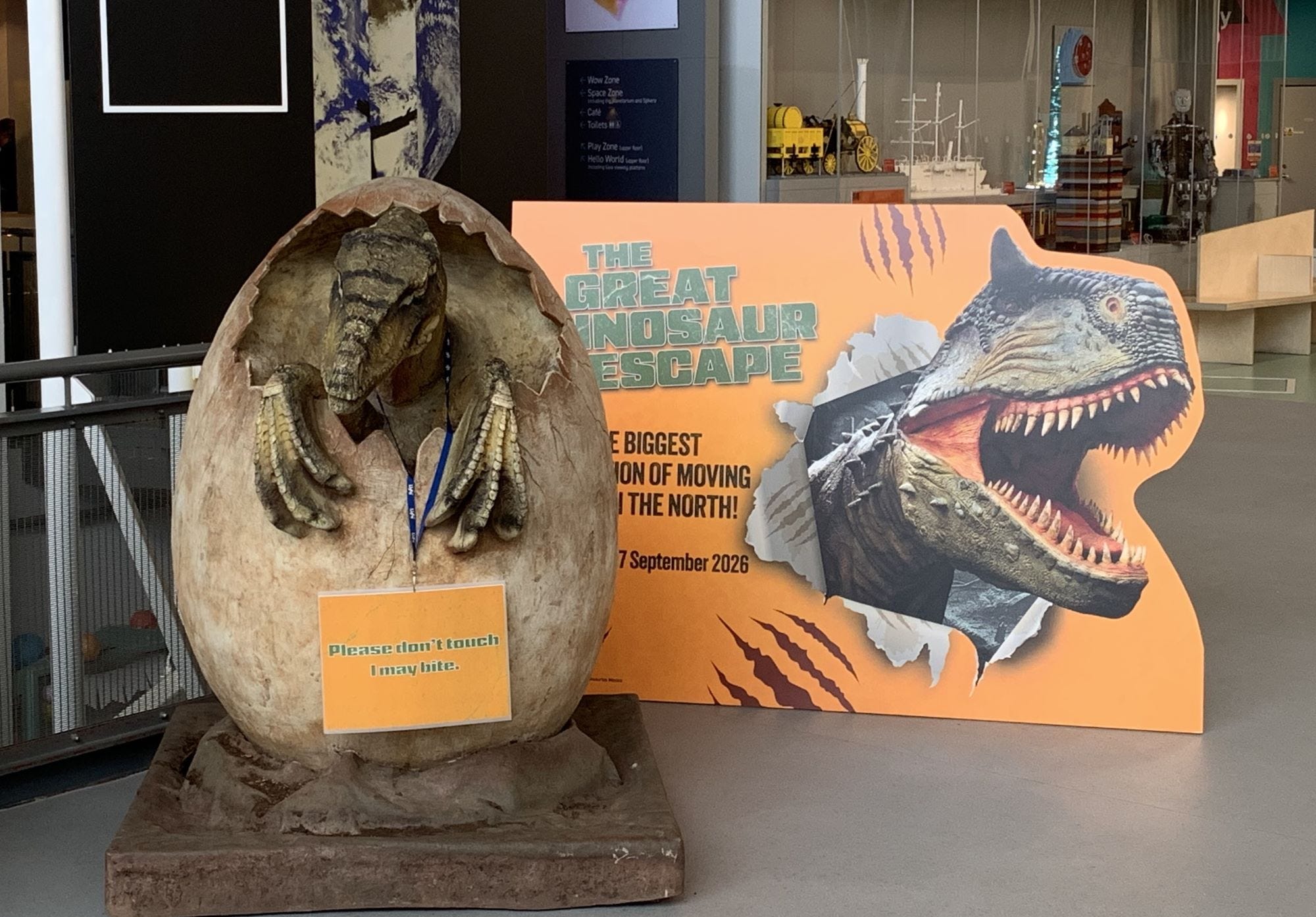
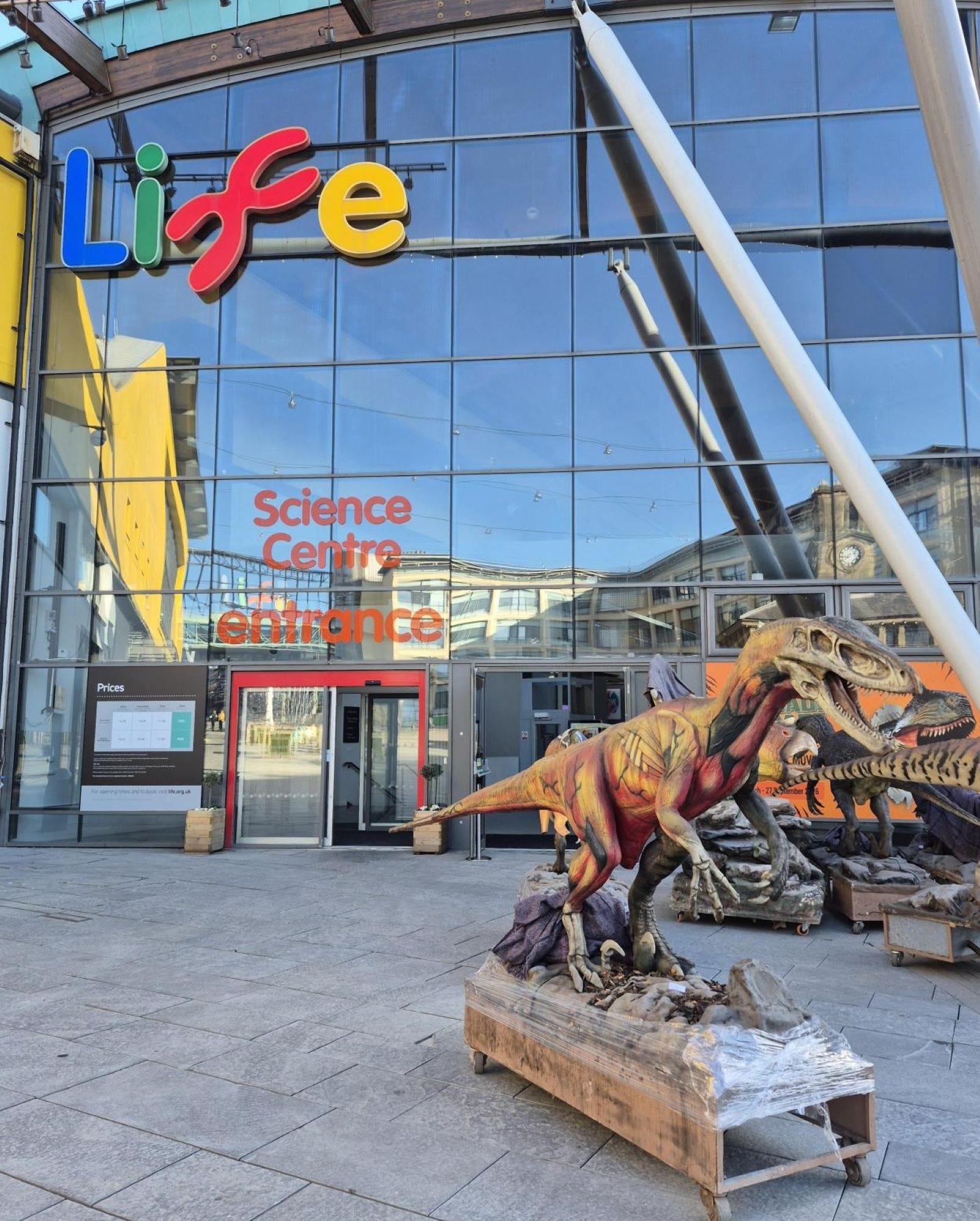
Actually one exhibit, a hatching dino-baby, is already positioned near the ticket desk, a reptilian teaser blazing a trail for its larger co-stars, all making their first appearance in the UK.
For the origin story, we must turn to Linda Conlon, chief executive of the International Centre for Life, of which the Life Science Centre visitor attraction (commonly known as Life) is part.
Temporary exhibitions had been a regular and popular attraction until about 2018, says Linda, who has been with Life since its inception.
There was the startling Body Worlds, with real human bodies, and there was Game On, spanning the history of computer games.
Over 15 years there were also three dinosaur exhibitions from the Natural History Museum, testament to the popularity of these monsters of prehistory.
Covid, however, halted things in 2020. Life became for a time a vaccination centre, which at least helped to keep it solvent.
The years since have seen some £4m invested in permanent attractions, such as the new LightBox display unveiled last year to mark the Centre’s 25th anniversary, and on facilities such as a new café and lift.
“But I think every now and again it’s nice to make a statement by bringing in something special,” says Linda.
“The question was: how? And where could we put it?”
Not huge to begin with, the space for blockbuster exhibitions has been reduced by the addition of LightBox with its installations relating to sound and movement.
“I started thinking about this a couple of years ago,” says Linda.
“Then a friend of mine, who used to run the science centre in Helsinki, started doing part-time consultancy work for a Mexican company which had a dinosaur exhibition.
“He said, ‘Do you want it?’ I said I did but couldn’t think how to make it happen.”
She admits to having been a bit worried about dinosaurs made by a company she’d never heard of, especially when remembering Chinese efforts which made people laugh although they weren’t meant to be funny.
Resort to the science centre grapevine put her mind at rest. Opposite numbers in Norway, Paris and Lisbon reported favourably on the animatronic Mexican dinosaurs, which can not only move but roar… or grunt or shriek.
“I thought a way we could make it work was by integrating some of it with our existing offer and using our big meeting room downstairs, the Scotswood Suite, for our finale piece.”
At which point Andy, Neil and pretty much the whole Life team was brought in to launch Operation Dinosaur, along with external exhibitions expert Andy Feast whose AFSB Associates, set up with partner Sharon Beard, is adept at turning big ideas into rewarding visitor experiences.
The decision to go ahead was made in October, the contract was signed in November and then, says Andy Lloyd, it was time for “serious logistical planning”.
Having settled on a dinosaur trail around Life, with some models installed amid existing attractions, it fell to Andy Feast and Bethan Ross, head of experience and audience research, to rationalise it.
“It was about looking at the content, the visitor journey, the interpretation, basically re-writing that, and also keeping an eye on it from an audience perspective,” says Bethan.
“They gave us some material but the English translation wasn’t ideal and we didn’t feel it would work for our audience who we know very well.
“The first thing people will want to know is what the dinosaur is, and then how big it is, what it ate and when did it live.”
Essentially, Life got the dinosaurs but no prescribed context or method of display. So the idea here, as the title suggests, is that the dinosaurs have escaped and visitors must follow a trail to round them up.
Cracking a code will gain them access to the dinosaur enclosure via a corridor resounding to music from Jurassic Park, that landmark Spielberg film of 1993, where they’ll encounter the biggest beasts.
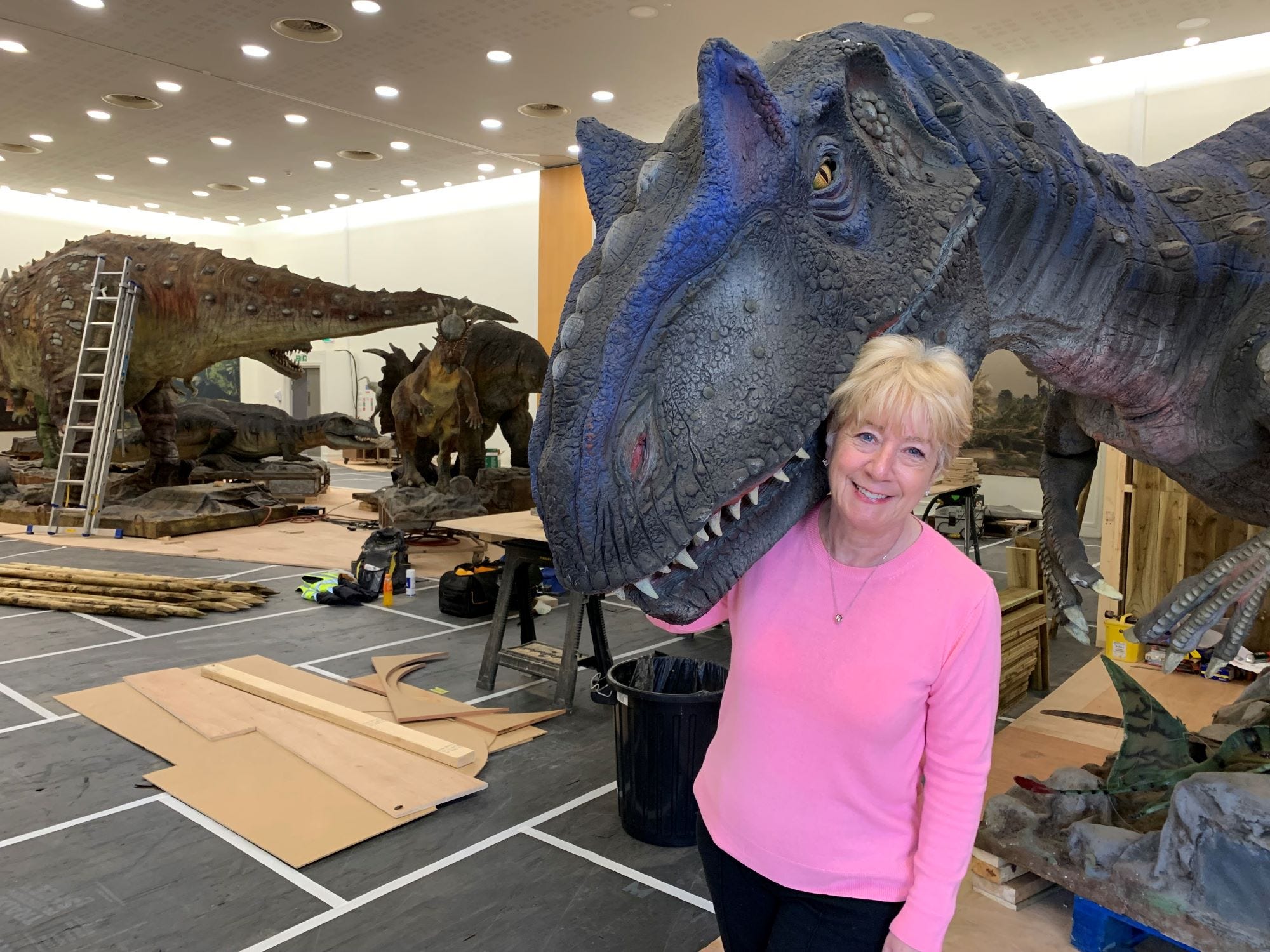
Sounds pretty simple… but it soon became apparent that the Scotswood Suite doors hadn’t been designed to accommodate a T-rex so would have to be replaced. Hence the involvement of Neil Rutherford, normally in charge of building maintenance and suchlike.
Also, once inside, T-rex and co. could only be manoeuvred with difficulty.
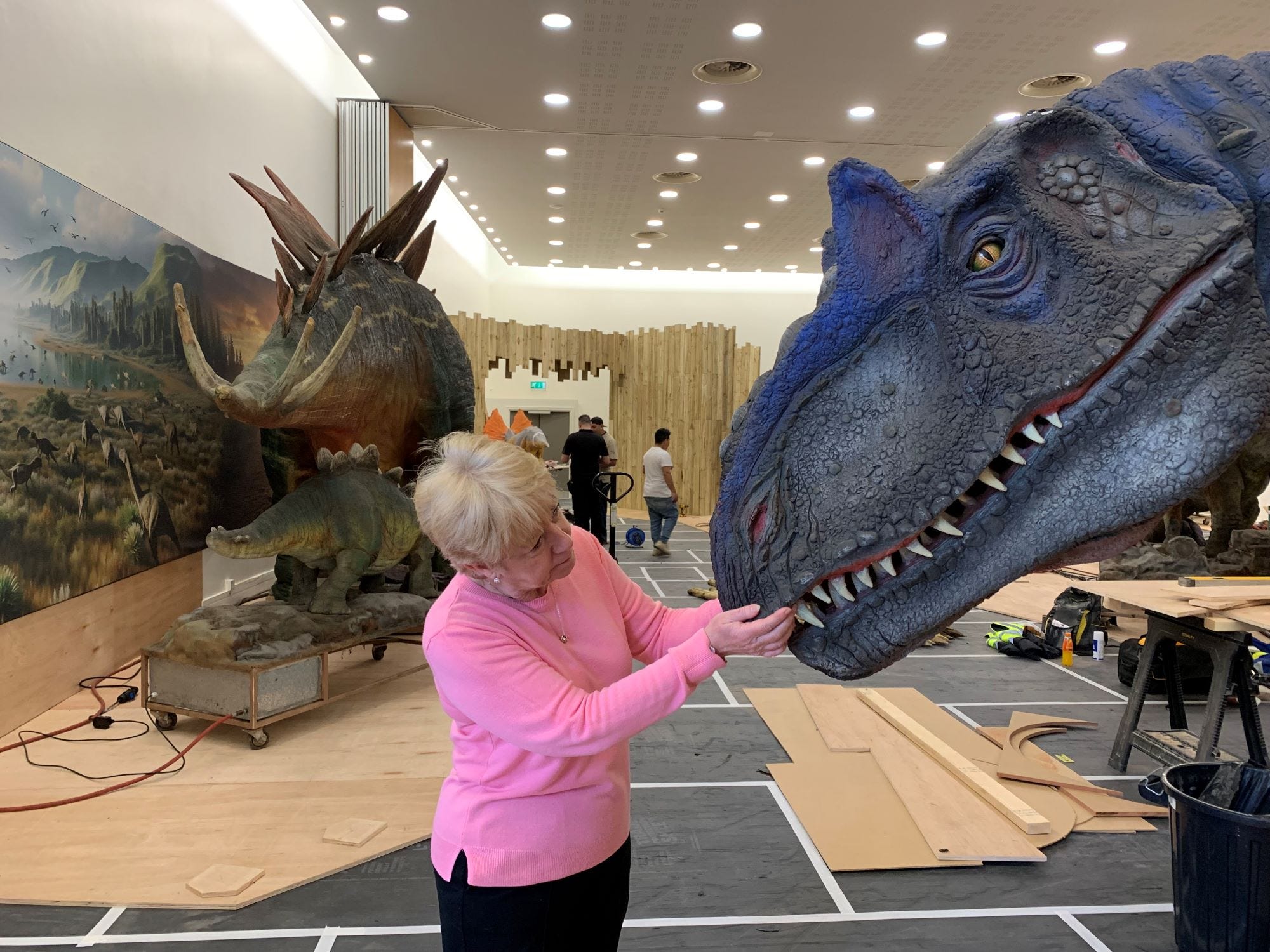
But they’re here now, having been shipped from Norway, and with two operatives from Dinosaurios Mexico doing some fine-tuning.
Everyone seems thrilled.
“What you see has come from a lot of planning, a lot of back and forth and conversations between all of us,” says Neil.
“There have been all sorts of issues but from a staff perspective it’s been good. There’s been a lot of enthusiasm and energy.”
“It’s been truly a team effort,” agrees Andy Feast.
“We tried and tested three versions of how to manage that big room, working out where a dinosaur’s tail or head might go and how people might navigate around it all.
“It shows what can be done when you work as a team.
“Out of this we’ll probably have youngsters who’ll get absolutely caught up and it might be the inspiration for them taking things forward. You just don’t know.”
But there’s something else. What about the science?
As Andy Lloyd points out: “If they were making Jurassic Park now, the velociraptors would have feathers.”
That wasn’t understood when these dinosaurs were constructed either.
Bethan says: “There’s a stereotypical idea of science as being a lot of facts which are true forever – but it’s more about asking the right questions than learning a lot of answers.
“Science is always evolving so if a dinosaur looks different to what our current understanding is, we’re open about that.
“There are always new things to find out, even with something as old as this.”
Complementing the dinosaurs, some moving and some static, will be dino-themed live shows, hands-on making activities and curriculum-linked workshops for schools.
The Great Dinosaur Escape opens at Life on March 28 and runs until September, with admission included in the normal price of entry. Find details on the Life Science Centre website.