


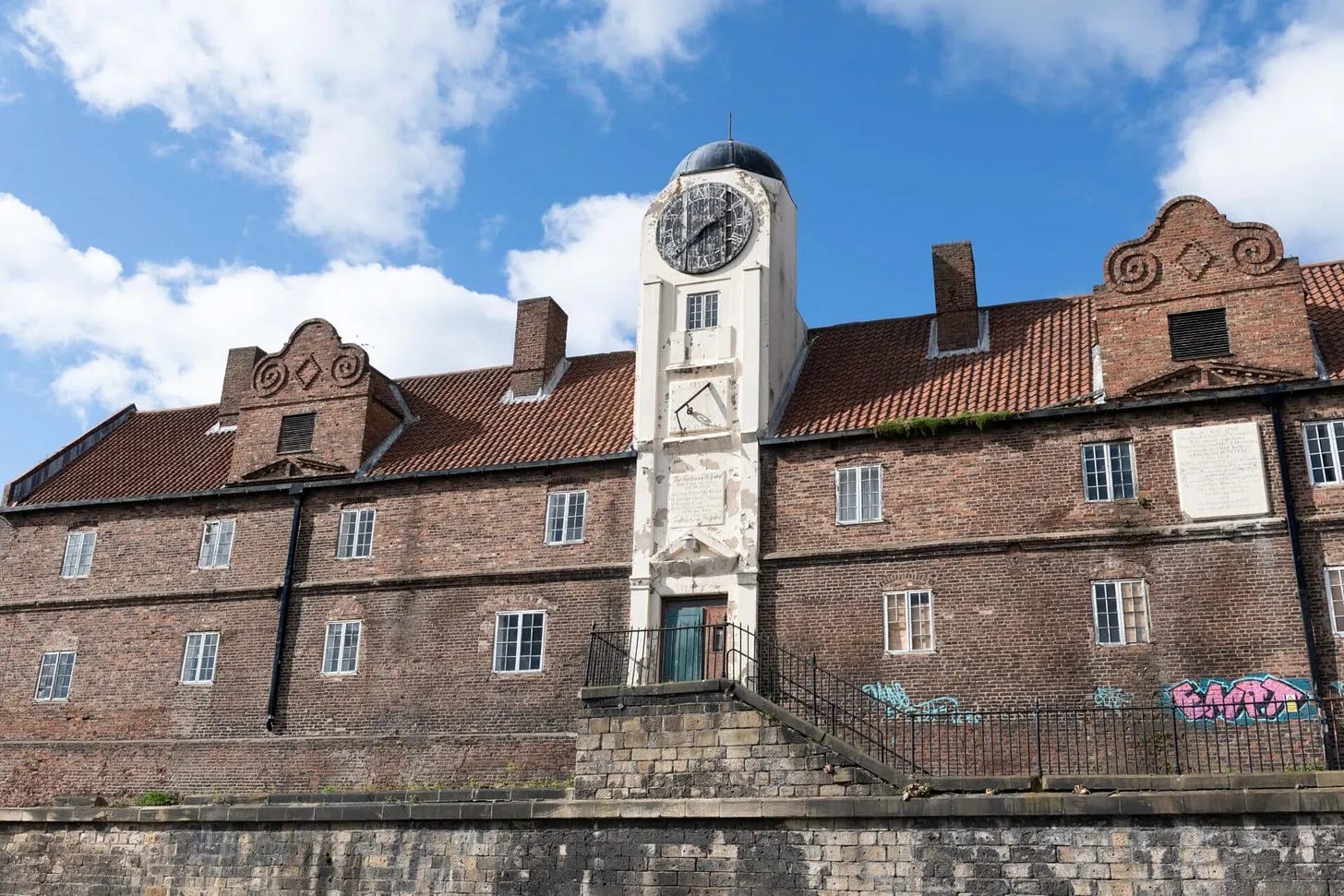
Work on restoring a prominent Tyneside heritage building has been named as one of an architectural charity’s standout projects for this year.
The Architectural Heritage Fund (AHF) is marking its 50th anniversary by choosing what it judges to be the best UK projects which illustrate heritage-led regeneration.
Among its choices is a landmark to Tyneside’s industrial and social history.
The Grade II* listed Keelmen’s Hospital, which overlooks the Tyne in Newcastle, is one of the city’s most at-risk historic buildings and has lain empty for the last 16 years.
Dating from 1701, it was built as an almshouse to provide food, shelter and medical care for the poor, the sick and aged keelmen and their families.
Work started in the spring on returning the building to its original role as homes to the design of Newcastle-based JDDK Architects. The conversion will result in 20 affordable units.
The scheme has been backed by £4.6m awarded earlier this year to Tyne & Wear Building Preservation Trust by The National Lottery Heritage Fund.
The AHF announced support for the building’s new future in July 2024 as “backing plans to conserve and repurpose this remarkable piece of industrial social history for contemporary community use.”
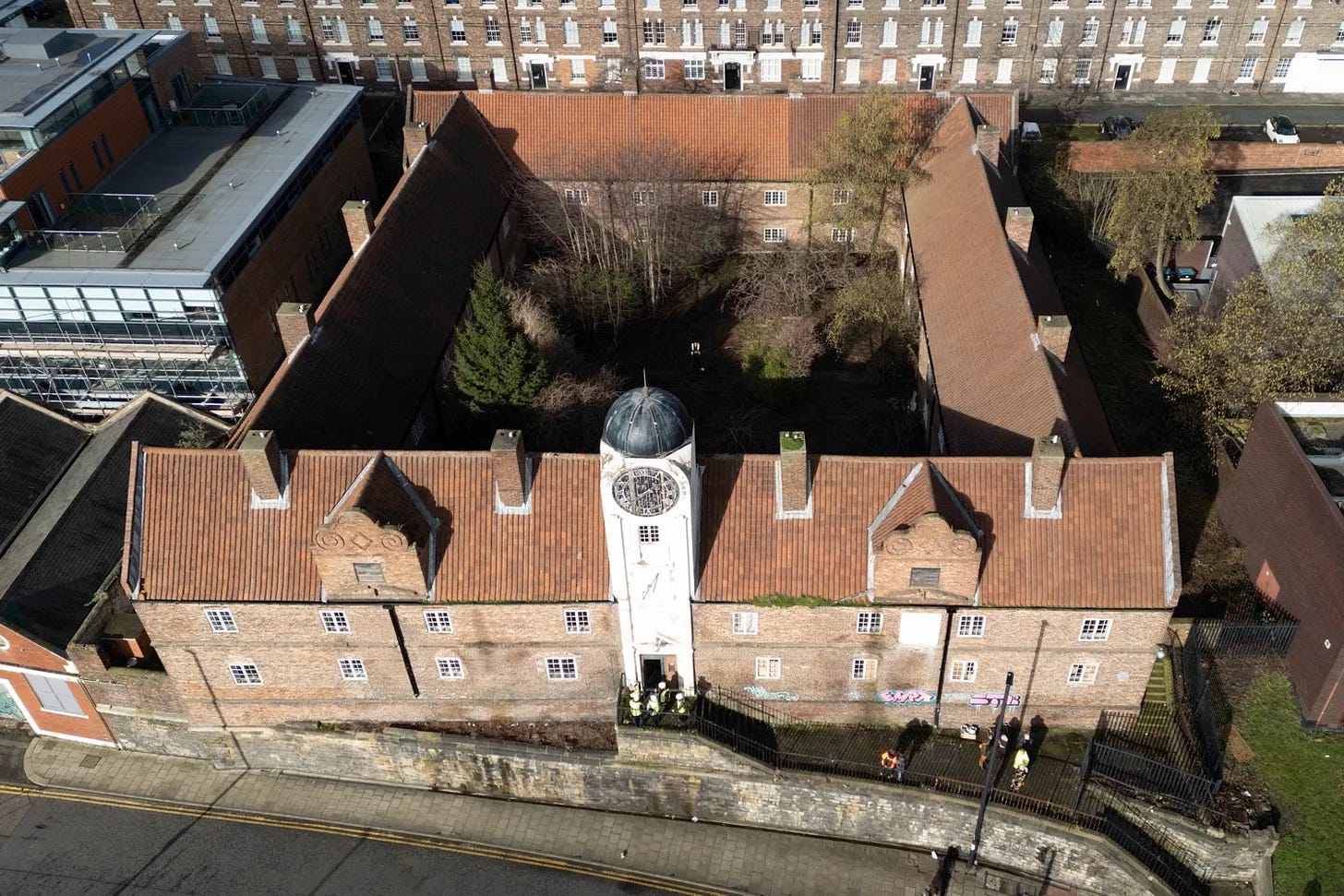
The project, due for completion by the end of next year, will feature air source heat pumps and its central courtyard will be landscaped to create a community space.
The Newcastle Conservation Area Panel (NCAP) describes the building as an “outstanding and unique heritage asset” and praises the objective to provide “social housing which reflects the origins of the building and gives future residents the opportunity to experience its real sense of historic place.
“NCAP believes this scheme has great potential as a catalyst to demonstrate the potential of bringing heritage buildings into use as residential space in the city. The Keelmen’s Hospital is among the most historically significant buildings in Newcastle and it is intrinsically linked to the evolution of this great city.”
The 1,600 keelmen of Newcastle were an essential part of the coal exporting boom which underpinned the economy of the region.
They worked their flat-bottomed boats, or keels, to carry coal from the banks of the shallow Tyne out to collier ships.
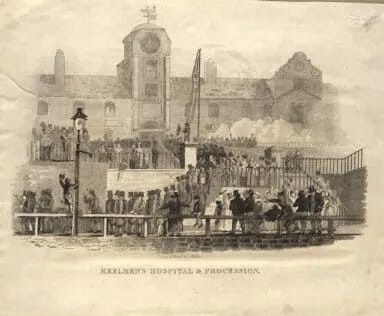
In the late 19th century, the Newcastle City Council-owned Keelmen’s Hospital was used as tenement housing for the poor. This continued into the 20th century when the building became student accommodation for the former Newcastle Polytechnic.
Matthew Mckeague, chief executive of the Architectural Heritage Fund, said: “For 50 years, the AHF has worked alongside communities to give new life to historic buildings and to ensure that heritage remains at the heart of regeneration.”
Baroness Twycross, parliamentary under-secretary of State for Museums, Heritage and Gambling, said: “Heritage is there to be used, not just admired. The Architectural Heritage Fund champions the impact of heritage and community-led regeneration.
“It is often the first point of contact for community groups seeking to rescue local historic sites and buildings. The AHF is there through every step of the way, providing advice, loans and grants to local communities to help create new futures for these historic buildings.”
Since its foundation in 1976, the AHF has supported 2,432 projects across the UK, awarding 3,079 grants and loans with a combined value of over £182 million.
