

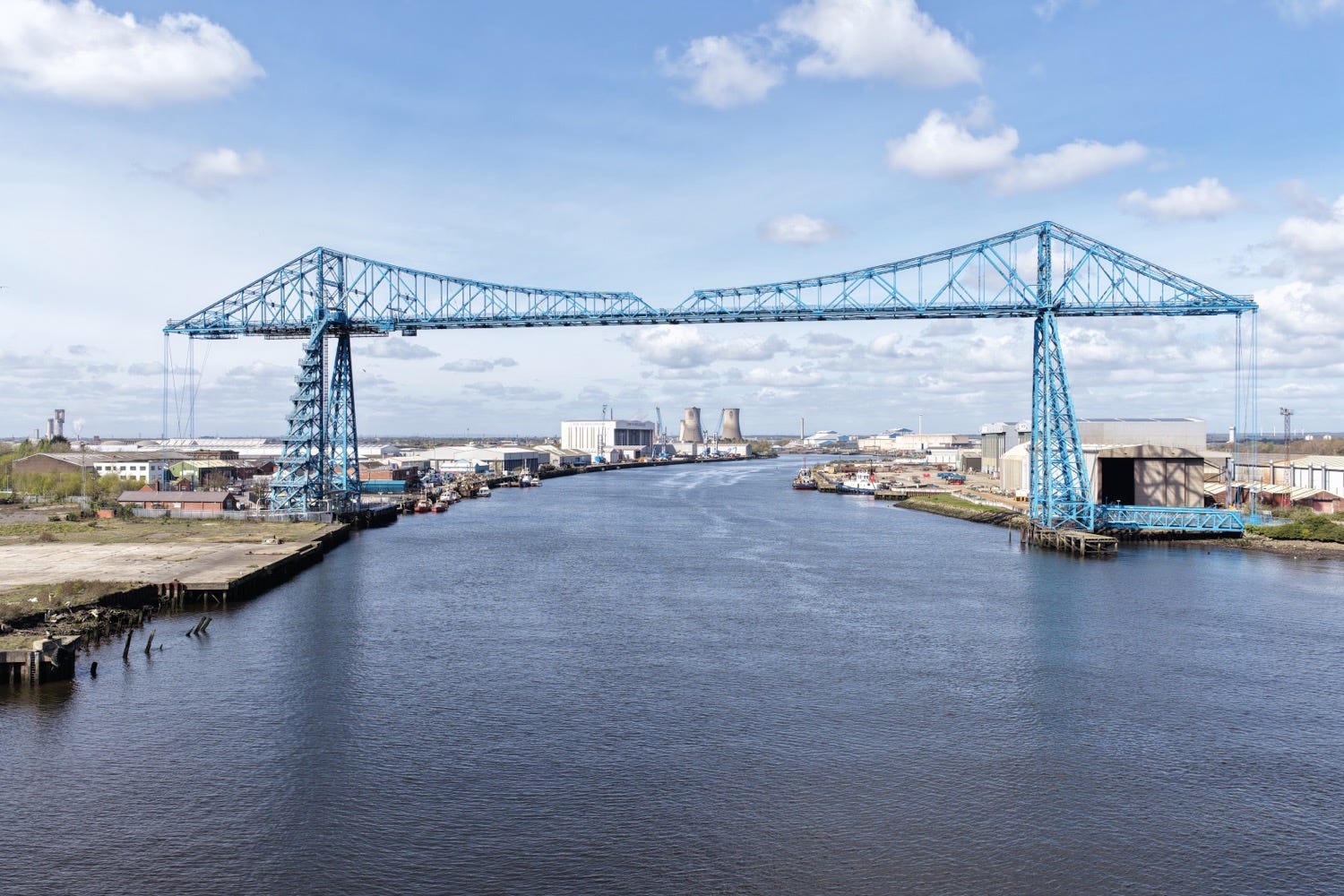
A symbol of Teesside’s industrial heritage which featured in TV’s Auf Wiedersehen, Pet has been placed on the Victorian Society’s Top Ten 2026 list of endangered buildings and structures.
The grade II* listed Tees Transporter Bridge has been closed since 2019 due to serious structural concerns.
“Spanning the River Tees between Middlesbrough and Port Clarence, it is one of the most recognisable engineering landmarks in the UK. Its future, however, now hangs in the balance,” says the society.
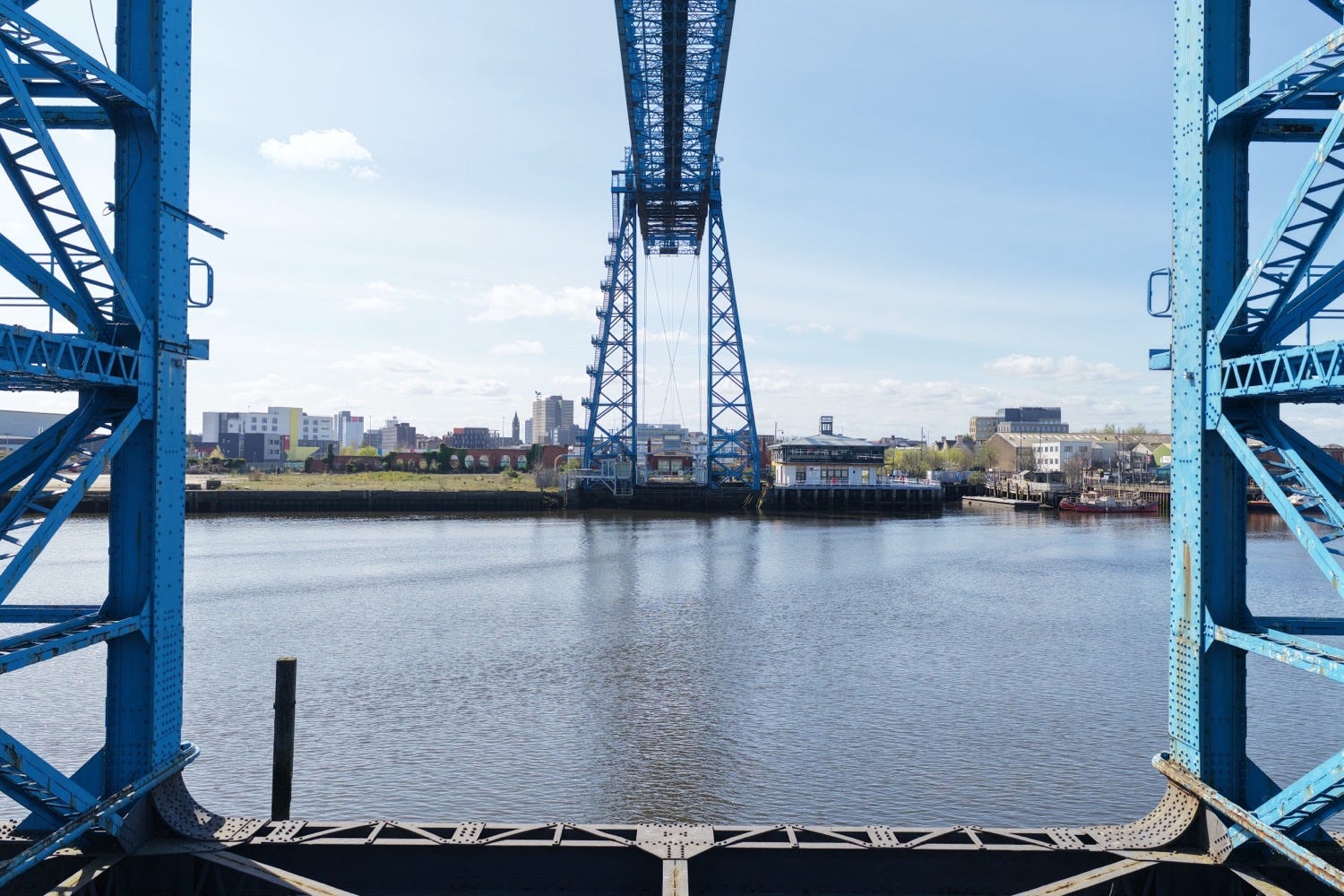
Opened in 1911, the bridge was designed to carry workers and goods across the river without obstructing busy shipping lanes. Built by Sir William Arrol & Co, the firm responsible for the Forth Bridge, it stretches 260 metres (850 feet) and rises 69 metres (225 feet) above the water.
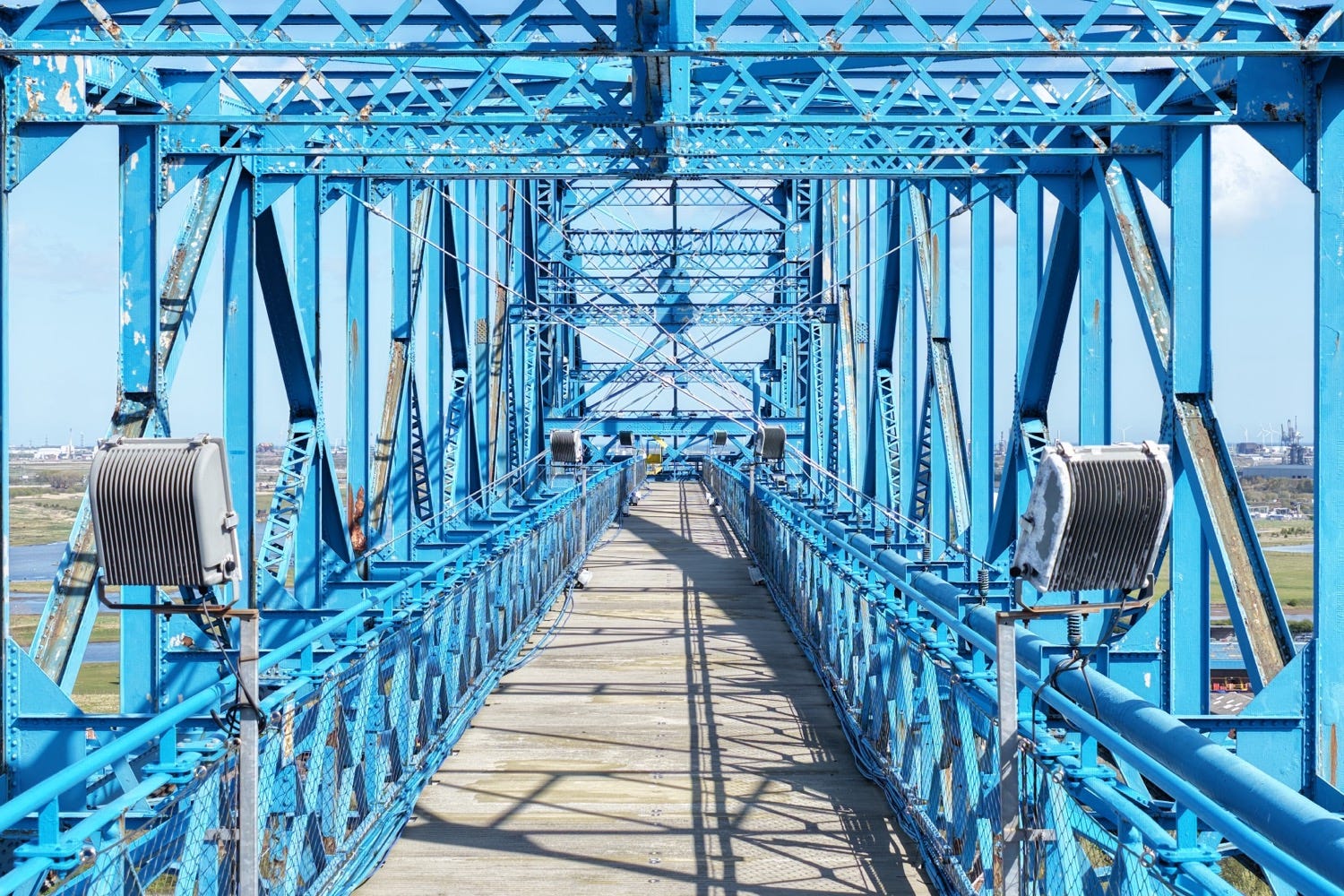
Its distinctive gondola, suspended from the overhead structure, once transported vehicles and pedestrians across the river, a rare and ingenious solution that made it one of the largest transporter bridges of its kind in the world.
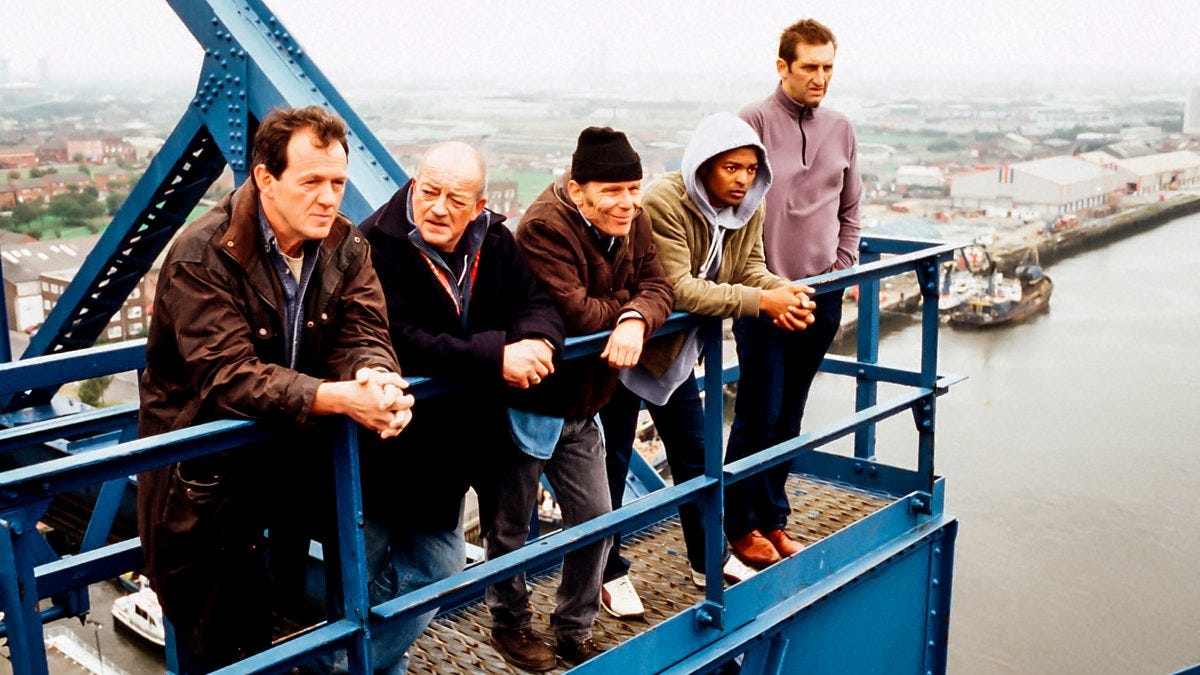
For more than a century, the bridge has been both a vital transport link and a powerful emblem of local identity. It has also become a cultural touchstone - its aforementioned appearance in the revival series of Auf Wiedersehen, Pet, saw a fictional storyline about its dismantling prompt real life concern among local residents.
More recently, public support for its restoration has remained strong, with overwhelming backing expressed in local consultations.
“If we can find money for new bridges, we can find money for this great survivor and all that it means.”
Griff Rhys Jones, Victorian Society president
But the society says: “Despite this, the bridge’s future is uncertain. Responsibility for its ownership and operation is shared between Stockton-on-Tees and Middlesbrough Councils, and the estimated £60 million required for repair and restoration is beyond their means alone.
“A central challenge remains unresolved: whether the bridge is to be treated primarily as transport infrastructure or as heritage. That distinction will determine what funding streams may be available, and whether the bridge can return to operation.”
Before its closure, the bridge was one of the few remaining operational examples of its type worldwide. In addition to its historic and functional role, it had developed a reputation as a visitor attraction, hosting events including abseils, bungee jumps and zip slides.
“Its loss would therefore be felt not only as the disappearance of a working structure, but as the erosion of a defining feature of the region’s identity,” says the society, which is calling for a co-ordinated national response to secure the bridge’s future.
“Whether as a functioning crossing or as a conserved monument, this extraordinary structure must not be allowed to fall into permanent disuse.”


Griff Rhys Jones, Victorian Society president, said: “People love this bridge. It is a symbol. It is a monument, and more than that, it is a link and a potential working part of Stockton and Middlesbrough. Got to be saved. Got to be operational again. If we can find money for new bridges, we can find money for this great survivor and all that it means.”
James Hughes, director of the Victorian Society, said: “The Tees Transporter Bridge is one of Britain’s most remarkable feats of engineering and a defining landmark of the North East.
“Its future cannot be left to uncertainty. A clear strategy, supported at national level, is urgently needed to secure both its structure and its continued role in the life of the region”.