

Artist Thomas William Pattison captured key historical events in the founding of two North East cities.
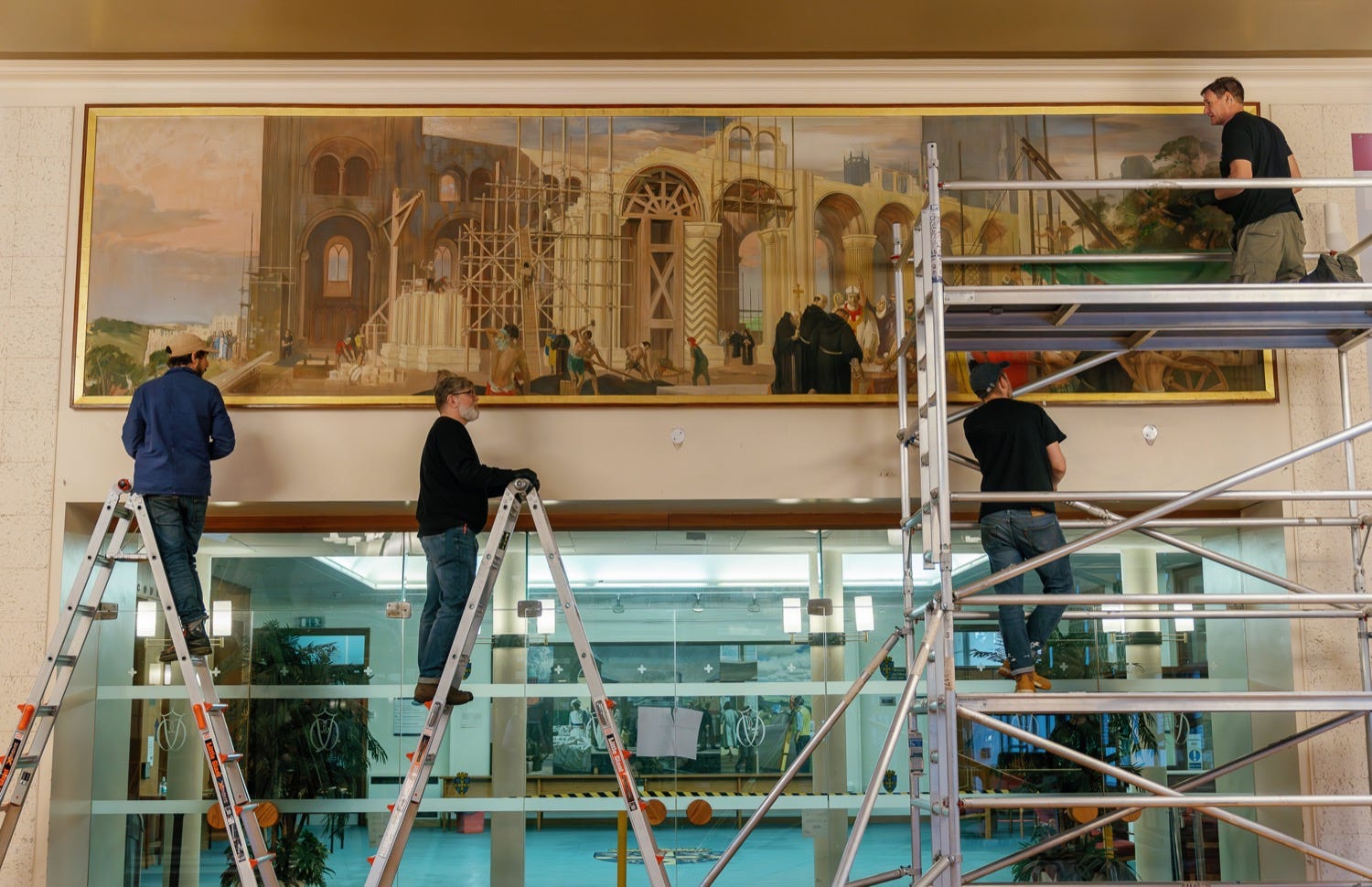
His prolific output included two large paintings of the building of Durham Cathedral and the castle at Newcastle.
His work The Building of Durham Cathedral has hung in Durham County Council’s County Hall headquarters for decades.
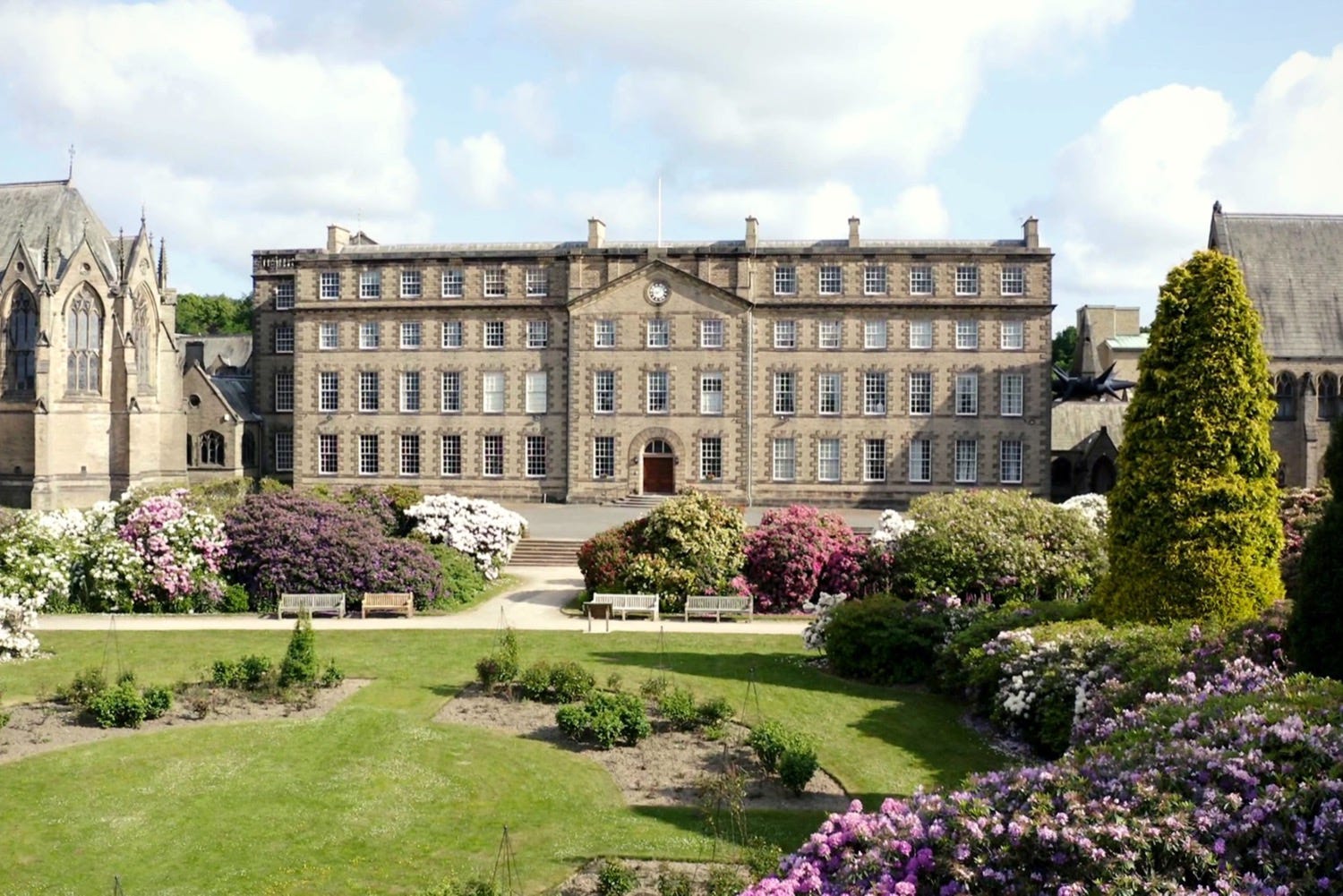
The hall is due to be demolished and now the seven-metre-wide painting depicting the construction of the cathedral has found a new home at the Main House of Ushaw Historic House, Chapel & Gardens.
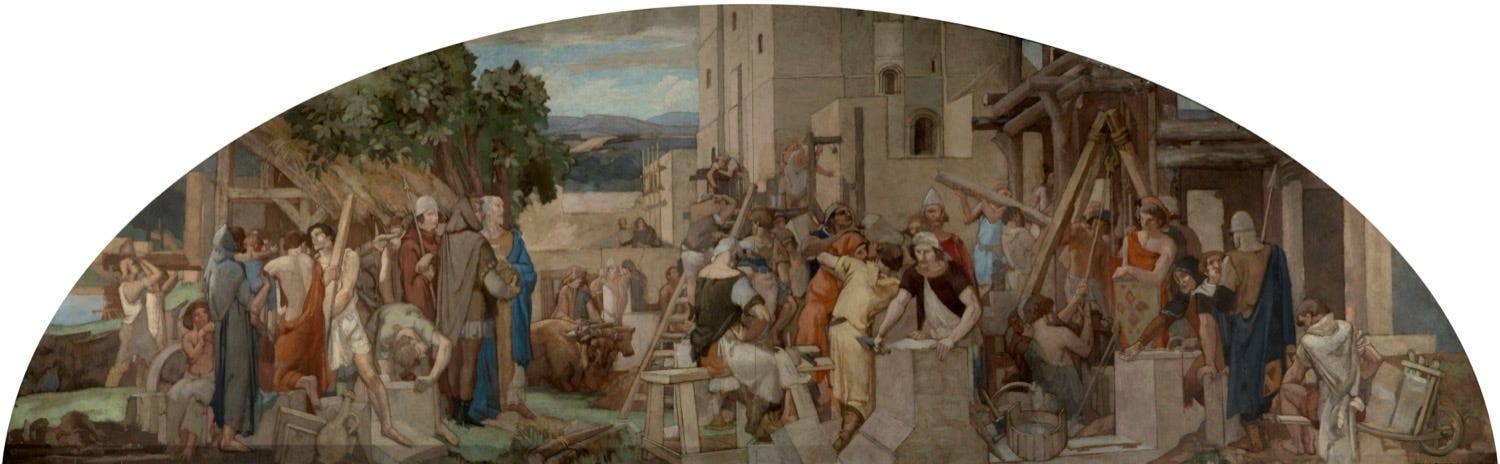
Pattison, who lived in Newcastle, also painted The Building of the Castle, Newcastle upon Tyne, 1177 as the first lunette in the city’s Laing Art Gallery.
A lunette is a crescent- or half-moon-shaped or semi-circular space or window in architecture.
One of Pattison’s other works, a portrait of Hannah Rushford, the first female Mayor of Durham, is also on display at Durham Town Hall.
The cathedral painting has been seen by many thousands of visitors to County Hall due to its prominent position above the doors leading into the foyer of the council chamber.
It is believed to have been acquired by the council in 1968.
Coun Karen Allison, Durham County Council’s Cabinet member for leisure, tourism, regeneration and high street, said: “As part of the decommissioning of County Hall, we are in the process of carefully reviewing the collections that remain in the building and finding new homes where they can be preserved.
“The Building of Durham Cathedral depicts one of the most significant moments in Durham’s history. For almost 60 years, the painting has watched over as councillors, officers and members of the public have entered the council chamber to make decisions which have shaped County Durham.
“We’re delighted to work with Ushaw in finding a new home for this painting, where it will continue to be enjoyed by the public.”
Andrew Heard, visitor programmes manager at Ushaw, said: “We’re thrilled to be able to display this magnificent and monumental painting at Ushaw. We are sure that visitors will appreciate the opportunity to see this striking realisation of one of the most important events in Durham’s history.”
The council is working towards closing County Hall by July. The building is to be demolished to pave the way for development at Aykley Heads, potentially creating thousands of jobs, as part of the emerging Durham Innovation District.
Pattison was a student at Armstrong College in Newcastle when the First World War began and he enlisted in the Royal Field Artillery, serving from 1915–18.
He carried his painting materials with him throughout the conflict.
After the war he returned to the Newcastle college, winning the School Medal with distinction, and later joined the teaching staff.
He exhibited at the Royal Academy and received a number of commissions for his work, including the castle painting in 1925. He died at his Newcastle home in 1983.
A painting from the collection of Lionel and Ruth Jacobson has been sold by Newcastle auctioneers Anderson & Garland for £193,350, including fees.
The work St Ives, Cornwall, 1947 was painted by artist David Bomberg.
It was part of a large modern art collection built up by the late Lionel Jacobson, who was chairman and managing director of Jackson the Tailors, based on Clayton Street, Newcastle.
Jacksons merged with Burtons in 1953, with Lionel Jacobson becoming chairman.