


It was back in 1996 that three Northumbria University drama students - Gordon Poad, Mark Labrow and Annie McCourt – decided to set up a theatre company and chose its name from a dictionary.
What caught their eye was cap-a-pie, an old French phrase meaning ‘head to foot’ which was used to describe a knight in full armour.
They liked it, according to Theatre Cap-a-Pie’s official origin story, because it sounded “kind of classical, kind of European and also kind of Geordie”.
Undaunted by the possibility of endless explaining ahead, the trio launched Theatre Cap-a-Pie on a wave of altruistic optimism (or vice versa).
“What always mattered to us was that the work had real value for the people taking part,” said Gordon Poad.
“We wanted to make good theatre but we also wanted people to feel that they were part of something meaningful and creative.”
Theatre Cap-a-Pie, of course, is now 30 years old, which is quite an achievement. After all that time, at least in the North East, they can probably claim to have redefined cap-a-pie as a type of theatre that engenders a sense of wellbeing from head to foot.
The founders have all moved on.
Gordon Poad is in Denmark, running a forest school for young children, although he remains an honorary patron of Cap-a-Pie and the company is in the capable hands of two of his recruits.
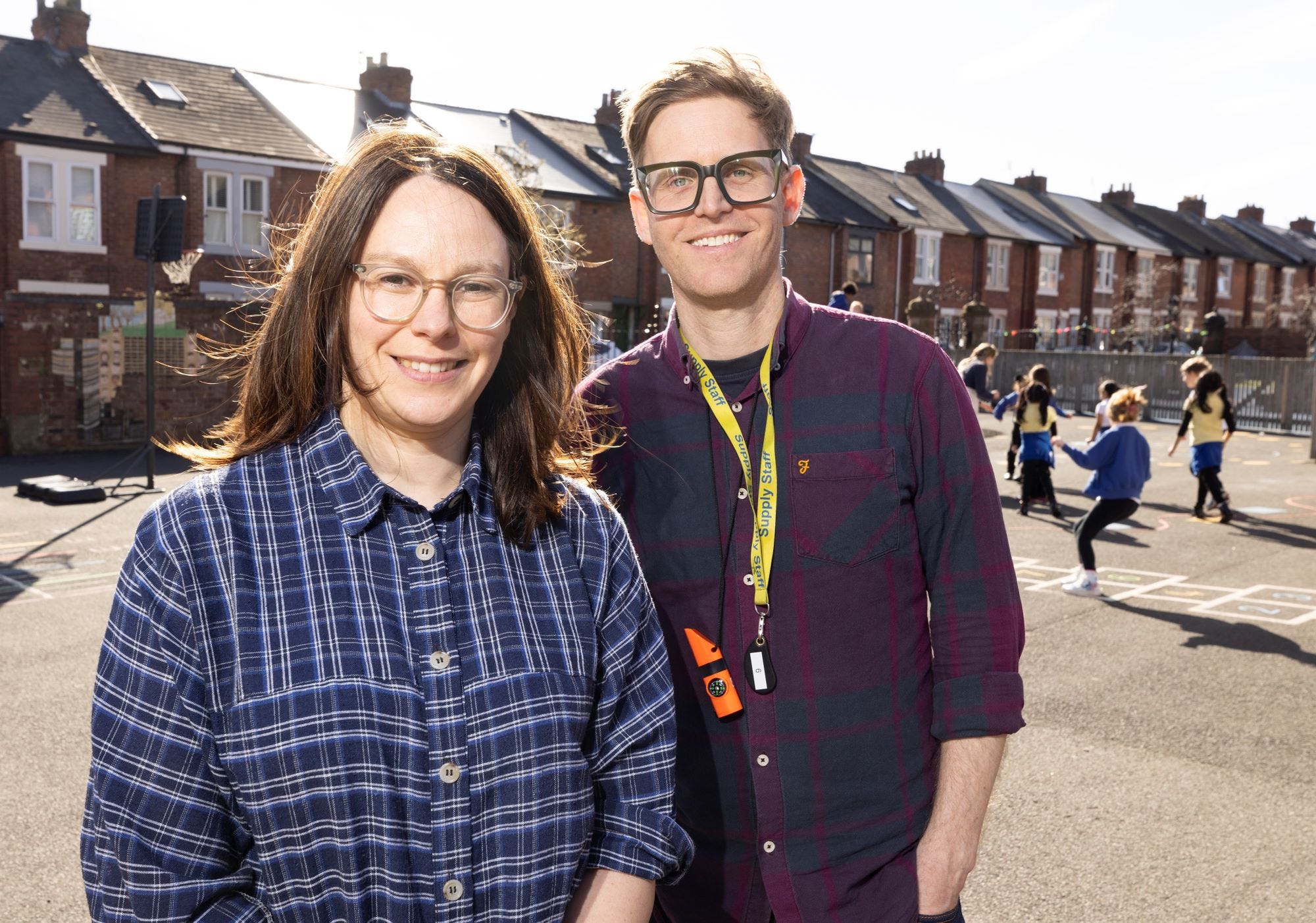
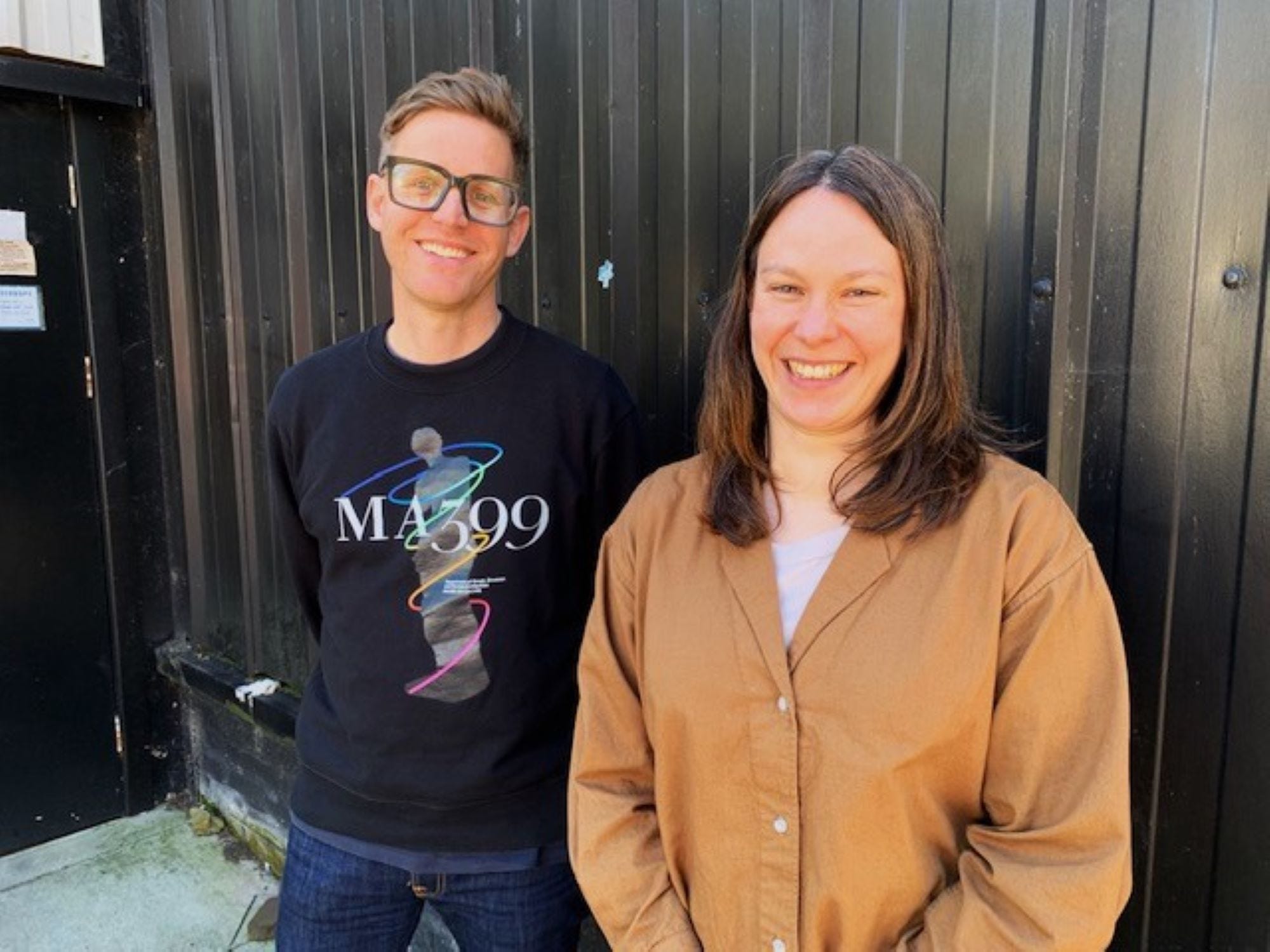
Artistic director Brad McCormick and producer Katy Vanden run the show from an office at the B. Box Studios, on Newcastle’s Stoddart Street, which could hardly be less theatrical if it tried, accommodating little more than desks and two computers.
But while the thinking might be done here, as they face each other over the screens, the action and magic take place in schools across the North East.
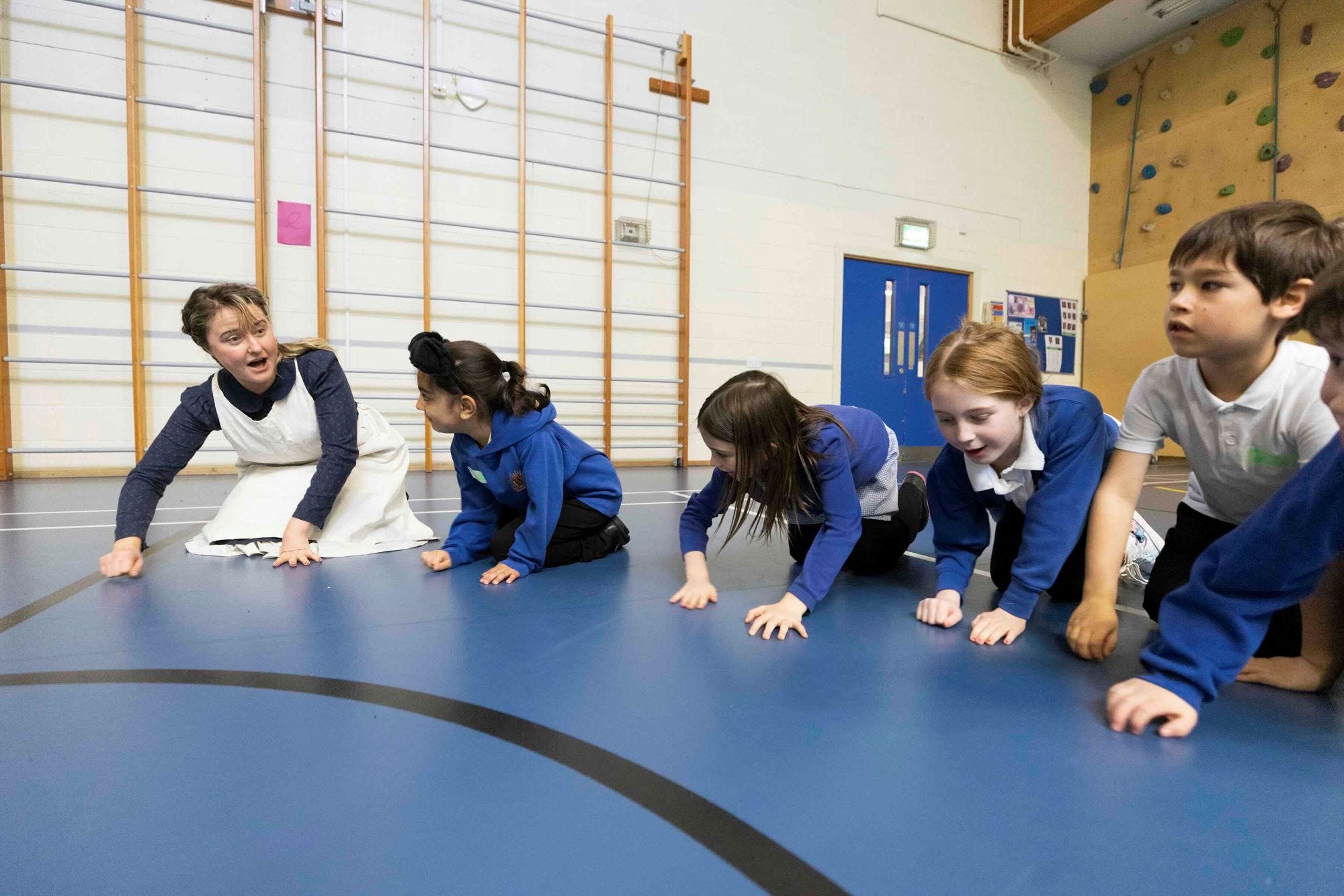
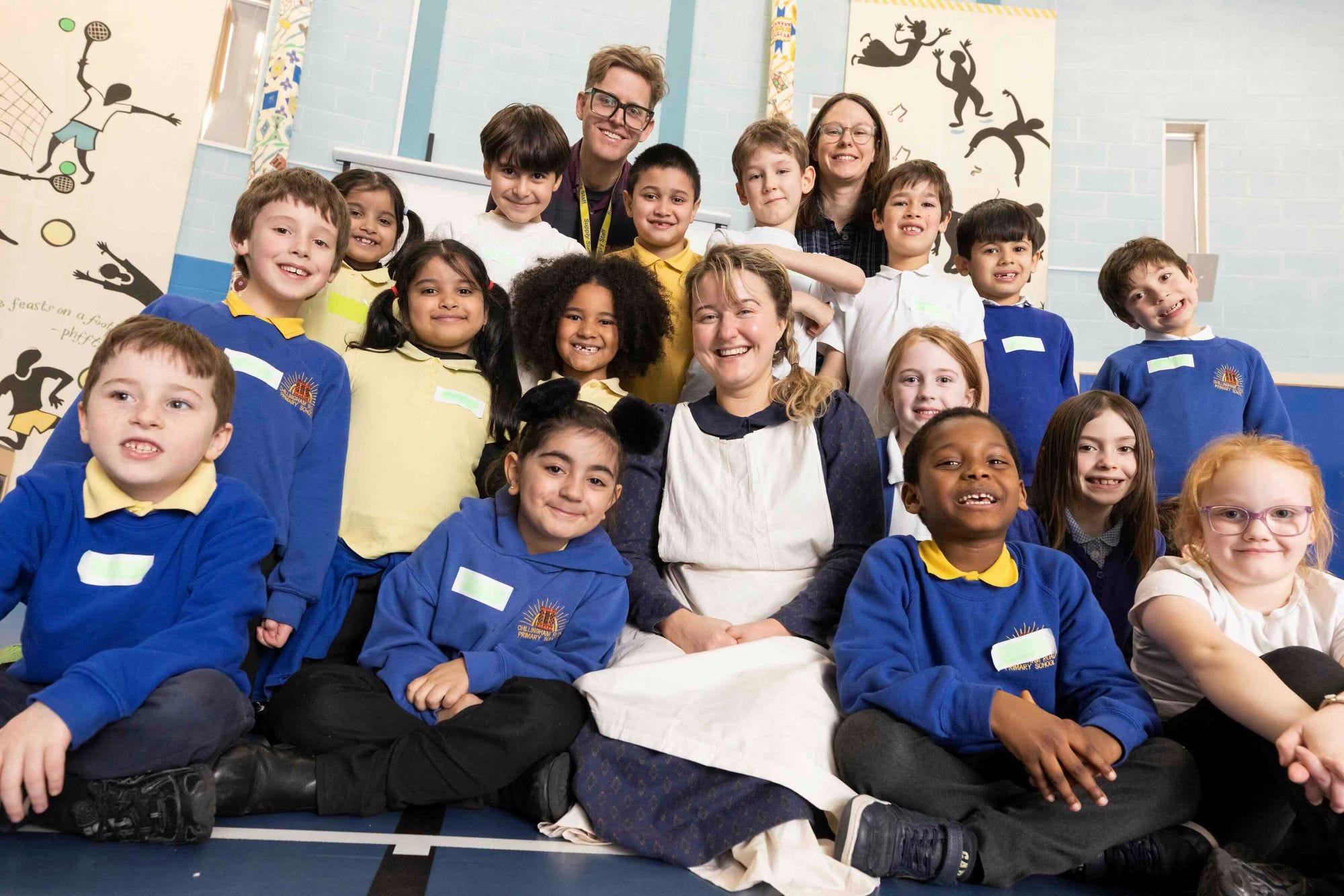
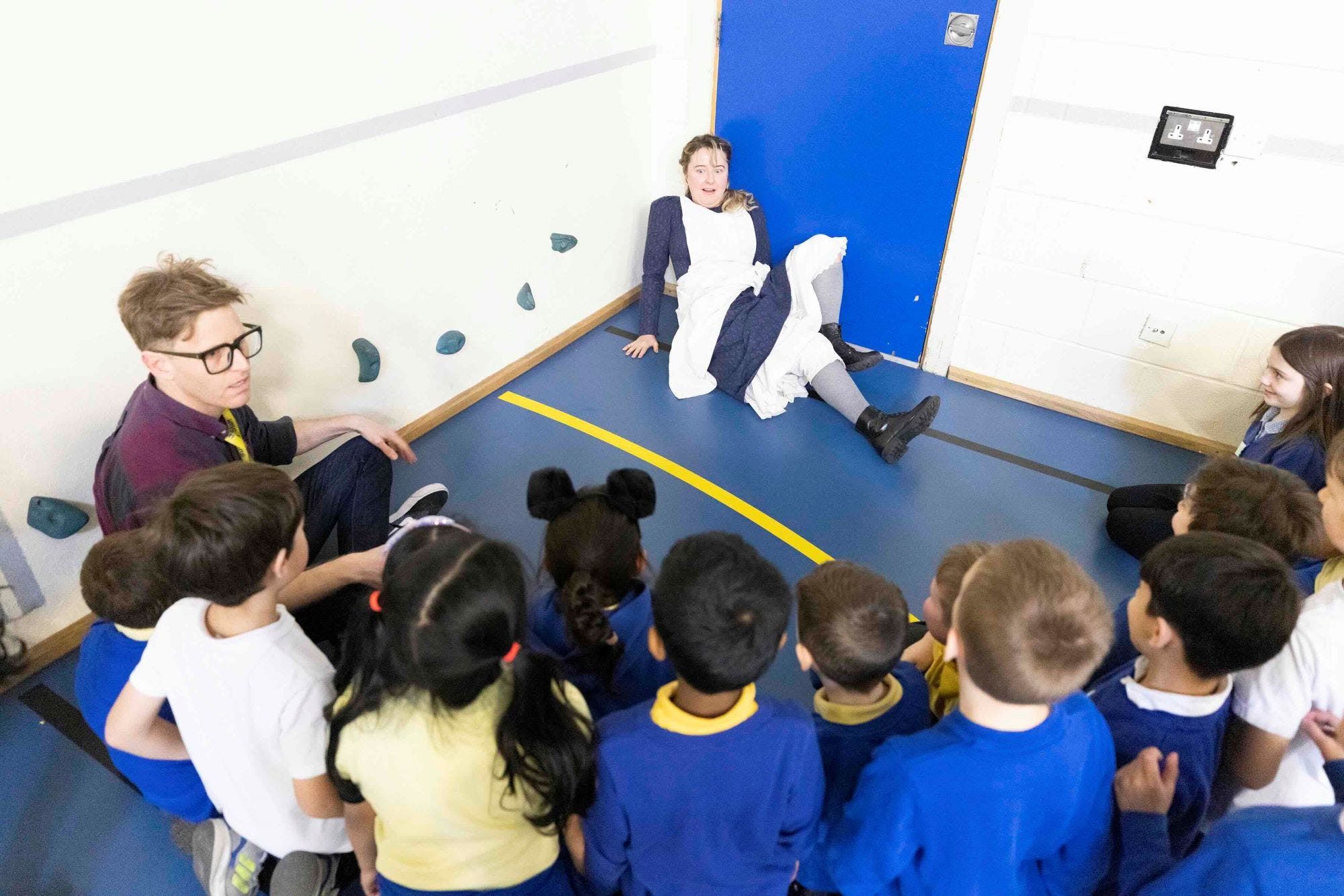
Just recently a new Theatre Cap-a-Pie project called Childhood was launched at Chillingham Road Primary School in Heaton, Newcastle, and there’s photographic evidence to suggest it went well.
It was another demonstration of the company’s collaborative way of working, getting the children involved.
Explaining the Cap-a-Pie approach for the company’s 30th anniversary report, Gordon Poad said: “When children take part in this kind of creative work, they come away feeling that they matter – that their ideas are valued and that they are part of something bigger.”
Brad says they collaborated with a Newcastle University academic, a specialist in the history of childhood, when devising Childhood, using her research as the basis for the project.
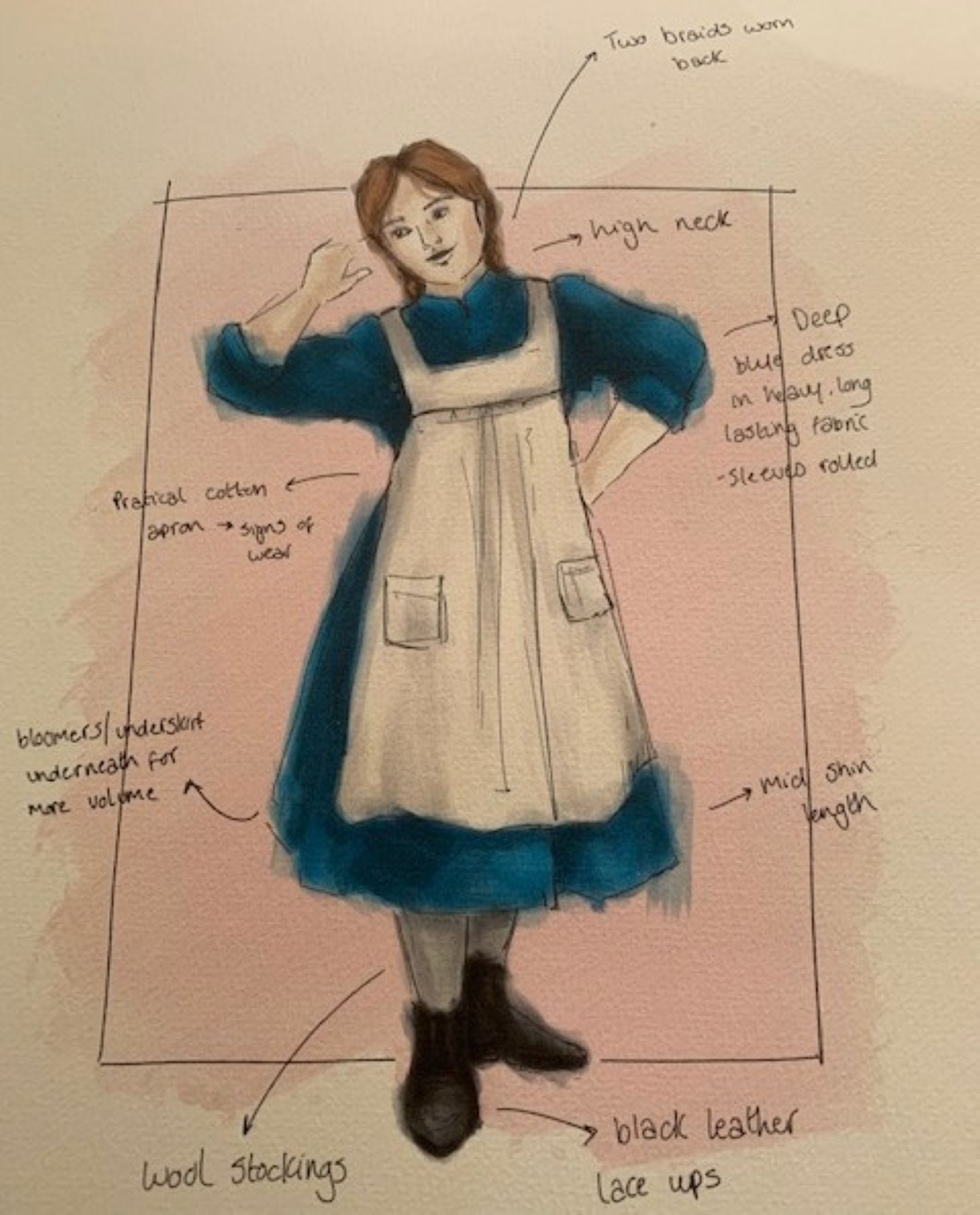
“Jeannie (that’s Theatre Cap-a-Pie facilitator Jeannie May Adam) plays a time-travelling Victorian child.
“I say to the children, ‘We’re going through into the hall to do some drama and you’ll find someone lying there. I don’t know who they are’.
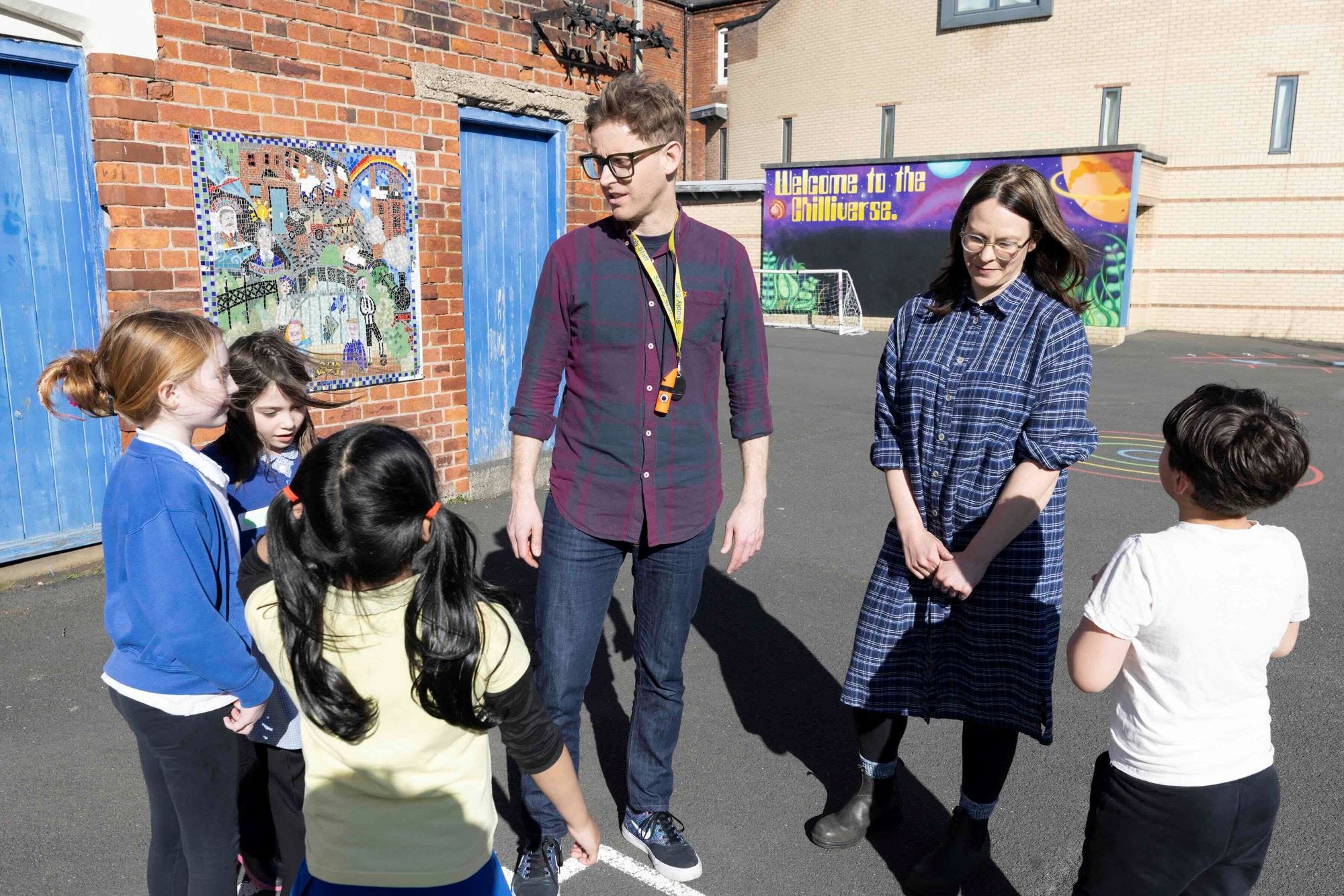
“We go through and Jeannie says to them, ‘I wanted to travel through time and I ended up here’. She plays a Victorian parlour game with them and then we go outside into the playground and they have 15 minutes to show Elizabeth (Jeannie) the games they play.
“I suppose it’s all about giving the children agency.”
Laughing, Brad says a fellow key holder at B. Box Studios said his daughter was in the class and told him she knew Elizabeth wasn’t from Victorian times – “because Victorian people didn’t have nose piercings”.
What a bright spark!
“You’d never have known that she didn’t believe because she was fully engaged in what was happening,” says Brad.
“You wonder if the children really think she’s travelled through time or are just happy to play the game. I think it’s probably a mixture of the two.”
Erica Allen, headteacher at Chillingham Road, said working with Cap-a-Pie had been a positive experience for the school and the pupils.
“The project has given them the chance to explore big ideas in such a creative and engaging way,” she said afterwards.
“It really helps to build their confidence and encourages them to share their thoughts with others in the class.
“It’s been great to see how involved the children have been and how the activities have supported their learning and their creativity.”
Theatre Cap-a-Pie has built up a repertoire of such projects over the years, winning acclaim – and Culture Awards – for the way they engage children in considering issues such as climate change.
“I think the reason for our continued success can be traced to our ongoing commitment, from the very beginning, for Cap-a-Pie to be useful to communities in the North East,” writes Katy in a foreword to that report.
“The DNA of our organisation has always been focused on how we can share theatre in ways that make a real difference to people’s lives.”
In just the past decade, the company boasts of engaging with 6,000 young people in more than 30 schools, creating performances for more than 7,000 audience members and partnering with seven universities.
They have presented work at the National Theatre and at the UN climate change conference, COP26, in Glasgow.
While most people tend to say their first experience of theatre was a panto, an increasing number could probably cite a Cap-a-Pie project or performance.
In their Stoddart Street box, Brad and Katy earn my admiration for the way they have kept up the good work.
They’re currently involved with about 10 schools in Newcastle and North Tyneside, working closely with teachers.
They also liaise with university staff in the North East and further afield.
“Universities have been urged to share what they do and I think they see working with us as a way to do that, especially when it comes to engaging with young people,” says Katy.
“It helps their research to have impact. For our project on climate change, we approach people at Newcastle University who look at different aspects of it and bring them into the classroom to talk about their work.
“It’s getting what’s happening in the university out there.”
Meanwhile, there’s the constant concern about funding. Well, I say that, but both Brad and Katy seem remarkably sanguine about it.
They’ve been knocked back once for regular Arts Council support but are currently mid-way through a three-year funding package from the Paul Hamlyn Foundation which enables them to provide their services free to schools.
“It’s been the first ongoing funding we’ve ever had really,” says Katy. “I think you always find ways to make it work. We’re lucky in having had funders who keep supporting us.”
Theatre Cap-a-Pie was lucky, I reckon, to have found this pair in quite unusual circumstances.
Brad, a New Zealander, trained as an actor and met his wife, a Teessider, when on a job in Europe. After bumping into the outgoing Gordon Poad at a children’s theatre festival, he was offered the job.
That was 12 years ago and despite running a company, he still gets to perform. For example, he plays a farmer in the Cap-a-Pie show Fizziwig the Pig, about a missing pig.
Katy graduated from Newcastle University’s folk and traditional music degree course and 14 years ago applied to Cap-a-Pie to be a composer.
She recalls: “I didn’t get it but Gordon liked my application and at the time I happened to be living two minutes from where the organisation was.
“I didn’t really want to be a composer. I wanted to get into producing. Gordon said, ‘Well, we don’t have one of those. Do you just want to do that?’ I said OK.”
If the cap fits, they say.
You can find out more about this inspiring, big-hearted and now 30-year-old company on the Theatre Cap-a-Pie website.