

Fifty years ago saw the realisation of the dream of Frank Atkinson, founder of what is now the North East’s biggest visitor attraction.
In 1976, Rowley Station became the first relocated building to be opened at Beamish Museum by Poet Laureate Sir John Betjeman, who also wrote a poem to commemorate the occasion.
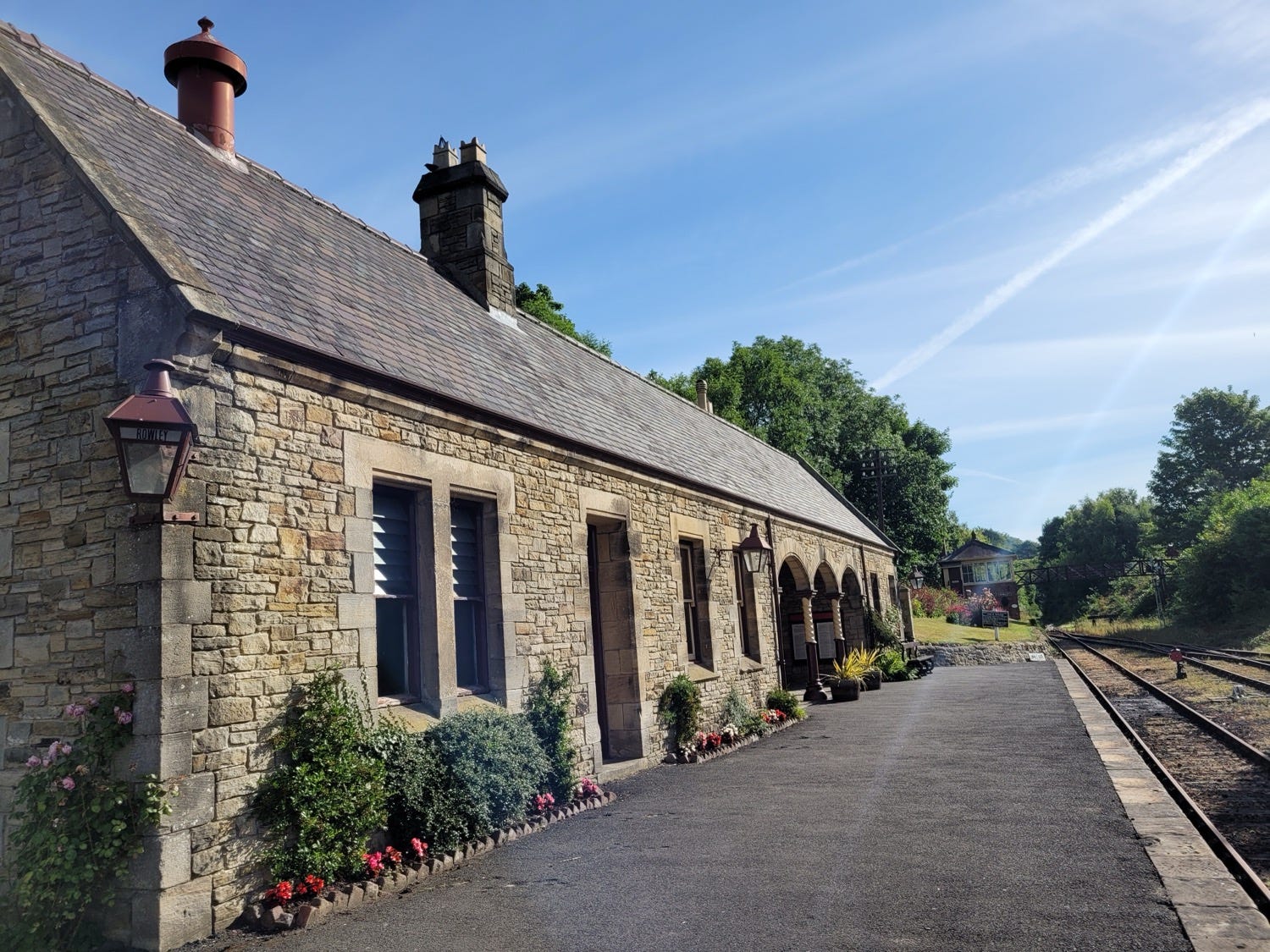
Now Beamish is celebrating the 50th anniversary of the rebirth of Rowley Station, which stands near the museum’s 1900s Town, and is presented as a North Eastern Railway station during the Edwardian period.
The station was originally built in Rowley, near Consett, County Durham, in 1873, on a station site dating back to 1845.
It was built to serve the village of Rowley which, at the time, had a population of around 20. The building included a booking and parcels office, waiting room, toilet facilities and a storeroom, as well as a covered area beneath the central arches - but it never had gas or electricity, and was always lit by oil.
In 1834, the Stanhope and Tyne Railway opened, becoming the earliest public railway on Tyneside and the sixth railway to be opened in Britain. One of the stations on the Stanhope and Tyne line was Cold Rowley, so named because it frequently experienced heavy snowfall in winter.
Cold Rowley became a major local collecting and dispatch point for goods traffic and, until 1846, all traffic to the station was goods traffic. The station was renamed as Rowley in 1868.
In 1854, the North Eastern Railway (NER) was formed and incorporated several companies, including the York, Newcastle, Berwick line, the Stanhope and Tyne line and, in 1863, the Stockton and Darlington line.
Competition from other forms of transport began to affect the railways and, after 1920, the decline in demand for passenger rail services on many small lines led to the closure of smaller stations for passenger traffic.
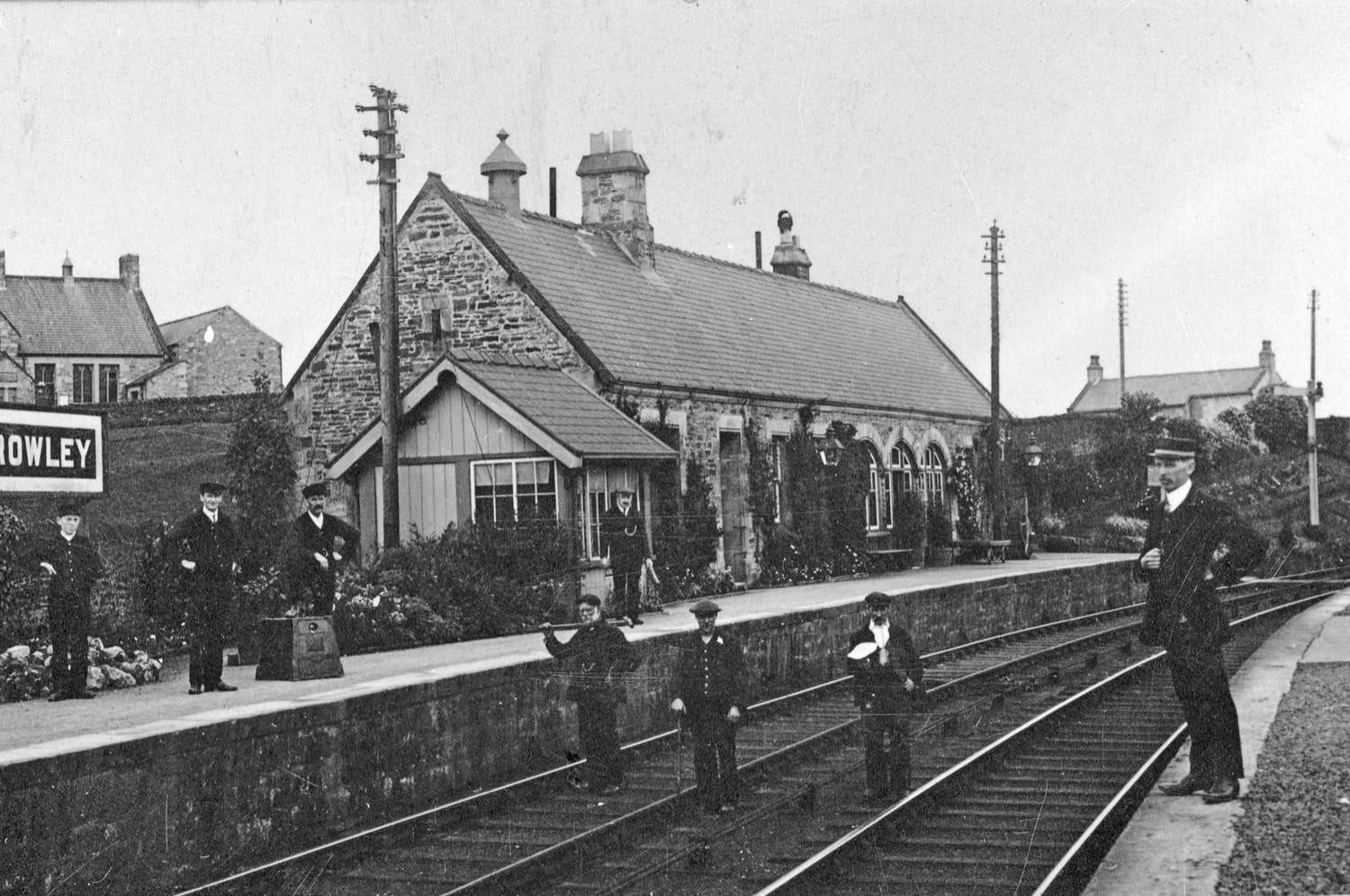
In 1931, 1,548 passengers used Rowley Station but by 1938, this figure had declined to 753. The station closed to passengers in 1939, and later closed for goods traffic in 1966.
By the 1970s, the station buildings had fallen into disrepair but it had been earmarked by Frank Atkinson, who envisaged an open-air museum based on rescued and rebuilt buildings.
Between 1973 and 1974, the station was dismantled, with each shaped stone and piece of timberwork being numbered for when the station was rebuilt at the museum.
Paul Jarman, Beamish’s director of development – transport, industry and design, said: “It is quite sobering to consider how long some of the buildings at Beamish have been in their ‘new’ location, compared to their span of time in use with their former owners and users.
“This station building has now achieved a very large percentage of its total existence, in situ at Beamish. The building is of great significance to the museum, and one of which we are very proud, given its local provenance and impressive façade.”
Visitors are currently able to catch a steam train ride to and from Rowley Station on weekends during the local school holidays.
The museum also explores the story of railways at its Georgian Waggonway exhibit, which opened in 2001 and represents 1825, the year the Stockton & Darlington Railway opened.