

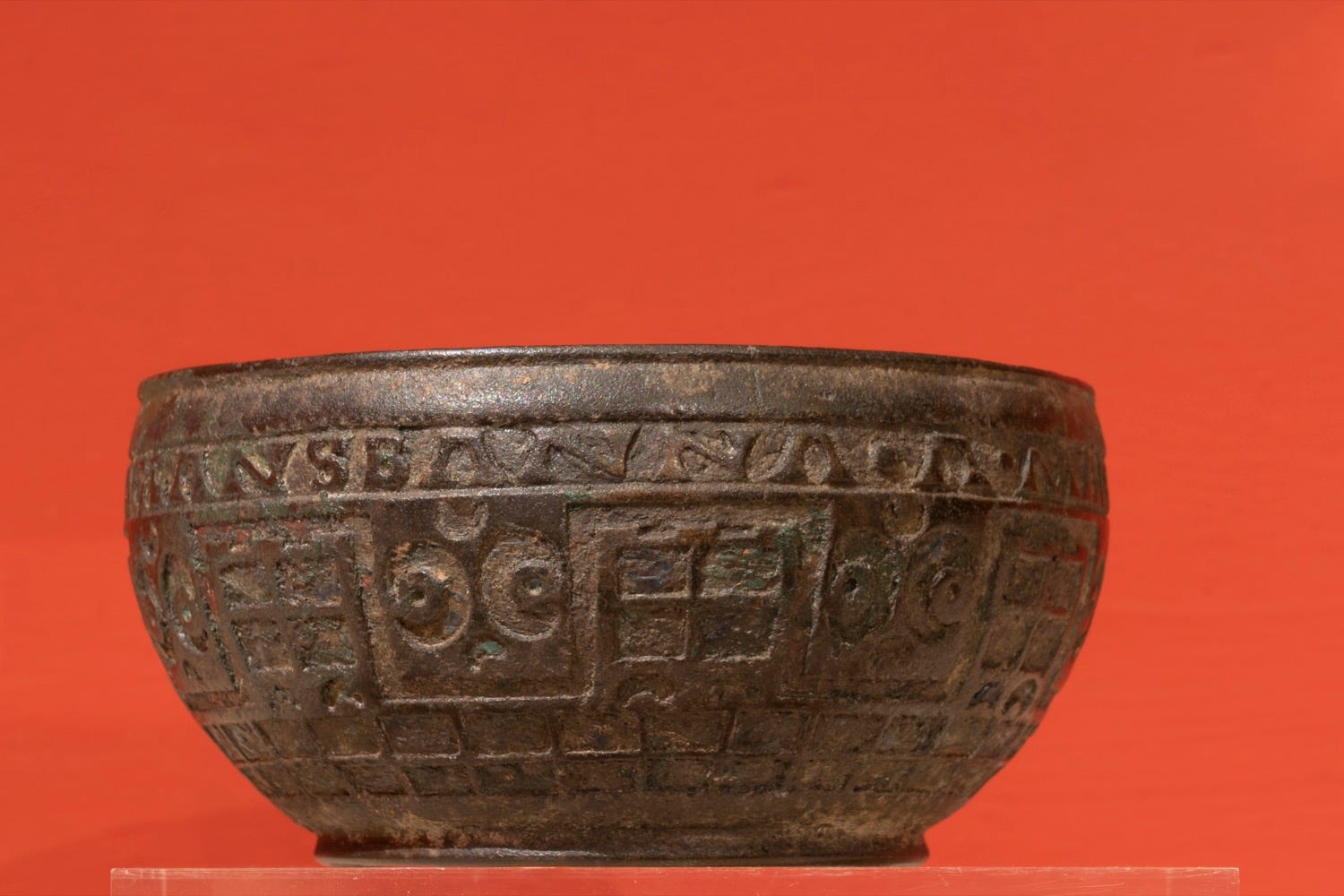
The discovery of a Roman cup in Spain has added to the belief that such expensive objects were souvenirs or keepsakes of soldiers who served on Hadrian’s Wall.
A new study of the cup found in Berlanga del Duero in Soria is the only one of several similar items which has inscriptions of forts in the eastern sector of the Wall. They are the Northumberland forts of Cilurnum (present-day Chesters), Onno (Halton Chesters), and Vindobala (Rudchester), plus Condercum in Benwell in Newcastle. Other cups list bases in the western sector of the Wall.
This is the case with the Rudge Cup, which is in the possession of the Duke of Northumberland and is on display in Alnwick Castle.
The small enamelled bronze cup was found in 1725 at Rudge, near Froxfield, in Wiltshire, and lists five forts.
The Rudge Cup was part of a 2022 exhibition at Chesters fort in Chollerford by English Heritage featuring a collection of the Wall’s oldest souvenirs.
The bowl-like cup appears to show a schematic drawing of Hadrian’s Wall originally picked out in coloured enamels with turrets and milecastles, although this is open to debate.
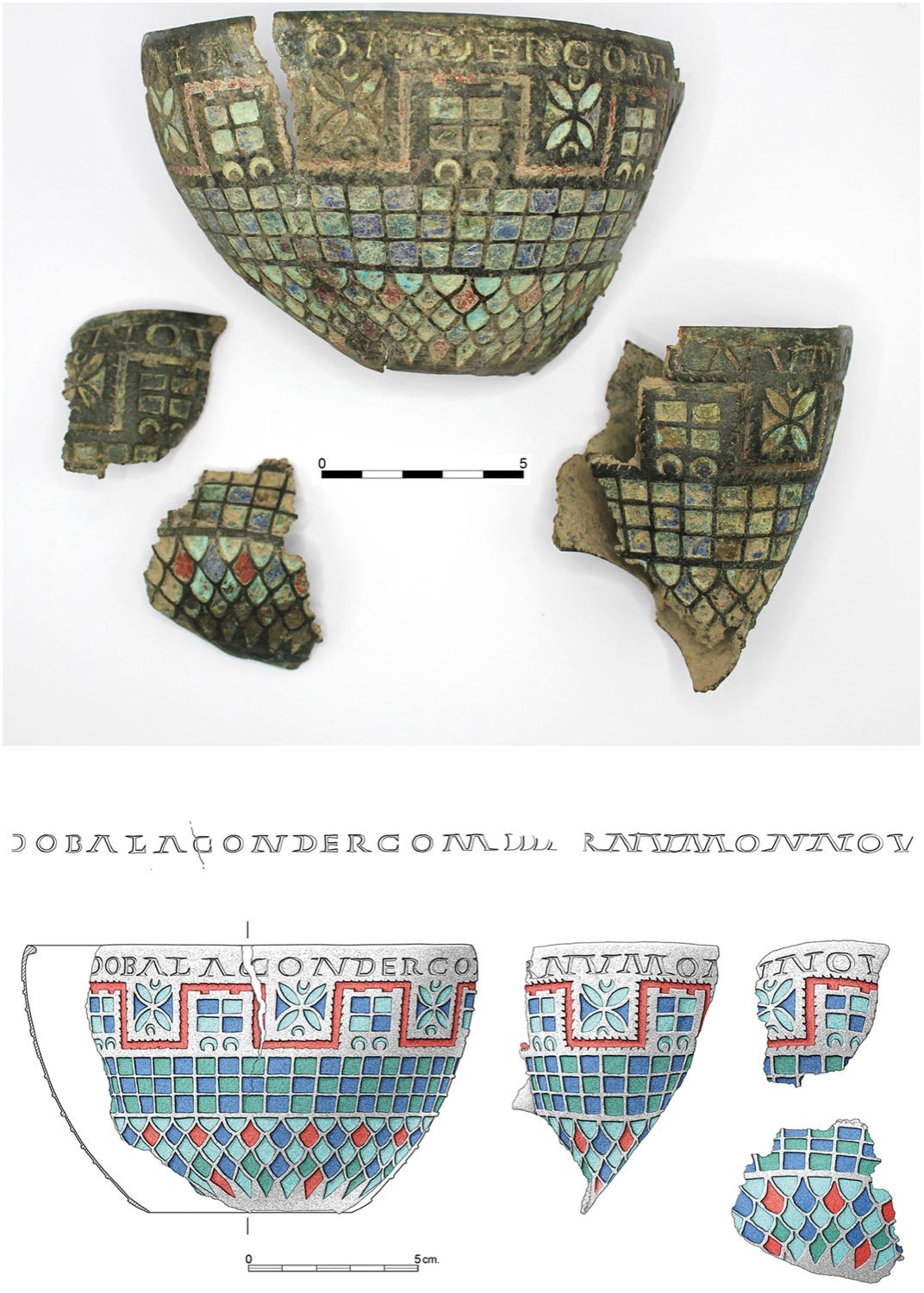
Similar objects have been found in Amiens in France and a more recent find in Staffordshire, which also carry Wall fort names.
“These are likely to have been expensive one-off commissions, perhaps for officers, as higher-end souvenirs of their time on Hadrian’s Wall or as a reminder of their service of which they were proud,” said Frances McIntosh, Hadrian’s Wall curator for English Heritage.
“The Spanish find is in the same style as the Rudge Cup and is an exciting development in that it lists forts in the east of the Wall.”
Researchers from the Consejo Superior de Investigaciones Científicas (CSIC) and the Museo Arqueológico Nacional (National Archaeological Museum) have published the new study of the Berlanga cup, with analysis carried out at Durham University.
The cup may have been the possession of a Roman soldier of Celtiberian origin who had completed his military service on the Wall and set out on the long journey to his homeland that today makes up the Castilian-Leonese province of Soria in Spain.
It displays three horizontal friezes enamelled in red, green, turquoise and navy blue to reproduce the profile of the Wall with crenellated turrets, while the Latin inscription runs along the top edge of the piece.

To determine the origin and date of manufacture, the team carried out analysis at Durham University’s geochemistry laboratory.
The results reveal that the cup is made of bronze - largely copper and tin - with a substantial addition of lead that likely came from mines in northern England, most likely from the North Pennines.
By combining this technical data with historical information about the forts mentioned in the inscription, the cup has been dated to between 124 and 150 AD.
The Romans recruited soldiers from conquered territories into their army, and it is known that a Hispanic Celtiberian unit, the Cohors I Celtiberorum, served on Hadrian’s Wall.