


Jaded by cute robins and jolly red-faced Santas dropping onto your Christmas doormat?
Many Victorians also had their fill of cuddly festive cards, reveals English Heritage.
Its Belsay Hall and Gardens and Lindisfarne Priory attractions in Northumberland, along with Tynemouth Priory and Castle, are selling a limited-edition collection of four charity Christmas cards, highlighting what were popular grisly Victorian festive illustrations.
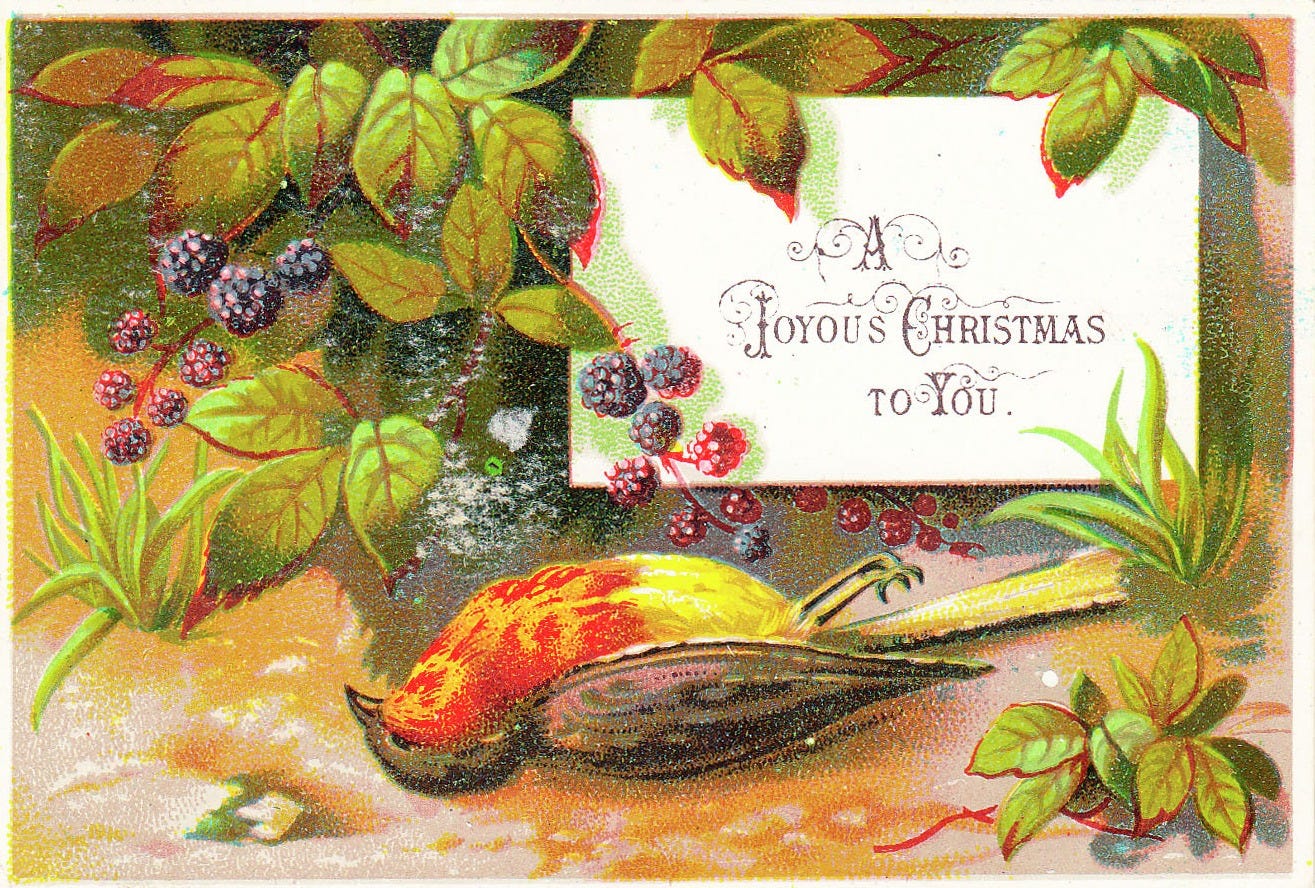
Featuring a murderous frog, a dead robin and bloodthirsty fairies cooking a rat over an open fire (makes a change from turkey), the reproductions of genuine 19th-century Christmas cards show a darker side to the traditional Victorian Christmas.
Many of today’s favourite ‘cosy’ Christmas traditions – from decorated trees to puddings – were popularised by the Victorians and have remained broadly similar over the years.
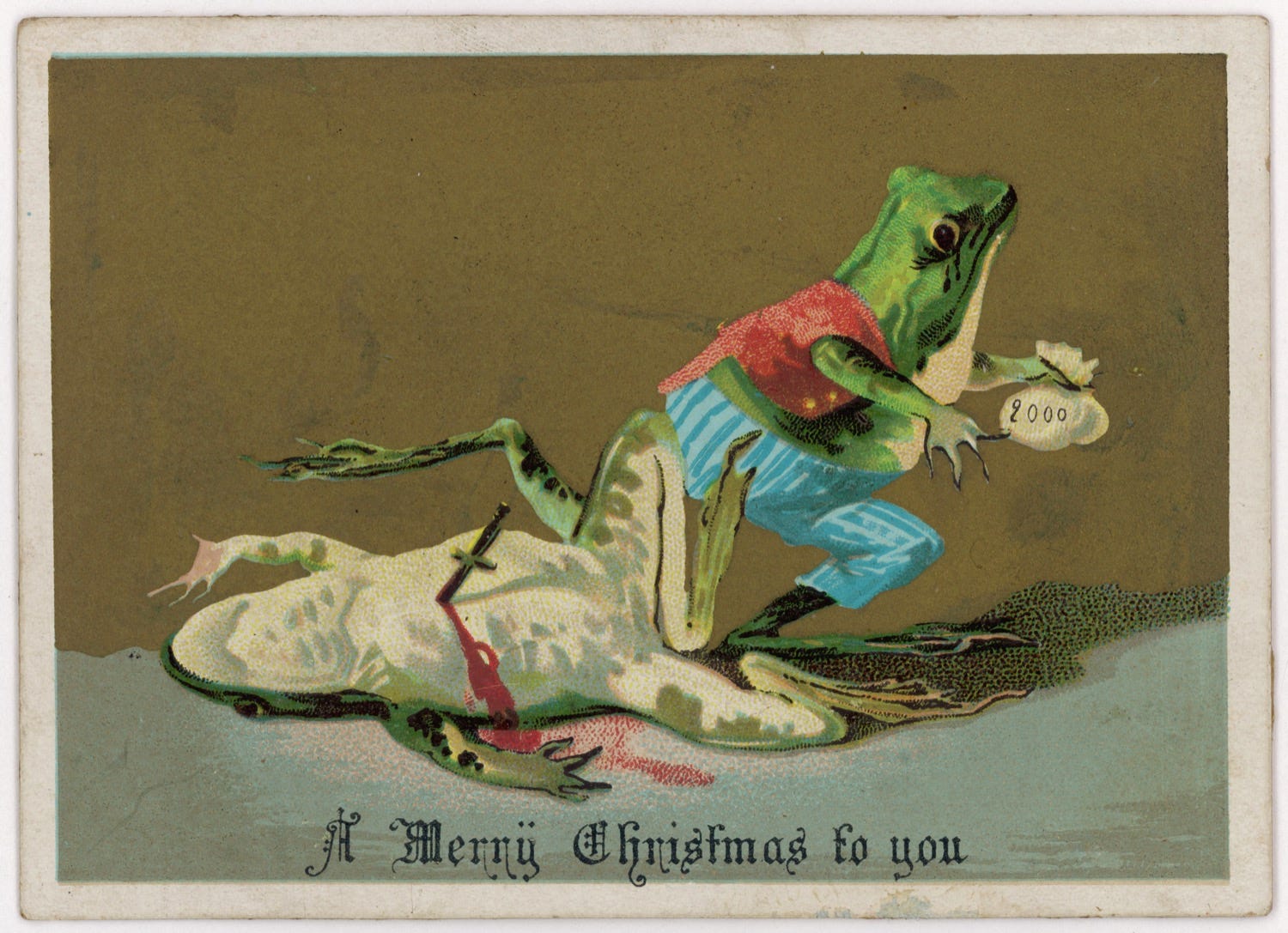
While today’s cards tend to feature familiar festive favourites such as snowmen and wintry landscapes, Victorian designers were considerably less inhibited. In addition to traditional seasonal imagery, the illustrations on many 19th-century cards featured violent encounters, fantastical scenes and absurd animals.
Curator at English Heritage, Peter Moore, said: “The Christmas card industry expanded rapidly in the 19th century, driven by advances in printing technology and the growth of affordable postal services.
“As sending Christmas cards became increasingly popular, publishers competed for customers with unusual, eye-catching and sometimes downright bizarre designs. While traditional religious and sentimental images remained popular, there was also a market for novelty cards intending to amuse the recipient.
“Many of these illustrations play with the uncanny, depicting animals behaving like people in scenes that could be humorous, absurd or unexpectedly violent.
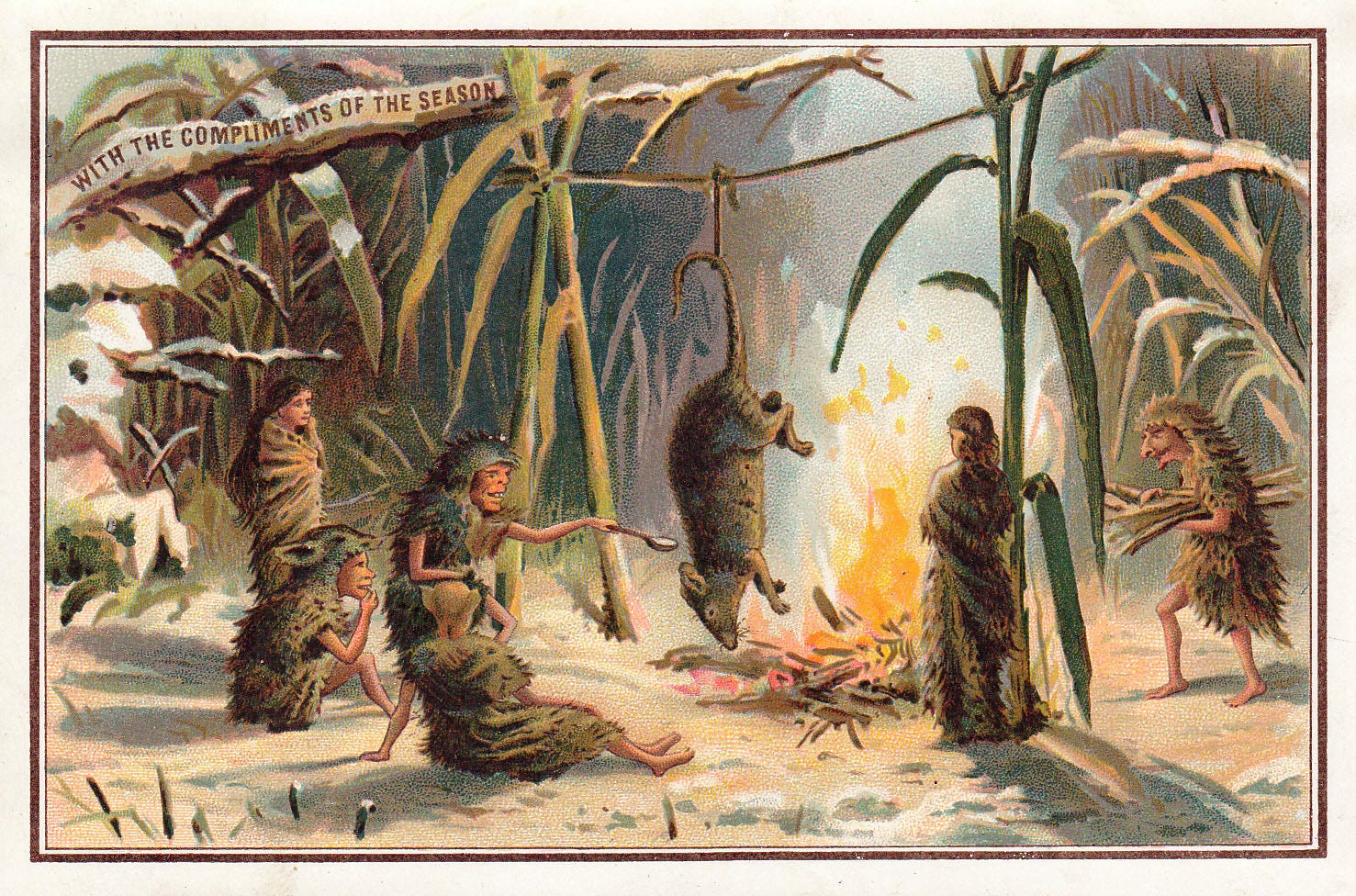
“This reflected a wider Victorian fascination with interests in the macabre, from anthropomorphic taxidermy which displayed animals engaged in recognisably human activities, to the ghost stories that were popular reading, particularly at Christmas.
“The dead robin is a particularly intriguing example. Robins became associated with Christmas through their connection with Victorian postmen, whose red uniforms earned them the nickname ‘robins’.
“By depicting a dead robin, the image turns a familiar symbol of Christmas into something unexpected and unsettling. While it may seem a surprisingly bleak choice, it perhaps appealed to the same enjoyment of dark, surreal and macabre humour that is still embraced by many today.
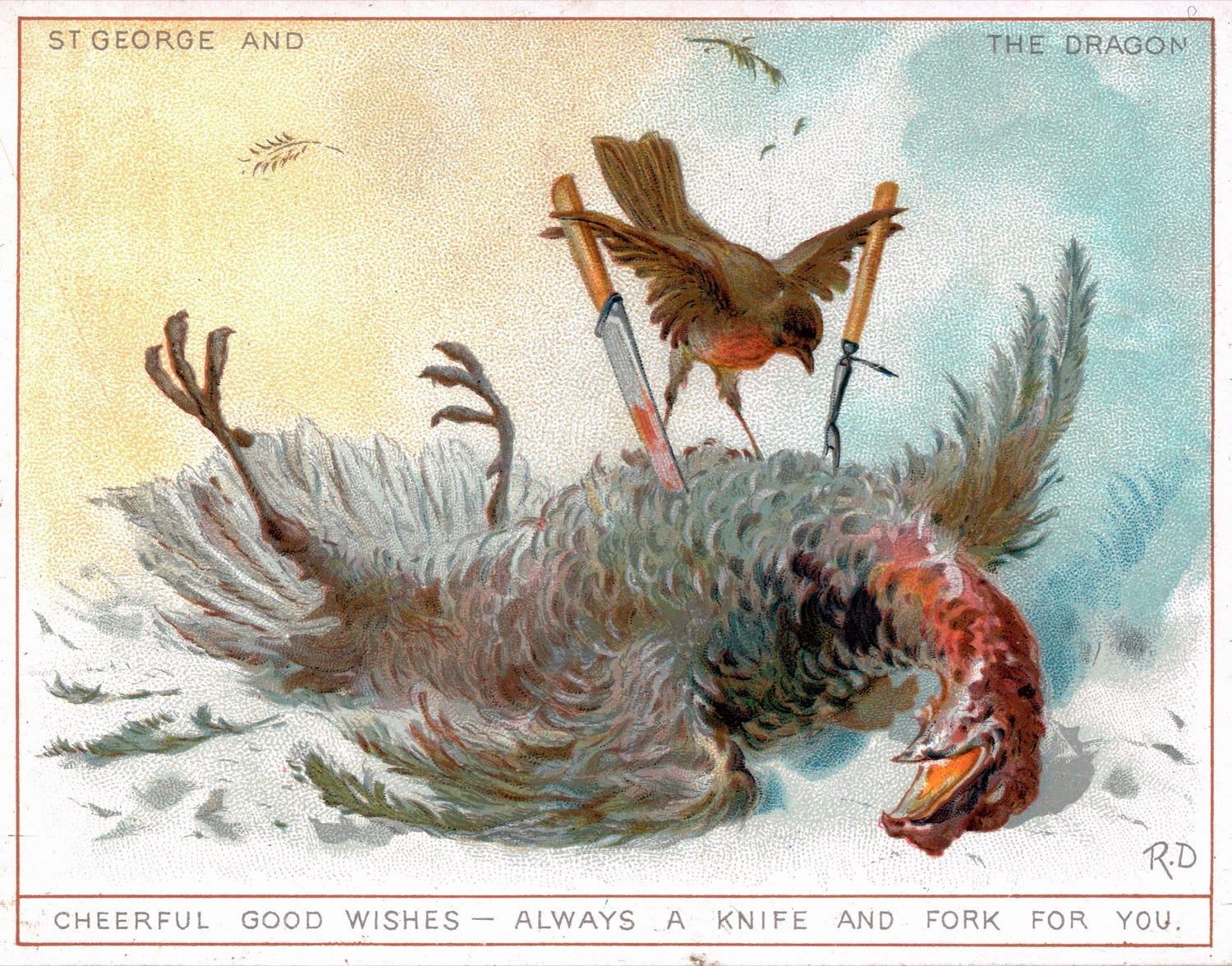
“There’s a fine line between humour and horror, and these curious Christmas cards sit right on it.”
The four cards are available to buy in English Heritage shops while stocks last, alongside the charity’s more traditional range of cards featuring snowy illustrations of its historic sites.
Each card is priced at a suggested donation, with proceeds going towards caring for English Heritage’s historic buildings and monuments. The Victorian cards have been reproduced from the collection held by the Mary Evans Picture Library.
