


A big weekend is coming up for the visual arts in Middlesbrough with the high profile Turner Prize exhibition opening at MIMA.
It’s a chance for this aspirant town – a longlisted contender to be the next UK City (yes, City) of Culture - to show outsiders that what they thought they knew about the place might not be the whole story.
This is also the start of the well-established Middlesbrough Art Week (September 24 to October 3) with artists exhibiting and performing in various venues.
Running alongside the Turner Prize exhibition, and further highlighting the area’s vibrant arts scene, is the Turner on Tees programme which embraces the most prominent exhibition spaces.
Supported by Arts Council England, MIMA and Teesside University, it is part of a strategy called The Next Wave: Creativity Rising aimed at building and sustaining culture, confidence and creative ambition across the Tees Valley.
Read on to meet a couple who have found Stockton a supportive and welcoming place for their performative art… and a photographer from the area whose work is being celebrated in parallel with the Turner Prize contenders.
BALANCE at Arc, Stockton…
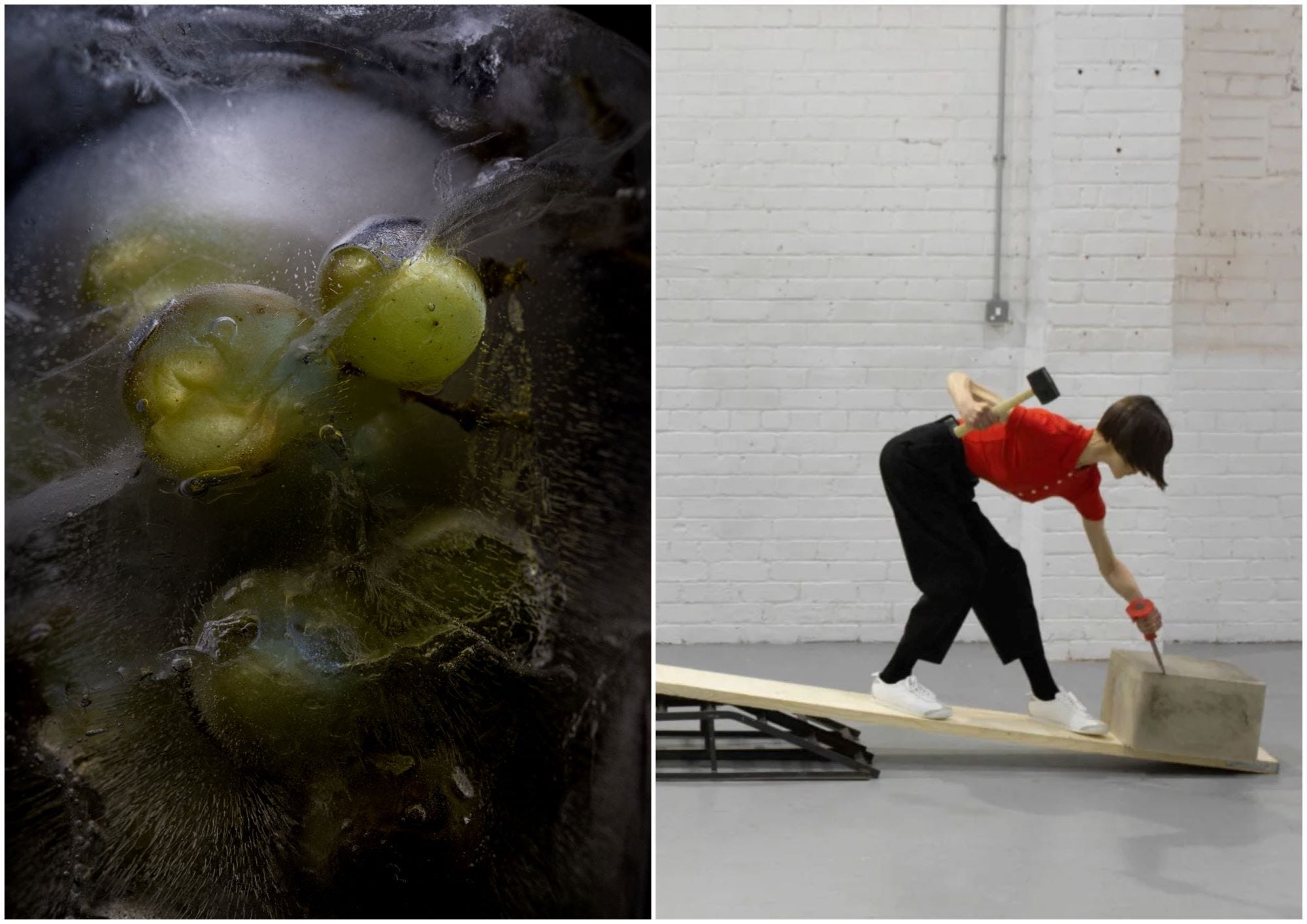
At two o’clock on Friday afternoon (September 25) Gillian Lees will get to work, standing on one end of a seesaw holding a hammer and chisel.
Keeping her airborne at the other end will be a concrete block, playing the spoilsport’s role of preventing the seesaw from doing what a seesaw does.
It isn’t even a proper seesaw – just a plank over a central fulcrum.
But Gillian’s aim, over several hours, will be to chip away at the block until it equals her weight, thereby justifying the title of the work, Balance, and becoming what she and collaborator (and husband) Adam York Gregory call “a sculptural equivalent of Gillian, a likeness in mass”.
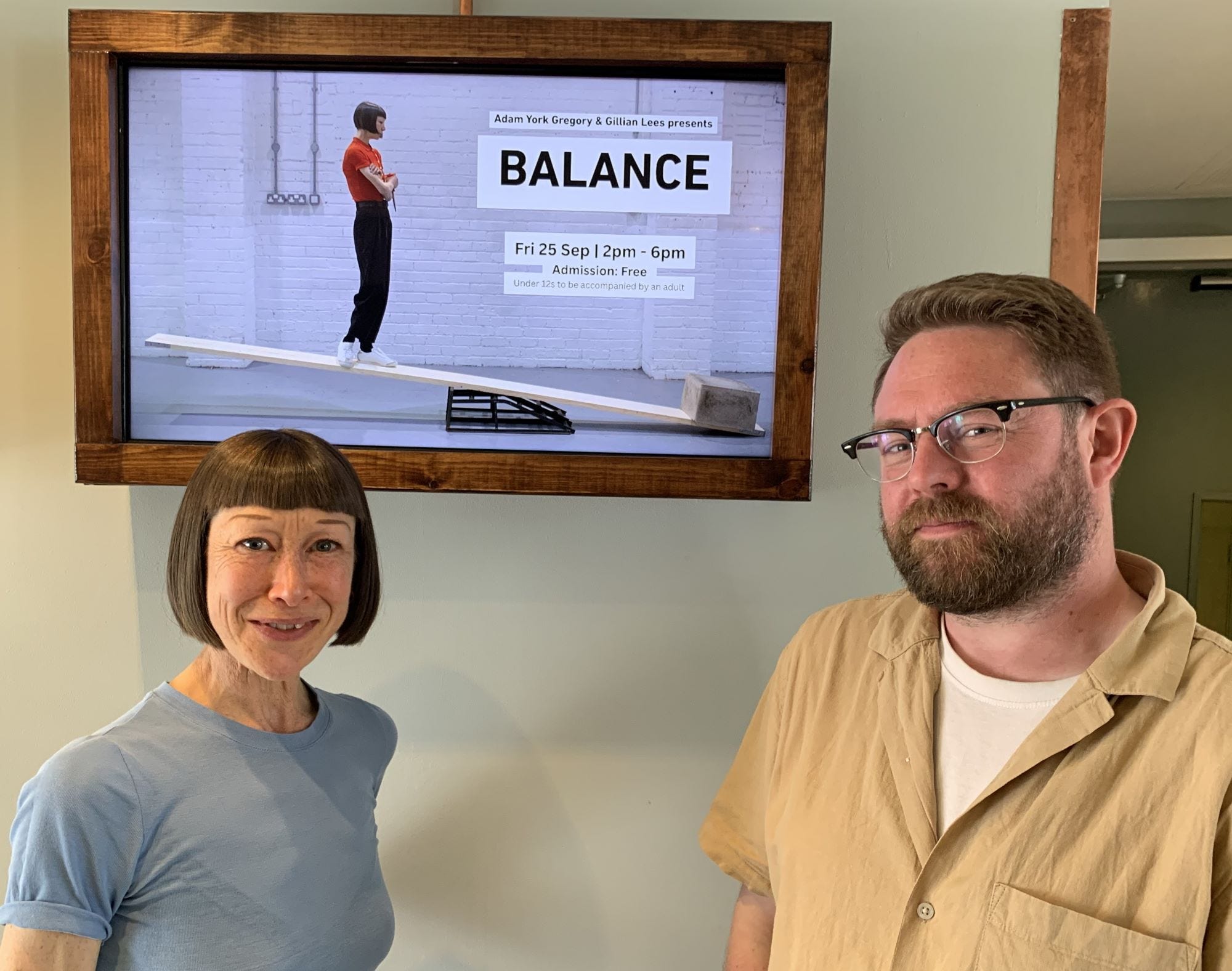
It will, they suggest, be “a self-portrait, bearing all the scars of the work that made it”.
It won’t look like Gillian, of course, but a likeness was never the aim.
So what is the aim?
At Arc, the Stockton arts centre where Balance is to take place (entry is free and you can come and go at will), the couple tell me it’s not to complete a task, as a portrait sculptor would have to do.
“If it was task-based I might be there six weeks,” says Gill. “Or I might hit the right spot and it’ll crack in half. It could be over in 10 seconds.”
That’s unlikely, since they tested various concrete aggregates and at the one previous public performance, in Lancaster, Gillian was chipping away for six hours.
“Because there’s no end, I just go at it. I surprised myself that I kept up the same rhythm.”
The pair balk a little at the word ‘performance’. Adam says: “It’s something that’s happening, an endeavour… it’s just Gillian hammering away at a brick.”
That might seem harsh on Gillian who’s the one putting in the physical effort.
But she doesn’t disagree, saying: “Adults seeing this sort of thing tend to assume there’s something they’re not getting but there’s no artifice.”
Children, she finds, are more accepting. “My mum used to take my niece and nephew to everything I did and they just sat and stared,” says Gillian.
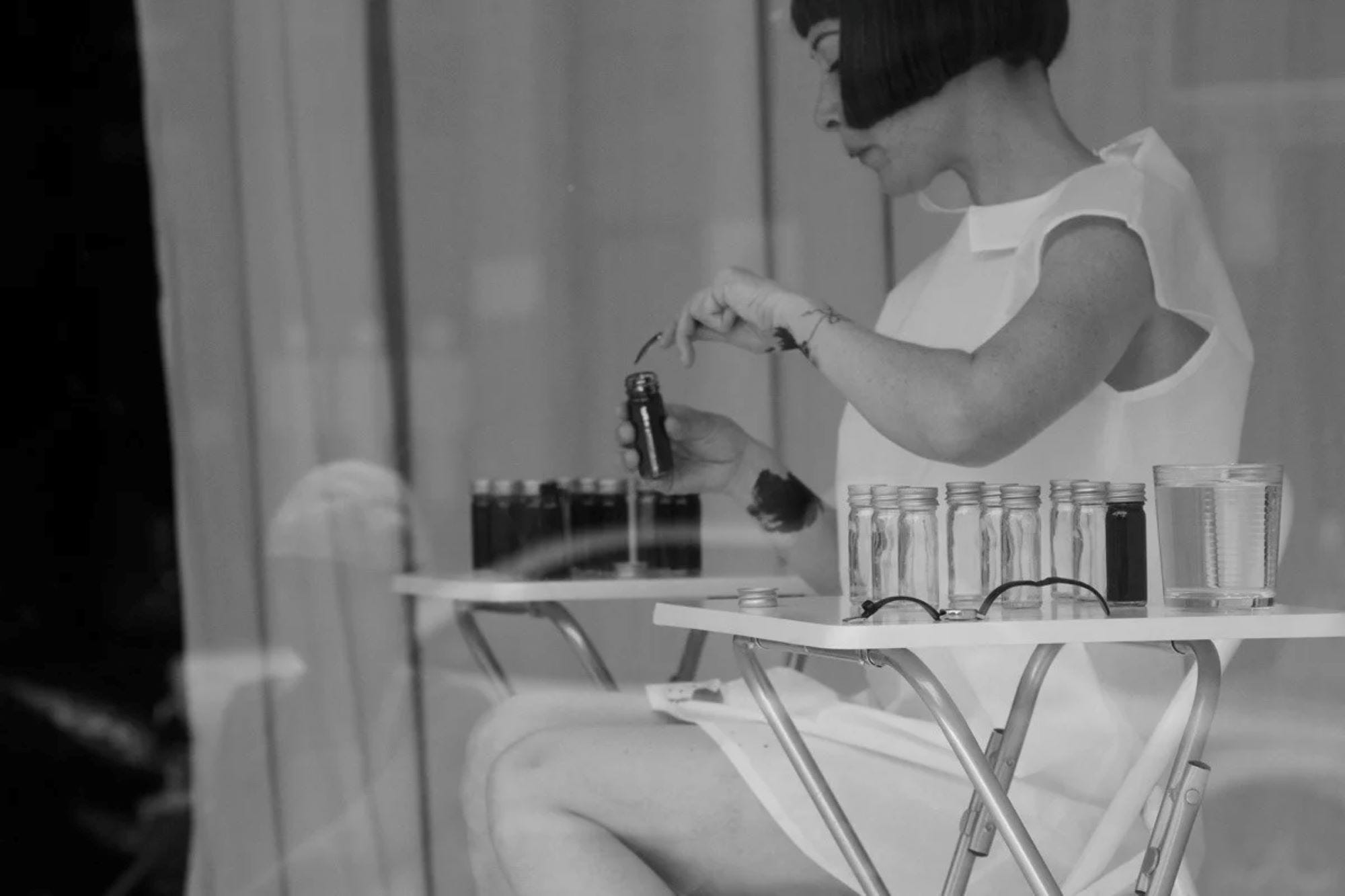
One of the couple’s earliest works together, Constants and Variables, had Gillian sitting in a white paper dress while transferring ink with a spoon from bottles on her right to empty bottles on her left.
“What are you doing?” piped up a young boy, seeing it in America. Gillian explained that she was trying to transfer the ink without spilling any.
“Doin’ a good job, lady,” replied the kid before darting from the room.
Gillian, from Glasgow, trained as a dancer and studied contemporary performance making at the Royal Scottish Academy of Music and Drama.
She dates her love of prolonged performance to a piece she saw one evening in Glasgow called On Everest.
“You entered this space and it smelled of sweat and there was a man, wearing the kind of kit you’d wear on Everest, walking back and forth.
“The idea was that we’d joined him as he approached the summit.
“He’d been there since 6am. It blew our minds. You’re not doing something like that for applause. You’re doing it to see if you can. I can still feel the excitement of that moment.”
Adam, from Lancashire, studied biochemistry but was drawn into the arts through animation and a love of reading and text.
The pair met when Gillian needed someone with scientific understanding to help with a project and hired Adam.
Mutual interests and compatibility led to marriage and a string of durational performances.
“We spend a lot of time conversing about things that interest us,” says Gillian. “Adam will say, ‘What if…’ and then some semblance of an idea will take shape. Could we, for instance, find a way to demonstrate a tension that elicits tension in other people?”
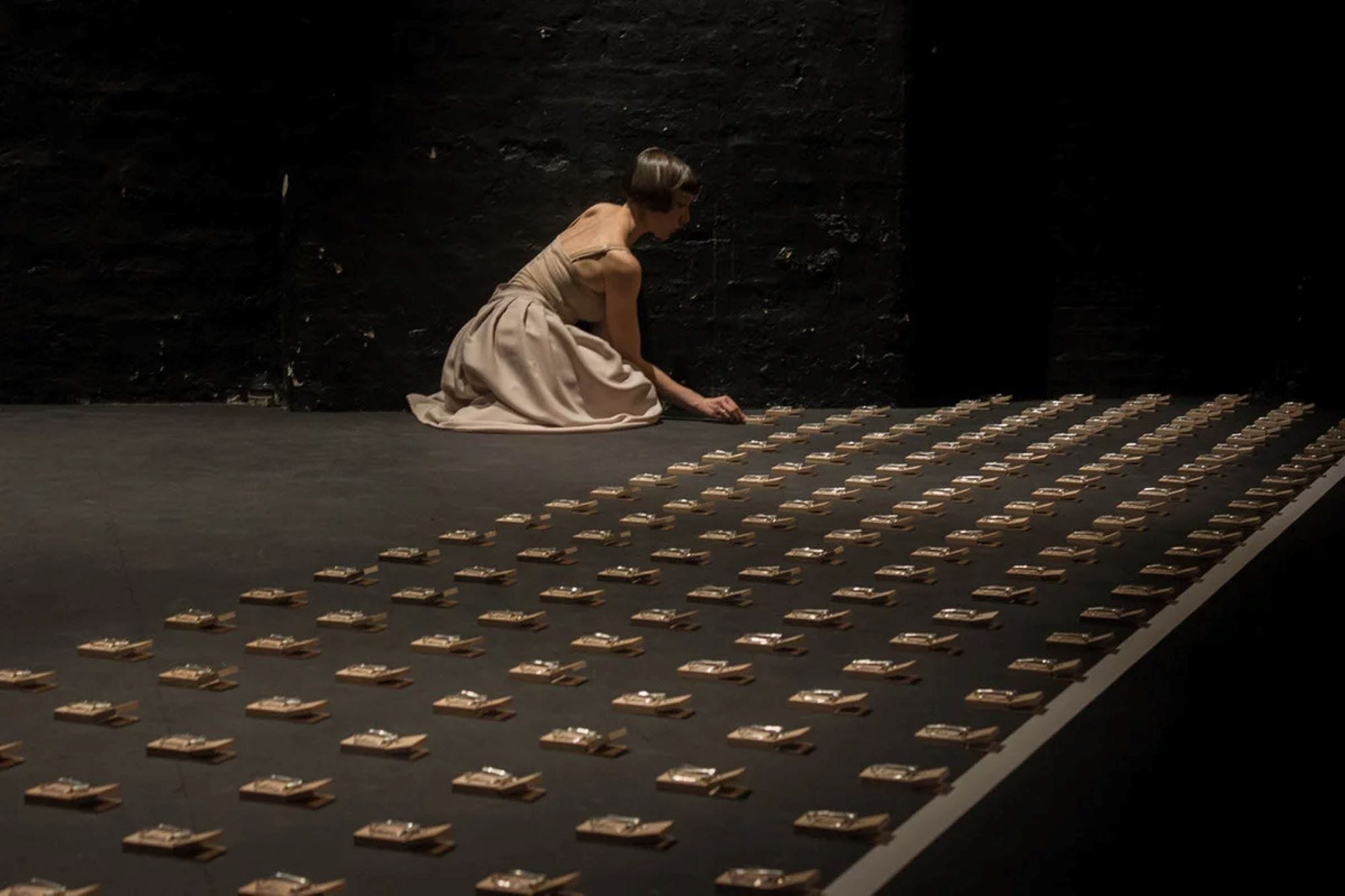
The result of that was Present Tense, in which a bare-foot Gillian set 500 mousetraps that eventually backed her into a corner.
Before she did it the first time, and to prepare herself should she have a mishap, both she and Adam snapped mousetraps onto their fingers, drawing blood.
In another piece, called Au, which the pair described as “a response on the active lobbying to rewrite the Human Rights Act 1998”, Gillian spent four hours reciting the document with a small gold nugget in her mouth.
“I wasn’t prepared for how difficult that was,” recalls Gillian. “It tasted disgusting and my jaw was in agony.”
The pair are perfectly suited to the slow performance, Gillian enjoying the challenge and Adam revealing his superpower. “I don’t get bored. It just doesn’t happen.”
Both have crosses to bear. Adam is hard of hearing and Gillian has a degenerative condition called osteonecrosis. When she last performed Balance, she had fractured feet.
But she laughs away the idea of suffering for her art, saying: “We don’t generally mention our conditions in relation to our work because we don’t identify as disabled in that way.
“You could replace me in this task and your attempt would be as valid as mine. It’s not an expression of anything I may suffer from.”
Adam says conditions may render him disabled, as when someone blocks the TV subtitles, but he adds: “I think there’s pressure on artists with disabilities to focus on that and it robs a lot of them of the ability to make the work they want.”
Gillian and Adam have made and presented several past works at Arc and are proud to be representing it at Turner on Tees. Gillian smiles as she recalls a local telling her: “You’re ours now.”
From the Transitory at Redcar Palace…
Kev Howard has always lived in the area, having grown up in Marske and moved at 18 to Saltburn, where he still lives.
He works as a photographic technician at Teesside University and is an accomplished musician with a well-travelled didgeridoo.
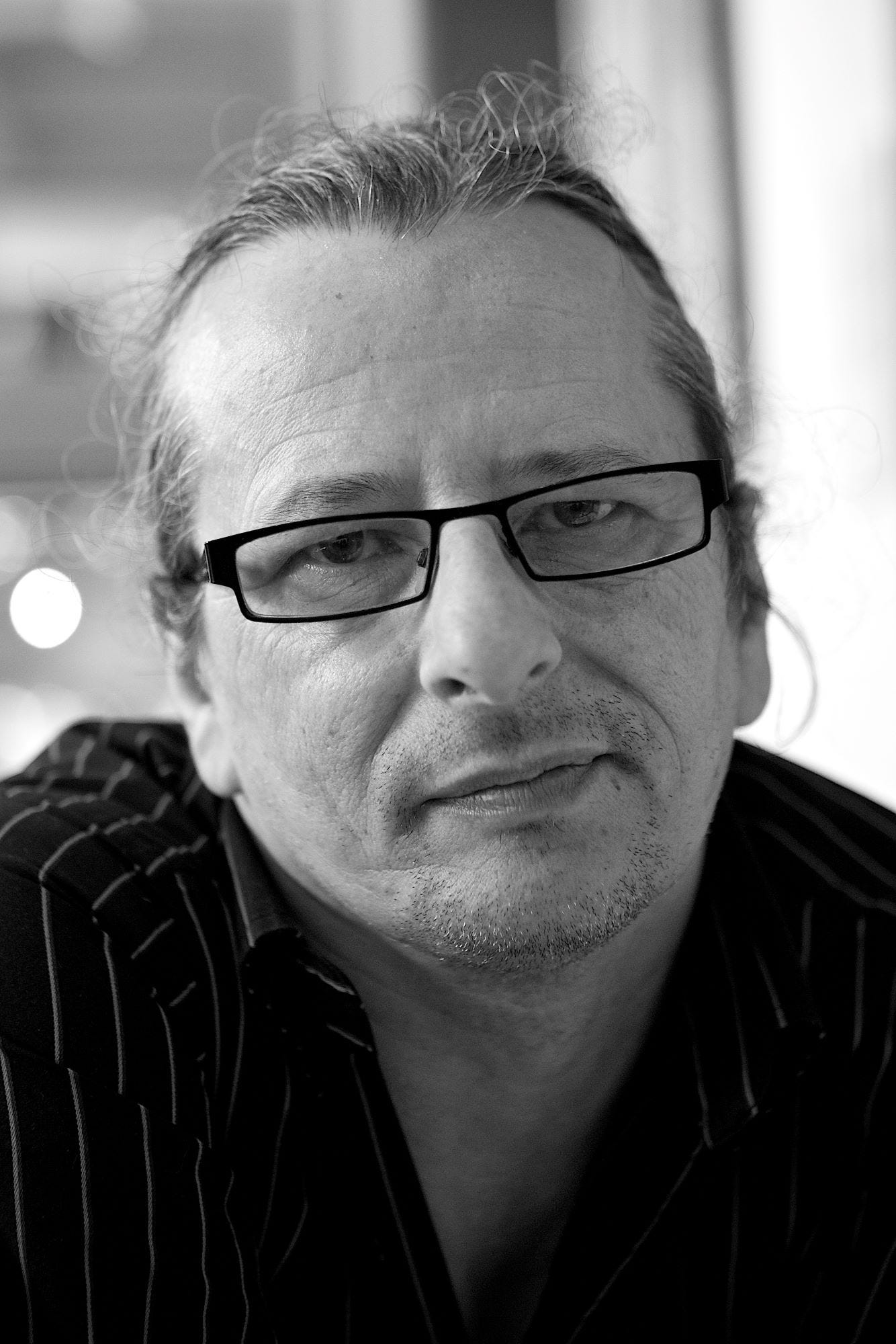
But he is best known as a photographer and is currently in the spotlight because his solo exhibition From the Transitory is showing at Redcar Palace until December 24 as part of Turner on Tees.
He was approached in November to be part of it and immediately began producing new work.
“The Turner Prize is huge and it’s such a coup Mima got it. To be asked if I’d show work as one of the satellite exhibitions was a big privilege.
“Teesside has always produced phenomenal artists and this should make it apparent to more people that it’s a creative hub and always has been.”
Kev’s exhibition is part retrospective, showing the different facets and phases of his photography.
“I think the earliest piece is from 1983 when I was photographing the punk and goth culture which I was part of.
“Then there are works from the 1990s around portraiture and landscape.”
Using mainly black and white film, Kev photographed bands, poets and the cultural scene, and also documented demos and other societal phenomena.
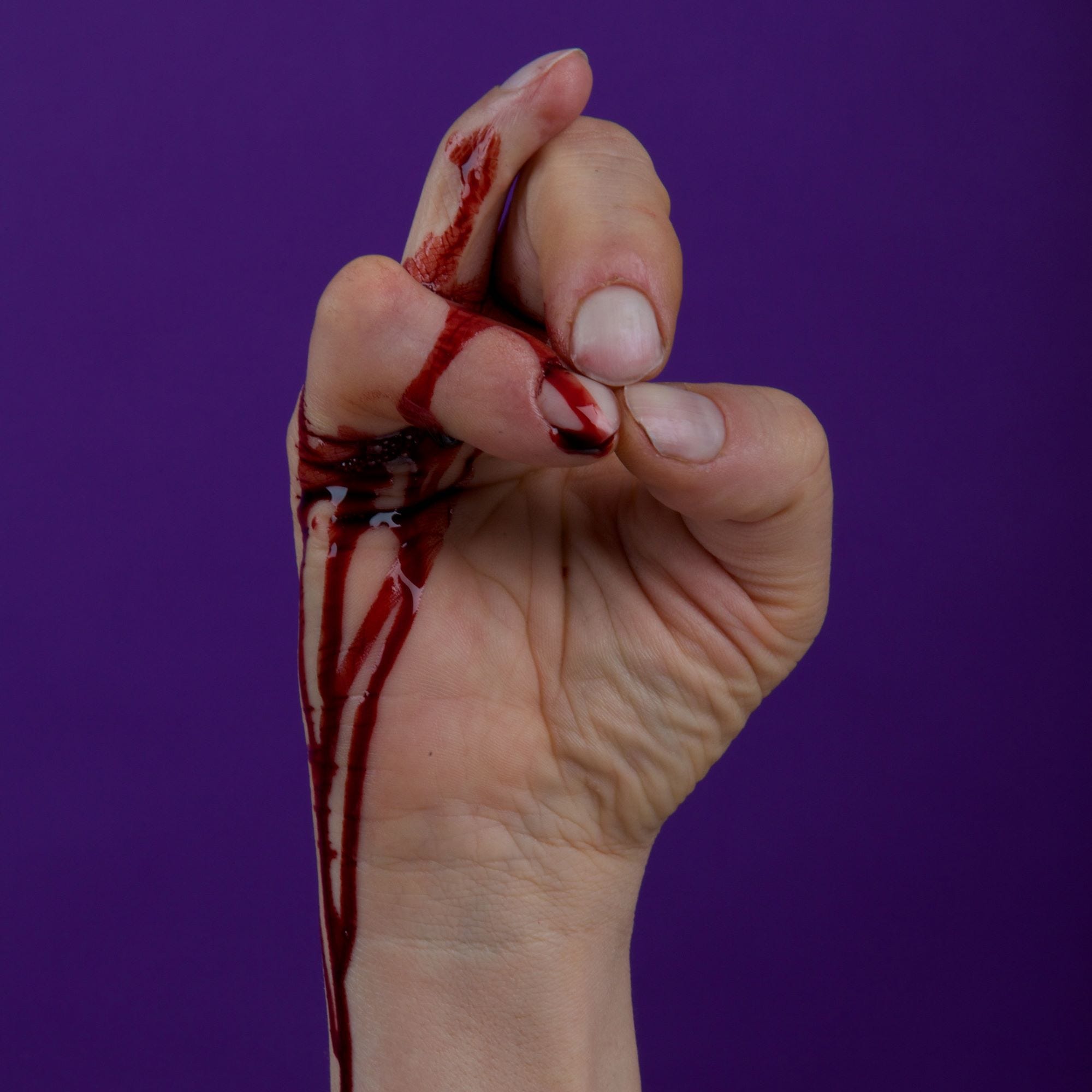
Then in 2014 came his d-FORMED series, exploring disability and motivated by the multiple operations he underwent during his early years as a sufferer of Arthrogryposis Multiplex Congenita, a condition affecting the joints.
Some of these striking images feature in the exhibition.
But the new work is from Encased, his series featuring various foodstuffs frozen in ice and photographed to seem abstract and impressionistic.
“It specifically highlights areas around food poverty and supply chains not being what they were since leaving the EU,” he says.
“Checks done at the border mean delays in produce entering the country and also, with losing freedom of movement, the picking crews didn’t get visas.

“It’s meant a lot of crops are in the fields longer than they used to be so shelf life was reduced.”
Kev experimented by freezing flowers and then, having mastered the knack, set his sights on food.
“I started noticing some fresh food went off soon after you bought it, which is a real issue for people on low incomes.”
Grapes, pears and cucumbers are among items featured in Encased, a series of arresting images with accompanying information.