

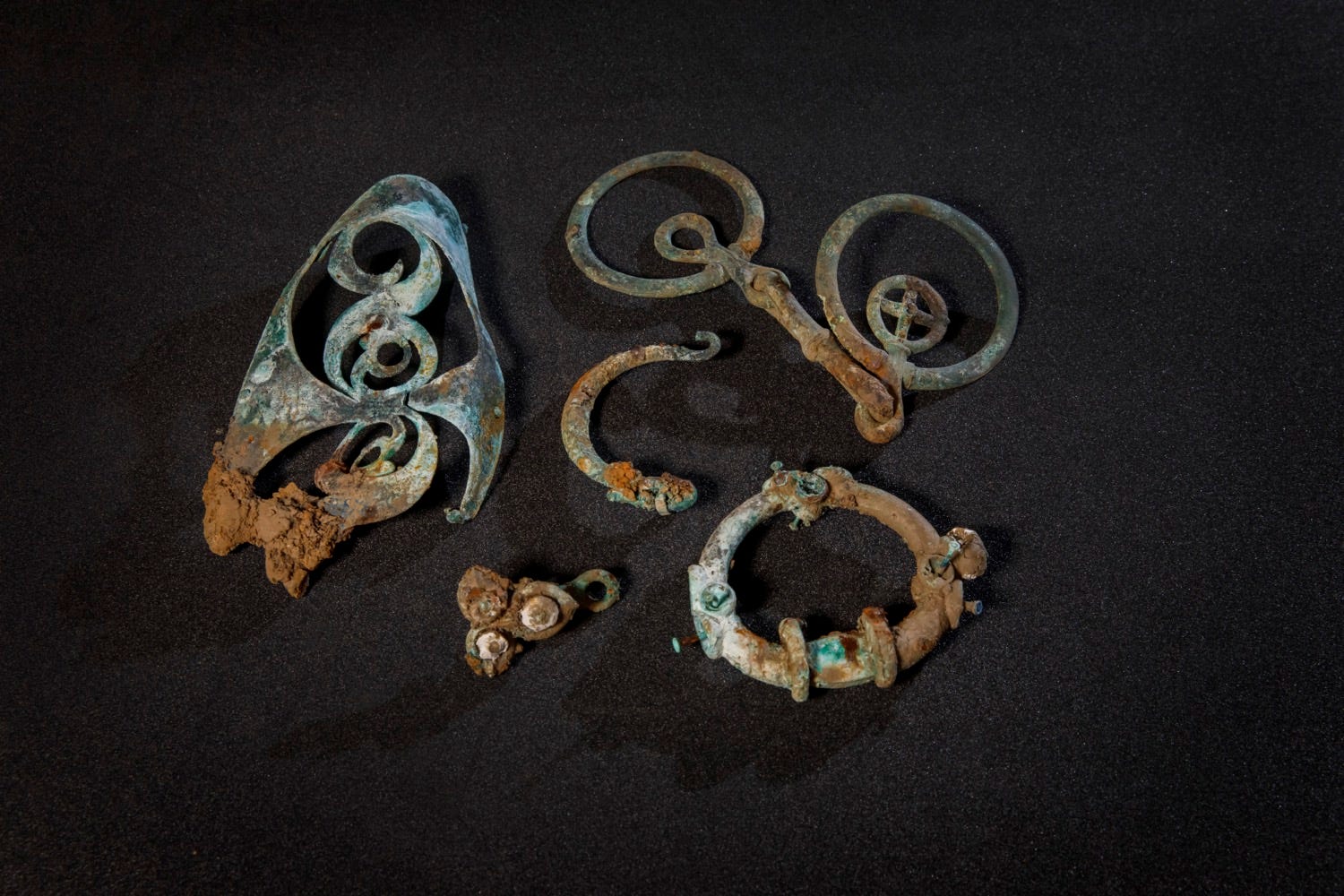
Items from the biggest hoard of Iron Age metalwork ever found in the UK are to go on show to the public for the first time after investigation and conservation work at Durham University.
The hoard was discovered by metal detectorist Peter Heads five years ago in a field at Melsonby, eight miles south of Darlington. He alerted Iron Age specialist Professor Tom Moore of the Department of Archaeology at Durham University, who has since been involved in the project.
Dated between 40BC and 40AD (before the Roman conquest), the hoard sparked worldwide interest after it was revealed last year that around 900 objects had been discovered.
It was excavated and conserved by archaeologists from Durham University with help from the British Museum, supported by £120,000 from Historic England.
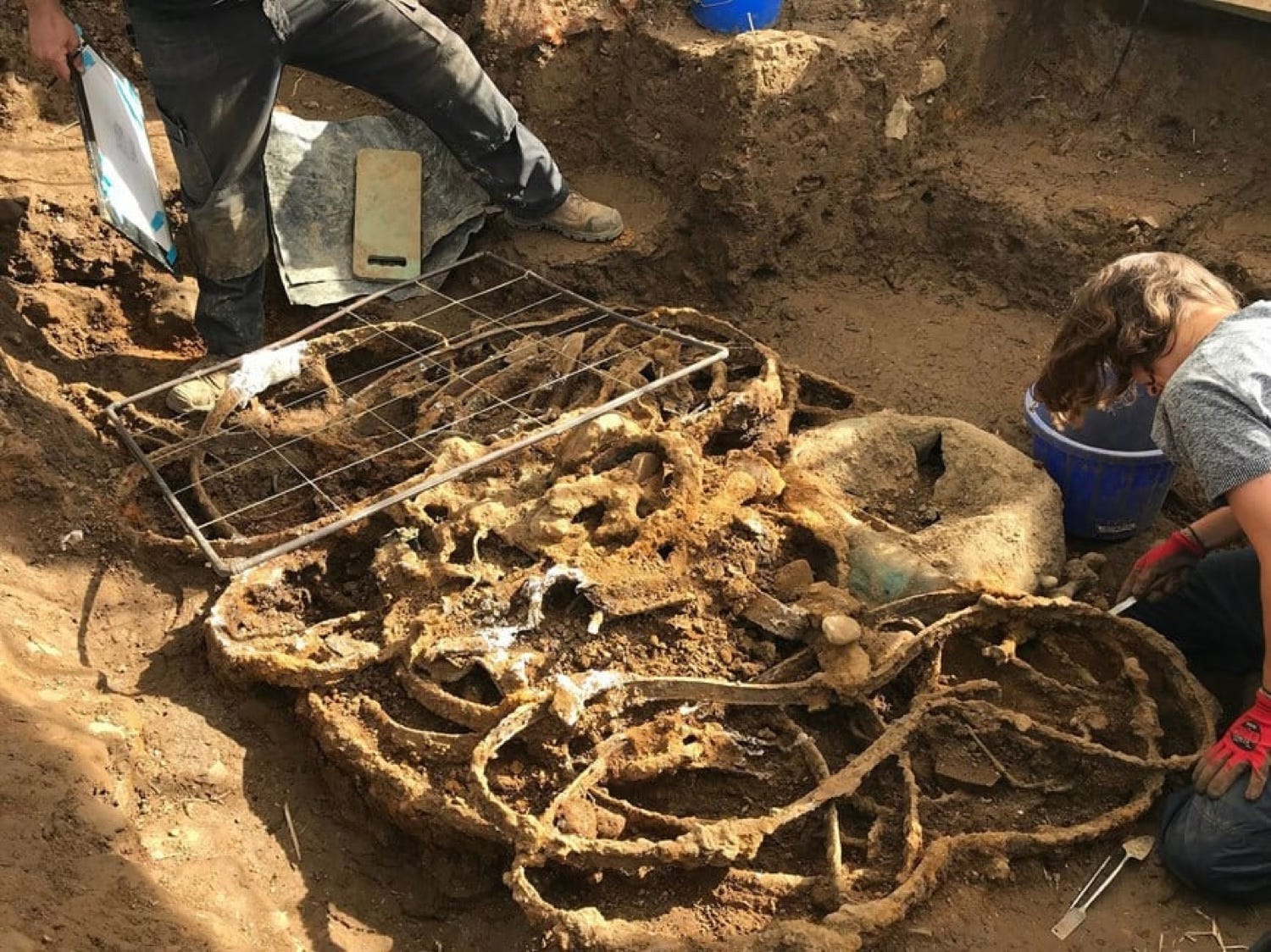
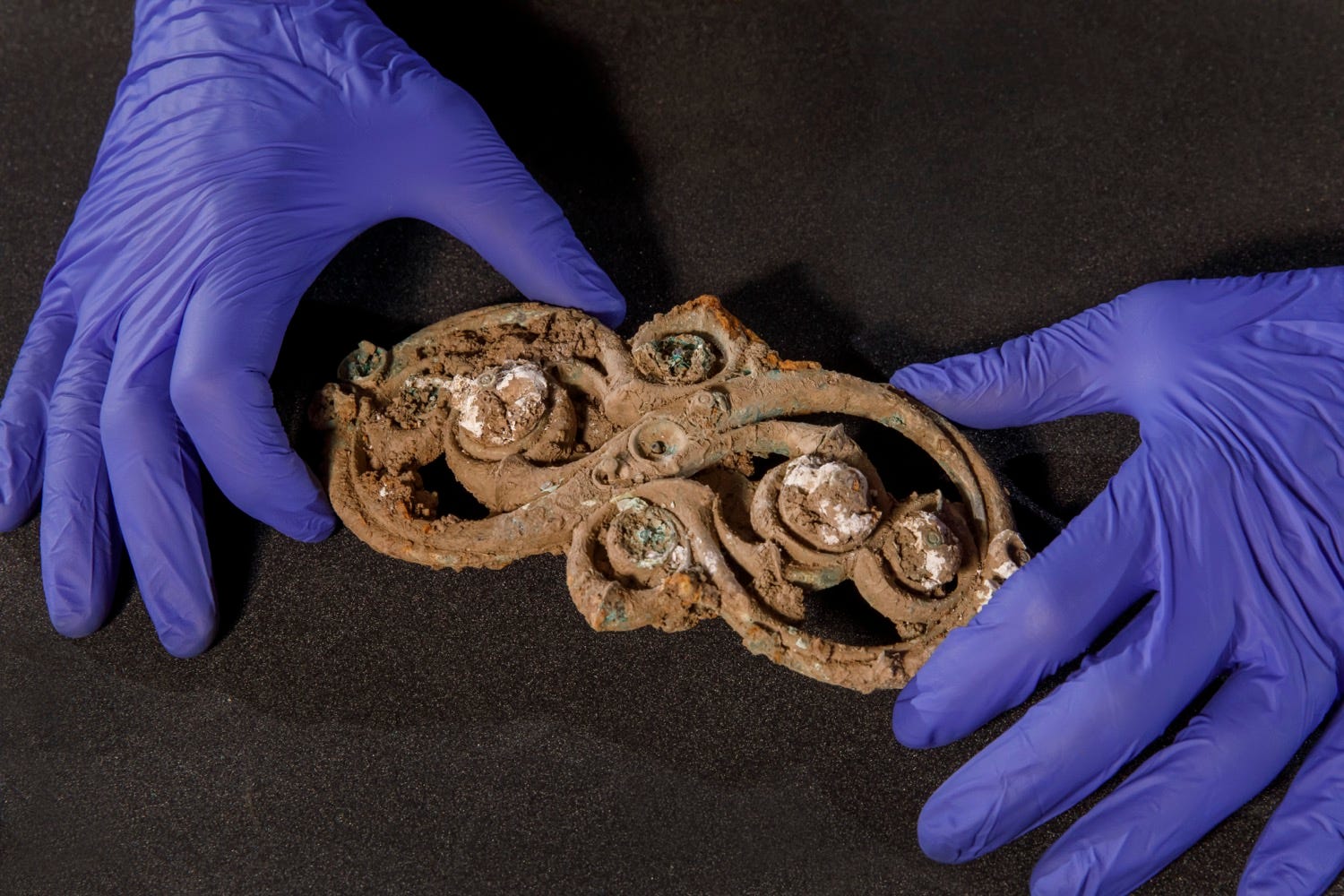
Parts of decorated wheeled vehicles, adornments from horse harnesses, 28 iron tyres, spears, a cauldron and what may be a wine mixing vessel, and hundreds of other individual items make up what has been described as a “momentous discovery of such quantity and variety that is highly unusual for the Iron Age”.
Prof Moore said: “The Melsonby Hoard is of a size that is exceptional for Britain and probably Europe. After being excavated from a field it is fantastic to see that this amazing discovery will soon be on public display.
“The hoard could lead to a major re-evaluation of how wealth and status were expressed during the Iron Age. We look forward to working with colleagues at the museum on further research and conservation of this incredible material.”
The Melsonby Hoard has been transferred to York from Durham after being acquired by the Yorkshire Museum. On Friday (May 15) it will open its Chariots, Treasure and Power: Secrets of the Melsonby Hoard exhibition, which will run until summer 2027.
The acquisition of the hoard was the result of a fundraising campaign, and a £192,096 grant from the National Heritage Memorial Fund.
The hoard was found in two trench locations near each other. In one of the deposits, at least 80 items were discovered fused and meshed together in what has been termed ‘The Block’, an entwined amalgamation of materials weighing over 150kg and measuring nearly a metre across.
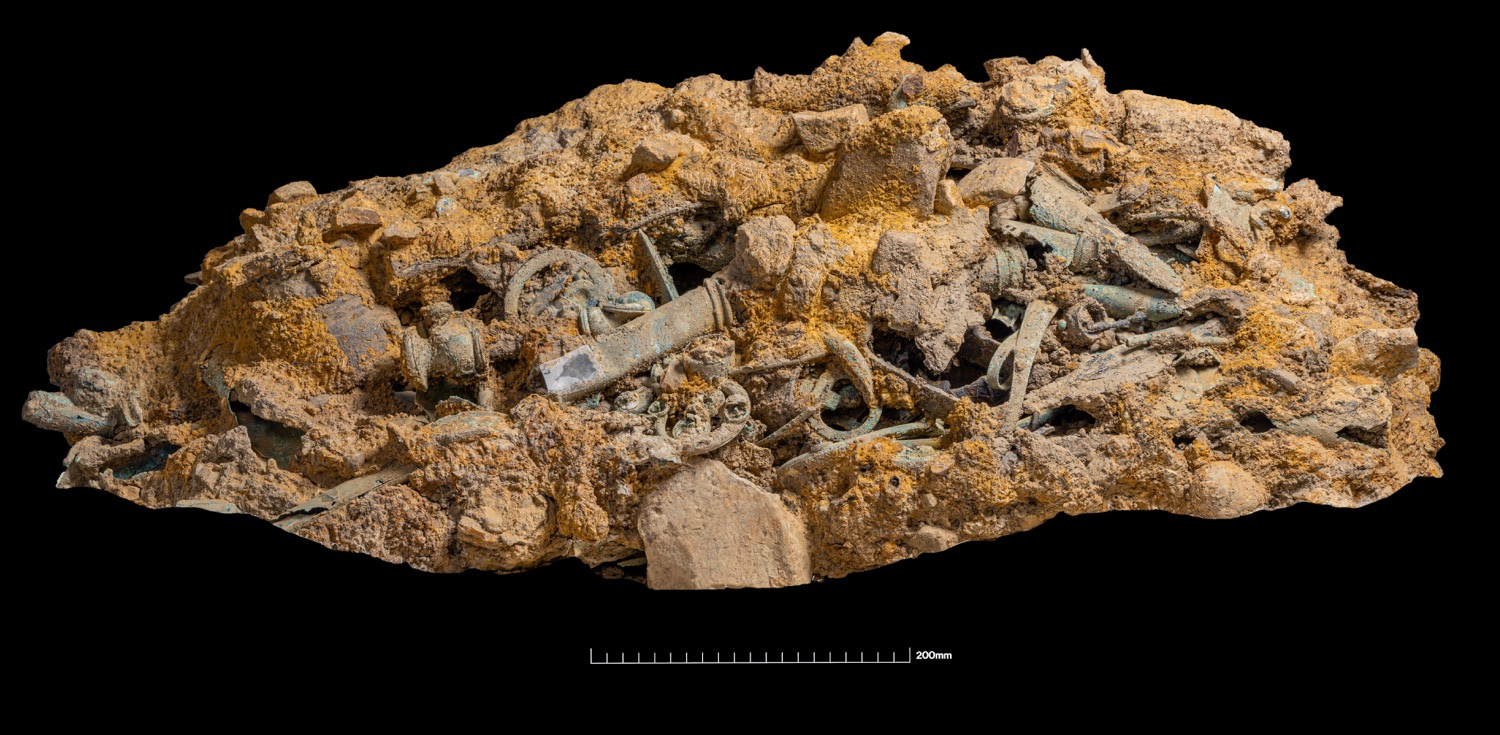
The earth block has been left intact to preserve its unique format and takes centre stage in the exhibition, allowing visitors to see its extraordinary structure. With many items hidden within the layers, 3D and CT scans have revealed some of its contents, but there is still much more to discover.
The exhibition will outline the current understandings of Iron Age Britain and explore life before the arrival of the Romans, asking questions such as why the hoard was buried, why some objects were burnt and apparently deliberately damaged, and who might have owned these lavish objects.
The main question is how this discovery confirms and challenges pre-existing conceptions of life, death, power and belief in the north of England over 2,000 years ago.
The exhibition will also examine the significance of the discovery, heightened by its proximity to the Iron Age fortified centre at nearby Stanwick, 10 miles from Darlington, which was a major centre of power for the Brigantes under Queen Cartimandua.
Stanwick comprised over nine kilometres (5.6 miles) of ditches and ramparts enclosing approximately 740 acres, and a hoard of 140 metal objects was found at the site in 1845. The Brigantes’ territory stretched across Yorkshire and County Durham.
The Melsonby Hoard, with some objects including coral decoration, itself reflects the far-reaching connections of these rulers, with objects revealing links to Denmark, the Mediterranean, and beyond.
Dr Emily Williams, associate professor for archaeological conservation at Durham University, has been working on the hoard.
She said that fragments of textiles suggest that objects had been wrapped up for deposition in a communal event.
“The vehicles would have been ornately decorated and the ponies which pulled them. Copper tubes which were found may be copper sheaths for the wheels to add more decoration and bling,” she said.
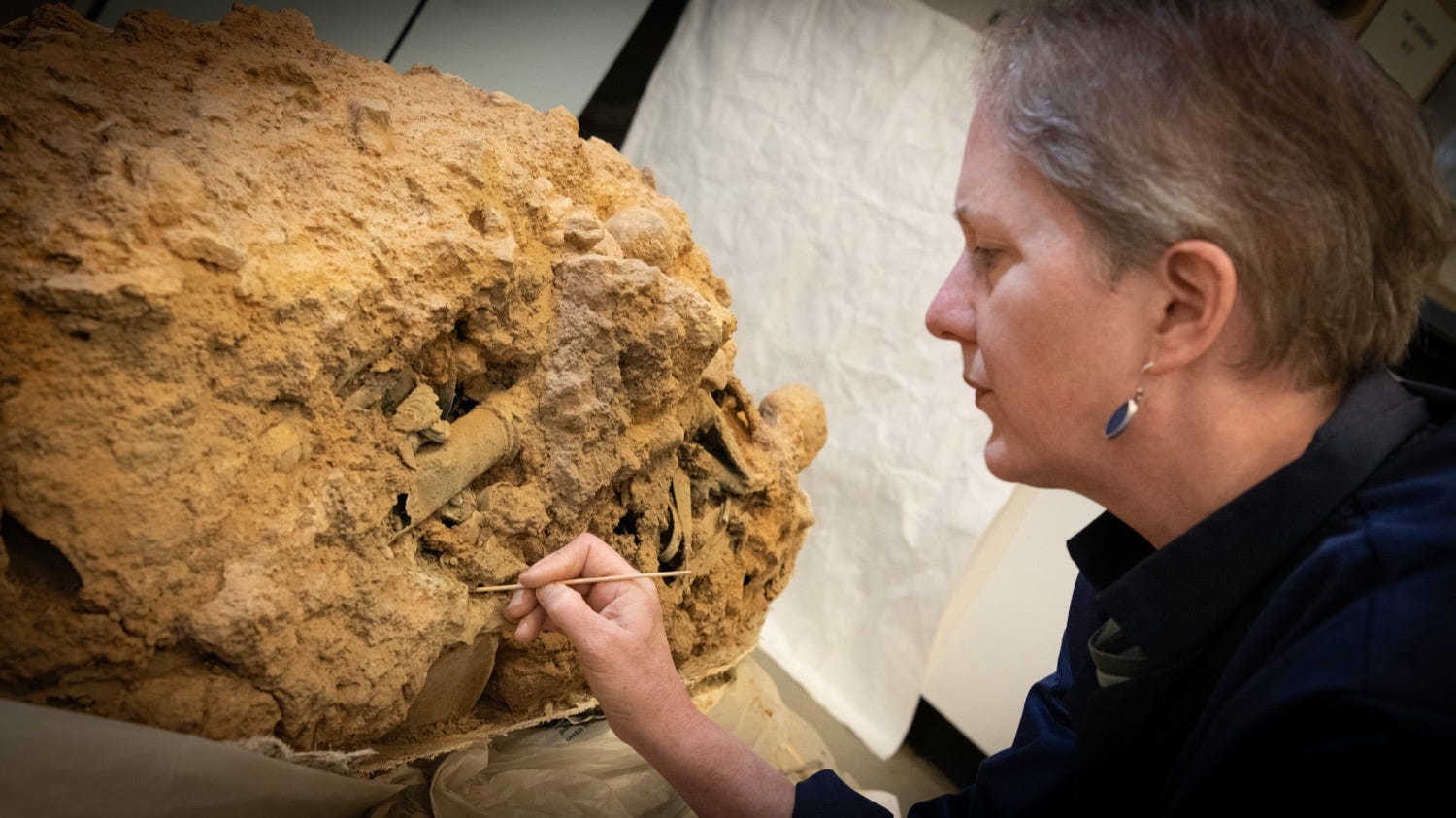
“There are compelling reasons to suspect that they may represent the first examples to be found in Britain of four-wheeled vehicles. Exploration of the hoard is only just beginning.”
Emily North, curator of archaeology at York Museums Trust, said, “It is a privilege to contribute to the development of the new Melsonby Hoard exhibition. We are delighted to share the first phase of research and conservation surrounding this exceptional discovery.
“The hoard continues to present compelling questions. Its composition, its purpose, and the circumstances under which it was buried, burnt, and broken remain the focus of ongoing investigation.”
The opening of the exhibition coincides with the Eboracum Roman Festival, held in York Museum Gardens from May 16-31, with a variety of Roman-related events, talks, activities, schools programming and a living history encampment.