


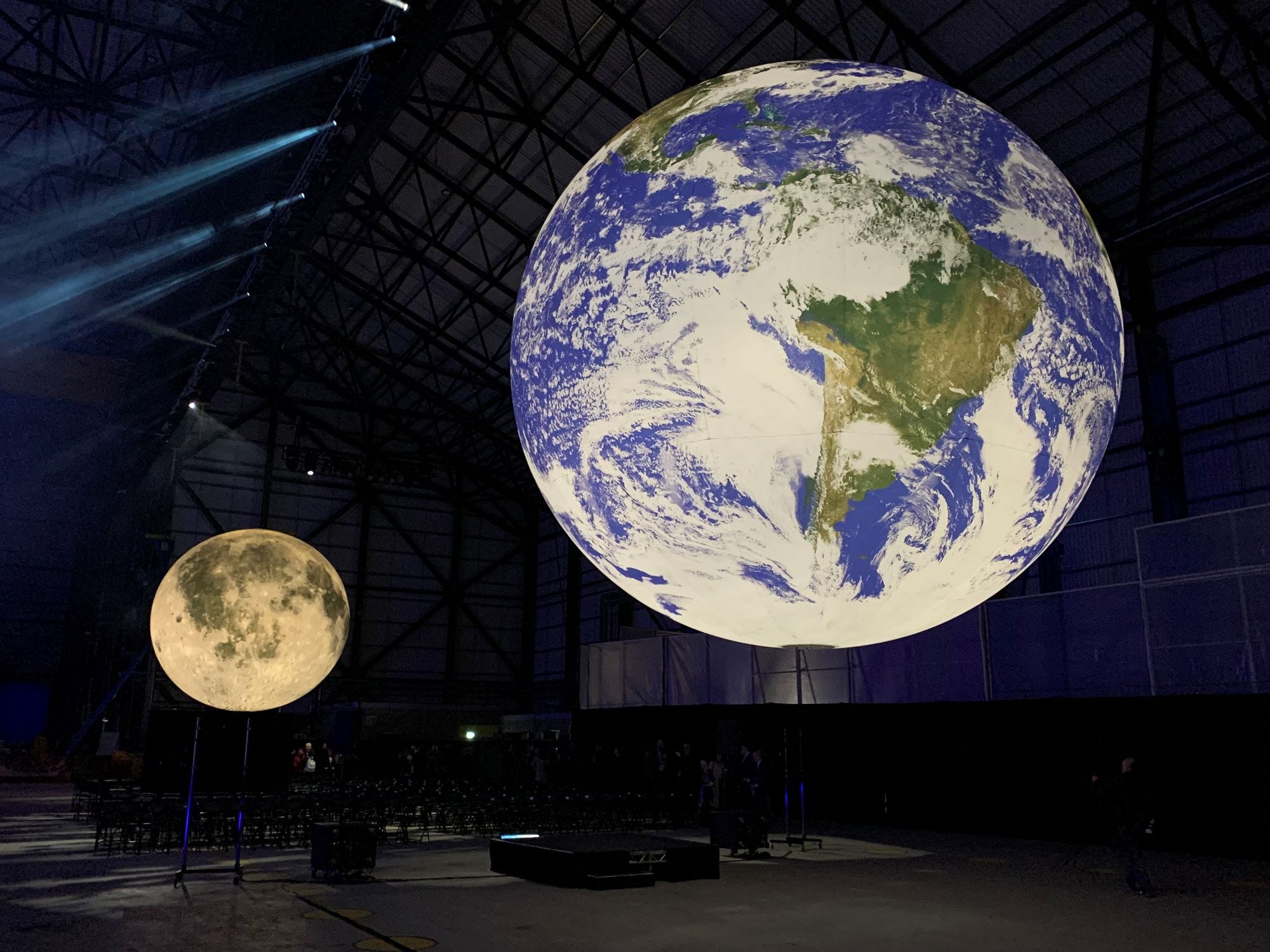
Blyth is the latest to throw its hat into the ring to be UK Town of Culture and the planets – if not the stars – would seem to have aligned in its favour.
To be considered for the honour (and the money that comes with it), the town council must submit a formal Expression of Interest by March 31.
As qualifying credentials go, though, it would be hard to beat a Festival of Energy whose attractions include Earth and the Moon under one roof.
For the first time ever, and for this weekend only, artist Luke Jerram’s planetary twins – their titles as artworks being Gaia and Museum of the Moon – are being exhibited together.
And - those lucky enough to have attended Thursday morning’s special preview will have been thinking - what a location!
In the vast testing facility at Offshore Renewable Energy (ORE) Catapult, the meticulous scale models of our home planet and its near neighbour appear, perhaps for the first time, really to be floating in space.
It makes for an impressive spectacle, as Britain’s first astronaut, Helen Sharman, suggested ahead of her talk beneath the planets to 350 local schoolchildren.
“I’ve seen both of them individually,” she said of the Jerram sculptures, each of which mimics its respective planetary surface, “but never in the same place. It’s just fabulous to see them like this.”

Reflecting on her own childhood, she said: “Nothing amazing ever seemed to happen but this would have inspired me, without a doubt.
“To see your own home planet from such a perspective and in context with our nearest celestial neighbour, and in a place where we’re seeing how modern engineering technology can support us to live better on that planet, is fantastic and inspirational.”
Sheffield-born Helen, who visited the Mir space station in 1991, was among the first to see this highlight of the Festival of Energy, the climax of the Blyth Celebrates cultural programme.
Getting the two Jerram creations displayed together was a coup for Salford-based festival producers Walk the Plank who have had a long association with the North East.
Executive director Charlie Morrison said Walk the Plank’s expertise lay in using culture as a catalyst to bring people and communities together to explore and ask questions.
“It’s a very powerful thing to add creativity, joy, laughter and wonder to a moment, helping memories to linger and to shape the future,” he said.
Many questions will be prompted this weekend as an expected 7,500 people file in through the door of ORE Catapult’s enormous testing facility.
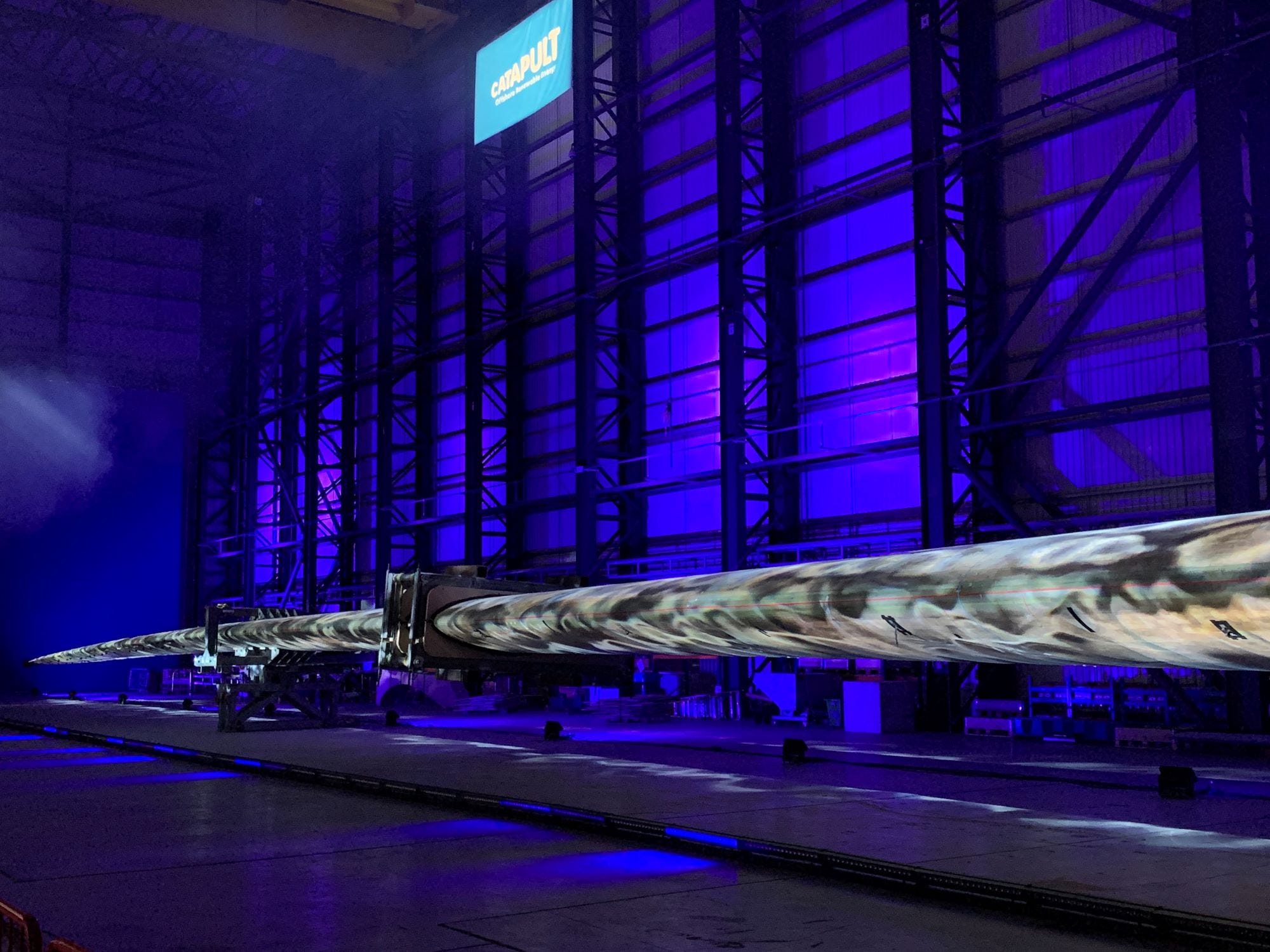
As well as the serenely rotating planets, their eyes will be drawn to an offshore turbine blade specially illuminated for the festival. Its dimensions at ground level are jaw-dropping. The thing runs the length of the building.
“That’s an 88 metre blade,” said ORE Catapult’s head of communications, John Lang, who explained the company’s role in the renewables revolution.
“Companies that develop a blade will bring it to us and our job is to test it and make sure it’s ready for all the stress and strain it’ll inevitably come up against when it’s out at sea.
“We can speed up time here and give it about 20 years of life in six months by constantly moving it. The data is then sent back to the developers who can make any necessary adjustments.
“Usually what goes on in here is quite confidential so being able to open the doors for something like this is absolutely fantastic, a real privilege.”
John said that when the hall was built in 2013 it was thought a length of 100 metres would be quite adequate.
“We thought no way would anything get bigger than that. But the blade before this one measured 107 metres. The tip had to be taken off.”
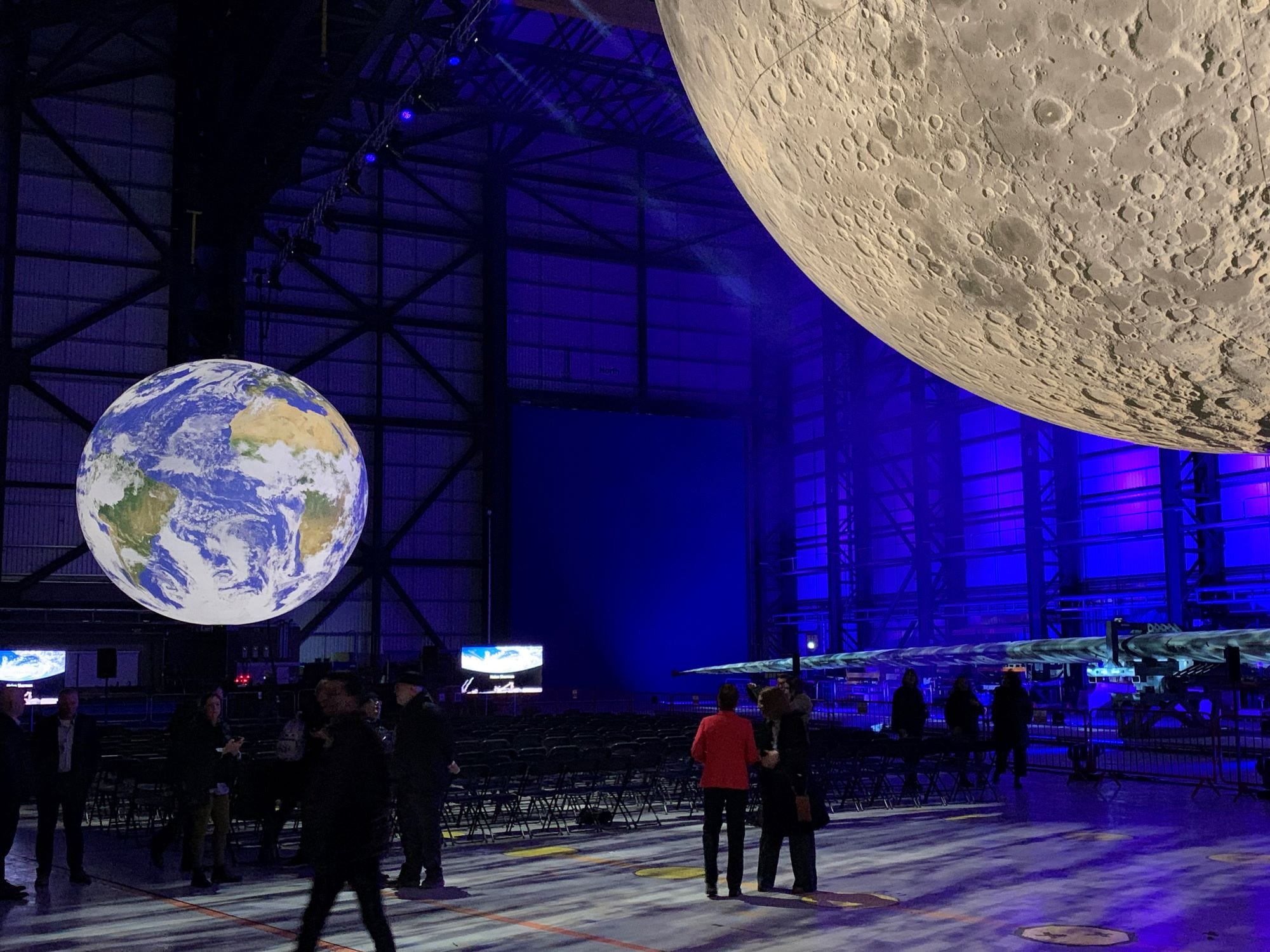
With these monster blades being stress-tested, sweeping constantly back and forth and subjected to conditions likely in a once-in-a-generation ‘weather event’, you can understand why this is not a natural festival venue.
But not everything ORE Catapult tests is on a monumental scale.
“One of my favourite bits of kit here is our rain erosion test rig which literally tests what different raindrops will do to a turbine’s coating,” said John.
“You get to find the average size of a raindrop in different parts of the world. The British average raindrop size is 2.1 millimetres. I think that’s my favourite fact.”
Up on the platform, and playing Atlas with Gaia spinning above their shoulders, were the politicians, Blyth and Ashington MP Ian Lavery and Northumberland County Council leader, Glen Sanderson.
“Honestly, I’m so excited,” confessed the former.
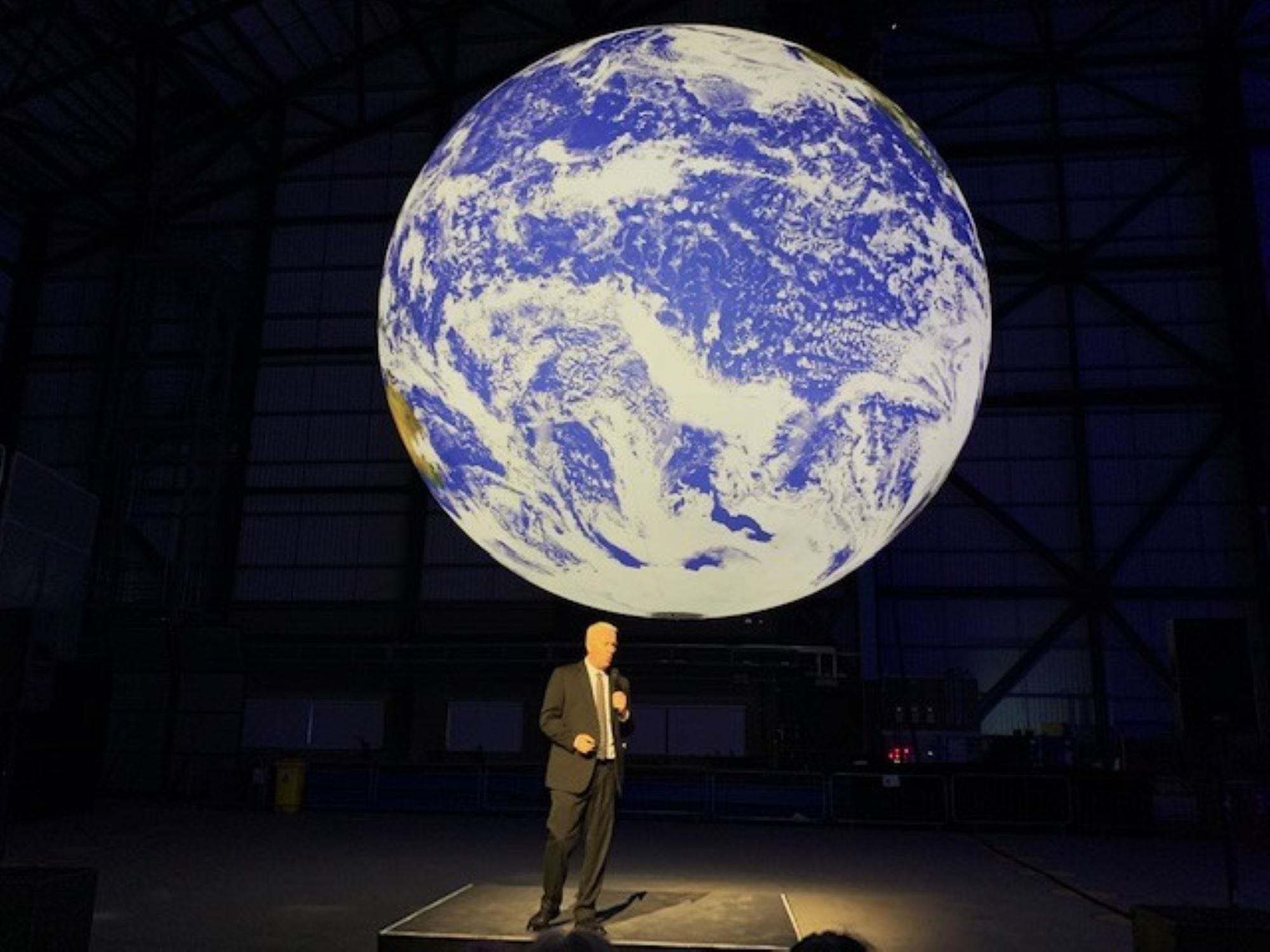
“Walking through the door this morning to see Museum of the Moon and Gaia in the same place was extraordinary. It’ll be brilliant for the community.
“But you’ve got to ask: why not? Why shouldn’t the people of Blyth be involved in the creative industries? It’s so special to have this event here and I’m proud as punch to be here.”
Councillor Sanderson had looked up the word ‘energy’ and discovered it came from an old Greek word meaning ‘activity’. There was plenty of that in Blyth, he suggested, which meant it was the most appropriate place for a Festival of Energy.
Tom Wildsmith, ORE Catapult head of commercial, said: “This hall has supported some of the biggest innovations in offshore wind technology.
“Blyth was home to the first UK offshore windfarm, not very far from here, so there’s a long history of renewables.
“But the bit about this week that makes me so proud is our engagement with the local community. We work very closely with Northumberland County Council and its Energy Central Campus, looking to how we can support the next generation workforce.”
You can really sense the future here and, despite the relentlessly grim news, feel a little optimistic.
ORE Catapult currently employs 325 people, about half of them in Blyth and others at sites around the country, but John Lang said the company is investing and extra recruitment is likely.
The company was keen to create pathways into the industry for local youngsters, he said, and related the story of a girl who first visited on a school trip and was so excited that she later successfully applied for an internship and was now on the payroll as an engineer.
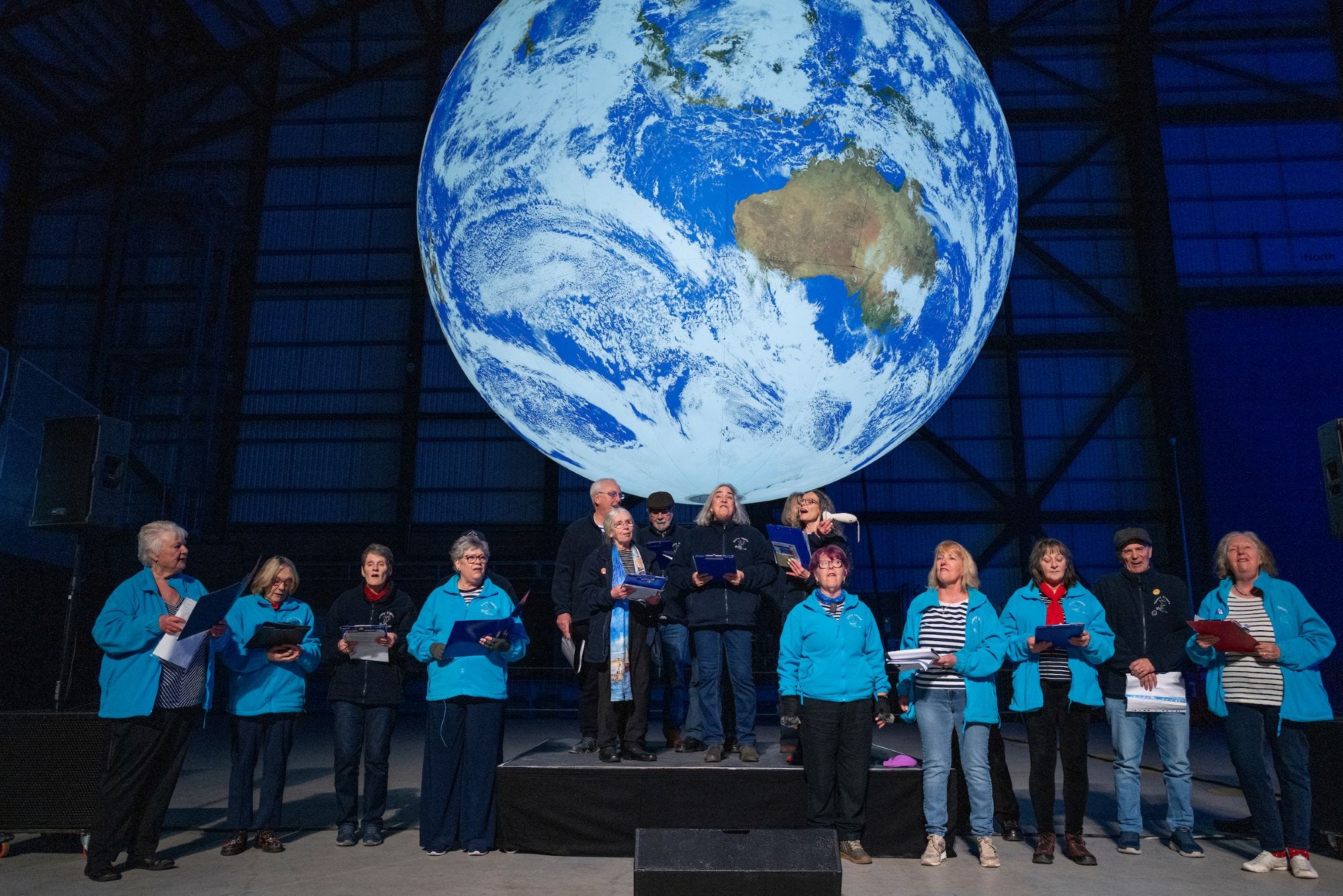
Thursday morning’s preview proceedings concluded with a choir singing sea shanties, emphasising that while this festival has global ramifications, it is rooted firmly in the North East and particularly in Blyth.
Funded by the county council and the North East Combined Authority, the Festival of Energy runs until Sunday, March 8 and is a fusion of art and science with creativity the common theme.
The final day, coinciding with International Women’s Day, will begin with a celebration breakfast under those spinning orbs and end at 8pm with a Walk the Plank special, its spectacular Tower of Light.
You’ll find all the full programme of free events on the Festival of Energy website.