

I’ve always enjoyed games in all their forms, video games especially. I remember playing games such as Disco Elysium, The Talos Principle, and Scarlet Hollow for the first time and being amazed that a video game could have such beautiful storytelling ability.
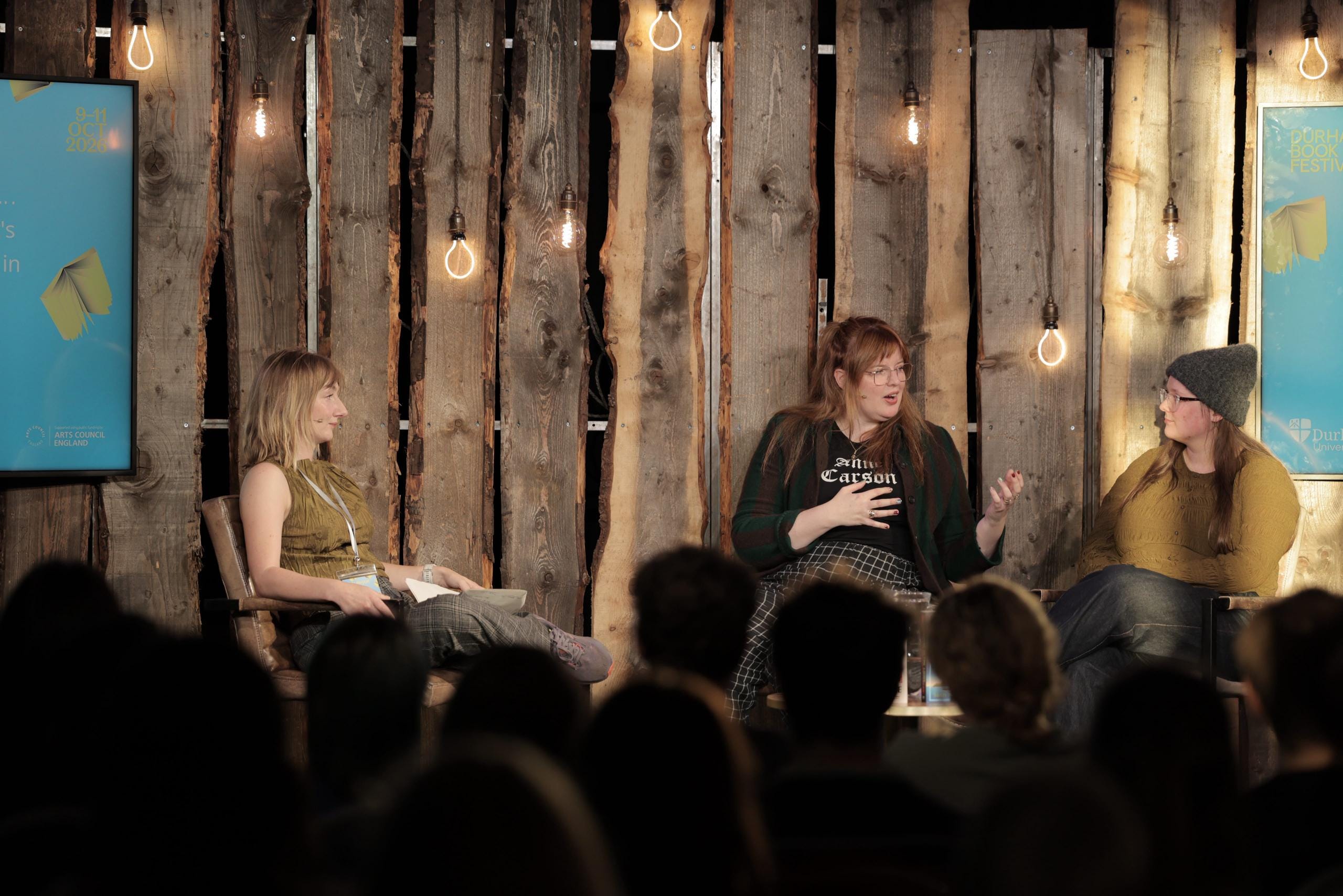
This was the backdrop against which I attended and enjoyed the Gaming and Storytelling event at Durham Book Festival, delivered by Lucy Rose (The Lamb) and Sarah Maria Griffin (Strange Is the Light), hosted by Sarah France from New Writing North.
I have always been sceptical about events in this crossover territory between video games and literature; worried that it will be too detached and academic. However, it was clear from the onset that both Lucy and Sarah had a deep passion for video games, talking joyfully about their favourite games throughout the event, and crucially praising them as tools to aid their writing process.
The speakers eloquently articulated what video games can do for the art of storytelling. The fact video games give so much choice, environmental immersion, re-playability from different angles and even characters, and a unique sense of ‘being in the story’ was discussed by both speakers as something that is uniquely captured by video games. And how they have both relied upon video games to aid their writing processes and to enjoy good stories.
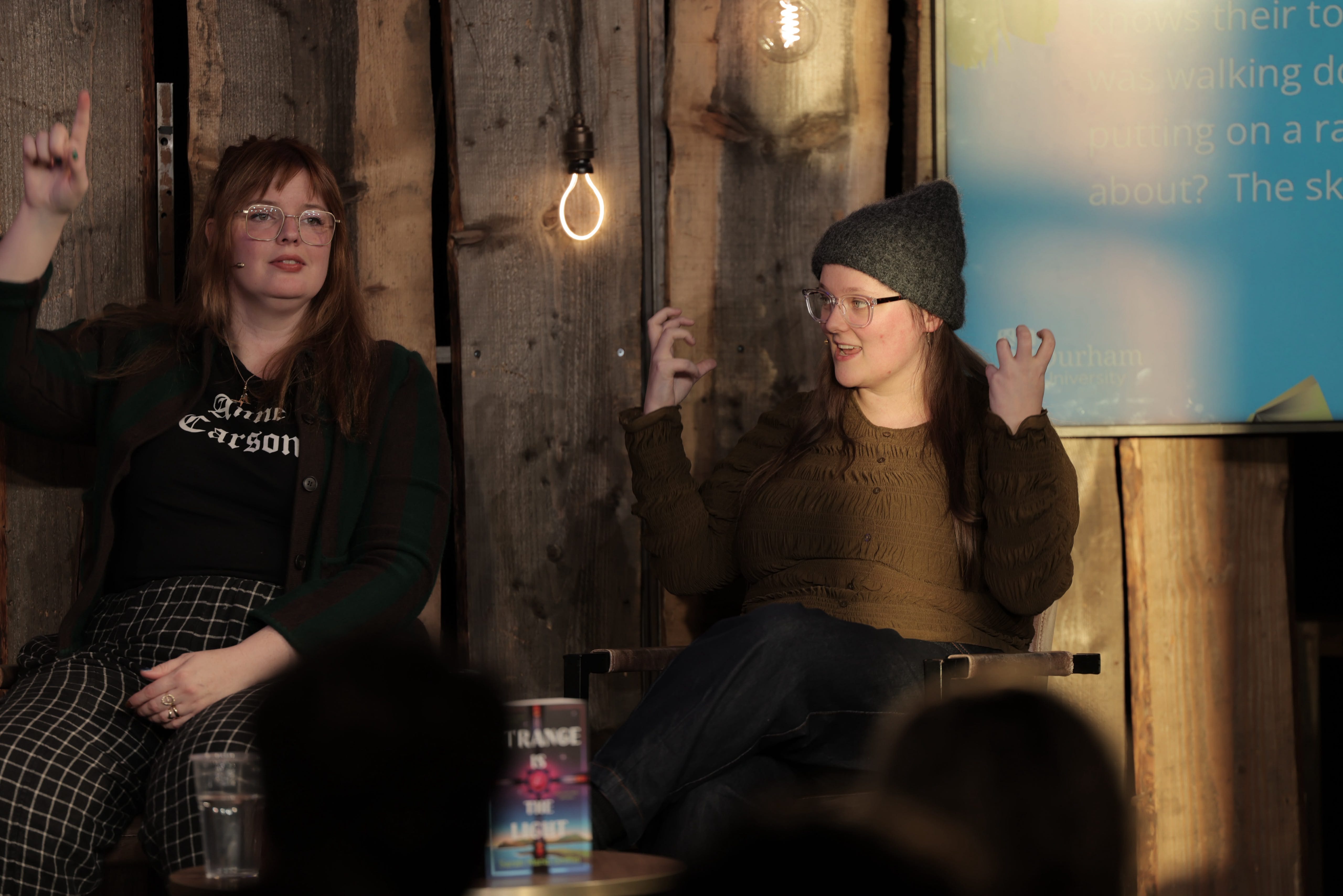
This was especially the case when discussing the reciprocity between the player and the game, and how this back and forth between the players’ unique input and the games outputs can create a beautiful story, regardless of whether it is story-forward (such as in What Remains of Edith Finch) or more hidden within the details of the game (such as in Bloodborne).
However, one of the most interesting aspects of the talk, even for those who may not be overly familiar with video games or literature respectively, was how both mediums of storytelling seem to mirror each other in their successes and their challenges. This reinforces further the overarching theme that was woven throughout the discussions, that video games can tell stories, and tell them well.
Both authors discussed the problem of adaptations of video games into films, and how it often misses. Essentially because the stories are told via the medium of video games because that is the best way for them to be told.
This also led into the worries of IPs over-saturating the video game market, the rise of AI and how it threatens to damage the indie scene of video games and the ability for unique creative projects to be made. On the other hand, people are fighting to create uniquely beautiful games despite the challenges presented by an industry which values profit over artistry.

Whilst the authors did not make an explicit connection beyond the occasional comment, it felt clear to me from their discussions how a lot of the problems above are mirrored in literature. This was also the case for the positives, and it was not lost on me how all the things that the authors loved about good video game storytelling; a sense of place, immersive world-building and environments, secrets and new perspectives, and so much more, is also what they loved about their favourite pieces of literature.
Although both authors did lack the technical experience of video game creation to perhaps fully round out an event on this topic (since a lot of the storytelling aspects of video gaming cannot be discussed fully without the coding and technical design aspects behind it all to bring it convincingly to life), the event was a brilliant discussion on the subject.
To paraphrase the authors, video gaming has entered an almost post-modern phase, having escaped the perception of being the interest of only a small sub-culture, to the point now where video games are being inspired by previous games, and even communicating and interacting with one another. The speakers seemed optimistic about how video games could develop their storytelling practices, and what amazing stories may be just around the virtual corner.